Non Qualified Stock Options Vs Iso
Description




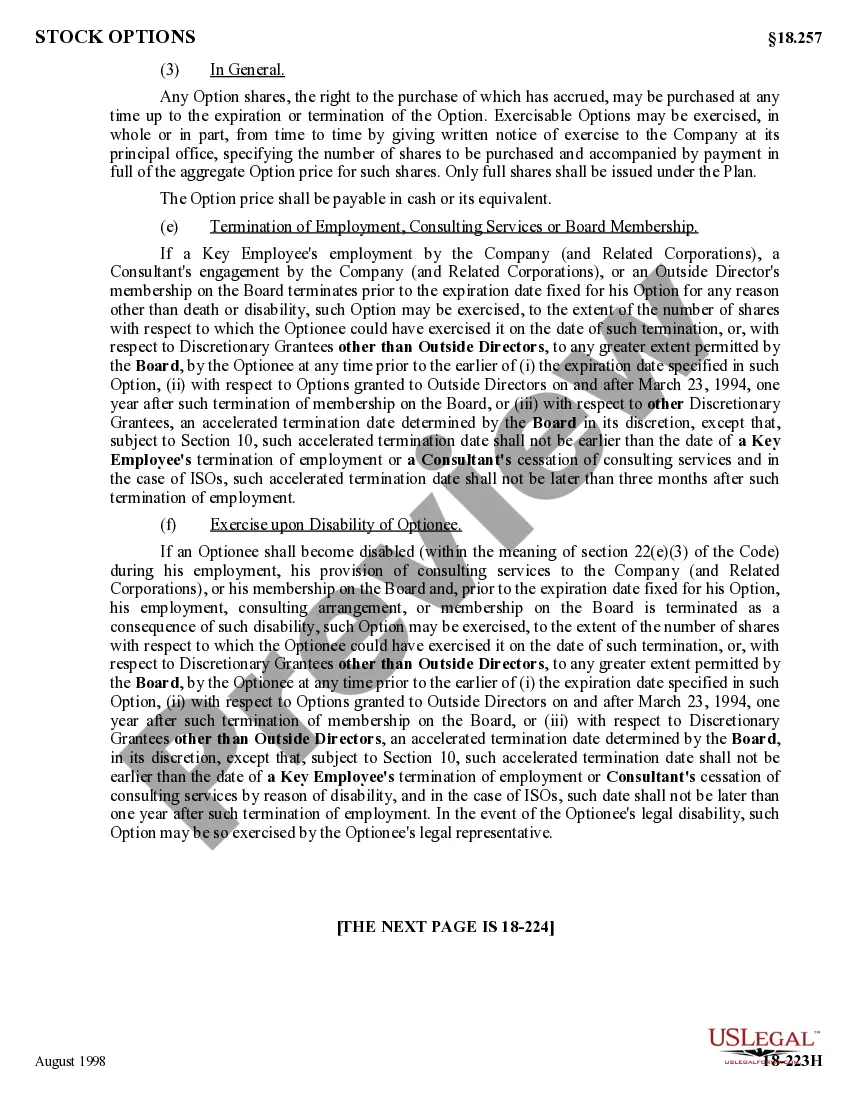



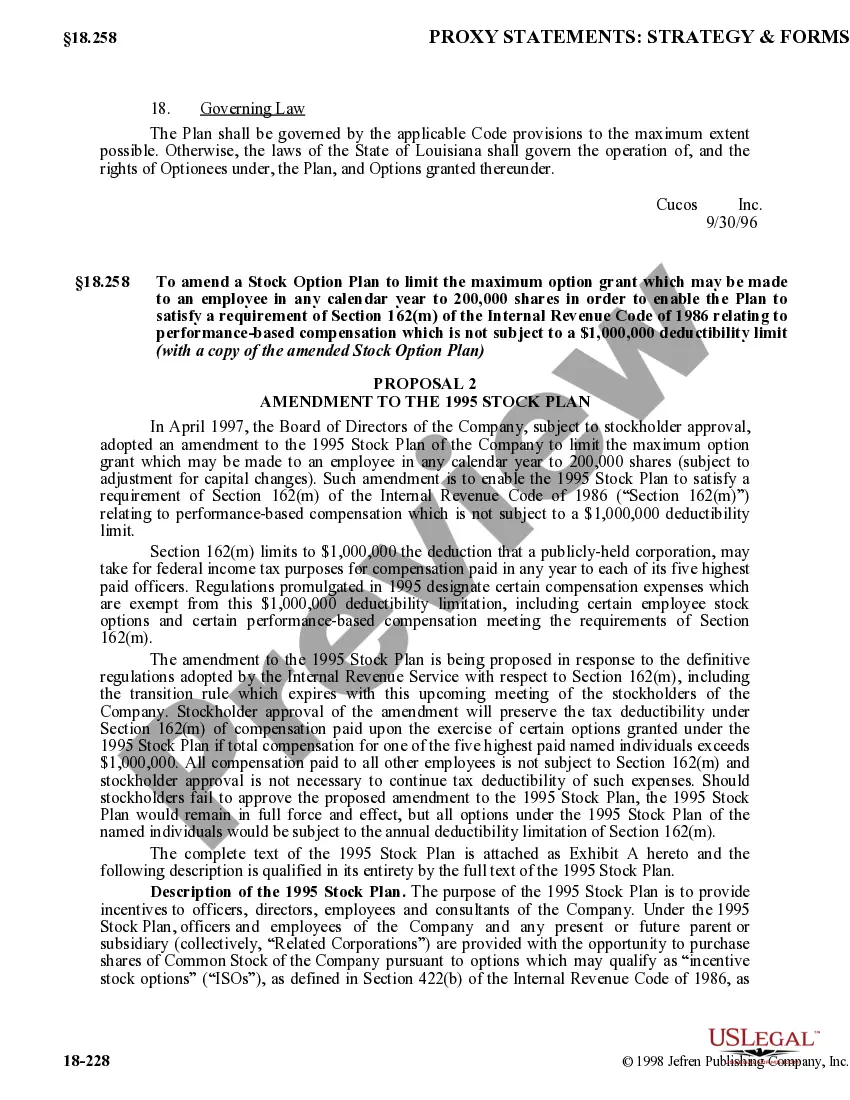










How to fill out Nonemployee Directors Nonqualified Stock Option Plan Of Cucos, Inc.?
Creating legal documents from the ground up can frequently feel somewhat daunting.
Certain instances may require extensive investigation and significant financial investment.
If you’re looking for a simpler and more cost-effective method of generating Non Qualified Stock Options Vs Iso or other variants without unnecessary complications, US Legal Forms is always here to assist you.
Our online library featuring over 85,000 current legal forms covers nearly every facet of your financial, legal, and personal concerns. With just a handful of clicks, you can promptly acquire state- and county-compliant templates meticulously crafted for you by our legal experts.
Examine the form preview and descriptions to ensure you are on the correct document. Confirm that the form you select complies with the regulations and laws of your state and county. Choose the most appropriate subscription option to buy the Non Qualified Stock Options Vs Iso. Download the file, complete it, certify it, and print it out. US Legal Forms has an excellent reputation and over 25 years of expertise. Join us today and make form handling a simple and efficient process!
- Utilize our site whenever you require dependable and trustworthy services through which you can easily locate and obtain the Non Qualified Stock Options Vs Iso.
- If you’re familiar with our services and have set up an account with us before, simply Log Into your account, select the form, and download it or re-download it anytime later from the My documents section.
- Not registered yet? No issue. It only takes a few minutes to create an account and browse the library.
- However, before jumping directly into downloading Non Qualified Stock Options Vs Iso, follow these recommendations.
Form popularity
FAQ
The choice between Incentive Stock Options (ISOs) and Non Qualified Stock Options (NSOs) depends on your financial situation and tax strategy. ISOs offer favorable tax treatment, but they come with specific eligibility requirements and holding periods. In contrast, NSOs are easier to obtain and provide more flexibility, though they may incur higher taxes upon exercise. To explore these differences further, consider using USLegalForms, which can guide you through the nuances of Non Qualified Stock Options vs ISO.
When deciding whether to exercise Non Qualified Stock Options (NSOs) or Incentive Stock Options (ISOs) first, consider your tax implications and financial goals. Exercising NSOs typically results in immediate taxable income, while ISOs allow for potential tax advantages if you meet holding requirements. Therefore, if tax efficiency is a priority, you might lean towards ISOs. However, using platforms like USLegalForms can help you navigate these options and make informed decisions.
Determining whether ISOs or NSOs are better depends on your individual circumstances and financial goals. ISOs typically offer tax benefits if you meet holding period requirements, which can be advantageous for employees. On the other hand, NSOs provide more flexibility in terms of recipients and immediate tax implications. Evaluating the differences between non qualified stock options vs iso can guide you in making the best choice.
The primary difference between ISO and non-ISO options lies in the tax treatment and eligibility. ISOs can only be granted to employees and offer favorable tax treatment, allowing for tax deferral until shares are sold. In contrast, non-ISOs can be given to employees, contractors, and advisors but are taxed at exercise. Understanding these distinctions can clarify the advantages of non qualified stock options vs iso.
The pros of NSOs include greater flexibility in who can receive them and immediate tax implications upon exercise. This can be beneficial for companies looking to attract non-employee talent. However, the cons involve higher tax liabilities at the time of exercise, which can reduce the overall benefit. Weighing the pros and cons of non qualified stock options vs iso is crucial for making smart investment choices.
Advisors typically receive NSOs instead of ISOs. This is because NSOs provide more flexibility in terms of granting options to non-employees. While ISOs are restricted to employees and come with specific tax benefits, advisors often prefer NSOs due to the straightforward tax implications. Understanding the differences between non qualified stock options vs iso can help you make informed decisions about compensation.
Choosing between ISO and NSO depends on your financial goals and tax situation. ISOs offer potential tax advantages, such as deferring taxes until you sell shares, while NSOs are taxed at the time of exercise. Consider your income level, holding period, and investment strategy. Consulting a tax professional can also help clarify the benefits of non qualified stock options vs iso for your specific situation.
ISO stands for incentive stock options, which are a type of employee stock option offering potential tax benefits. These options must meet specific criteria set by the IRS to qualify for favorable tax treatment. Knowing what ISO means is crucial for employees evaluating their options, particularly when comparing the tax implications of non qualified stock options vs ISO.
ISO and NQ stock options differ mainly in their tax implications and eligibility criteria. ISOs may offer tax advantages for employees, potentially allowing for lower capital gains taxes, while NQs do not. Understanding these differences is essential for making informed decisions about your investment strategy, especially when analyzing the pros and cons of non qualified stock options vs ISO.
The primary difference between NQ and ISO stock options lies in their tax treatment. Non-qualified stock options are taxed as ordinary income upon exercise, while ISOs may qualify for favorable capital gains treatment if certain conditions are met. This distinction is vital for individuals looking to optimize their financial strategy, particularly when considering non qualified stock options vs ISO.