Absenteeism
Description
Get your form ready online
Our built-in tools help you complete, sign, share, and store your documents in one place.
Make edits, fill in missing information, and update formatting in US Legal Forms—just like you would in MS Word.
Download a copy, print it, send it by email, or mail it via USPS—whatever works best for your next step.
Sign and collect signatures with our SignNow integration. Send to multiple recipients, set reminders, and more. Go Premium to unlock E-Sign.
If this form requires notarization, complete it online through a secure video call—no need to meet a notary in person or wait for an appointment.
We protect your documents and personal data by following strict security and privacy standards.

Make edits, fill in missing information, and update formatting in US Legal Forms—just like you would in MS Word.

Download a copy, print it, send it by email, or mail it via USPS—whatever works best for your next step.

Sign and collect signatures with our SignNow integration. Send to multiple recipients, set reminders, and more. Go Premium to unlock E-Sign.

If this form requires notarization, complete it online through a secure video call—no need to meet a notary in person or wait for an appointment.

We protect your documents and personal data by following strict security and privacy standards.
Looking for another form?


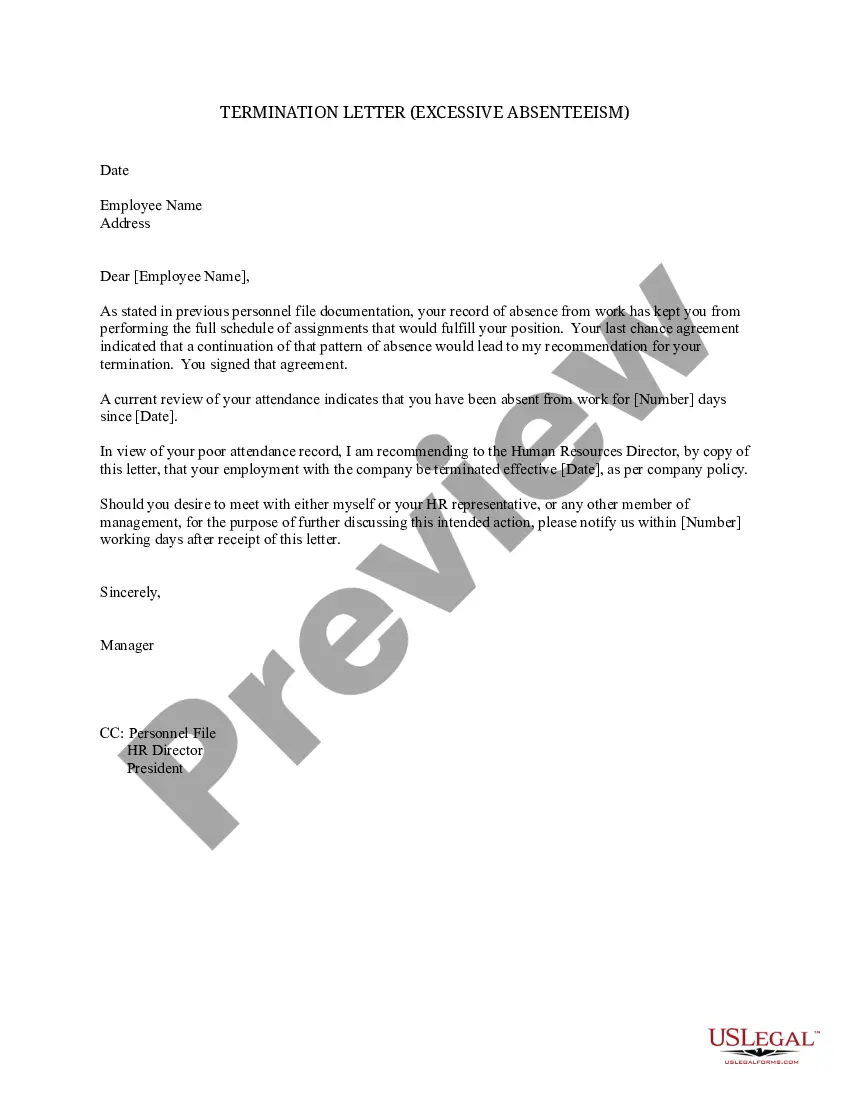
How to fill out Termination Letter (Excessive Absenteeism)?
- If you're an existing user, log into your account and retrieve the necessary form template by clicking the Download button. Ensure your subscription is active; renew it if necessary according to your plan.
- For first-time users, start by reviewing the Preview mode and form description to confirm you have selected the correct document that aligns with your local jurisdiction's requirements.
- If you notice any discrepancies, utilize the Search tab to locate an alternative template that better fits your needs.
- Once you've identified the suitable form, proceed to purchase it by clicking the Buy Now button, and choose your preferred subscription plan, creating an account for access.
- Enter your payment details via credit card or PayPal to complete your purchase.
- Download the template onto your device for completion and access it later through the My Forms section of your profile.
By utilizing US Legal Forms, you're not only gaining access to a superior collection of over 85,000 editable legal forms but also benefiting from expert guidance to ensure your documents are precise and compliant with legal standards.
Take the first step toward effective absenteeism management today by leveraging the resources available at US Legal Forms.
Form popularity
FAQ
Absenteeism itself is legal; however, excessive absenteeism can lead to disciplinary actions based on company policies. Employers can set attendance requirements that align with business needs, provided these policies are applied consistently and fairly. Awareness of attendance laws can help navigate absenteeism effectively.
Absence refers to the state of being away from a place or person, while absenteeism specifically denotes repeated or habitual absence, especially from work or school. Understanding this distinction can help employers and parents identify patterns of absenteeism. Addressing absenteeism is key to maintaining productivity and educational success.
In Oklahoma, missing 10 days of school can lead to potential legal consequences for students and their guardians. Schools may take actions such as notifying parents, requiring attendance meetings, or even involving truancy officers if attendance does not improve. Staying informed about school policies can help manage absenteeism effectively.
Yes, it is possible to be fired for being absent, especially if the absence violates company policy. Employers typically have the right to terminate employees who do not provide adequate notice or fail to communicate about their absences. It is beneficial to familiarize yourself with your company's attendance policy to avoid unexpected consequences.
The main causes of absenteeism often include illness, family obligations, workplace stress, and dissatisfaction with jobs. Understanding these factors helps employers address the root issues that lead to frequent absences. Targeted interventions can significantly reduce absenteeism rates.
The absenteeism formula is: (Number of Days Absent / Total Number of Workdays) x 100. This calculation allows employers to quantify employee absenteeism rates. Understanding absenteeism can help in developing strategies to address attendance issues within your workforce.
Yes, you can terminate an employee for absenteeism, but it's essential to follow your company's policies. Consistent absence without valid reasons can violate work agreements. Ensure the termination adheres to applicable labor laws and that you have documented the absenteeism pattern effectively.
To calculate the absenteeism rate, divide the total number of workdays missed by the total number of workdays possible, then multiply by 100. This will give you a percentage that reflects how prevalent absenteeism is within your organization. Tracking this metric helps identify trends and improve employee attendance.
An absenteeism report should summarize attendance data and highlight patterns of absence. Include critical information such as the employee's name, dates of absence, and the reasons when available. By reviewing this data, employers can formulate strategies to enhance attendance and utilize platforms like uslegalforms for standardized reporting.
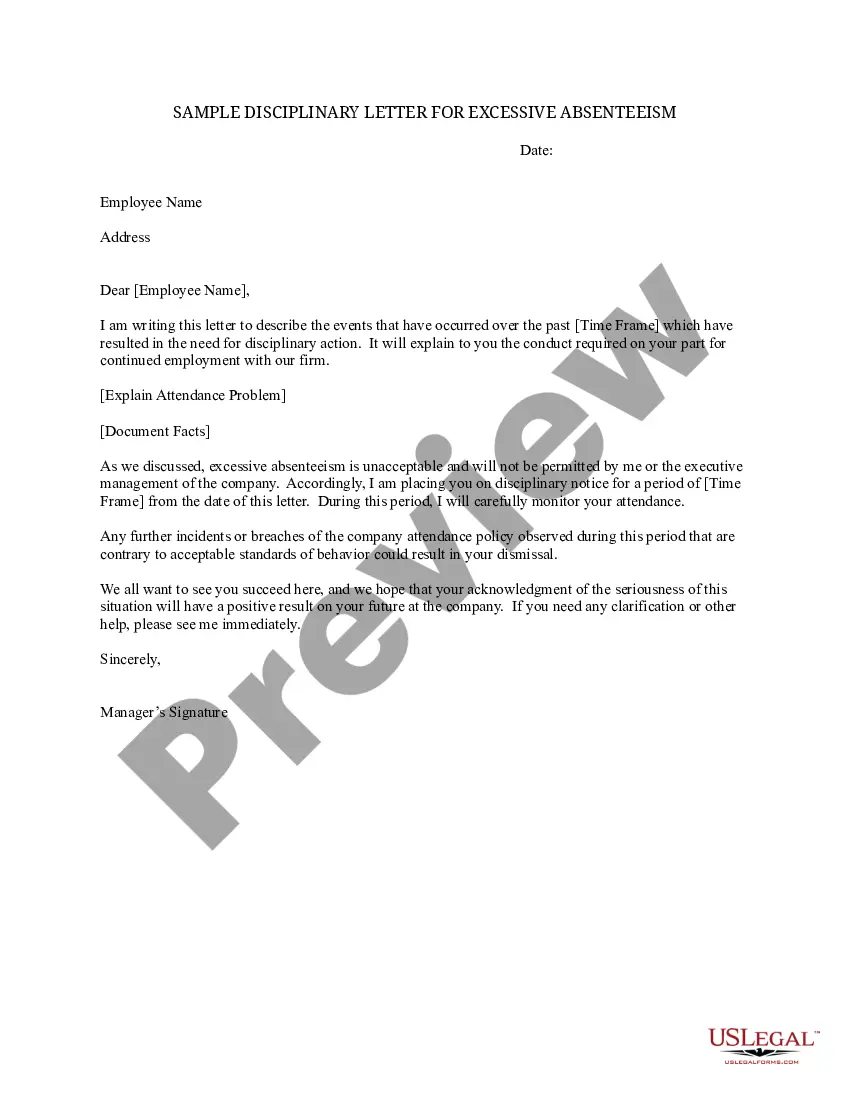
To write a written warning for absenteeism, start with outlining the specific attendance issues and the impact they have on the workplace. Be factual, cite dates of absences, and remind the employee of company policies regarding attendance. Lastly, provide information on potential consequences if absenteeism continues, while showing support for improvement.