Fmla Eligibility For Remote Employees
Description
Get your form ready online
Our built-in tools help you complete, sign, share, and store your documents in one place.
Make edits, fill in missing information, and update formatting in US Legal Forms—just like you would in MS Word.
Download a copy, print it, send it by email, or mail it via USPS—whatever works best for your next step.
Sign and collect signatures with our SignNow integration. Send to multiple recipients, set reminders, and more. Go Premium to unlock E-Sign.
If this form requires notarization, complete it online through a secure video call—no need to meet a notary in person or wait for an appointment.
We protect your documents and personal data by following strict security and privacy standards.
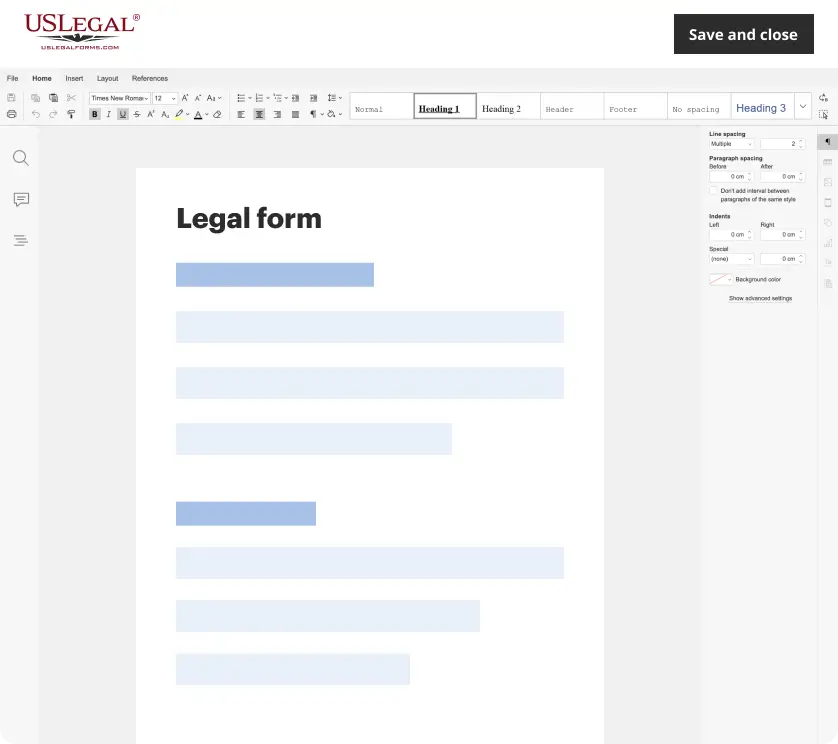
Make edits, fill in missing information, and update formatting in US Legal Forms—just like you would in MS Word.
Download a copy, print it, send it by email, or mail it via USPS—whatever works best for your next step.
Sign and collect signatures with our SignNow integration. Send to multiple recipients, set reminders, and more. Go Premium to unlock E-Sign.
If this form requires notarization, complete it online through a secure video call—no need to meet a notary in person or wait for an appointment.
We protect your documents and personal data by following strict security and privacy standards.
Looking for another form?







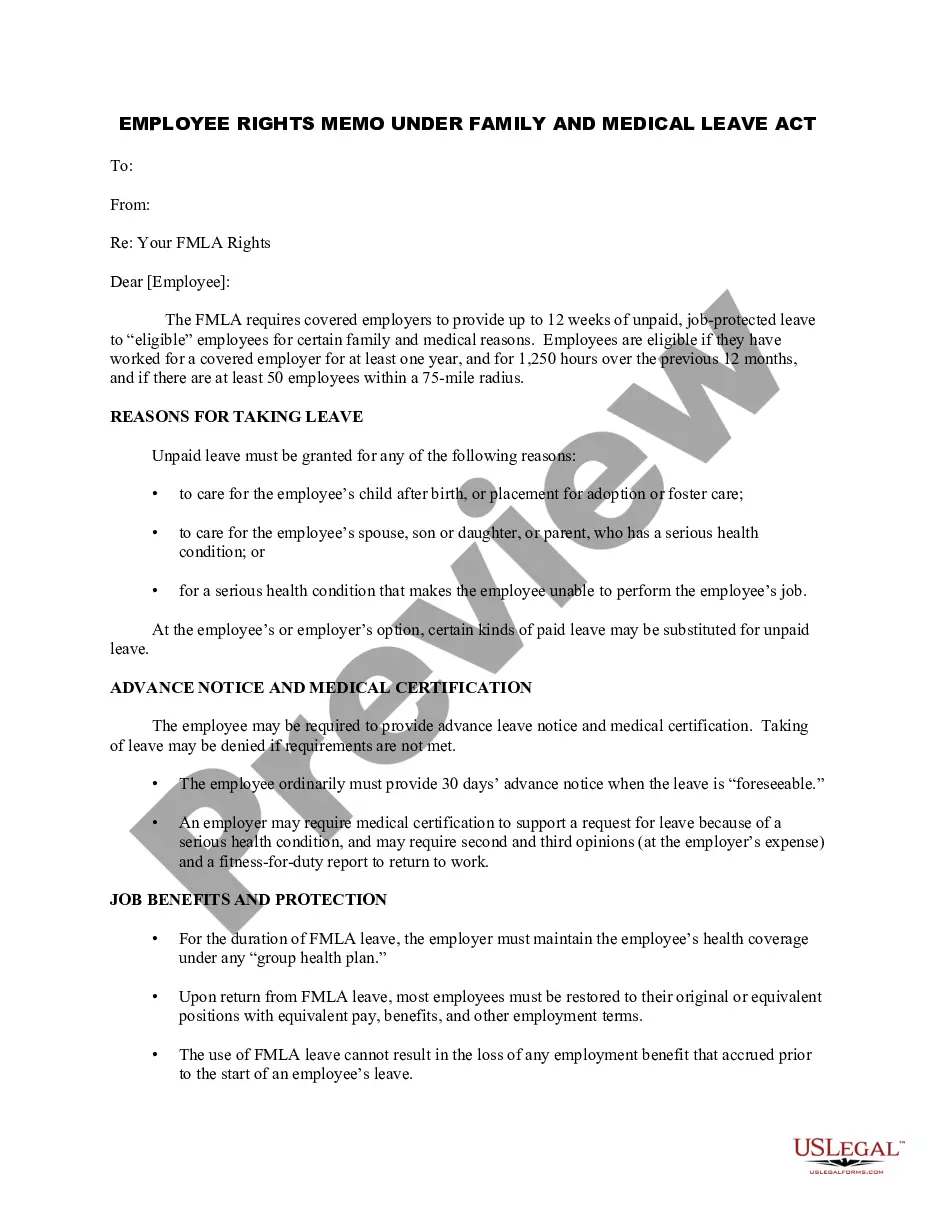
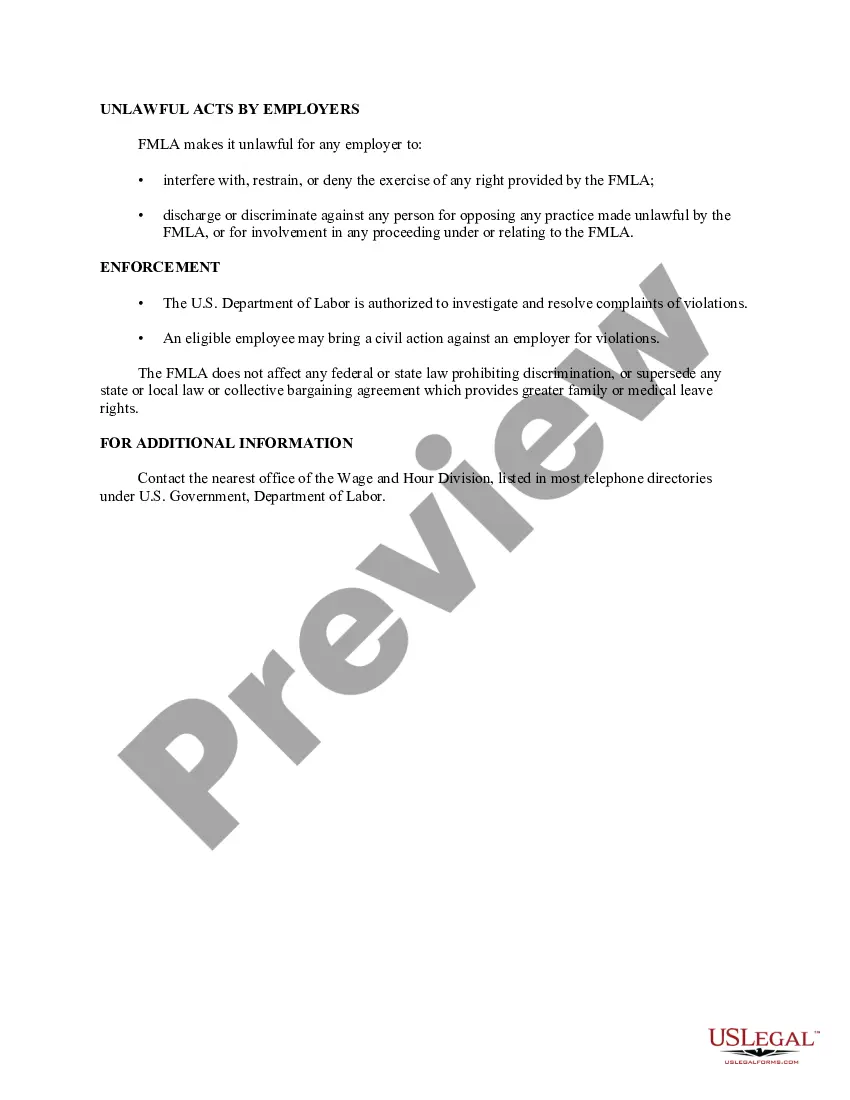
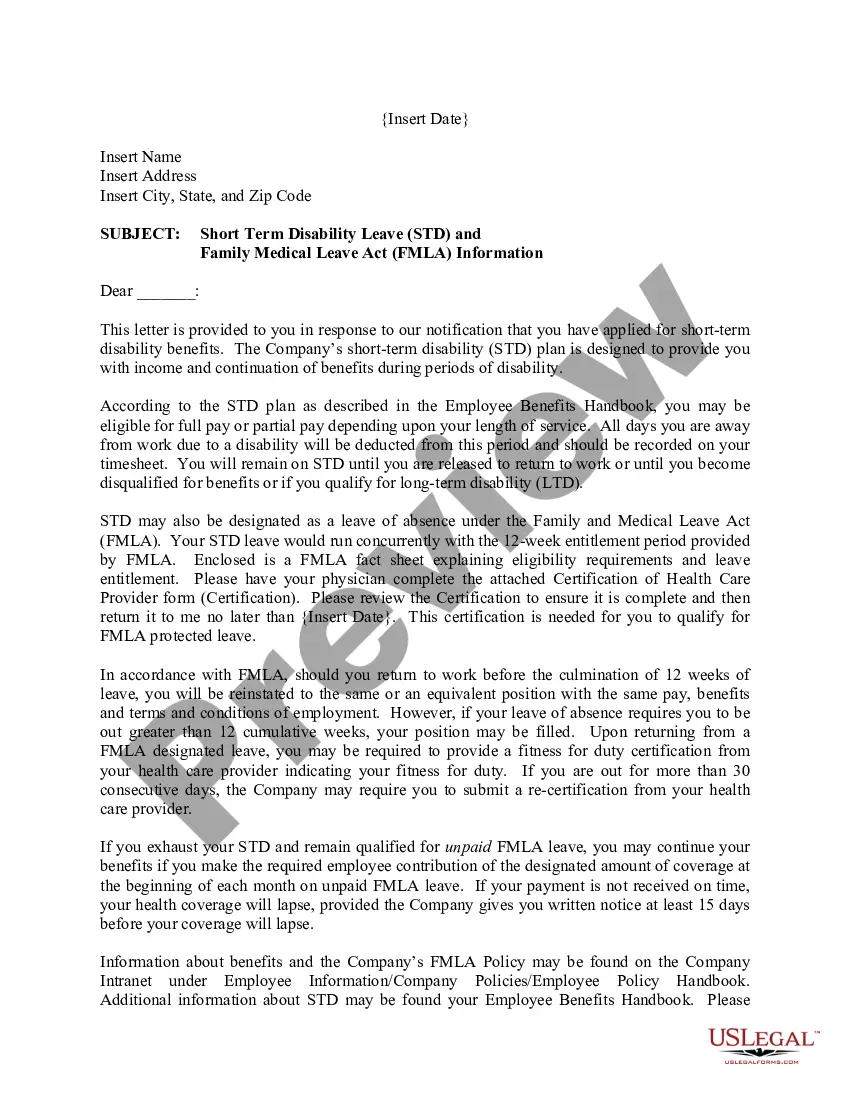
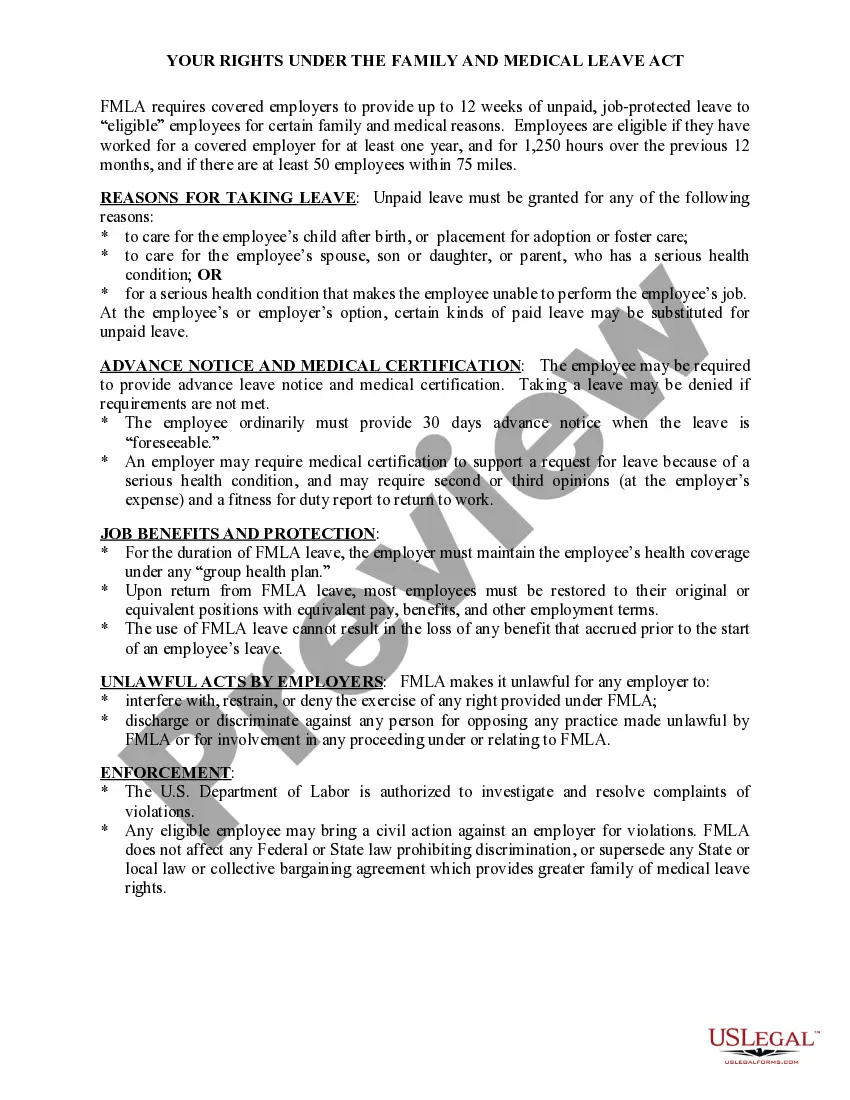
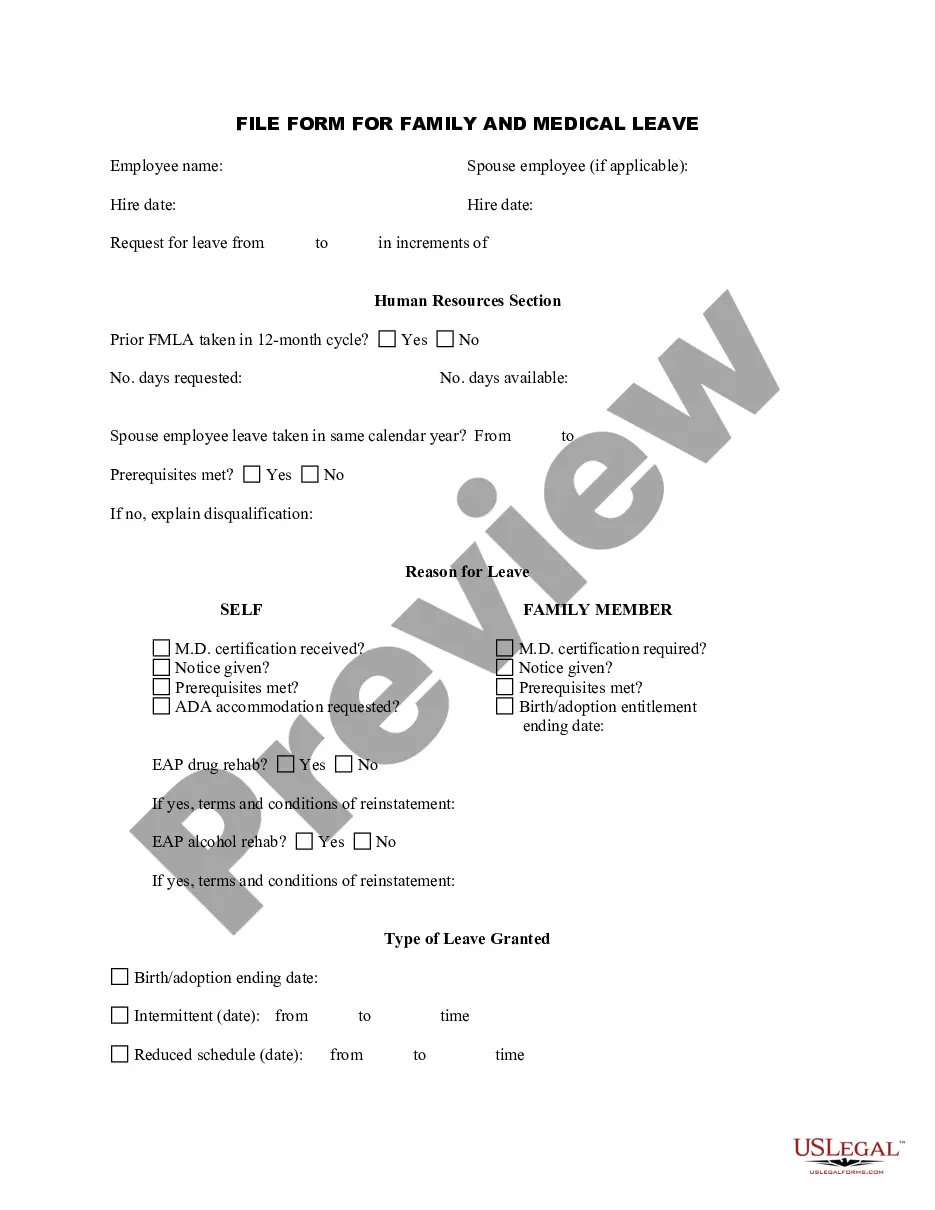
How to fill out Employee Rights Memo Under The Family And Medical Leave Act?
Regardless of whether for commercial activities or personal issues, everybody encounters legal matters at some stage in their existence. Filling out legal documents requires meticulous care, starting with choosing the appropriate form template.
For example, if you choose an incorrect version of an Fmla Eligibility For Remote Employees, it will be denied upon submission. Thus, it is essential to find a trustworthy source for legal documents like US Legal Forms.
With a comprehensive US Legal Forms catalog available, you need not waste time searching for the correct template online. Use the library’s straightforward navigation to find the suitable form for any scenario.
- Locate the template you require by utilizing the search box or catalog browsing.
- Review the form’s description to confirm it aligns with your situation, state, and county.
- Select the form’s preview to inspect it.
- If it is the incorrect document, revert to the search tool to find the Fmla Eligibility For Remote Employees sample you are looking for.
- Download the file if it meets your criteria.
- If you possess a US Legal Forms account, click Log in to access previously saved documents in My documents.
- If you do not have an account yet, you can download the form by selecting Buy now.
- Choose the appropriate payment option.
- Complete the account registration form.
- Select your payment method: you can use a credit card or PayPal account.
- Choose the file format you desire and download the Fmla Eligibility For Remote Employees.
- Once it is saved, you can fill out the form using editing software or print it and complete it manually.
Form popularity
FAQ
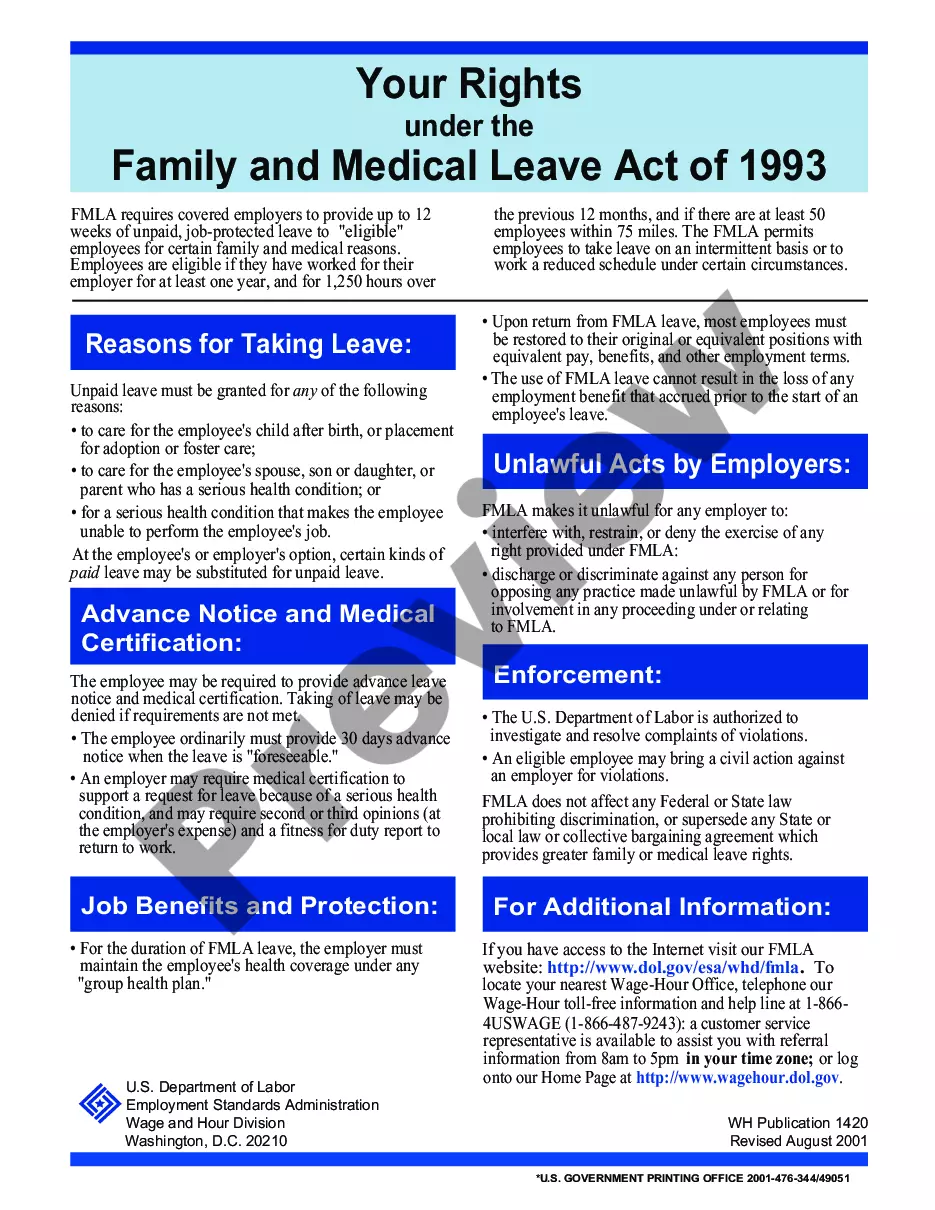
Yes, FMLA does apply to remote employees, provided they meet the eligibility criteria. This means that if you work for a covered employer and have worked at least 1,250 hours in the past year, you can access your rights under FMLA. Ensuring your FMLA eligibility for remote employees is vital for protecting your job while you address family or medical issues. Tools from USLegalForms can help clarify any uncertainties about your rights and paperwork.
The Family and Medical Leave Act (FMLA) applies to remote employees just as it does to in-office workers. When you qualify under FMLA eligibility for remote employees, you can take up to 12 weeks of unpaid leave for specific family and medical reasons. It's important to notify your employer and follow their procedures for requesting leave. Utilizing platforms like USLegalForms can simplify the process of understanding and applying for FMLA benefits.
Disqualification from FMLA may stem from various factors, including not fulfilling the hours or duration of employment requirements. Additionally, if your leave is not for a serious health condition or if your employer doesn’t meet the federal FMLA criteria, you may not be eligible. It’s advisable to clarify your situation and explore resources aimed at understanding FMLA eligibility for remote employees.
Individuals may not qualify for FMLA if they work for a small business that does not meet FMLA criteria or if their reason for leave does not align with FMLA provisions. Employees who are not at least part-time or lack tenure might also find themselves disqualified. Being informed about your FMLA eligibility for remote employees is essential for navigating these situations.
Employees who do not meet the eligibility requirements are not entitled to FMLA protections. This includes workers who have been with their employer for less than 12 months or who have not completed at least 1,250 hours of work in the past year. Understanding these criteria is vital to recognize FMLA eligibility for remote employees, as some may mistakenly believe they qualify.
For remote employees, FMLA provides the same protections as for in-office workers, permitting them to take leave for serious health concerns. However, it’s crucial to communicate with HR to confirm that your remote status meets the FMLA eligibility for remote employees. Keep in mind that documentation may be required to substantiate your leave request.
FMLA works similarly for remote employees as it does for on-site workers, but there are nuances. Remote employees must ensure they meet the eligibility criteria, such as hours worked and length of employment. Companies must also track remote work locations when assessing FMLA eligibility for remote employees, ensuring they comply with legal requirements.
The 50 75 rule refers to the requirement that employers must have at least 50 employees within a 75-mile radius to be subject to FMLA regulations. This means that if your employer does not meet these criteria, they are not obligated to provide FMLA benefits, impacting your FMLA eligibility for remote employees. If you're uncertain, it's a good idea to consult a professional or a platform like USLegalForms for guidance.
Certain employers are exempt from FMLA requirements. These include businesses with fewer than 50 employees within a 75-mile radius and federal government agencies. It's essential to verify if your employer falls into this category to determine your FMLA eligibility for remote employees, as it affects the rights you may have.
Employers may deny FMLA for several reasons, including lack of sufficient hours worked, failure to meet the 12-month employment requirement, or not qualifying under the FMLA criteria. Additionally, if the reason for leave does not meet the definition of a serious health condition, an employer may deny the request. Understanding FMLA eligibility for remote employees is crucial, as remote work may impact how these terms apply.