Harassment Work
Description
Get your form ready online
Our built-in tools help you complete, sign, share, and store your documents in one place.
Make edits, fill in missing information, and update formatting in US Legal Forms—just like you would in MS Word.
Download a copy, print it, send it by email, or mail it via USPS—whatever works best for your next step.
Sign and collect signatures with our SignNow integration. Send to multiple recipients, set reminders, and more. Go Premium to unlock E-Sign.
If this form requires notarization, complete it online through a secure video call—no need to meet a notary in person or wait for an appointment.
We protect your documents and personal data by following strict security and privacy standards.

Make edits, fill in missing information, and update formatting in US Legal Forms—just like you would in MS Word.

Download a copy, print it, send it by email, or mail it via USPS—whatever works best for your next step.

Sign and collect signatures with our SignNow integration. Send to multiple recipients, set reminders, and more. Go Premium to unlock E-Sign.

If this form requires notarization, complete it online through a secure video call—no need to meet a notary in person or wait for an appointment.

We protect your documents and personal data by following strict security and privacy standards.
Looking for another form?

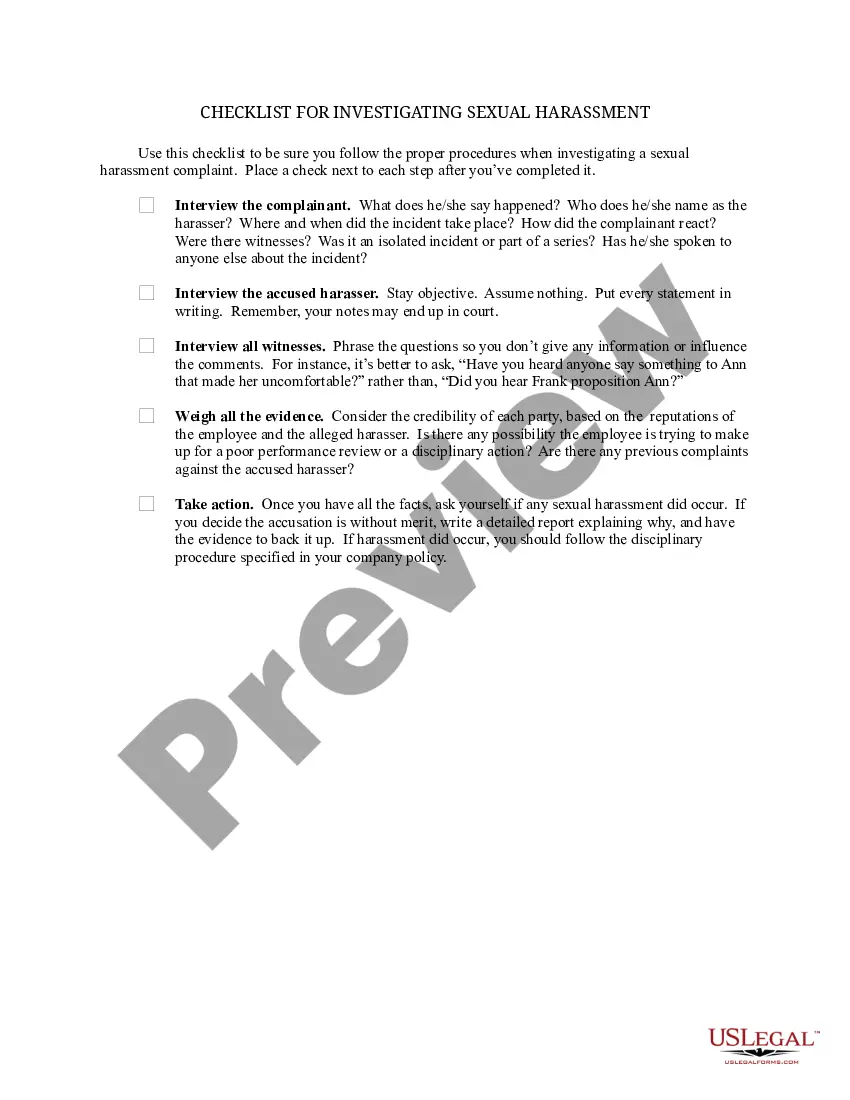
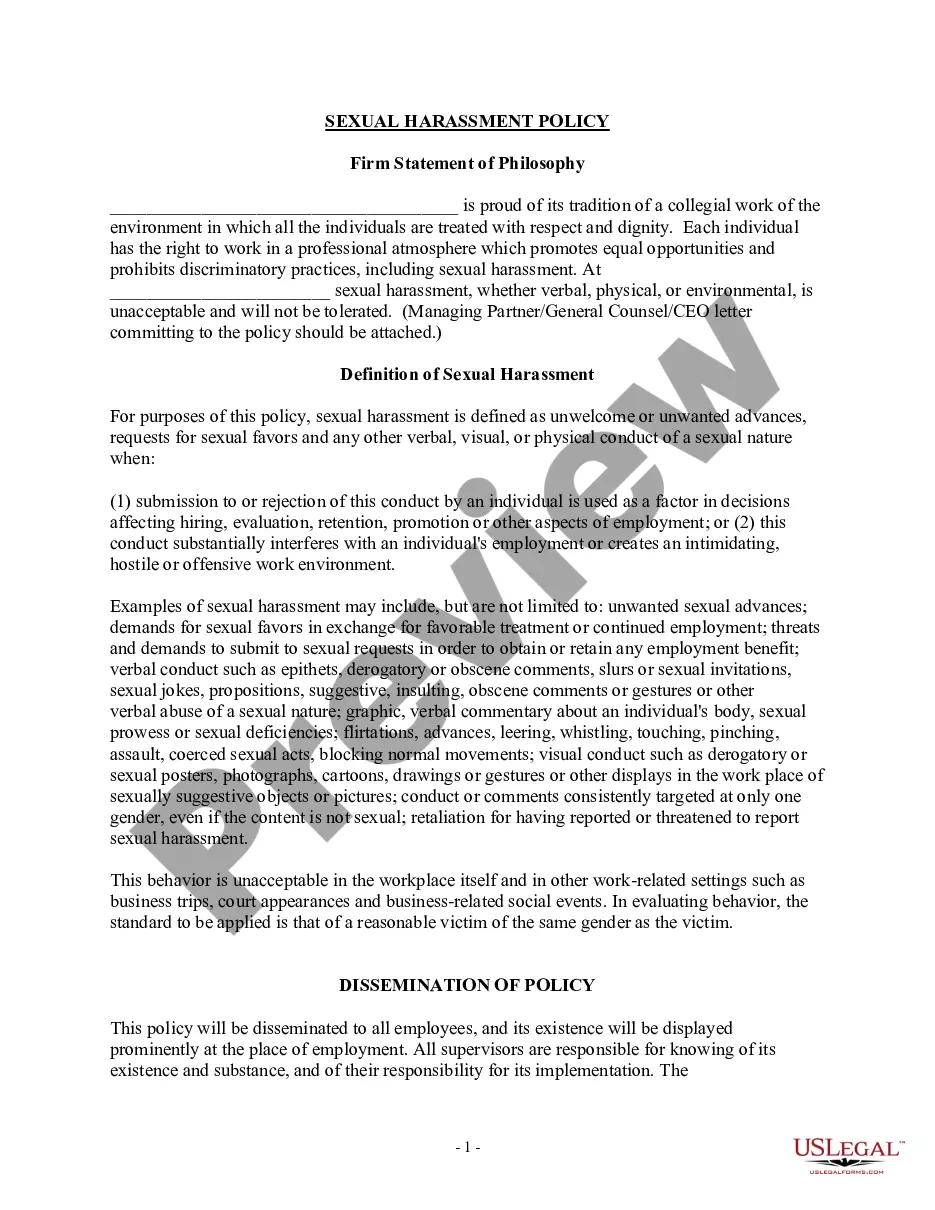
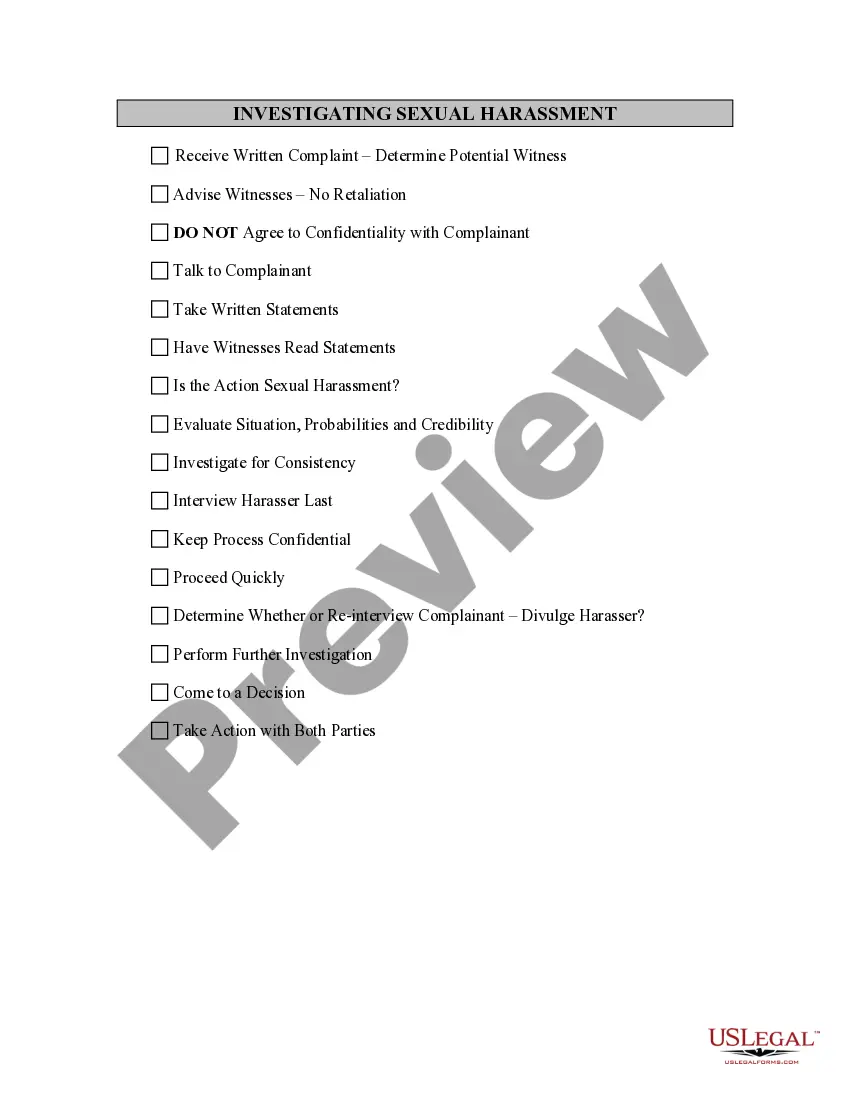
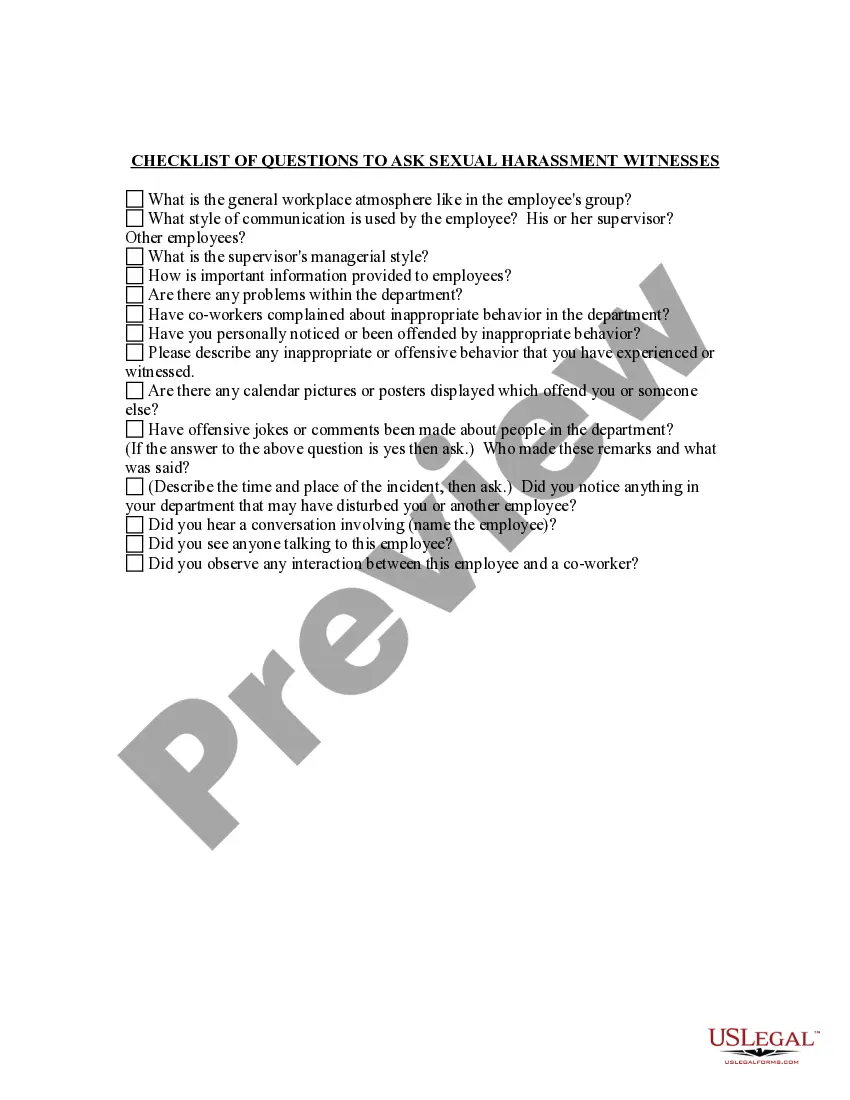
How to fill out Checklist For Investigation Sexual Harassment - Workplace?
- If you're a returning user, log in to your account and download the needed harassment work form by clicking the Download button. Ensure that your subscription is active; if it's not, renew it before proceeding.
- For first-time users, begin by reviewing the Preview mode and the form description to confirm you've selected the right document for your needs and it complies with local jurisdiction requirements.
- If necessary, utilize the Search tab to locate a different template if you find any discrepancies or if the initial choice isn't suitable.
- Proceed to purchase the document by clicking on the Buy Now button. Choose your preferred subscription plan and register an account to access the full library.
- Complete your purchase by entering your credit card details or using your PayPal account for payment.
- Download the form and save it to your device for easy access later. You can also find it in the My Forms section of your profile at any time.
Utilizing US Legal Forms not only provides access to a vast collection of templates but also connects users with premium experts who assist in form completion, ensuring accuracy and compliance.
Don't hesitate to take advantage of this resource! Start your journey today and take control of your legal documentation for harassment work.
Form popularity
FAQ
Writing a harassment statement requires clarity and detail to convey your experiences effectively. Begin by outlining the incidents, including dates, locations, and any witnesses. Use straightforward language and describe how the behavior affected your work environment. This statement will help HR understand the seriousness of the situation, enabling them to take appropriate action.
To tell HR about harassment work, it is best to prepare by documenting your experiences with specific details. Approach HR in a private setting where you feel comfortable discussing the issue. Clearly explain the incidents and provide any evidence if available. HR is there to help you, so be honest and straightforward about your concerns.
Supervisors play a vital role in addressing harassment work complaints effectively. They are expected to listen to employees, provide guidance, and escalate issues to HR when necessary. It’s important for supervisors to model respectful behavior and set a standard for their teams. By taking harassment seriously, they contribute to a positive workplace culture.
Managers indeed have a responsibility to report harassment work incidents that they witness or hear about. This requirement is part of their role to ensure a healthy and productive work atmosphere. When managers act on reported harassment, it demonstrates their commitment to employee wellbeing and upholds company standards. By reporting, they also protect the organization from potential legal issues.
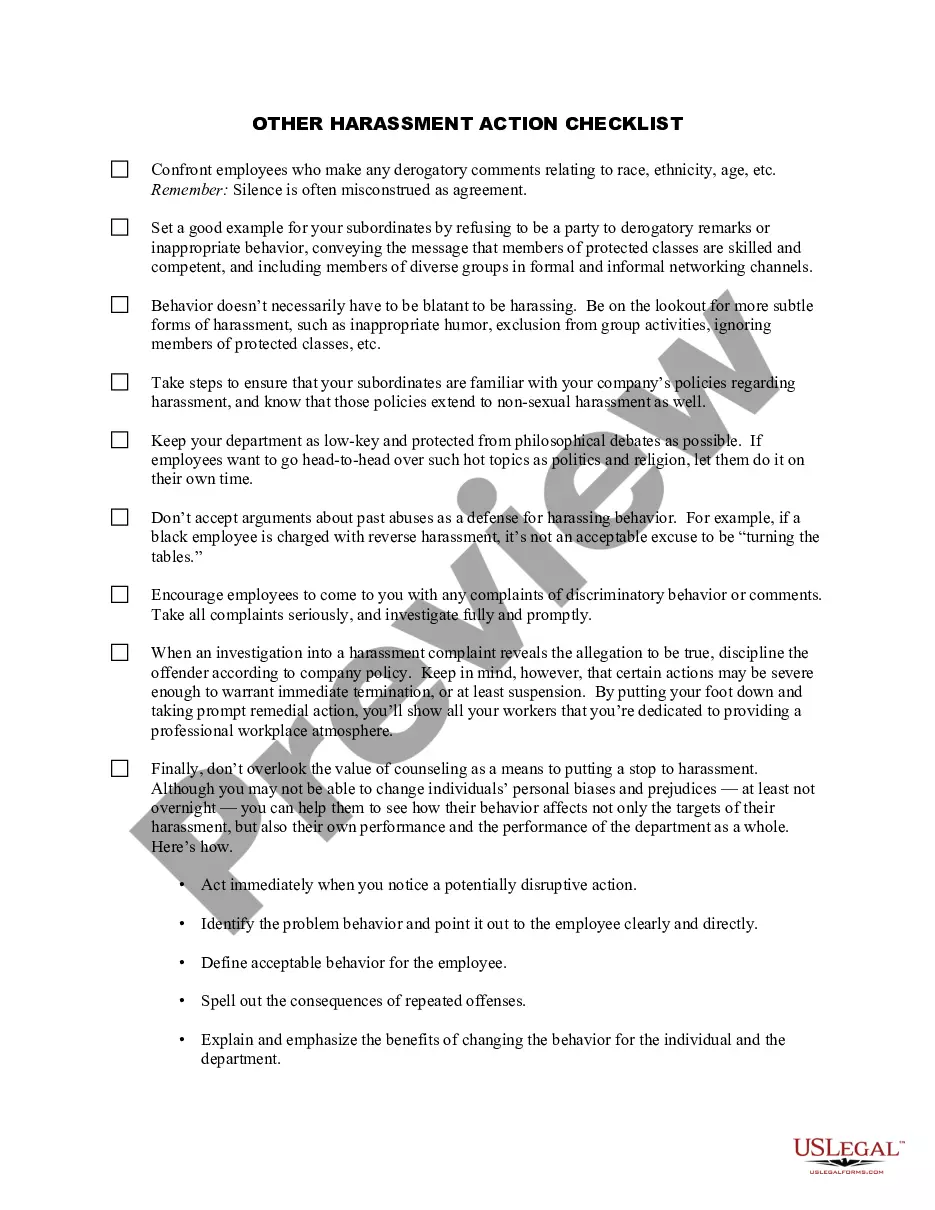
Human Resources (HR) plays a crucial role in handling harassment work complaints. They typically investigate the incidents, gather evidence, and determine the appropriate actions to take. HR also provides support to victims by guiding them through the reporting process and ensuring that they feel safe and heard. Their goal is to maintain a respectful work environment and enforce company policies.
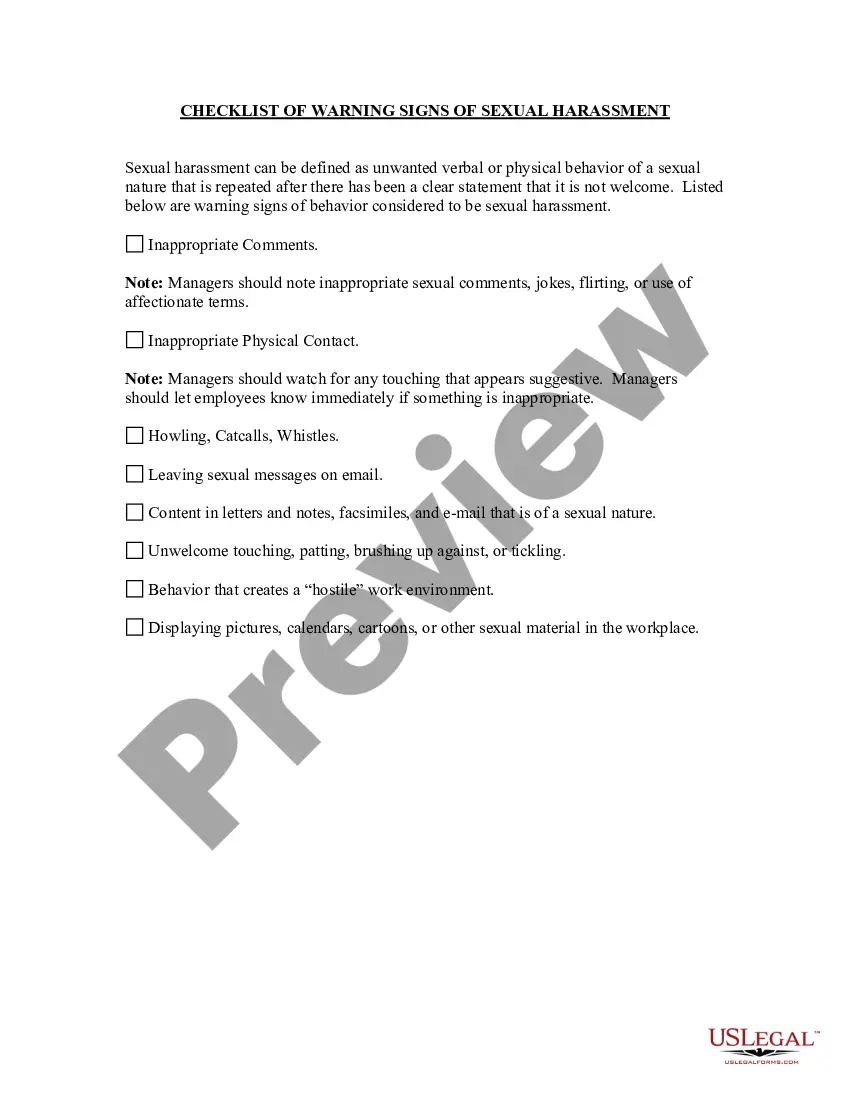
Workplace harassment includes any unwelcome behavior that creates a hostile environment for employees. This can encompass verbal comments, physical acts, or even digital communication that degrades or intimidates someone. Understanding what constitutes harassment work is essential for both employees and employers to foster a safe workplace. Any repeated and offensive behavior should be considered seriously.
Yes, managers have a duty to report any incidents of harassment work they become aware of. This obligation ensures that the workplace remains safe and supportive. By taking prompt action, managers help to address the issue effectively and protect the employees involved. Ignoring such incidents can lead to a toxic atmosphere and possible legal consequences.
Certain actions, such as casual disagreements, constructive criticism, or differences in opinion at work, typically do not constitute harassment. These instances often fall within the realm of workplace interactions. Understanding these distinctions can help clarify what truly qualifies as harassment work, focusing on tangible negative behaviors.
Harassment can manifest in three primary forms: verbal, physical, and psychological. Verbal harassment includes slurs and insults, while physical harassment involves any unwanted physical contact. Psychological harassment may entail manipulation or threats, all of which necessitate a strong response from victims.
Harassment can include various negative behaviors, such as stalking, persistent unwanted communication, or derogatory remarks. These actions can create significant emotional distress and clearly fall within the boundaries of harassment work. Recognizing such offenses is vital for obtaining necessary support and guidance.