Harassment With Malicious Intent
Description
Get your form ready online
Our built-in tools help you complete, sign, share, and store your documents in one place.
Make edits, fill in missing information, and update formatting in US Legal Forms—just like you would in MS Word.
Download a copy, print it, send it by email, or mail it via USPS—whatever works best for your next step.
Sign and collect signatures with our SignNow integration. Send to multiple recipients, set reminders, and more. Go Premium to unlock E-Sign.
If this form requires notarization, complete it online through a secure video call—no need to meet a notary in person or wait for an appointment.
We protect your documents and personal data by following strict security and privacy standards.

Make edits, fill in missing information, and update formatting in US Legal Forms—just like you would in MS Word.

Download a copy, print it, send it by email, or mail it via USPS—whatever works best for your next step.

Sign and collect signatures with our SignNow integration. Send to multiple recipients, set reminders, and more. Go Premium to unlock E-Sign.

If this form requires notarization, complete it online through a secure video call—no need to meet a notary in person or wait for an appointment.

We protect your documents and personal data by following strict security and privacy standards.
Looking for another form?







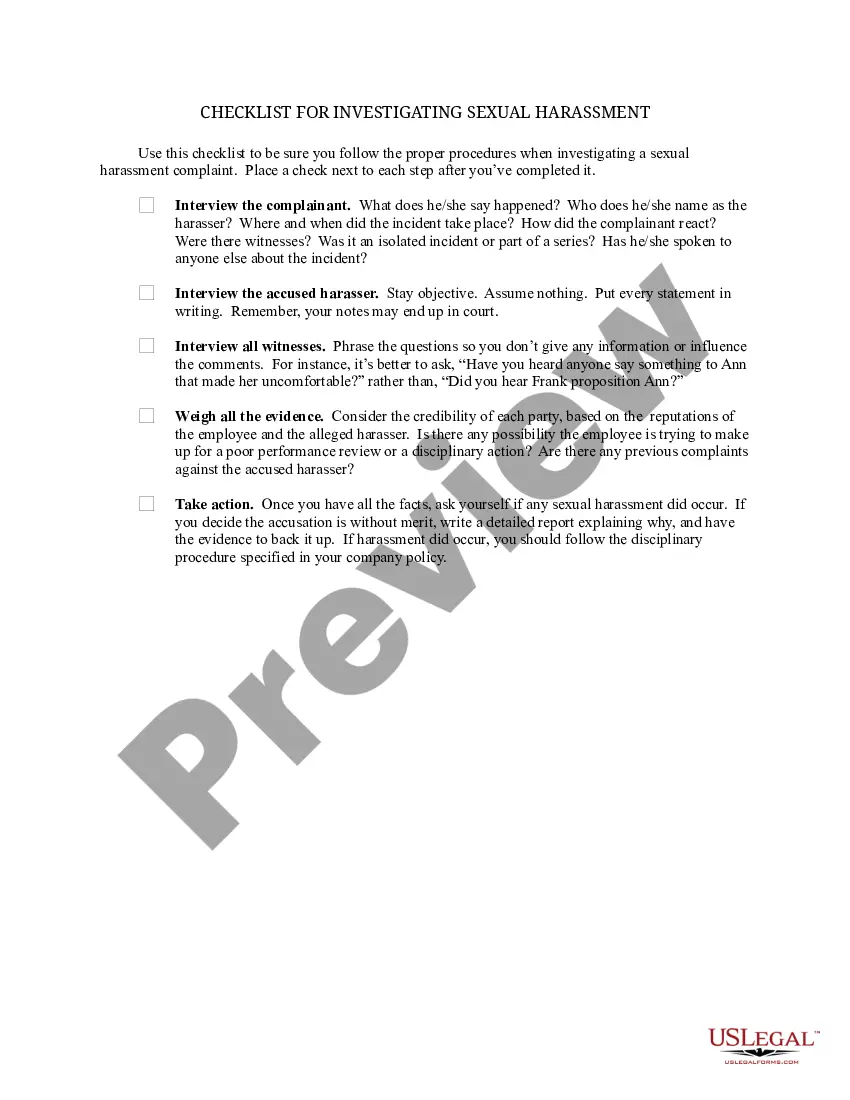
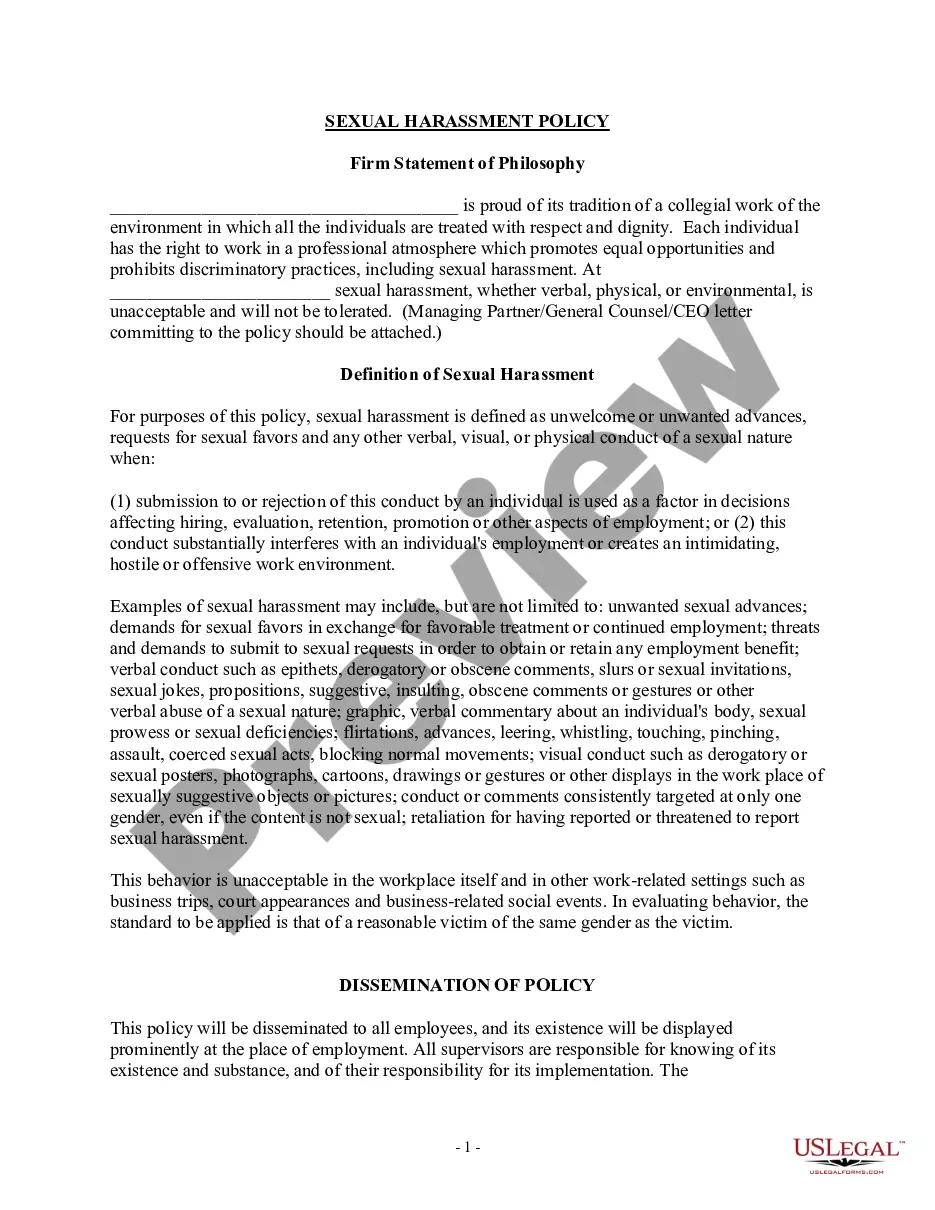
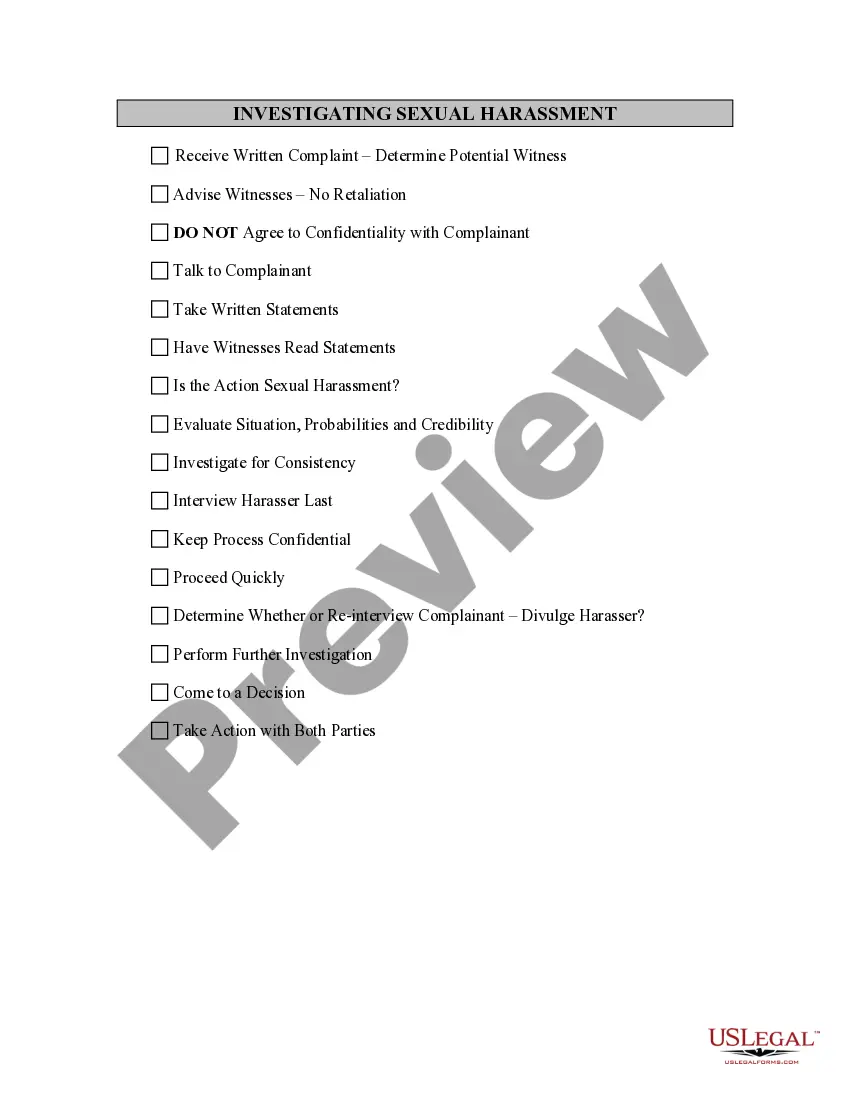
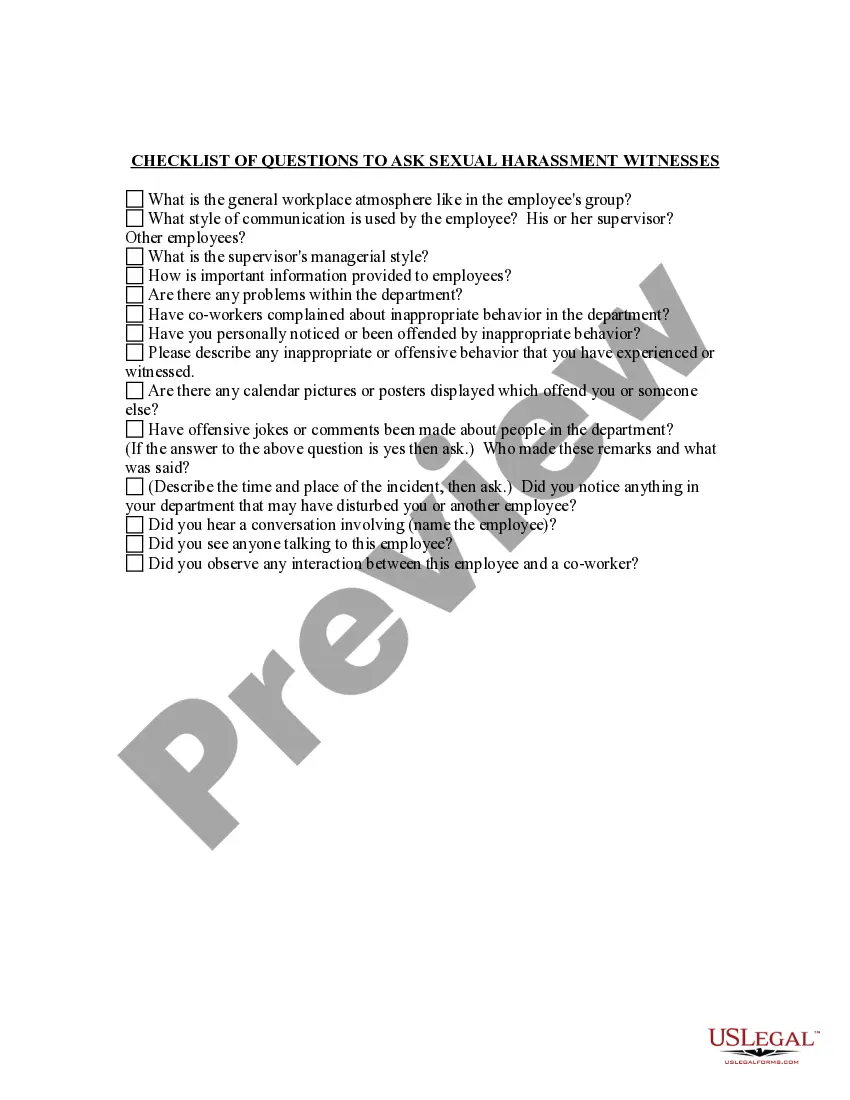
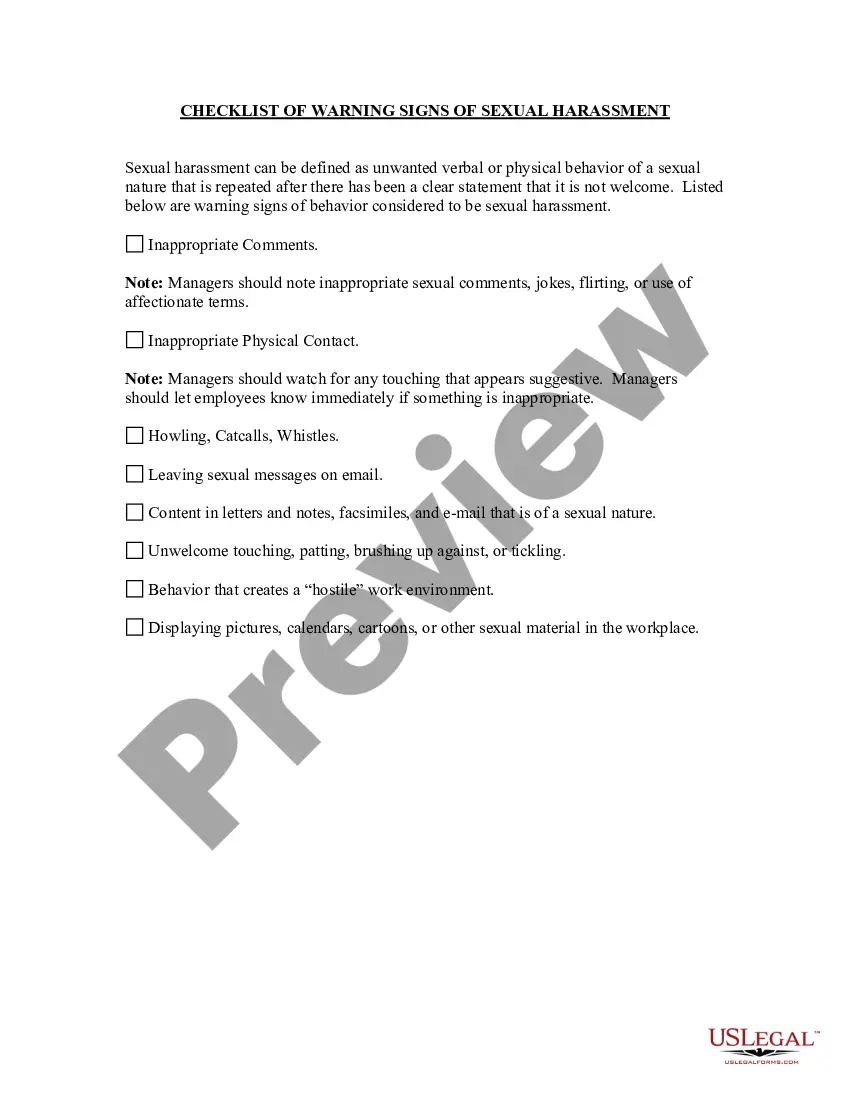
How to fill out Checklist For Investigation Sexual Harassment - Workplace?
- Log into your account on US Legal Forms if you're already a member, and click the Download button to retrieve your desired form template. Confirm your subscription is active.
- If you are new to US Legal Forms, start by exploring the Preview mode to review the form descriptions. Make sure to select the correct document that aligns with your needs and local regulations.
- If the first form you view doesn’t suit your needs, use the Search tab to find another template that fits your requirements. Once you've identified the appropriate form, proceed to the next step.
- Next, click on the Buy Now button and select the subscription plan that works best for you. You'll need to create an account to gain access to the extensive library of forms.
- Complete your purchase by entering your credit card information or utilizing your PayPal account.
- Finally, download the form to your device. This allows you to work on it at your convenience, and you can also access it anytime from the My Forms section of your profile.
Once you've acquired your document through US Legal Forms, you can confidently address the issues of harassment with malicious intent. The platform ensures that every form is legally sound and easy to complete, saving you time and effort.
Don’t hesitate—take action now by visiting US Legal Forms to protect yourself and navigate your legal needs effectively.
Form popularity
FAQ
Behaviors classified as harassment with malicious intent vary widely and can include persistent unwanted communication, threats, stalking, or other forms of intimidation. This can also involve spreading rumors or engaging in actions that degrade or humiliate the targeted individual. Understanding these behaviors is essential for recognizing the seriousness of harassment. For those facing such challenges, platforms like uslegalforms can provide necessary legal support and guidance.
To classify an act as harassment with malicious intent, four elements must generally be present: firstly, the behavior must be unwelcome; secondly, it should create a hostile or intimidating environment; thirdly, there must be a clear connection to the targeted individual; and finally, the act must be intentional. Each element serves to establish the nature and severity of the behavior. A thorough understanding of these components can help individuals recognize legitimate cases of harassment.
There are behaviors that may seem aggressive but do not qualify as harassment with malicious intent. For instance, a heated disagreement among peers can simply reflect differing opinions rather than malicious intent. Additionally, a single rude comment, if not repeated, may not be labeled as harassment. Lastly, innocent mistakes in communication can occur without any intent to harm, making them exceptions as well.
Yes, reporting harassment with malicious intent is crucial. It not only protects you but also helps to prevent future incidents. By bringing attention to such behavior, you contribute to a safer environment for everyone. Additionally, your report can prompt necessary actions, ensuring that perpetrators are held accountable for their actions.
Harassment with malicious intent can take various forms, primarily including verbal, physical, and sexual harassment. Verbal harassment involves the use of threatening or abusive language. Physical harassment includes unwanted physical contact, while sexual harassment can encompass unwanted advances or inappropriate behavior. Each form is designed to intimidate or harm, emphasizing the importance of understanding these behaviors.
Harassment with malicious intent involves actions that cause distress or harm to another person. This can include unwelcome comments, threats, or persistent unwanted attention aimed at intimidating or distressing someone. For behavior to qualify as harassment, it must demonstrate a clear intent to cause discomfort or fear. Understanding this definition helps you recognize your rights and the legal implications of such actions.
A crime with malicious intent involves actions taken deliberately to cause harm or suffering to another person. Such crimes include harassment with malicious intent, where the perpetrator consciously aims to torment or intimidate the victim. Legal systems recognize that malicious intent can escalate the severity of charges and penalties. If you believe you are a victim of such behavior, seeking legal support can help you understand your rights and potential remedies.
In a harassment case involving malicious intent, the burden of proof lies with the victim. They must demonstrate that the harassment occurred and that it was executed with the intent to inflict harm. Typically, this involves providing evidence such as messages, witness testimonies, or documentation of the behavior. To effectively navigate the complexities of harassment with malicious intent, victims often find value in using platforms like US Legal Forms for legal guidance.
Yes, intent plays a crucial role in cases of harassment with malicious intent. To establish harassment, it's important to show that the person acted with the intention to harm, intimidate, or annoy another individual. Courts typically evaluate the perpetrator's actions and intentions to determine the nature of the behavior. Therefore, if someone engages in harassment with malicious intent, it significantly affects the legal outcomes.
Malicious harassment involves targeting someone with the intent to cause distress or harm. This can include actions like spreading false rumors, making threats, or engaging in catfishing tactics. Understanding these behaviors is essential for individuals facing such challenges. If you encounter malicious harassment, utilizing platforms like US Legal Forms can assist you in creating formal documentation for your case.