Good Interview Questions For Students
Description
Get your form ready online
Our built-in tools help you complete, sign, share, and store your documents in one place.
Make edits, fill in missing information, and update formatting in US Legal Forms—just like you would in MS Word.
Download a copy, print it, send it by email, or mail it via USPS—whatever works best for your next step.
Sign and collect signatures with our SignNow integration. Send to multiple recipients, set reminders, and more. Go Premium to unlock E-Sign.
If this form requires notarization, complete it online through a secure video call—no need to meet a notary in person or wait for an appointment.
We protect your documents and personal data by following strict security and privacy standards.

Make edits, fill in missing information, and update formatting in US Legal Forms—just like you would in MS Word.

Download a copy, print it, send it by email, or mail it via USPS—whatever works best for your next step.

Sign and collect signatures with our SignNow integration. Send to multiple recipients, set reminders, and more. Go Premium to unlock E-Sign.

If this form requires notarization, complete it online through a secure video call—no need to meet a notary in person or wait for an appointment.

We protect your documents and personal data by following strict security and privacy standards.
Looking for another form?
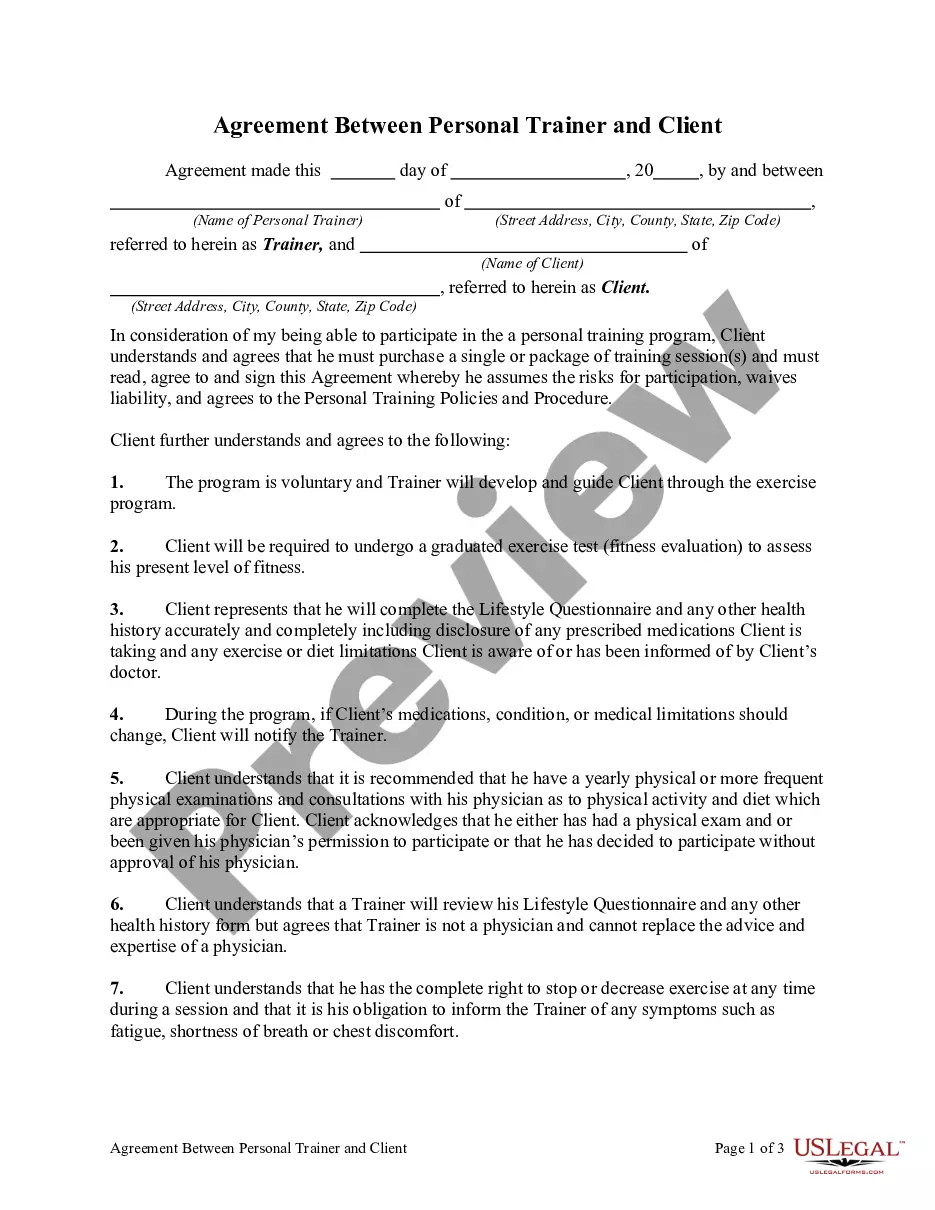





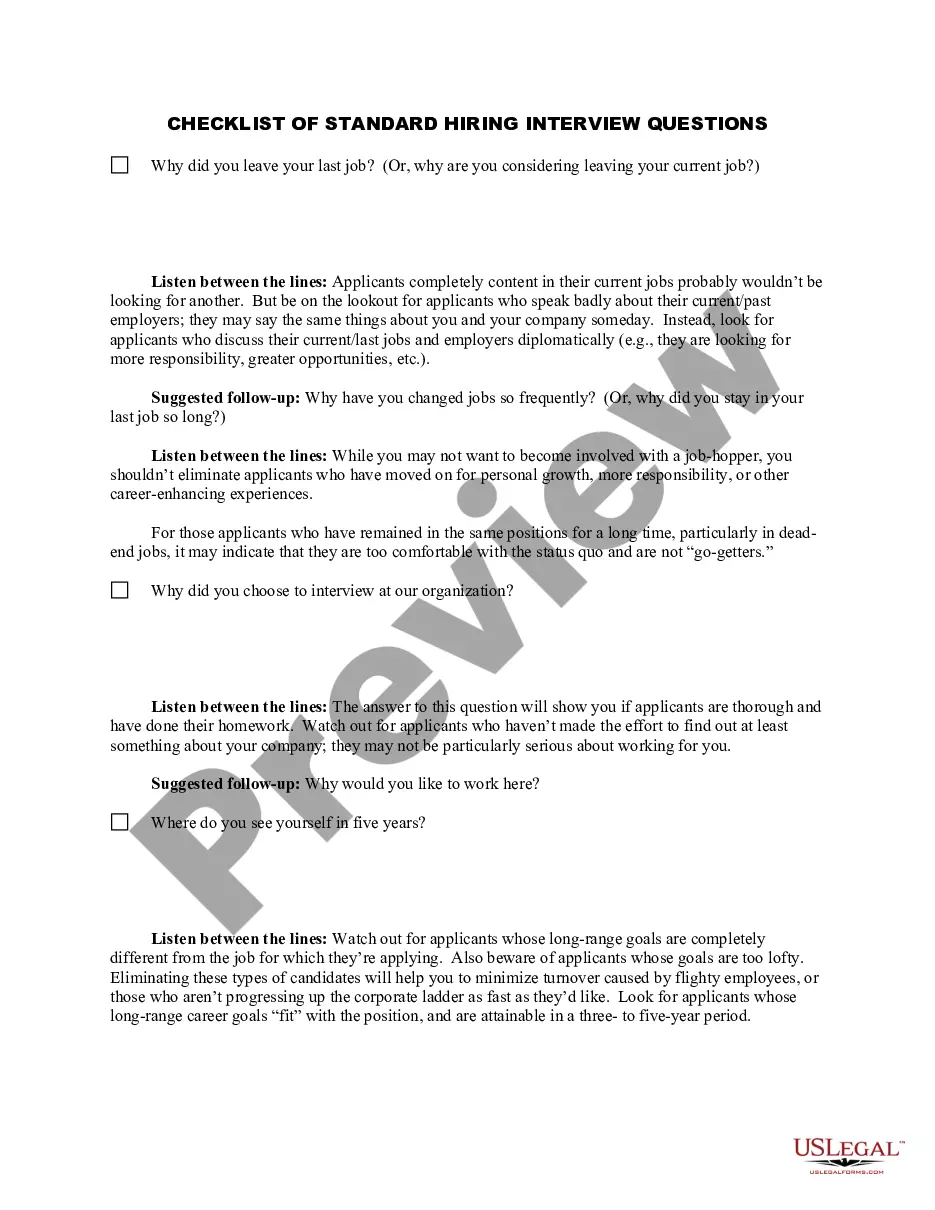
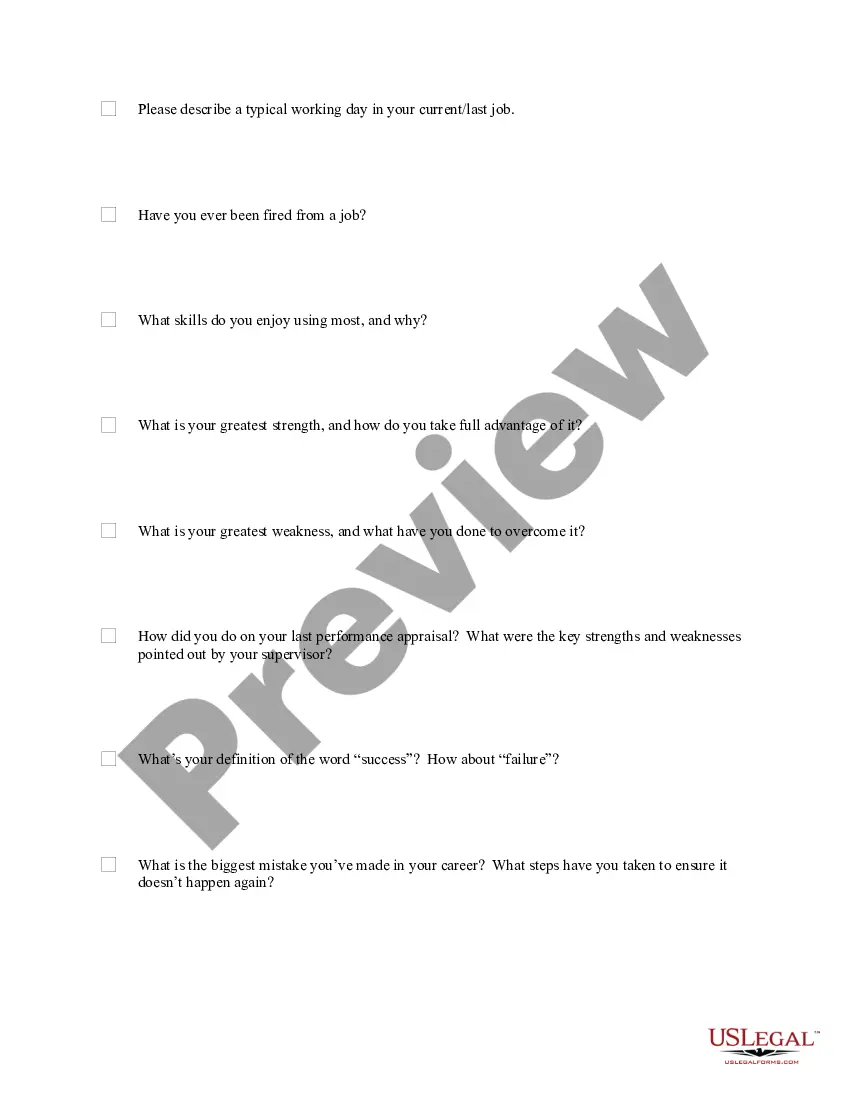
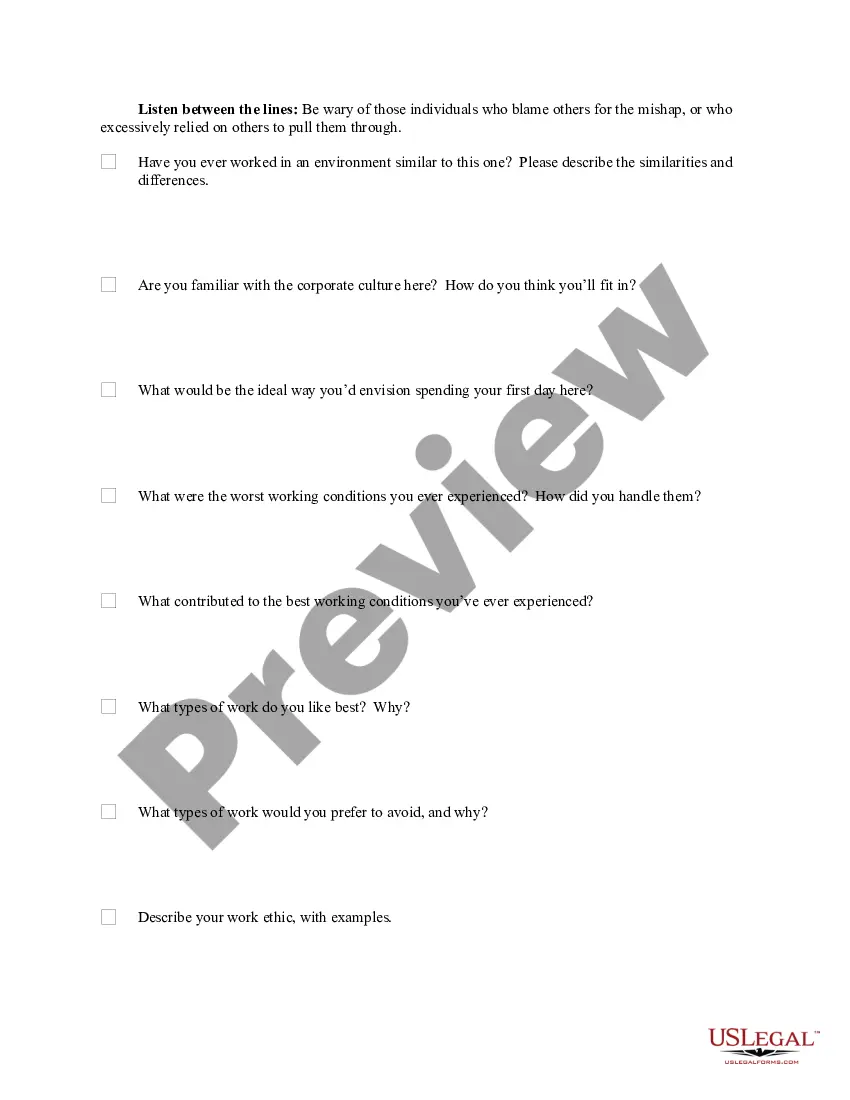
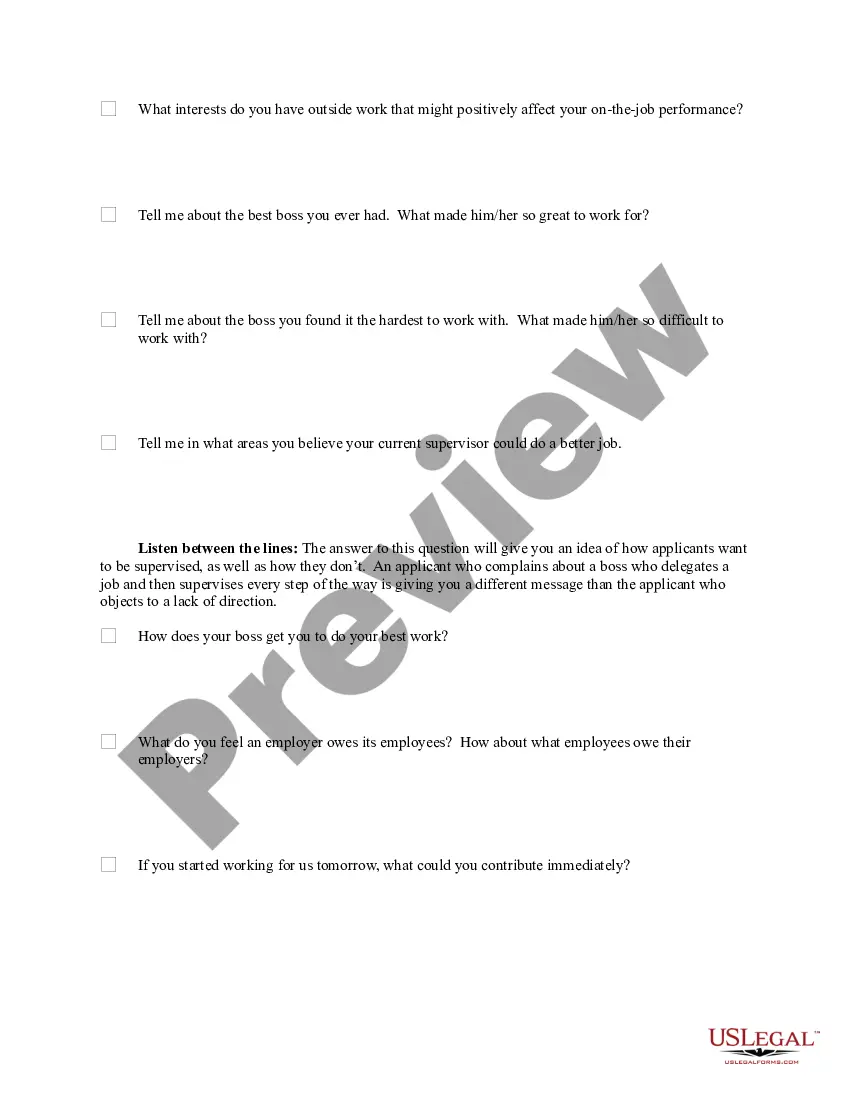
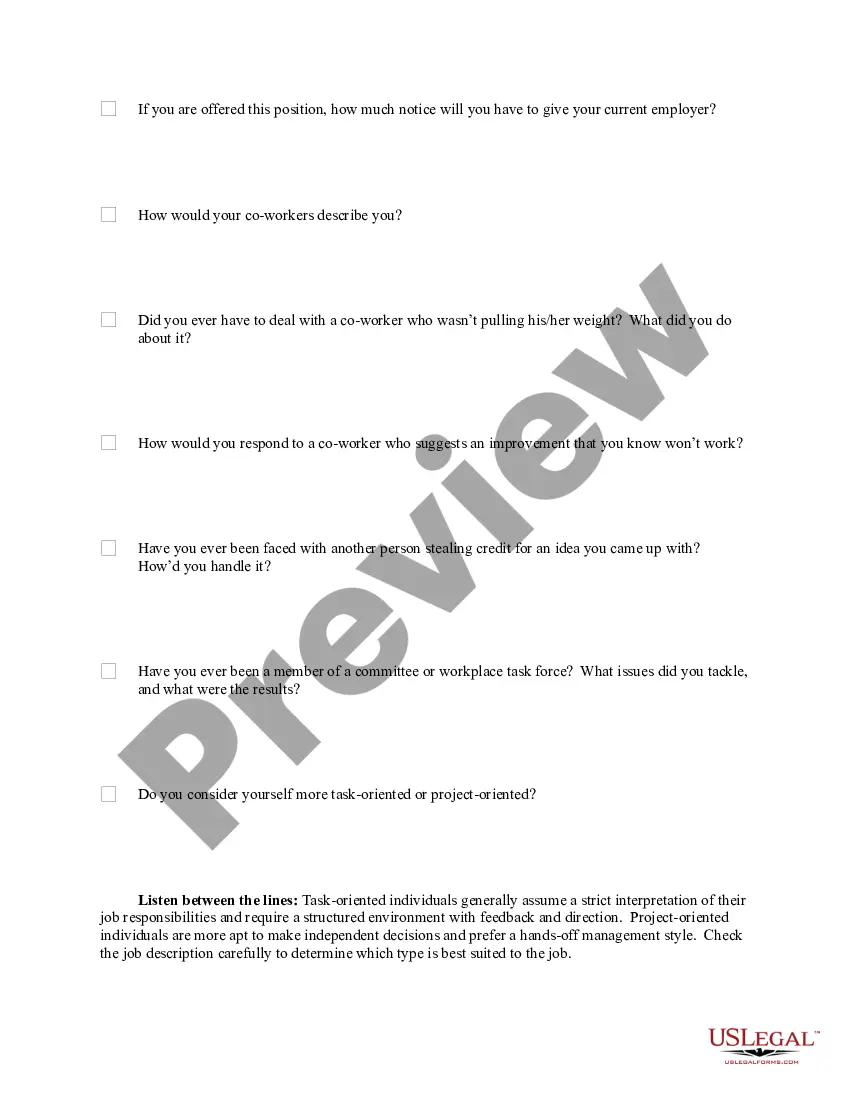
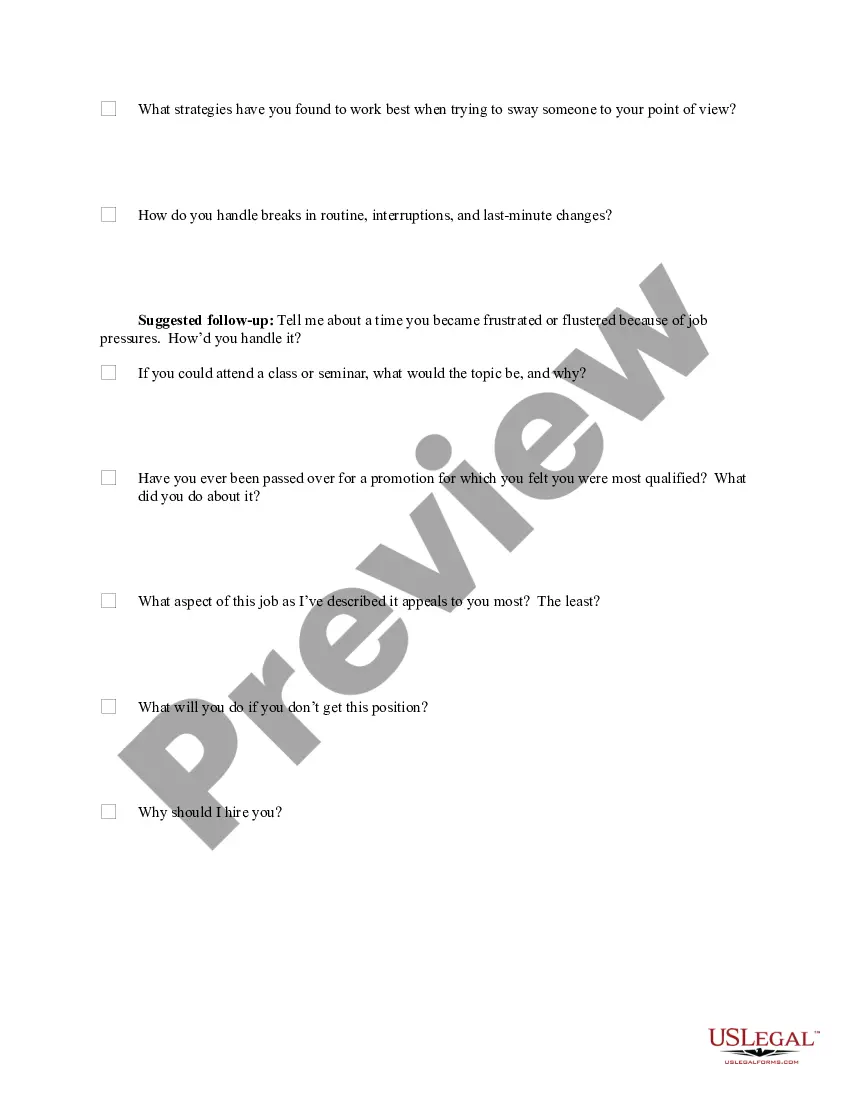
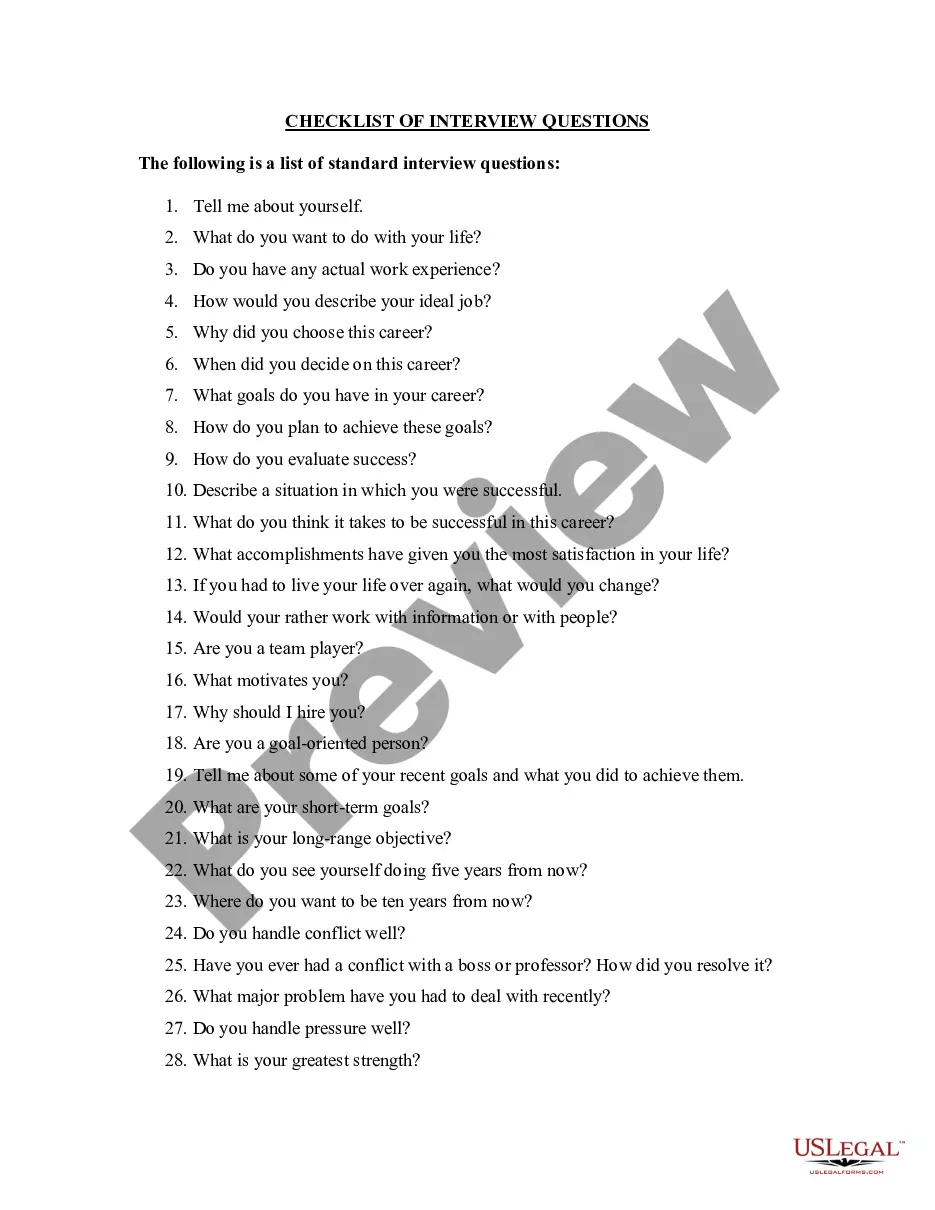
How to fill out Checklist Of Standard Hiring Interview Questions With Listening Tips And Suggested Follow-up Questions?
- Log into your account if you're an existing user. Ensure your subscription is active, and download the desired form template directly to your device.
- For new users, start by previewing the form descriptions to select one that fits your needs and complies with local jurisdiction requirements.
- If the selected form isn't suitable, utilize the Search feature to explore additional templates until you find one that meets your specifications.
- Once you've chosen the correct document, click on the 'Buy Now' button and select your preferred subscription plan. You will need to create an account to access the extensive resources available.
- Complete your purchase by entering your payment details through credit card or PayPal.
- After the transaction is complete, download the form to save it on your device. You can also access it later via the 'My Forms' section in your profile.
Utilizing US Legal Forms is a straightforward way to manage your legal document needs. The extensive collection ensures you find the right forms at competitive prices, making it a valuable tool for both individuals and professionals.
Start optimizing your legal form process today with US Legal Forms—secure your subscription and gain access to the legal resources you need!
Form popularity
FAQ
The P's of interviewing skills comprise preparedness, presentation, persistence, poise, and politeness. Preparedness highlights the importance of understanding the role you are pursuing and the company culture. Presentation relates to how you articulate your experiences and strengths. Persistence through follow-up can set you apart, while poise ensures you maintain composure under pressure. Politeness is key in creating a positive impression. Using good interview questions for students aligns with these skills and can foster a constructive dialogue.
The 5 P's of an interview are purpose, planning, practice, performance, and follow-up. Establishing purpose sets the tone for the interview. Effective planning includes preparing both questions to ask and answers to potential questions. Practice refines your delivery and builds confidence. Ensuring strong performance during the interview means staying calm and engaged, while thoughtful follow-up reinforces your interest. Incorporating good interview questions for students throughout these P's can lead to a successful outcome.
The 5 P's of interviewing include preparation, perspective, presentation, participation, and professionalism. Preparation involves researching the role and organization, while perspective helps you understand the interviewer's viewpoint. Presentation refers to your personal branding and how you communicate your qualifications. Participation emphasizes active engagement during the interview, making it a two-way conversation. Using good interview questions for students can greatly enhance each of these P's.
A solid survey can include good interview questions for students such as: 'What subjects do you find most challenging?' or 'How do you prefer to receive feedback on your work?' Other questions could encompass their thoughts on school resources or extracurricular activities. These questions help educators understand student needs and improve the learning environment.
To gather meaningful insights, good interview questions for students may include queries about their study habits and time management strategies. You could ask how they feel about group projects and their role in teamwork. Additionally, inquiring about their future aspirations can reveal their ambitions and values, making the conversation more engaging.
Good interview questions for students typically focus on their interests, experiences, and goals. Consider asking about their favorite subjects in school and why they inspire them. You might also want to know how they approach challenges in their studies. These types of questions provide insights into their thought processes and motivations.
The 5Cs of interviewing encompass clarity, communication, consistency, connection, and curiosity. These components are essential for crafting good interview questions for students. Clarity aids in establishing a mutual understanding, while communication facilitates a smooth dialogue. By focusing on these aspects, interviewers can better assess student capabilities and fit within the organization.
The 3Cs of interviewing are comprehension, credibility, and character. These core elements serve as a guide when formulating good interview questions for students. Comprehension helps in assessing how well students understand the position and expectations. Credibility and character reflect the student's integrity and can influence the interviewer’s perception significantly.
The 5Cs of interviewing include clarity, confidence, curiosity, communication, and connection. When preparing good interview questions for students, consider how these elements help shape a positive interview experience. Clarity ensures that interviewers and candidates understand each other. Confidence allows students to feel self-assured and authentic during their responses.