Business Taxes For Dummies
Description


Get your form ready online
Our built-in tools help you complete, sign, share, and store your documents in one place.
Make edits, fill in missing information, and update formatting in US Legal Forms—just like you would in MS Word.
Download a copy, print it, send it by email, or mail it via USPS—whatever works best for your next step.
Sign and collect signatures with our SignNow integration. Send to multiple recipients, set reminders, and more. Go Premium to unlock E-Sign.
If this form requires notarization, complete it online through a secure video call—no need to meet a notary in person or wait for an appointment.
We protect your documents and personal data by following strict security and privacy standards.

Make edits, fill in missing information, and update formatting in US Legal Forms—just like you would in MS Word.

Download a copy, print it, send it by email, or mail it via USPS—whatever works best for your next step.

Sign and collect signatures with our SignNow integration. Send to multiple recipients, set reminders, and more. Go Premium to unlock E-Sign.

If this form requires notarization, complete it online through a secure video call—no need to meet a notary in person or wait for an appointment.

We protect your documents and personal data by following strict security and privacy standards.
Looking for another form?

How to fill out Business Deductibility Checklist?
Managing legal documents can be daunting, even for the most experienced experts.
When you're looking for a Business Taxes For Dummies and you miss the opportunity to dedicate time to find the right and current edition, the process can be exhausting.
Tap into a wealth of articles, guides, and handbooks relevant to your circumstances and requirements.
Save time and effort searching for the documents you need, and utilize US Legal Forms’ advanced search and Preview feature to find Business Taxes For Dummies and obtain it.
Transform your daily document management into a streamlined and user-friendly experience today, supported by 25 years of expertise and trust in US Legal Forms.
- If you have a subscription, Log In to your US Legal Forms account, search for the form, and obtain it.
- Visit the My documents tab to view the documents you have previously saved and manage your folders as desired.
- If it's your initial experience with US Legal Forms, create a free account and enjoy unlimited access to all the platform's benefits.
- Once you've downloaded the required form, follow these procedures.
- Ensure this is the correct form by previewing it and reviewing its description.
- Access state- or county-specific legal and business documents.
- US Legal Forms addresses all your requirements, from personal to business papers, all in one location.
- Employ advanced tools to complete and manage your Business Taxes For Dummies.
Form popularity
FAQ
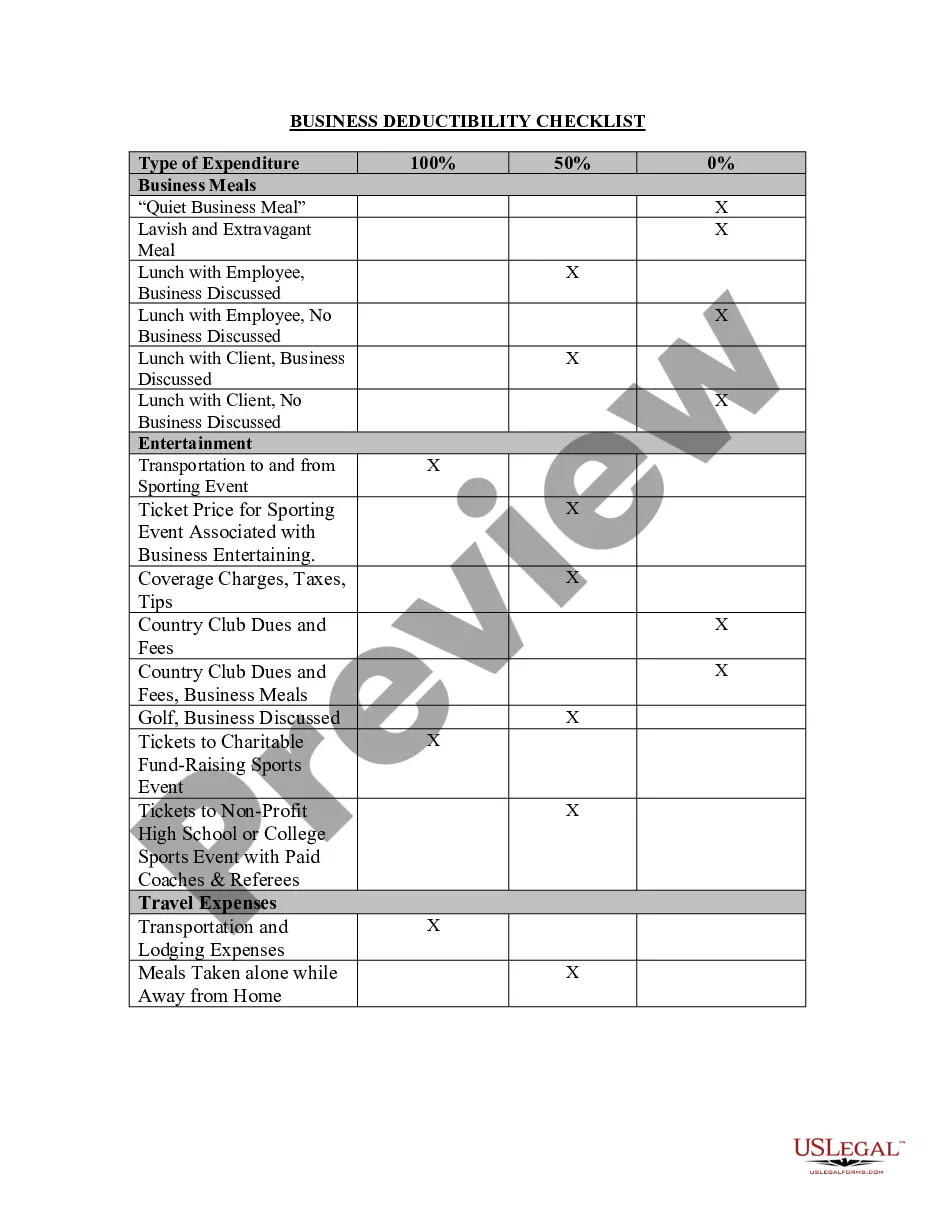
While you can deduct many business expenses, you cannot deduct 100% of every expense. The IRS typically allows deductions for ordinary and necessary expenses related to your business operations. Always keep records to validate your deductions and consult tax guidelines to ensure compliance. For a more comprehensive understanding, business taxes for dummies could serve as a handy reference.
Similar to previous questions, a small business usually needs to make more than the standard deduction amount before paying taxes, which is $12,400 for individual filers. It's essential to keep accurate records of your income and expenses to assess your tax obligations properly. Business taxes for dummies can give you insights into navigating these thresholds effectively.
Yes, you can generally write off your LLC fees as business expenses on your tax return. These fees often include formation costs, renewal fees, and legal expenses related to your company structure. Keeping track of these expenses is vital to maximizing your deductions. Resources like US Legal Forms can assist you in documenting and understanding these costs better.
Small businesses can avoid high taxes by maximizing deductions, utilizing tax credits, and ensuring proper bookkeeping. Staying organized with financial records throughout the year simplifies the tax filing process. Engaging with tax professionals can help identify additional savings or strategies tailored to your business. If you're feeling overwhelmed, business taxes for dummies can be a valuable resource.
The $5,000 tax credit for small businesses is a part of the startup costs that you can claim on your tax return during your initial year of operation. This credit aims to support new entrepreneurs by offsetting some initiation expenses. To qualify, your business must meet specific criteria. Exploring resources like US Legal Forms can provide guidance on how to effectively utilize this tax credit.
The threshold for income before paying federal taxes varies, based on your business structure and the type of income. For single-member LLCs, for example, the first $12,400 (as of 2021) may not be taxed, thanks to the standard deduction. It's crucial to track your earnings accurately and consult tax guidelines to understand your specific situation fully. Business taxes for dummies can help clarify these points.
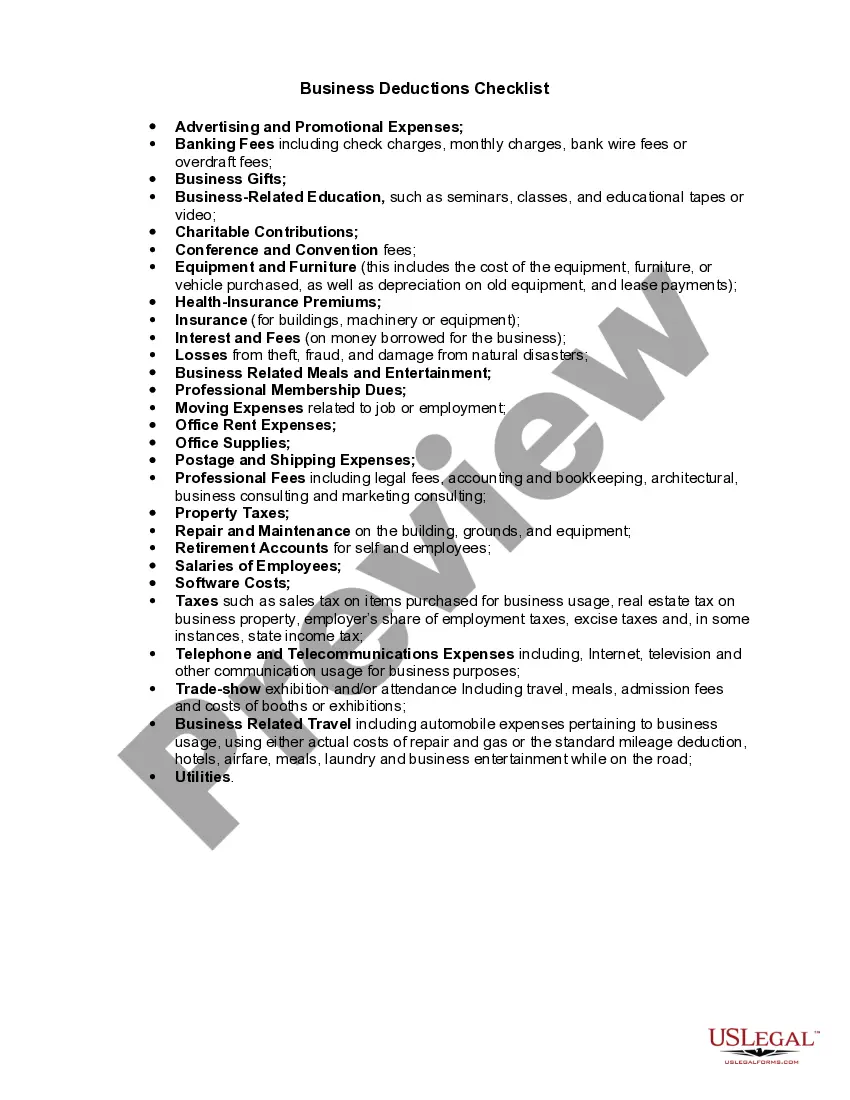
A small business can generally write off ordinary and necessary business expenses, which can significantly reduce taxable income. These write-offs include things like rent, utilities, and employee wages. The amount varies depending on your specific expenses and revenue. To maximize your deductions, consider tools and resources like those offered by US Legal Forms.
The four basic types of business taxes include income tax, self-employment tax, employment tax, and excise tax. Understanding these taxes is essential, especially when you're diving into business taxes for dummies. Each tax type applies differently based on your business structure and activities. Knowing your obligations can help streamline your business operations.
Filing taxes after starting your own business involves first determining your business structure, as it affects your tax obligations. You will need to collect all relevant financial information, including income and deductions. Then, you can utilize tax software or consult with a tax professional for guidance. Our platform offers tools and knowledge to help you navigate business taxes for dummies with confidence.
Generally, if you run a sole proprietorship, you can file your personal and business taxes together on the same return using Schedule C. However, if your business is a separate legal entity, like an LLC or corporation, you must file a separate business tax return. This distinction can complicate your tax situation, so using our platform can help simplify the process of understanding business taxes for dummies.