Harassment With Girls
Description
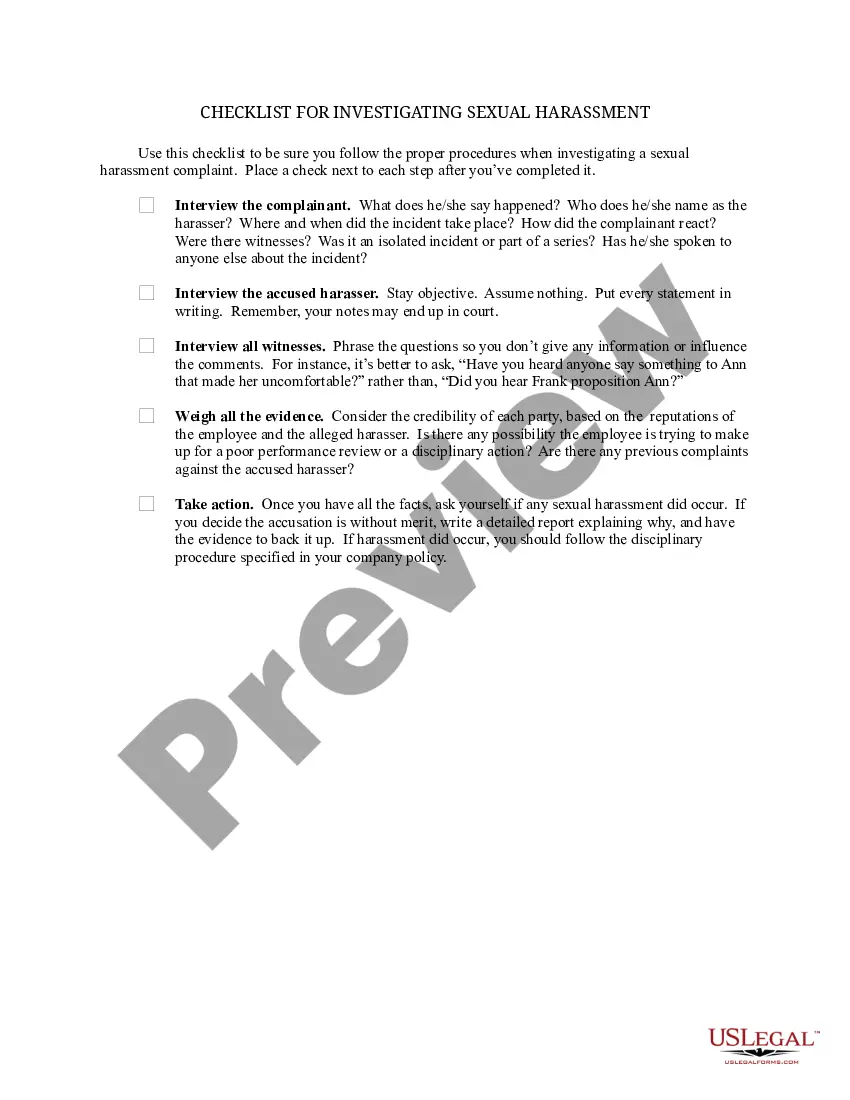
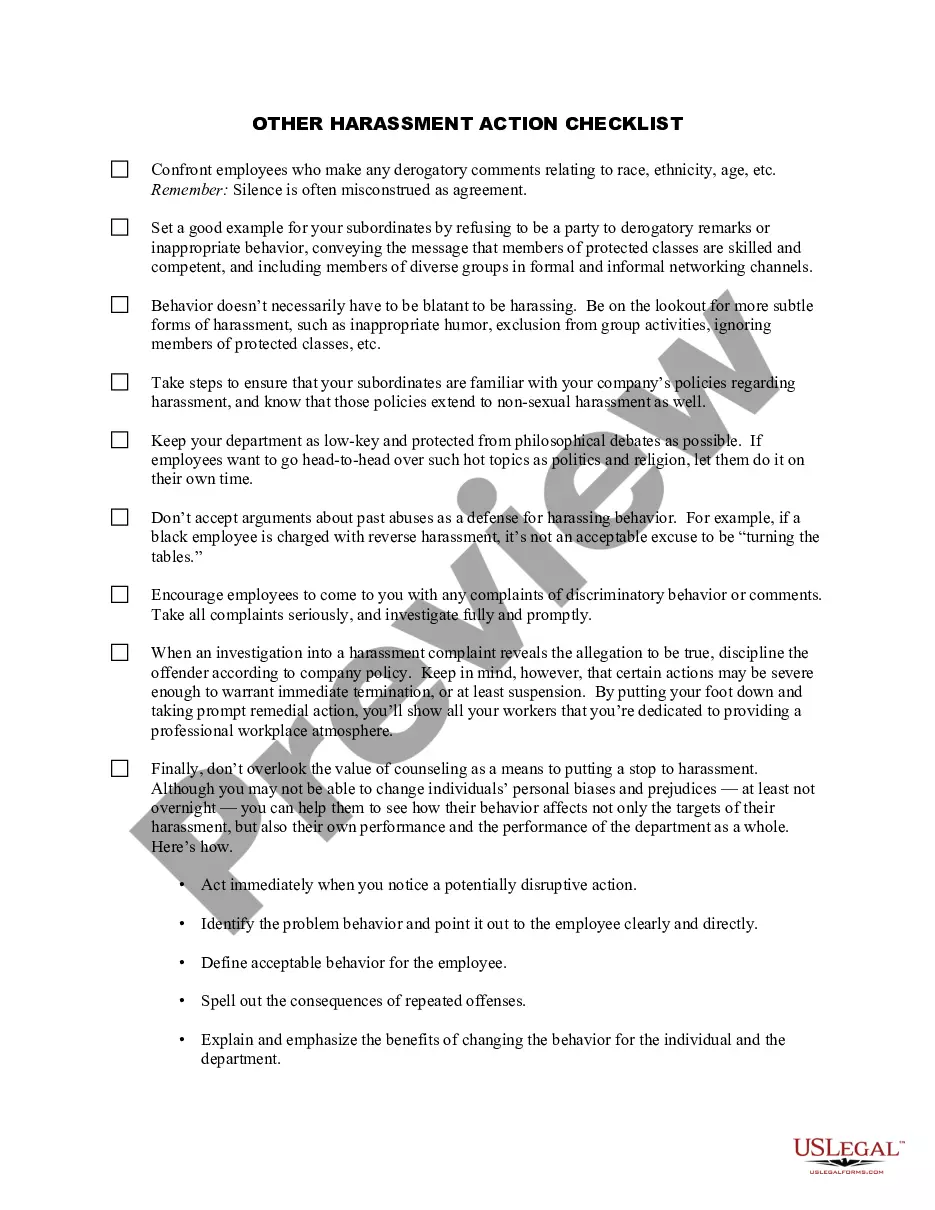
Get your form ready online
Our built-in tools help you complete, sign, share, and store your documents in one place.
Make edits, fill in missing information, and update formatting in US Legal Forms—just like you would in MS Word.
Download a copy, print it, send it by email, or mail it via USPS—whatever works best for your next step.
Sign and collect signatures with our SignNow integration. Send to multiple recipients, set reminders, and more. Go Premium to unlock E-Sign.
If this form requires notarization, complete it online through a secure video call—no need to meet a notary in person or wait for an appointment.
We protect your documents and personal data by following strict security and privacy standards.

Make edits, fill in missing information, and update formatting in US Legal Forms—just like you would in MS Word.

Download a copy, print it, send it by email, or mail it via USPS—whatever works best for your next step.

Sign and collect signatures with our SignNow integration. Send to multiple recipients, set reminders, and more. Go Premium to unlock E-Sign.

If this form requires notarization, complete it online through a secure video call—no need to meet a notary in person or wait for an appointment.

We protect your documents and personal data by following strict security and privacy standards.
Looking for another form?








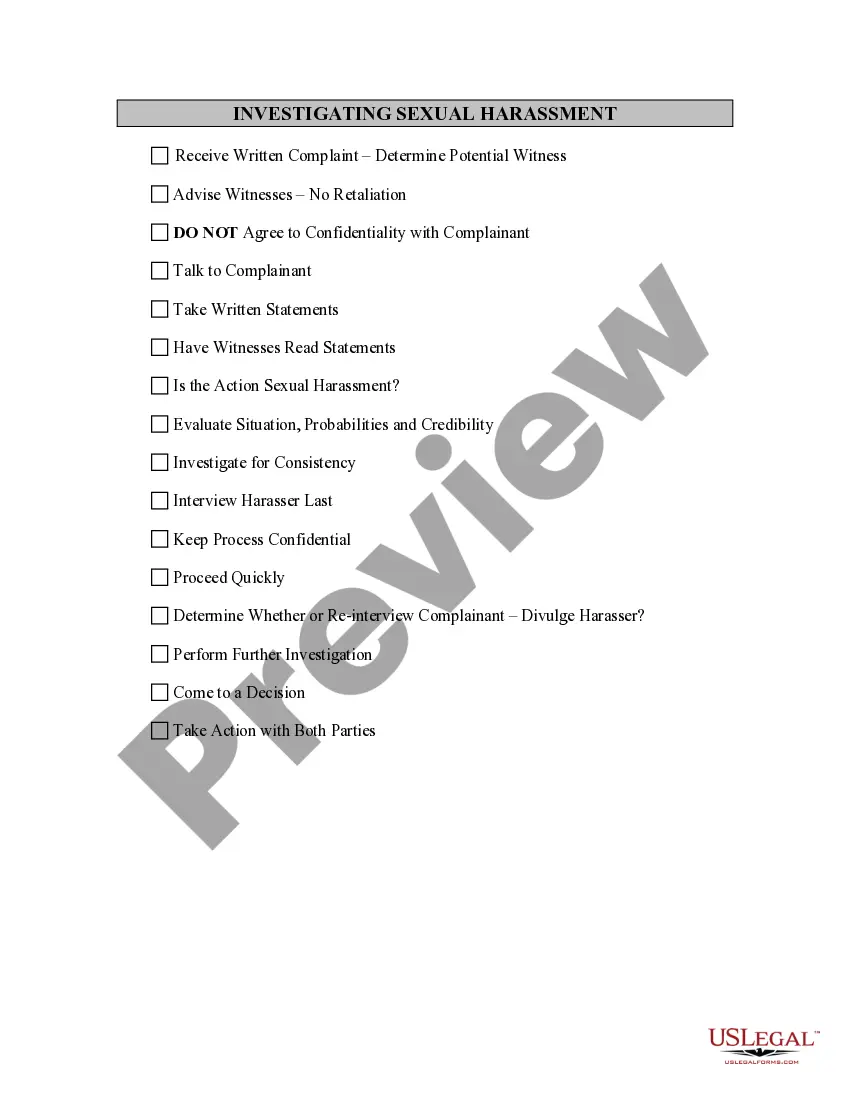
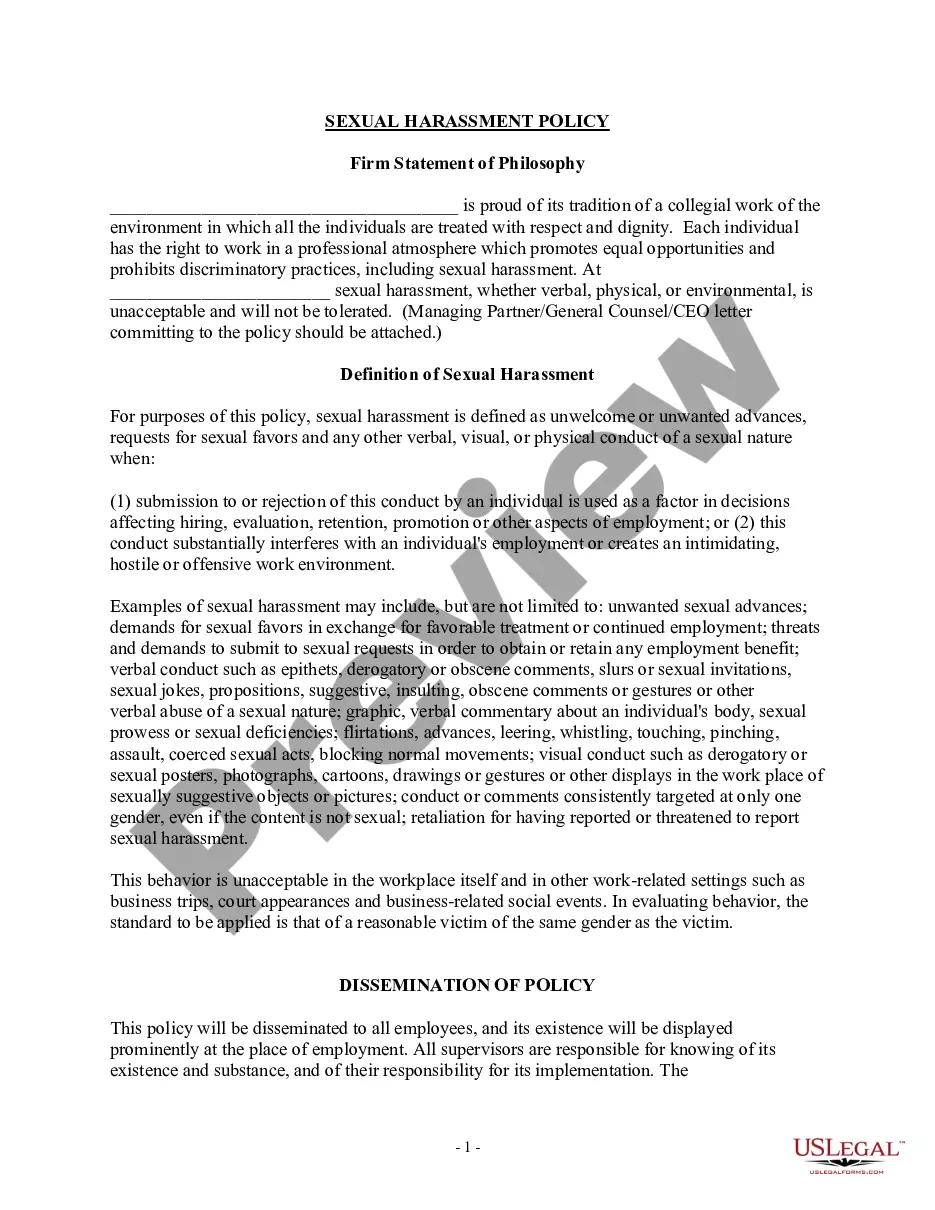
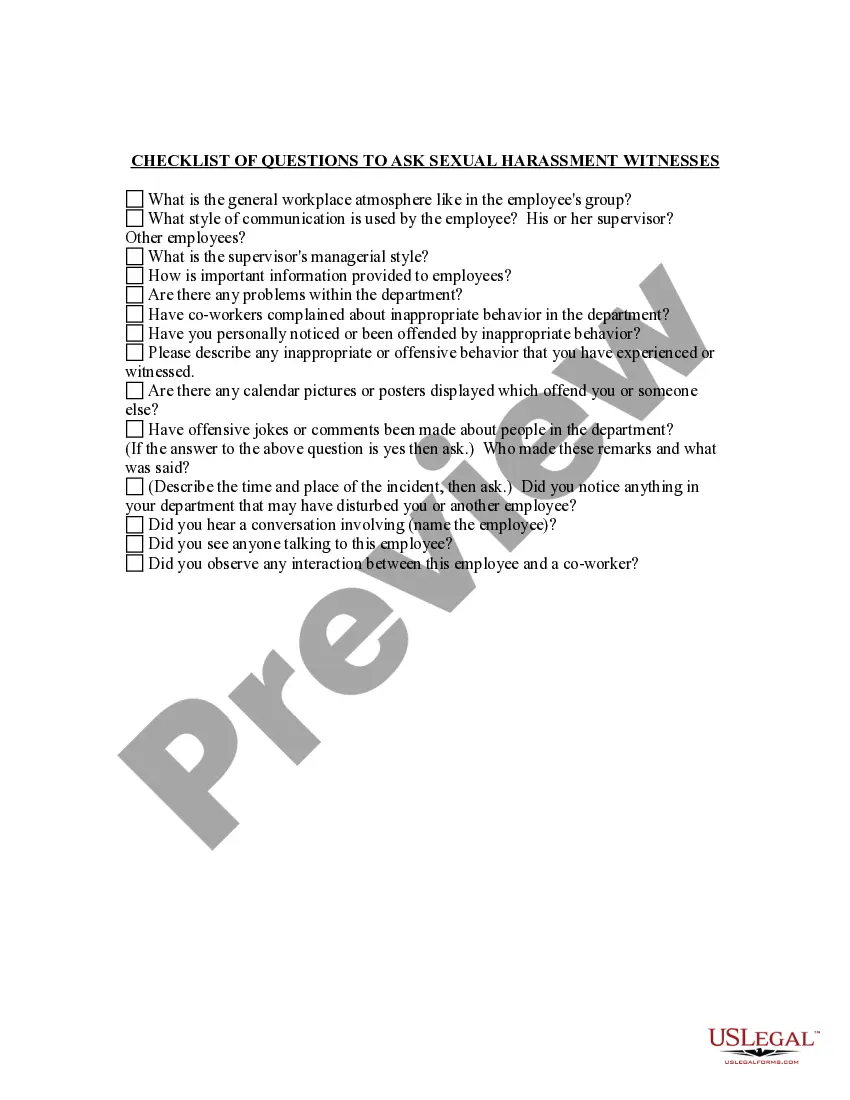
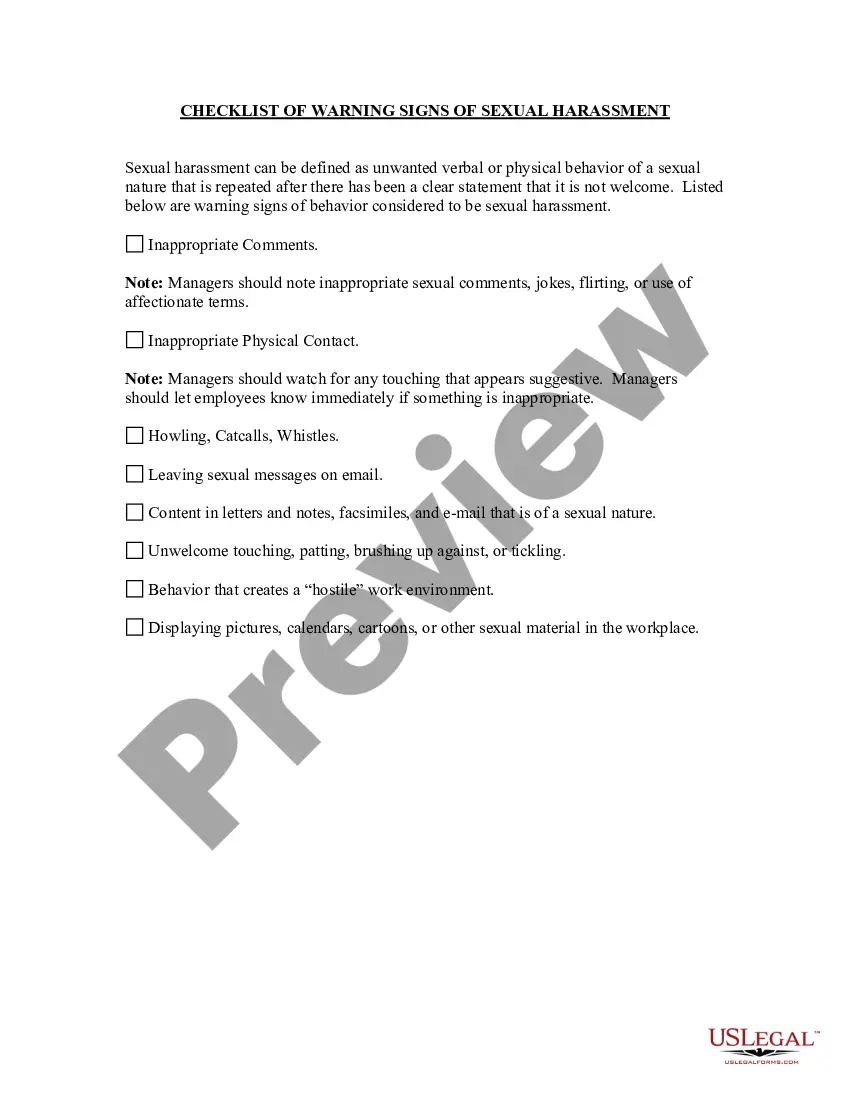
How to fill out Investigating Sexual Harassment Checklist - Workplace?
- Begin by checking the preview and description of the form you need to ensure it aligns with your requirements and local regulations.
- If you cannot find the suitable template, utilize the search function to identify the correct legal form for your case.
- To proceed, click on the "Buy Now" button and select your desired subscription plan. This will require you to create an account to access the multitude of resources available.
- Complete your payment by entering your credit card information or using PayPal for a secure transaction.
- Once your purchase is confirmed, download the form directly to your device for easy access and subsequent completion. You can also find it later in the "My Forms" section of your account.
In conclusion, US Legal Forms not only equips you with a robust collection of legal documents but also provides valuable resources to ensure your forms are completed accurately. With over 85,000 editable templates and expert support, you can navigate legal challenges with confidence. Take charge of your situation and explore the extensive library today!
Visit US Legal Forms to start your experience now.
Form popularity
FAQ
Behaviors that qualify as harassment include making unwelcome advances, using sexually explicit language, or distributing inappropriate materials. In the context of harassment with girls, it's essential to recognize that actions perceived as jokes or friendly may cross the line into harassment territory if they make someone uncomfortable. Staying alert to these behaviors and knowing your rights can help foster a safer environment.
Harassment can generally take three main forms: verbal, physical, and visual. Verbal harassment involves unwanted comments or threats, physical harassment encompasses any unwanted physical contact, and visual harassment relates to inappropriate imagery or gestures. Understanding these forms is vital, especially when addressing harassment with girls, as different behaviors fall into distinct categories.
Female harassment refers to unwelcome behaviors directed at women that create a hostile or intimidating environment. In the context of harassment with girls, it often involves inappropriate comments, unwanted advances, or discriminatory treatment based on their gender. Recognizing the signs of female harassment is crucial for both victims and bystanders to intervene appropriately and provide support.
There are scenarios that may seem like harassment with girls but do not legally qualify as such. For instance, light teasing among friends, a single compliment that is not repeated or persistent, or professional behavior in a workplace setting may not meet the legal definition of harassment. Context plays a significant role, and consistently evaluating intentions and perceptions is important.
To legally define harassment, four elements are crucial: the behavior must be unwanted, it must create a hostile environment, it must be severe or pervasive, and it should be linked to a protected characteristic such as gender. In the context of harassment with girls, understanding these elements helps identify if specific actions are legally problematic. If you suspect harassment, it's essential to document incidents and consider seeking legal advice to protect your rights.
Harassment can include a range of actions like verbal bullying, sending unwanted messages, or making threatening gestures. All of these behaviors can contribute to a climate where harassment with girls is prevalent. Creating awareness around what constitutes harassment is key to prevention and addressing these issues effectively.
Establishing harassment often requires evidence that the behavior was unwelcome and had a detrimental effect on the victim. Documenting incidents can help in proving that harassment with girls occurred. Using resources like uslegalforms can provide guidance on how to navigate reporting processes and protect oneself.
An example of harassing a woman could be repeatedly making inappropriate comments about her body or appearance despite her discomfort. This type of behavior contributes to a culture where harassment with girls is normalized. By understanding these examples, we can help create safer environments for everyone.
Not all offensive behavior constitutes harassment. For instance, a single unwanted compliment may not rise to the level of harassment with girls unless it is part of a persistent pattern. It's crucial to assess the context and frequency of behaviors to determine if they actually qualify as harassment.
The nine grounds of harassment typically include race, gender, sexual orientation, disability, age, religion, national origin, marital status, and military status. Harassment with girls specifically often relates to gender and sexual orientation. Understanding these grounds can help individuals recognize and address harassment more effectively.