Salaried Employee Guidelines With Overtime
Description
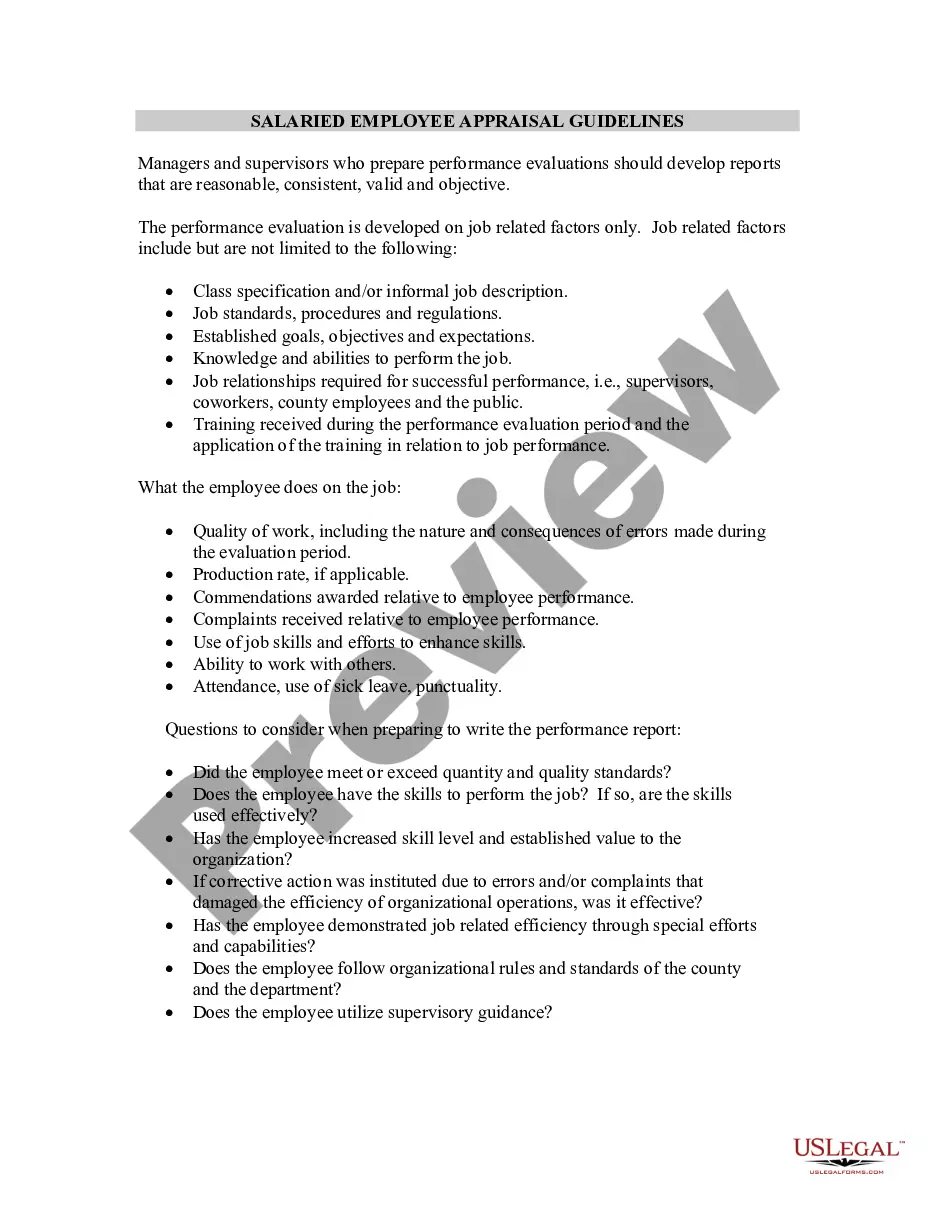
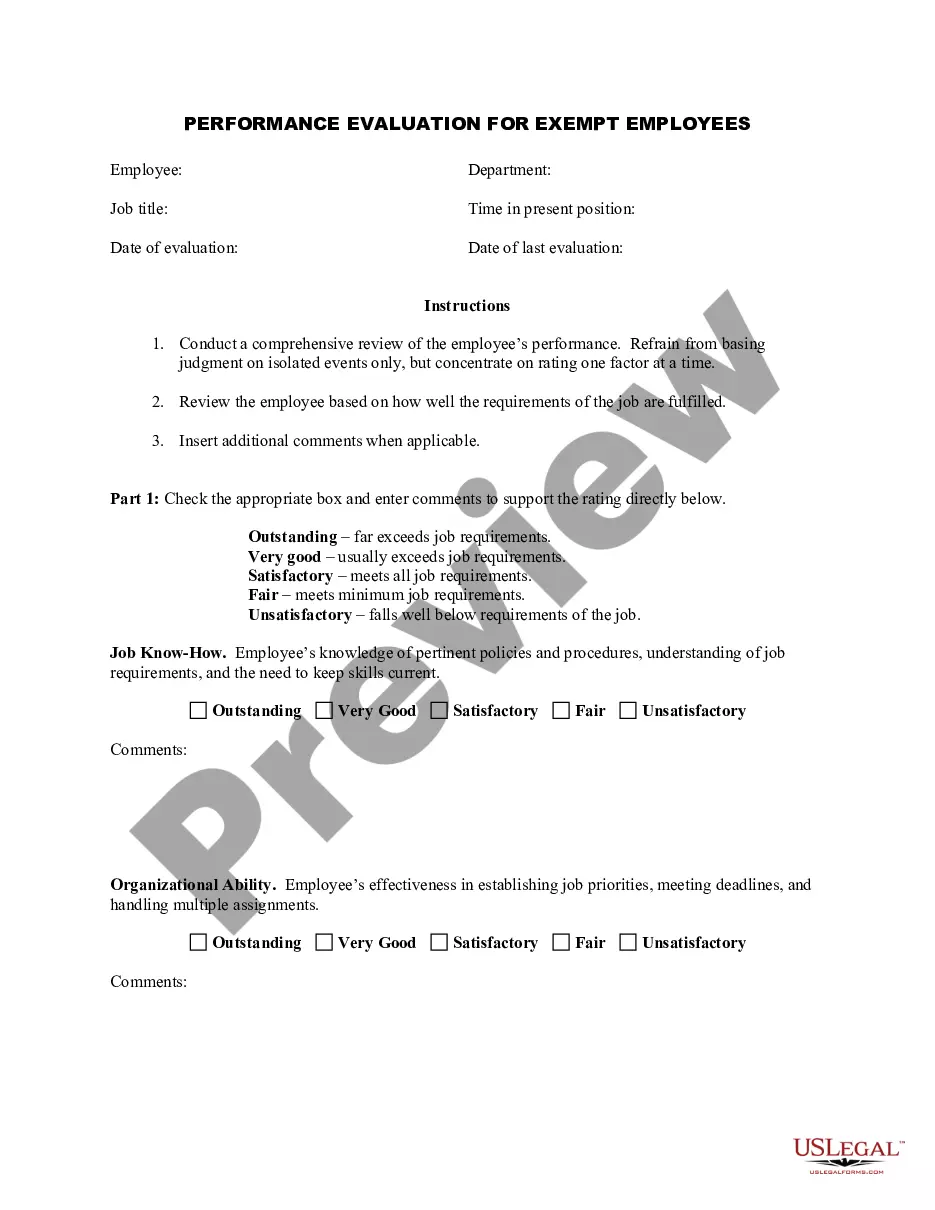
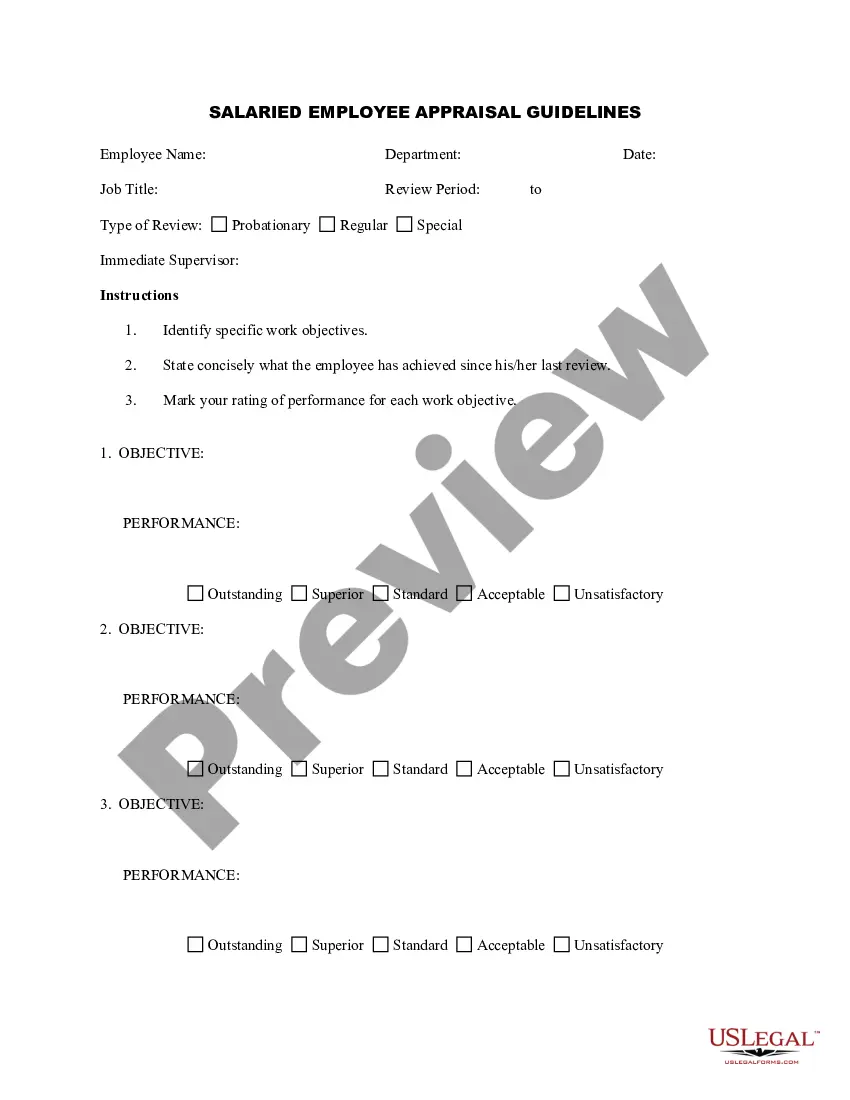
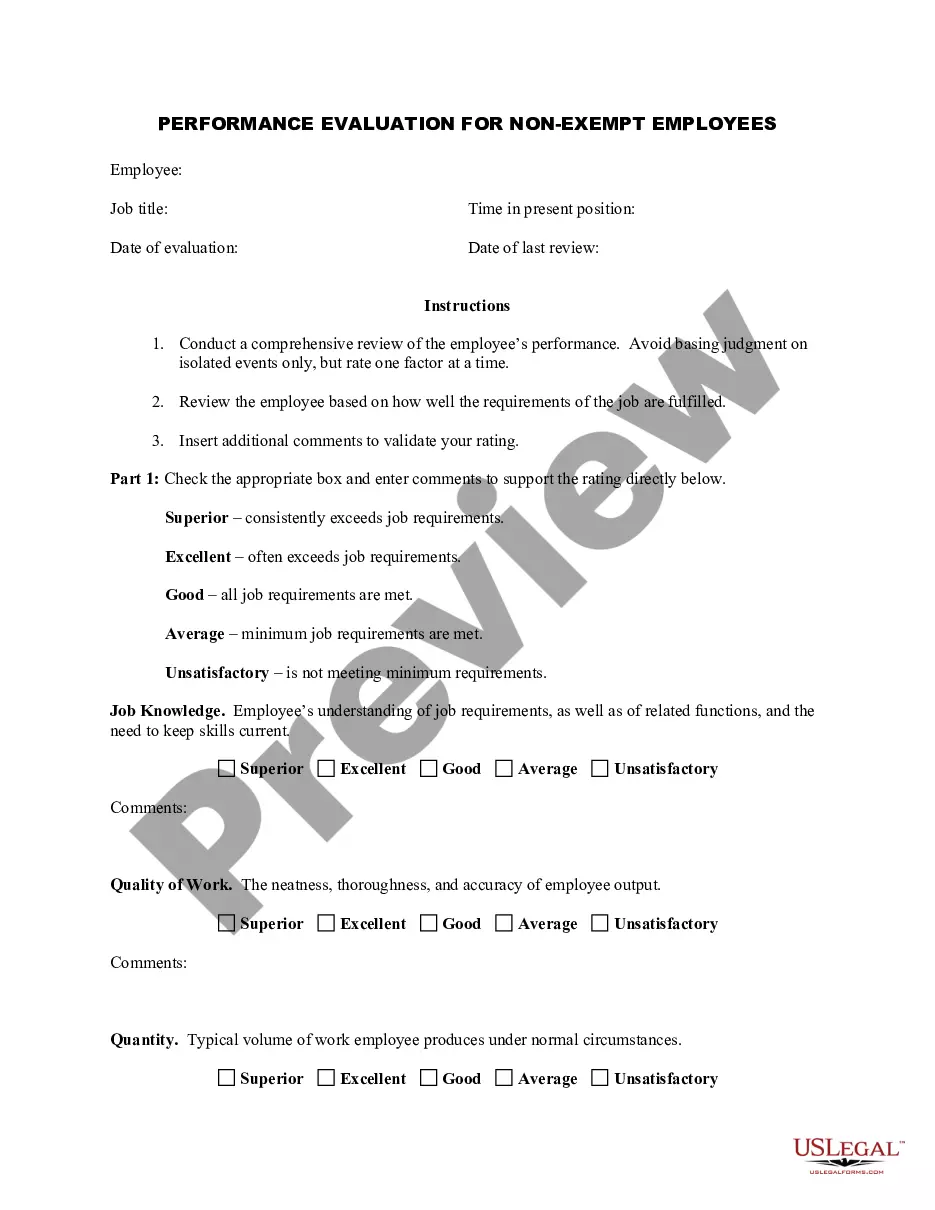



How to fill out Salaried Employee Appraisal Guidelines - General?
The Salaried Employee Guidelines With Overtime you see on this page is a multi-usable formal template drafted by professional lawyers in compliance with federal and state regulations. For more than 25 years, US Legal Forms has provided individuals, businesses, and attorneys with more than 85,000 verified, state-specific forms for any business and personal scenario. It’s the quickest, easiest and most reliable way to obtain the documents you need, as the service guarantees bank-level data security and anti-malware protection.
Obtaining this Salaried Employee Guidelines With Overtime will take you only a few simple steps:
- Look for the document you need and review it. Look through the file you searched and preview it or check the form description to ensure it satisfies your needs. If it does not, utilize the search bar to get the appropriate one. Click Buy Now when you have located the template you need.
- Subscribe and log in. Select the pricing plan that suits you and create an account. Use PayPal or a credit card to make a prompt payment. If you already have an account, log in and check your subscription to continue.
- Get the fillable template. Choose the format you want for your Salaried Employee Guidelines With Overtime (PDF, Word, RTF) and download the sample on your device.
- Fill out and sign the paperwork. Print out the template to complete it manually. Alternatively, use an online multi-functional PDF editor to quickly and accurately fill out and sign your form with a eSignature.
- Download your paperwork again. Make use of the same document again anytime needed. Open the My Forms tab in your profile to redownload any previously saved forms.
Subscribe to US Legal Forms to have verified legal templates for all of life’s situations at your disposal.
Form popularity
FAQ
The FLSA requires that covered, nonexempt employees in the United States be paid at least the Federal minimum wage for all hours worked and receive overtime pay at one and one-half times the employee's regular rate of pay for all hours worked after 40 hours of work in a workweek.
Is It Legal to Work 60 Hours a Week on Salary? If an employee is exempt from FLSA and any state, local, or union overtime laws, then it is legal to work 60 hours a week on salary. Some employers do pay exempt employees for overtime work through time-and-a-half, bonuses, or extra time off.
Step 1: Calculate regular rate of pay by dividing salary by total hours worked. Step 2: Calculate overtime pay by multiplying the hours of overtime worked by one-half the regular rate of pay. Step 3: Add overtime time to salary to determine total pay.
Employee Time Tracking Salaried employees are not required by law to clock in and out. Because of this, the decision comes down to the employer. While some employers don't require them to, there are many benefits of having your salaried employees track their time.
Most notably, the highly anticipated proposal seeks to raise the salary threshold under which employees are eligible for overtime pay under federal labor law to $1,059 per week ($55,068 annualized).