Excessive Absenteeism And Tardiness
Description
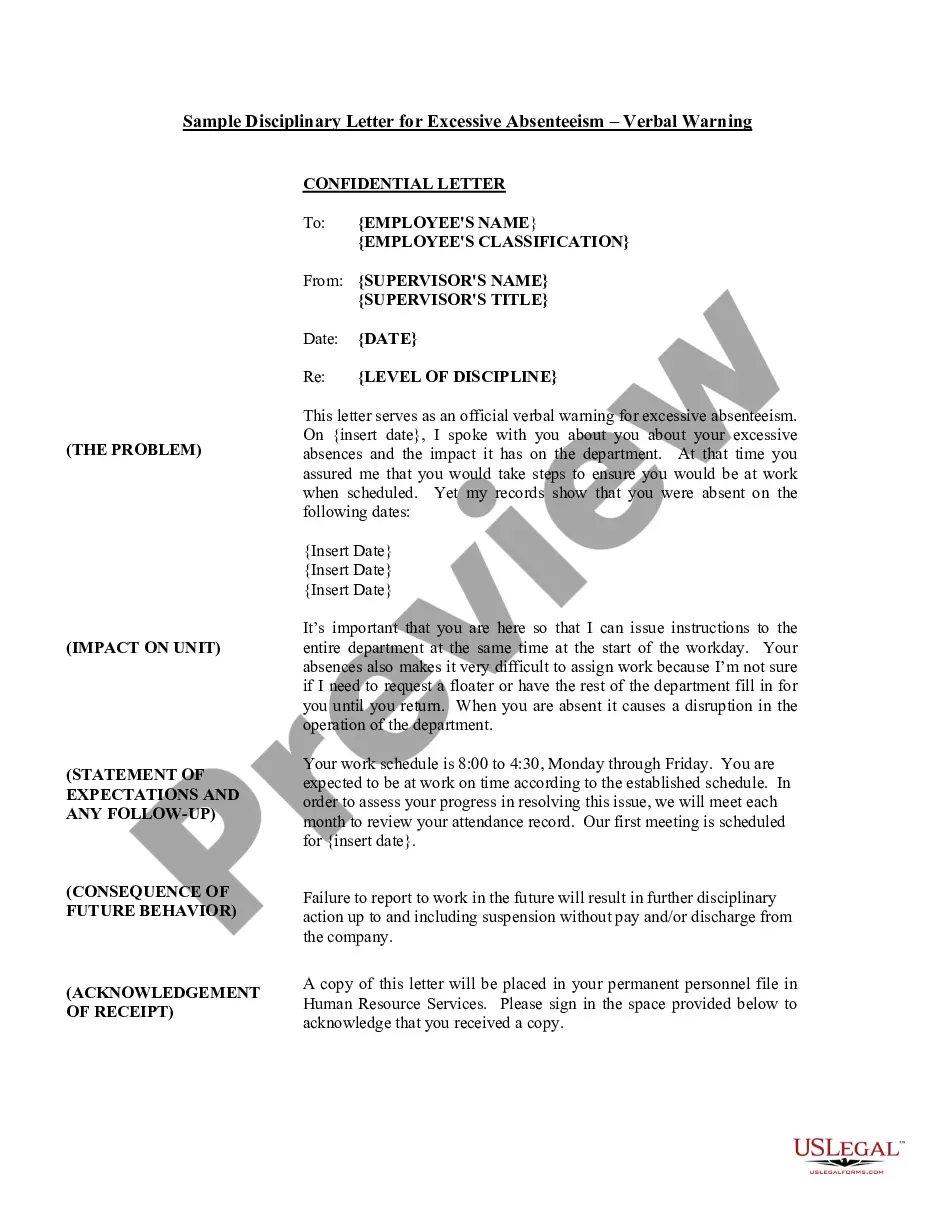
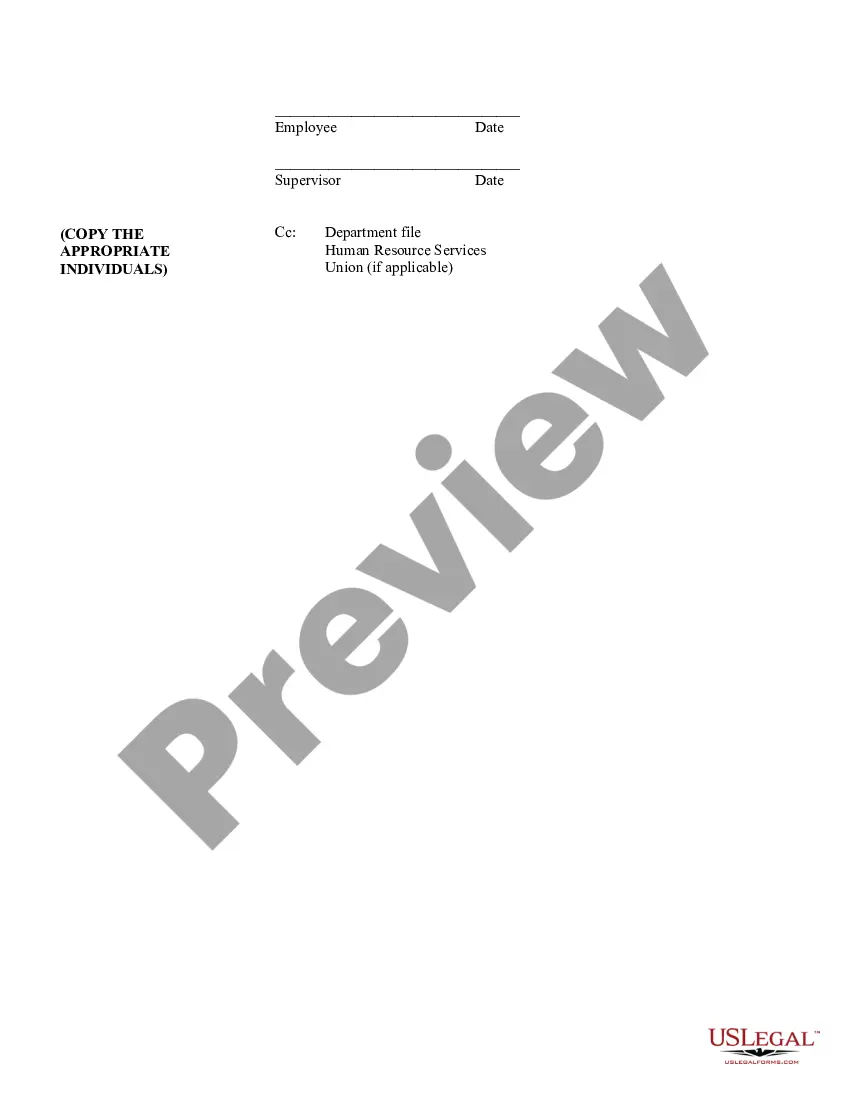
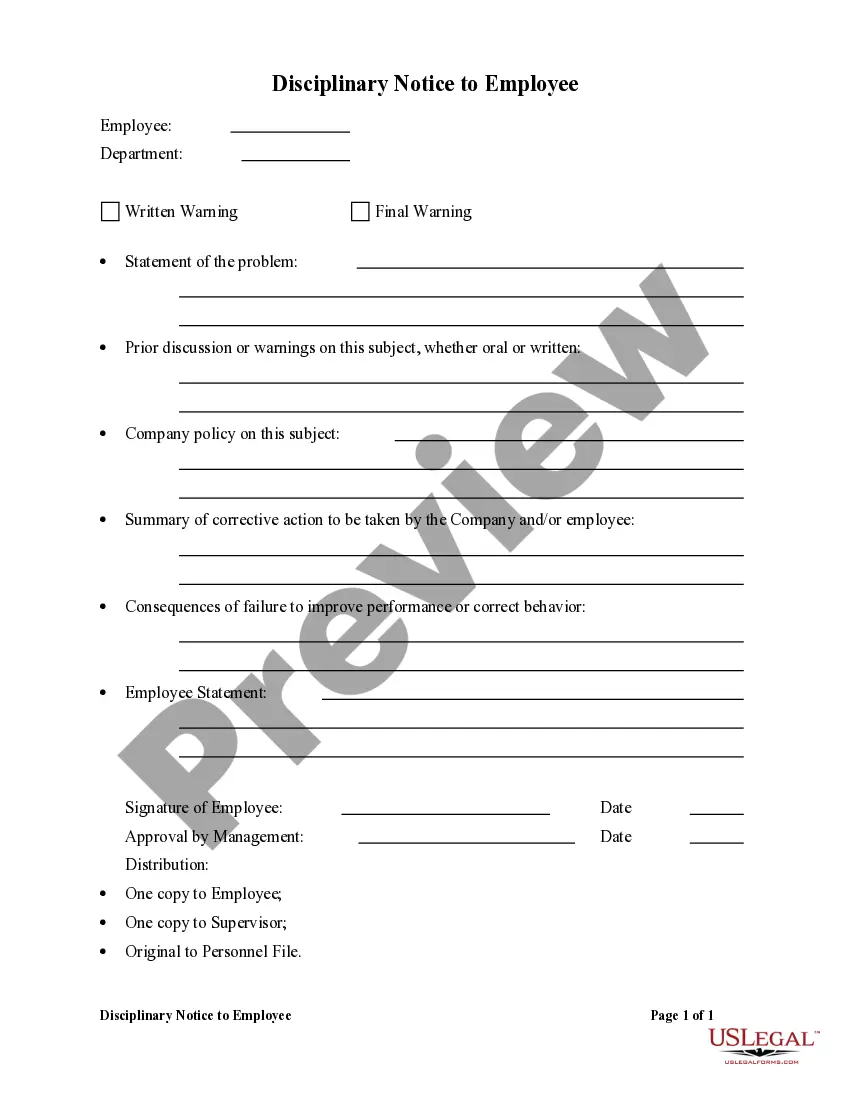
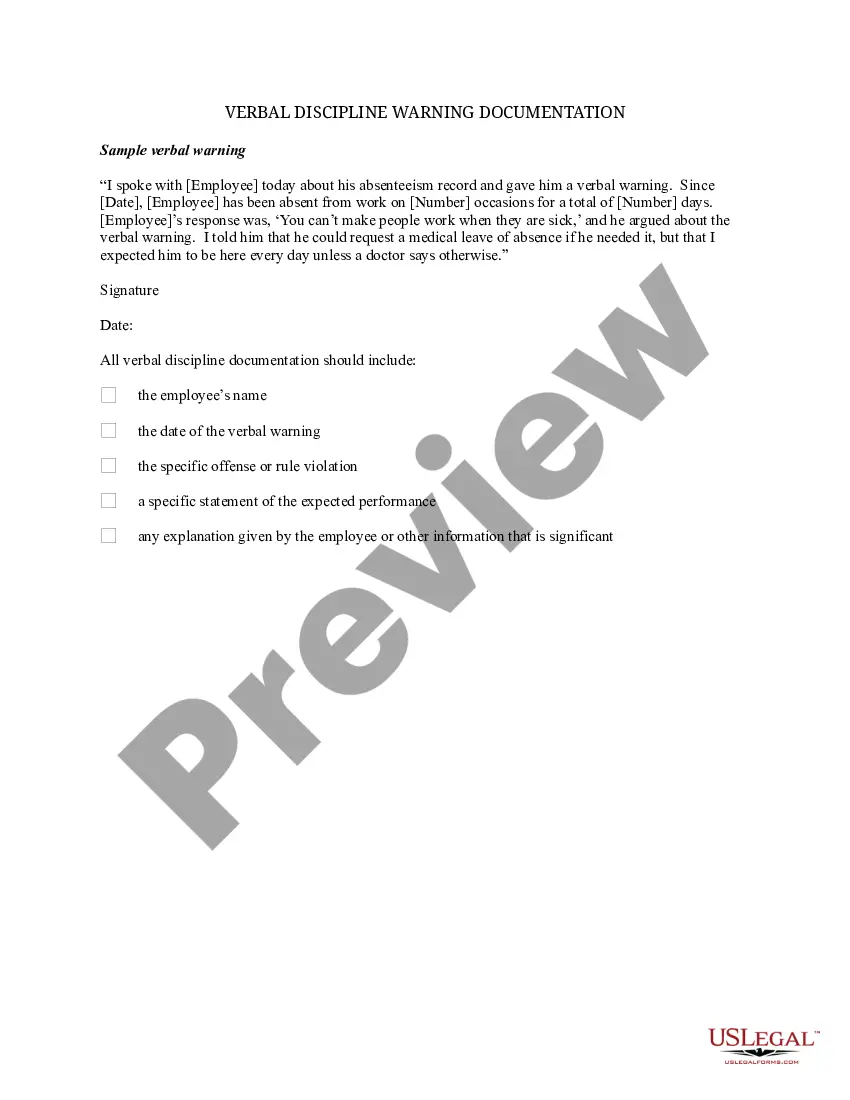
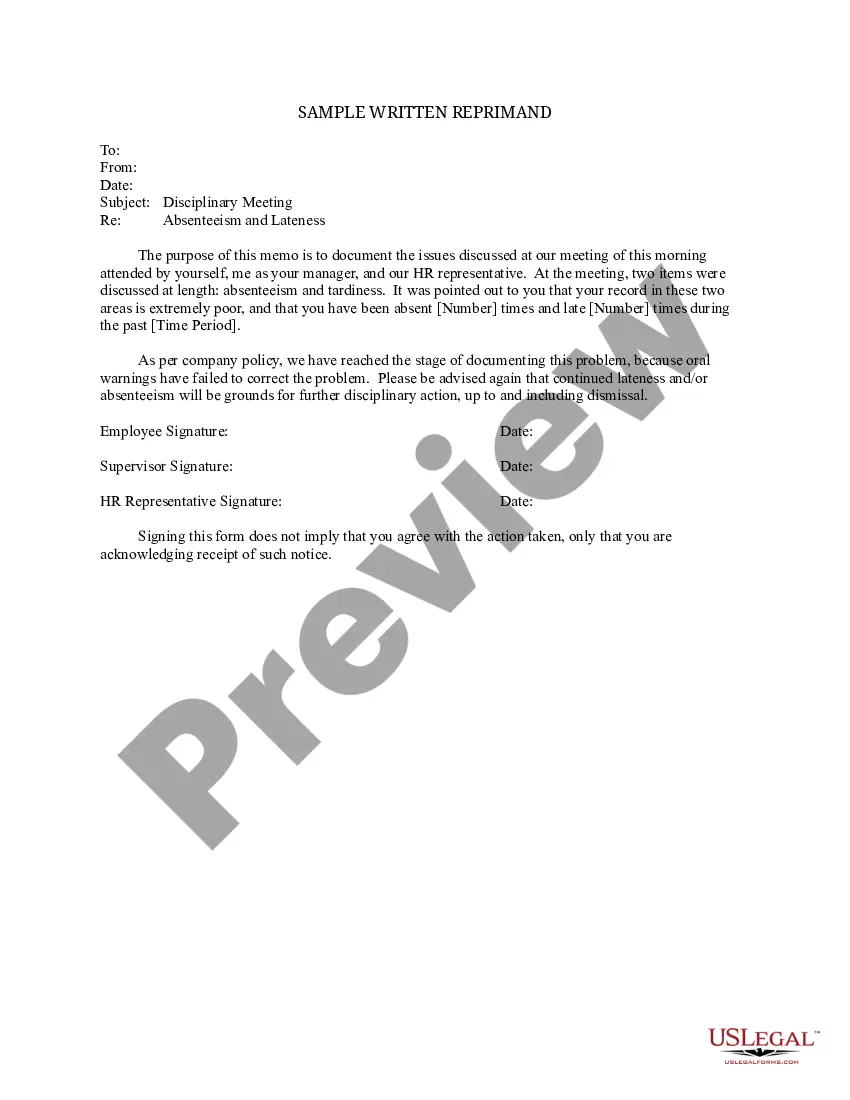
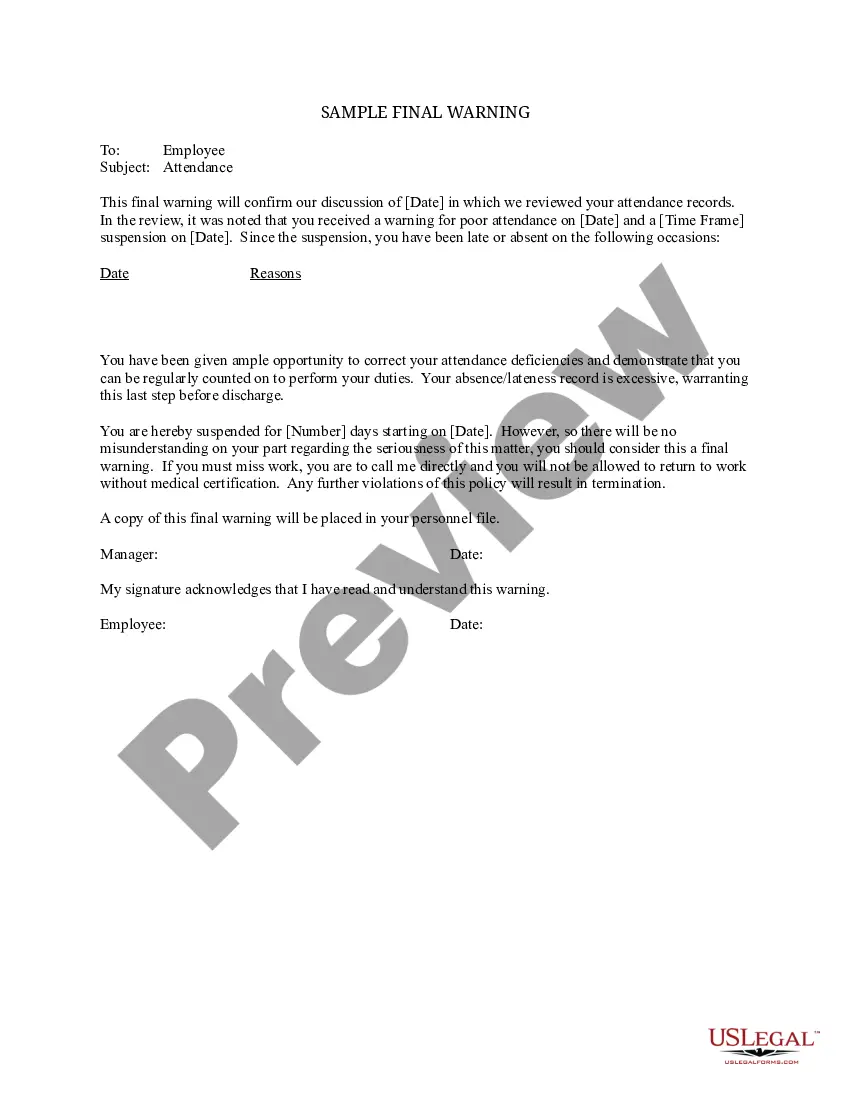
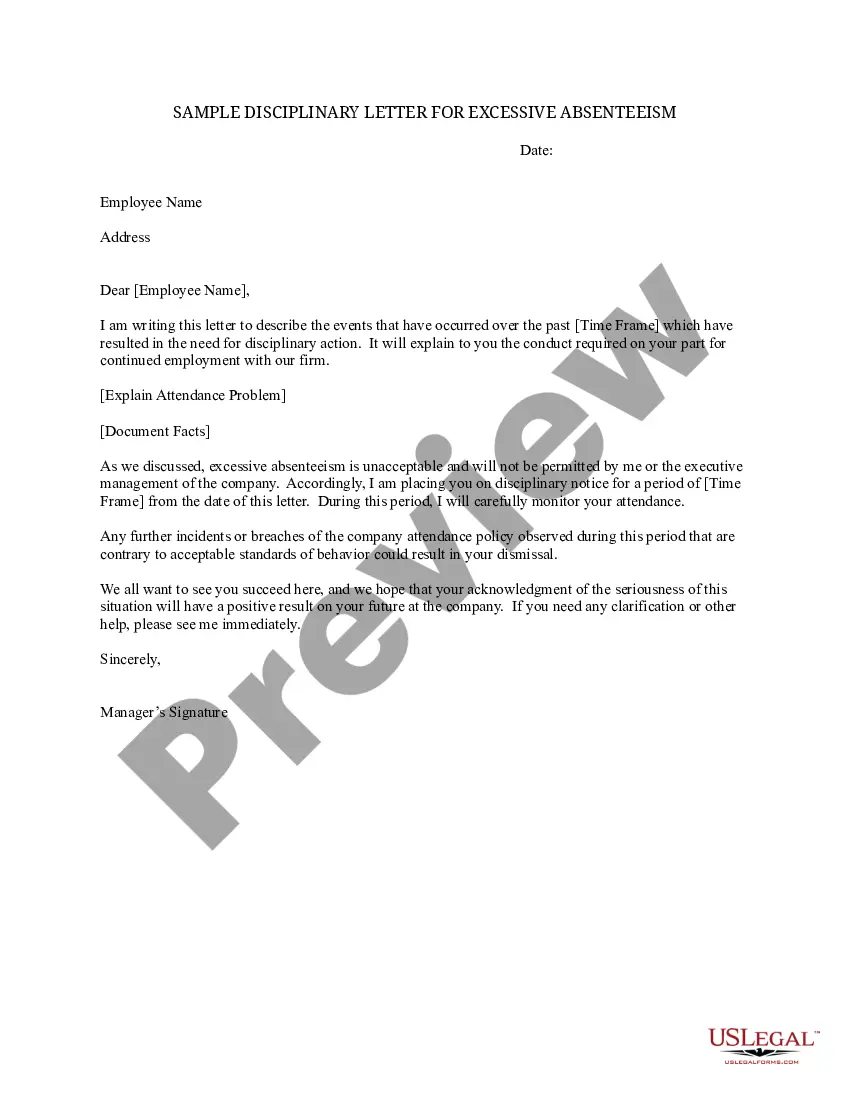




How to fill out Sample Disciplinary Letter For Excessive Absenteeism - Verbal Warning?
Legal administration can be irritating, even for the most experienced professionals.
When you are concerned with a High Absenteeism and Delays and do not have the time to spend searching for the right and current version, the processes can be overwhelming.
Utilize advanced tools to complete and oversee your High Absenteeism and Delays.
Access a library of articles, guides, manuals, and materials related to your circumstances and needs.
Verify it is the correct form by previewing it and reviewing its details.
- Conserve time and effort searching for the documents you require, and use US Legal Forms’ sophisticated search and Preview feature to find High Absenteeism and Delays and obtain it.
- If you hold a membership, Log In to your US Legal Forms account, search for the document, and acquire it.
- Check your My documents section to view the files you've previously saved and manage your folders as you desire.
- If this is your first experience with US Legal Forms, register for an account to gain unlimited access to all benefits of the library.
- Here are the actions to take after obtaining the form you need.
- A robust online form catalog can be a transformative resource for anyone seeking to address these issues effectively.
- US Legal Forms is a premier provider in online legal forms, featuring over 85,000 state-specific legal documents accessible at any time.
- With US Legal Forms, you can.
Form popularity
FAQ
Documenting employee attendance issues requires meticulous record-keeping. Start by maintaining a clear log of absences, tardiness incidents, and any discussions you have with the employee regarding their attendance. Utilize forms provided by USLegalForms to create standardized documentation that captures both the attendance issues and any corrective actions taken. This thorough documentation will be essential if disciplinary measures or terminations need to occur.
When mailing an employee regarding irregular attendance, begin by crafting a clear and concise letter. State the purpose of the communication and outline the specific attendance concerns, including dates and any relevant policies. Ensure you offer an opportunity for the employee to discuss their situation and express your willingness to help them improve their attendance. Tools like USLegalForms can provide templates to assist you in drafting professional correspondence.
Writing up an employee for excessive tardiness involves creating a formal document that outlines the issue. Begin by detailing the specific instances of lateness and the dates involved. Include any previous discussions regarding the employee's attendance so they understand the gravity of the situation. A well-structured write-up can clarify expectations and ensure that the employee is aware of the consequences of continued excessive absenteeism and tardiness.
To handle an employee who takes excessive time off, start by reviewing their attendance history and identifying patterns. Schedule a conversation to express your concerns and listen to their perspective. Discuss potential solutions, such as flexible scheduling or support options, while explaining the importance of regular attendance. Resources like USLegalForms can help you draft a plan to monitor attendance moving forward.
Yes, you can legally terminate an employee for excessive absenteeism and tardiness if it violates your established attendance policy. However, it’s essential to document all attendance issues and provide the employee with the opportunity to improve. Ensure your actions comply with applicable labor laws and consider any legitimate medical or personal reasons the employee may have. Having proper documentation will protect your company during this difficult process.
Excessive absenteeism and tardiness can vary based on your company's policies and the industry standards. Generally, frequent absences beyond three or four days in a month may raise concerns. It is crucial to communicate your attendance policy clearly to employees to help them understand what constitutes excessive absenteeism. Keeping clear records will aid in making informed decisions.
When addressing excessive absenteeism, begin by reviewing the employee's attendance records. Schedule a private meeting to discuss the situation openly and share your concerns. Clearly outline the expectations regarding attendance and the potential consequences of continued excessive absenteeism and tardiness. Utilizing tools like USLegalForms can help you create an effective disciplinary notice to document the conversation.
When writing a warning for excessive absenteeism, it’s essential to be clear and specific. State the purpose of the warning, outline documented instances of excessive absenteeism and tardiness, and explain the consequences of continued behavior. This structured approach reinforces your commitment to fair and transparent communication regarding attendance expectations.
To communicate that someone has poor attendance, use straightforward language that describes the facts. You might say, 'There have been several instances of excessive absenteeism and tardiness,' and provide specific examples. This clarity helps the individual understand the seriousness of the issue without ambiguity.
When drafting a letter regarding irregular attendance, start by clearly stating the purpose of the letter. Point out specific instances of excessive absenteeism and tardiness while maintaining a professional tone. Encourage the employee to discuss any challenges they face, reinforcing your willingness to support them in improving their attendance record.