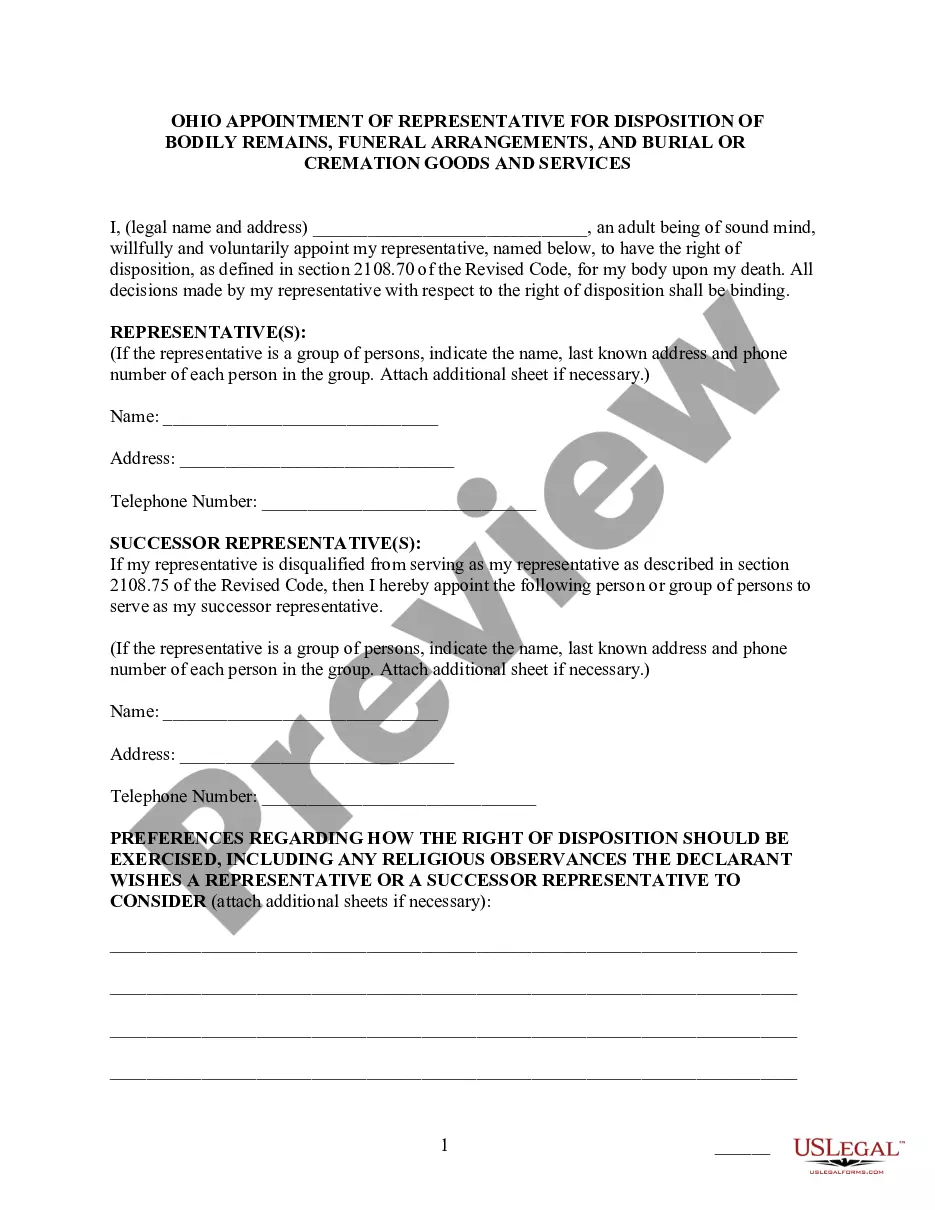
Maryland Child Care Services Package
About this form package
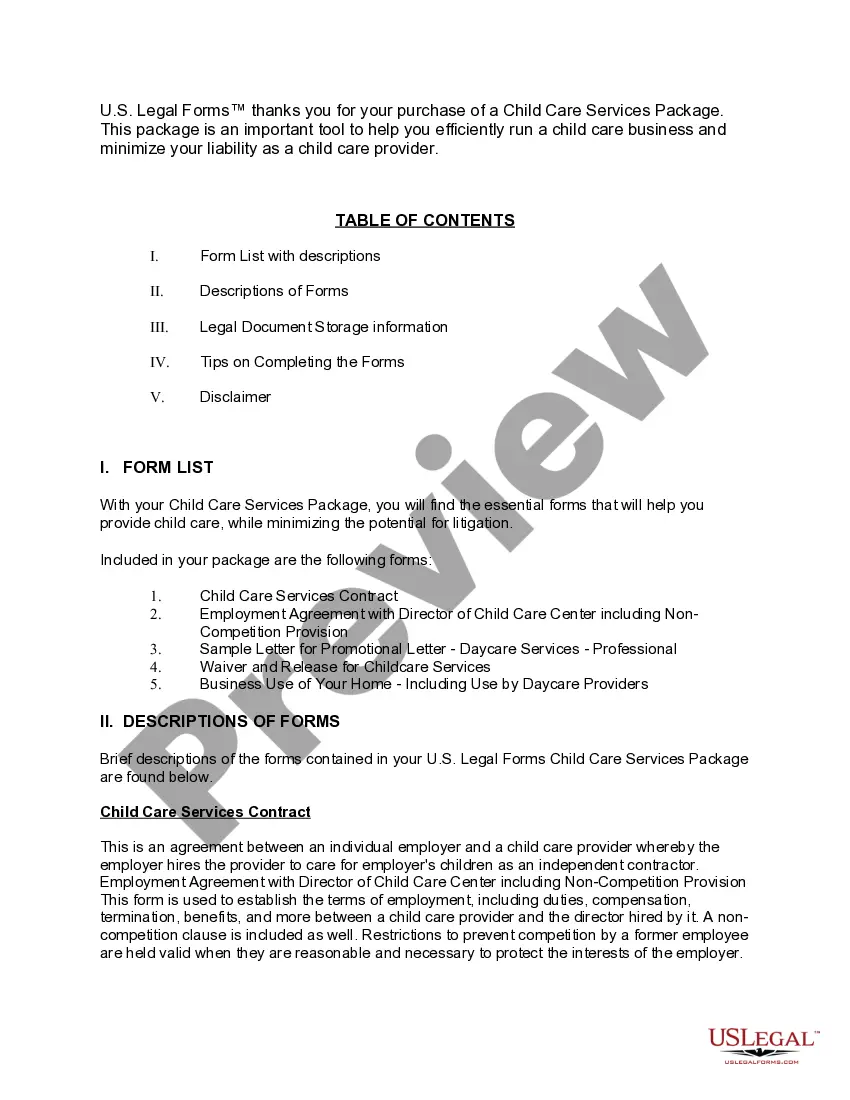
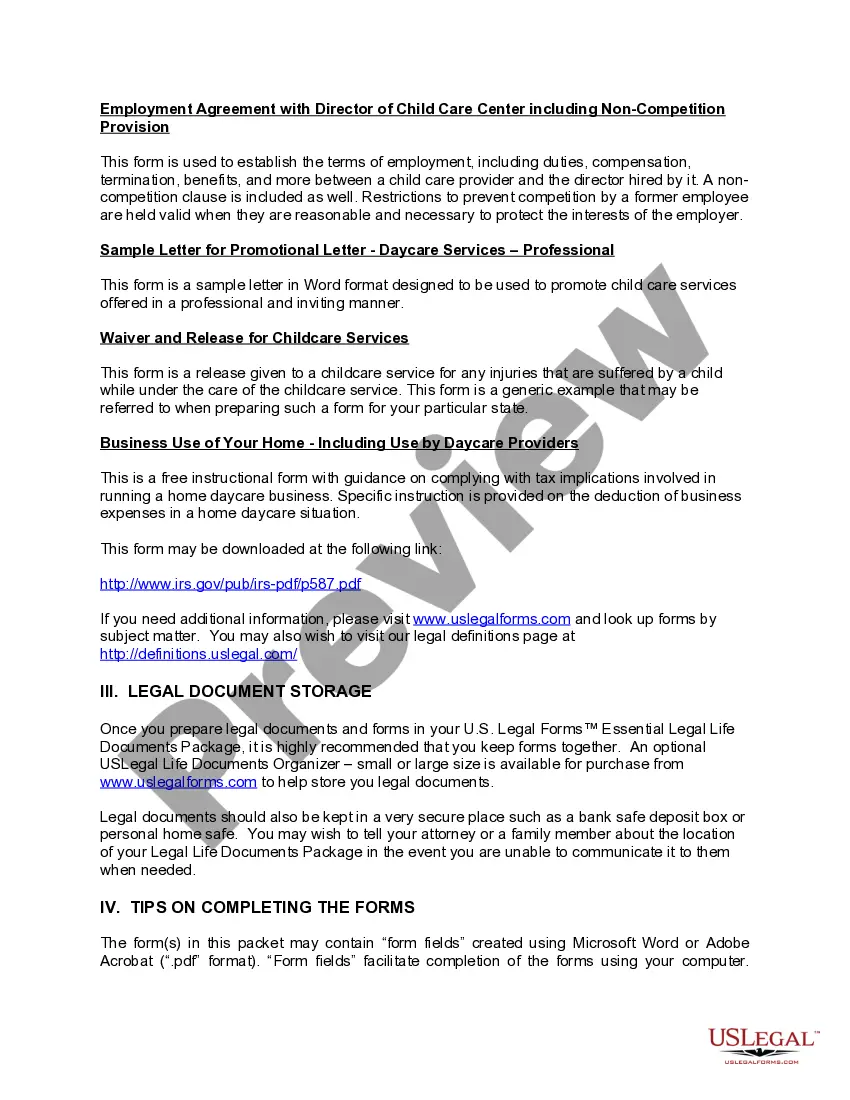
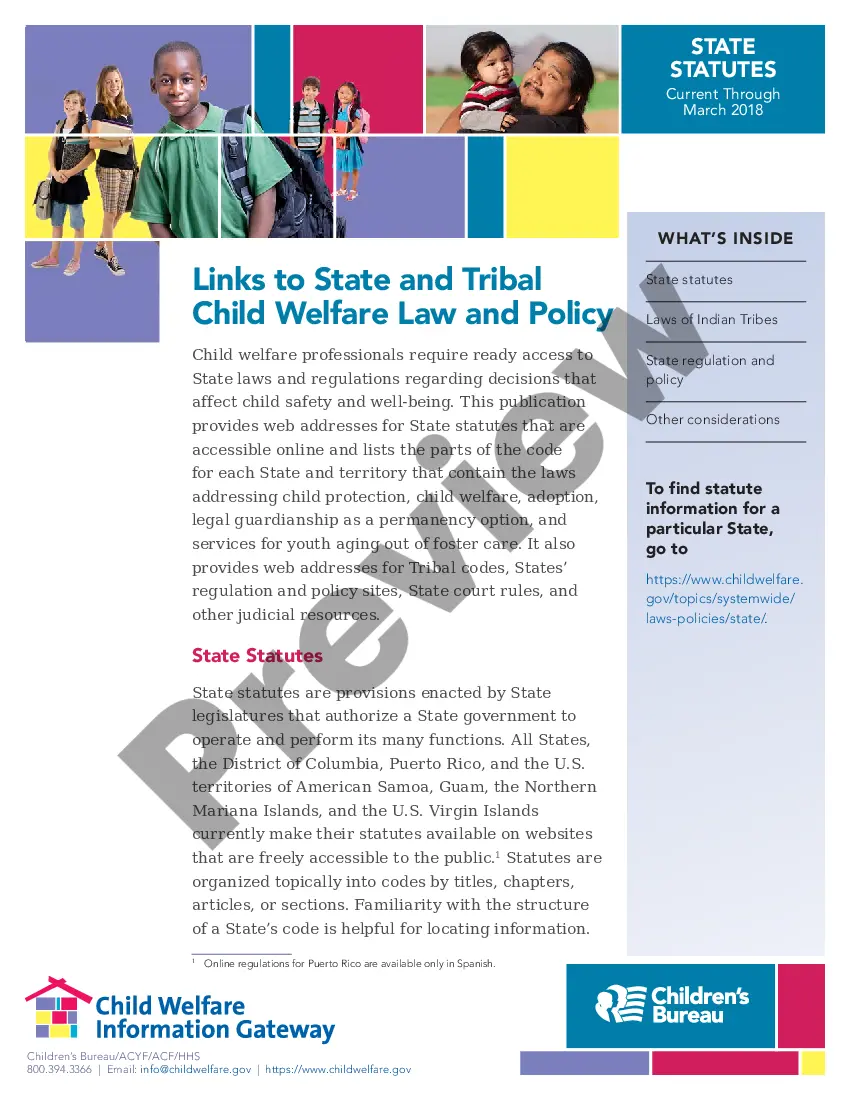
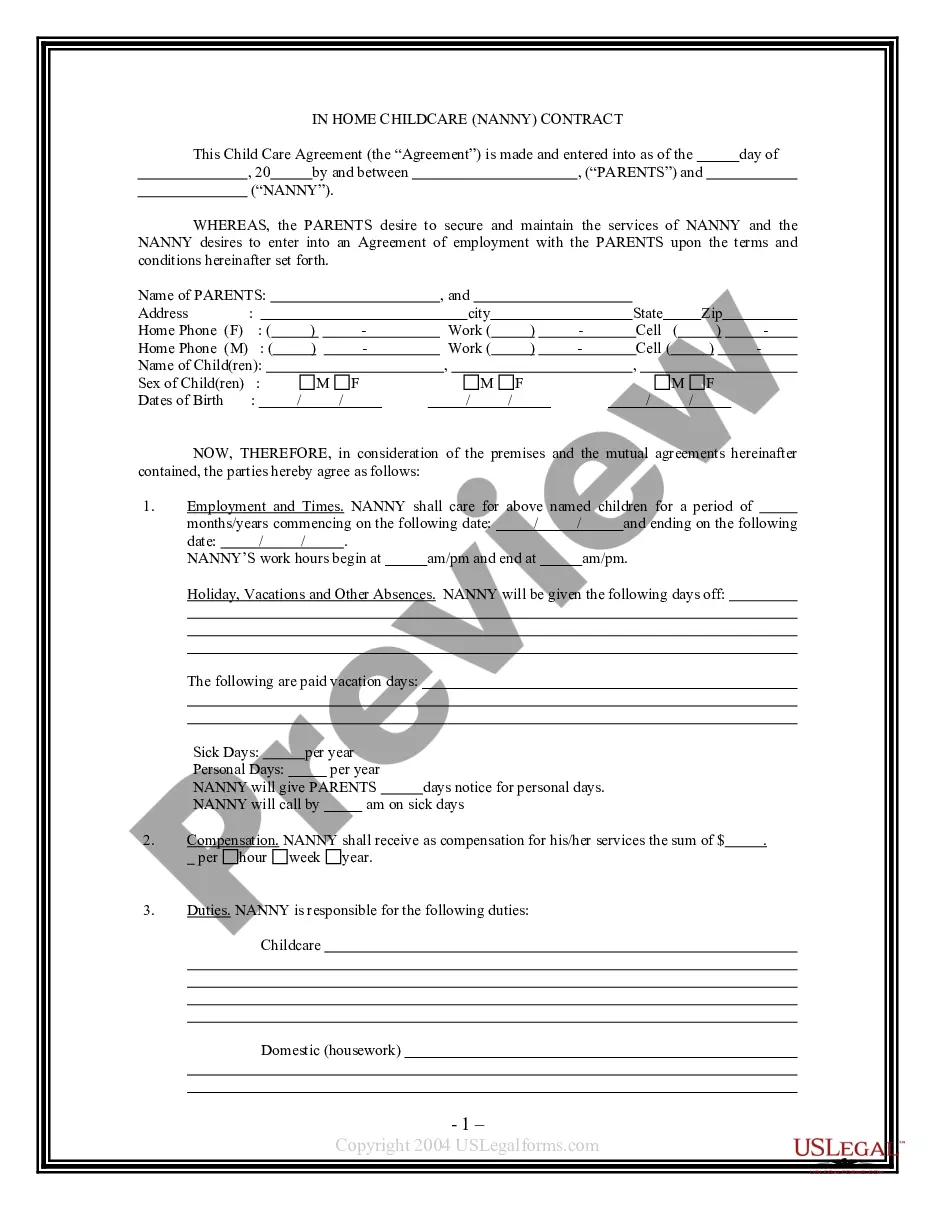
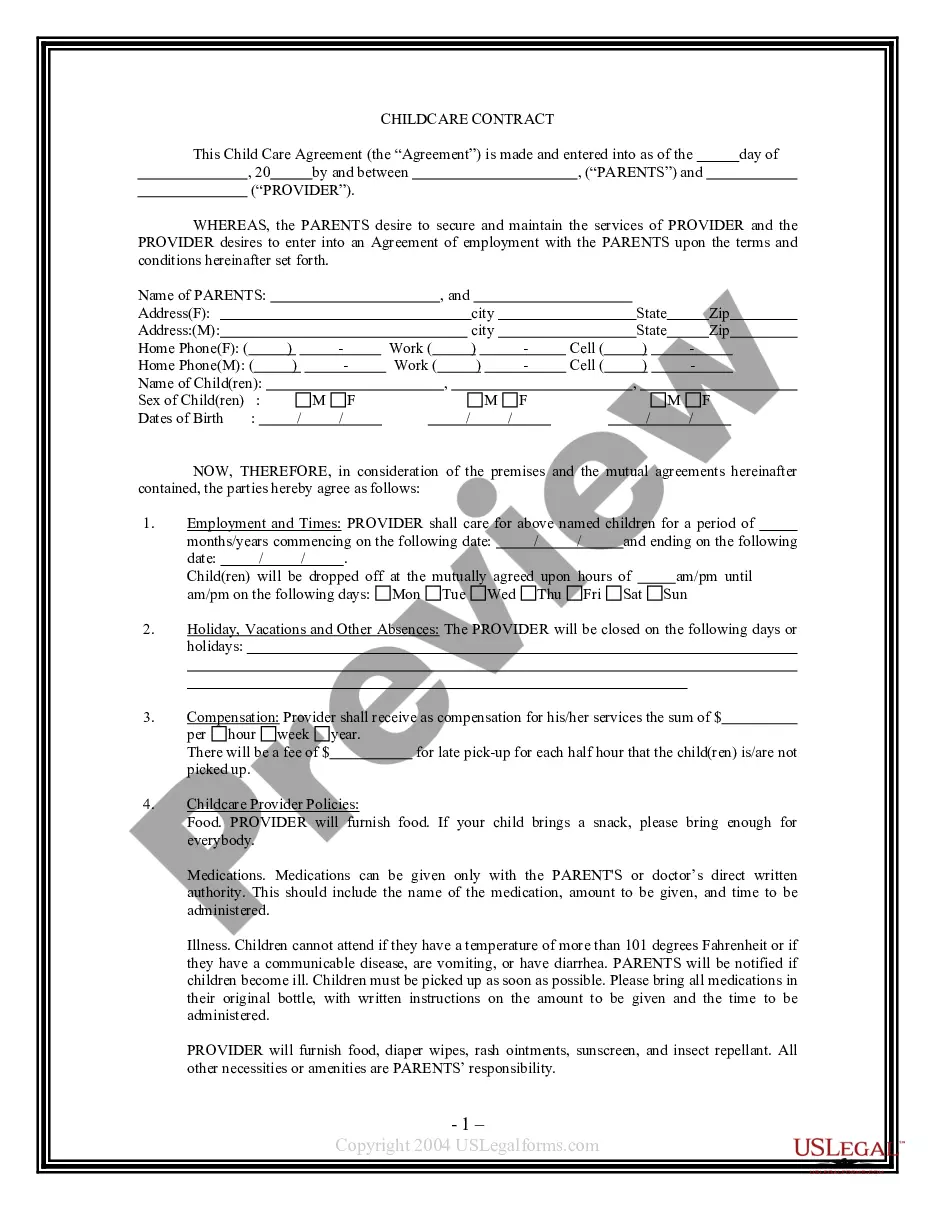
The Maryland Child Care Services Package is a comprehensive set of essential legal forms specifically designed for the establishment and operation of a child care service in Maryland. This package assists providers in minimizing liability and reducing the risk of future legal disputes, making it an essential resource for both new and existing child care providers. By choosing this package, you save more than 50 percent compared to purchasing each form individually.
What’s included in this form package

Situations where these forms applies
This package is useful in several situations, including:
- Starting a new child care service and needing a structured contract and legal agreements.
- Hiring a director for your child care center and requiring a comprehensive employment agreement.
- Promoting your child care services to potential clients in a professional manner.
- Ensuring you have liability protections in place for any injuries that may occur while children are under your care.
- Understanding tax implications related to running a home daycare and how to manage expenses effectively.
Who should use this form package
- Individuals starting a child care service in Maryland.
- Existing child care providers looking to formalize agreements and improve liability protection.
- Directors of child care centers who need structured employment conditions.
- Home daycare providers who want to inform themselves about tax matters.
Instructions for completing these forms
- Review all included forms carefully to understand their purpose and content.
- Identify and fill in the parties involved using clear and accurate information.
- Enter important dates and signatures where indicated on each form.
- Ensure all legal requirements and specifics are adhered to according to Maryland regulations.
- Store completed forms securely to maintain their confidentiality and integrity.
Do forms in this package need to be notarized?
Forms in this package usually don’t need notarization, but certain jurisdictions or signing circumstances may require it. US Legal Forms provides a secure online notarization option powered by Notarize, accessible 24/7 from anywhere.
Get your form ready online
Our built-in tools help you complete, sign, share, and store your documents in one place.
Make edits, fill in missing information, and update formatting in US Legal Forms—just like you would in MS Word.
Download a copy, print it, send it by email, or mail it via USPS—whatever works best for your next step.
Sign and collect signatures with our SignNow integration. Send to multiple recipients, set reminders, and more. Go Premium to unlock E-Sign.
If this form requires notarization, complete it online through a secure video call—no need to meet a notary in person or wait for an appointment.
We protect your documents and personal data by following strict security and privacy standards.

Make edits, fill in missing information, and update formatting in US Legal Forms—just like you would in MS Word.

Download a copy, print it, send it by email, or mail it via USPS—whatever works best for your next step.

Sign and collect signatures with our SignNow integration. Send to multiple recipients, set reminders, and more. Go Premium to unlock E-Sign.

If this form requires notarization, complete it online through a secure video call—no need to meet a notary in person or wait for an appointment.

We protect your documents and personal data by following strict security and privacy standards.
Typical mistakes to avoid
- Failing to include all required signatures on contracts.
- Incorrectly filling out business-related tax forms, leading to compliance issues.
- Using outdated contracts or agreements that do not reflect current laws.
Benefits of using this package online
- Immediate access to a comprehensive set of forms tailored to Maryland law.
- Convenient download options that allow customization according to your specific needs.
- Time-saving by reducing the need to draft documents from scratch.
Looking for another form?



Form popularity
FAQ
For families earning less than $65,000 per year, the new subsidy will cover up to 85 per cent of their costs. For families earning between $65,000 and $170,000 the rate will gradually taper to 50 per cent of costs.
To be eligible for the CCS you must meet certain requirements, some of which are: Be a Family Tax Benefit Child or Regular Care Child. Be 13 years of age or under, and not attending secondary school. Meet immunisation requirements.
The percentage of subsidy a family is entitled to is based on combined annual family income. Families earning $68,163 or less receive the maximum CCS rate of 85 per cent of the actual fee charged, or of the relevant hourly rate cap (whichever is lower).
At least 20 years old with a high school diploma or equivalent or successful completion of courses for credit from accredited college or university; and 6 semester hours or 90 clock hours of approved training or CDA and either 1 year supervised work experience in group program for preschoolers or as a registered family
Families take the voucher to a child care provider that participates in the Maryland EXCELS program. The voucher is a signed agreement between the State, provider and parent. The voucher is returned to CCS Central for processing.
Subsidy Percentage Combined family income determines the percentage of subsidy you're eligible for. This applies to the hourly fee charged or the hourly rate cap whichever is lowest. The hourly rate cap for Outside School Hours Care is $10.29 for 2018/2019.
At least 20 years old with a high school diploma or equivalent or successful completion of courses for credit from accredited college or university; and 6 semester hours or 90 clock hours of approved training or CDA and either 1 year supervised work experience in group program for preschoolers or as a registered family
The Child Care Subsidy percentage you're entitled to depends on your family's income.
Poor Families That Pay for Child Care Spend an Average of 30 Percent of Their Income on it Center on Budget and Policy Priorities.