Married Common In Law
Description
Get your form ready online
Our built-in tools help you complete, sign, share, and store your documents in one place.
Make edits, fill in missing information, and update formatting in US Legal Forms—just like you would in MS Word.
Download a copy, print it, send it by email, or mail it via USPS—whatever works best for your next step.
Sign and collect signatures with our SignNow integration. Send to multiple recipients, set reminders, and more. Go Premium to unlock E-Sign.
If this form requires notarization, complete it online through a secure video call—no need to meet a notary in person or wait for an appointment.
We protect your documents and personal data by following strict security and privacy standards.

Make edits, fill in missing information, and update formatting in US Legal Forms—just like you would in MS Word.

Download a copy, print it, send it by email, or mail it via USPS—whatever works best for your next step.

Sign and collect signatures with our SignNow integration. Send to multiple recipients, set reminders, and more. Go Premium to unlock E-Sign.

If this form requires notarization, complete it online through a secure video call—no need to meet a notary in person or wait for an appointment.

We protect your documents and personal data by following strict security and privacy standards.
Looking for another form?




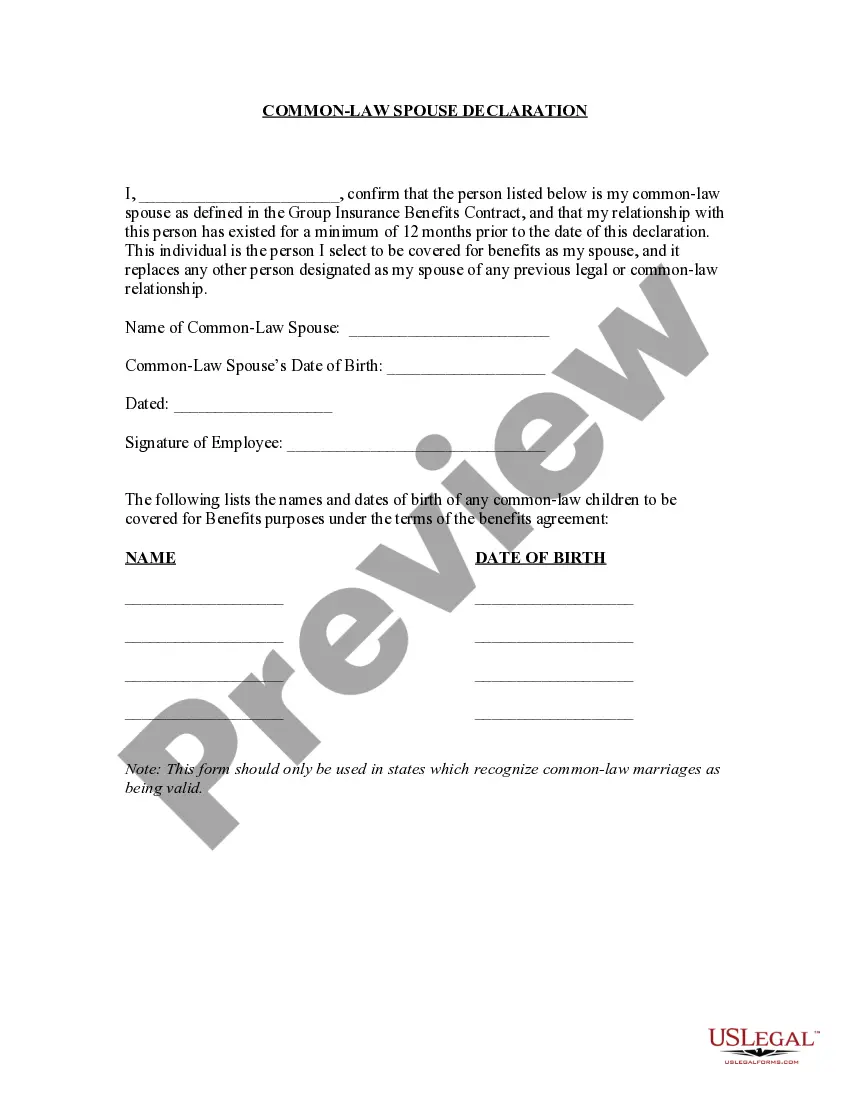
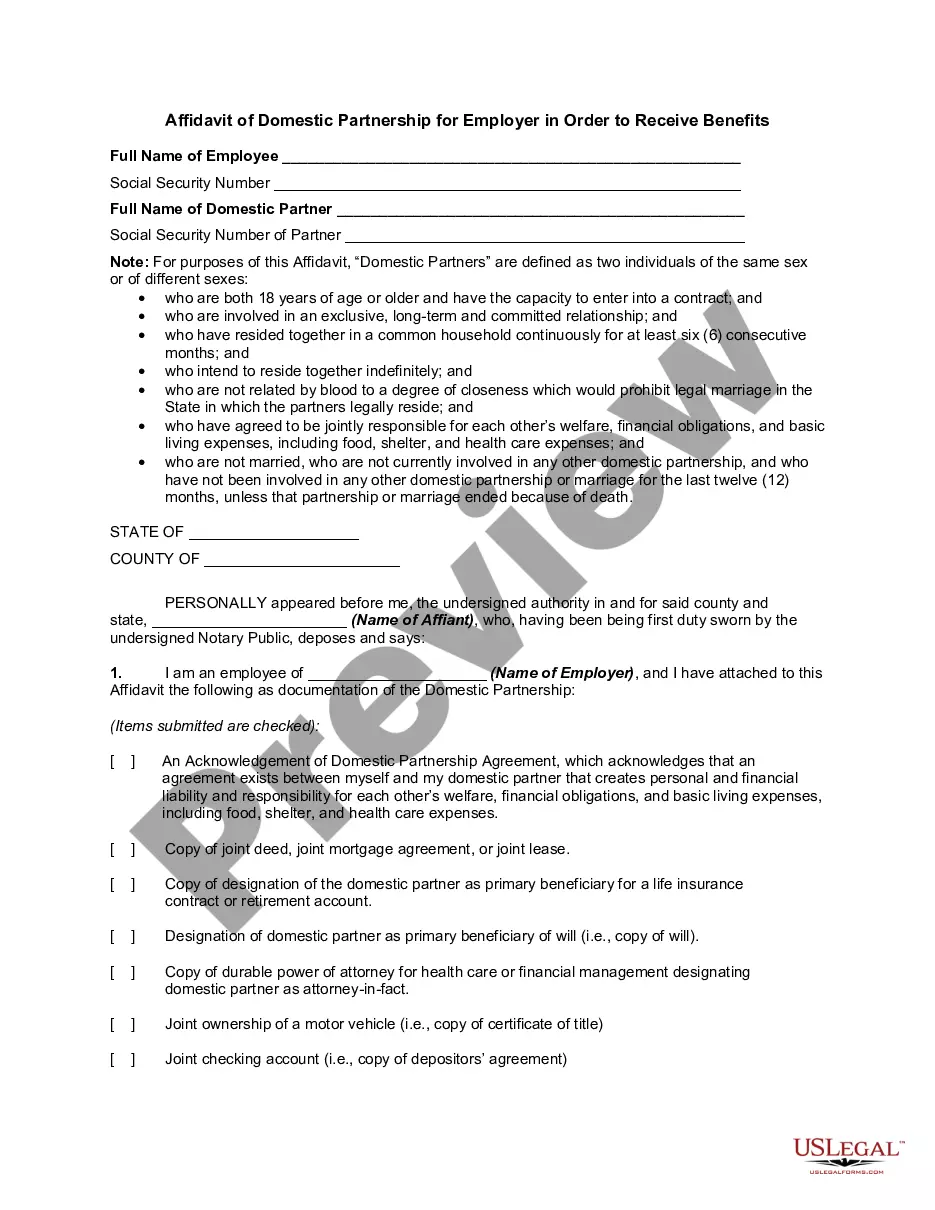
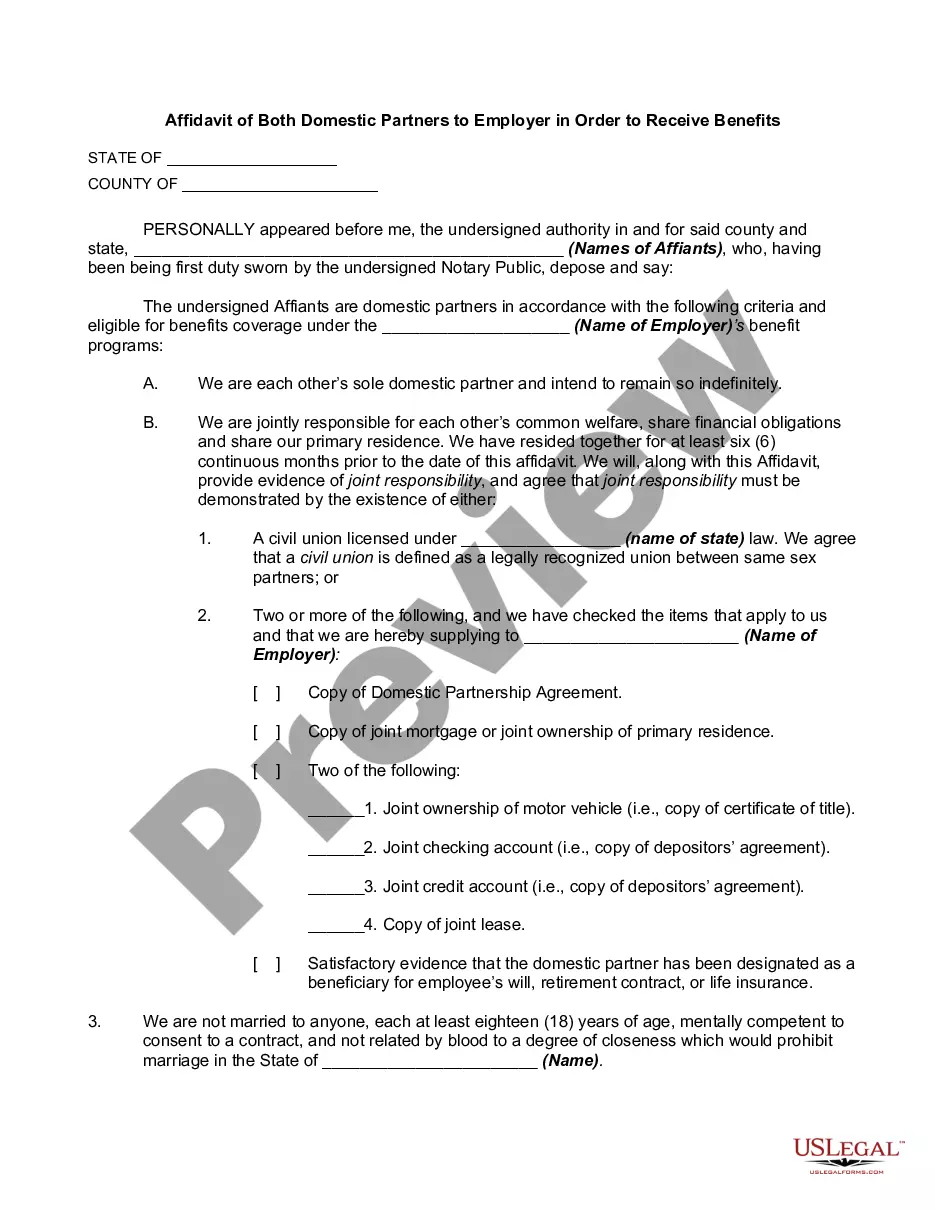
How to fill out Common Law Spouse Or Marriage Declaration Or Affidavit?
Whether for business purposes or for individual affairs, everybody has to manage legal situations sooner or later in their life. Completing legal documents demands careful attention, starting with choosing the correct form template. For example, when you pick a wrong edition of a Married Common In Law, it will be rejected when you send it. It is therefore important to have a reliable source of legal files like US Legal Forms.
If you need to obtain a Married Common In Law template, stick to these simple steps:
- Find the sample you need using the search field or catalog navigation.
- Check out the form’s description to ensure it fits your case, state, and region.
- Click on the form’s preview to see it.
- If it is the wrong document, return to the search function to find the Married Common In Law sample you need.
- Get the template when it matches your requirements.
- If you have a US Legal Forms account, simply click Log in to gain access to previously saved documents in My Forms.
- In the event you don’t have an account yet, you can download the form by clicking Buy now.
- Pick the appropriate pricing option.
- Finish the account registration form.
- Select your payment method: use a bank card or PayPal account.
- Pick the document format you want and download the Married Common In Law.
- When it is saved, you can complete the form by using editing software or print it and finish it manually.
With a substantial US Legal Forms catalog at hand, you never have to spend time looking for the right sample across the web. Utilize the library’s easy navigation to get the right template for any occasion.
Form popularity
FAQ
Both of the common law partners must file their own tax returns with Internal Revenue Service (IRS). Apart from their personal information, they need to mention the name of their common-law partner, their net income, and social insurance number on their tax return.
Common law marriages are recognized for federal income tax purposes if they are recognized by the state in which the taxpayers reside. If the taxpayers later move to a state which does not recognize common law marriages, they are still considered married for federal income tax purposes.
Common-law marriages have three basic features: (1) A present agreement to be married, (2) cohabitation, and (3) public representations of marriage. taxpayer and the taxpayer's spouse are currently domiciled in a state that requires a ceremony to establish the marital relationship.
You usually must be married to file together. However, if you are non-married but want to file a joint return, it is possible you can use married filing jointly if you're considered married under a common law marriage recognized by either of these: The state where you live. The state where the common-law marriage began.
A common law marriage is a legally recognized marriage between two people who have not purchased a marriage license or had their marriage solemnized by a ceremony. Not all states have statutes addressing common law marriage.