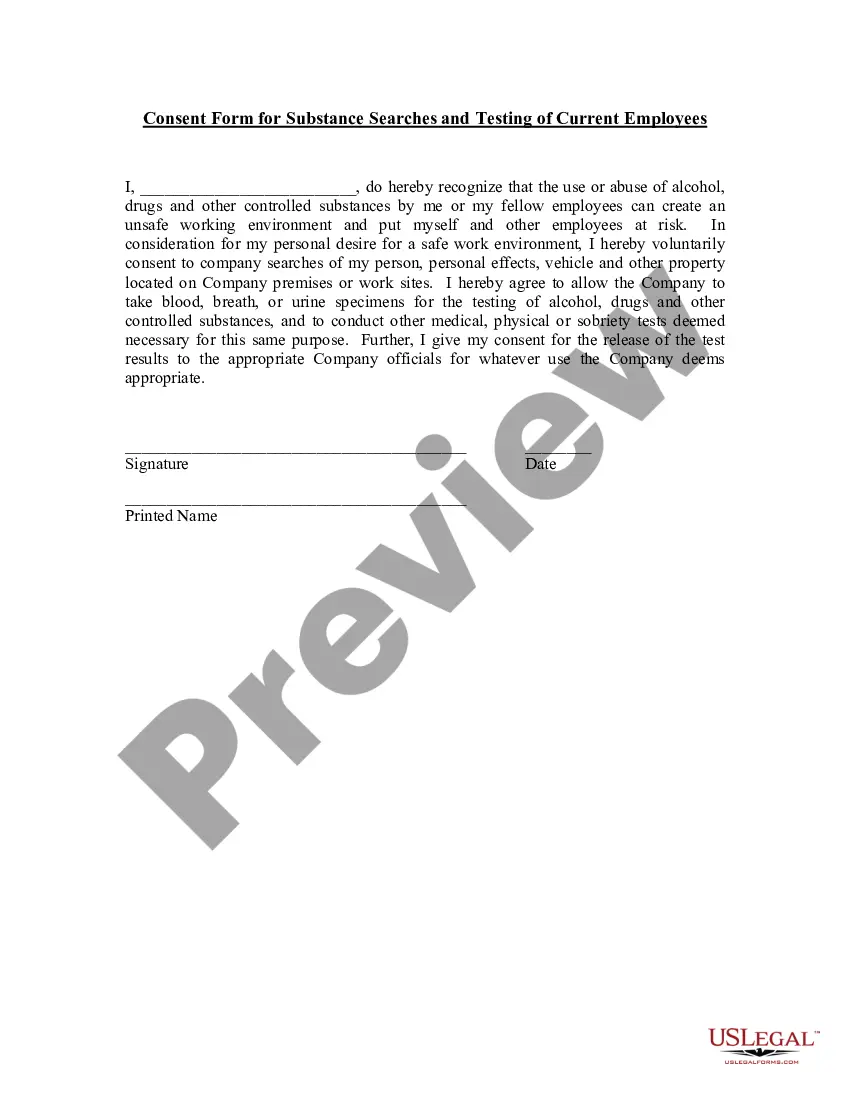
Consent Searches Of Persons
Description
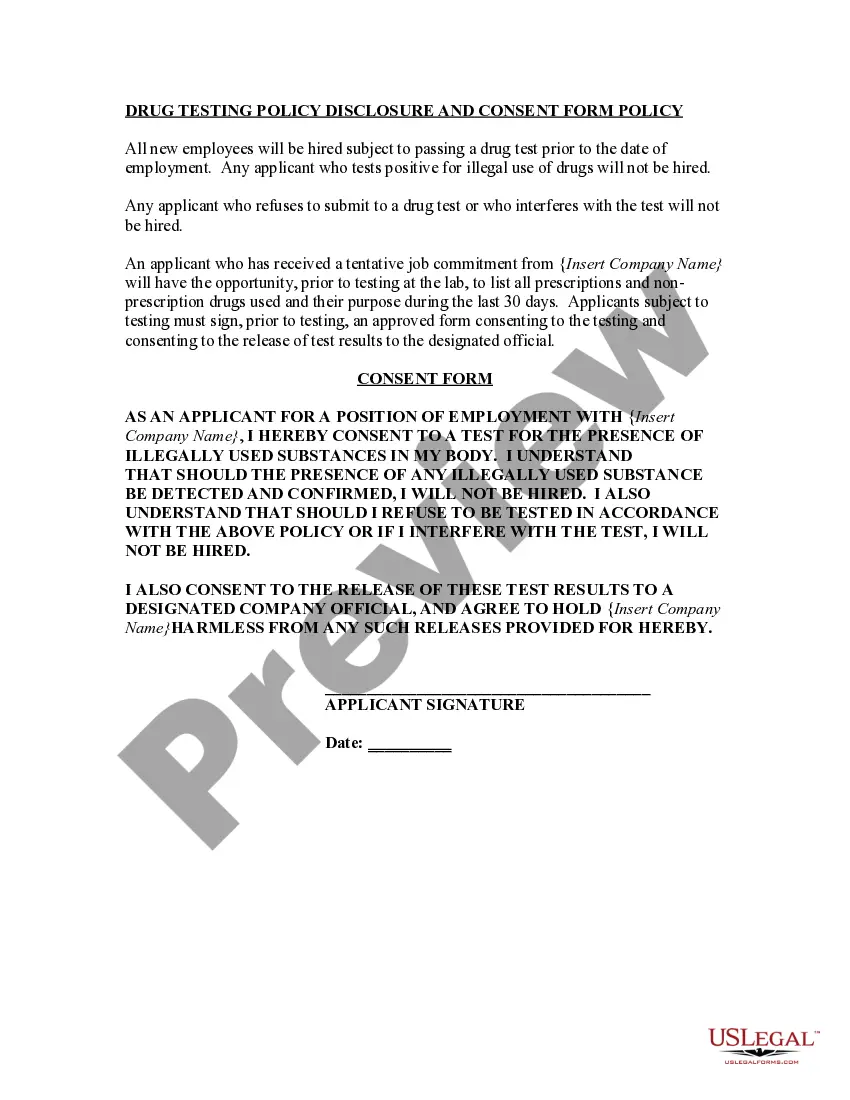
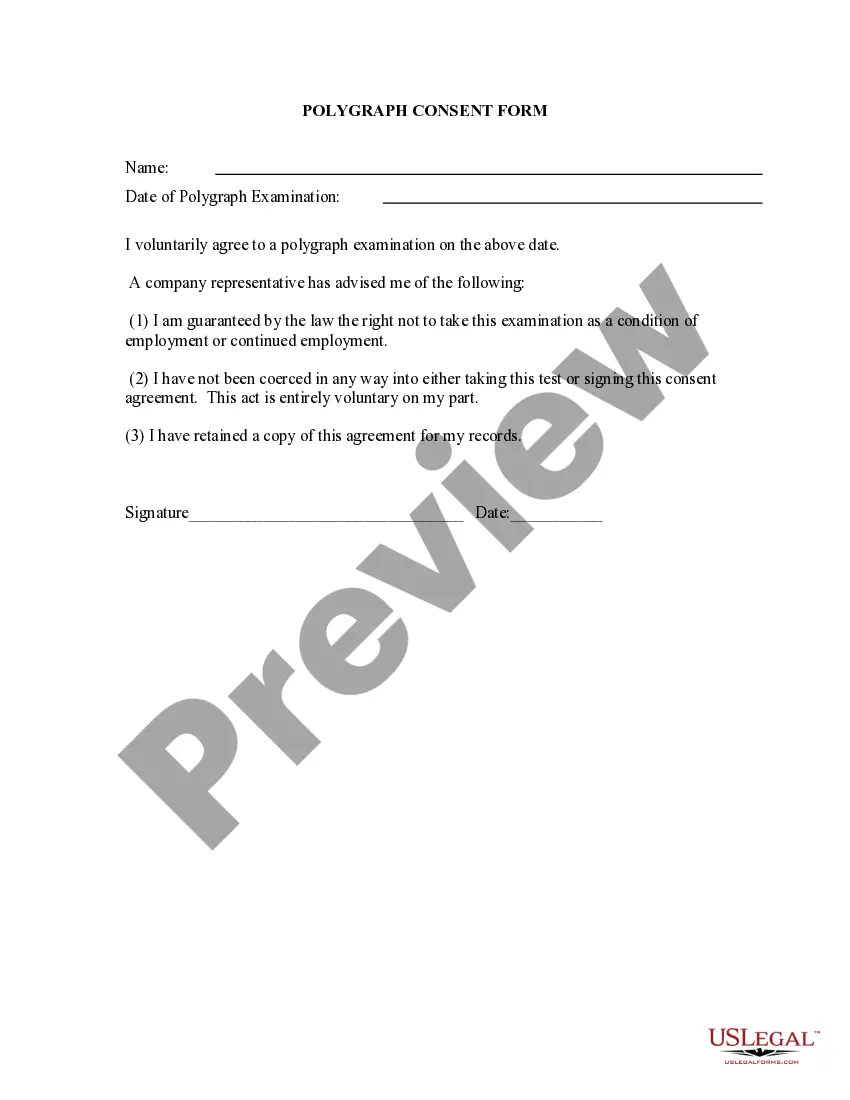
Get your form ready online
Our built-in tools help you complete, sign, share, and store your documents in one place.
Make edits, fill in missing information, and update formatting in US Legal Forms—just like you would in MS Word.
Download a copy, print it, send it by email, or mail it via USPS—whatever works best for your next step.
Sign and collect signatures with our SignNow integration. Send to multiple recipients, set reminders, and more. Go Premium to unlock E-Sign.
If this form requires notarization, complete it online through a secure video call—no need to meet a notary in person or wait for an appointment.
We protect your documents and personal data by following strict security and privacy standards.

Make edits, fill in missing information, and update formatting in US Legal Forms—just like you would in MS Word.

Download a copy, print it, send it by email, or mail it via USPS—whatever works best for your next step.

Sign and collect signatures with our SignNow integration. Send to multiple recipients, set reminders, and more. Go Premium to unlock E-Sign.

If this form requires notarization, complete it online through a secure video call—no need to meet a notary in person or wait for an appointment.

We protect your documents and personal data by following strict security and privacy standards.
Looking for another form?


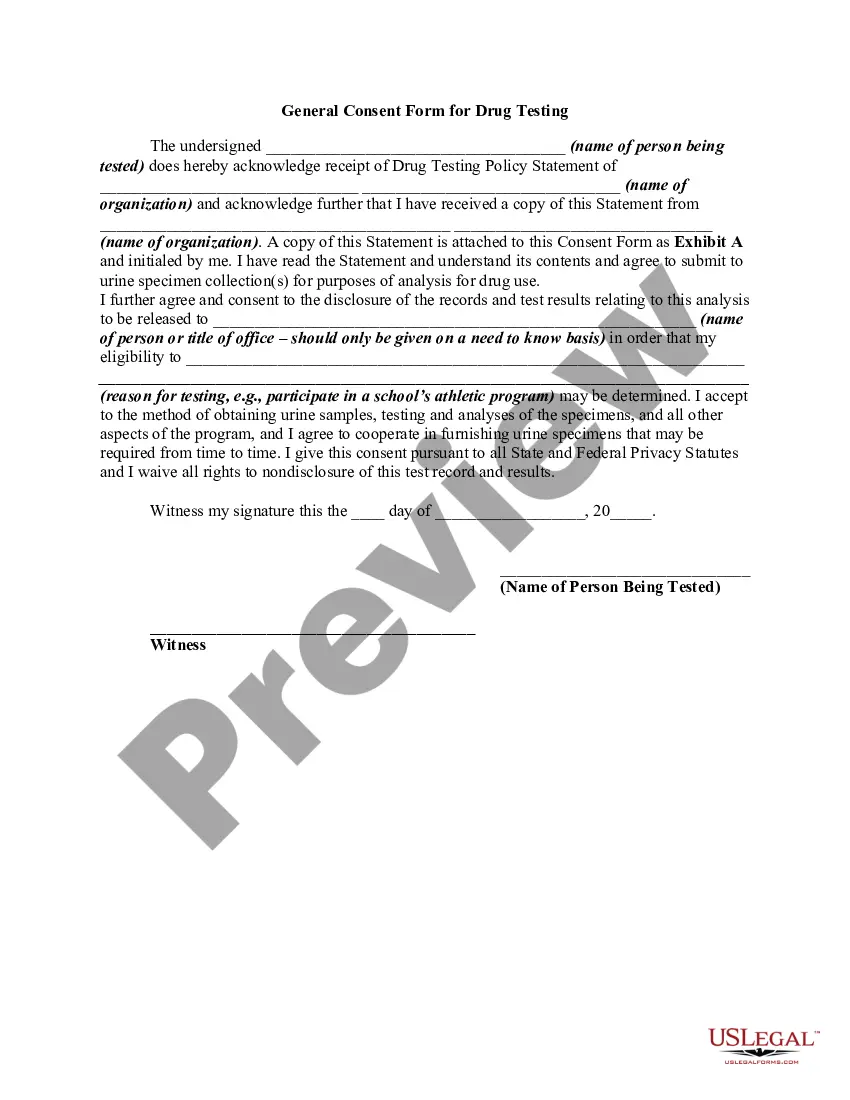
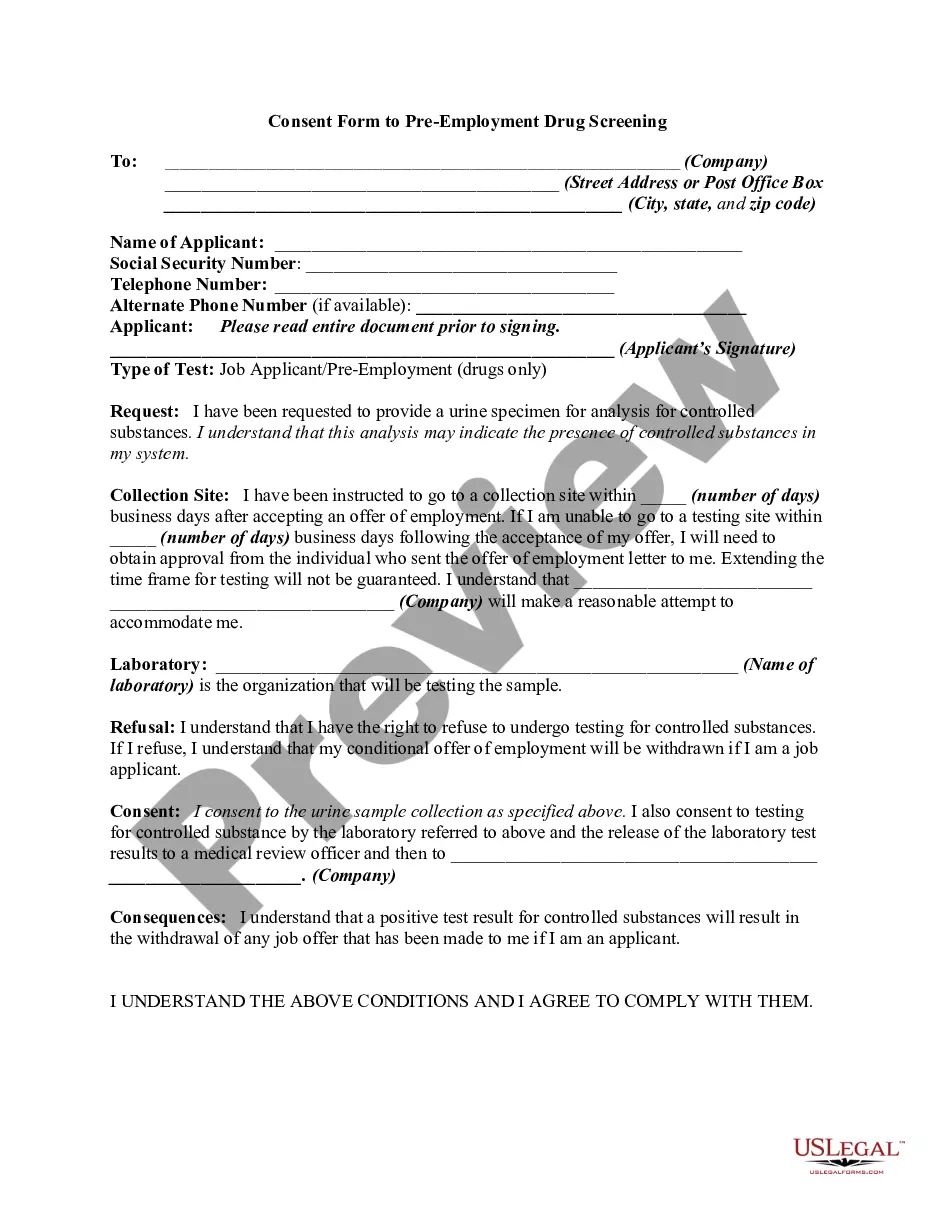
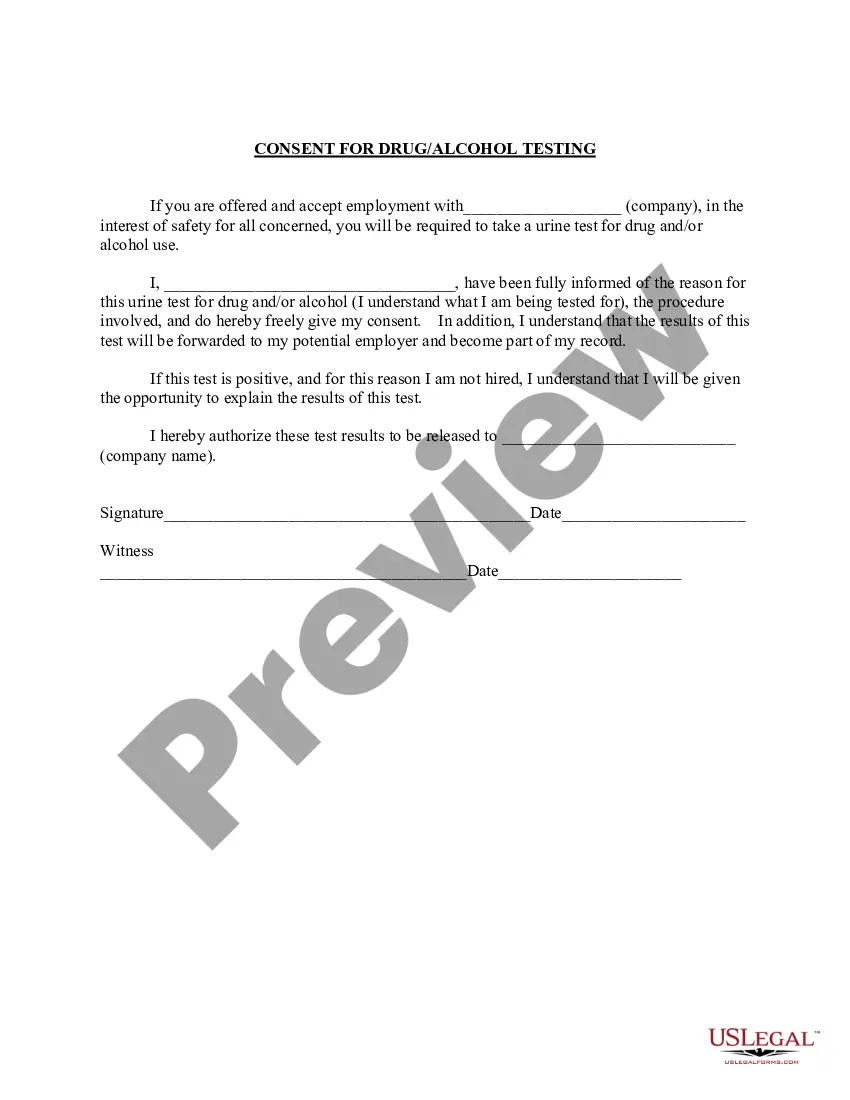
How to fill out Consent Form For Substance Searches Of Vehicles And Personal Effects And For Testing Of Employees?
It’s obvious that you can’t become a legal professional immediately, nor can you learn how to quickly draft Consent Searches Of Persons without the need of a specialized background. Putting together legal forms is a time-consuming venture requiring a particular training and skills. So why not leave the preparation of the Consent Searches Of Persons to the professionals?
With US Legal Forms, one of the most comprehensive legal template libraries, you can find anything from court paperwork to templates for in-office communication. We know how important compliance and adherence to federal and local laws and regulations are. That’s why, on our platform, all forms are location specific and up to date.
Here’s how you can get started with our platform and obtain the form you need in mere minutes:
- Discover the form you need by using the search bar at the top of the page.
- Preview it (if this option available) and check the supporting description to figure out whether Consent Searches Of Persons is what you’re searching for.
- Begin your search again if you need a different form.
- Set up a free account and select a subscription option to purchase the form.
- Choose Buy now. Once the transaction is complete, you can download the Consent Searches Of Persons, complete it, print it, and send or mail it to the designated people or organizations.
You can re-access your documents from the My Forms tab at any time. If you’re an existing customer, you can simply log in, and locate and download the template from the same tab.
Regardless of the purpose of your forms-be it financial and legal, or personal-our platform has you covered. Try US Legal Forms now!
Form popularity
FAQ
Section 443 of Canada's Criminal Code provides that a justice may issue a search warrant when there is 'reasonable ground' to believe that a building, receptacle, or place contains the following: (1) anything with respect to which a criminal act has been committed, (2) evidence bearing upon the commission of an offense ...
Consenting to a search The police can also search you if you give them ?informed consent?. This means you understand the possible consequences of the search and you agree to let them search you. The search must be limited to what you have consented to. The police must tell you the reasons why they want to search.
Reasonable and probable grounds is the ?the point where credibly-based probability replaces suspicion". It is the reasonable belief that "an event not unlikely to occur for reasons that rise above mere suspicion". "Reasonableness" concerns the legitimate expectations in the existence of certain facts.
For consent to be valid it must be voluntary and informed. Voluntary search requires that the consent to be given without coercion. Informed consent to a search requires the accused to be aware of the right to refuse the search and the consequences of consenting to the search.