Fcra Law For Credit
Description
Get your form ready online
Our built-in tools help you complete, sign, share, and store your documents in one place.
Make edits, fill in missing information, and update formatting in US Legal Forms—just like you would in MS Word.
Download a copy, print it, send it by email, or mail it via USPS—whatever works best for your next step.
Sign and collect signatures with our SignNow integration. Send to multiple recipients, set reminders, and more. Go Premium to unlock E-Sign.
If this form requires notarization, complete it online through a secure video call—no need to meet a notary in person or wait for an appointment.
We protect your documents and personal data by following strict security and privacy standards.

Make edits, fill in missing information, and update formatting in US Legal Forms—just like you would in MS Word.

Download a copy, print it, send it by email, or mail it via USPS—whatever works best for your next step.

Sign and collect signatures with our SignNow integration. Send to multiple recipients, set reminders, and more. Go Premium to unlock E-Sign.

If this form requires notarization, complete it online through a secure video call—no need to meet a notary in person or wait for an appointment.

We protect your documents and personal data by following strict security and privacy standards.
Looking for another form?








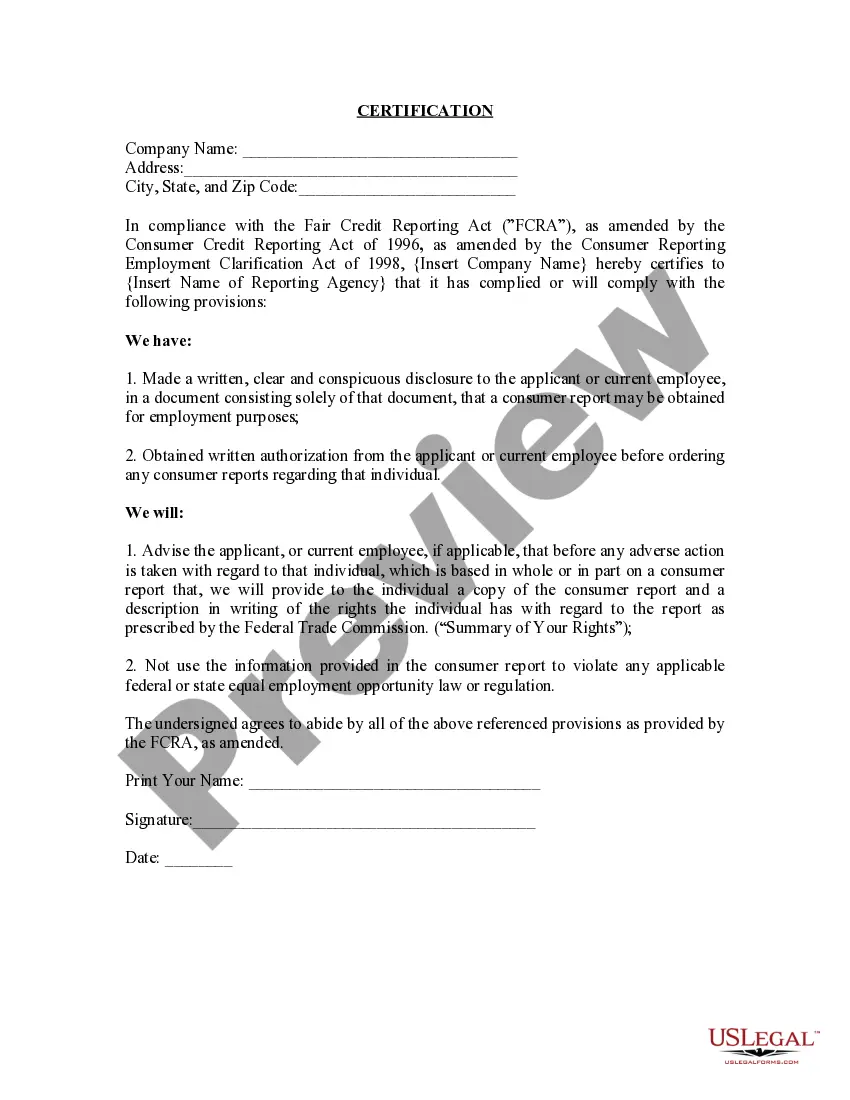
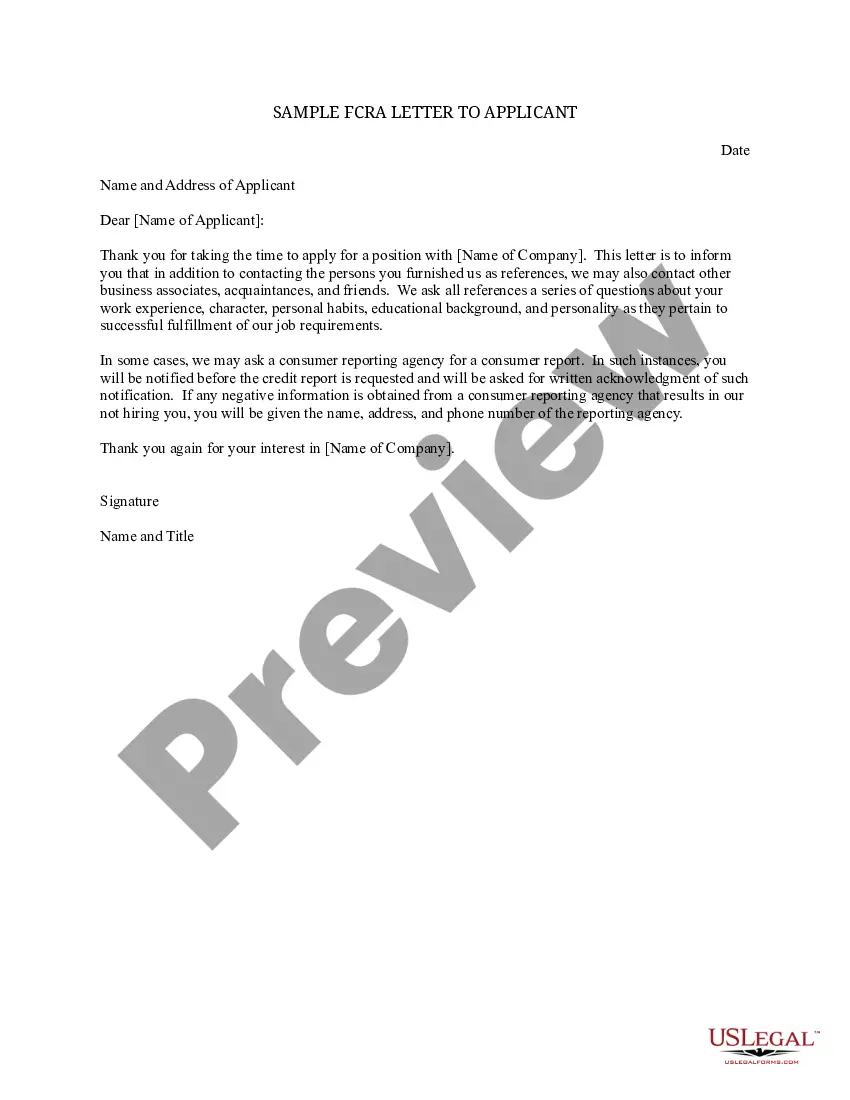
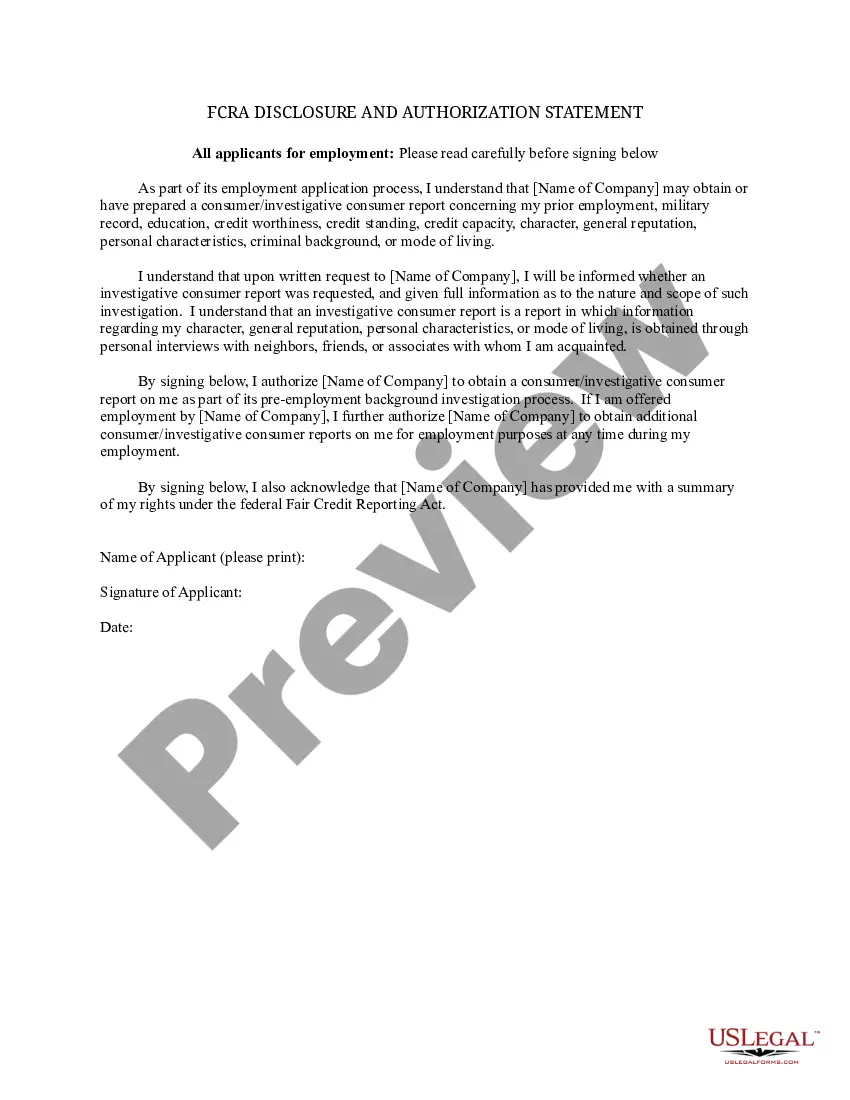
How to fill out FCRA Certification Letter To Consumer Reporting Agency?
- If you're a returning user, log in to your account and download the required form by clicking the Download button. Ensure your subscription is active or renew it if necessary.
- For newcomers, start by checking the Preview mode and detailed descriptions to confirm the document suits your needs and adheres to local jurisdiction standards.
- If the selected document doesn't match your requirements, utilize the Search tab to find a more suitable template.
- Once you find the correct document, click on the Buy Now button and select your preferred subscription plan. You'll need to create an account for full access.
- Complete your purchase by entering your credit card details or using your PayPal account for the payment.
- Finally, download your chosen form and save it on your device. You can also access it later from the My Forms section of your profile.
US Legal Forms offers a robust collection of over 85,000 fillable and editable legal forms, ensuring you can find what you need at an affordable cost. Additionally, users receive access to premium experts for assistance, guaranteeing that your documents are accurate and legally compliant.
Start your legal journey today by utilizing the comprehensive resources from US Legal Forms, and ensure your documents are handled with care. Explore now!
Form popularity
FAQ
To become FCRA compliant, you need to understand the FCRA law for credit, which governs how credit reporting agencies manage consumer data. Start by reviewing your processes for obtaining and handling credit information. Ensure that your organization has clear policies and procedures that reflect these legal requirements. Additionally, consider using platforms like US Legal Forms, which provide resources and templates to help you create compliant documents tailored to your business needs.
In simple terms, the FCRA law for credit makes sure you are treated fairly when it comes to your credit information. It gives you rights to access your credit report, correct errors, and understand how your credit information is used. It's all about ensuring that credit reporting is transparent and that consumers can take control of their financial reputation.
When your credit report states it meets FCRA requirements, it indicates that the information has been verified as accurate and complies with the FCRA law for credit. This means you can trust the integrity of the information presented. Inaccurate or outdated data can lead to negative impacts on your credit score, so knowing it meets FCRA standards is reassuring.
The new FCRA law for credit passed in 2025 focuses on enhancing consumer protections and improving accuracy in credit reporting. This includes stricter regulations on how long negative information can remain on credit reports and enhanced dispute resolution processes. Keep an eye out for updates to stay informed about how these changes may affect you.
The FCRA law for credit governs how collection agencies report debt information. It prohibits agencies from reporting inaccurate information and requires them to validate debts upon request. If a collection is found to be inaccurate, you have the right to dispute it and have it removed from your credit report.
To fill out a credit dispute form under the FCRA law for credit, first identify the items you wish to dispute on your credit report. Then, provide your personal information, details of the items in question, and the reasons for disputing them. Submit this form to the credit bureau, and they are obligated to investigate your claims.
The FCRA law for credit is designed to ensure fair treatment in credit reporting. It regulates how credit information is collected, shared, and used. Essentially, the FCRA protects consumers by promoting accuracy and privacy in their credit records.
Under the FCRA law for credit, several practices are prohibited, including reporting inaccurate information and failing to investigate disputes. Credit reporting agencies cannot provide information without proper verification, ensuring accuracy and fairness. Understanding these restrictions empowers you to take action if you encounter violations.
To effectively use the FCRA law for credit, familiarize yourself with your rights regarding credit reporting and dispute resolution. Regularly review your credit reports for inaccuracies and report any errors to your credit agency. Knowing how the FCRA applies helps you protect your creditworthiness and ensure fair treatment.
The new FCRA law introduces significant updates to how credit reporting agencies handle consumer information. These updates aim to enhance transparency and accountability in credit reporting. By understanding the FCRA law for credit, consumers can better navigate their rights and strengthen their financial positions.