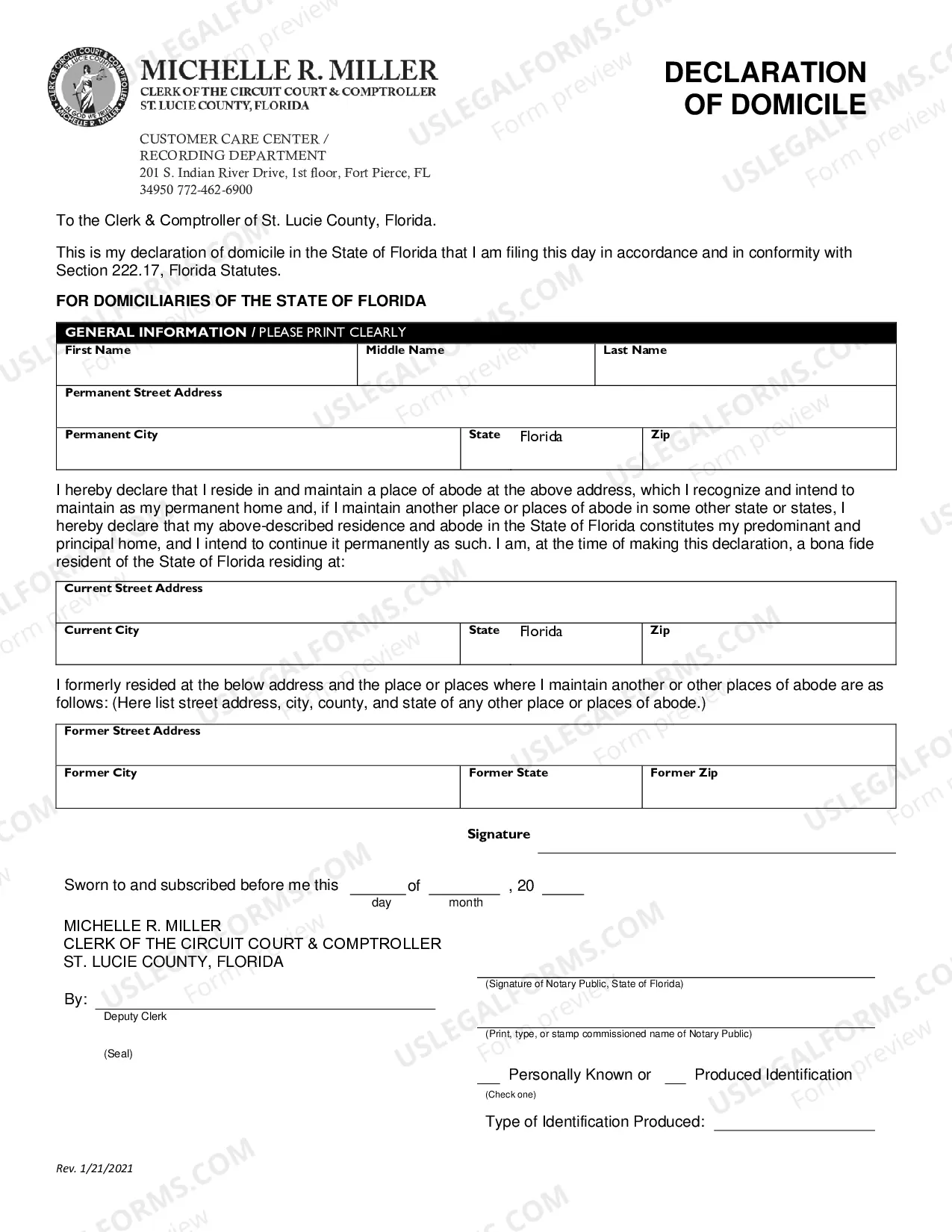
Amended Uniform commercial code security agreement
What this document covers
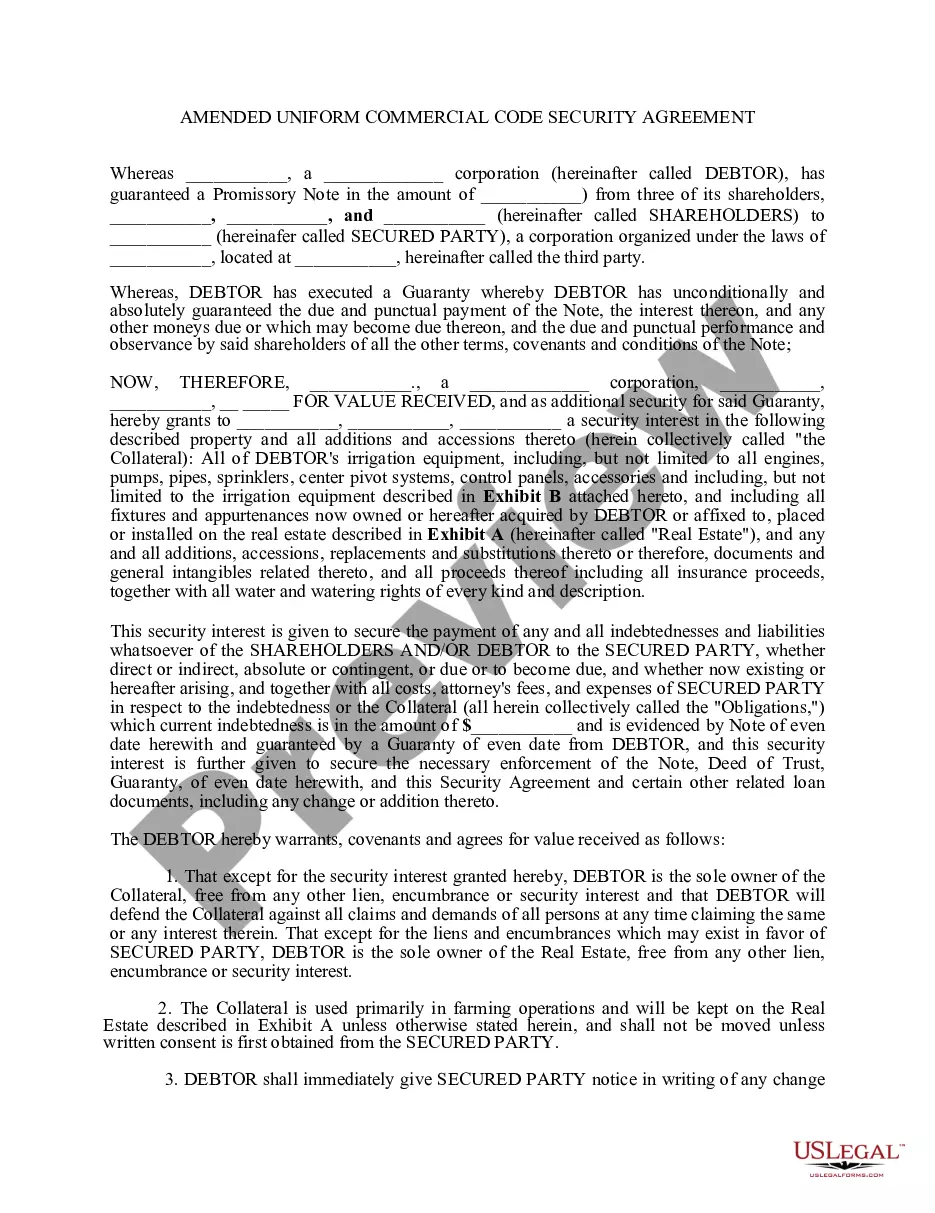
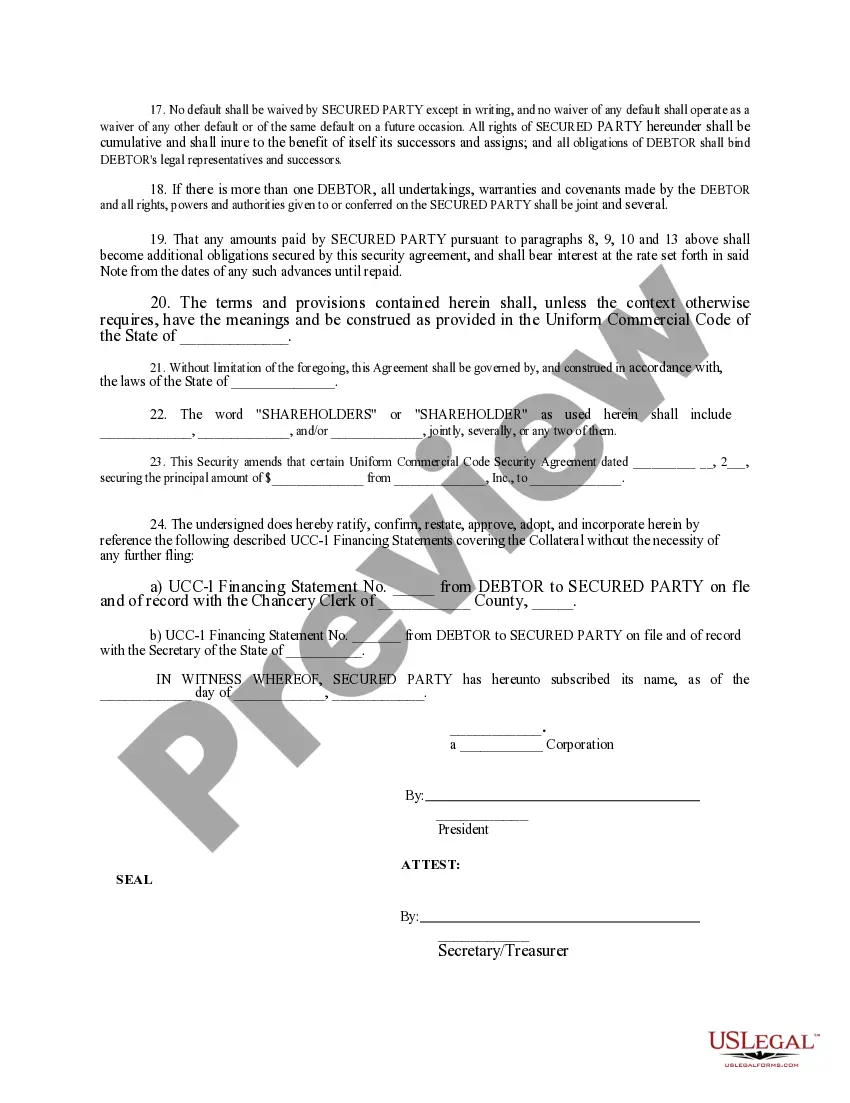
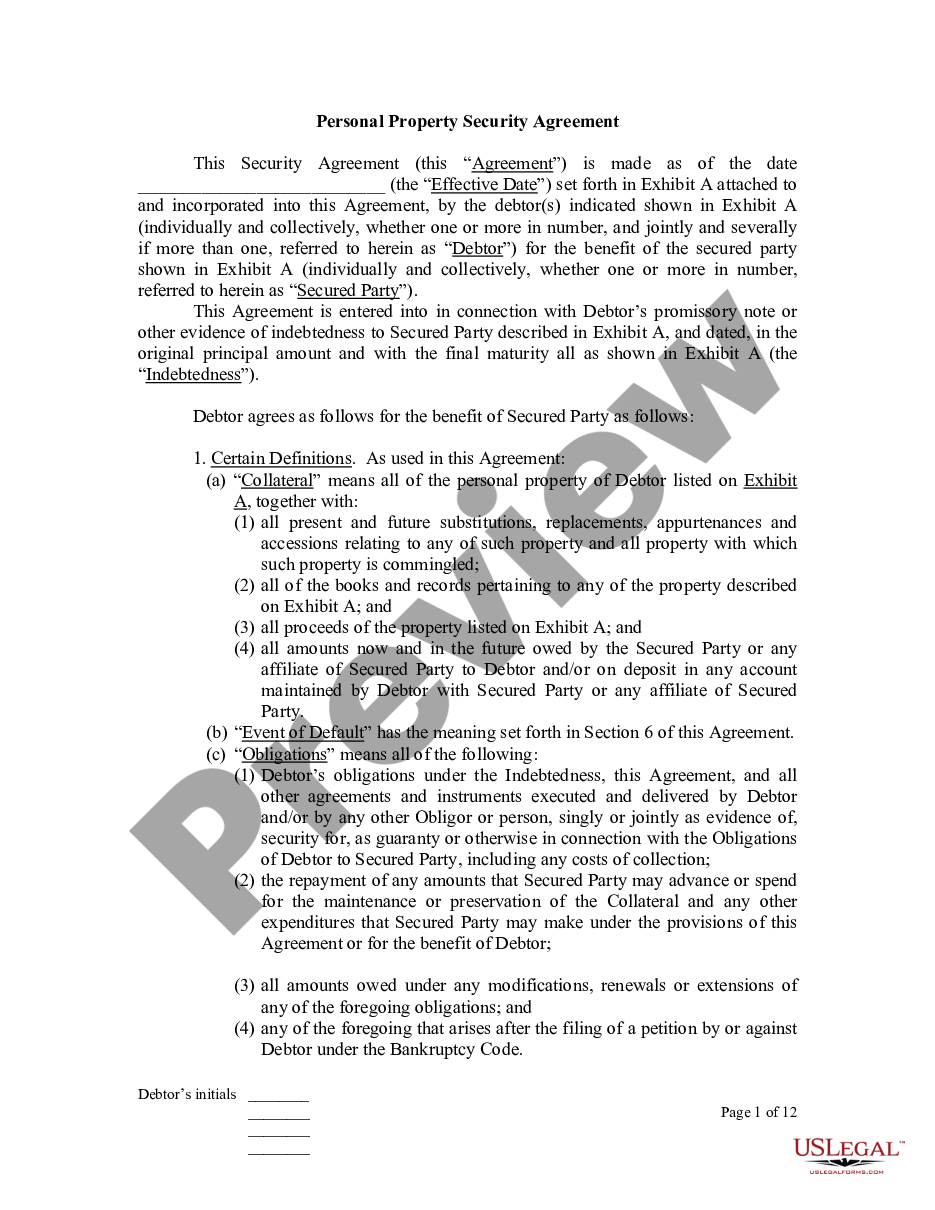
The amended Uniform Commercial Code (UCC) security agreement is a legal document that allows a debtor to secure a loan or financial obligation using personal property as collateral. This form is essential for businesses and individuals who need to convey a security interest in collateral to a secured party, ensuring that the lender has rights to the collateral in case of default. Unlike standard agreements, this amended version is tailored to reflect updates or changes since the original documentation, providing a clear view of the obligations and rights of involved parties.
What’s included in this form
- Identifying details of the debtor, shareholders, and secured party.
- Description of the collateral secured by the agreement.
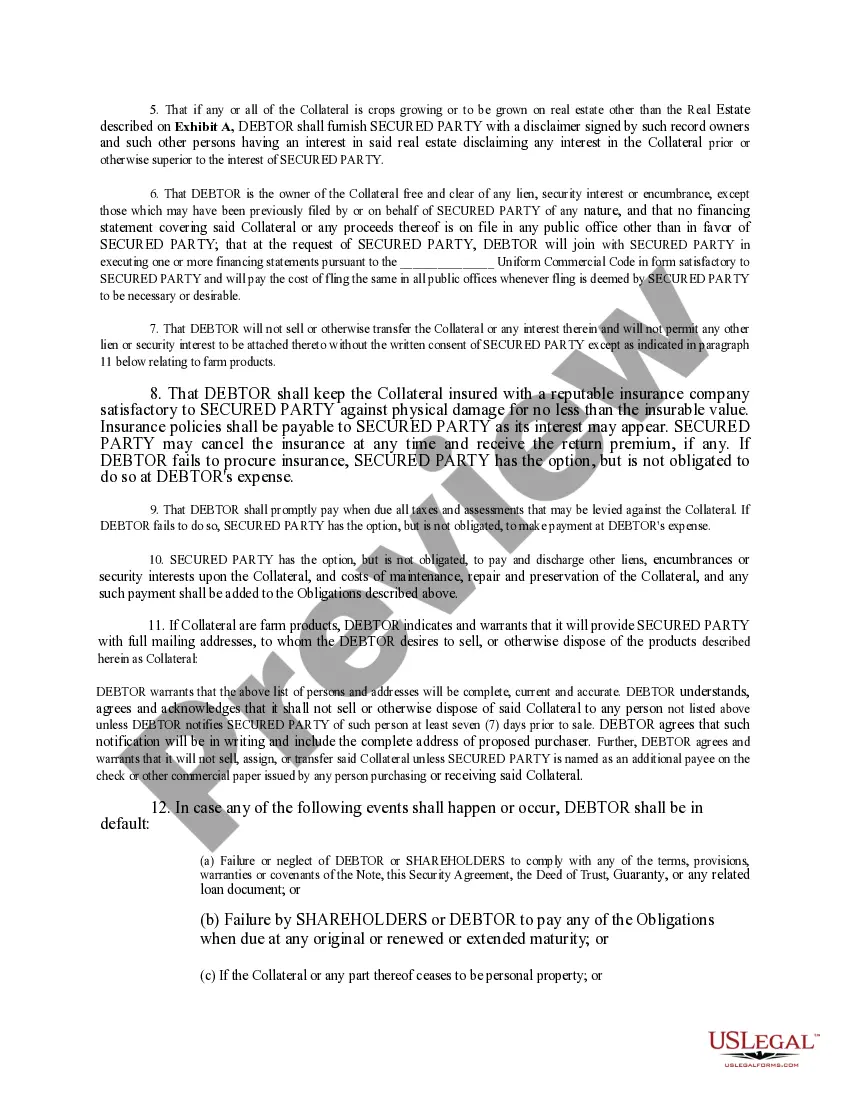
- Warranties and covenants detailing the rights and responsibilities of the debtor.
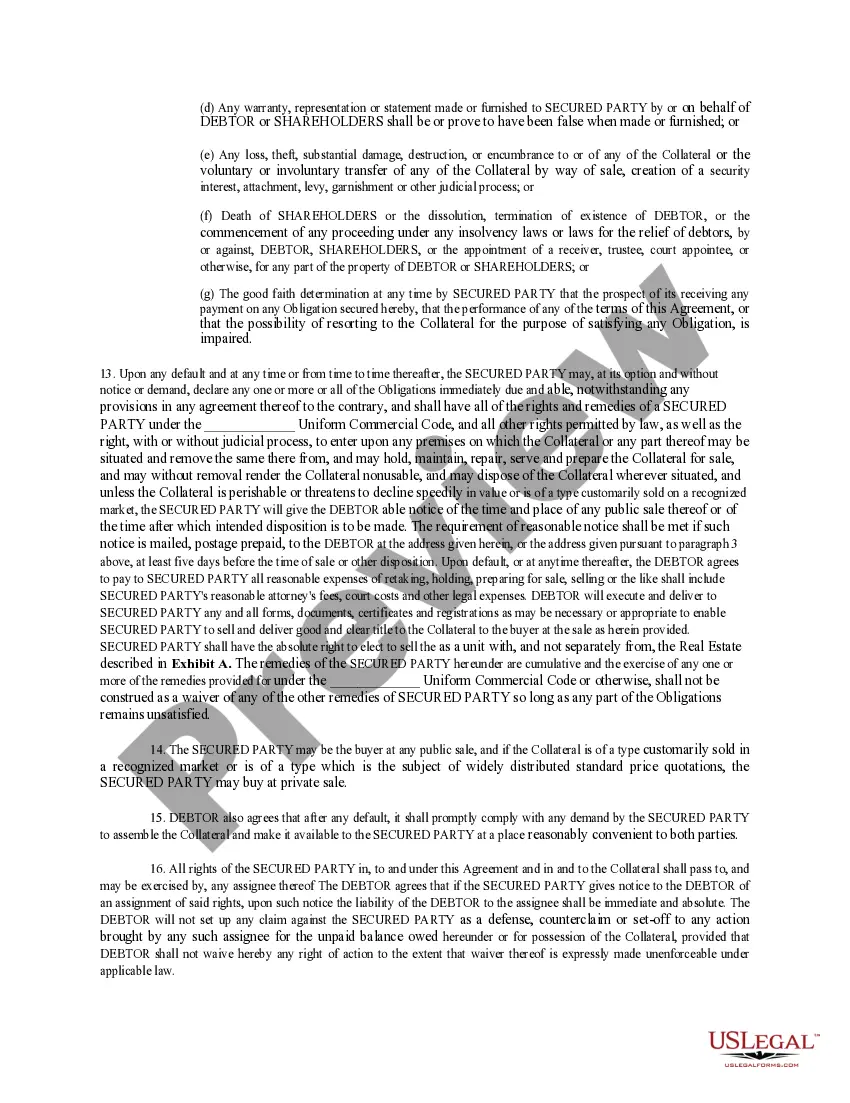
- Conditions for default and remedies available to the secured party.
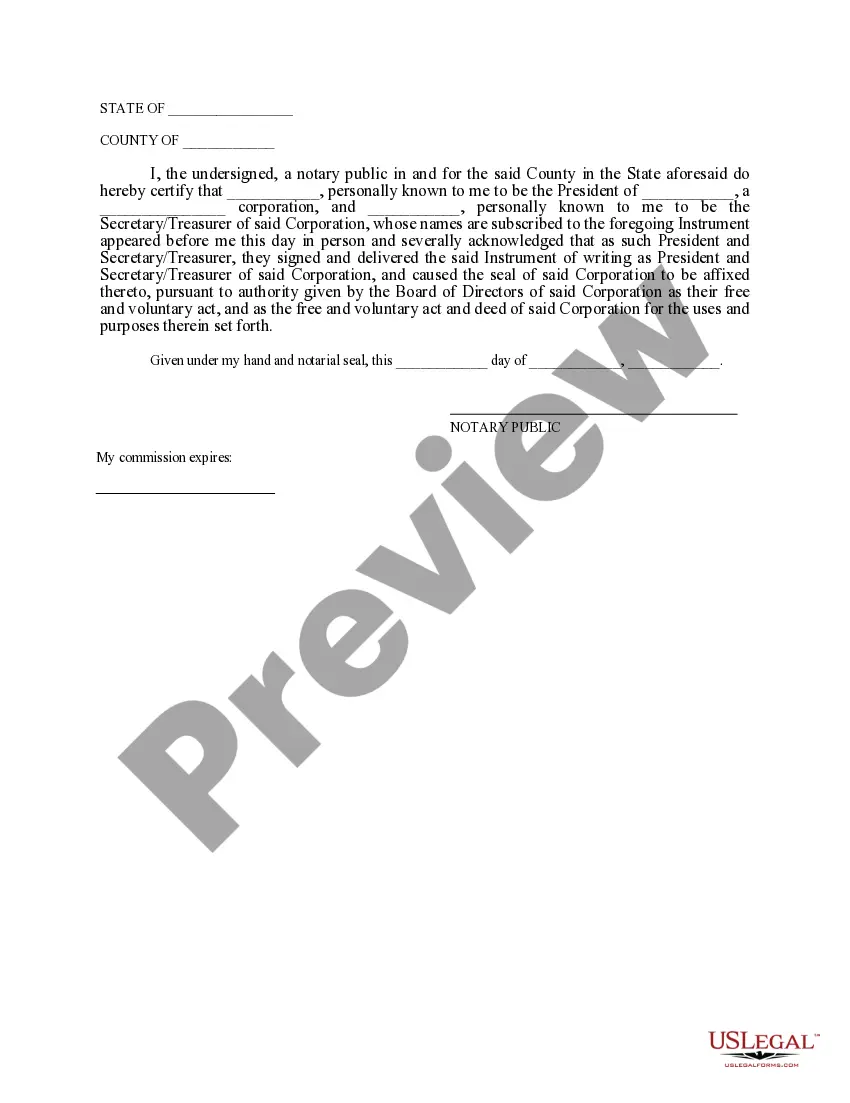
- Notarization and acknowledgment section to validate the agreement.

Situations where this form applies
You should use this amended UCC security agreement when you want to secure financing by offering personal property, such as equipment or inventory, as collateral. This applies in scenarios such as seeking loans for business expansion, purchasing new assets, or restructuring existing debt obligations. It is especially relevant when there are changes to previous agreements that require formal updates to security interests.
Who should use this form
- Business owners seeking to secure financing through the use of collateral.
- Shareholders involved in guaranteeing a loan for a corporate entity.
- Legal representatives or advisors aiding clients in drafting security agreements.
- Individuals or organizations needing to amend existing UCC security agreements.
Steps to complete this form
- Identify and input the names and details of all parties involved: debtor, shareholders, and secured party.
- Clearly describe the collateral being secured in the agreement.
- Enter the monetary amount of the loan or obligation that the security agreement covers.
- Include the necessary warranty and covenant clauses to establish responsibilities and rights.
- Ensure all parties sign the document in the presence of a notary public, if required.
Does this form need to be notarized?
To make this form legally binding, it must be notarized. Our online notarization service, powered by Notarize, lets you verify and sign documents remotely through an encrypted video session.
Get your form ready online
Our built-in tools help you complete, sign, share, and store your documents in one place.
Make edits, fill in missing information, and update formatting in US Legal Forms—just like you would in MS Word.
Download a copy, print it, send it by email, or mail it via USPS—whatever works best for your next step.
Sign and collect signatures with our SignNow integration. Send to multiple recipients, set reminders, and more. Go Premium to unlock E-Sign.
If this form requires notarization, complete it online through a secure video call—no need to meet a notary in person or wait for an appointment.
We protect your documents and personal data by following strict security and privacy standards.

Make edits, fill in missing information, and update formatting in US Legal Forms—just like you would in MS Word.

Download a copy, print it, send it by email, or mail it via USPS—whatever works best for your next step.

Sign and collect signatures with our SignNow integration. Send to multiple recipients, set reminders, and more. Go Premium to unlock E-Sign.

If this form requires notarization, complete it online through a secure video call—no need to meet a notary in person or wait for an appointment.

We protect your documents and personal data by following strict security and privacy standards.
Avoid these common issues
- Not clearly defining the collateral, which can lead to disputes.
- Failing to have all parties sign the agreement, rendering it unenforceable.
- Not properly notarizing the form if required by state law.
- Omitting important details such as the description of obligations or terms of default.
Benefits of using this form online
- Convenience of accessing and downloading the form from anywhere at any time.
- Editability allows you to customize the form to suit specific needs.
- Reliable as it is drafted by licensed attorneys, ensuring legal compliance.
Looking for another form?
Form popularity
FAQ
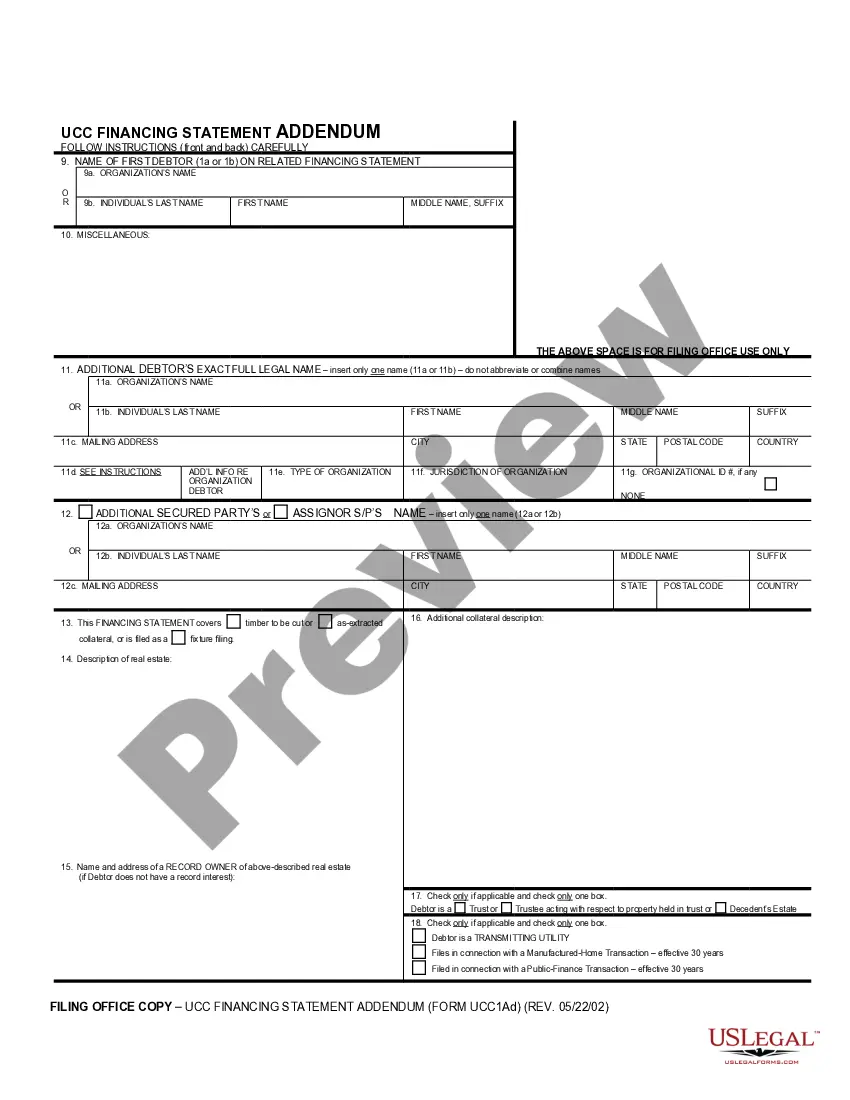
UCC-1 Financing Statements do not have to be signed by either the Debtor or Secured Party; however, they must be authorized.Although the UCC-1 Financing Statement does not require signatures, any attachment such as the legal description or special terms and conditions may require the signature of the Debtor.
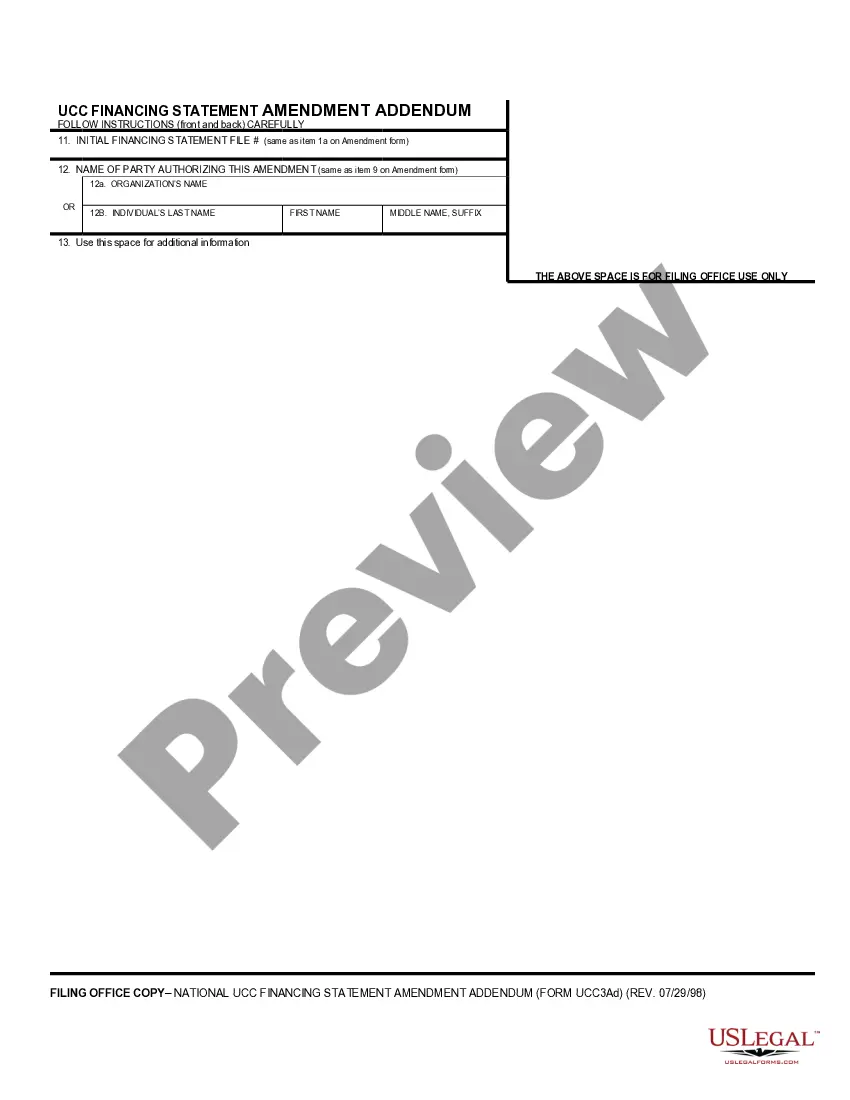
Also known as a UCC-3, and, depending on the context, a UCC-3 financing statement amendment, a UCC-3 termination statement, and a UCC-3 continuation statement. Under the Uniform Commercial Code, a UCC-3 is used to continue, assign, terminate, or amend an existing UCC-1 financing statement (UCC-1).
It should be noted that UCC financing statements filed now generally do not contain a grant of the security interest and generally are not signed or otherwise authenticated by the Debtor and therefore would not satisfy the requirement of a security agreement.
As was true under former Article 9 "goods" are defined, in new section 9-102(a)(44), to mean all things that are movable when a security interest attaches, including fixtures, standing timber that is to be cut and removed under a conveyance or contract for sale, the unborn young of animals, crops grown, growing, or to
Having a UCC filed on your business credit report can have negative effects in general on your overall credit risk, scoring and other associated risk analysis, (across all three business credit bureaus) and can even kill your chances at getting financing for your business.
Updated Jun 1, 2020. A UCC-Uniform Commercial Code-1 statement is a legal notice filed by creditors as a way to publicly declare their rights to potentially obtain the personal properties of debtors who default on business loans they extend.
Article 9 is an article under the Uniform Commercial Code (UCC) that governs secured transactions, or those transactions that pair a debt with the creditor's interest in the secured property.
The Uniform Commercial Code (UCC) is a set of business laws that regulate financial contracts and transactions employed across states. The UCC code consists of nine separate articles, each of which covers separate aspects of banking and loans.
The Uniform Commercial Code (UCC) contains rules applying to many types of commercial contracts, including contracts related to the sale of goods, leasing of goods, use of negotiable instruments, banking transactions, letters of credit, documents of title for goods, investment securities, and secured transactions.