Fcra For Individuals
Description
Get your form ready online
Our built-in tools help you complete, sign, share, and store your documents in one place.
Make edits, fill in missing information, and update formatting in US Legal Forms—just like you would in MS Word.
Download a copy, print it, send it by email, or mail it via USPS—whatever works best for your next step.
Sign and collect signatures with our SignNow integration. Send to multiple recipients, set reminders, and more. Go Premium to unlock E-Sign.
If this form requires notarization, complete it online through a secure video call—no need to meet a notary in person or wait for an appointment.
We protect your documents and personal data by following strict security and privacy standards.

Make edits, fill in missing information, and update formatting in US Legal Forms—just like you would in MS Word.

Download a copy, print it, send it by email, or mail it via USPS—whatever works best for your next step.

Sign and collect signatures with our SignNow integration. Send to multiple recipients, set reminders, and more. Go Premium to unlock E-Sign.

If this form requires notarization, complete it online through a secure video call—no need to meet a notary in person or wait for an appointment.

We protect your documents and personal data by following strict security and privacy standards.
Looking for another form?

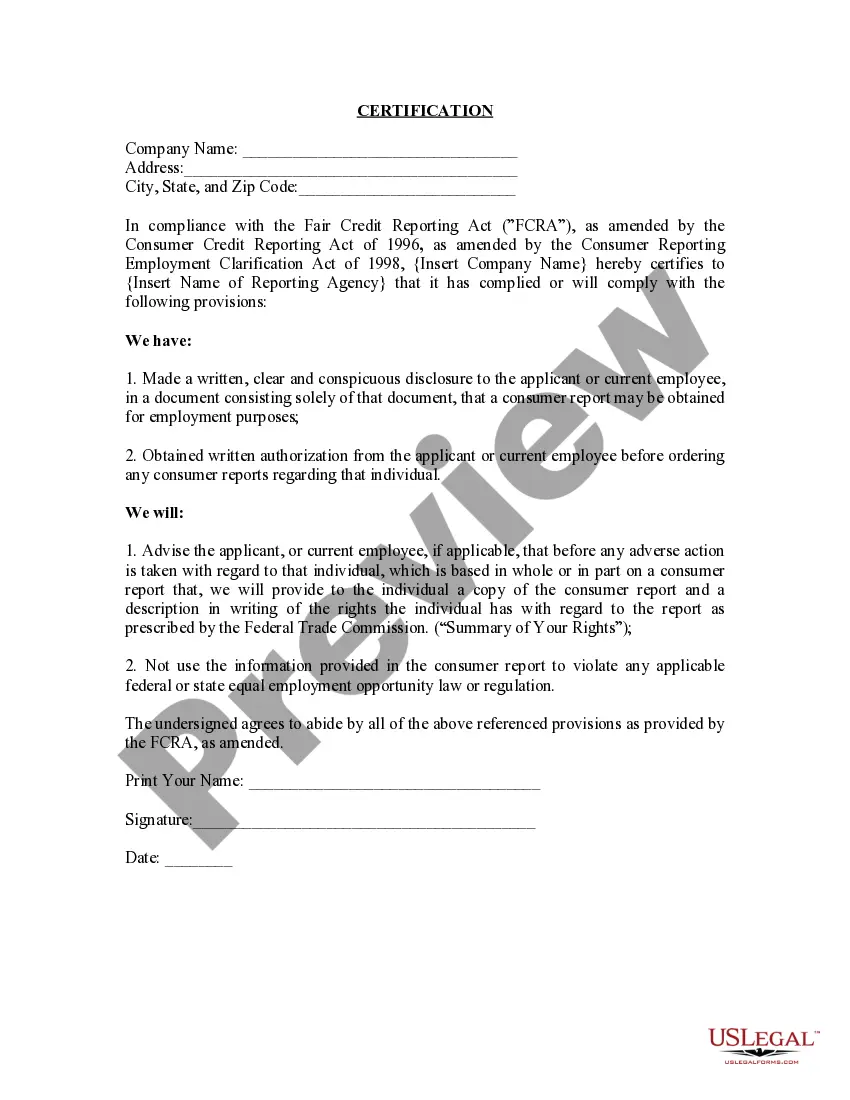
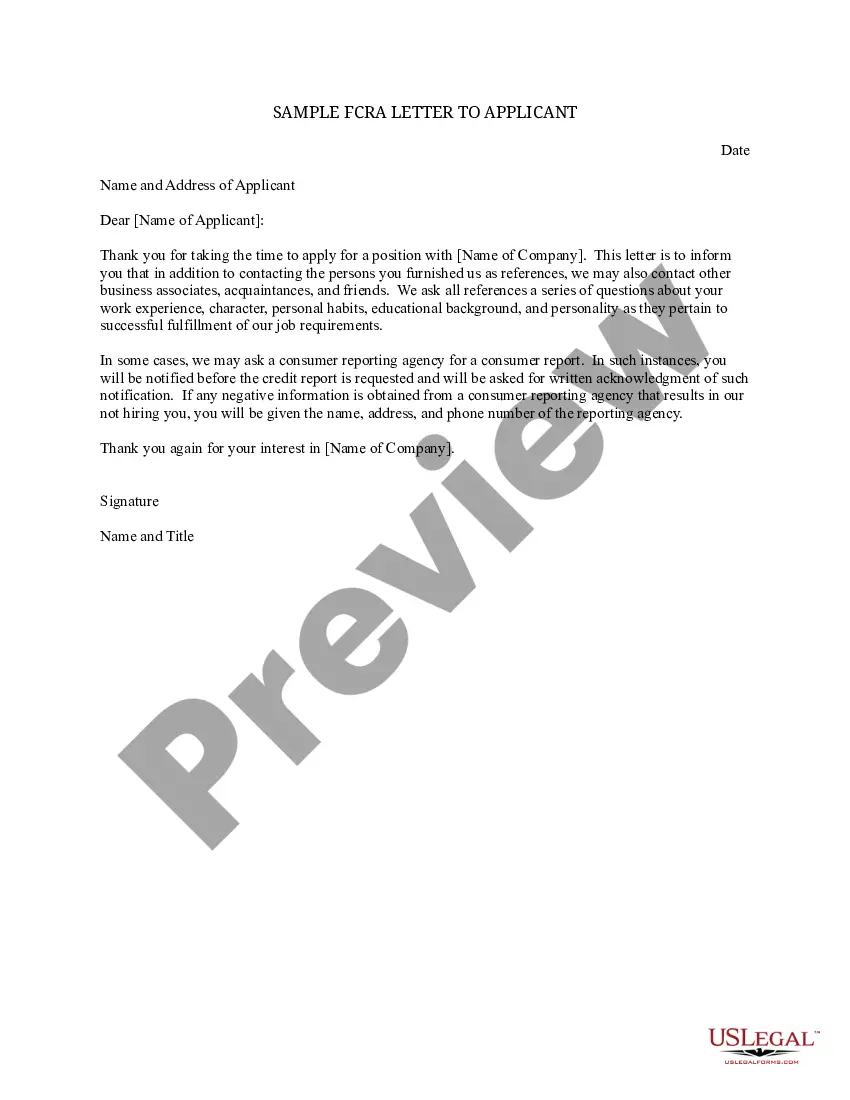
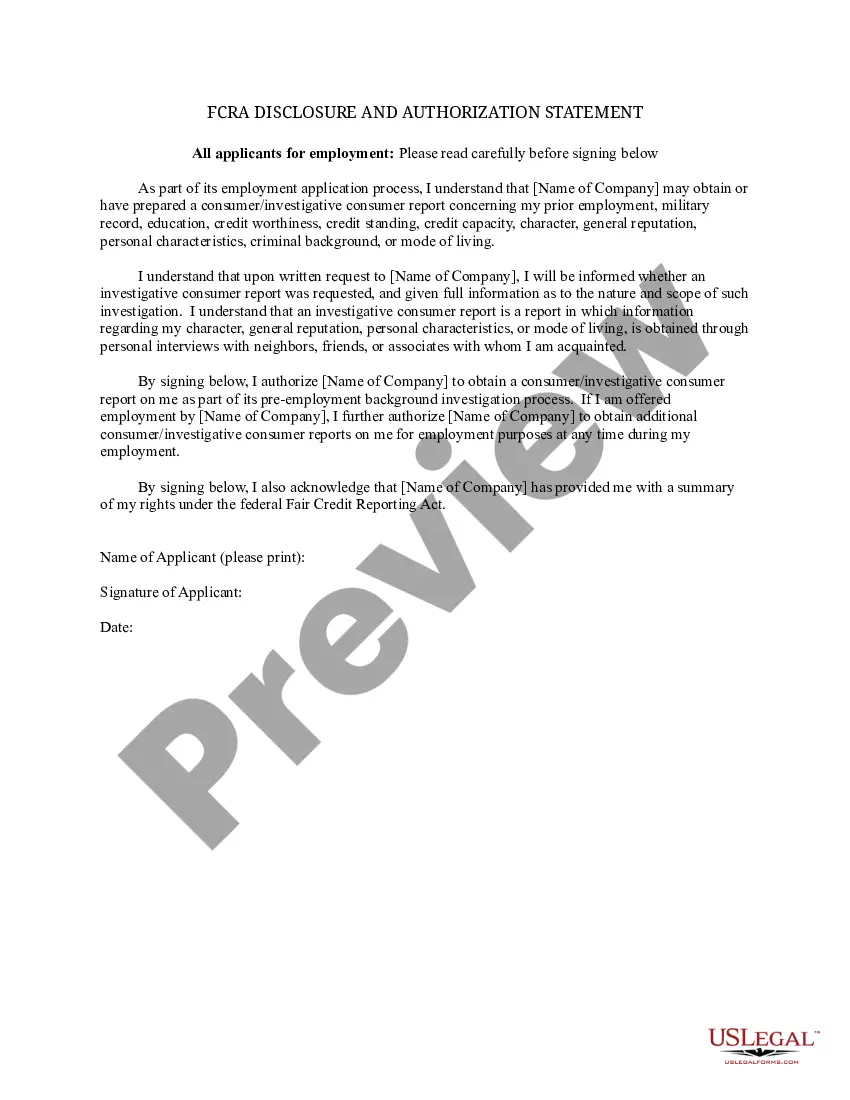
How to fill out FCRA Certification Letter To Consumer Reporting Agency?
- Log in to your account if you're a returning user and ensure your subscription is active. If needed, renew your plan.
- For first-time users, start by checking the Preview mode and form description to ensure your selection matches your requirements.
- If the form doesn’t suit your needs, utilize the Search tab to find a more appropriate template.
- Once you’ve selected the right document, proceed to purchase by clicking the Buy Now button, choosing your desired subscription plan, and creating an account.
- Complete your purchase by entering your credit card information or using your PayPal account.
- Finally, download your form to your device. You can access it anytime via the My Forms section in your profile.
By following these steps, you can quickly obtain the necessary documents tailored to your needs through US Legal Forms. The platform not only offers robust form collections but also access to experts who ensure your documents are accurate and legally compliant.
Start simplifying your legal document process with US Legal Forms today!
Form popularity
FAQ
The FCRA covers various types of information that credit agencies can collect and report, including payment history, account status, credit inquiries, and your public records. By monitoring this information, you can protect your credit profile and ensure your financial health. Delving into FCRA for individuals helps you grasp what is considered in your credit worthiness and guides you in maintaining accurate records.
Under the FCRA, if a decision regarding credit is made based on your report, the creditor must provide you with specific details. This includes the name of the credit reporting agency used, the information that influenced their decision, and your right to dispute the information. Knowing these rights, as outlined in FCRA for individuals, equips you with the tools to understand and question any lending decisions made about you.
FCRA on your credit report refers to the regulations established by the Fair Credit Reporting Act. It dictates how information is reported, who can access your credit report, and your rights to dispute inaccuracies. Understanding FCRA for individuals empowers you to make informed decisions regarding your credit management and protects your financial identity.
The FCRA influences how your credit score is calculated by ensuring the accuracy of the information reported by credit agencies. If an error appears in your credit report, the FCRA provides you rights to dispute this error, which can improve your credit score once corrected. Awareness of FCRA for individuals guides you in maintaining a healthy credit profile and ensuring all information is accurate.
The FCRA, or Fair Credit Reporting Act, protects the personal information of individuals related to their credit history. This includes details like your name, address, Social Security number, and credit account information. By understanding FCRA for individuals, you can better safeguard your sensitive data against misuse and gain clarity on how it is handled by credit reporting agencies.
The various types of FCRA include provisions for registration, reporting, and compliance for organizations receiving foreign contributions. These types ensure that contributions are utilized for lawful purposes while promoting transparency. For individuals and entities involved in foreign funding, recognizing the different types of FCRA can enhance compliance and operational efficiency.
A Foreign Contribution (FC) bank account is a specialized account for managing foreign funds received under the FCRA. This account enables efficient handling of foreign donations, ensuring that they are used according to the law. Individuals dealing with foreign contributions must understand the significance of a dedicated FC bank account.
The minimum balance in an FCRA account may vary by bank, yet it’s essential to maintain sufficient funds to facilitate transactions. Keeping an appropriate balance also ensures your compliance with FCRA rules and assists in efficient management of foreign contributions. Individuals must consult their banking institution for specific requirements.
FCRA applies to organizations and individuals that receive foreign contributions, ensuring they adhere to specific reporting requirements. This regulation is crucial for entities involved in social, religious, or educational activities funded through foreign sources. Recognizing who falls under FCRA can help individuals stay compliant and informed about their obligations.
Form 6C is associated with reporting under the FCRA for entities receiving foreign contributions. This form helps collect essential data regarding contributions, enabling authorities to monitor compliance effectively. If you are navigating the complexities of FCRA regulations, understanding Form 6C is essential for individuals engaged in this process.