Work Employee Policy For Tardiness
Description

Get your form ready online
Our built-in tools help you complete, sign, share, and store your documents in one place.
Make edits, fill in missing information, and update formatting in US Legal Forms—just like you would in MS Word.
Download a copy, print it, send it by email, or mail it via USPS—whatever works best for your next step.
Sign and collect signatures with our SignNow integration. Send to multiple recipients, set reminders, and more. Go Premium to unlock E-Sign.
If this form requires notarization, complete it online through a secure video call—no need to meet a notary in person or wait for an appointment.
We protect your documents and personal data by following strict security and privacy standards.

Make edits, fill in missing information, and update formatting in US Legal Forms—just like you would in MS Word.

Download a copy, print it, send it by email, or mail it via USPS—whatever works best for your next step.

Sign and collect signatures with our SignNow integration. Send to multiple recipients, set reminders, and more. Go Premium to unlock E-Sign.

If this form requires notarization, complete it online through a secure video call—no need to meet a notary in person or wait for an appointment.

We protect your documents and personal data by following strict security and privacy standards.
Looking for another form?
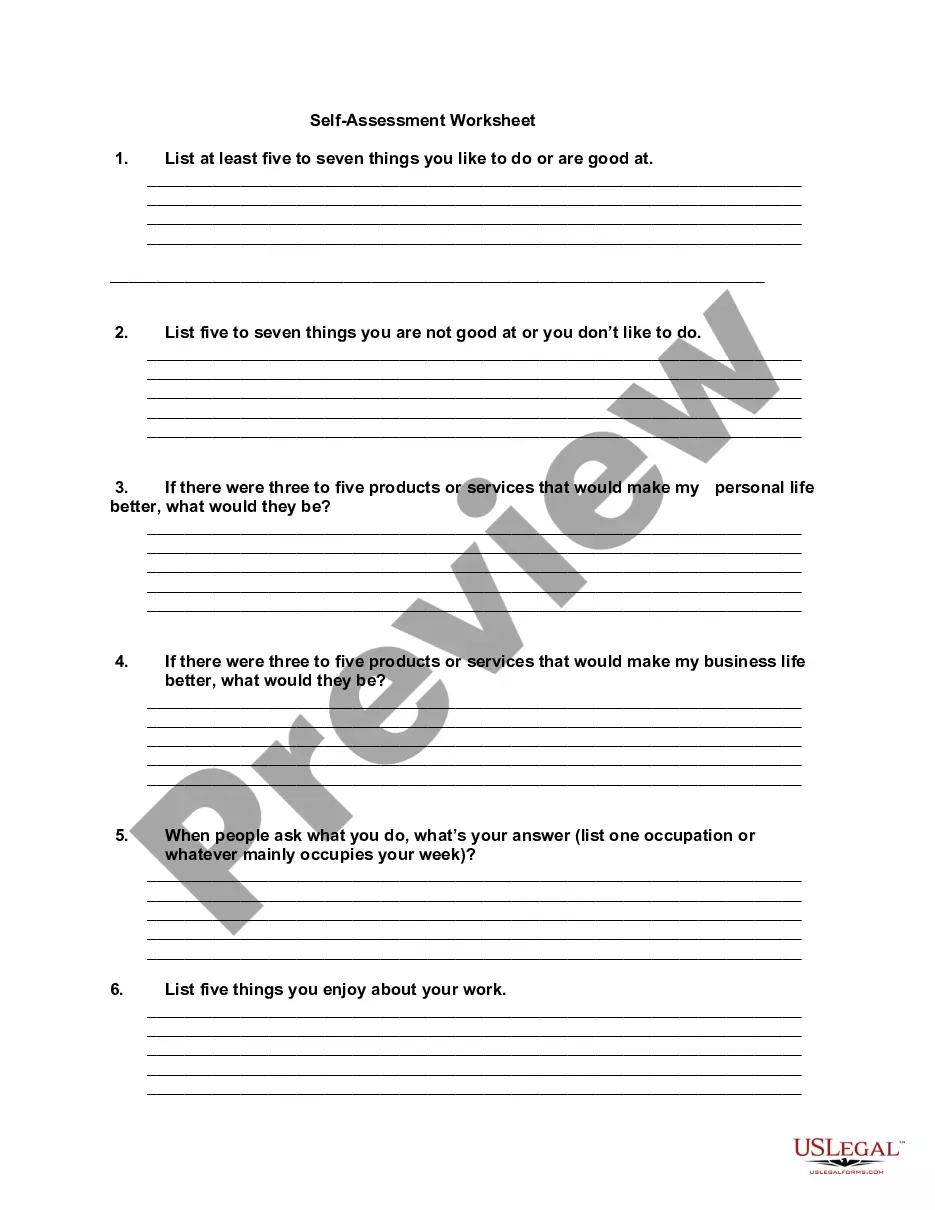


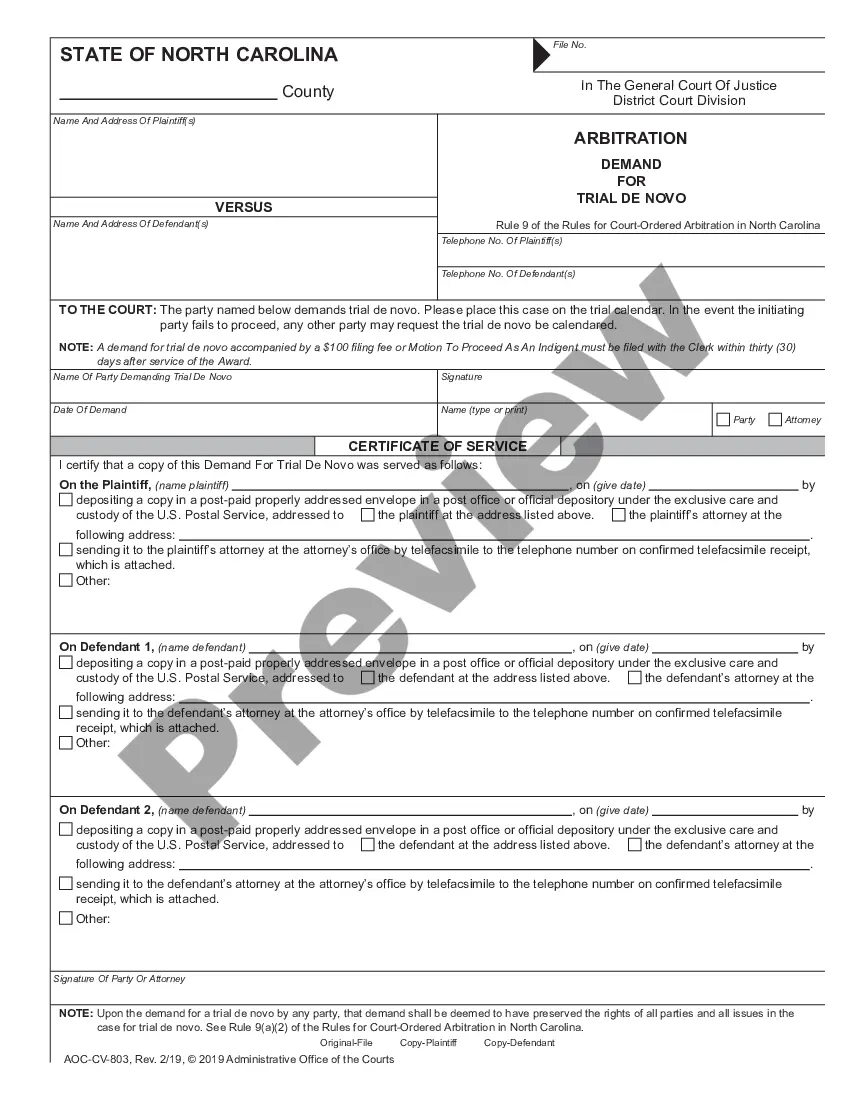






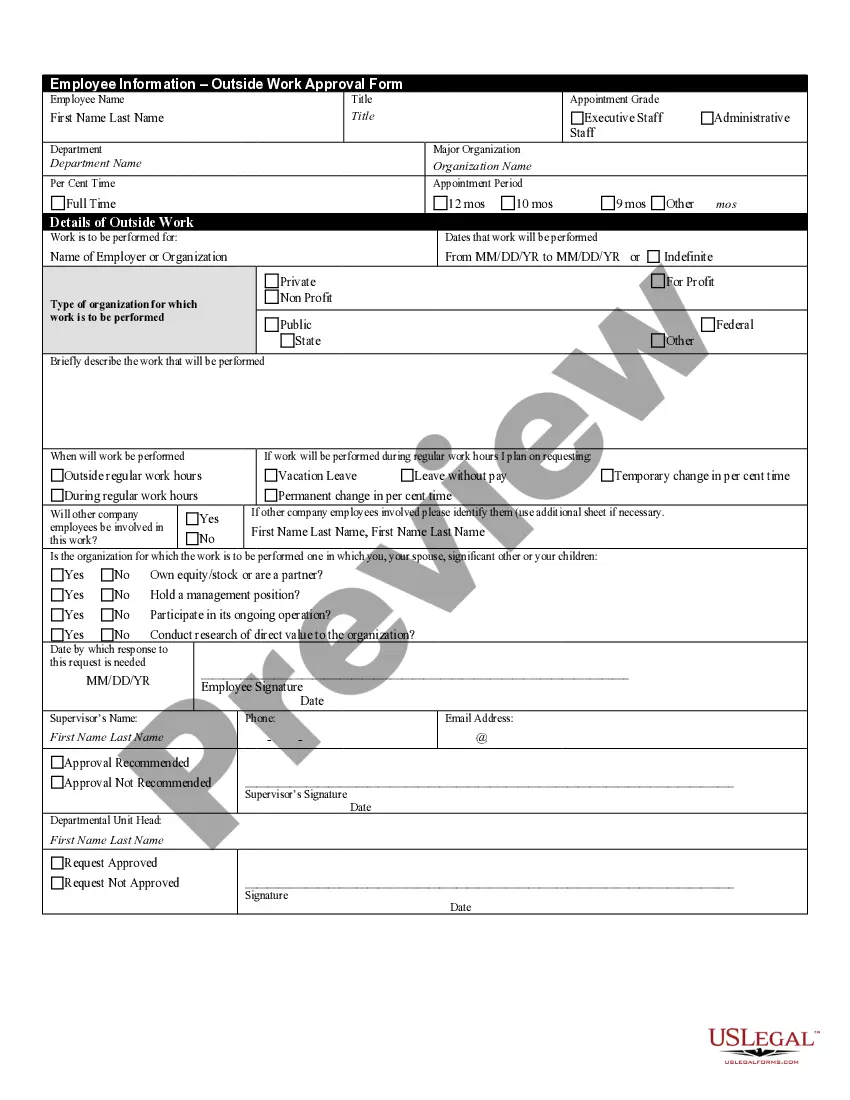
How to fill out Outside Work Approval Form?
The Employee Work Policy Regarding Tardiness displayed on this page is a reusable official template created by qualified attorneys in accordance with national and local laws and regulations.
For over 25 years, US Legal Forms has offered individuals, organizations, and legal practitioners more than 85,000 validated, state-specific documents for any business and personal situation. It’s the quickest, easiest, and most trustworthy method to acquire the paperwork you require, as the service ensures the utmost level of data protection and anti-malware safeguards.
Select the format you prefer for your Employee Work Policy Regarding Tardiness (PDF, DOCX, RTF) and store the sample on your device.
- Search for the document you require and review it.
- Browse through the file you searched and preview it or examine the form description to verify it meets your requirements. If it doesn’t, use the search feature to find the right one. Click Buy Now when you locate the template you need.
- Choose a subscription plan and Log In.
- Select the pricing option that works for you and set up an account. Use PayPal or a credit card for a swift transaction. If you already possess an account, Log In and check your subscription to continue.
- Obtain the editable template.
Form popularity
FAQ
Documenting employee tardiness involves keeping a detailed record of instances when an employee arrives late to work. Use a standardized form or system to track dates, times, and reasons for tardiness, if provided. This documentation is crucial in enforcing your work employee policy for tardiness, as it provides evidence to support any necessary disciplinary actions. By maintaining accurate records, you foster accountability and transparency within your team.
To write an effective attendance policy, start by outlining the expectations for employee attendance and punctuality. Clearly state the consequences of tardiness and the process for reporting absences. Consider including guidelines on acceptable reasons for tardiness and the procedure for requesting time off. A well-structured work employee policy for tardiness helps ensure consistency and fairness in your workplace.
To create an effective attendance policy, start by defining the expectations for attendance and punctuality, including your work employee policy for tardiness. Ensure that you outline the procedures for reporting absences and the consequences for non-compliance. Involve employees in the process to gather feedback and address any concerns. Utilizing platforms like uslegalforms can help you draft a comprehensive attendance policy that meets legal standards and fits your workplace culture.
The tardy policy in the workplace refers to the guidelines that outline acceptable arrival times, consequences for lateness, and procedures for notifying supervisors. A clear work employee policy for tardiness helps establish a consistent standard for all employees. It should be communicated effectively and made accessible, ensuring everyone understands the expectations. By having this policy in place, companies can maintain productivity and a harmonious work environment.
Yes, an employee can be terminated due to excessive tardiness, especially if it violates the company’s work employee policy for tardiness. However, it's crucial to follow a fair process that includes warnings and opportunities for improvement. Employers should document instances of tardiness and provide support to help employees meet expectations. This approach not only protects the organization but also shows respect for the employee's situation.
A good tardiness policy should clearly outline expectations for punctuality and the consequences of being late. It should also define what constitutes tardiness and allow for reasonable flexibility when necessary. Incorporating a supportive approach, such as warning systems or grace periods, can foster a positive work environment. A well-structured work employee policy for tardiness promotes accountability and encourages employees to arrive on time.
Typically, being late by more than five to ten minutes is considered tardy. However, this can vary depending on your workplace's work employee policy for tardiness. It's essential to refer to your specific policy to understand the exact guidelines. Clear communication about time expectations can help reduce confusion and improve punctuality.