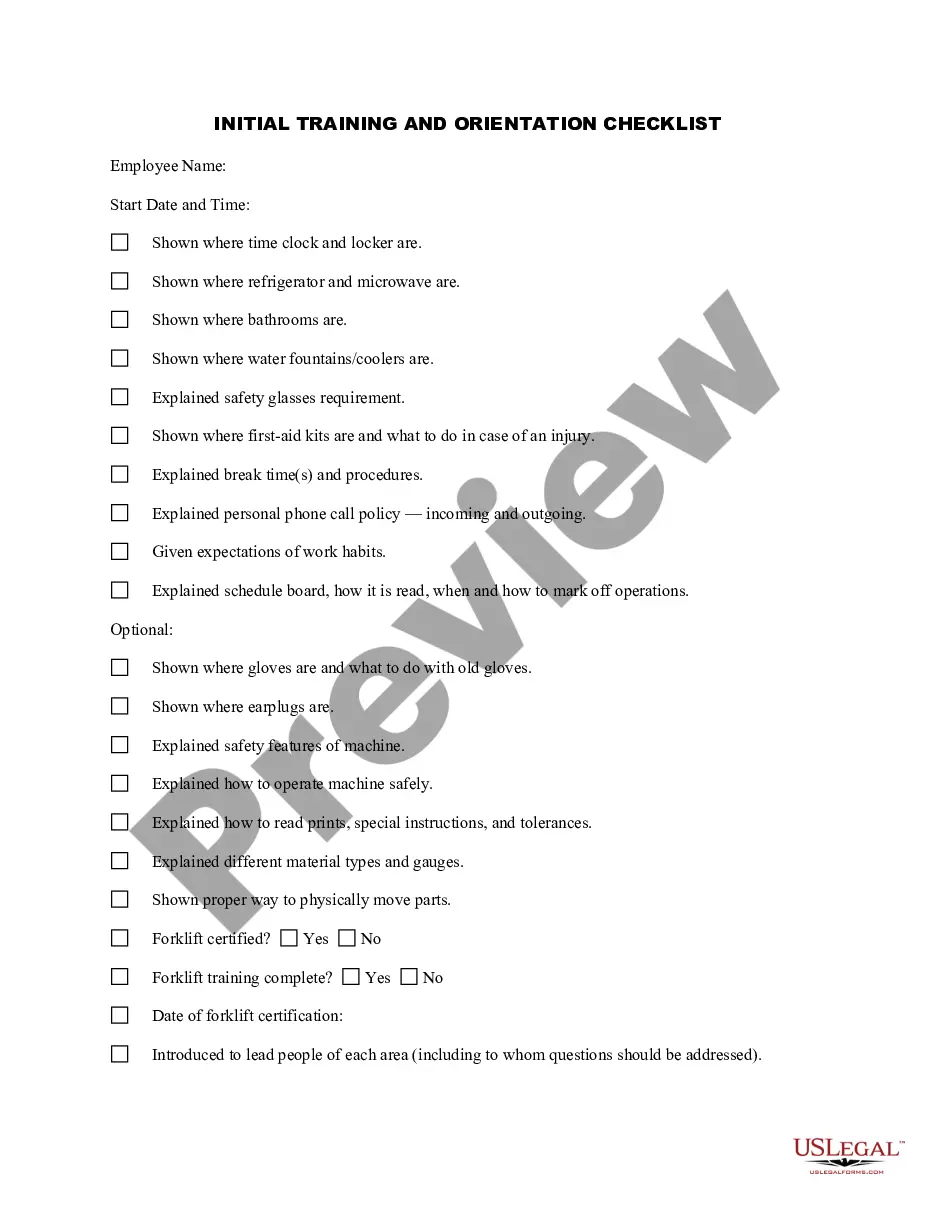
Onboarding Template
Description
Get your form ready online
Our built-in tools help you complete, sign, share, and store your documents in one place.
Make edits, fill in missing information, and update formatting in US Legal Forms—just like you would in MS Word.
Download a copy, print it, send it by email, or mail it via USPS—whatever works best for your next step.
Sign and collect signatures with our SignNow integration. Send to multiple recipients, set reminders, and more. Go Premium to unlock E-Sign.
If this form requires notarization, complete it online through a secure video call—no need to meet a notary in person or wait for an appointment.
We protect your documents and personal data by following strict security and privacy standards.

Make edits, fill in missing information, and update formatting in US Legal Forms—just like you would in MS Word.

Download a copy, print it, send it by email, or mail it via USPS—whatever works best for your next step.

Sign and collect signatures with our SignNow integration. Send to multiple recipients, set reminders, and more. Go Premium to unlock E-Sign.

If this form requires notarization, complete it online through a secure video call—no need to meet a notary in person or wait for an appointment.

We protect your documents and personal data by following strict security and privacy standards.
Looking for another form?



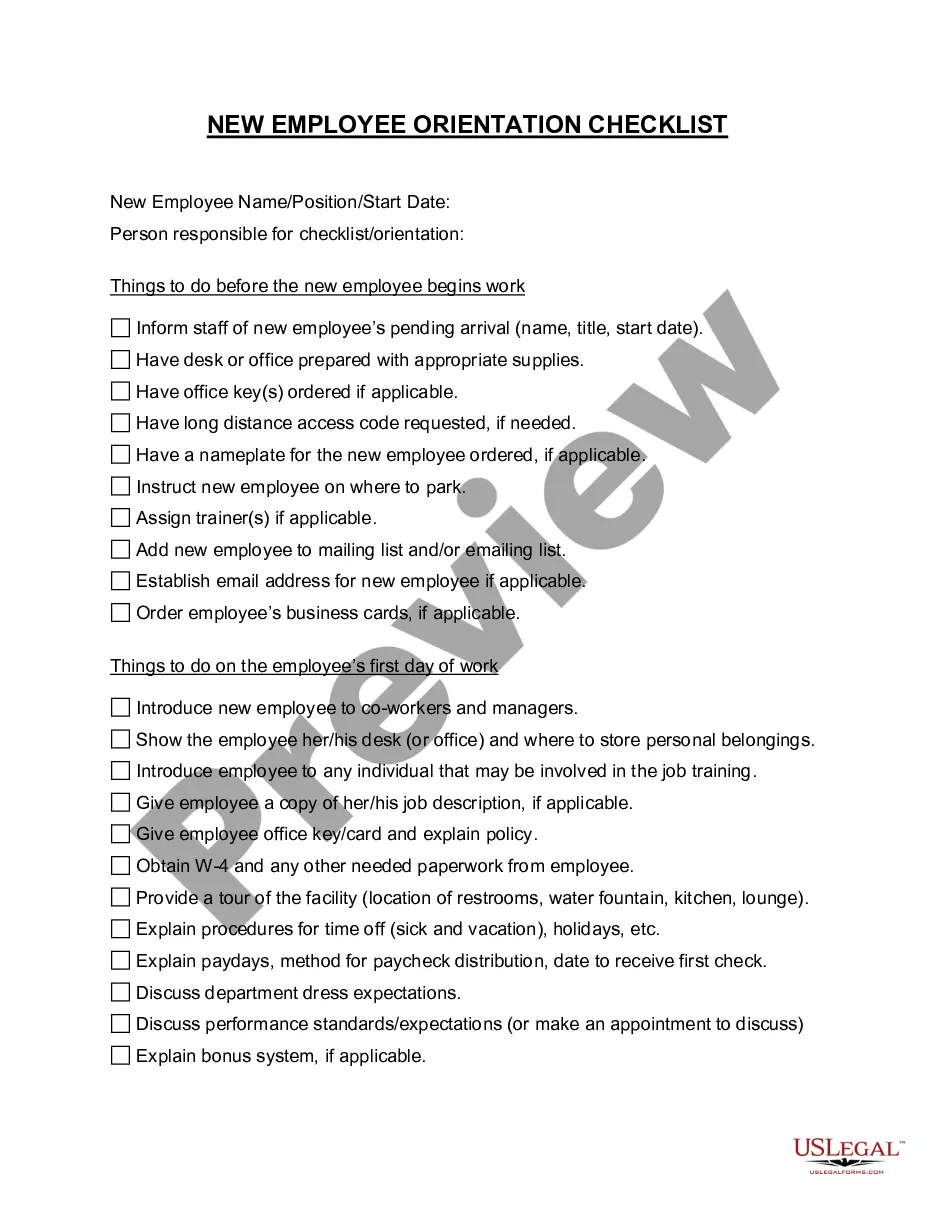
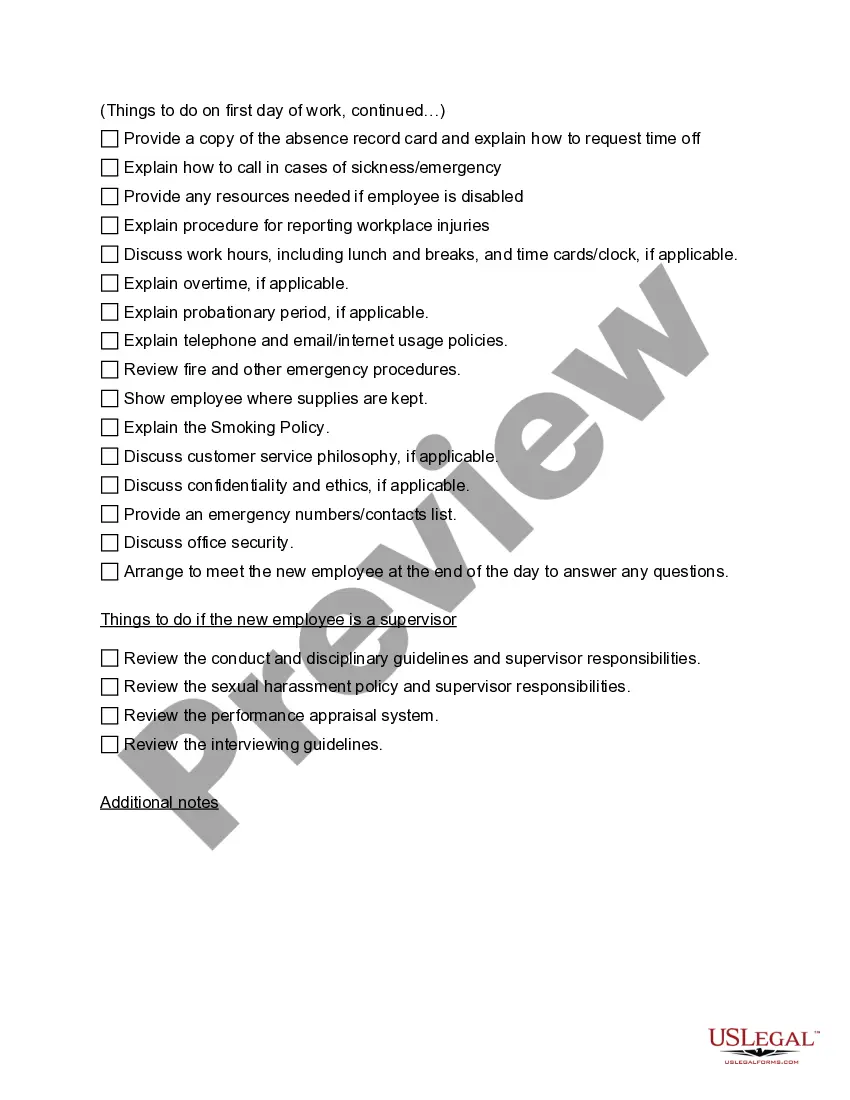
How to fill out New Employee Orientation Checklist?
- If you're a returning user, log in to your account and check that your subscription is active before downloading your required template by clicking the Download button.
- For first-time users, begin by browsing the Preview mode to review form descriptions and ensure you select a template that meets your needs and complies with local jurisdiction rules.
- Conduct a search if you need a different template. Utilize the Search tab above to find the right one if your first choice doesn't match your requirements.
- Once you've identified the correct document, click on the Buy Now button and select your preferred subscription plan. You'll need to create an account to access the library.
- Complete your purchase by entering your payment information, which can include credit card details or PayPal for convenience.
- Successfully download your document and save the template to your device, making it accessible later through the My Forms section of your profile.
With US Legal Forms, you benefit from a robust collection of forms unmatched by competitors, giving you the support of premium experts to ensure all documents are accurate and legally sound.
Start utilizing your onboarding template today for a smoother legal document process. Visit US Legal Forms to explore our comprehensive library!
Form popularity
FAQ
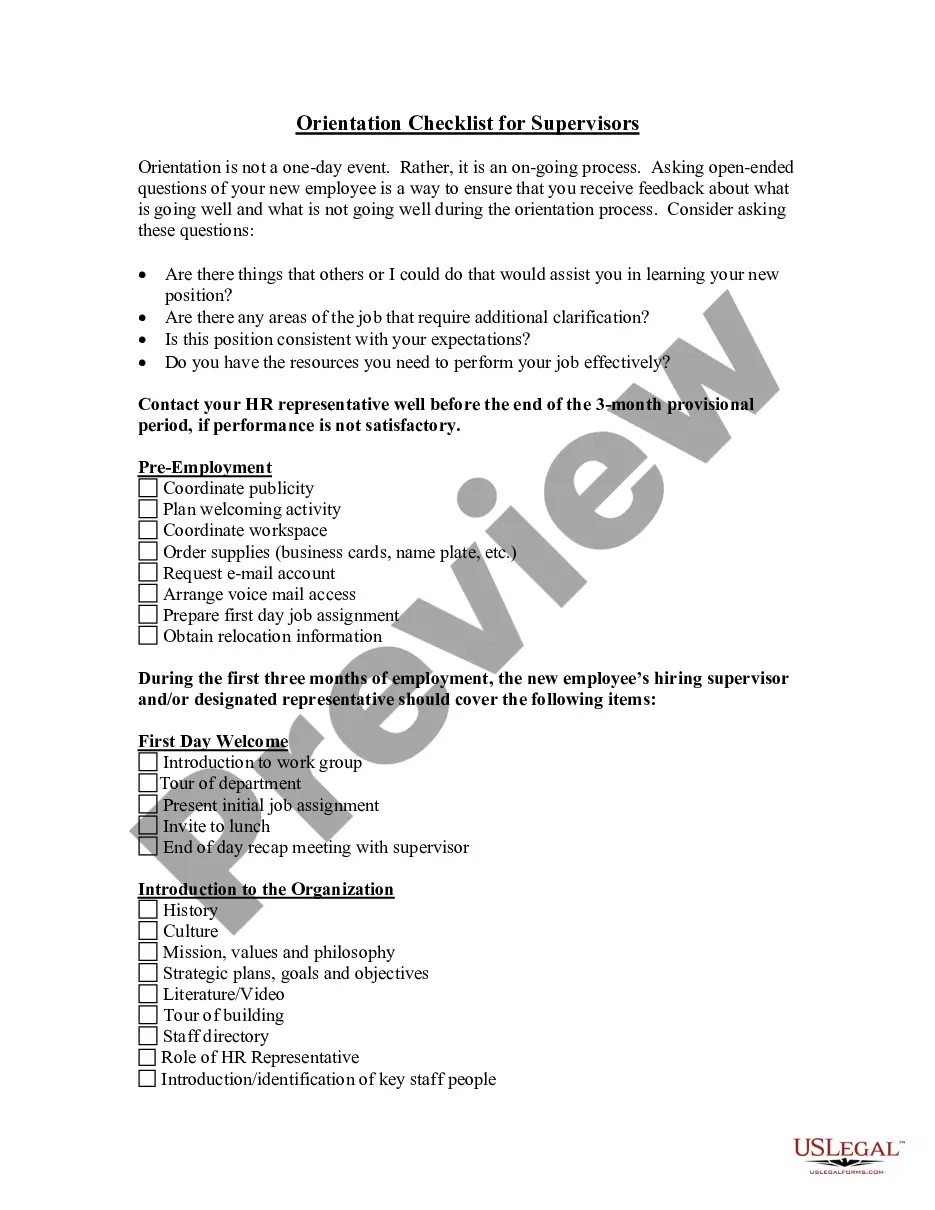
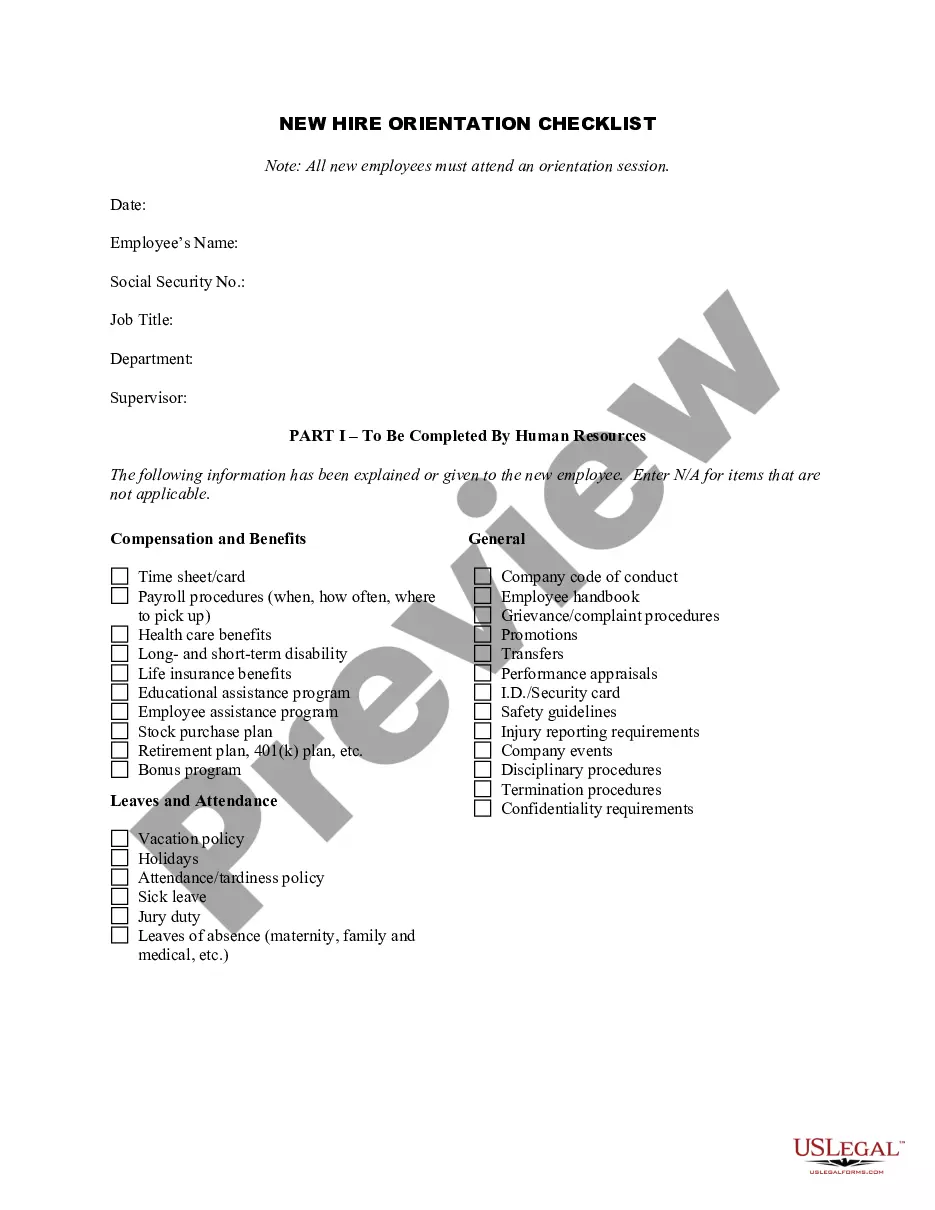
An onboarding checklist should include essential items such as welcome materials, training schedules, compliance documents, and introductions to team members. Additionally, consider adding resources for company policies and procedures, as well as information about company culture. Using an onboarding template can help you structure this checklist, ensuring that all necessary components are included while also empowering new employees to feel prepared and supported.
Creating an onboarding checklist involves identifying the key tasks required for a successful onboarding experience. Start by gathering input from various departments to understand their expectations and needs. Then, use an onboarding template to organize these tasks into a logical sequence, which will help guide new hires through their initial days. This structured approach ensures nothing is overlooked, making the onboarding process efficient and effective.
The five pillars of onboarding are preparation, culture, connection, training, and feedback. Each pillar plays a crucial role in ensuring a smooth transition for new employees. An effective onboarding template can simplify this process by outlining essential steps and actions related to each pillar. By focusing on these elements, you can create a comprehensive onboarding experience that helps new hires integrate quickly and successfully.
A good onboarding program is structured yet flexible, tailored to the needs of both the company and the new hire. It typically includes a mix of orientation, training, and team integration activities, all guided by a well-designed onboarding template. This ensures that newcomers can navigate their roles effectively while also understanding the company culture and values. Ultimately, a successful onboarding program leads to satisfied and productive employees.
To create an effective onboarding program, start by defining your goals and the outcomes you want to achieve. Utilize an onboarding template to outline each step of the process, from orientation to training sessions. Incorporate engaging activities that cultivate connections among new hires and existing staff. This approach fosters a welcoming environment that enhances employee retention and productivity.
Creating an onboarding document begins with gathering relevant information about your organization and the position. Use an onboarding template to structure your document, detailing key processes, responsibilities, and resources. This helps new hires quickly understand their roles and what is expected of them. Make sure to include important contacts and introductory company policies for a smooth transition.
Onboarding documents typically have a structured layout that includes headings, bullet points, and visuals to enhance readability. They may feature sections that introduce the company, outline job responsibilities, and provide resources for further guidance. Using an onboarding template can simplify the creation of these documents, ensuring that they are visually appealing and easy to navigate. By presenting the information clearly, you make it easier for new employees to find what they need.
A good onboarding document should be straightforward and user-friendly. Incorporate a welcoming introduction, followed by detailed sections on roles, responsibilities, and relevant procedures. Utilize an onboarding template to streamline the formatting and ensure that every crucial aspect is covered. This structure not only enhances clarity but also fosters a positive experience for new hires.
To write an effective onboarding document, start by defining the purpose and scope of the document. Include essential information such as company policies, role expectations, and training procedures. An onboarding template can help you organize this information clearly and coherently, making it easier for new employees to understand their responsibilities. Don't forget to include contact information for key personnel to support newcomers during their transition.
The four key onboarding controls consist of checklists, timelines, performance metrics, and feedback mechanisms. These controls ensure that the onboarding process stays organized and effective. Leveraging an onboarding template allows you to easily implement these controls, giving both management and new hires clarity throughout the process. After all, a structured onboarding experience leads to more confident and productive employees.