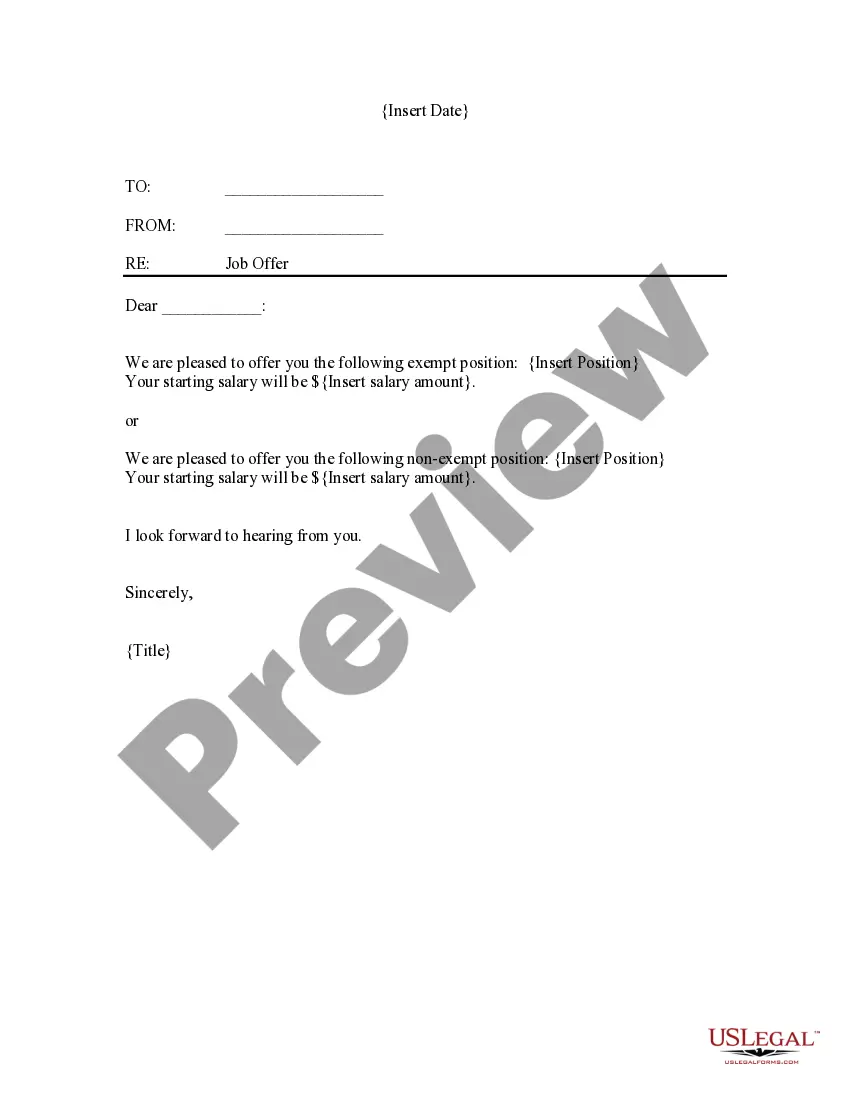
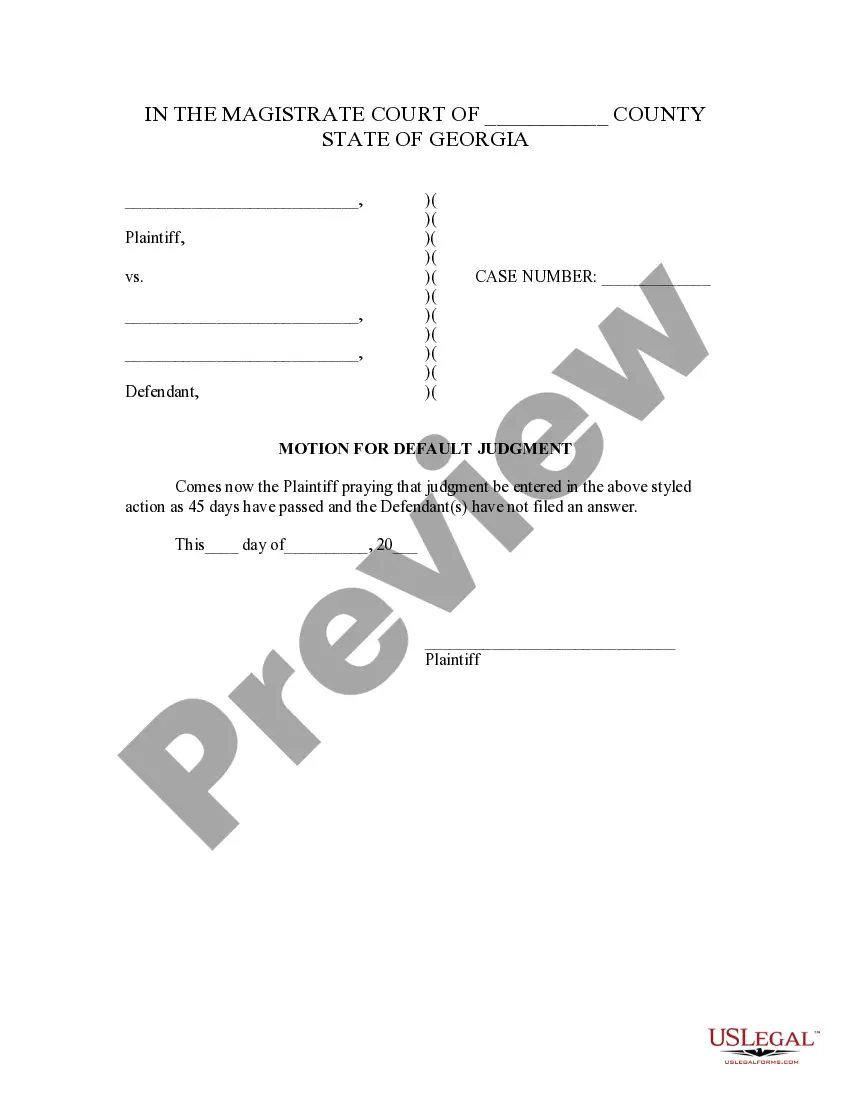
Georgia Motion for Default Judgment
Overview of this form
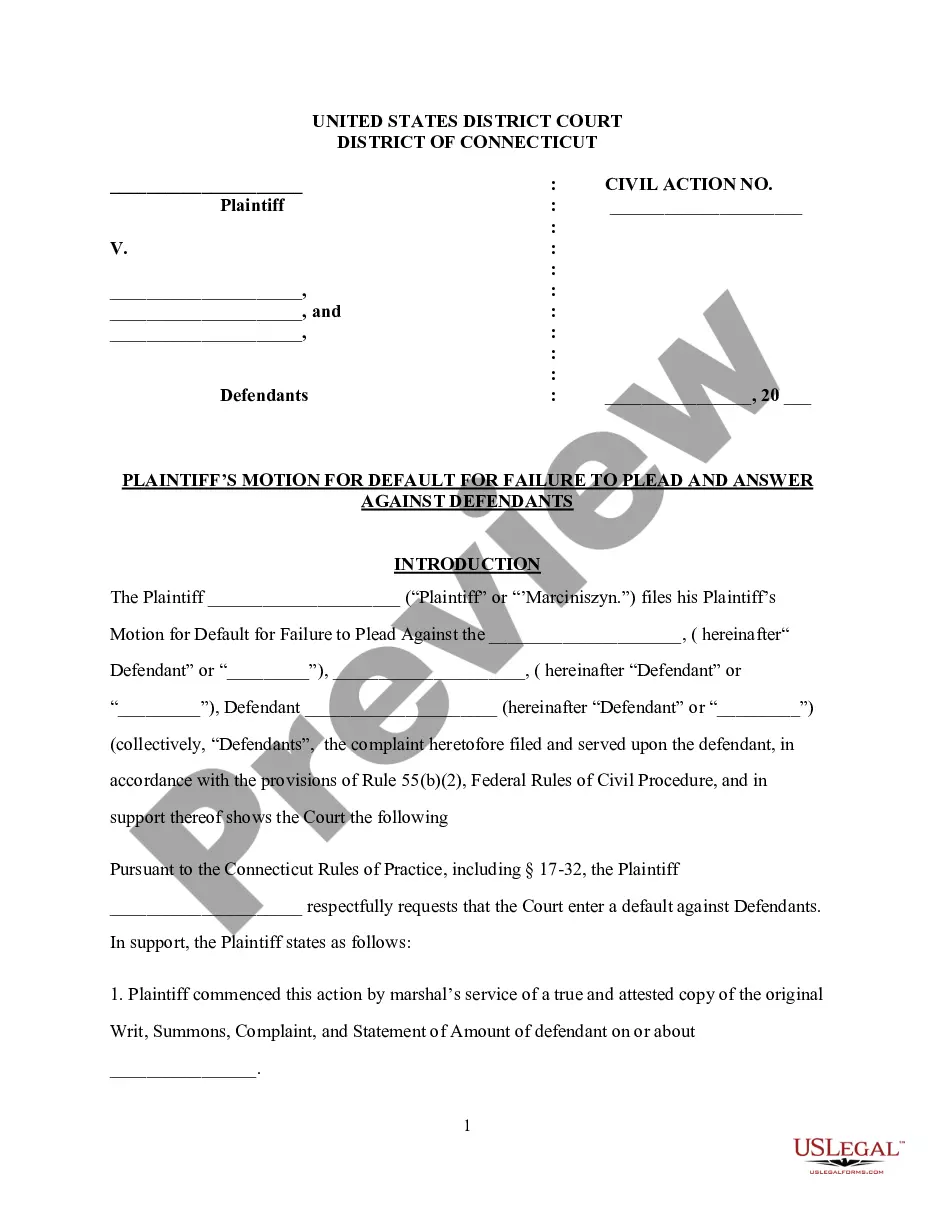
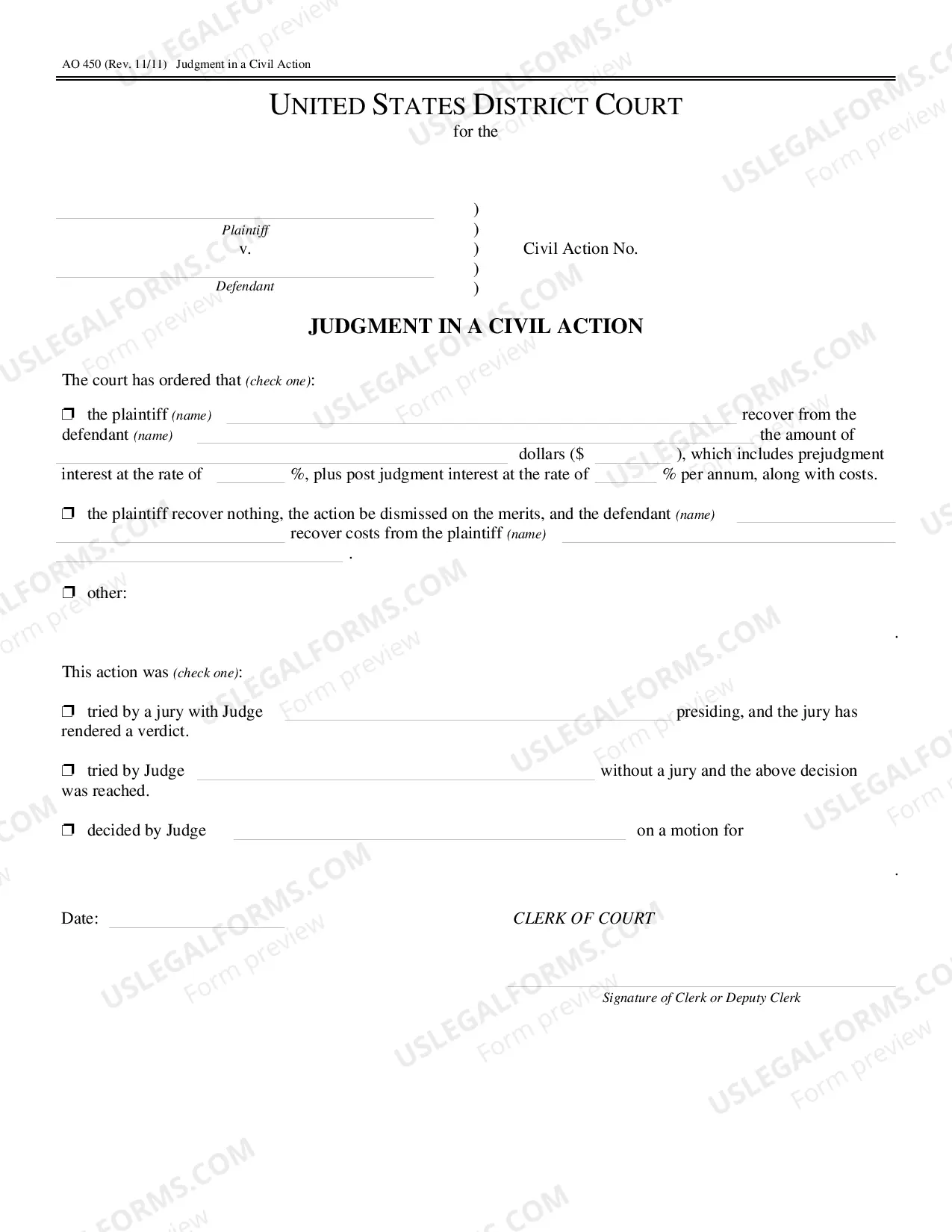
A Motion for Default Judgment is a legal document used to request a court to issue a judgment in favor of a plaintiff when the defendant has failed to respond to a complaint within the required time frame. This form specifically allows the plaintiff to ask the court for a ruling without the presence of the defendant, highlighting situations where the defendant is not contesting the claim. Unlike general motions, a Motion for Default Judgment is tailored to cases where the defendant's inaction directly impacts the proceedings.
Key components of this form
- Identification of the plaintiff and defendant, including case number.
- Statement of the motion requesting a default judgment.
- Declaration that the defendant has not filed an answer within 45 days.
- Signature line for the plaintiff to date and sign the motion.
Situations where this form applies
This form is utilized when a plaintiff seeks a judgment against a defendant who has failed to respond to a lawsuit. Common scenarios include situations where the defendant has ignored court summons, failed to file an answer within the stipulated time, or is otherwise unresponsive, allowing the plaintiff to secure a legal decision in their favor.
Who needs this form
- Individuals or entities that have filed a lawsuit and named a defendant.
- Plaintiffs in cases where the defendant has not responded to the complaint.
- Those needing to expedite their claim due to the defendant's inaction.
Instructions for completing this form
- Identify all parties involved by entering the names of the plaintiff and defendant.
- Fill in the case number pertaining to the lawsuit.
- Specify the date on which the motion is filed.
- Ensure that you state that the defendant has not answered the complaint within the required 45 days.
- Sign and date the form to complete your request.
Is notarization required?
Notarization is generally not required for this form. However, certain states or situations might demand it. You can complete notarization online through US Legal Forms, powered by Notarize, using a verified video call available anytime.
Get your form ready online
Our built-in tools help you complete, sign, share, and store your documents in one place.
Make edits, fill in missing information, and update formatting in US Legal Forms—just like you would in MS Word.
Download a copy, print it, send it by email, or mail it via USPS—whatever works best for your next step.
Sign and collect signatures with our SignNow integration. Send to multiple recipients, set reminders, and more. Go Premium to unlock E-Sign.
If this form requires notarization, complete it online through a secure video call—no need to meet a notary in person or wait for an appointment.
We protect your documents and personal data by following strict security and privacy standards.

Make edits, fill in missing information, and update formatting in US Legal Forms—just like you would in MS Word.

Download a copy, print it, send it by email, or mail it via USPS—whatever works best for your next step.

Sign and collect signatures with our SignNow integration. Send to multiple recipients, set reminders, and more. Go Premium to unlock E-Sign.

If this form requires notarization, complete it online through a secure video call—no need to meet a notary in person or wait for an appointment.

We protect your documents and personal data by following strict security and privacy standards.
Common mistakes to avoid
- Failing to include accurate case numbers can delay proceedings.
- Not signing the motion, which renders it invalid.
- Forgetting to check the deadline for filing after the defendant's response time has expired.
- Using outdated forms that do not comply with current state requirements.
Benefits of completing this form online
- Instant access to the form, allowing for immediate filing.
- Ability to customize the document easily based on specific case details.
- Guidance from licensed attorneys in drafting precise legal documents.
- Convenience of downloading and printing the form when needed.
Looking for another form?
Form popularity
FAQ
Removing a default judgment requires filing a motion to vacate it in the court where the judgment was issued. You must clearly articulate your reasons and provide supporting evidence, like mistakes or procedural errors. Engaging with the US Legal platform can help simplify this process by providing the necessary templates and insights related to the Georgia Motion for Default Judgment.
To set aside a default judgment in Georgia, you need to file a motion with the court that issued the judgment. Provide a valid reason for your request, such as a mistake or excusable neglect. It's essential to include any evidence supporting your claim. With US Legal Forms, you can find specific forms and guidance to assist you in this process related to the Georgia Motion for Default Judgment.
Opening a default judgment in Georgia involves filing a motion to set it aside. You need to demonstrate to the court that you were not properly notified or that you have a valid defense to present. When you file your motion, include all supporting documents and evidence. The US Legal platform can provide you with useful tools and templates to navigate the process effectively around the Georgia Motion for Default Judgment.
Beating a default judgment often requires timely and strategic action. First, you should file a motion to set aside the judgment, providing valid reasons such as lack of notice or an excusable mistake. It's crucial to present your evidence and legal arguments persuasively. With the assistance of US Legal Forms, you can access resources to understand and navigate this process surrounding the Georgia Motion for Default Judgment.
Writing a motion for default judgment involves crafting a clear and concise document that outlines your case. Start with an introduction that states the purpose, followed by a statement of facts regarding the default. Include any relevant laws or rules that support your request. The US Legal platform offers templates and examples that can help you effectively write your motion for Georgia Motion for Default Judgment.
To beat a default judgment, you must act quickly. You can file a motion to set aside the default judgment, demonstrating valid reasons for your failure to respond. Utilizing the resources on the uslegalforms platform can help you draft your motion effectively, improving your chances of a favorable outcome in your case.
When writing a motion to a judge, it is essential to be clear and concise. Begin with a title and a statement explaining your request, followed by the facts supporting your Georgia Motion for Default Judgment. Conclude with a respectful request for the judge’s consideration. A well-structured motion can significantly influence the court's decision.
The three main types of judgment include default judgment, summary judgment, and final judgment. A Georgia Motion for Default Judgment occurs when one party fails to respond to a complaint, allowing the other party to win by default. Understanding these types can help you navigate your legal options more effectively.
Filing a motion for judgment involves several steps. First, you need to draft your motion, clearly stating the reasons for your request in relation to the Georgia Motion for Default Judgment. After preparing the document, you must file it with the relevant court and serve a copy to the opposing party. Ensuring proper procedure is crucial for a successful outcome.
While you are not required to have a lawyer to file a motion to dismiss, having legal representation can significantly enhance your chances of success. A lawyer understands the nuances of a Georgia Motion for Default Judgment and can guide you through the process efficiently. They can also help you prepare the necessary documents and represent your interests in court.