Testamentary Letter For A Will
Description
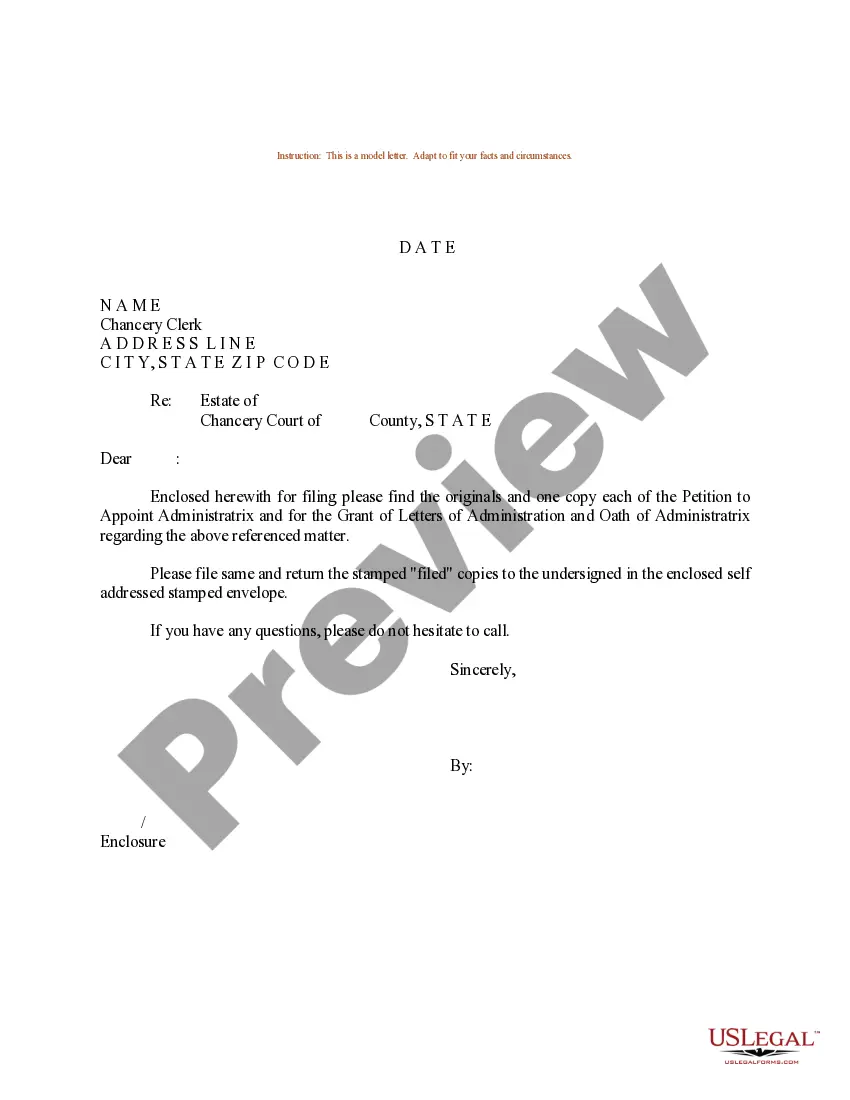
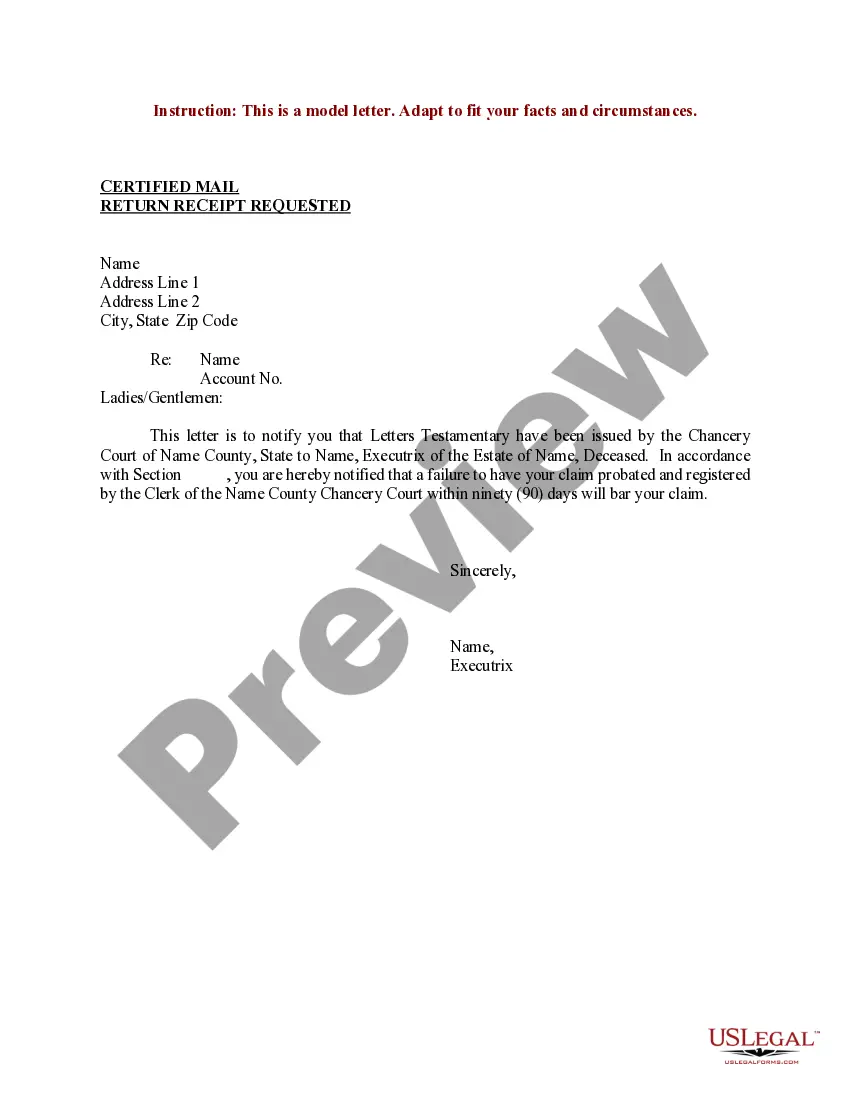
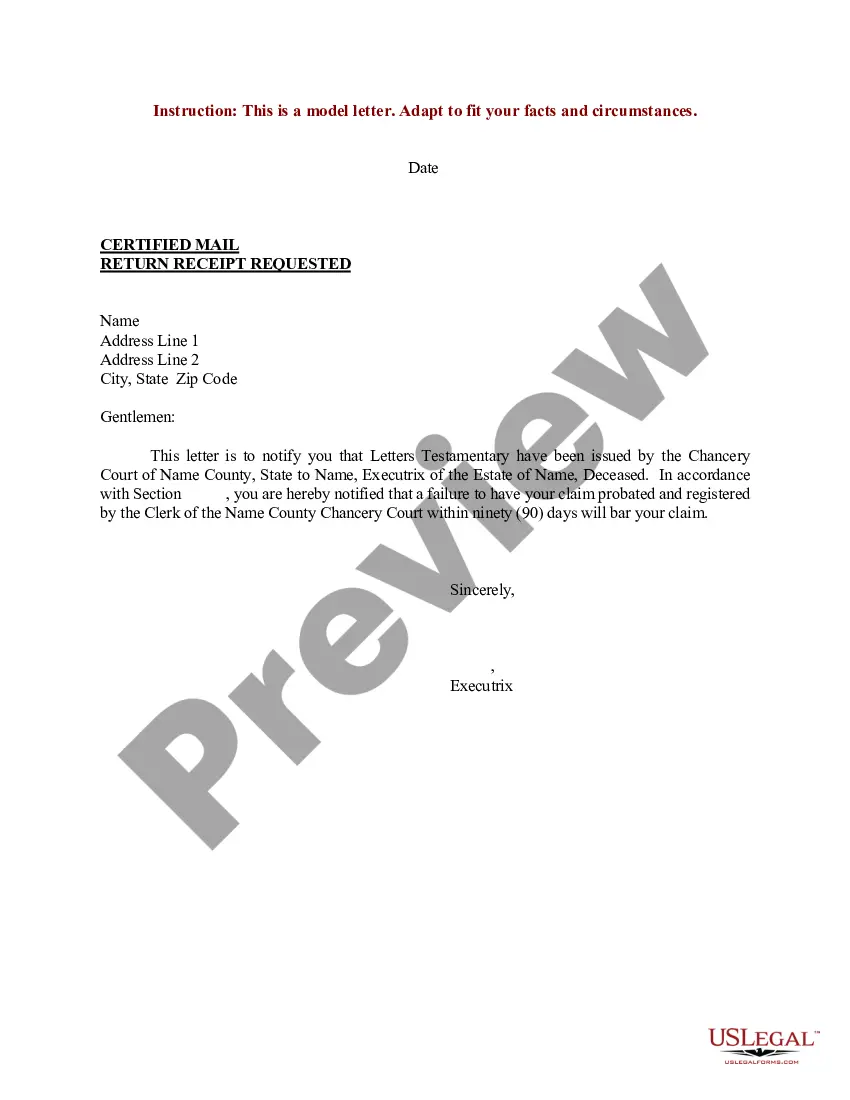
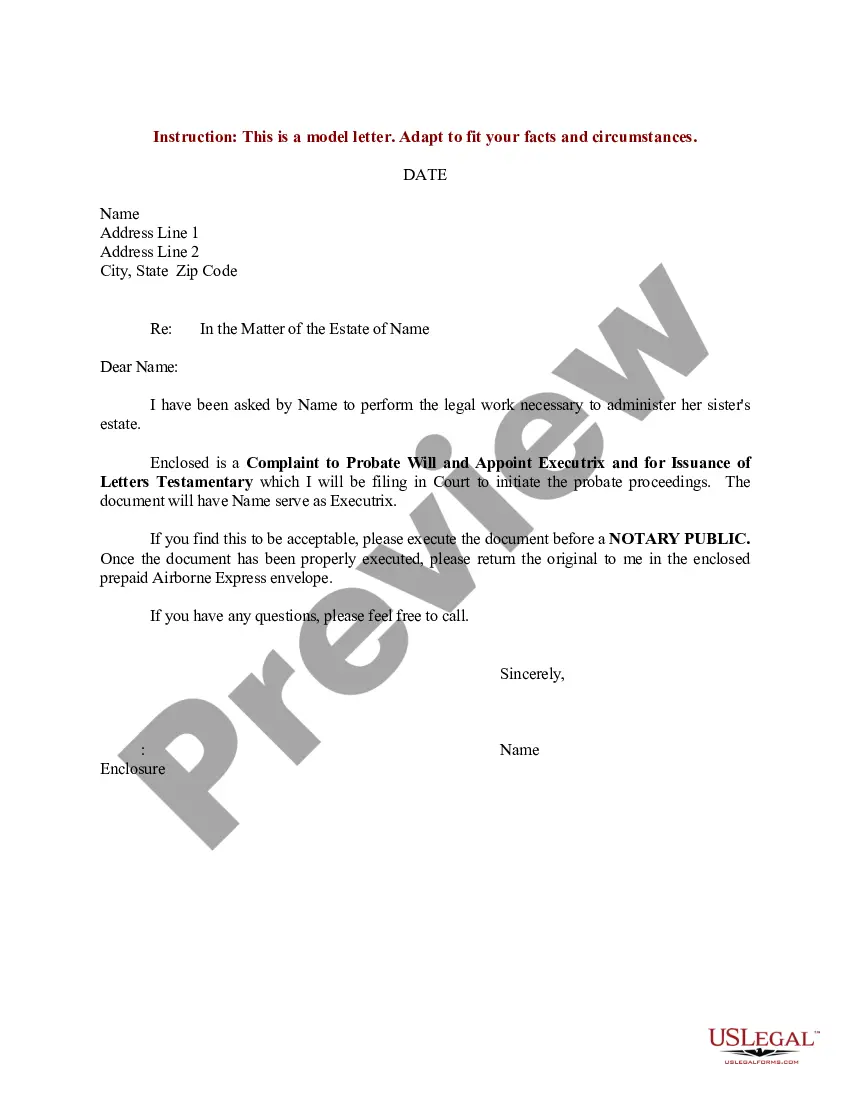




How to fill out Sample Letter For Letters Testamentary?
Locating a reliable source for obtaining the most up-to-date and suitable legal templates is a significant part of navigating bureaucracy.
Selecting the appropriate legal forms requires accuracy and meticulousness, which is why it's essential to obtain samples of a Testamentary Letter For A Will exclusively from trustworthy providers, such as US Legal Forms. An incorrect template could squander your time and delay your circumstances.
Once you have the form on your device, you can either modify it using the editor or print it out and complete it manually. Eliminate the stress associated with your legal documentation. Explore the comprehensive US Legal Forms collection to discover legal templates, verify their applicability to your situation, and download them instantly.
- Utilize the library navigation or search tool to find your template.
- Review the form’s details to verify it meets the requirements of your state and county.
- Preview the form, if possible, to confirm it is indeed the template you are seeking.
- Return to the search to identify the correct template if the Testamentary Letter For A Will doesn't fulfill your needs.
- Once you are confident about the form’s applicability, download it.
- If you are a registered user, click Log in to verify your identity and access your chosen templates in My documents.
- If you do not have an account yet, click Buy now to acquire the form.
- Select the payment plan that best fits your requirements.
- Proceed with registration to complete your purchase.
- Conclude your transaction by selecting a payment method (credit card or PayPal).
- Choose the file format for downloading the Testamentary Letter For A Will.
Form popularity
FAQ
No, a testamentary letter for a will and a power of attorney serve different purposes. A testamentary letter grants authority to an executor after death, while a power of attorney grants authority to make decisions on behalf of someone who is still alive. Understanding these distinctions is vital for effective estate planning.
The validity period of a testamentary letter for a will can differ significantly based on legal jurisdiction and estate complexities. Generally, it remains effective throughout the probate process until all debts are settled, and assets are distributed. Executors should remain diligent to honor their role effectively until completion.
In Texas, a letter of testamentary is generally valid until the estate is officially closed. The timeline can vary based on the specific circumstances of the estate. It's essential for executors to be proactive and ensure that all necessary actions are taken to settle the estate efficiently.
In New York, letters of administration are valid indefinitely until the estate is closed and settled. However, the executor or administrator must act in a timely manner to ensure a smooth administration process. Delays in fulfilling these responsibilities can lead to complications, so it’s best to keep the process moving forward.
Typically, a testamentary letter for a will remains valid until the estate is fully settled and distributed. However, its duration may vary depending on the jurisdiction and the complexity of the estate. It is crucial to understand that the executor should act promptly to fulfill their duties within a reasonable timeframe.
A testamentary letter for a will serves as legal proof that the named executor has the authority to manage the deceased's estate. This document allows the executor to carry out the terms of the will, including distributing assets to beneficiaries. Essentially, it legitimizes the executor's role, ensuring that they can act on behalf of the deceased's wishes.
Ordering a testamentary letter involves filing a petition with the probate court along with necessary documentation, including the will. It’s advisable to consult with an attorney to ensure all requirements are met and the process goes smoothly. Once approved, the court will issue the letter to you as the executor. For a seamless experience, consider using uslegalforms to guide you through obtaining your testamentary letter for a will.
Testamentary costs encompass various fees incurred during the probate process. This includes legal fees, costs for court filings, valuations of assets, and any necessary appraisals. Being aware of testamentary costs can aid in better financial planning for both executors and beneficiaries. A testamentary letter for a will can assist in outlining these costs and ensuring transparency.
To receive a letter of testamentary, you must file a petition with the probate court in your jurisdiction. Once the court reviews your case and approves it, they will issue the letter, granting you the authority to administer the deceased's estate. This letter serves as an important document, allowing you to proceed with estate management. Utilizing a testamentary letter for a will can simplify the procedure.
The time required to obtain a letter of testimony varies depending on state laws and the specific circumstances of the estate. Generally, this process can take anywhere from a few weeks to several months. Factors such as court schedules and the complexity of the estate can affect this timeline. Securing a testamentary letter for a will can help streamline the probate process.