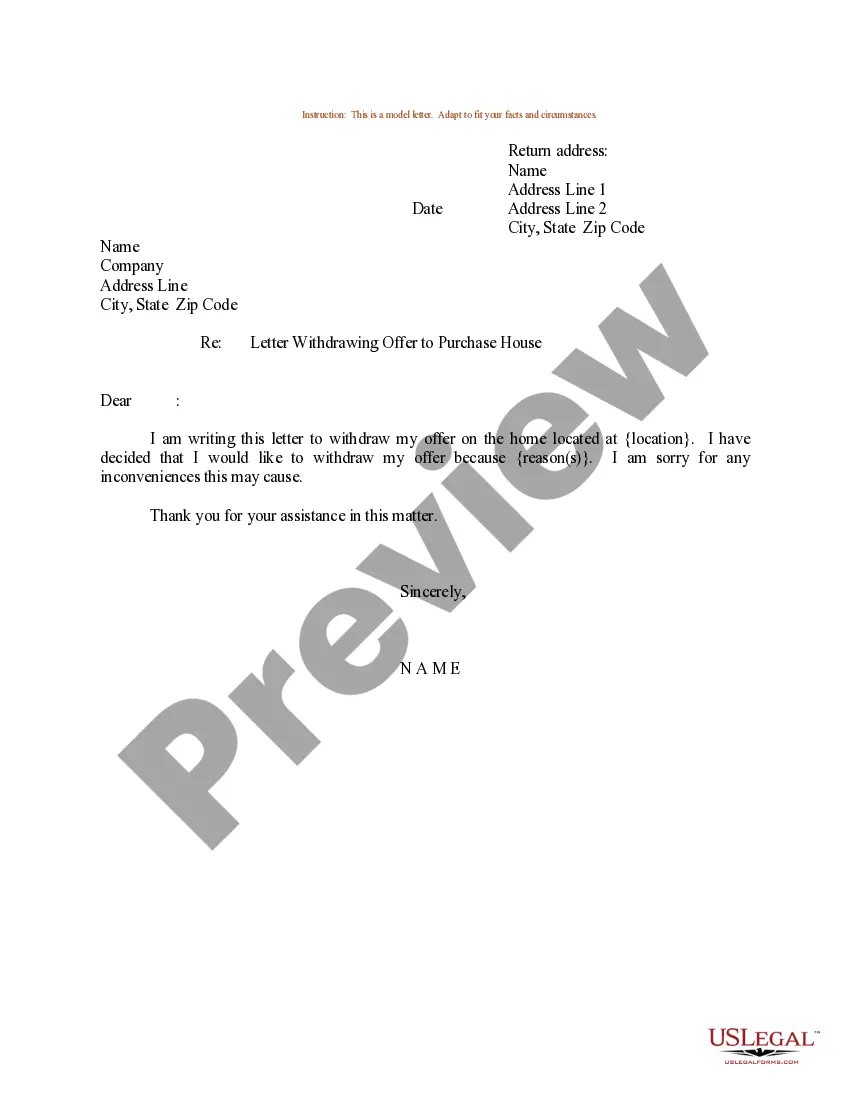
Withdrawing From Purchase Of House
Description

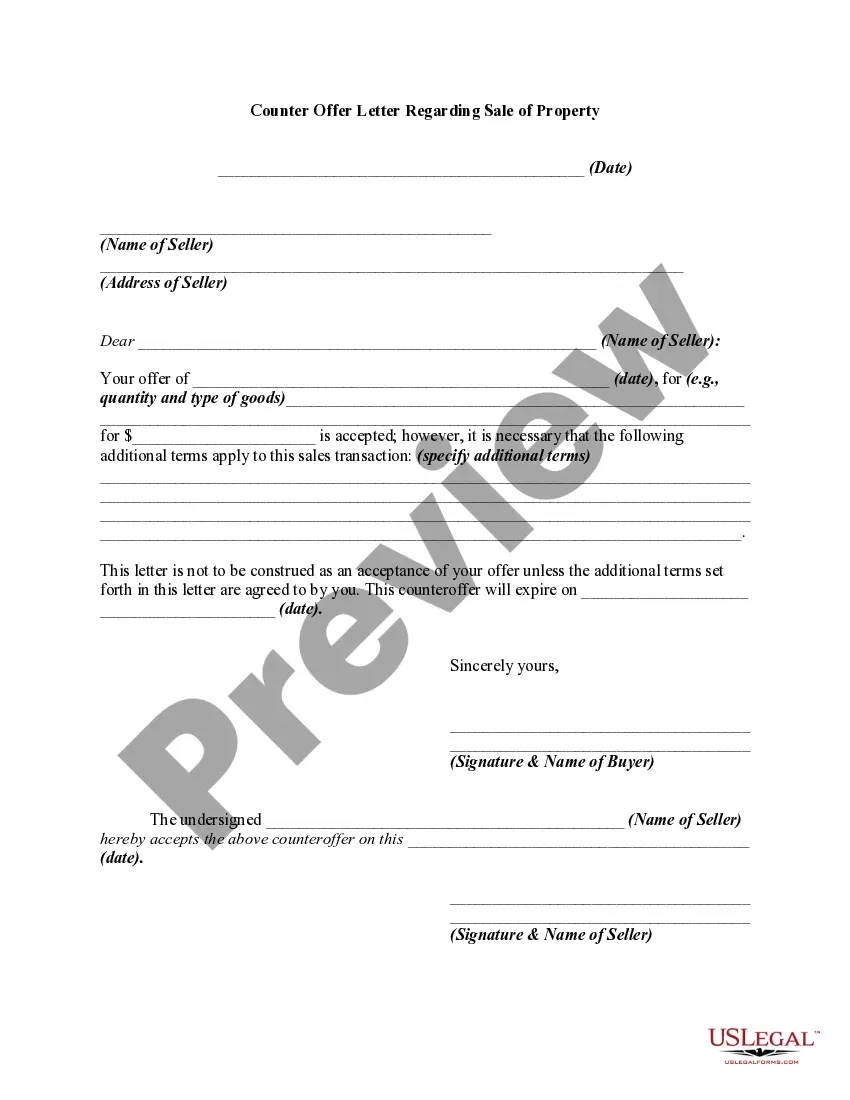
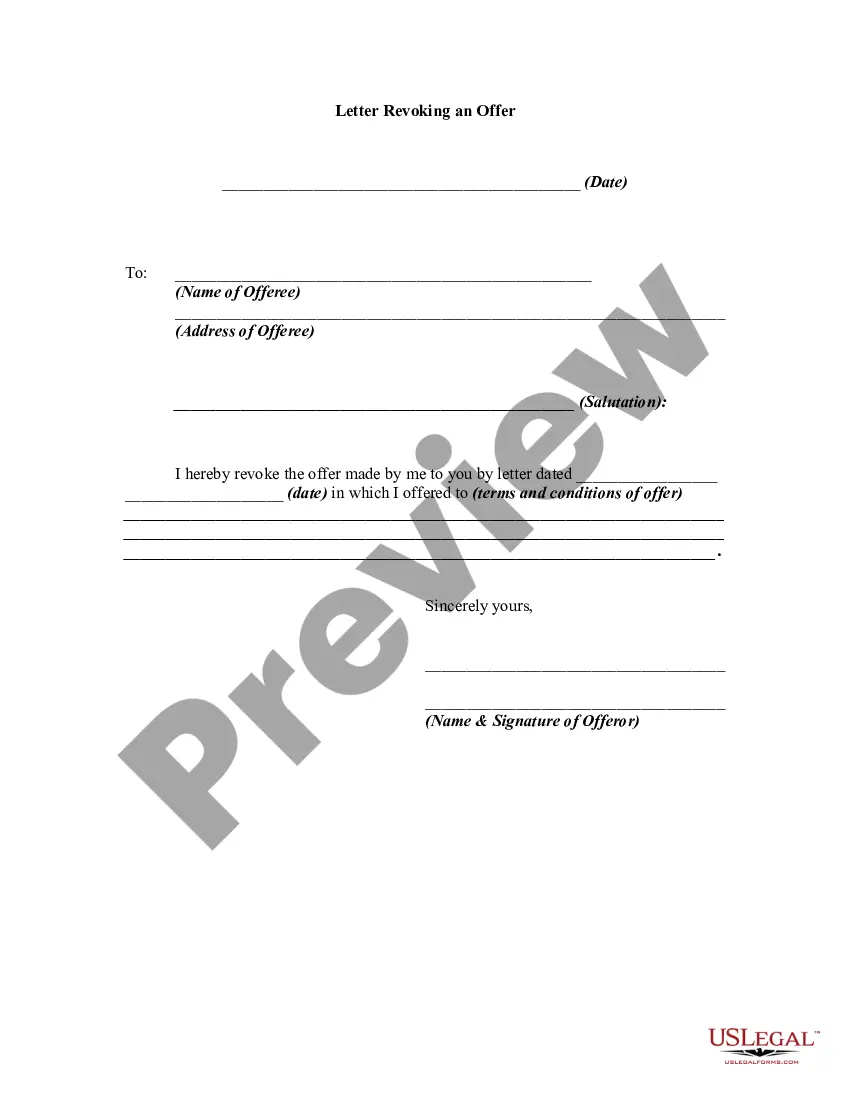
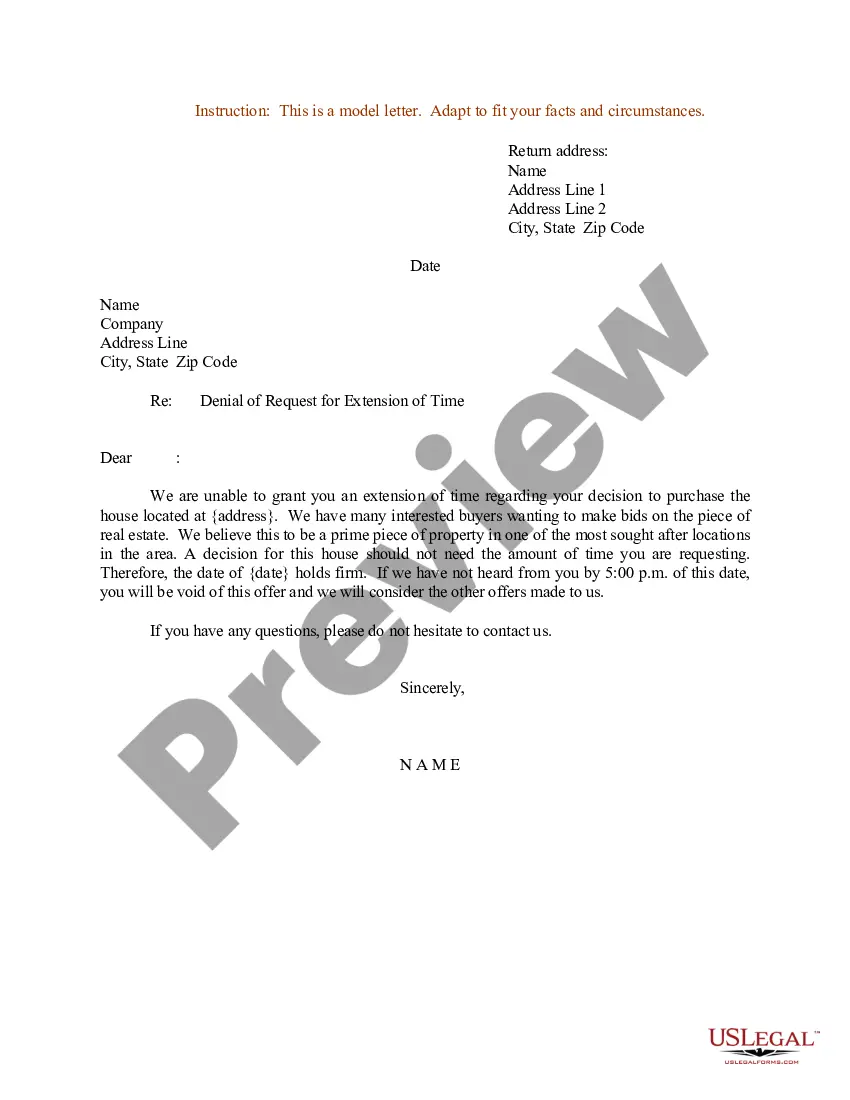
Get your form ready online
Our built-in tools help you complete, sign, share, and store your documents in one place.
Make edits, fill in missing information, and update formatting in US Legal Forms—just like you would in MS Word.
Download a copy, print it, send it by email, or mail it via USPS—whatever works best for your next step.
Sign and collect signatures with our SignNow integration. Send to multiple recipients, set reminders, and more. Go Premium to unlock E-Sign.
If this form requires notarization, complete it online through a secure video call—no need to meet a notary in person or wait for an appointment.
We protect your documents and personal data by following strict security and privacy standards.

Make edits, fill in missing information, and update formatting in US Legal Forms—just like you would in MS Word.

Download a copy, print it, send it by email, or mail it via USPS—whatever works best for your next step.

Sign and collect signatures with our SignNow integration. Send to multiple recipients, set reminders, and more. Go Premium to unlock E-Sign.

If this form requires notarization, complete it online through a secure video call—no need to meet a notary in person or wait for an appointment.

We protect your documents and personal data by following strict security and privacy standards.
Looking for another form?


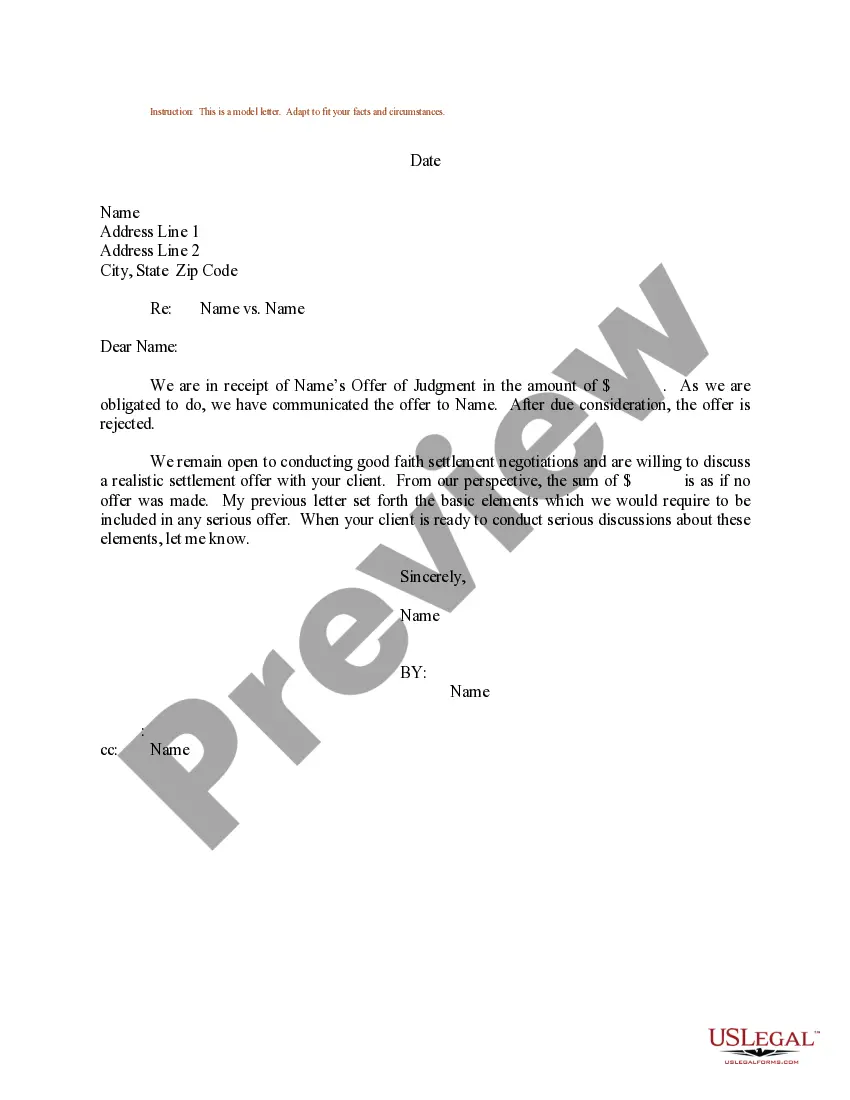
How to fill out Sample Letter Withdrawing Offer To Purchase House?
Whether for commercial aims or personal matters, everyone must navigate legal issues at some stage in their lives.
Completing legal documents requires meticulous care, starting from selecting the appropriate form template.
With a vast collection from US Legal Forms available, you do not have to waste time searching for the right template online. Utilize the library’s user-friendly navigation to find the appropriate form for any situation.
- For example, if you choose the incorrect version of the Withdrawing From Purchase Of House, it will be rejected after you submit it.
- Thus, it's crucial to have a reliable source of legal documents like US Legal Forms.
- If you need a Withdrawing From Purchase Of House template, follow these simple steps.
- Acquire the template you require by using the search bar or browsing the catalog.
- Review the form’s details to ensure it aligns with your case, state, and county.
- Click on the form’s preview to view it.
- If it is the wrong document, return to the search option to find the Withdrawing From Purchase Of House template you need.
- Download the template when it meets your criteria.
- If you already possess a US Legal Forms account, simply click Log in to retrieve previously saved templates in My documents.
- If you do not yet have an account, you can download the form by selecting Buy now.
- Choose the suitable pricing plan.
- Fill out the profile registration form.
- Select your payment method: use a credit card or PayPal.
- Choose the desired file format and download the Withdrawing From Purchase Of House.
- Once downloaded, you can fill out the form using editing software or print it and complete it by hand.
Form popularity
FAQ
The 3-day rule refers to a requirement that lenders provide finalized closing documents to buyers at least three days before the closing date. This period allows buyers time to review the terms and conditions of their mortgage. If you have concerns or questions during this time, reaching out to legal professionals can help you understand your options if you are considering withdrawing from the purchase of a house.
Withdrawing from a house purchase can be an option, especially if you have contingencies in your contract. It is important to act quickly and follow the stipulations laid out in your agreement. Consider contacting US Legal Forms for resources that can help guide you through the process of withdrawing from the purchase of a house safely and legally.
The timeframe for changing your mind after buying a house varies by state and the type of purchase contract. Typically, states offer a 'cooling-off' period that ranges from a few days to several weeks. During this period, you may be able to cancel your purchase without severe repercussions.
Withdrawing from the purchase of a house after signing contracts is possible, but it depends on the terms of the agreement. Most contracts include contingencies that allow buyers to cancel under specific circumstances. If you decide to withdraw, it’s essential to review your contract to understand any potential penalties or forfeitures.
Yes, you can typically back out of a home purchase before closing, especially if you are within a contingency period defined in your contract. It is important to understand your legal rights and obligations in this situation. Withdrawing from the purchase of a house before closing may involve certain steps, such as providing written notice to the seller. Seeking advice from a legal professional can also ensure you understand any repercussions for your decision.
Pulling out of a property purchase starts by assessing any contingencies in your agreement. If applicable, you can notify the seller, often through formal written communication. Additionally, documenting your reasons for withdrawing from the purchase of a house can protect your interests. If needed, using a platform like US Legal Forms can provide the necessary documents and guidance to facilitate this process effectively.
Withdrawing from the purchase of a house often starts with reviewing your purchase agreement. Most contracts include a contingency period that allows you to cancel the deal without penalties. During this phase, you can simply inform your real estate agent and follow the steps outlined in the agreement. If you're unsure, consulting with a legal expert can clarify your options and help you navigate the process smoothly.
Withdrawing from a purchase of house typically involves understanding your contract and local laws. Start by reviewing your purchase agreement to see if it includes contingencies that allow for withdrawal. If you find valid grounds, communicate your intent clearly to the seller in writing. For a smooth process, consider using platforms like US Legal Forms, which provide helpful resources and templates to guide you through formally withdrawing from the purchase of a house.
Yes, you can back out of purchasing a house, but doing so requires understanding your options and potential consequences. Withdrawing from the purchase of a house may be necessary due to changes in your financial situation or concerns that arise during the inspection phase. It is essential to review your purchase agreement, as it will outline any stipulations and deadlines for withdrawal. Utilizing platforms like US Legal Forms can provide you with the necessary legal documents and guidance to navigate this process smoothly.