Kansas Codicil to Will Form for Amending Your Will - Will Changes or Amendments
Overview of this form
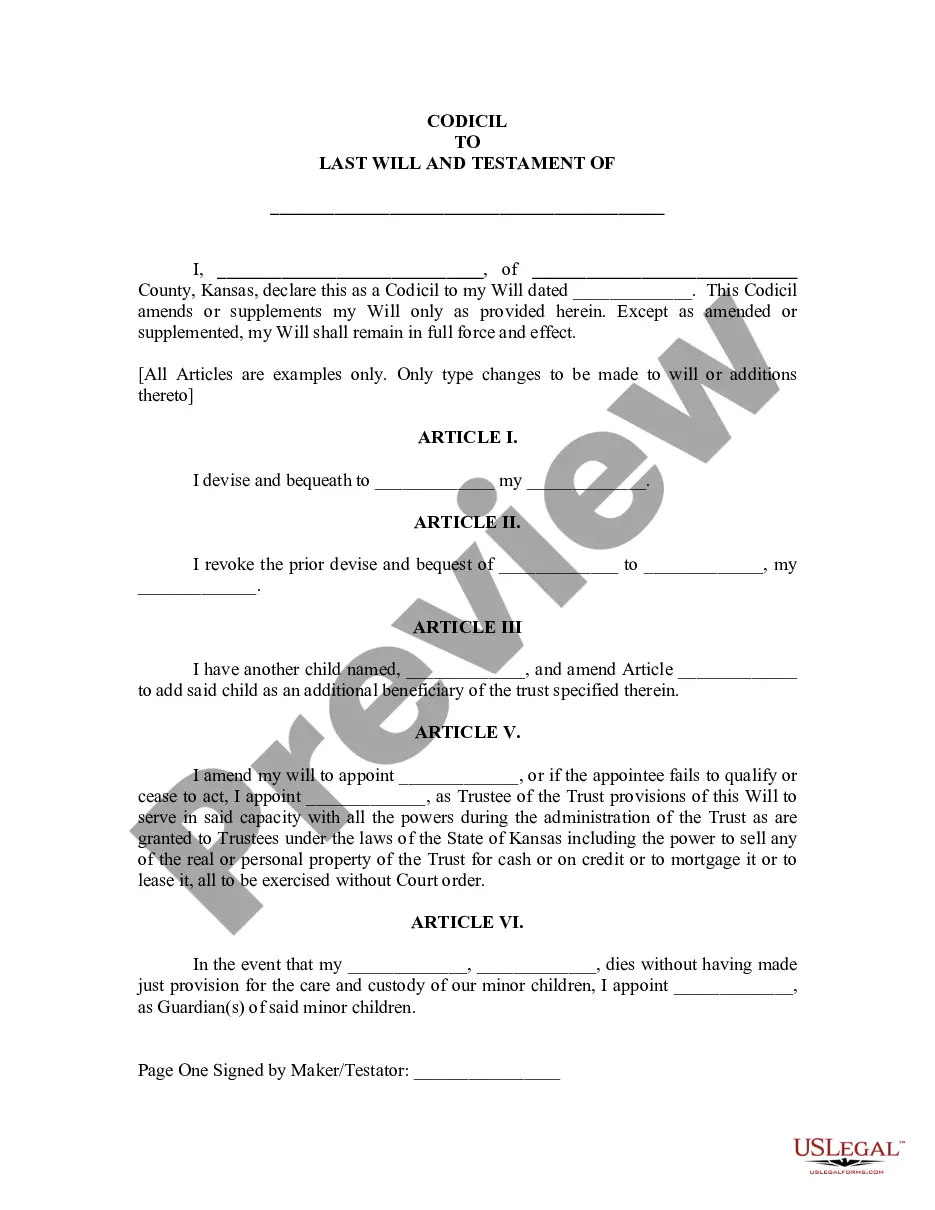
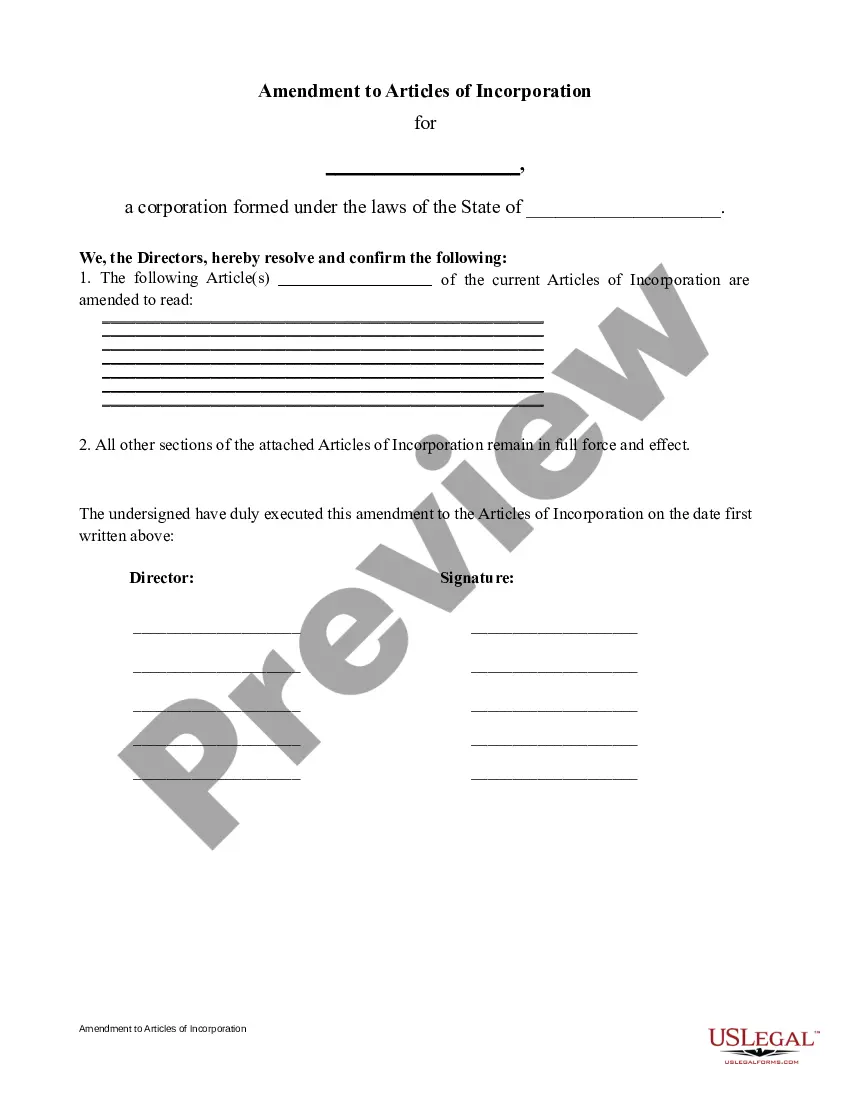
The Codicil to Will Form is designed for individuals wishing to amend their existing will without creating a new document. This form allows you to make specific changes, ensuring the original will remains valid except for the updated provisions outlined in the codicil. It is an efficient way to incorporate changes to beneficiaries, appointments, or other important details while preserving the remaining terms of the original will. The Codicil standardizes the required legal format and attestation clause, specific to the state in which it is used.
Key components of this form
- Identification of the testator and the original will date.
- Specific articles for amending existing provisions, such as beneficiaries and trustees.
- Revocation of prior bequests as necessary.
- Appointment of guardians for minor children.
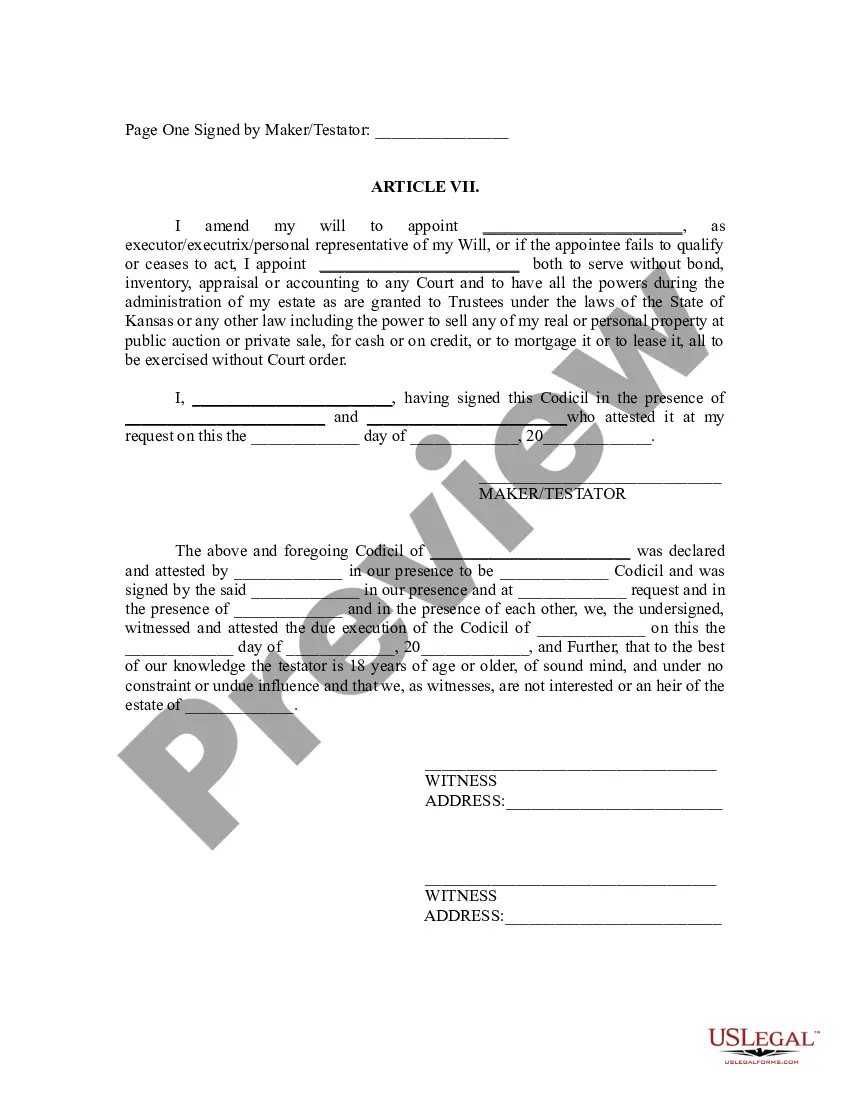
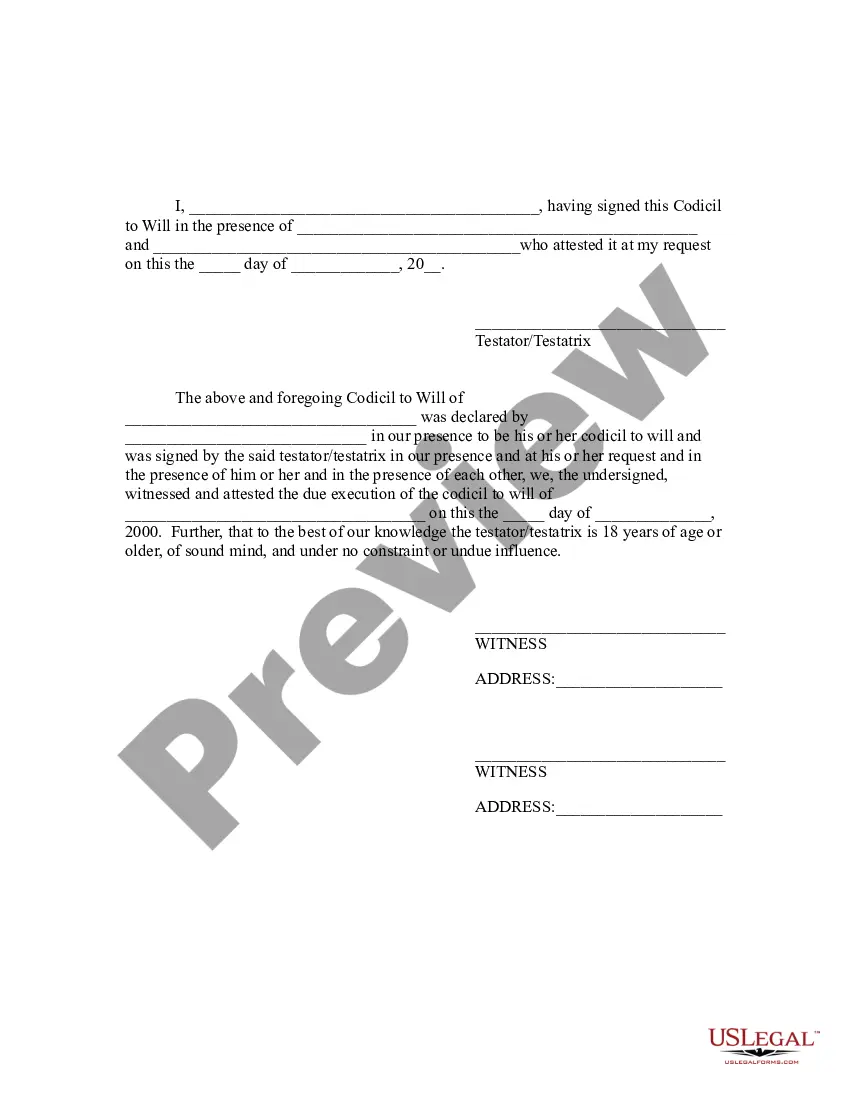
- Execution and attestation clauses, including witness signatures.
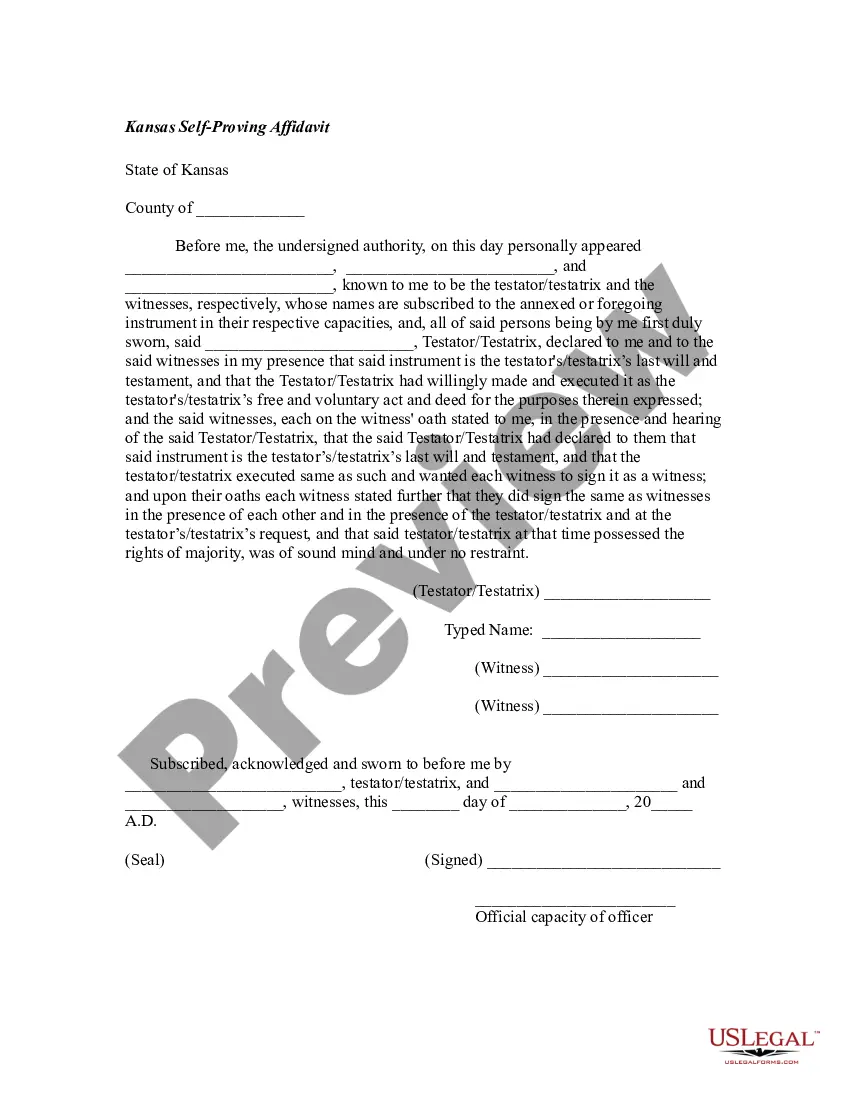
- Self-proving affidavit for easier probate processing.

Situations where this form applies
This form should be used when you need to make specific changes to an existing will without drafting an entirely new document. Common situations include adding or removing beneficiaries, changing trustees, or appointing guardians for minor children. If your circumstances have changedâsuch as marriage, divorce, birth, or death of a beneficiaryâthis codicil provides a straightforward way to update your legal intentions.
Who this form is for
- Individuals who have an existing will and wish to amend it.
- People experiencing life changes that impact their estate plans.
- Those wanting to clarify or specify particular provisions in their will.
- Residents of Kansas looking to adhere to state-specific legal requirements for a codicil.
How to prepare this document
- Begin by filling in your name and the county where you reside.
- Specify the date of your original will and outline the amendments you wish to make.
- Clearly identify any beneficiaries, including those being added or revoked.
- Designate trustees and guardians as needed, ensuring all appointed individuals are willing to take on these roles.
- Have the codicil witnessed by at least two individuals, ensuring compliance with Kansas law.
- Consider including a self-proving affidavit for easier probate acceptance.
Does this document require notarization?
This form does not typically require notarization unless specified by local law. However, having it notarized may help streamline the probate process by providing additional verification of its validity.
Get your form ready online
Our built-in tools help you complete, sign, share, and store your documents in one place.
Make edits, fill in missing information, and update formatting in US Legal Forms—just like you would in MS Word.
Download a copy, print it, send it by email, or mail it via USPS—whatever works best for your next step.
Sign and collect signatures with our SignNow integration. Send to multiple recipients, set reminders, and more. Go Premium to unlock E-Sign.
If this form requires notarization, complete it online through a secure video call—no need to meet a notary in person or wait for an appointment.
We protect your documents and personal data by following strict security and privacy standards.

Make edits, fill in missing information, and update formatting in US Legal Forms—just like you would in MS Word.

Download a copy, print it, send it by email, or mail it via USPS—whatever works best for your next step.

Sign and collect signatures with our SignNow integration. Send to multiple recipients, set reminders, and more. Go Premium to unlock E-Sign.

If this form requires notarization, complete it online through a secure video call—no need to meet a notary in person or wait for an appointment.

We protect your documents and personal data by following strict security and privacy standards.
Common mistakes to avoid
- Failing to correctly identify the original will or its date.
- Not having the required number of witnesses sign the document.
- Leaving out important amendments or making vague statements.
- Not ensuring that witnesses are disinterested parties.
Why use this form online
- Convenience of accessing the form from any device at any time.
- Editability allows for easy customization to suit individual needs.
- Reliable templates drafted by licensed attorneys ensure legal compliance.
Looking for another form?


Form popularity
FAQ
§ 59-601. In Kansas, your will affects the property you own at the time of your death, as well as any property your estate receives after your death.Kansas does not permit holographic (handwritten) wills.
Dying Without a Will in KansasIf there isn't a will, the court then appoints someone, usually an adult child or surviving spouse, to be the executor or personal representative. The executor or personal representative takes care of the decedent's estate.
Hiring an attorney will cost you more than $1,000. If you choose to use the DIY approach, you'll spend a few hundred dollars. Both methods have pros and cons, of course. DIY estate planning, though less expensive, requires more detail and planning.
Legal Requirements A will is valid in Kansas only if it is in writing and signed at the final draft by the testator, or by a proxy who has been directed by the testator to sign it. The will also needs to be signed by two witnesses who have seen the testator sign the will or have heard the acknowledgement of the will.