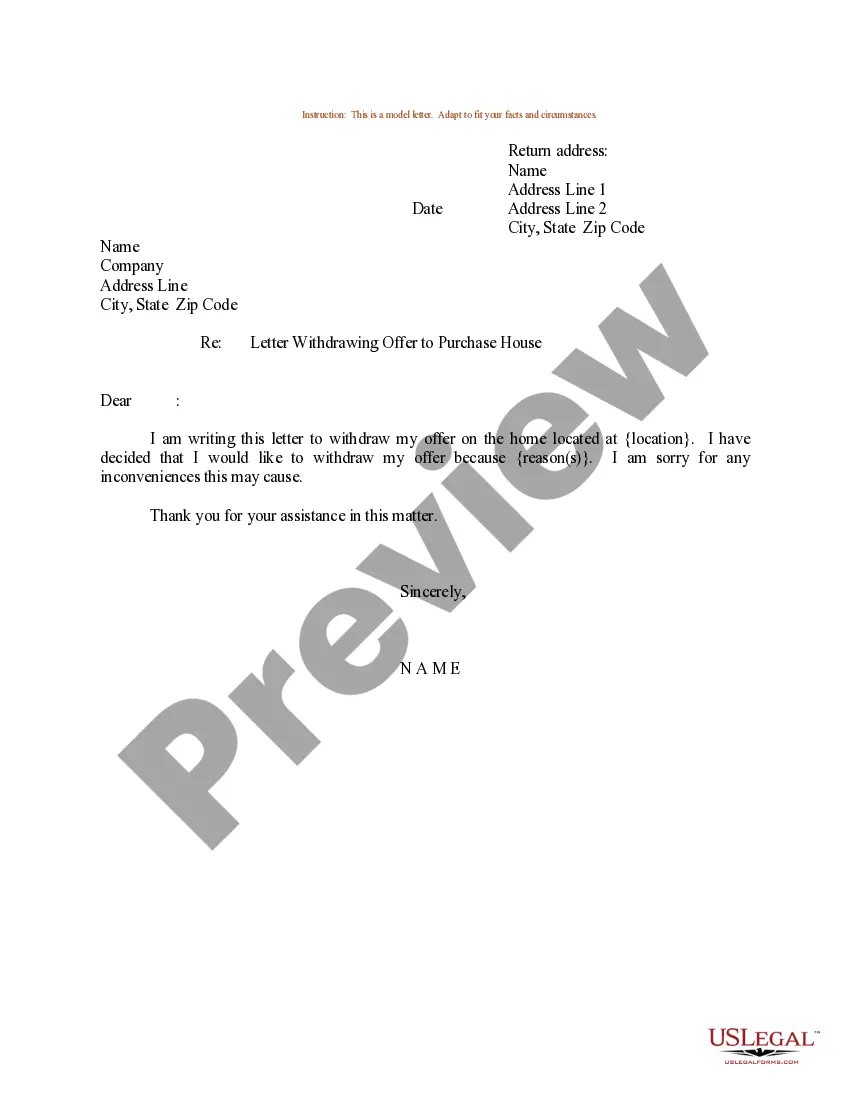
House Offer To Purchase
Description

Get your form ready online
Our built-in tools help you complete, sign, share, and store your documents in one place.
Make edits, fill in missing information, and update formatting in US Legal Forms—just like you would in MS Word.
Download a copy, print it, send it by email, or mail it via USPS—whatever works best for your next step.
Sign and collect signatures with our SignNow integration. Send to multiple recipients, set reminders, and more. Go Premium to unlock E-Sign.
If this form requires notarization, complete it online through a secure video call—no need to meet a notary in person or wait for an appointment.
We protect your documents and personal data by following strict security and privacy standards.

Make edits, fill in missing information, and update formatting in US Legal Forms—just like you would in MS Word.

Download a copy, print it, send it by email, or mail it via USPS—whatever works best for your next step.

Sign and collect signatures with our SignNow integration. Send to multiple recipients, set reminders, and more. Go Premium to unlock E-Sign.

If this form requires notarization, complete it online through a secure video call—no need to meet a notary in person or wait for an appointment.

We protect your documents and personal data by following strict security and privacy standards.
Looking for another form?
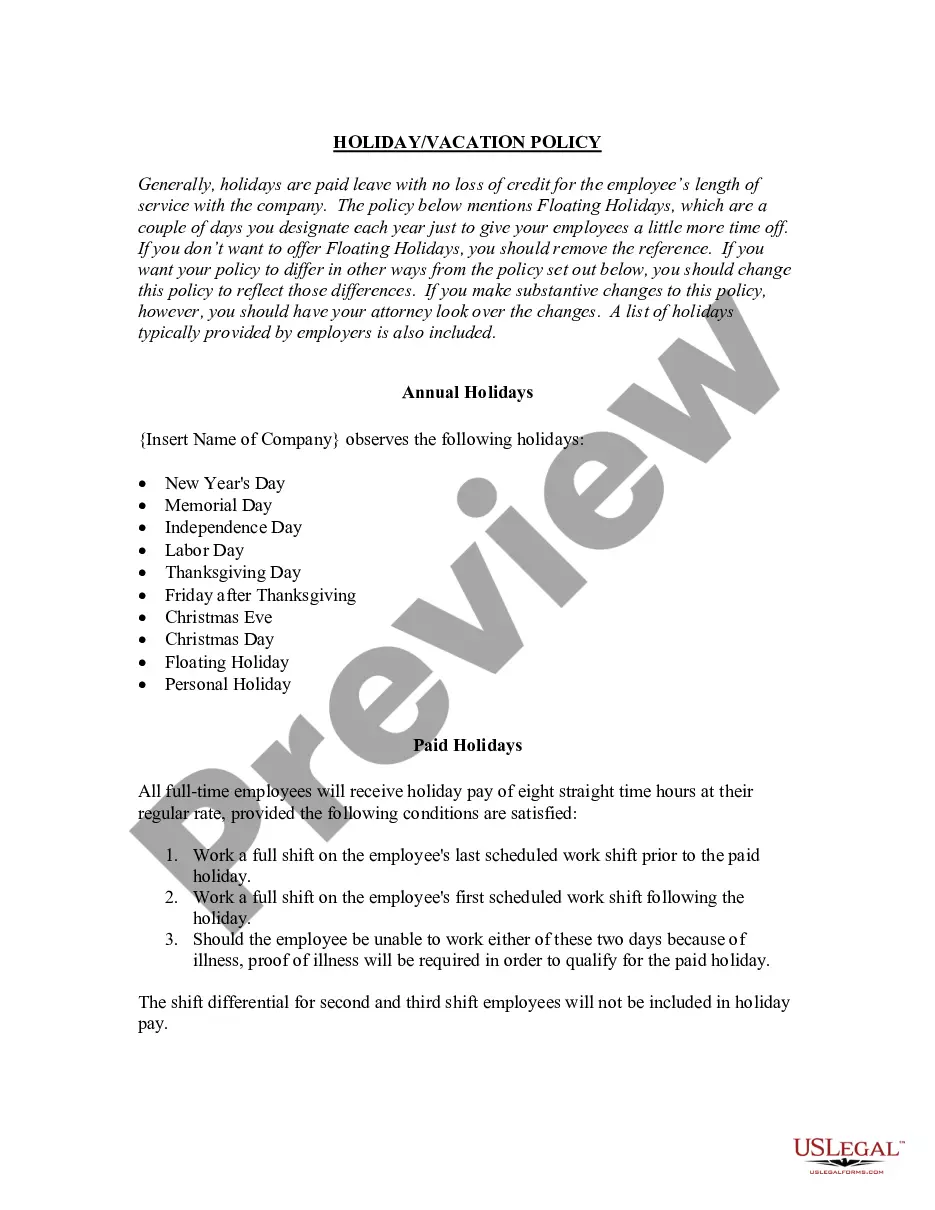


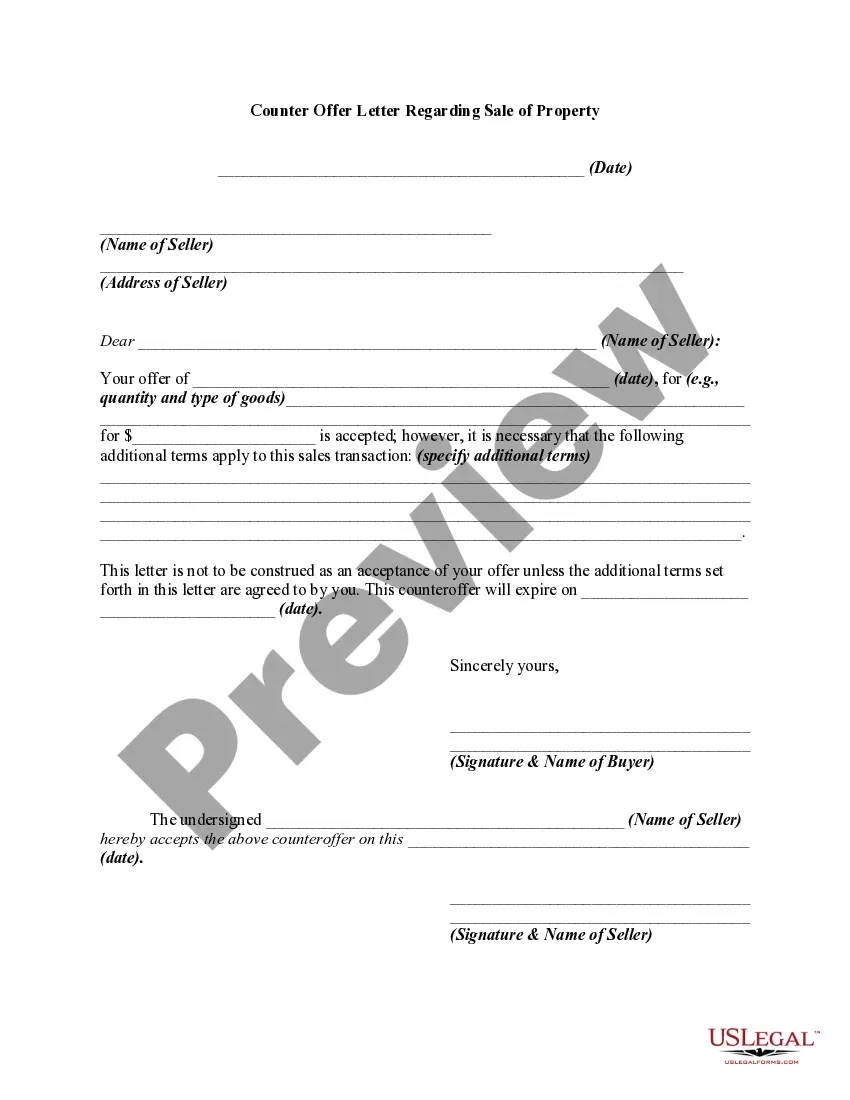
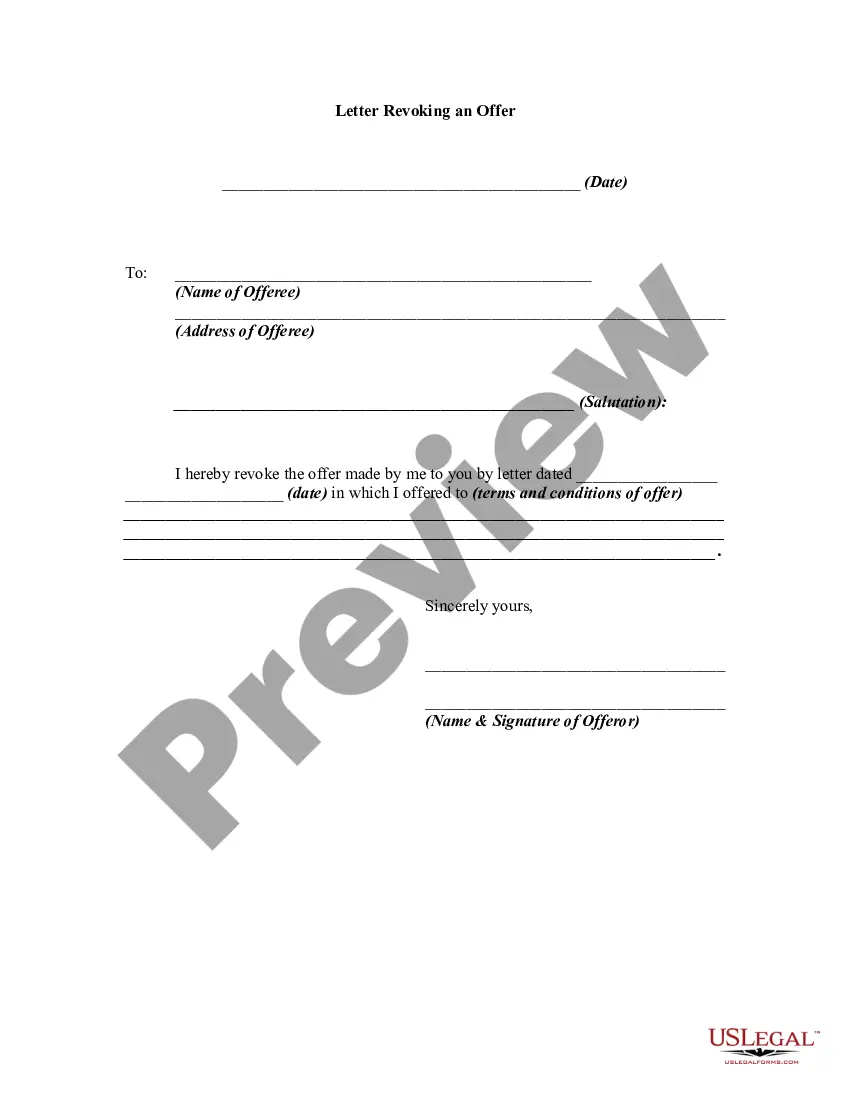
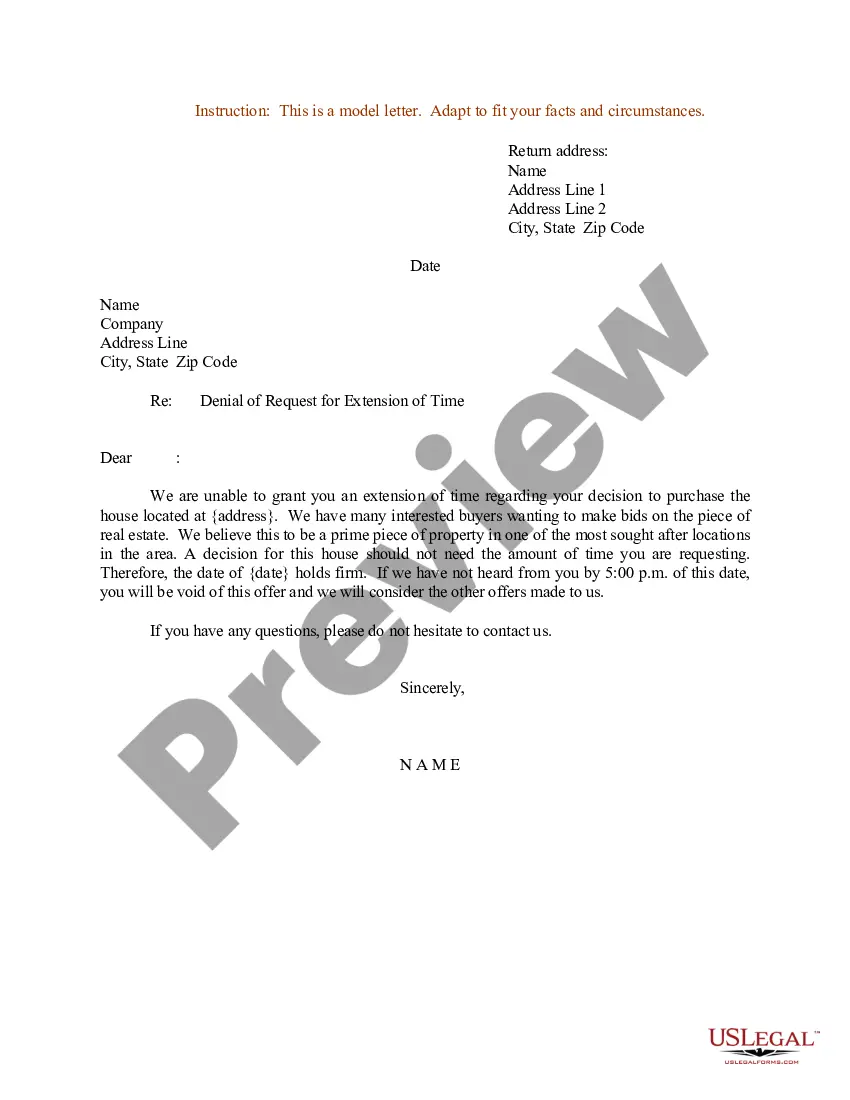
How to fill out Sample Letter Withdrawing Offer To Purchase House?
Regardless of whether it's for corporate reasons or personal issues, everyone eventually encounters legal circumstances in their lifetime.
Filling out legal paperwork demands meticulous focus, beginning with choosing the right template.
With an extensive catalog of US Legal Forms available, you are never required to waste time searching for the right template online. Utilize the library’s simple navigation to find the suitable template for any occasion.
- Locate the template you require via the search bar or catalog navigation.
- Review the form’s description to ensure it aligns with your situation, state, and county.
- Select the form’s preview to inspect it.
- If it is not the correct document, return to the search function to find the House Offer To Purchase template you need.
- Download the template if it meets your requirements.
- If you already possess a US Legal Forms account, simply click Log in to access previously saved documents in My documents.
- If you do not yet have an account, you can acquire the form by pressing Buy now.
- Select the appropriate pricing choice.
- Complete the account registration form.
- Pick your payment method: utilize a credit card or PayPal account.
- Select the document format you desire and download the House Offer To Purchase.
- Once downloaded, you can fill out the form using editing software or print it and complete it by hand.
Form popularity
FAQ
To afford a $400,000 house, your salary should generally be around $80,000 to $100,000 annually, depending on your debt-to-income ratio and down payment. Lenders often suggest that your monthly housing costs should not exceed 28% of your gross income. This means understanding your financial situation is crucial when preparing your house offer to purchase. Consider consulting with a financial advisor to determine your specific needs.
Yes, you can submit a house offer to purchase without a realtor. This process allows you to have more control and potentially save on commission fees. However, it's important to understand the legalities and paperwork involved in making an offer. Using platforms like US Legal Forms can guide you through the necessary documentation and help ensure your offer is valid.
Writing an official offer on a house involves presenting your offer in a formal manner. Begin with a clear subject line, followed by your offer amount and any terms you wish to propose. Be sure to include contingencies to protect your interests. A well-structured house offer to purchase can create a positive impression and enhance your chances of acceptance.
Filling out a notice of offer to purchase requires specific information. Start by detailing the property address and your offer amount. Include essential terms like contingencies and expiration dates for the offer. Using a reliable platform like USLegalForms can help ensure your notice is complete and legally compliant.
To complete an offer to purchase form, start by clearly stating your intention to buy the property. Fill in the property details, including address and legal description. Next, provide your offer amount and any contingencies, such as financing or inspections. Lastly, ensure you sign and date the form before sending it to the seller or their agent.
Submitting a house offer to purchase involves a few straightforward steps. First, complete the offer form with all the required details, ensuring accuracy. Once your offer is ready, present it to the seller or their agent, either in person or through email. Consider using US Legal Forms for additional resources and templates to streamline the submission process.
A contingency is a potential occurrence of a negative event in the future, such as an economic recession, natural disaster, fraudulent activity, terrorist attack, or a pandemic.
6 common contingencies Mortgage contingency. This clause specifies a window of time in which the buyer must obtain financing to purchase the home. ... Title contingency. ... Home inspection contingency. ... Sale of a prior home contingency. ... Appraisal contingency. ... Homeowners insurance contingency.
So, here are some of the most important things to include in a strong real estate offer letter: The Property Buyer and the Property Seller. ... Description of the Property. ... Purchase Price. ... Financing. ... Offer Expiration Date. ... Earnest Money Amount and Terms. ... Investigation Period. ... Contract Contingencies.
Address the seller and introduce yourself. If you know the seller's name, use that, but you likely won't know the name of the owner of the home. ... Detail what makes the home stand out to you. ... Find something in common. ... Present your offer. ... Note any contingencies you have. ... Close with a friendly thank you.