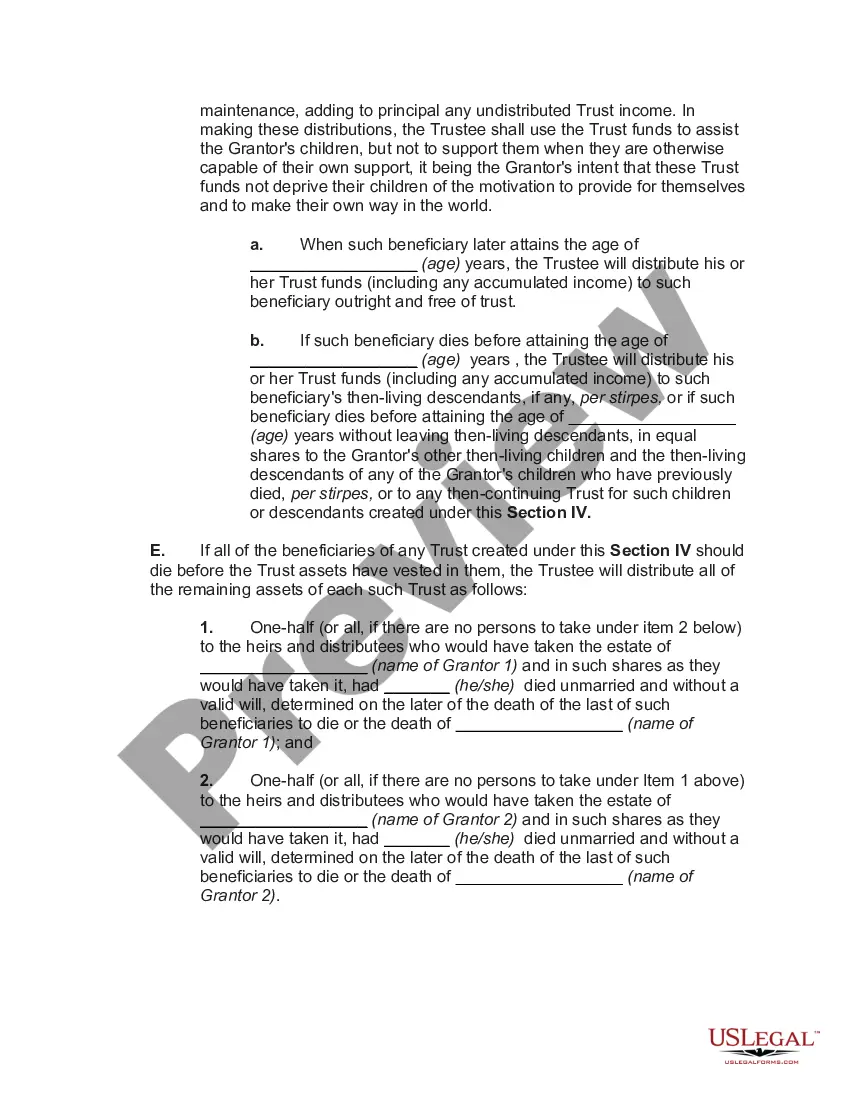
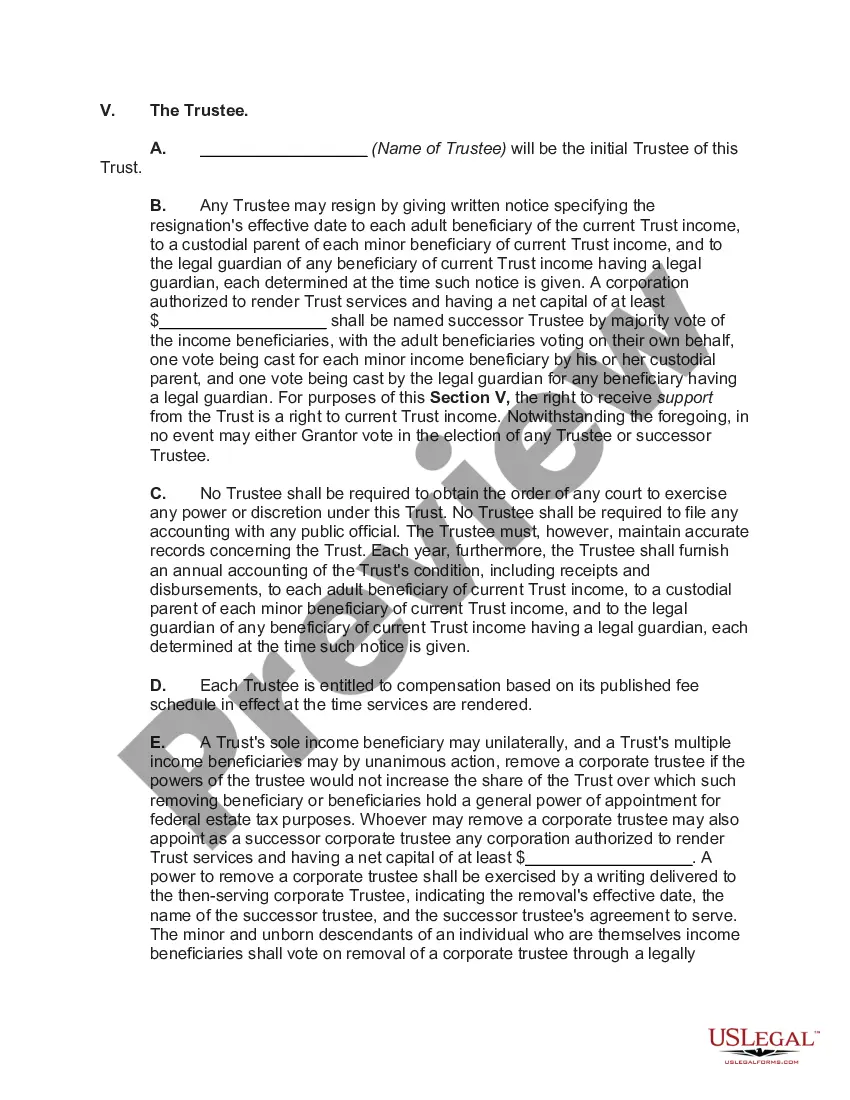
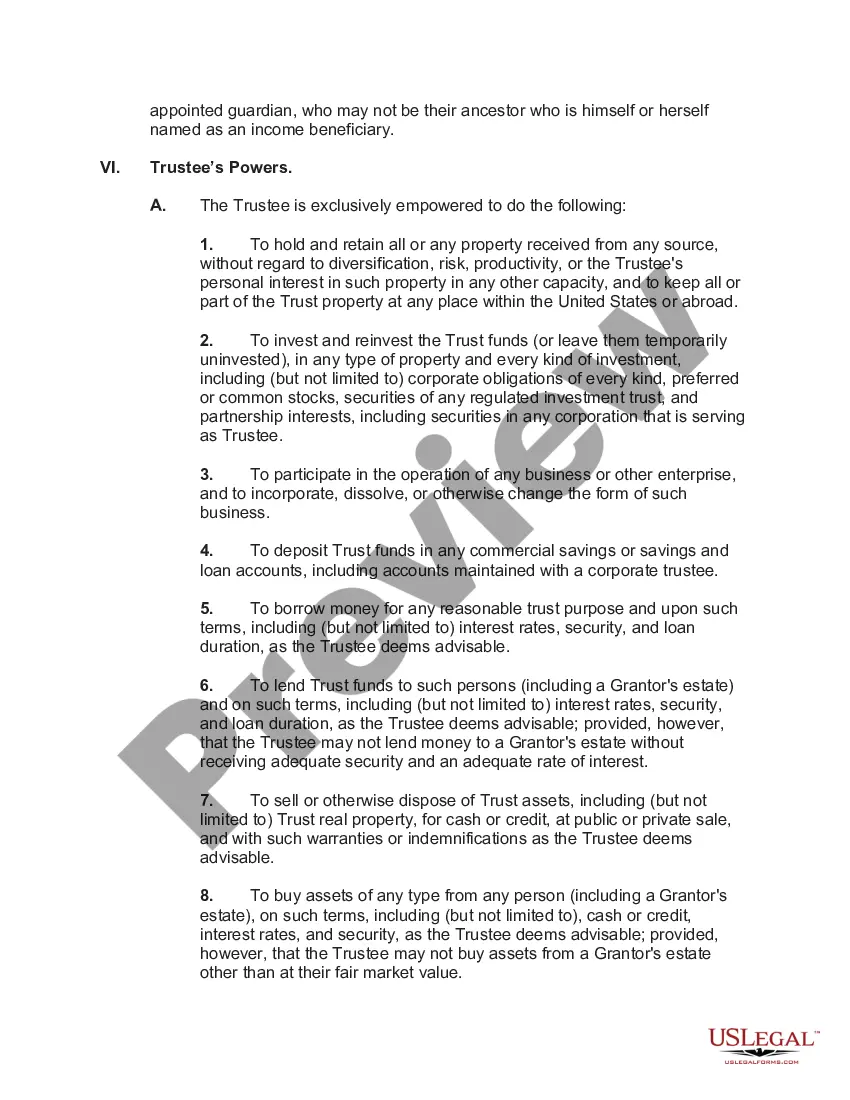
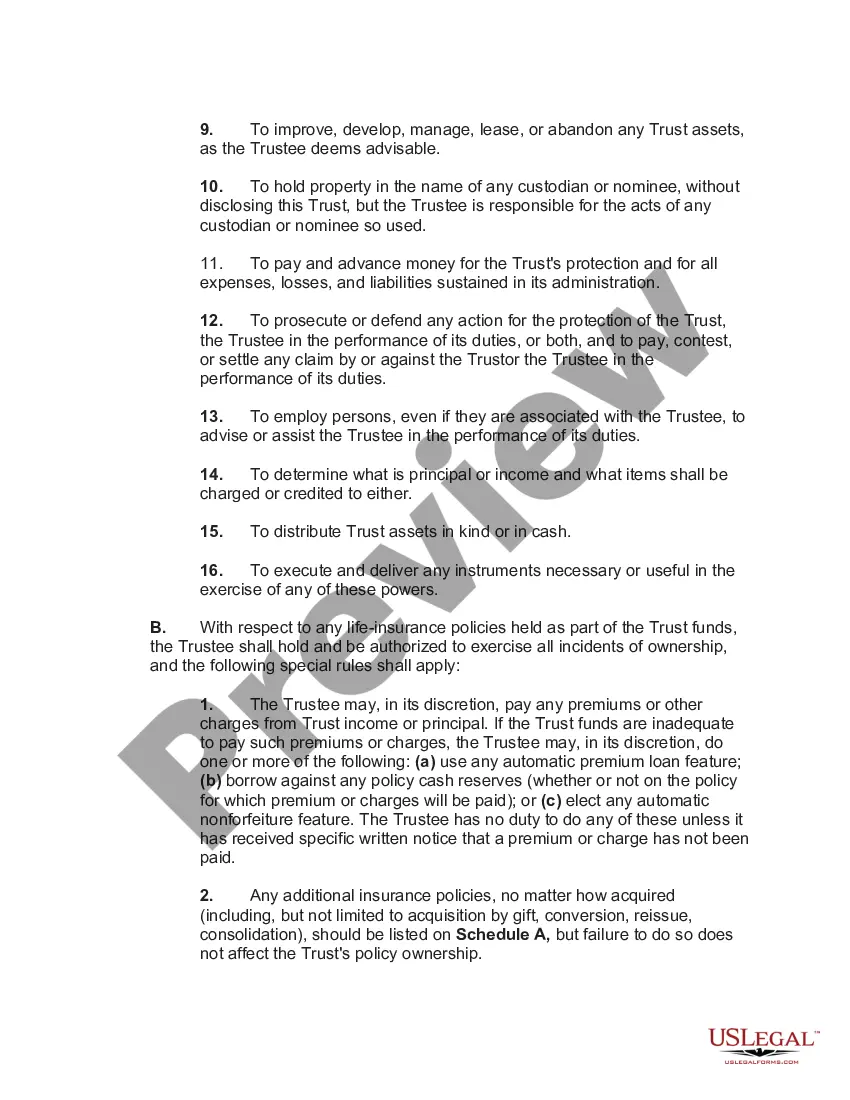
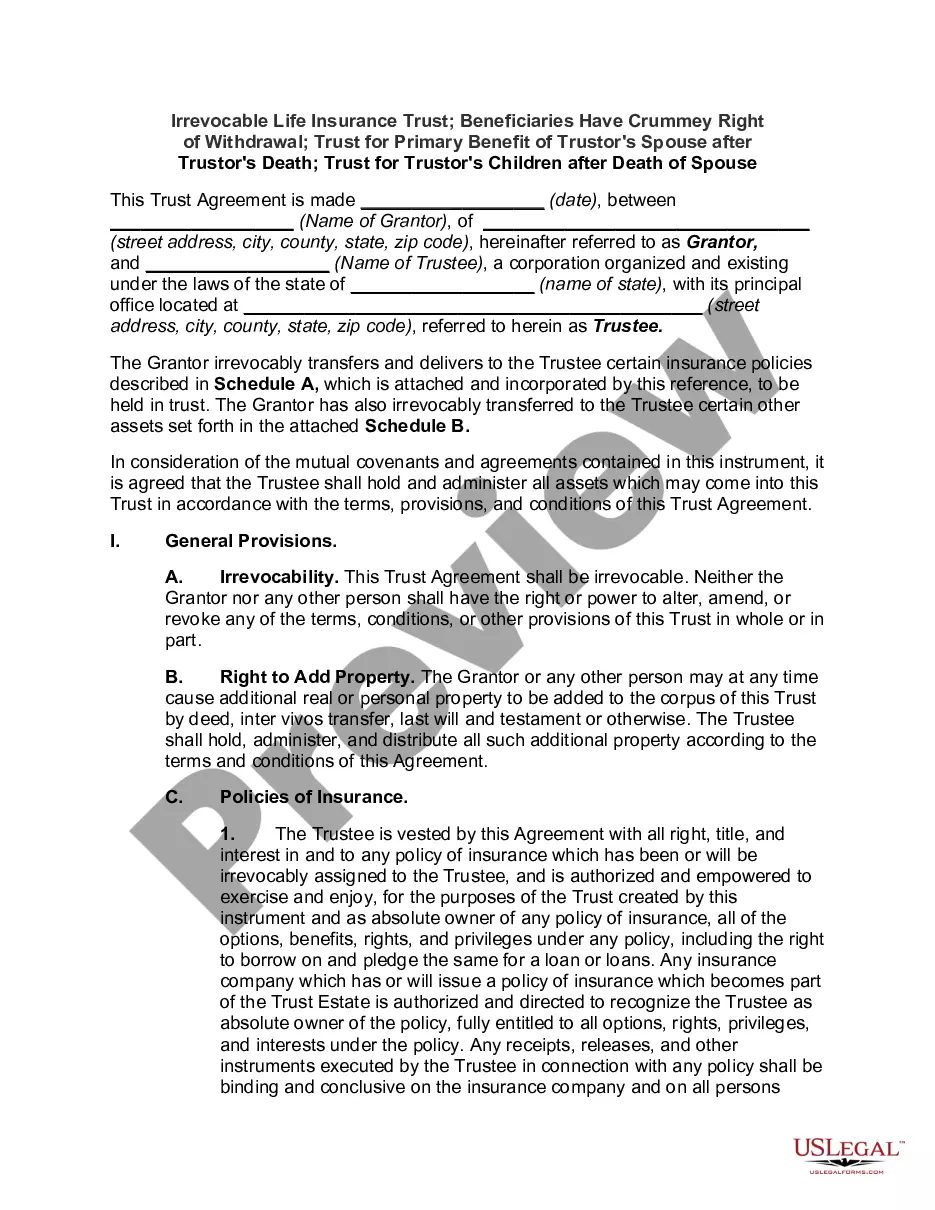
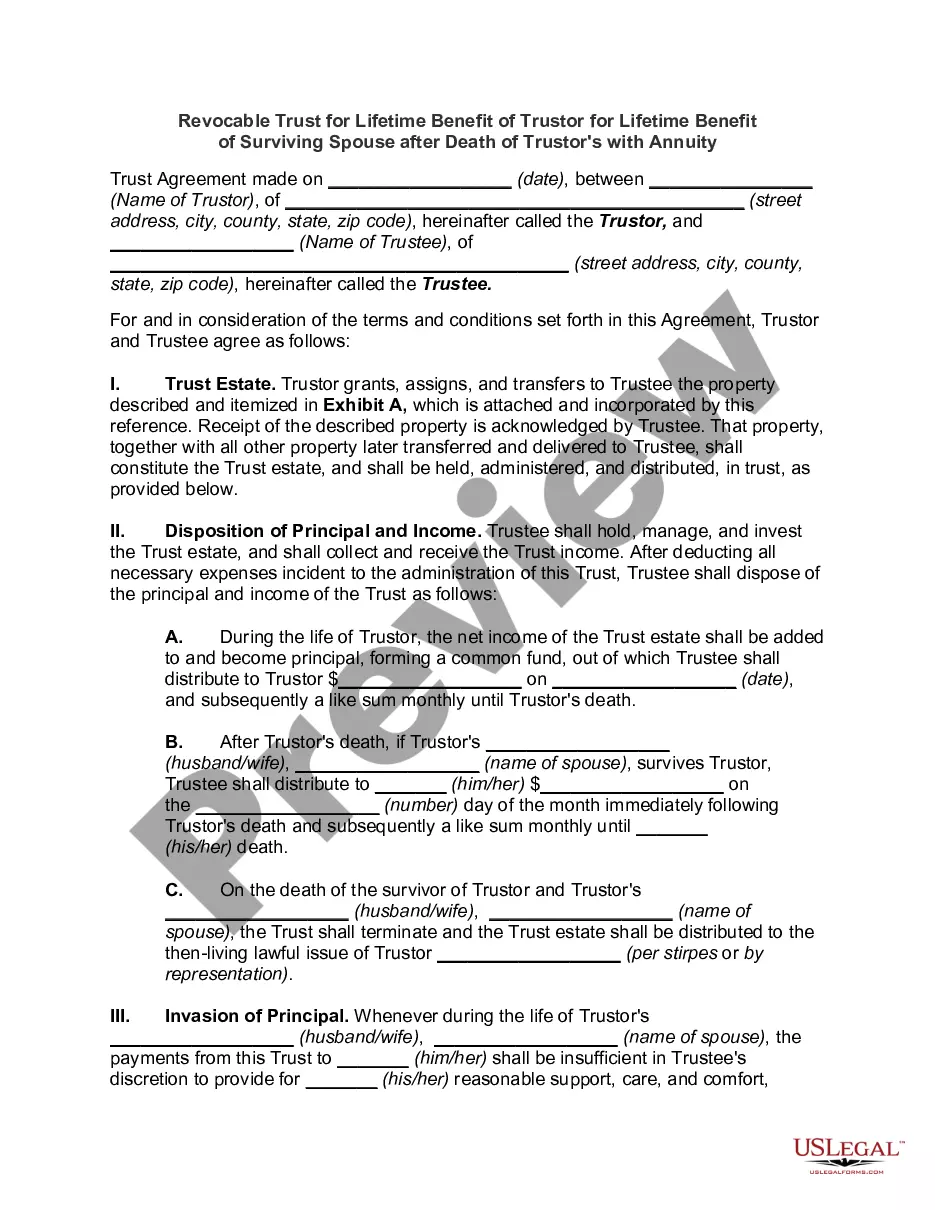
Life Insurance Trust With With A
Description
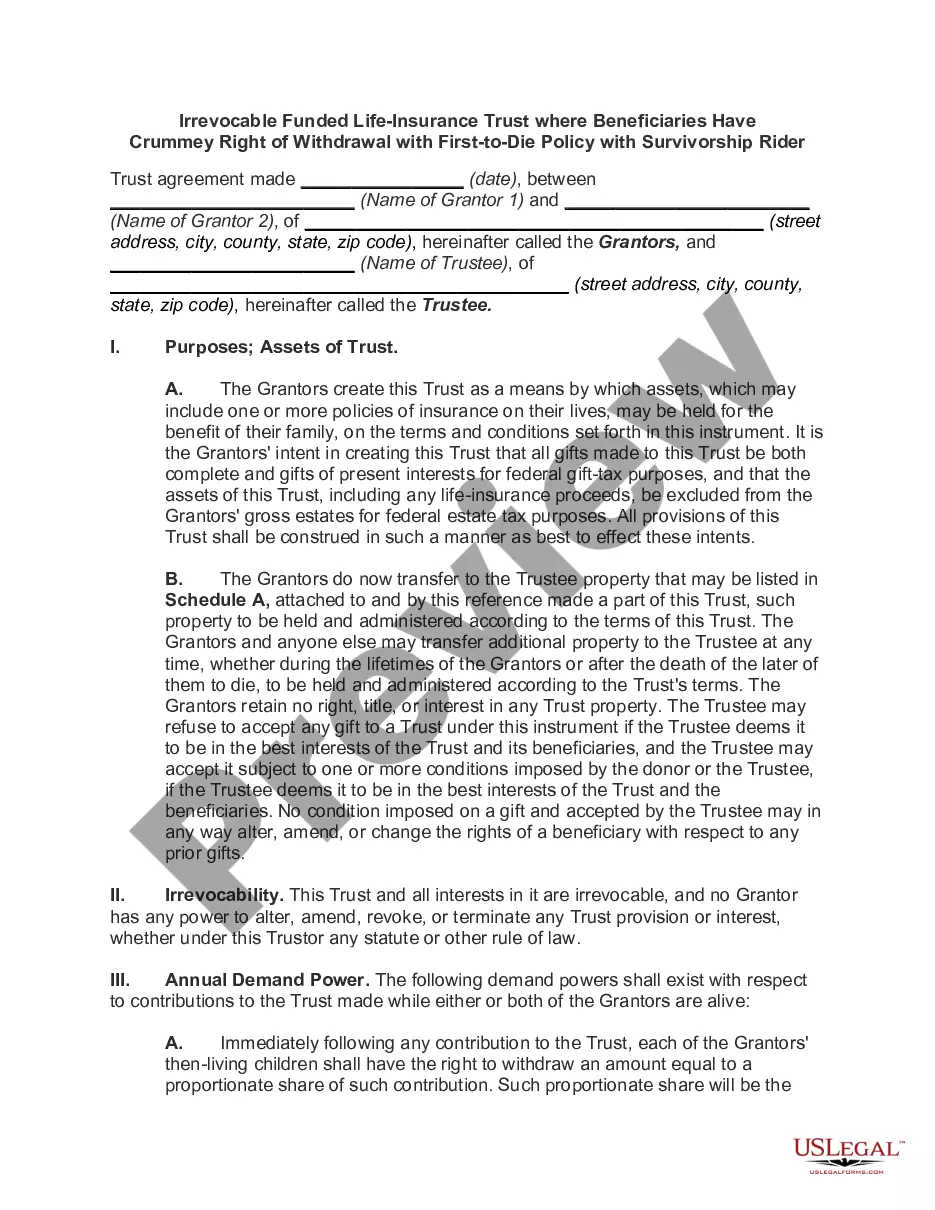
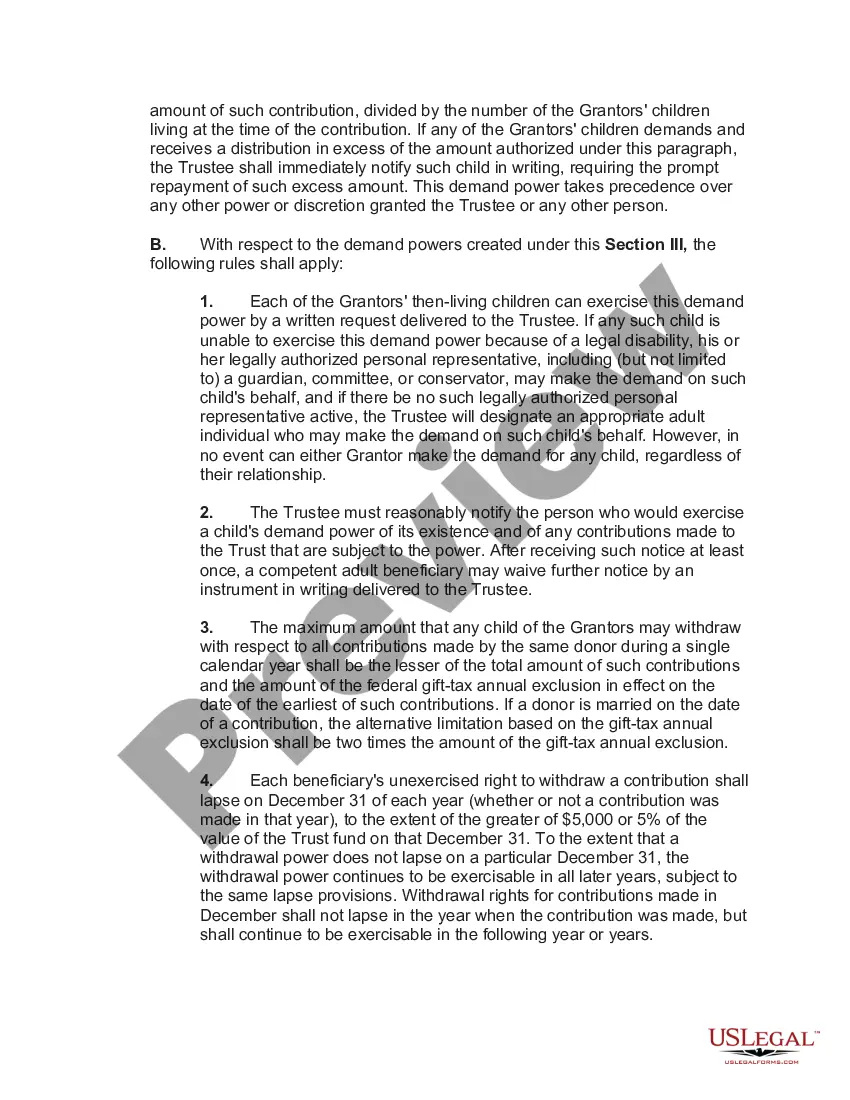
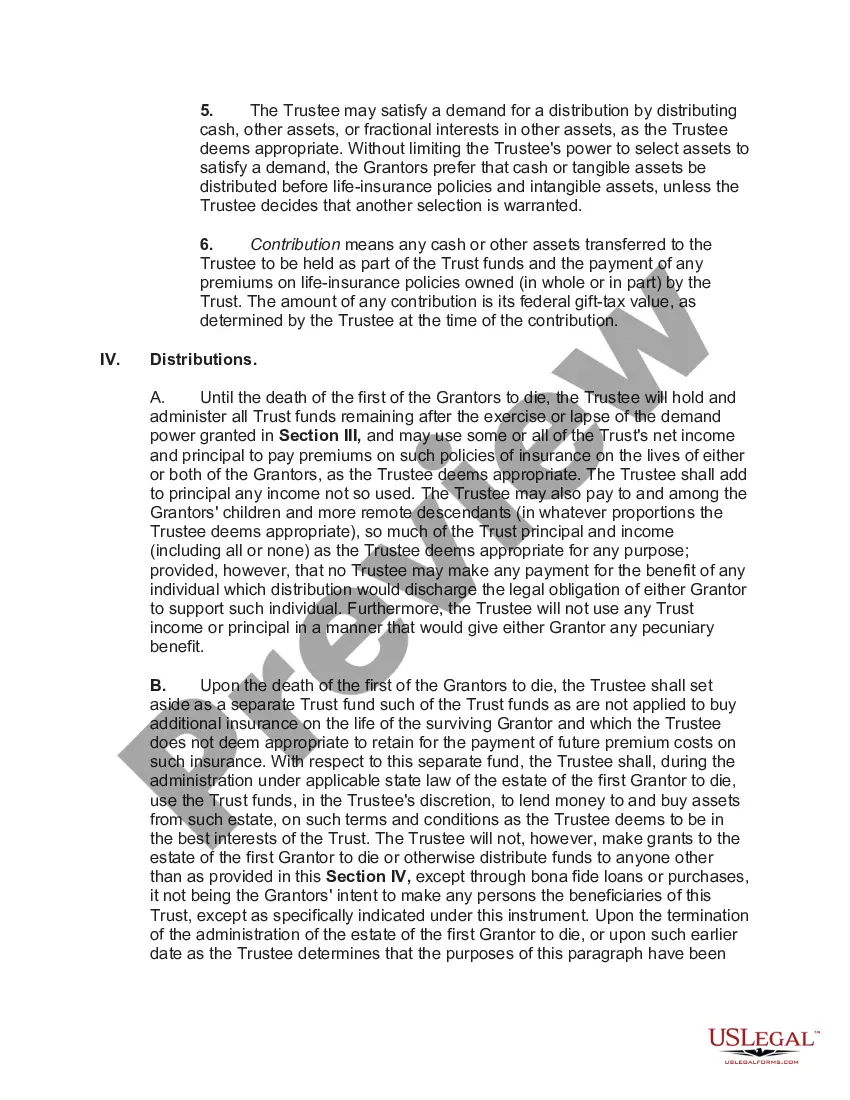
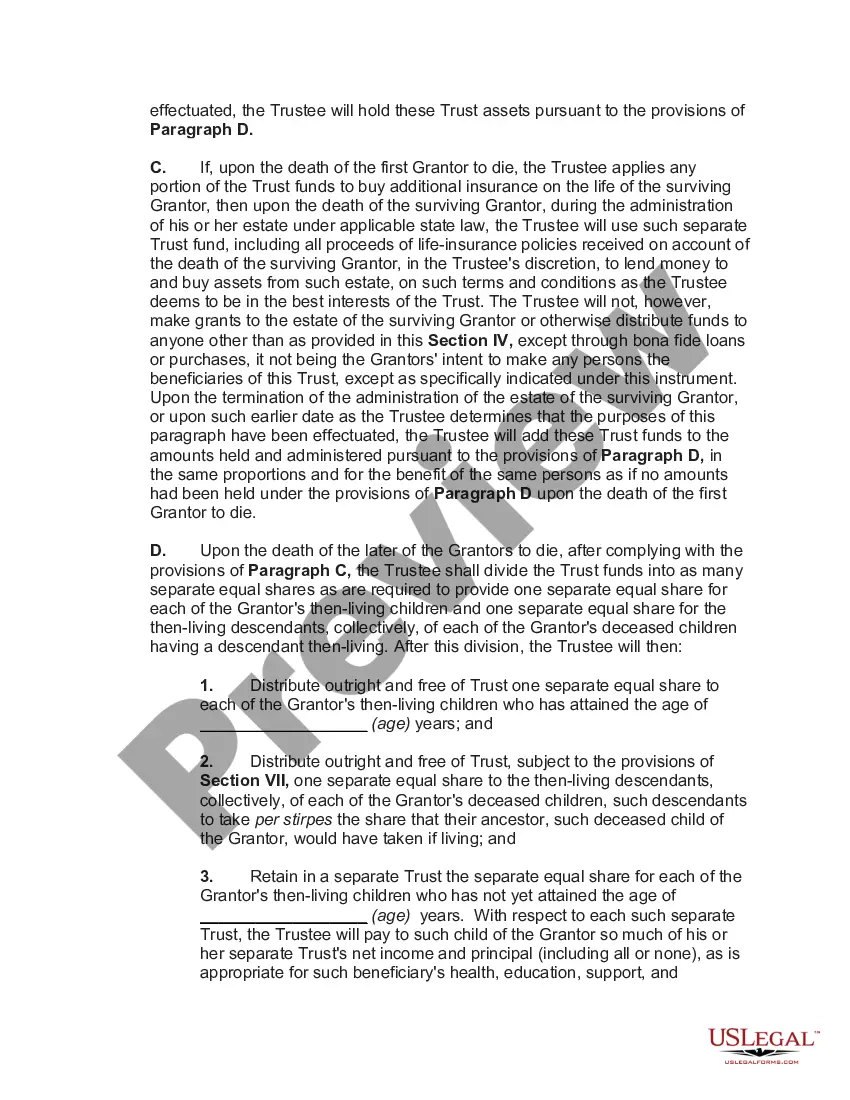
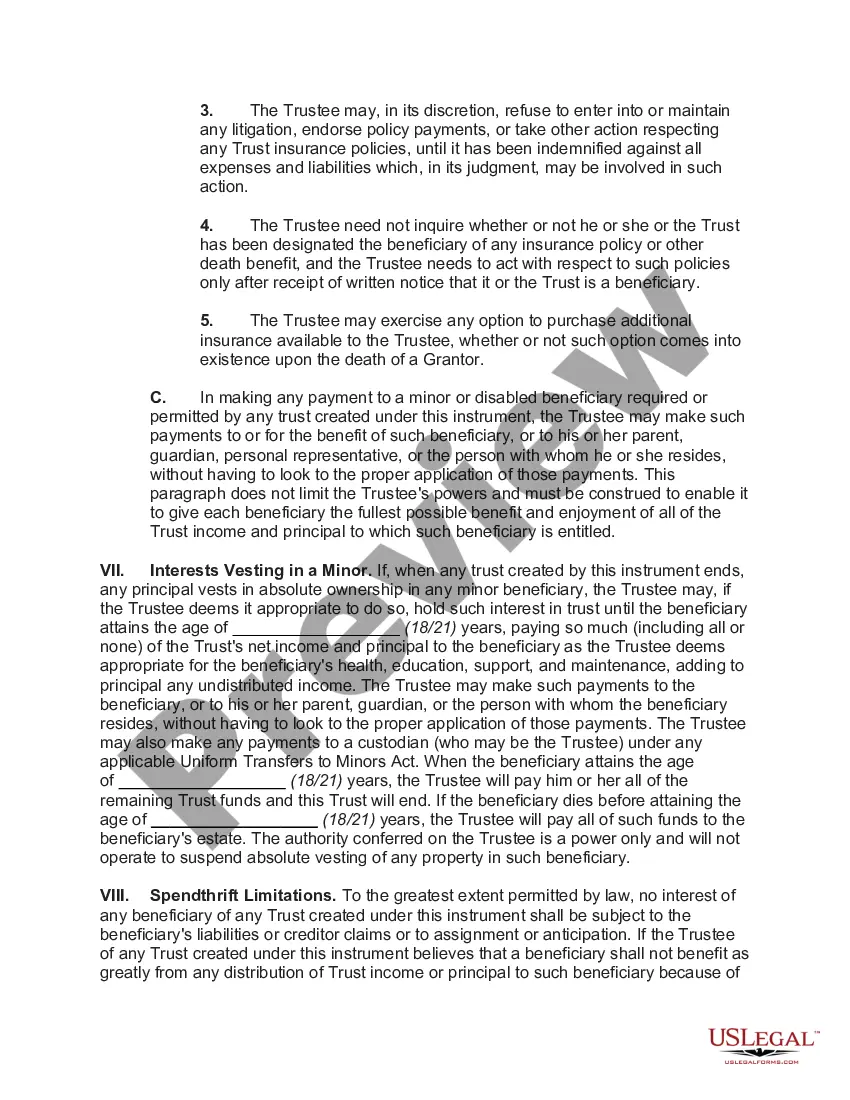
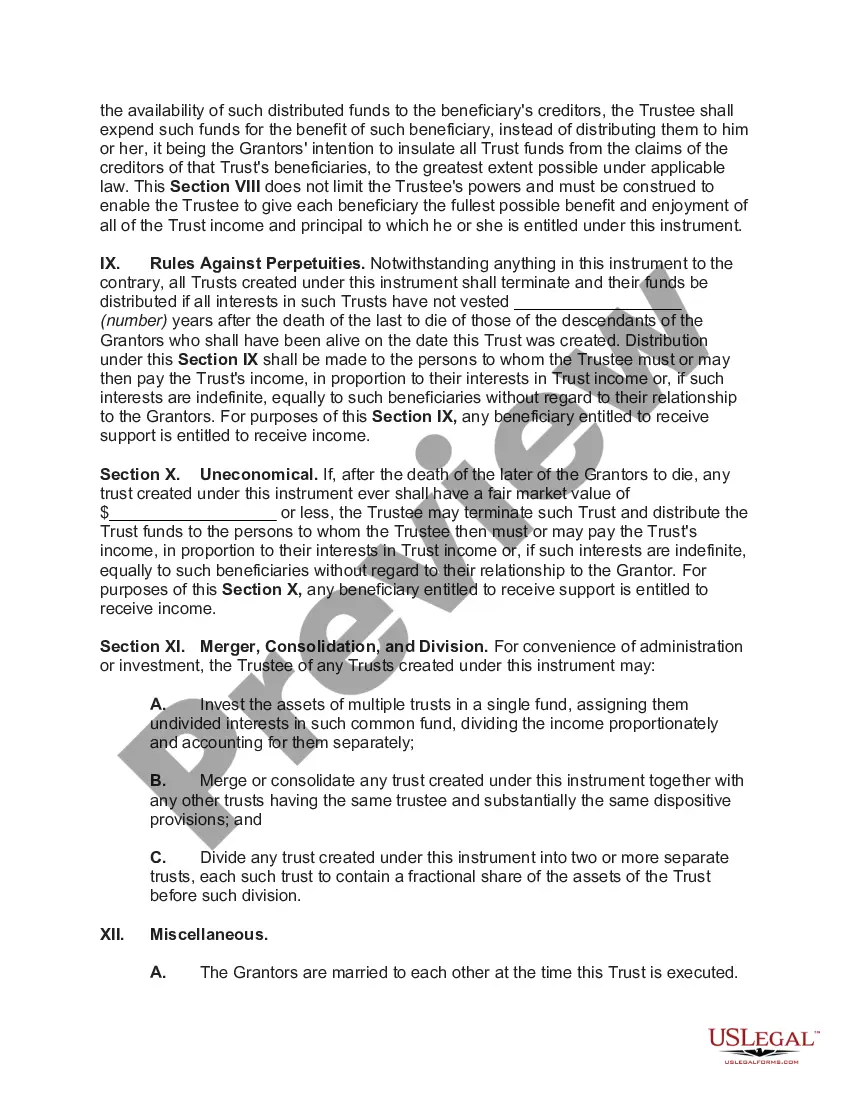

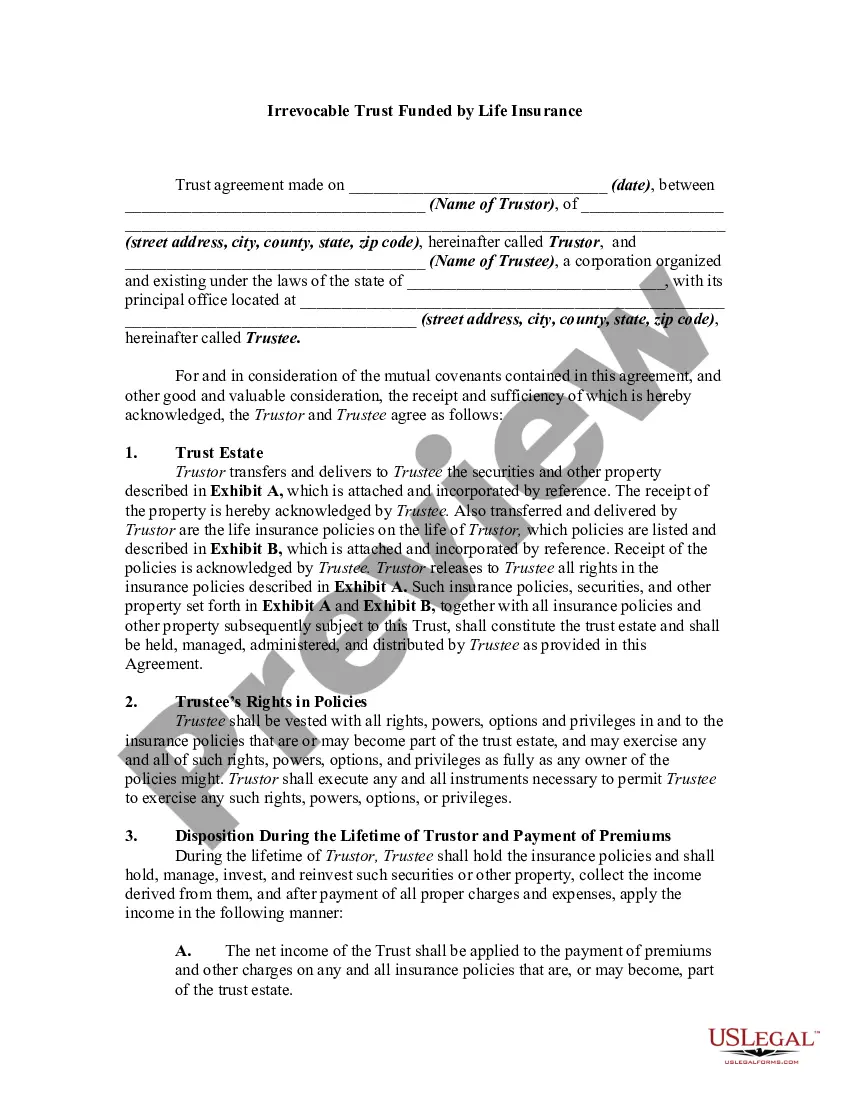
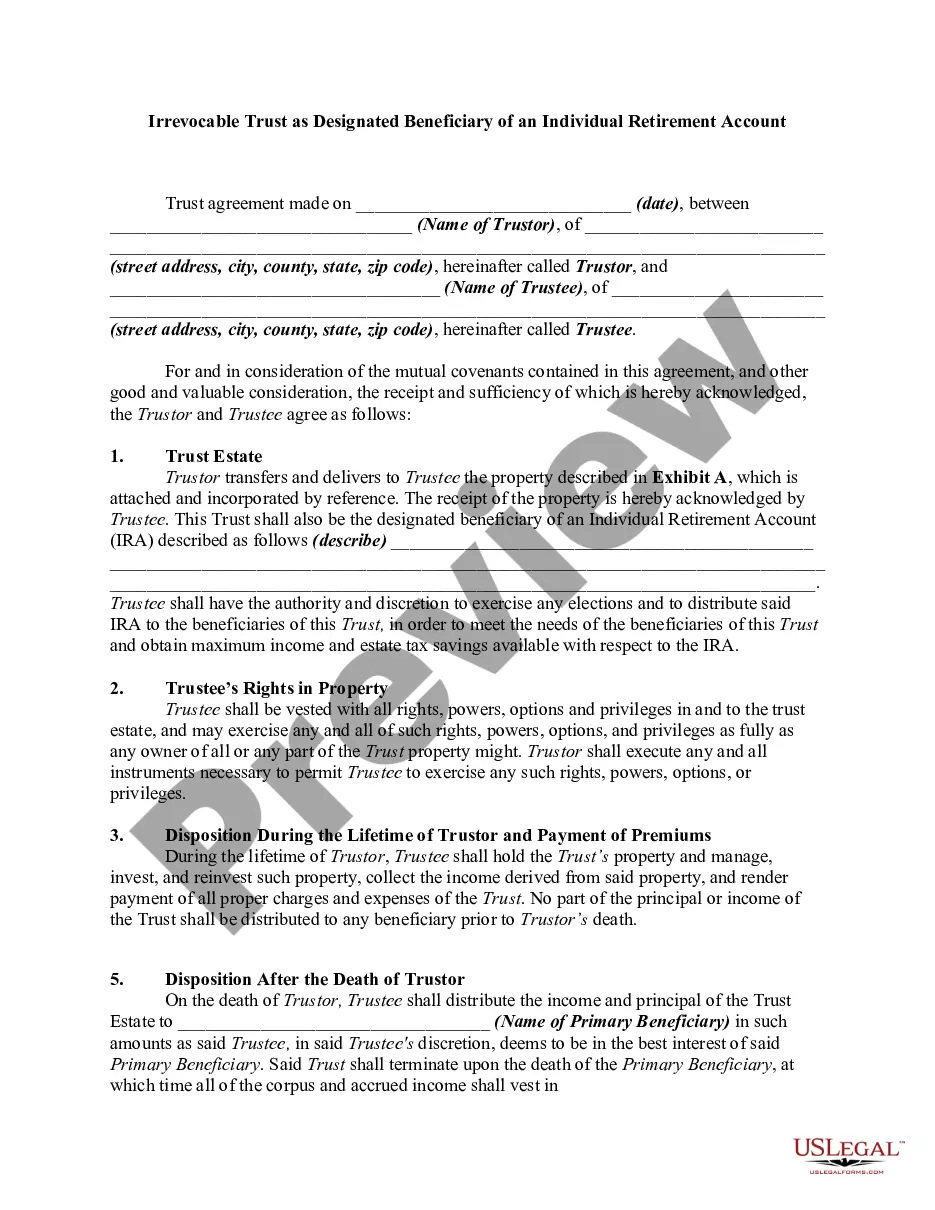
Get your form ready online
Our built-in tools help you complete, sign, share, and store your documents in one place.
Make edits, fill in missing information, and update formatting in US Legal Forms—just like you would in MS Word.
Download a copy, print it, send it by email, or mail it via USPS—whatever works best for your next step.
Sign and collect signatures with our SignNow integration. Send to multiple recipients, set reminders, and more. Go Premium to unlock E-Sign.
If this form requires notarization, complete it online through a secure video call—no need to meet a notary in person or wait for an appointment.
We protect your documents and personal data by following strict security and privacy standards.

Make edits, fill in missing information, and update formatting in US Legal Forms—just like you would in MS Word.

Download a copy, print it, send it by email, or mail it via USPS—whatever works best for your next step.

Sign and collect signatures with our SignNow integration. Send to multiple recipients, set reminders, and more. Go Premium to unlock E-Sign.

If this form requires notarization, complete it online through a secure video call—no need to meet a notary in person or wait for an appointment.

We protect your documents and personal data by following strict security and privacy standards.
Looking for another form?







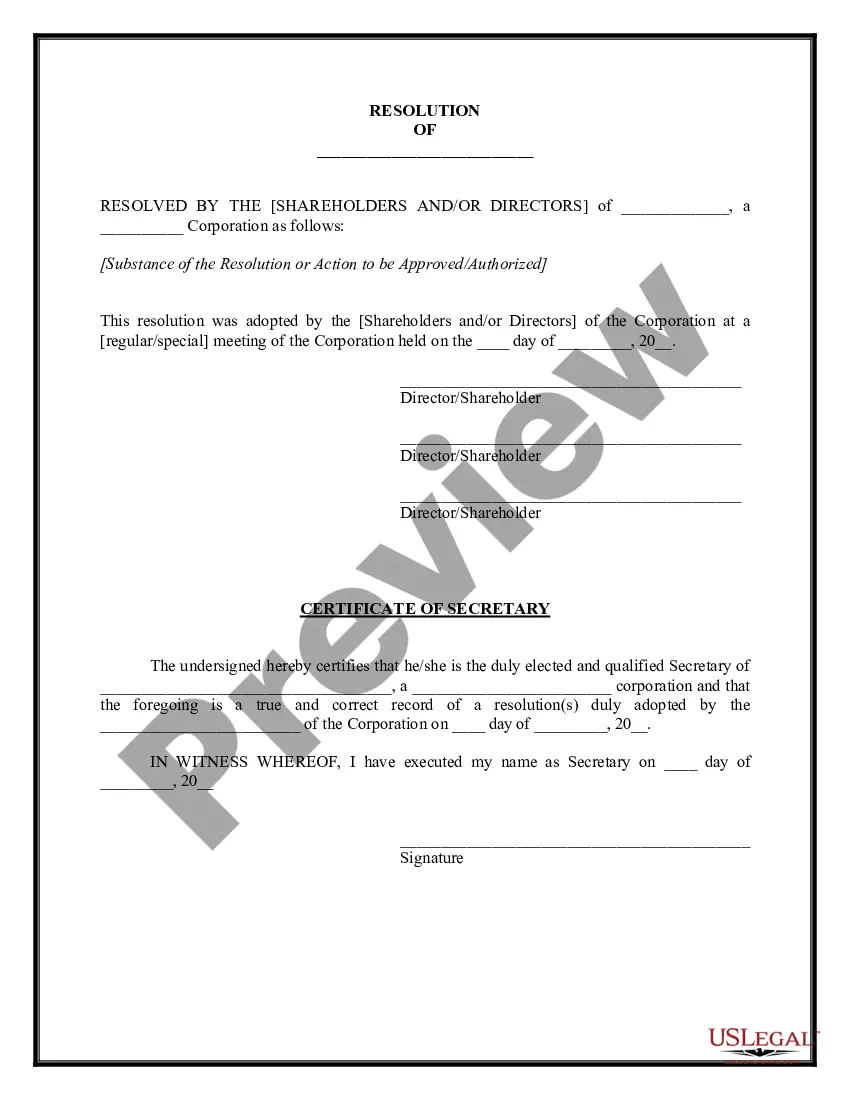


How to fill out Irrevocable Funded Life Insurance Trust Where Beneficiaries Have Crummey Right Of Withdrawal With First To Die Policy With Survivorship Rider?
- Log in to your existing account at US Legal Forms to download required templates directly by clicking the Download button. Ensure your subscription is active; if not, renew it.
- If you're new to US Legal Forms, start by checking the Preview mode and form details. Confirm the template you select aligns with your needs and local jurisdiction.
- Utilize the Search tab to find alternative templates if necessary. If the initial form has discrepancies, ensure you locate a suitable one before moving forward.
- Proceed to purchase the document by clicking the Buy Now button and select a subscription plan that best fits your needs. You'll need to create an account for full access.
- Complete your purchase with your payment details through credit card or PayPal, securing your subscription.
- Finally, download the form to your device for completion. You can always access your saved documents in the My Forms section of your account.
In conclusion, US Legal Forms provides a robust collection of legal documents, making it easier for users to execute essential forms efficiently. With over 85,000 fillable and editable documents available, including access to expert assistance, you can ensure your life insurance trust is executed flawlessly.
Take control of your legal needs today—visit US Legal Forms and get started!
Form popularity
FAQ
Setting up a trust for a life insurance policy involves several clear steps. First, you'll need to select the right type of trust, such as a revocable or irrevocable trust. Next, you should name the trust as the beneficiary on your life insurance policy, ensuring all documentation is in order. Finally, consulting resources like US Legal Forms can guide you through the legal intricacies to secure your loved ones effectively with a life insurance trust with.
Generally, putting life insurance in a trust is a wise choice for many individuals. This strategy helps shield funds from estate taxes, thus maximizing the amount that beneficiaries receive. Moreover, a life insurance trust with protects your family’s financial future by ensuring that your wishes are fulfilled without unnecessary complications. Consider using US Legal Forms to explore structured options that fit your specific situation.
Placing a life insurance policy in a trust serves several valuable purposes. It allows for controlled distribution of benefits, ensuring that assets go to the intended beneficiaries without the delays of probate. Moreover, this arrangement can provide tax advantages and help protect the proceeds from creditors. Understanding these benefits can simplify the process significantly, and US Legal Forms can assist you in setting up a life insurance trust with ease.
One common mistake parents make when establishing a life insurance trust with is underestimating the complexities involved. Often, they fail to properly name the beneficiaries, which can lead to conflicts and delays in asset distribution. Additionally, neglecting to regularly review and update the trust can cause issues as family situations and laws change over time. Ensuring you have comprehensive guidance, like that offered by US Legal Forms, can help you avoid these pitfalls.
Whether a life insurance trust files a tax return depends on the income generated by the trust. If the trust does not earn any income, typically it does not need to file a tax return. However, if the trust receives interest or other income, it may have to report this and file a return. For clarity and compliance, utilizing platforms like US Legal Forms can provide necessary guidance on managing life insurance trusts and understanding their tax implications.
A life insurance trust may need to file a tax return if it generates income, such as interest or dividends. Typically, the trust is designed to hold life insurance policies outside of the estate for tax purposes, so the proceeds themselves are not taxable. However, depending on the specifics of the trust structure and the income generated, you might have an obligation to file. Consulting with a tax advisor is a wise step to navigate these regulations.
A living trust does not generally have to file its own tax return if the grantor, or creator of the trust, is also the trustee and retains control over the trust assets. Since the income generated by the trust assets is reported on the grantor's personal tax return, there is no separate filing requirement. However, if the trust becomes irrevocable or if a separate trustee manages the trust, different tax rules may apply. It's essential to consult a tax professional to ensure compliance with tax obligations.
It is advisable to consider adding your trust to your home insurance policy if the home is an asset of the trust. This addition allows the trust to be directly covered, providing financial protection aligned with your estate planning goals. You want to ensure that any claims related to the property are appropriately managed. Engaging with a knowledgeable provider like uslegalforms can clarify the processes and requirements involved.
Yes, for a life insurance trust with a policy to function effectively, the insurance should generally be in the name of the trust. This arrangement ensures that the death benefit is handled according to the trust's terms, bypassing probate. Having the policy directly in the trust's name maintains intended control over the assets, protecting the beneficiaries. It's essential to consult with experts to get this right.
When listing a trust on an insurance policy, you should provide the full legal name of the trust, along with the date it was established. This accuracy assures that the intended beneficiaries receive protection. It is best practice to specify the trustee's name as well. Working with a knowledgeable professional can simplify this process.