Special Trust Child Statement For The Family
Description
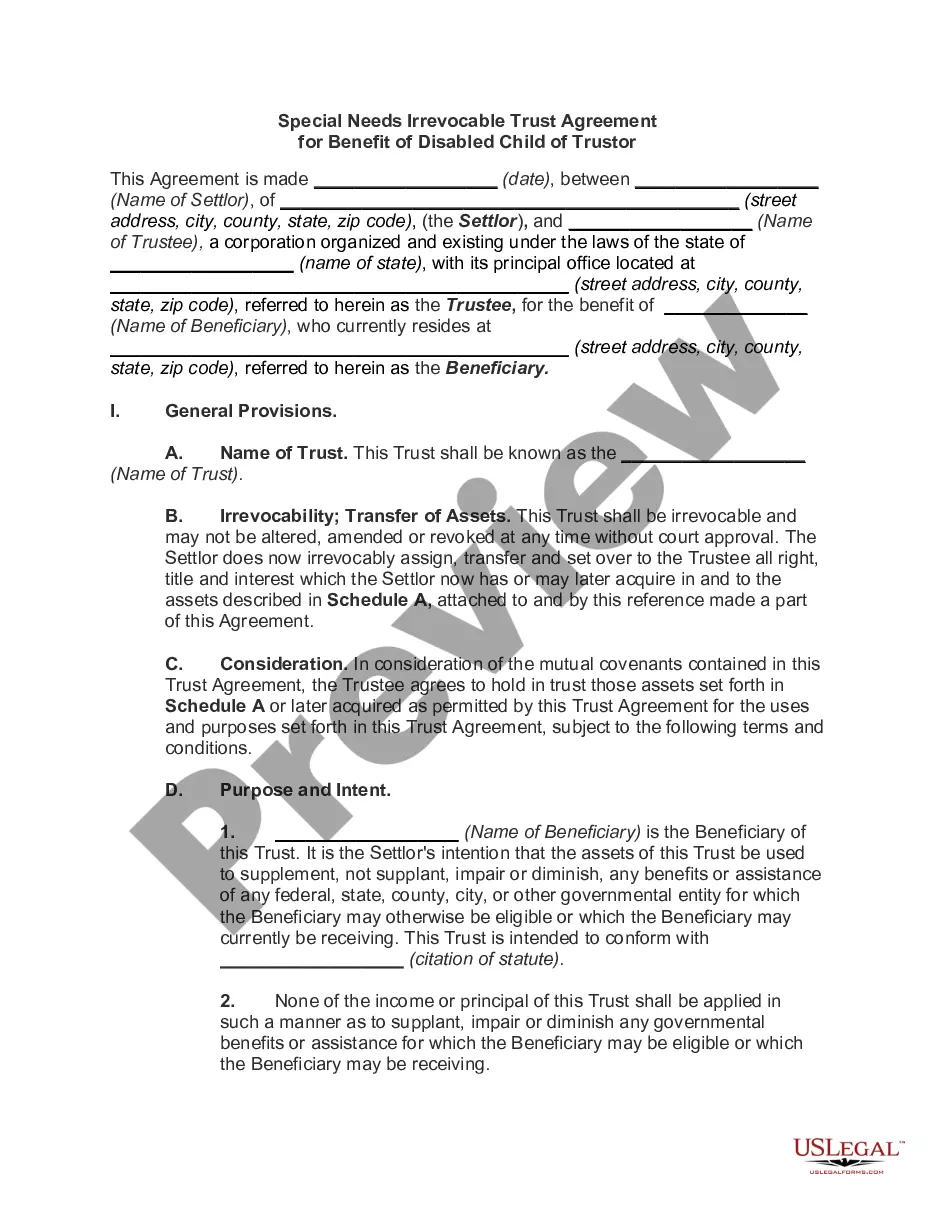
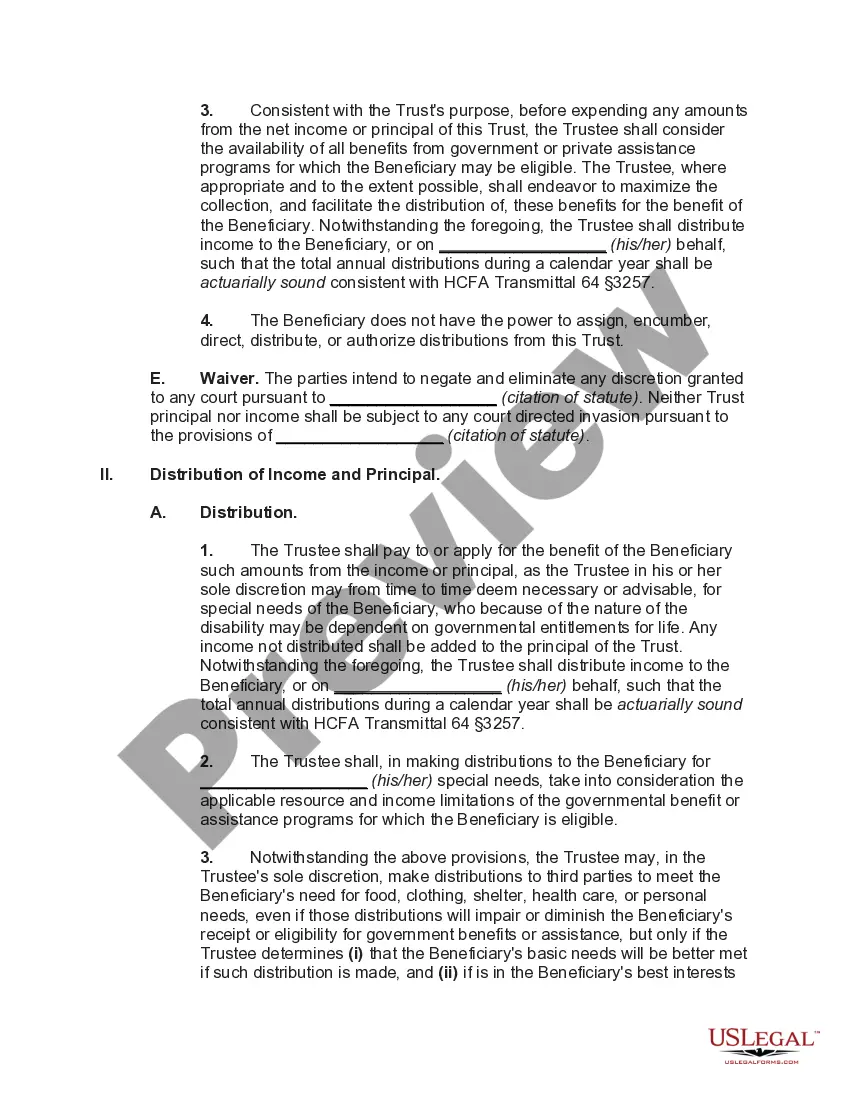
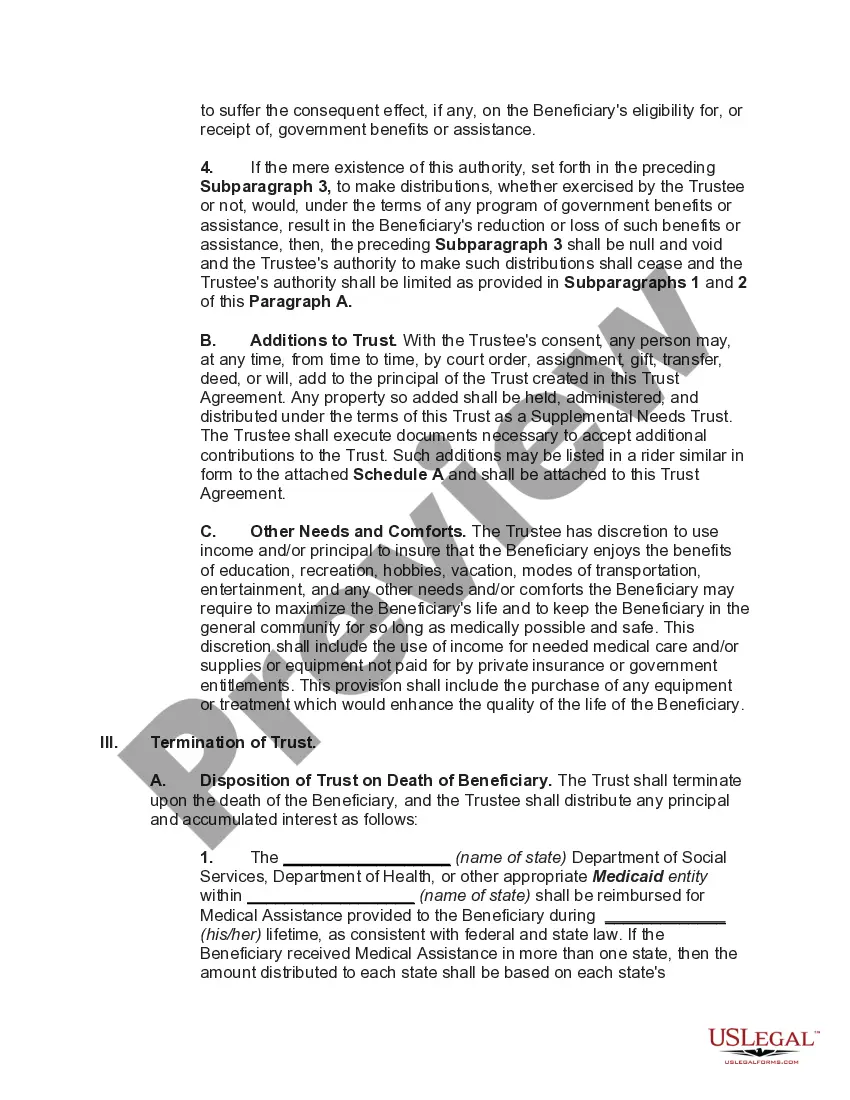
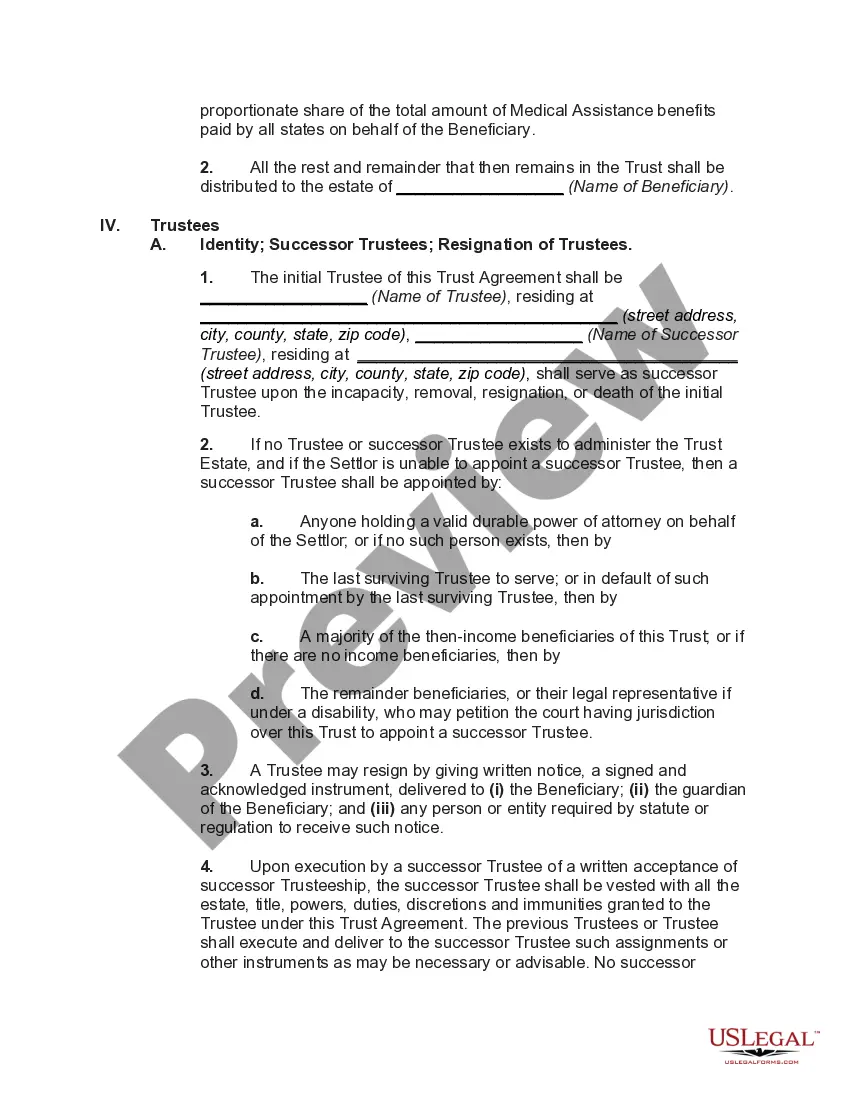
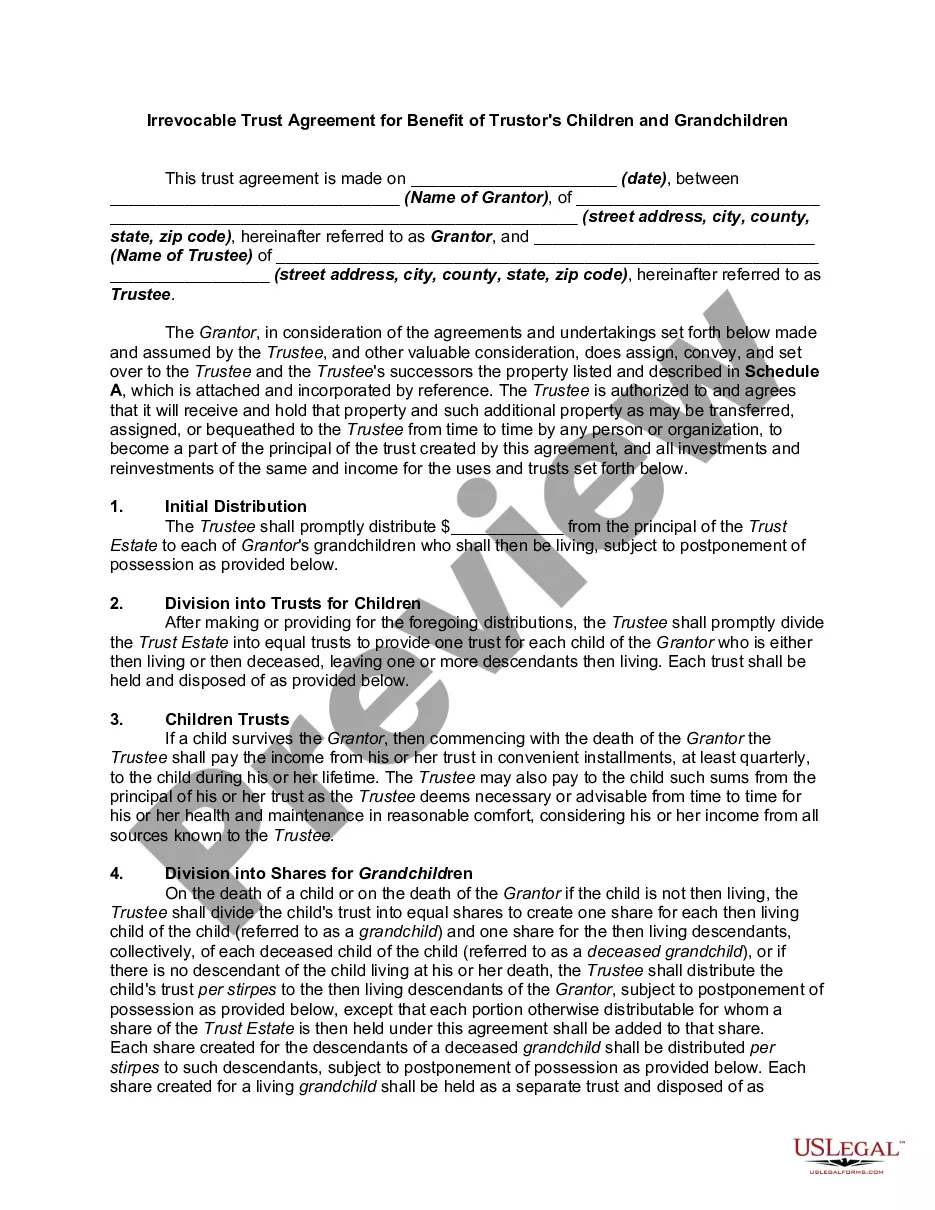
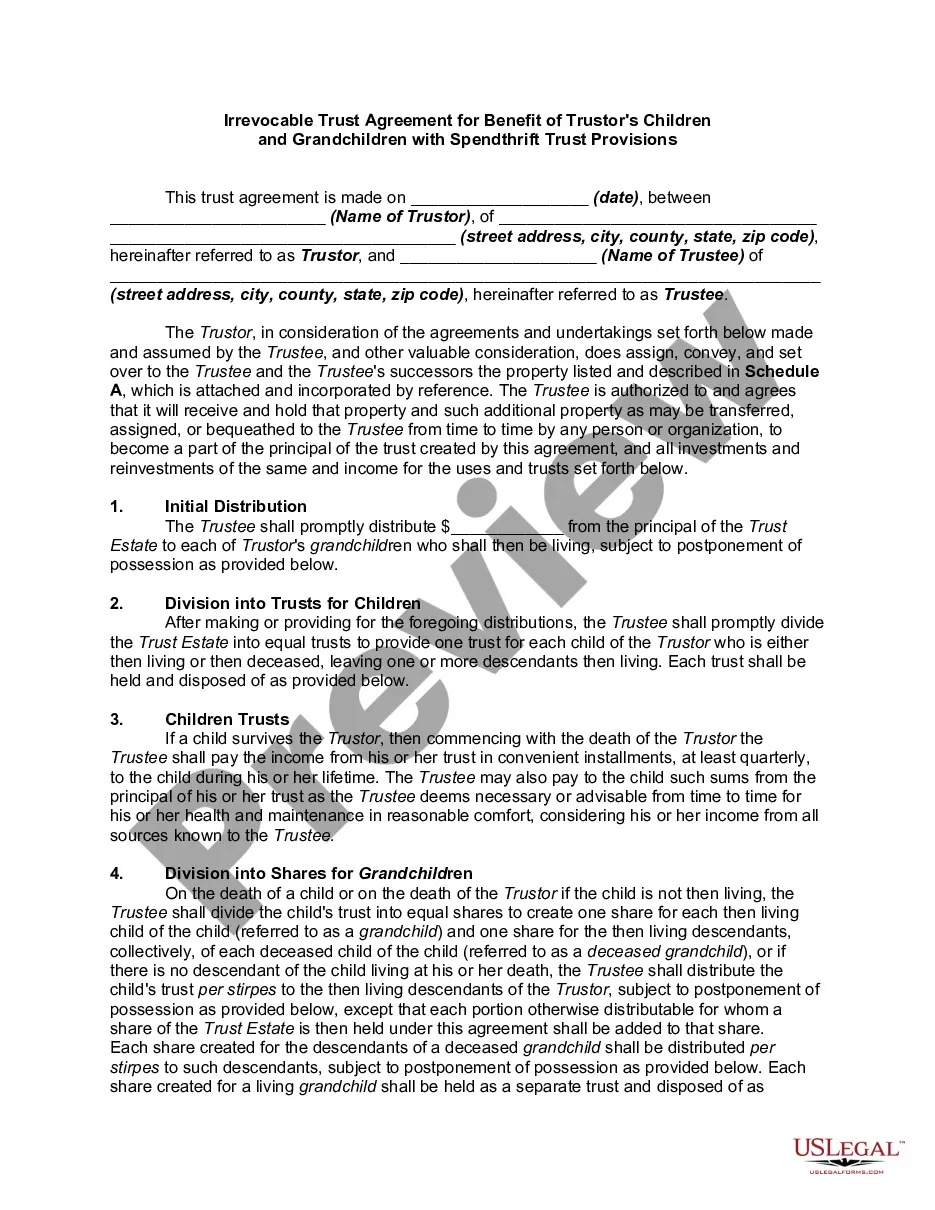
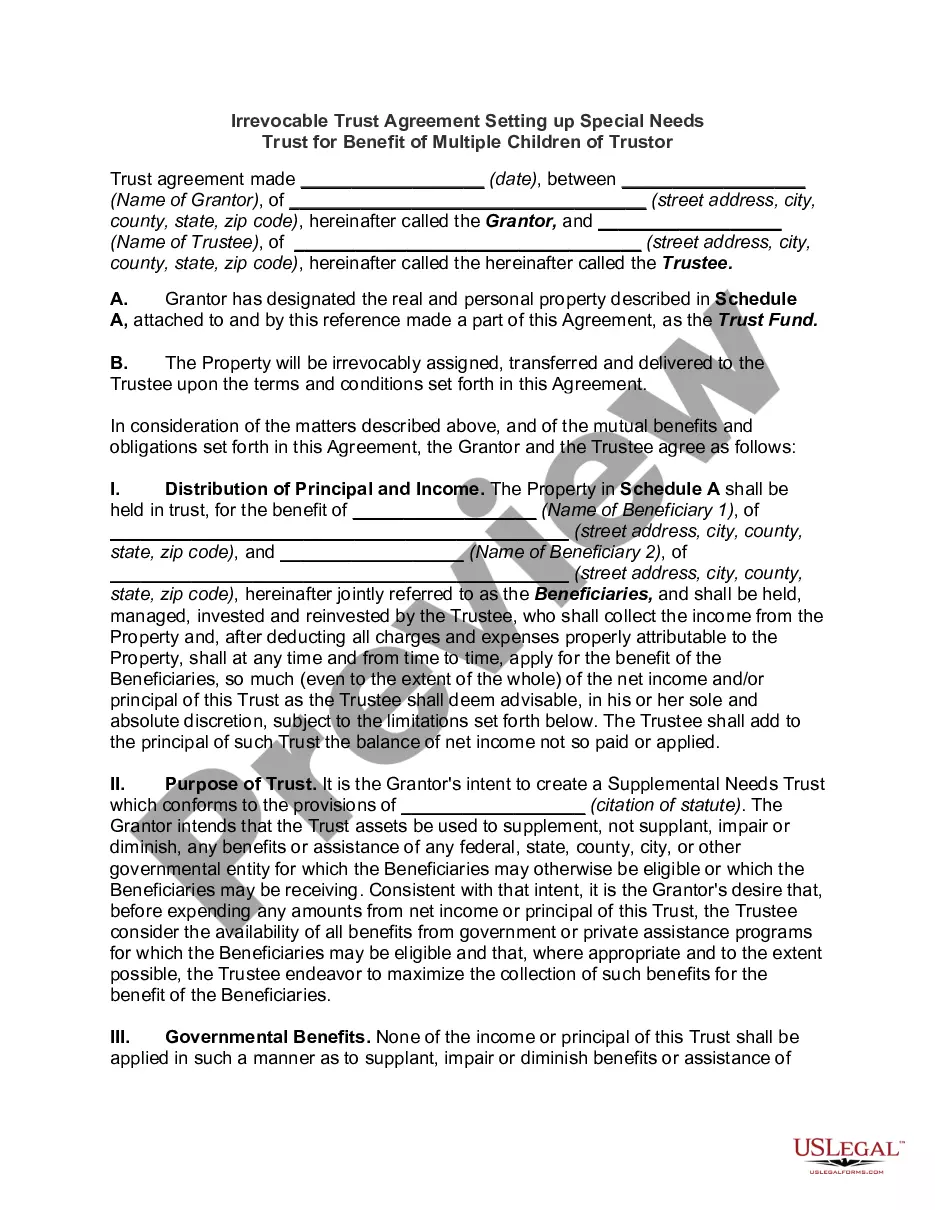
Get your form ready online
Our built-in tools help you complete, sign, share, and store your documents in one place.
Make edits, fill in missing information, and update formatting in US Legal Forms—just like you would in MS Word.
Download a copy, print it, send it by email, or mail it via USPS—whatever works best for your next step.
Sign and collect signatures with our SignNow integration. Send to multiple recipients, set reminders, and more. Go Premium to unlock E-Sign.
If this form requires notarization, complete it online through a secure video call—no need to meet a notary in person or wait for an appointment.
We protect your documents and personal data by following strict security and privacy standards.

Make edits, fill in missing information, and update formatting in US Legal Forms—just like you would in MS Word.

Download a copy, print it, send it by email, or mail it via USPS—whatever works best for your next step.

Sign and collect signatures with our SignNow integration. Send to multiple recipients, set reminders, and more. Go Premium to unlock E-Sign.

If this form requires notarization, complete it online through a secure video call—no need to meet a notary in person or wait for an appointment.

We protect your documents and personal data by following strict security and privacy standards.
Looking for another form?


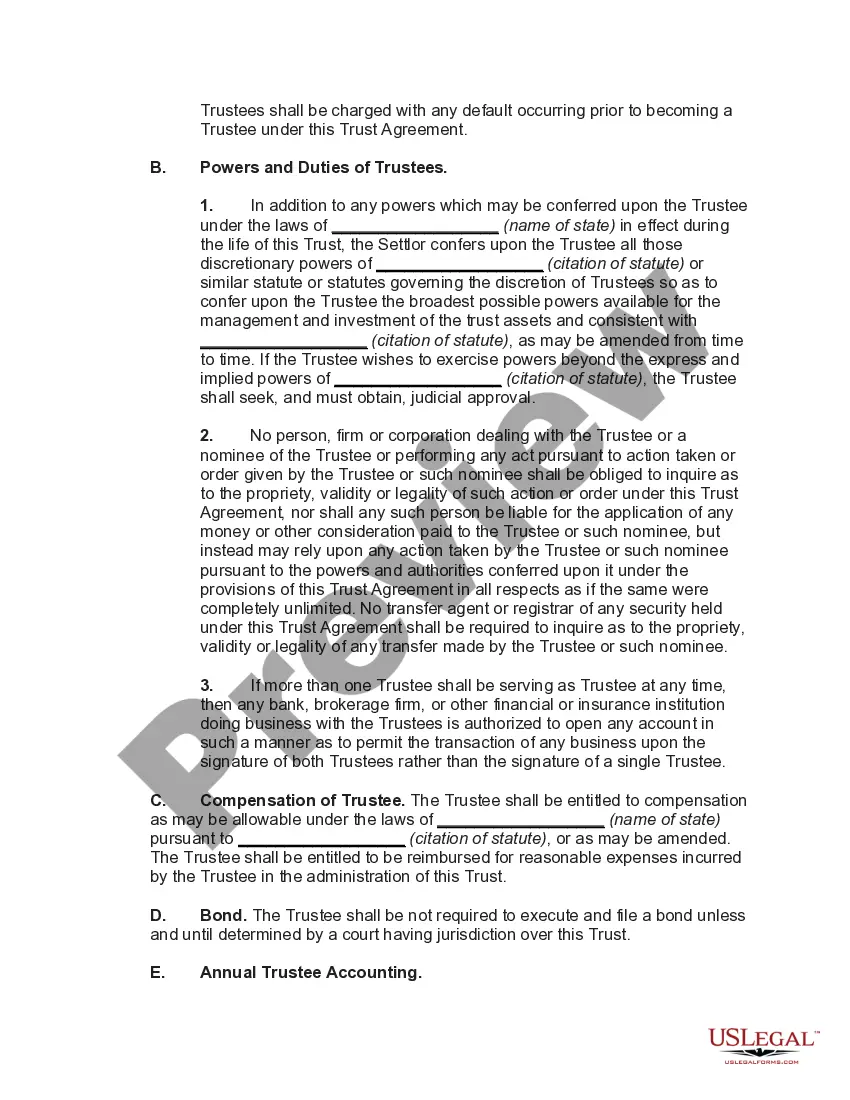
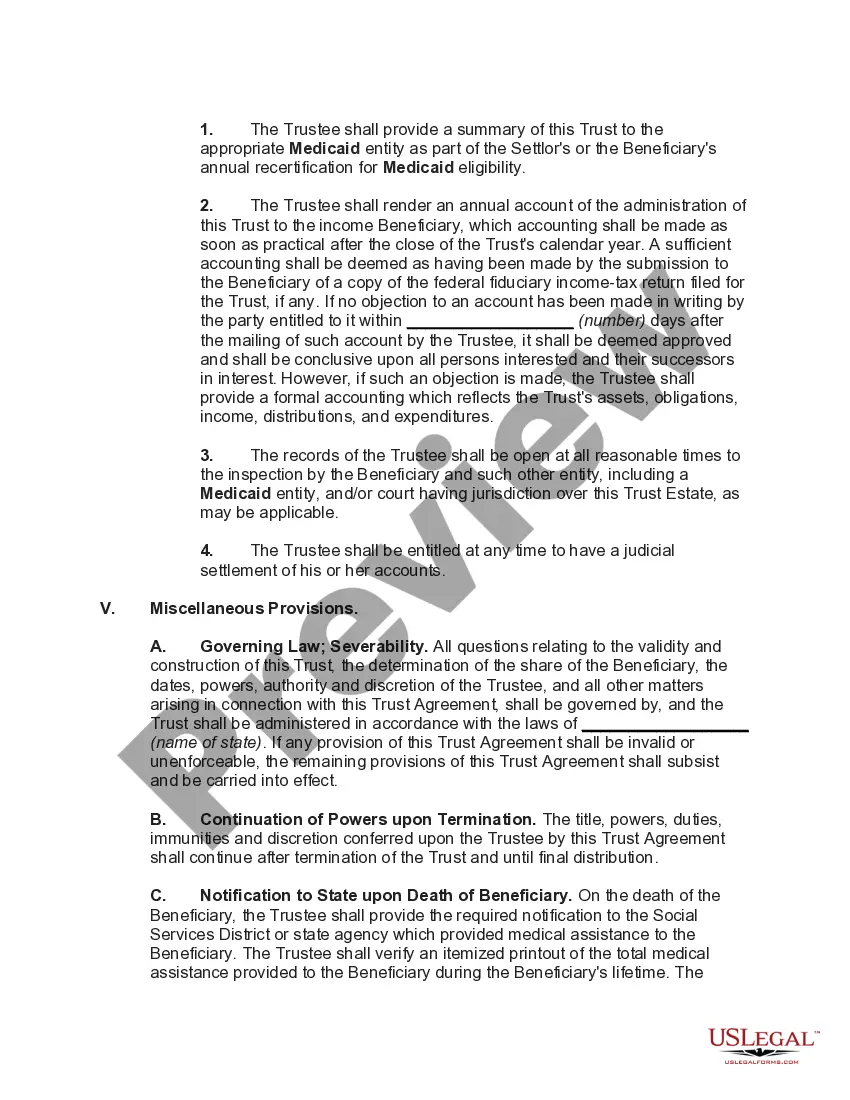
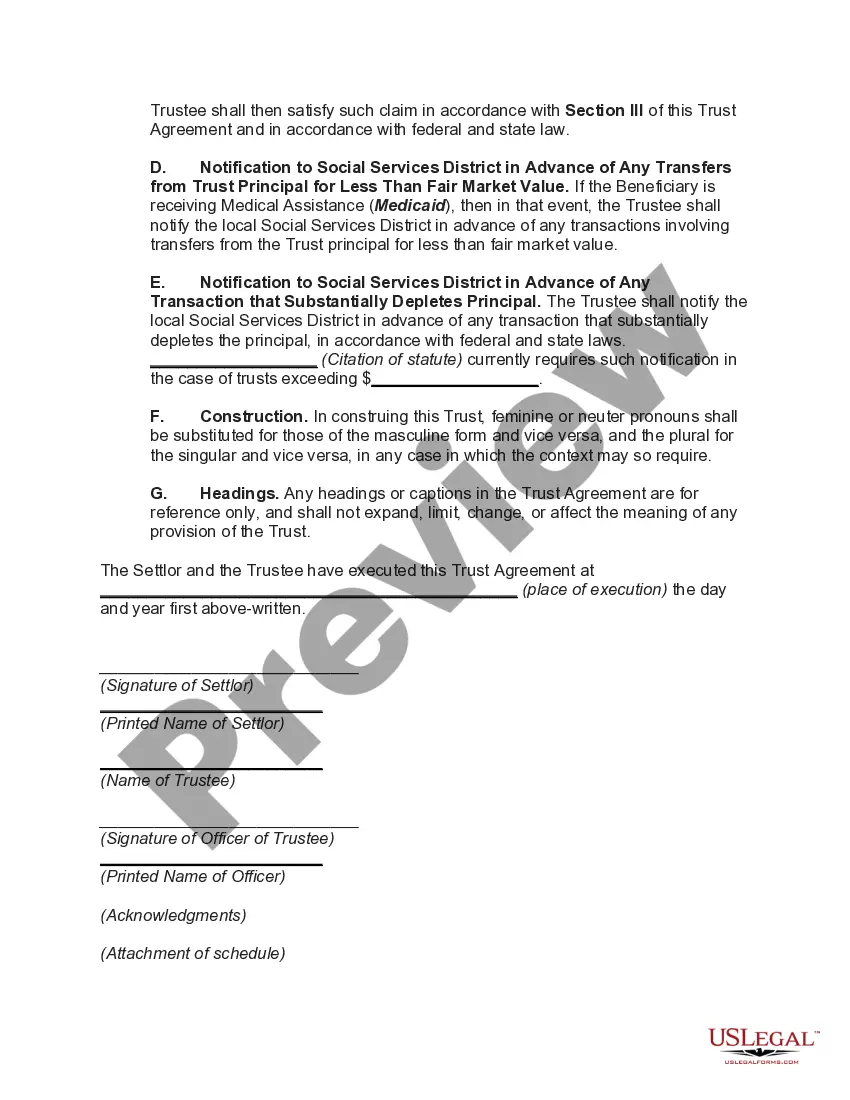
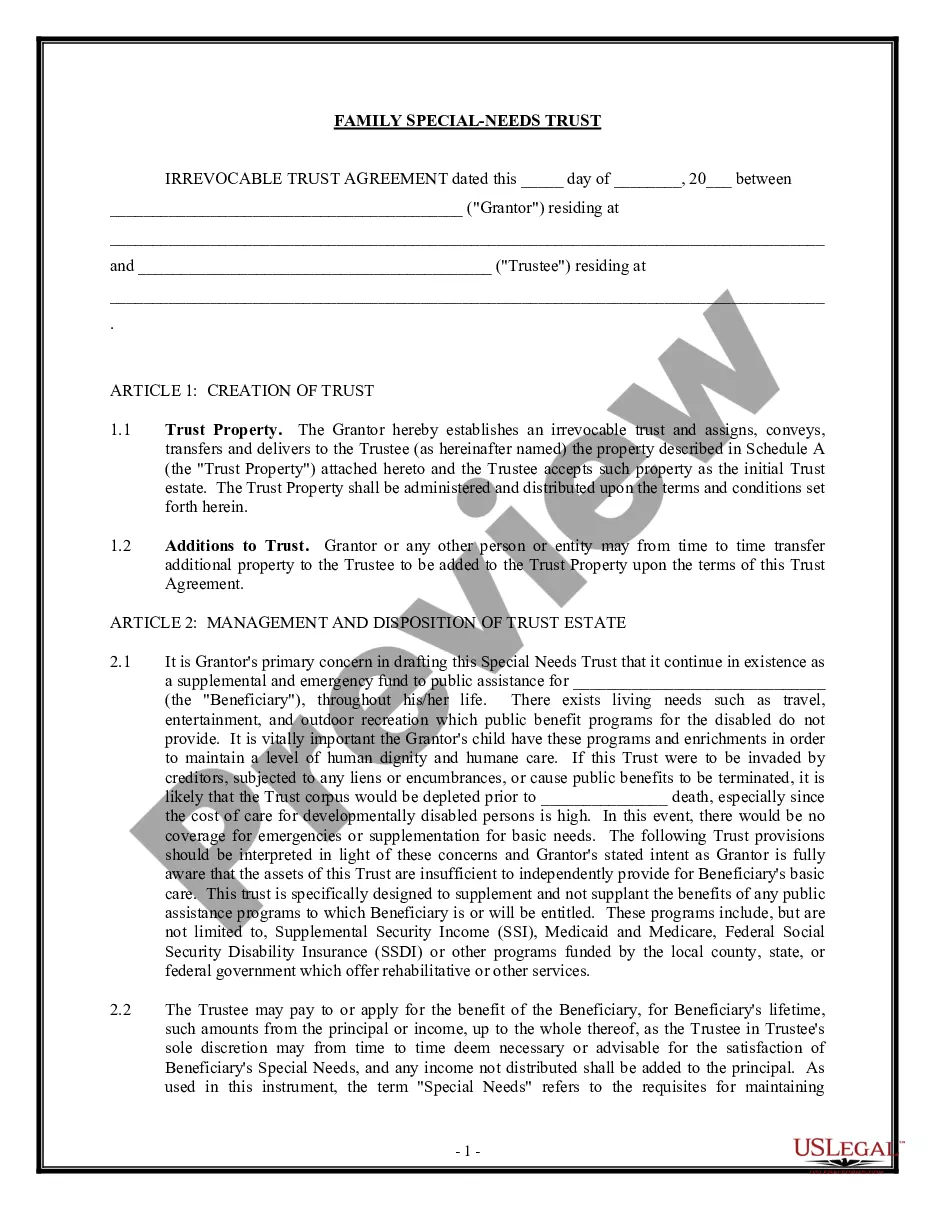
How to fill out Special Needs Irrevocable Trust Agreement For Benefit Of Disabled Child Of Trustor?
- If you're a returning user, log in to your account and download the needed form template. Ensure your subscription is active; if not, renew based on your chosen plan.
- For first-time users, begin by reviewing the Preview mode and detailed description of the desired form to confirm it meets your local jurisdiction requirements.
- Should you find any inconsistencies, utilize the Search tab to locate additional templates that fit your needs.
- Once you’ve selected a suitable document, click the Buy Now button to choose your preferred subscription plan and register for an account.
- Complete your purchase by entering your credit card information or using your PayPal account to finalize the transaction.
- Download the form to your device, allowing you immediate access through the My Forms menu whenever necessary.
In conclusion, utilizing US Legal Forms empowers you to create precise legal documents tailored to your needs with ease. With over 85,000 forms and expert assistance, you're equipped to handle your legal documentation confidently.
Start your journey today by visiting US Legal Forms and ensuring your family's future is secure.
Form popularity
FAQ
In the context of trust, SNT refers to Special Needs Trust, which provides for someone with disabilities without compromising their access to government benefits. This ensures that the beneficiary can receive funds for extra needs, helping them lead a more fulfilling life. Establishing a solid special trust child statement for the family within this framework is essential for proper management. Consulting with uslegalforms can provide clarity on establishing and maintaining an SNT.
SNT stands for Special Needs Trust, a financial tool created to support individuals with disabilities. This trust helps manage assets specifically for individuals while protecting their eligibility for assistance programs. A properly structured SNT can create a special trust child statement for the family that outlines how funds will be used for the beneficiary's benefit. For detailed guidance on SNTs, consider exploring the materials available on uslegalforms.
The purpose of a Special Needs Trust (SNT) is to ensure that a child with disabilities can receive financial support while maintaining their eligibility for government benefits. This type of trust allows you to allocate funds for additional care and services without affecting public assistance. By creating an effective special trust child statement for the family, you make provisions that enhance your loved one’s quality of life. Using resources from uslegalforms can help clarify how to best establish an SNT.
To find the meaning of SNT, or Special Needs Trust, it’s best to consult trusted legal resources or platforms like uslegalforms. A Special Needs Trust is designed to provide for a child’s financial needs without jeopardizing governmental benefits. Many online resources explain SNT, guiding you on how to structure and understand this unique tool. A thorough understanding of SNT can enhance your family's planning strategy.
A family trust document outlines the terms and conditions of how assets will be managed for the benefit of family members, including any special trust child statement for the family. This document serves as a legal framework to ensure that the assets are distributed according to your wishes. It typically includes details about the trustee, beneficiaries, and instructions for managing the trust. Understanding this document is vital for protecting your family’s financial future.
Selecting a trustee for a special needs trust is crucial to ensuring the well-being of the beneficiary. Look for someone trustworthy, financially savvy, and familiar with the specific needs of the child. It's essential to consider a candidate who understands the implications of managing a special trust child statement for the family. If you need guidance, uslegalforms offers resources to help you make this important decision.
The correct way to say children with special needs is to refer to them as special needs children. This phrasing acknowledges their individual circumstances while maintaining respect and dignity. When creating documents like a special trust child statement for the family, using this terminology reflects a positive and inclusive approach in addressing their unique needs.
Setting up a trust for a special needs child involves several steps, beginning with selecting the right type of trust suitable for their unique circumstances. Parents must include a special trust child statement for the family to outline how funds should be managed for the child's benefit. It's advisable to involve a legal expert to navigate the complexities of special needs trusts, ensuring compliance and alignment with the family's goals.
One of the biggest mistakes parents make when setting up a trust fund is failing to clearly define their child's needs and future goals. Without a detailed special trust child statement for the family, trustees may lack guidance in managing the trust. It's essential for parents to articulate their child's specific requirements, thus preventing mismanagement and misinterpretation of the trust's intent.
The purpose of a special trustee is to manage and oversee the assets placed in a trust for a special needs child. This individual is responsible for ensuring that the child's financial resources are used effectively and in compliance with regulations. A well-appointed special trustee can make informed decisions that prioritize the child's welfare, ensuring that the special trust child statement for the family is executed properly.