New York Foundation Contract for Contractor
Understanding this form
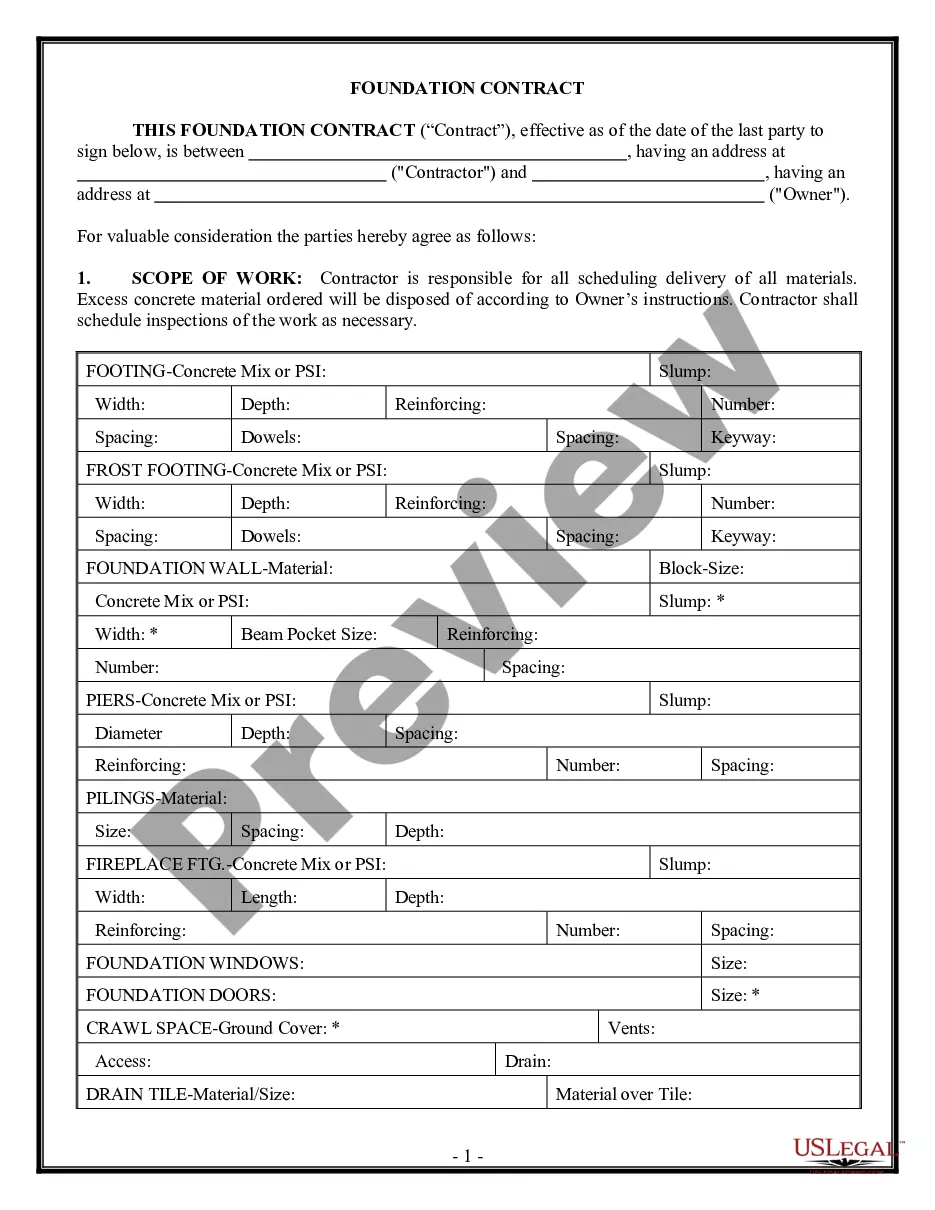
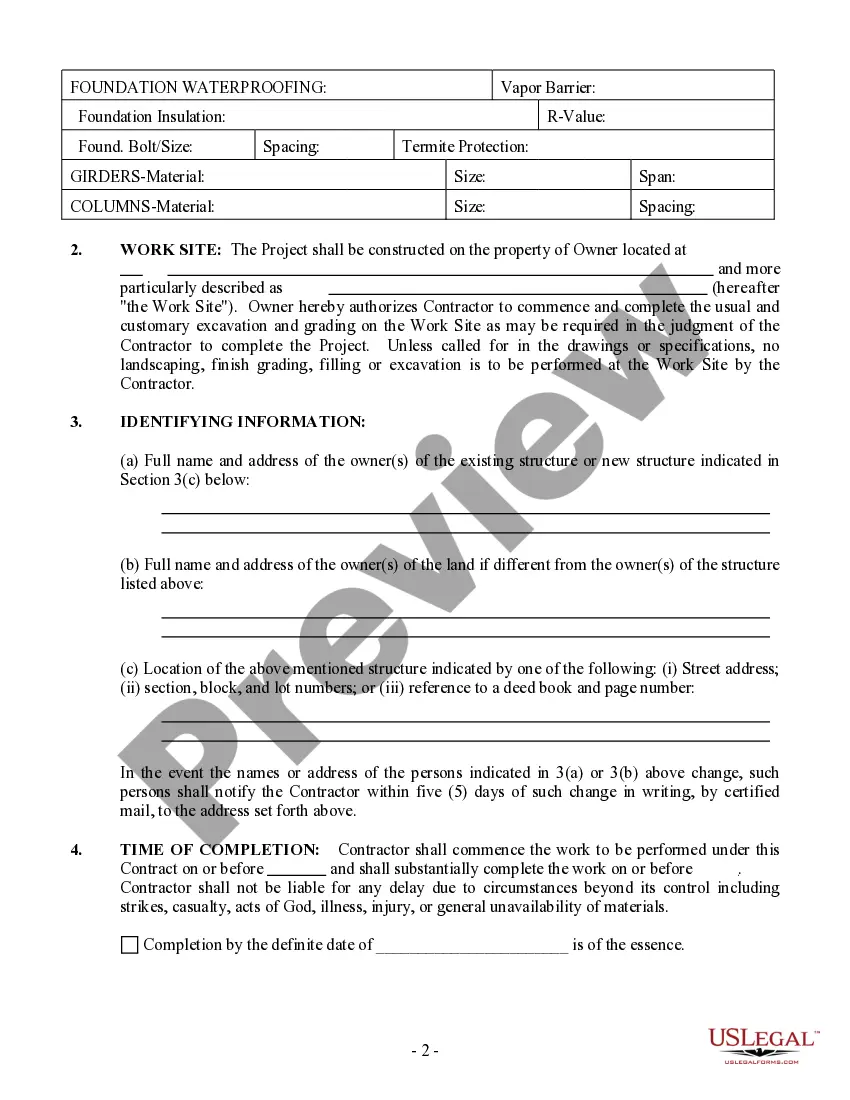
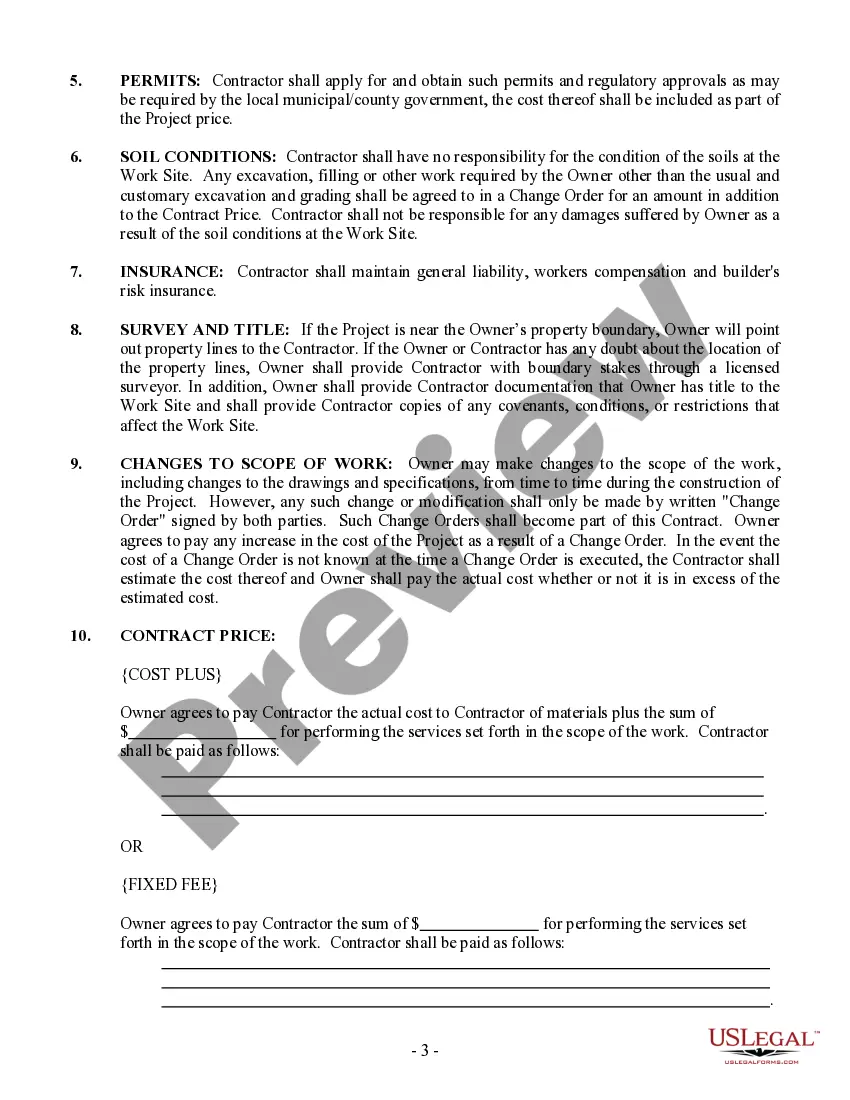
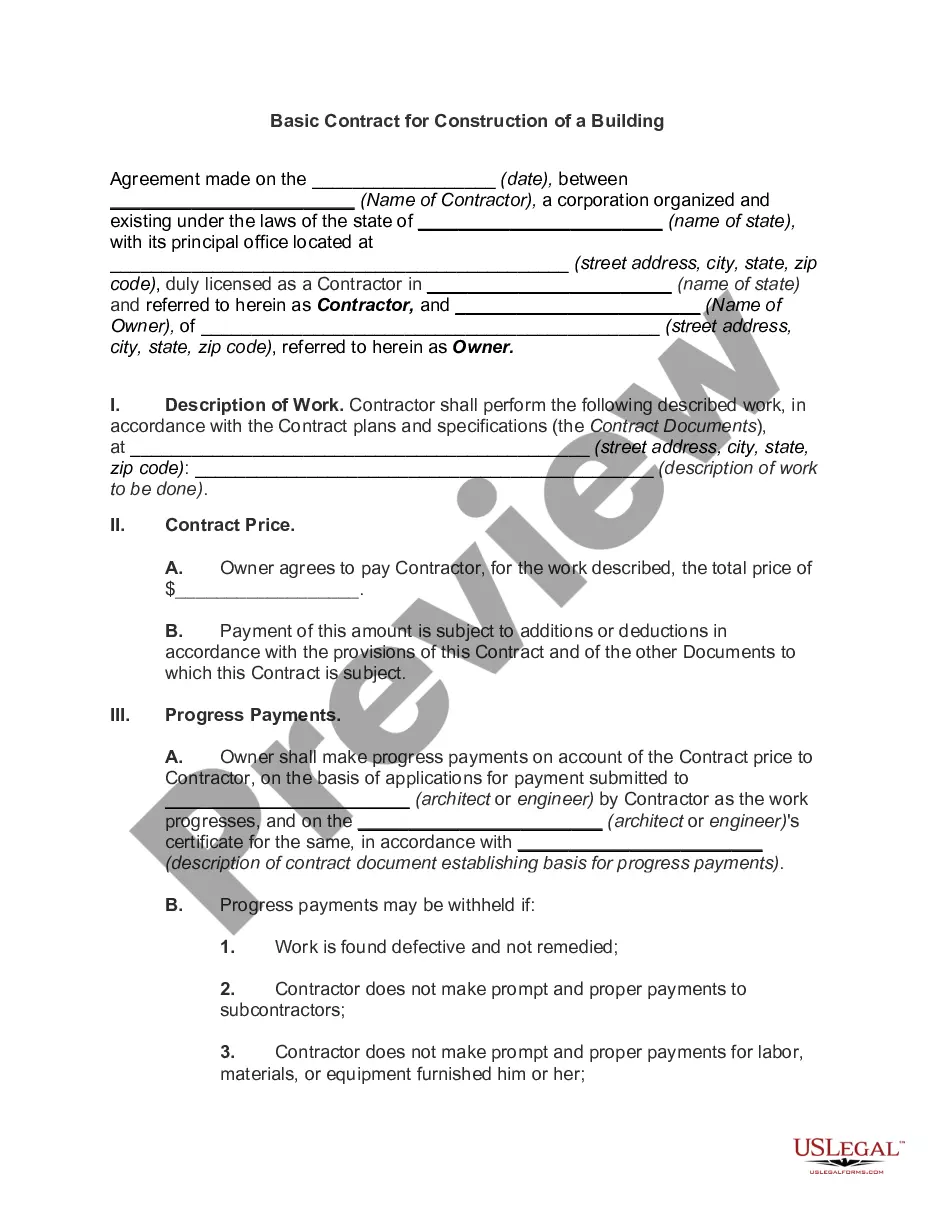
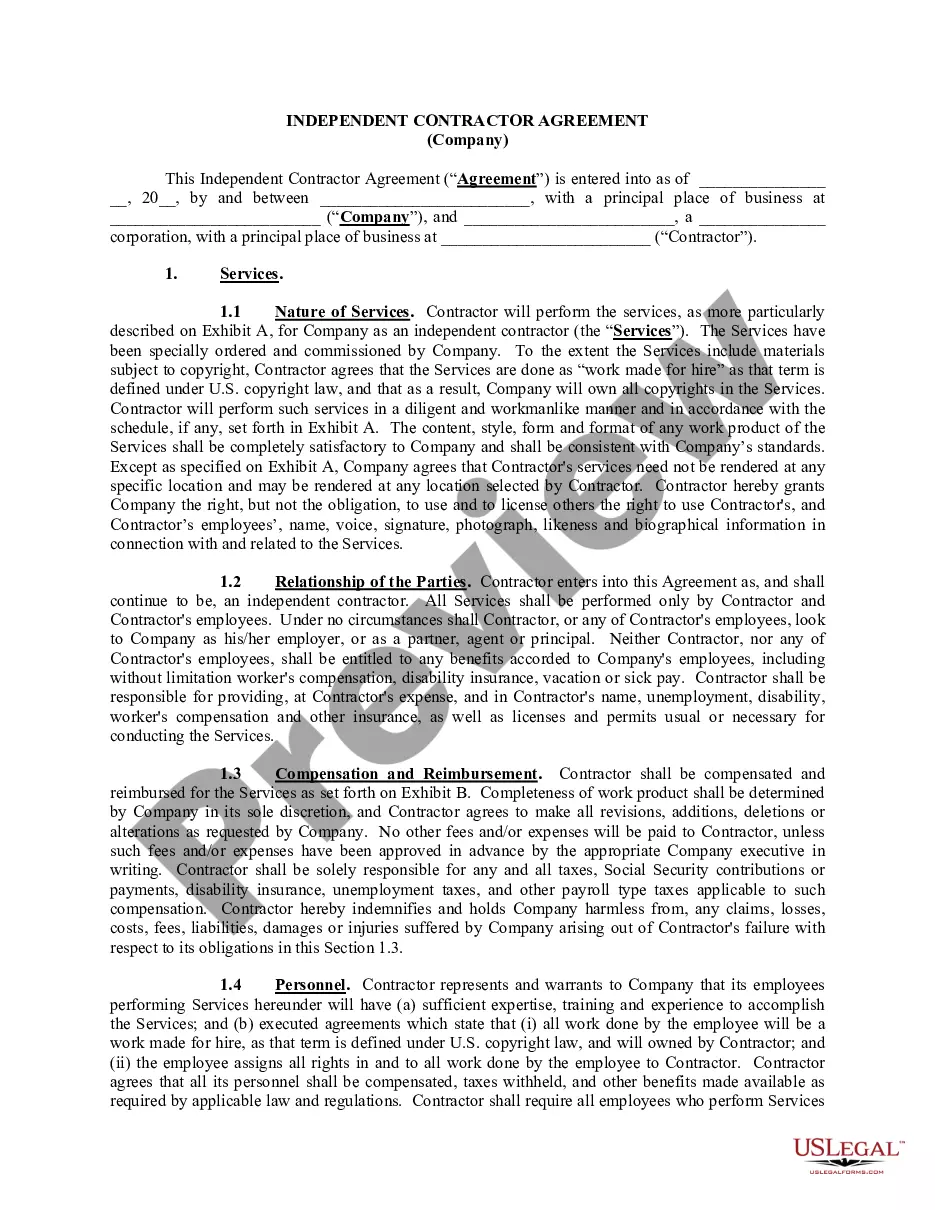
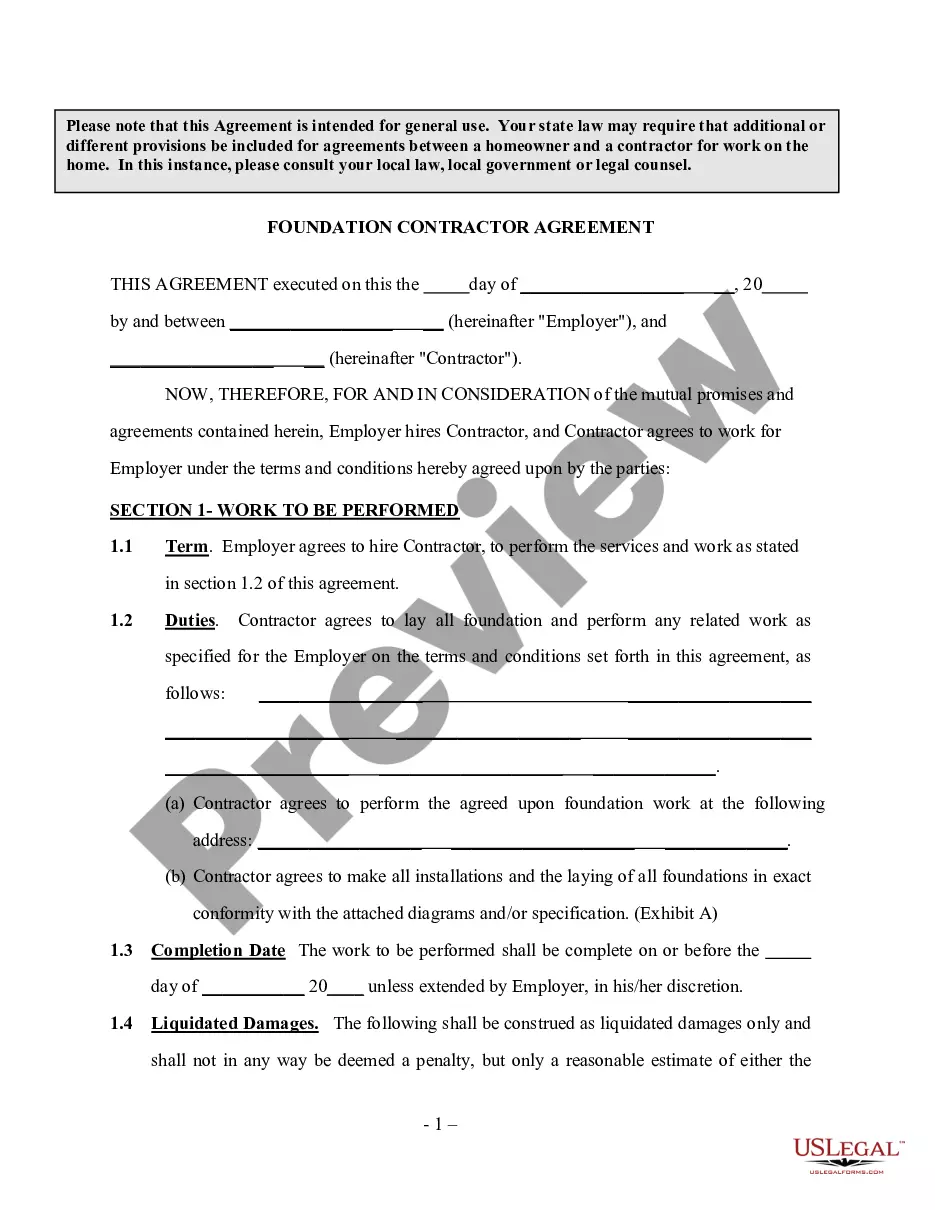
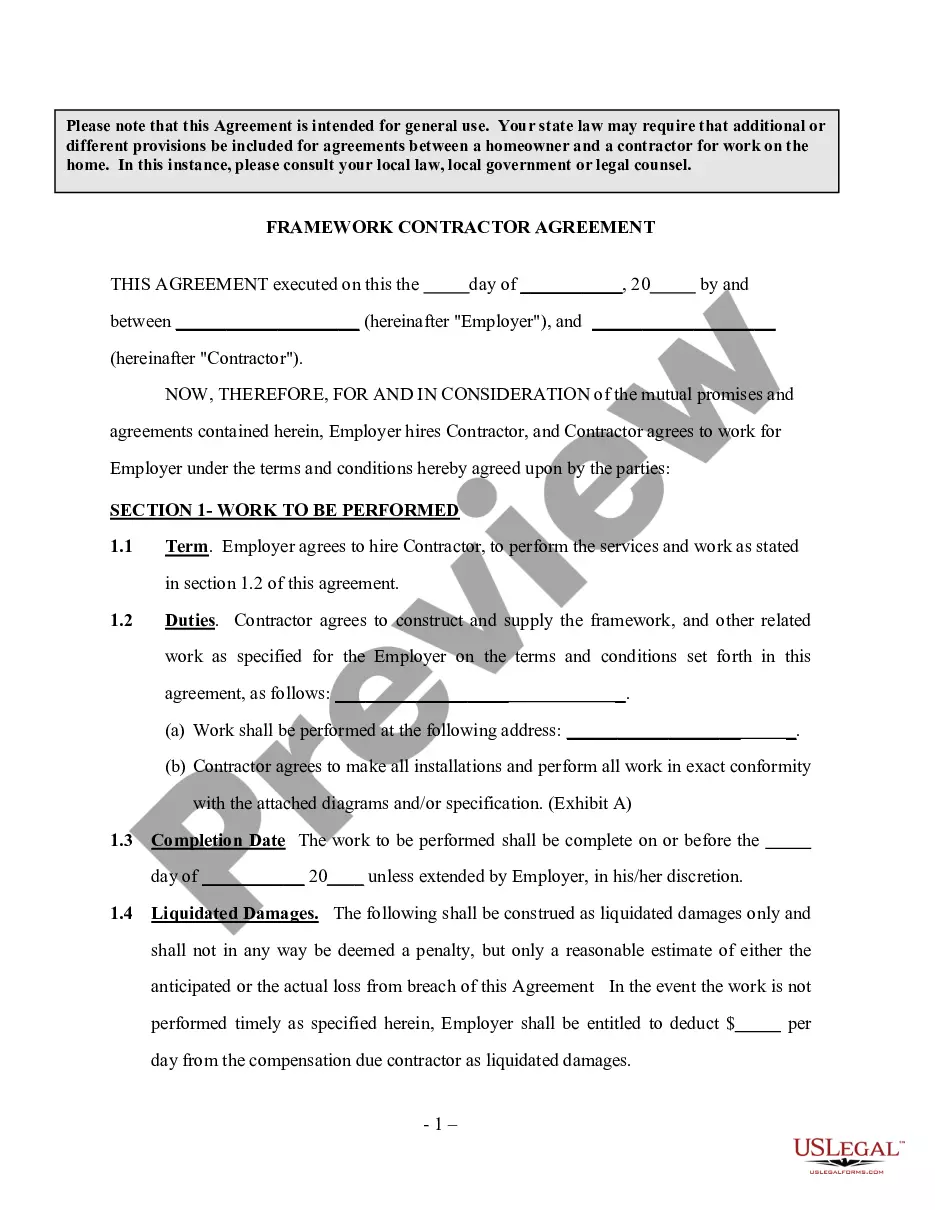
The Foundation Contract for Contractor is a legal document that establishes the terms and conditions between foundation contractors and property owners. This contract can be executed under a cost-plus or fixed-fee payment arrangement and outlines essential aspects such as change orders, warranty, insurance requirements, and site information. It is specifically designed to comply with the laws of the State of New York, setting it apart from general construction contracts that may not address these particularities.
Key parts of this document
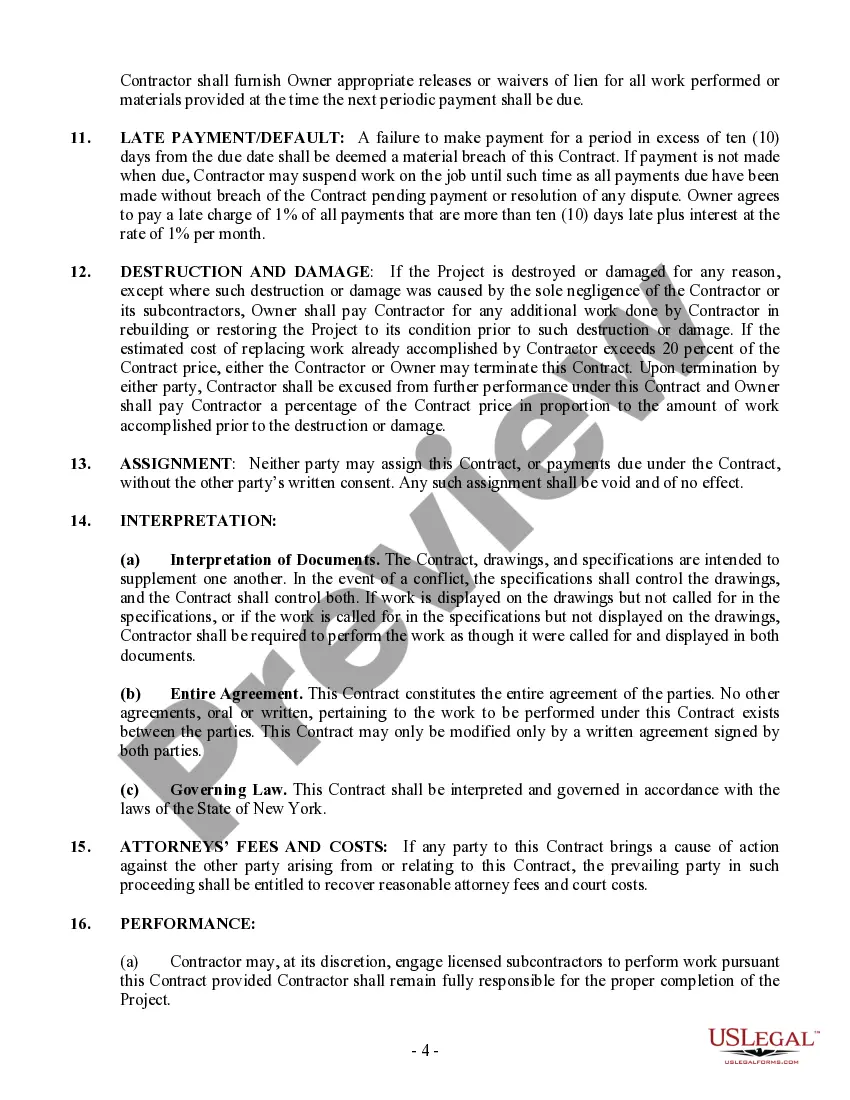
- Identifying information specifying the completion date.
- Requirements for the contractor to obtain necessary permits.
- Provisions addressing soil conditions and potential additional costs.
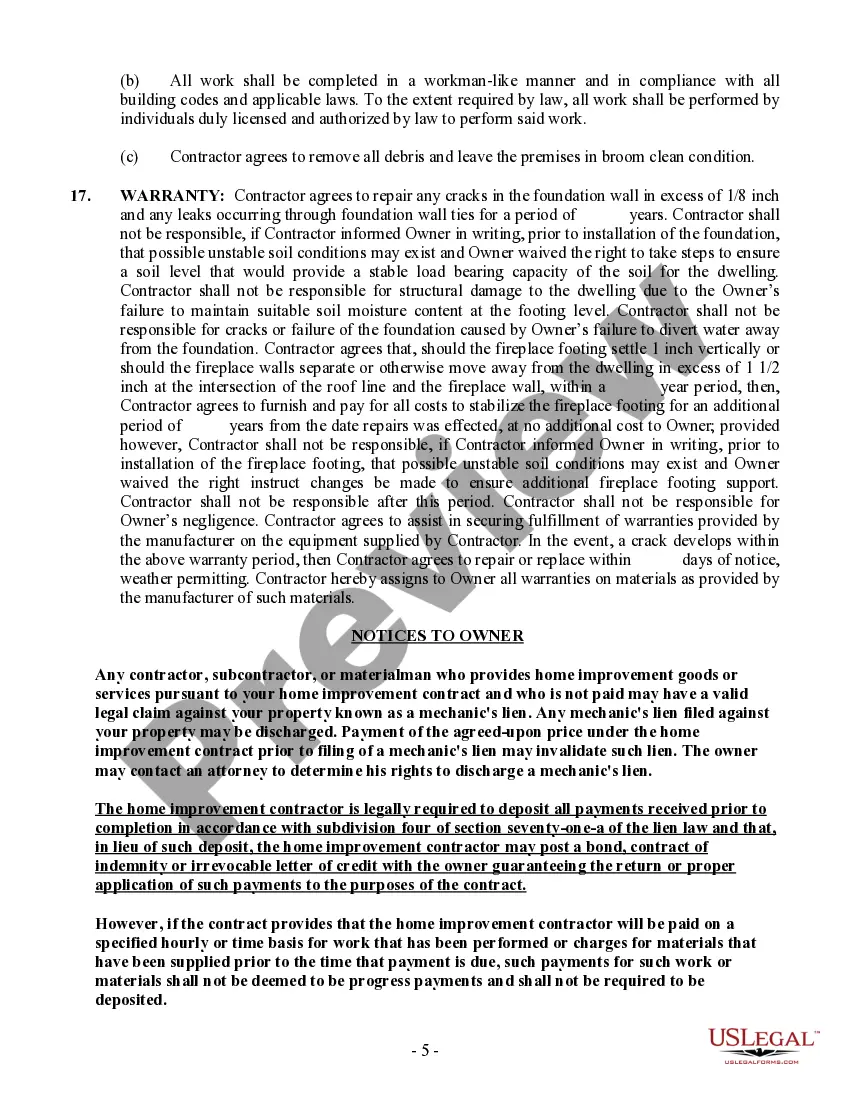
- Insurance responsibilities for general liability, workers' compensation, and builders risk.
- Guidelines for property boundary identification and title verification.
- Terms regarding damage, destruction, and contract termination.
- Rules on assignment and contract interpretation.
- Conditions on attorneys' fees if legal action arises.
- Performance standards and debris removal obligations.
Common use cases
This form should be used when you are a property owner entering into an agreement with a foundation contractor for work related to the foundation of a building or other structure. It is essential when the project requires specific legal protections and clear guidelines for both parties, especially regarding any changes in the scope of work due to soil conditions or project costs.
Who this form is for
- Property owners looking to hire foundation contractors.
- Foundation contractors needing a legally sound agreement with clients.
- Individuals seeking to formalize the terms of construction or renovation projects involving foundations.
- Parties involved in real estate development that includes foundation work.
Steps to complete this form
- Identify the parties involved and complete the identifying information section.
- Enter the definitive completion date stipulated in the contract.
- Specify the necessary permits that the contractor must obtain.
- Include details about soil conditions and clarify responsibilities.
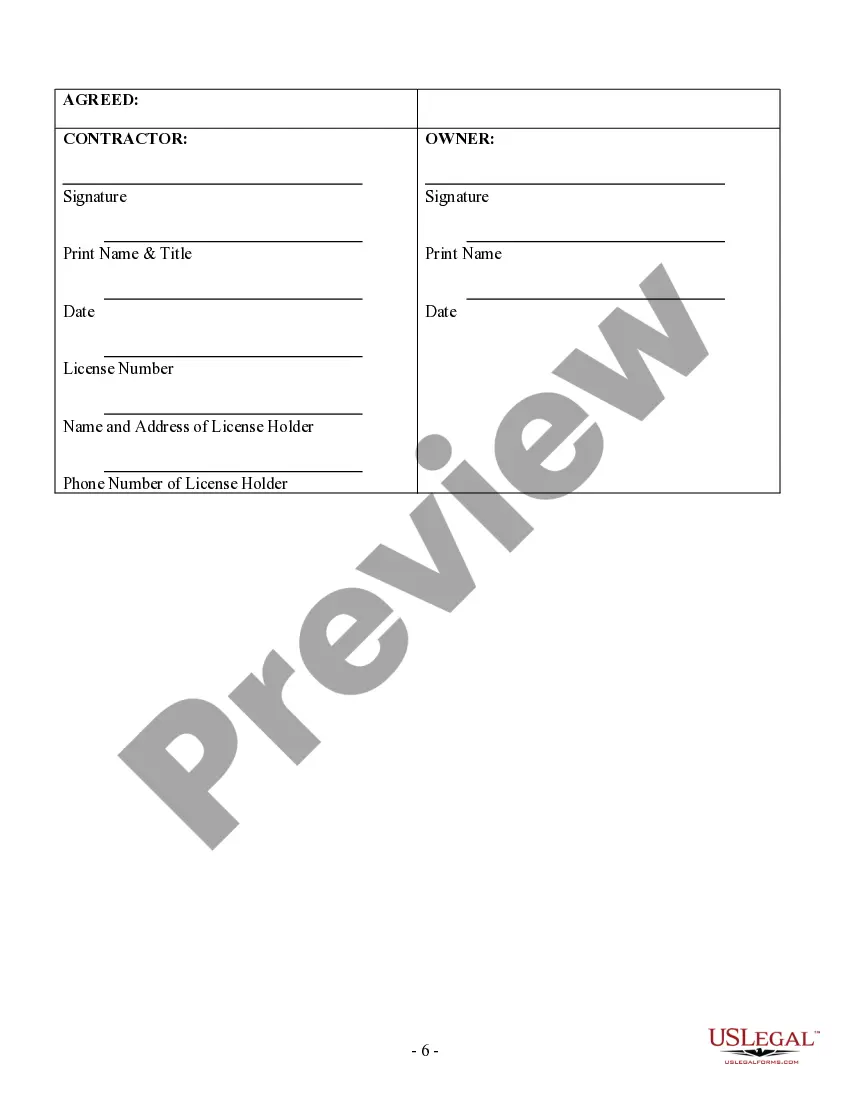
- Ensure that both parties sign, dating the contract to make it legally binding.
- Review the contract thoroughly before submission to ensure all terms are acceptable.
Is notarization required?
Notarization is generally not required for this form. However, certain states or situations might demand it. You can complete notarization online through US Legal Forms, powered by Notarize, using a verified video call available anytime.
Get your form ready online
Our built-in tools help you complete, sign, share, and store your documents in one place.
Make edits, fill in missing information, and update formatting in US Legal Forms—just like you would in MS Word.
Download a copy, print it, send it by email, or mail it via USPS—whatever works best for your next step.
Sign and collect signatures with our SignNow integration. Send to multiple recipients, set reminders, and more. Go Premium to unlock E-Sign.
If this form requires notarization, complete it online through a secure video call—no need to meet a notary in person or wait for an appointment.
We protect your documents and personal data by following strict security and privacy standards.

Make edits, fill in missing information, and update formatting in US Legal Forms—just like you would in MS Word.

Download a copy, print it, send it by email, or mail it via USPS—whatever works best for your next step.

Sign and collect signatures with our SignNow integration. Send to multiple recipients, set reminders, and more. Go Premium to unlock E-Sign.

If this form requires notarization, complete it online through a secure video call—no need to meet a notary in person or wait for an appointment.

We protect your documents and personal data by following strict security and privacy standards.
Avoid these common issues
- Not specifying the completion date clearly, which can lead to confusion or disputes.
- Failing to include necessary permits, resulting in project delays.
- Overlooking soil conditions, which can affect project costs and responsibilities.
- Not having both parties sign and date the contract, making it unenforceable.
Why use this form online
- Convenience of downloading and completing the form at your own pace.
- Editability of the document allows adjustments to meet specific project needs.
- Access to professionally drafted templates ensures legal accuracy and compliance.
- Time-saving compared to seeking custom legal advice for simple agreements.
Legal use & context
- This contract is legally enforceable under New York law, providing clear obligations for both contractors and property owners.
- By using this form, parties are protected against disputes related to work scope and payment terms.
- It helps establish clear evidence of the agreement in case of legal proceedings.
What to keep in mind
- The Foundation Contract for Contractor is crucial for formalizing agreements between contractors and property owners.
- The form includes specific clauses that address various aspects of construction projects, making it comprehensive and legally sound.
- Using this form can help avoid common mistakes and ensure that all parties understand their rights and obligations.
Looking for another form?

Form popularity
FAQ
Name of contractor and contact information. Name of homeowner and contact information. Describe property in legal terms. List attachments to the contract. The cost. Failure of homeowner to obtain financing. Description of the work and the completion date. Right to stop the project.
Get it in writing. Keep it simple. Deal with the right person. Identify each party correctly. Spell out all of the details. Specify payment obligations. Agree on circumstances that terminate the contract. Agree on a way to resolve disputes.
Define and describe the project in detail. Include what materials must be used; be as specific as possible. Include weight, brand name and other identifying features. Specify the work being performed and all equipment being used or installed.
Timeframe or key milestones of the project; hours of work; deliverables of the project; and. way the business will pay the contractor for their services.
Your general contractor should provide proof of licensing, bonding and insurance before a project starts, but it's better to have it in hand before you sign any contracts. It's important that contractors carry any licensing and/or certification required for the specific trade or skill they practice.
Timeframe or key milestones of the project; hours of work; deliverables of the project; and. way the business will pay the contractor for their services.
Get it in writing. Keep it simple. Deal with the right person. Identify each party correctly. Spell out all of the details. Specify payment obligations. Agree on circumstances that terminate the contract. Agree on a way to resolve disputes.
Identifying/Contact Information. Title and Description of the Project. Projected Timeline and Completion Date. Cost Estimate and Payment Schedule. Stop Work Clause and Stop Payment Clause. Act of God Clause. Change Order Agreement. Warranty.
Name of contractor and contact information. Name of homeowner and contact information. Describe property in legal terms. List attachments to the contract. The cost. Failure of homeowner to obtain financing. Description of the work and the completion date. Right to stop the project.