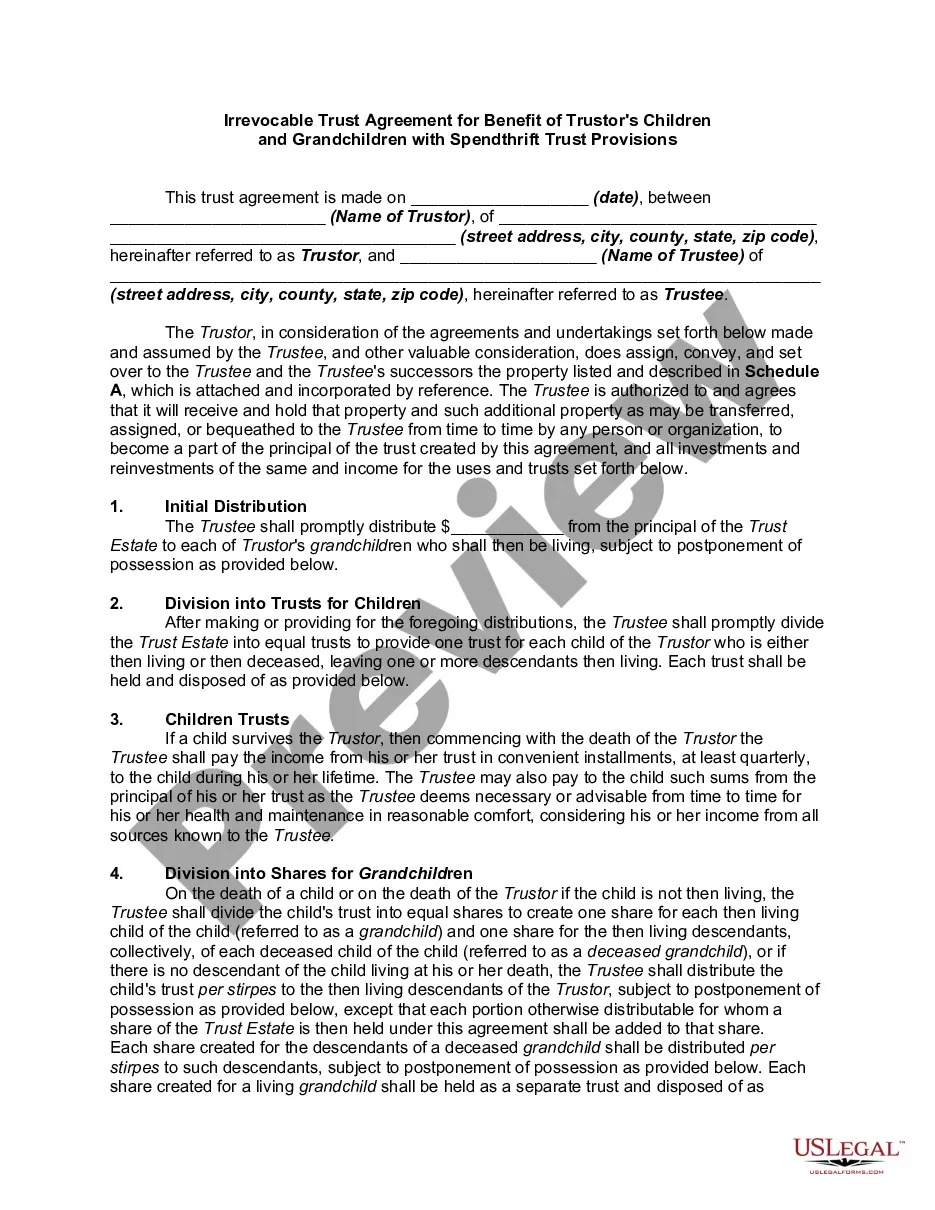
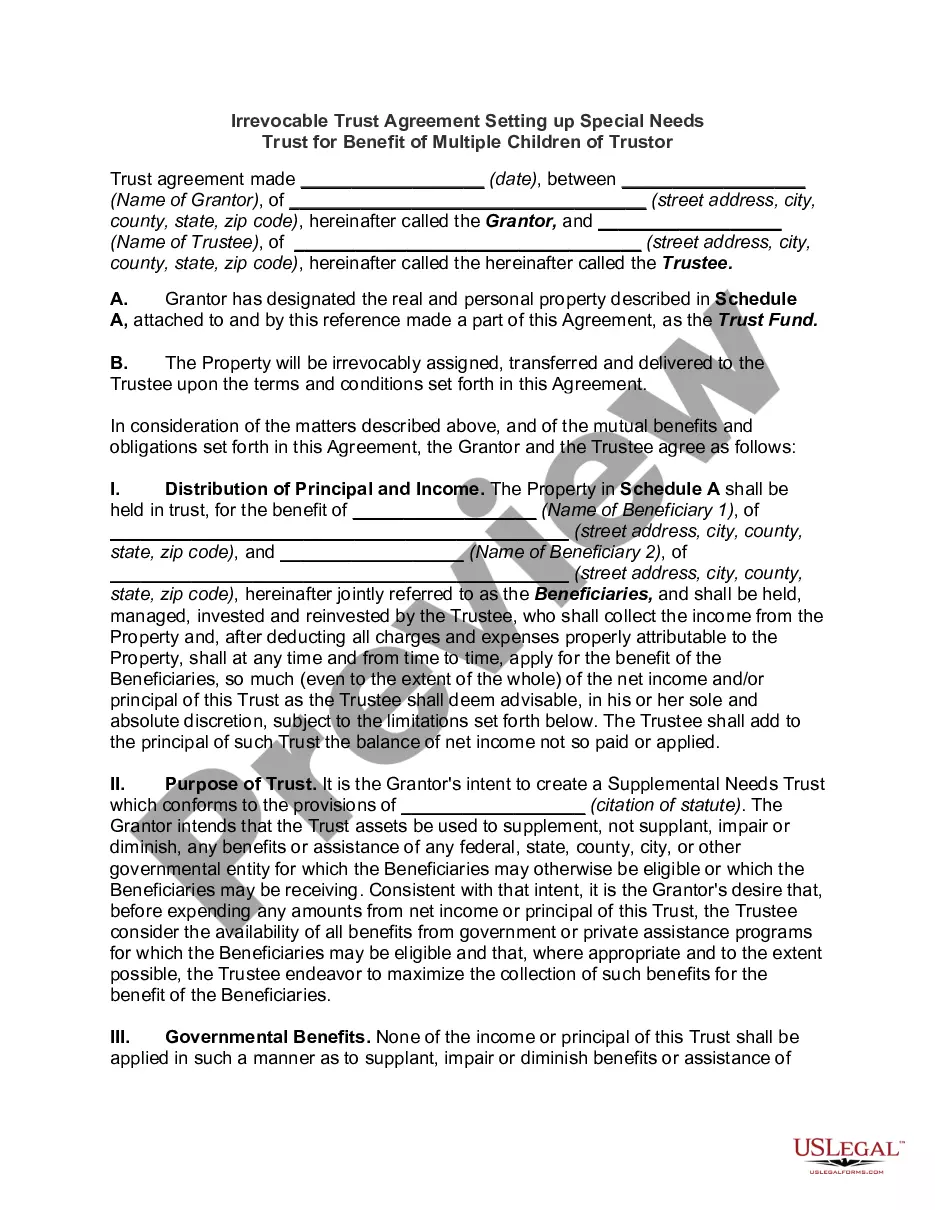
Special Needs Trust Supplemental For Minor Child
Description

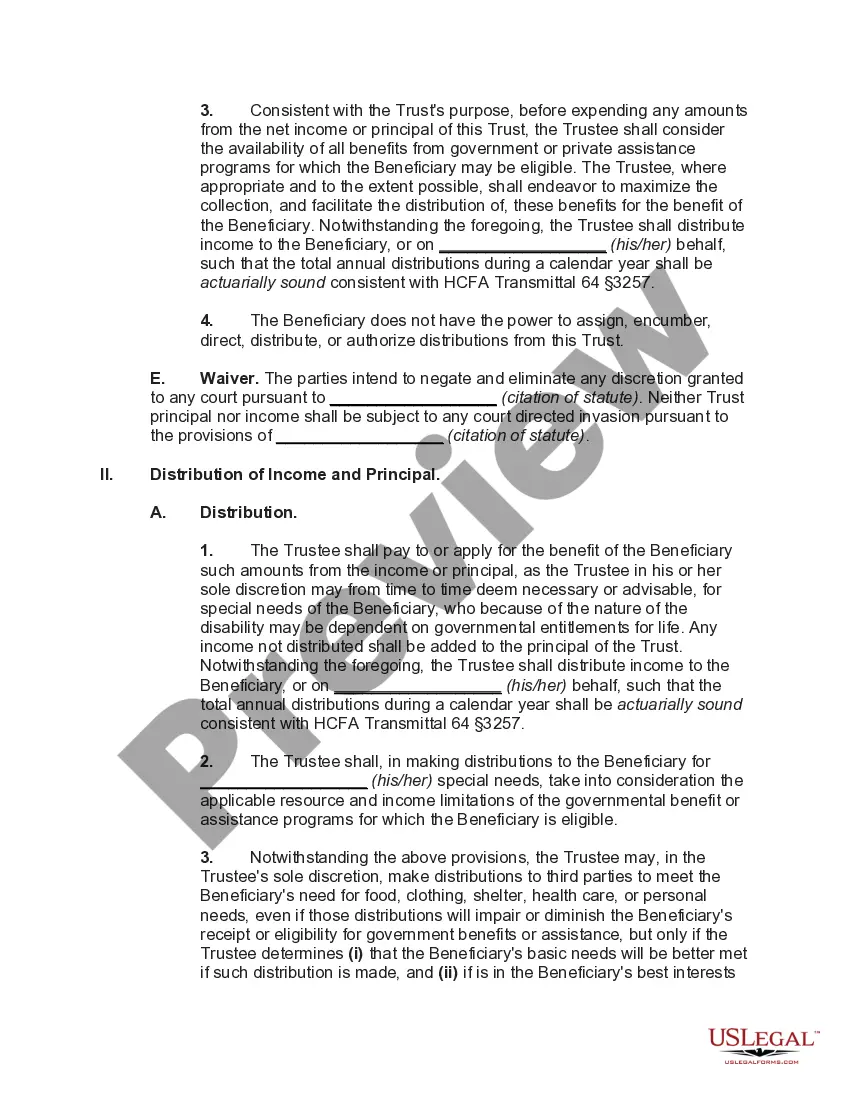
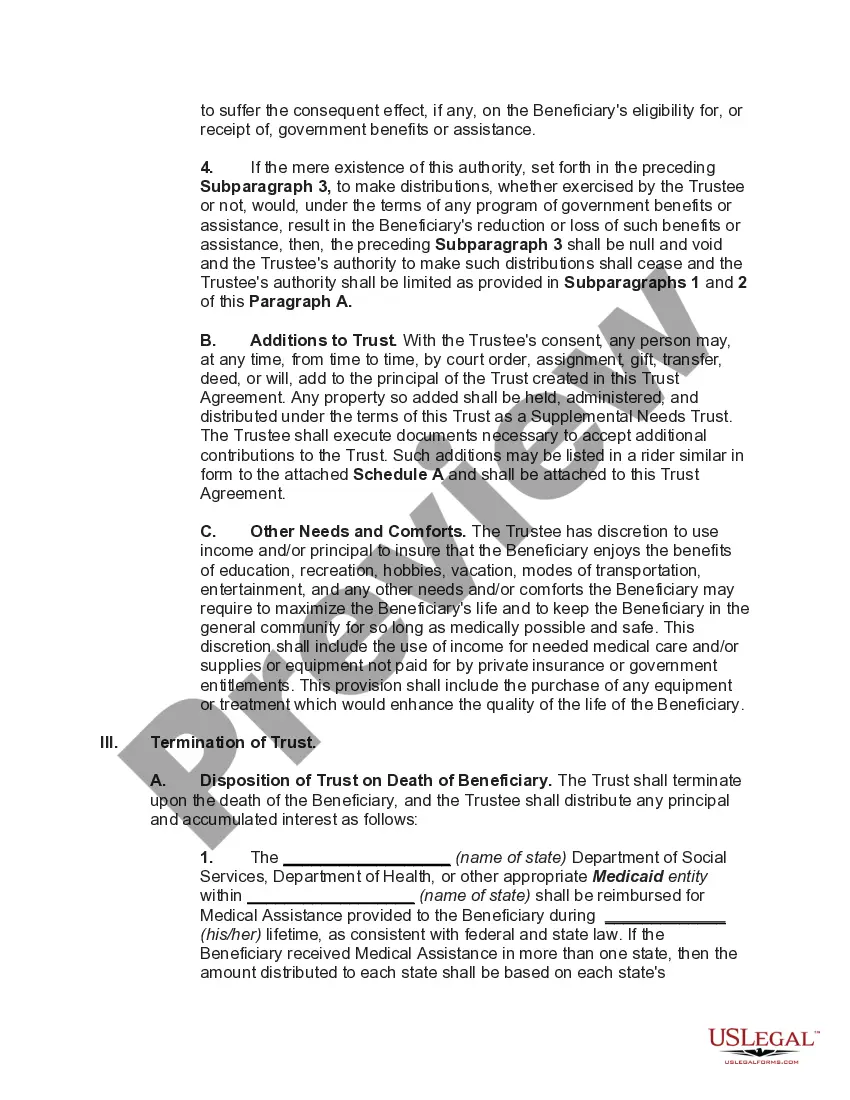
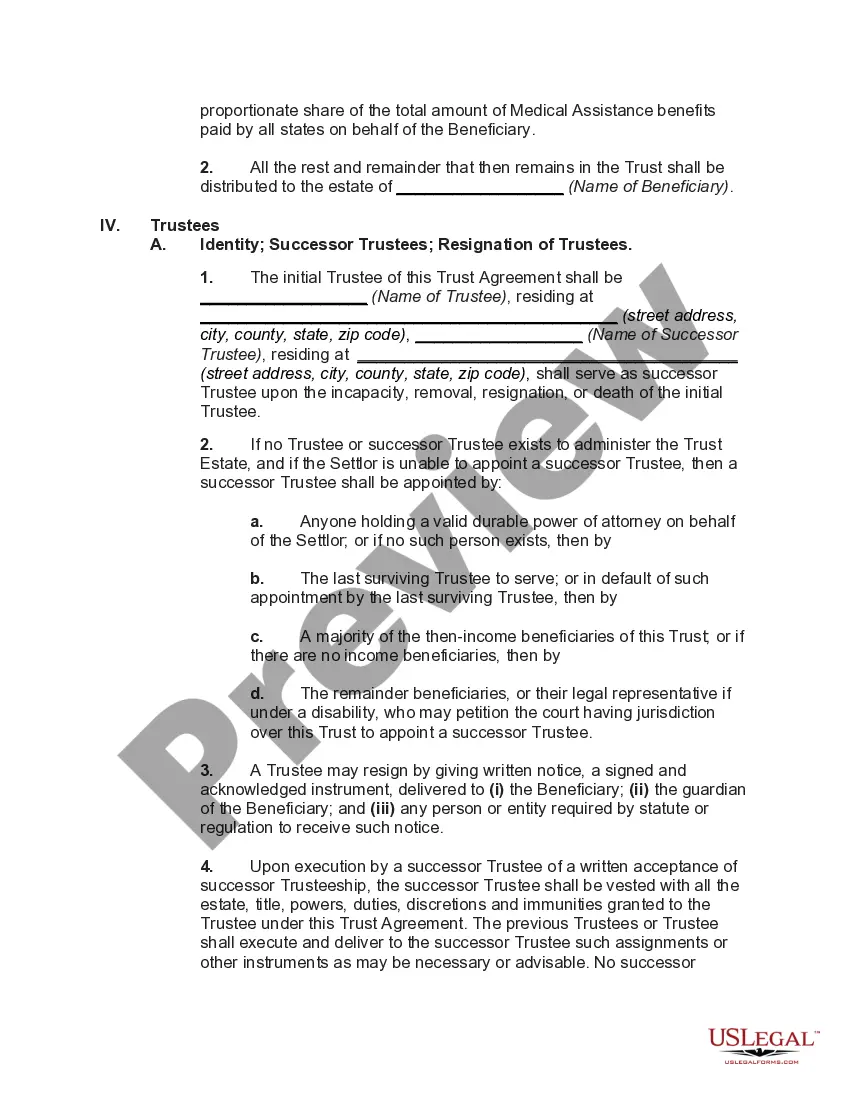
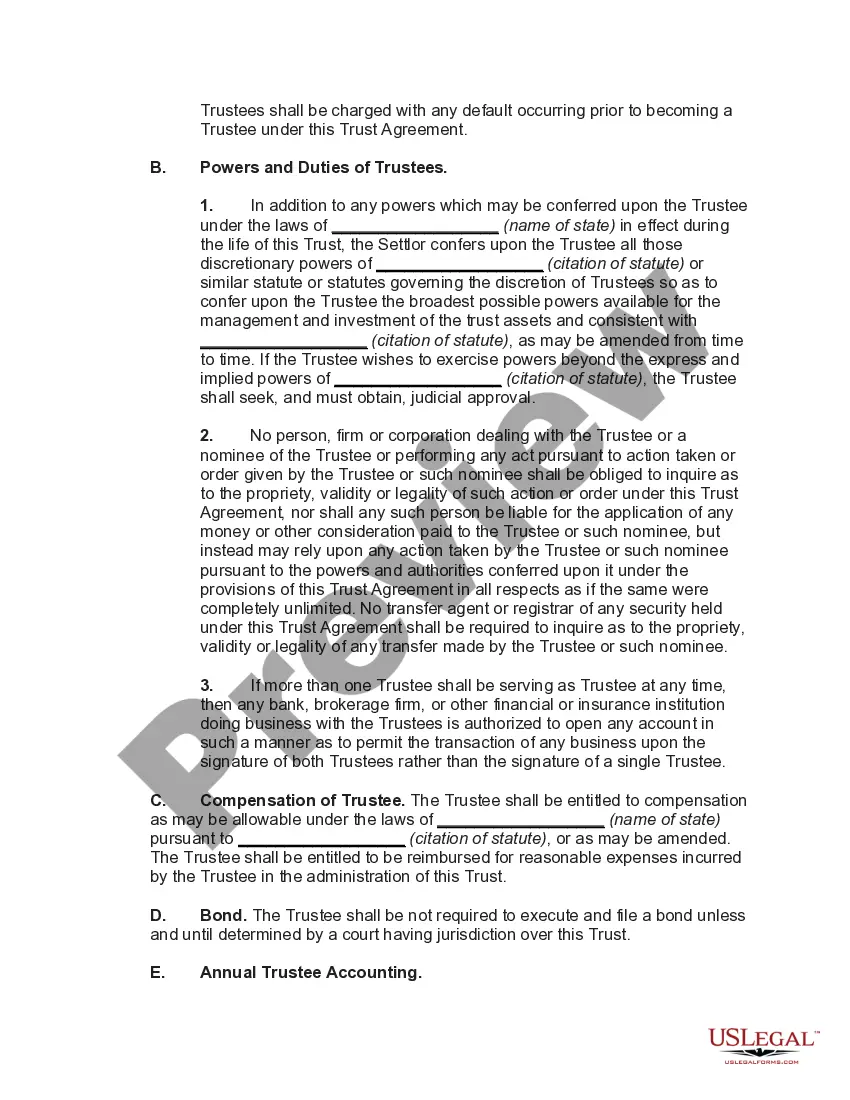
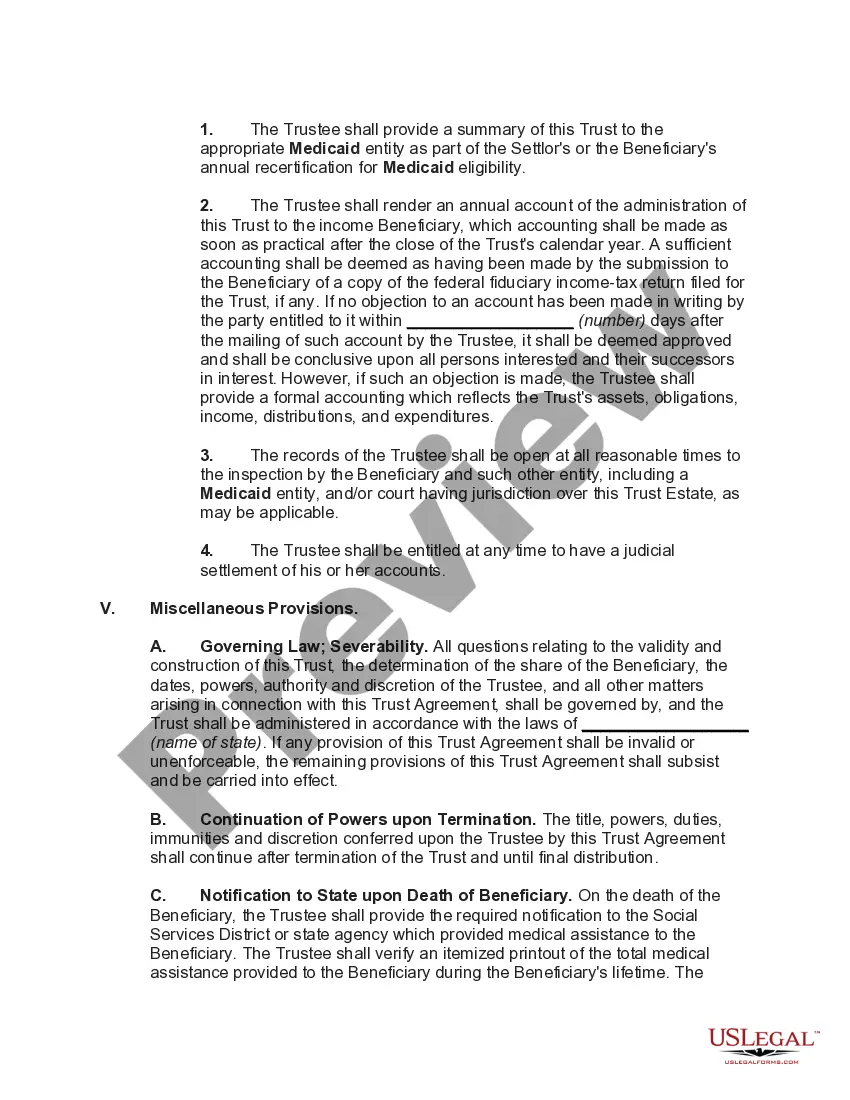
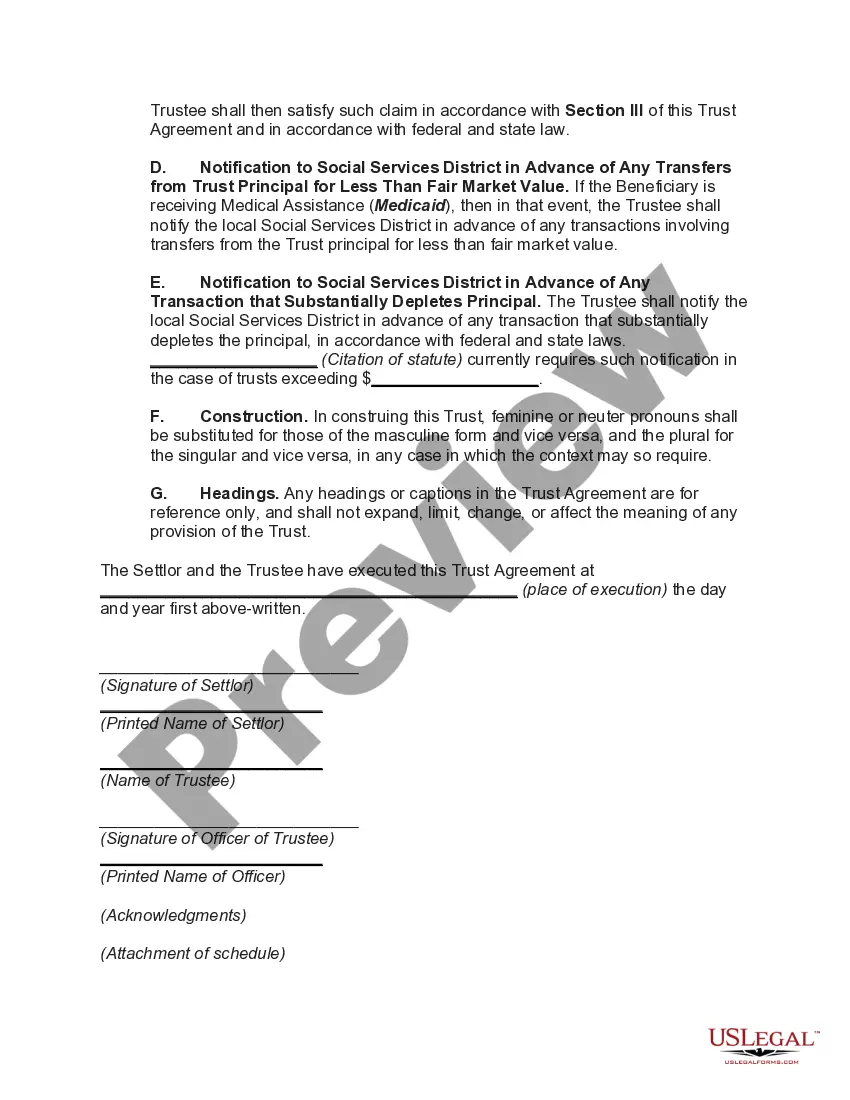
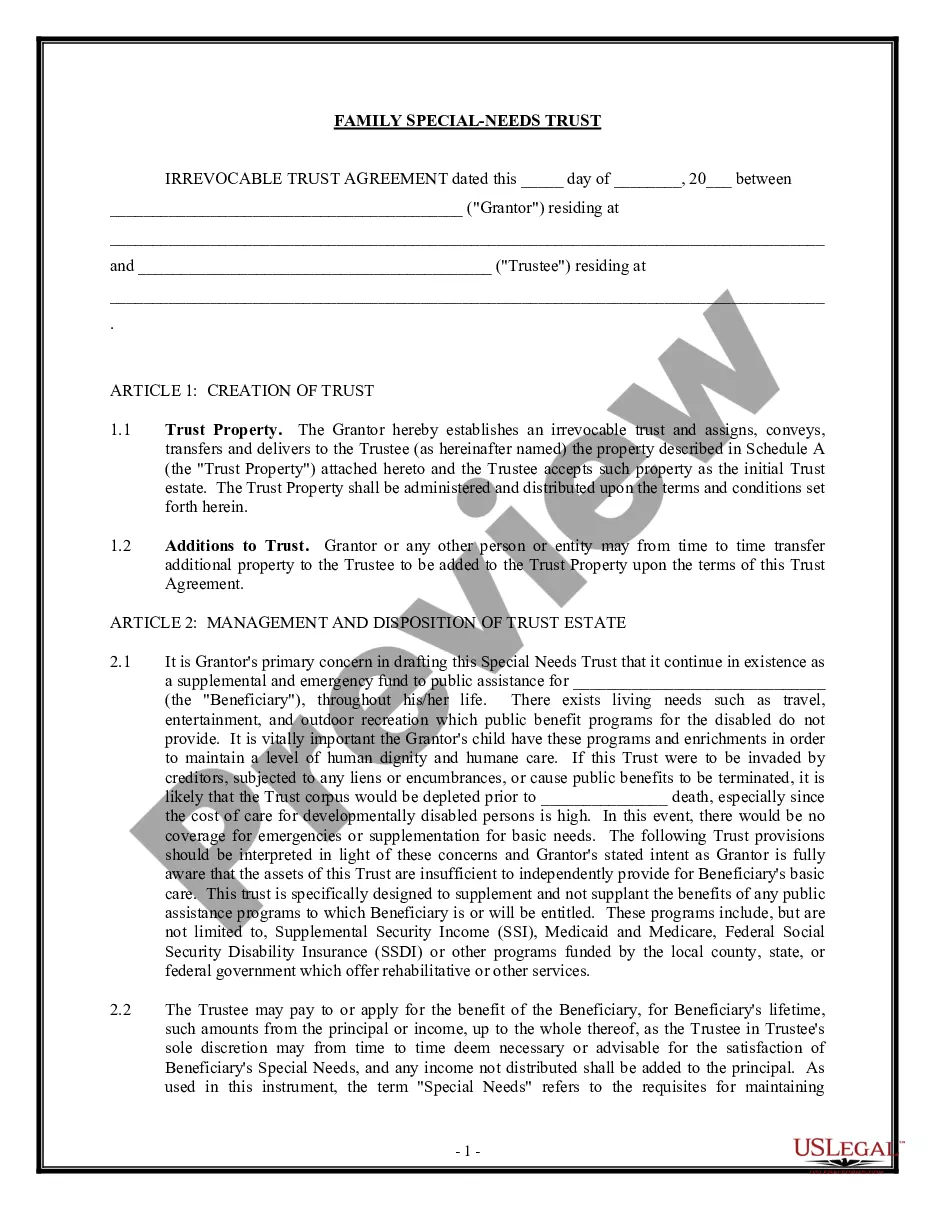
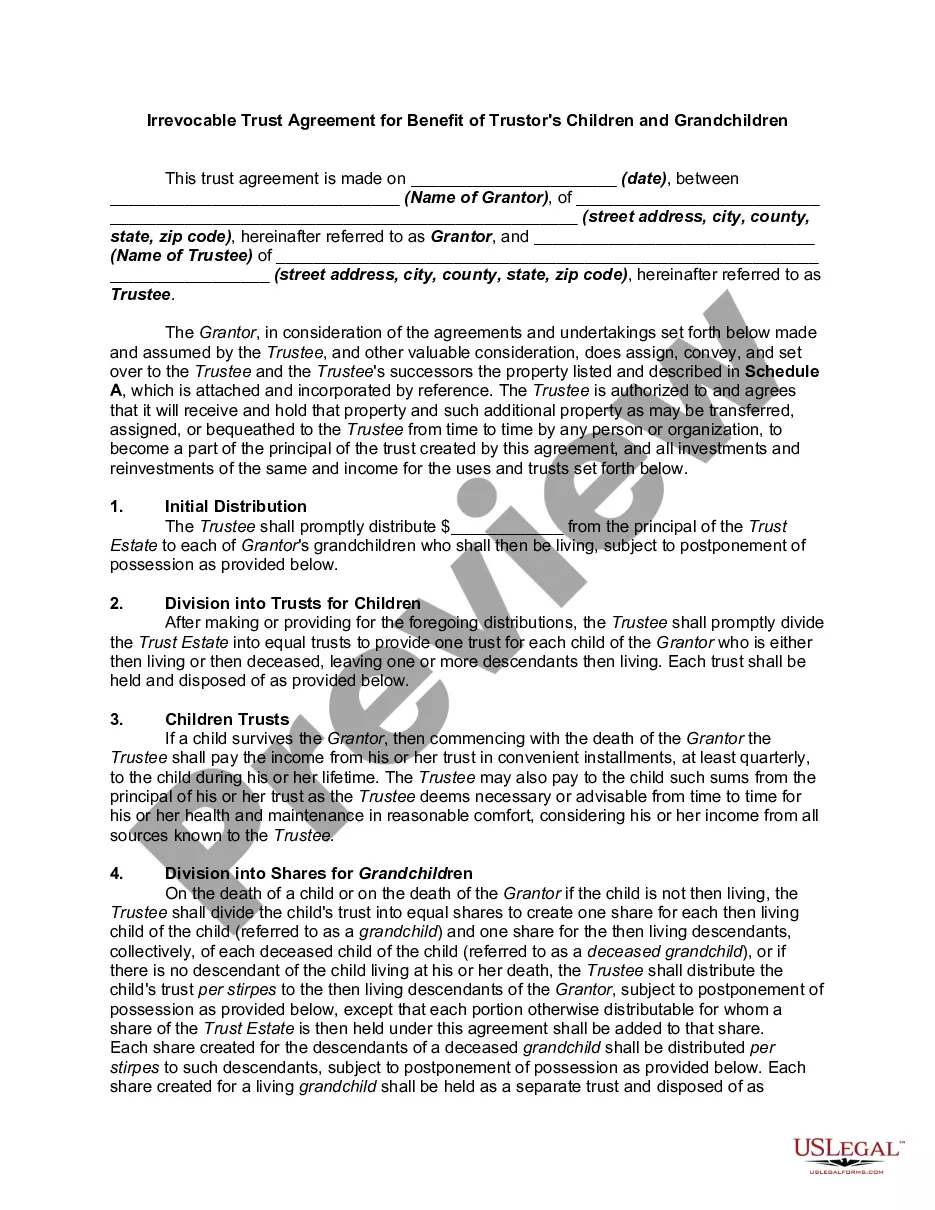
Get your form ready online
Our built-in tools help you complete, sign, share, and store your documents in one place.
Make edits, fill in missing information, and update formatting in US Legal Forms—just like you would in MS Word.
Download a copy, print it, send it by email, or mail it via USPS—whatever works best for your next step.
Sign and collect signatures with our SignNow integration. Send to multiple recipients, set reminders, and more. Go Premium to unlock E-Sign.
If this form requires notarization, complete it online through a secure video call—no need to meet a notary in person or wait for an appointment.
We protect your documents and personal data by following strict security and privacy standards.

Make edits, fill in missing information, and update formatting in US Legal Forms—just like you would in MS Word.

Download a copy, print it, send it by email, or mail it via USPS—whatever works best for your next step.

Sign and collect signatures with our SignNow integration. Send to multiple recipients, set reminders, and more. Go Premium to unlock E-Sign.

If this form requires notarization, complete it online through a secure video call—no need to meet a notary in person or wait for an appointment.

We protect your documents and personal data by following strict security and privacy standards.
Looking for another form?






How to fill out Special Needs Irrevocable Trust Agreement For Benefit Of Disabled Child Of Trustor?
Securing a reliable source for obtaining the most up-to-date and pertinent legal templates is a significant portion of the challenge when dealing with bureaucracy. Locating the appropriate legal paperwork requires accuracy and meticulousness, which is why it is essential to acquire samples of Special Needs Trust Supplemental For Minor Child exclusively from reputable providers, such as US Legal Forms. An incorrect template can squander your time and delay the matter at hand. With US Legal Forms, you have minimal concerns. You can access and review all the details regarding the document’s application and significance for your circumstances and in your region or locality.
Consider the following steps to finalize your Special Needs Trust Supplemental For Minor Child.
Eliminate the inconvenience associated with your legal documentation. Explore the extensive US Legal Forms library to discover legal samples, evaluate their applicability to your situation, and download them instantly.
- Utilize the library navigation or search option to find your template.
- Inspect the form’s details to ensure it meets the criteria of your state and locality.
- Examine the form preview, if available, to confirm the form is indeed the one you need.
- Return to the search and seek the appropriate document if the Special Needs Trust Supplemental For Minor Child does not fulfill your requirements.
- If you are confident about the form’s applicability, download it.
- As a registered user, click Log in to verify and access your selected forms in My documents.
- If you do not possess an account yet, click Buy now to obtain the form.
- Select the pricing plan that suits your needs.
- Proceed to the registration to complete your purchase.
- Finalize your order by selecting a payment method (credit card or PayPal).
- Select the file format for downloading Special Needs Trust Supplemental For Minor Child.
- Once you have the form saved on your device, you can modify it using the editor or print it and complete it by hand.
Form popularity
FAQ
Cons of Special Needs Trusts The trust must be maintained, and yearly management costs can be high. Depending on who manages the fund, there may be a minimum amount required to set up the trust. It may be financially difficult for the settlor to actually establish the trust, depending upon their circumstances.
What are the main benefits of an SDT? The asset value limit of $781,250 (indexed annually on 1 July) and income from the trust may be disregarded for the purposes of the principal beneficiary's income support payment. Assets above that limit are added to the assessable assets of the principal beneficiary.
SSDI does not depend upon having limited assets, and it is not affected by distributions from a Disability Trust.
Distribution of the trust's contents don't fall to the beneficiary, but to the trustee. They're the one that your beneficiary has to go through. Generally, the money that is put into this fund will go into living expenses such as transportation and paying for medical costs. This probably isn't going to a fun fund.
Typically, a third party special needs trust is set up by the family of the disabled person. The family then gifts money to the trust, rather than the disabled person, so the gifts do not interfere with the disabled persons Supplemental Security Income (SSI), Medicaid, vocational rehabilitation, and subsidized housing.