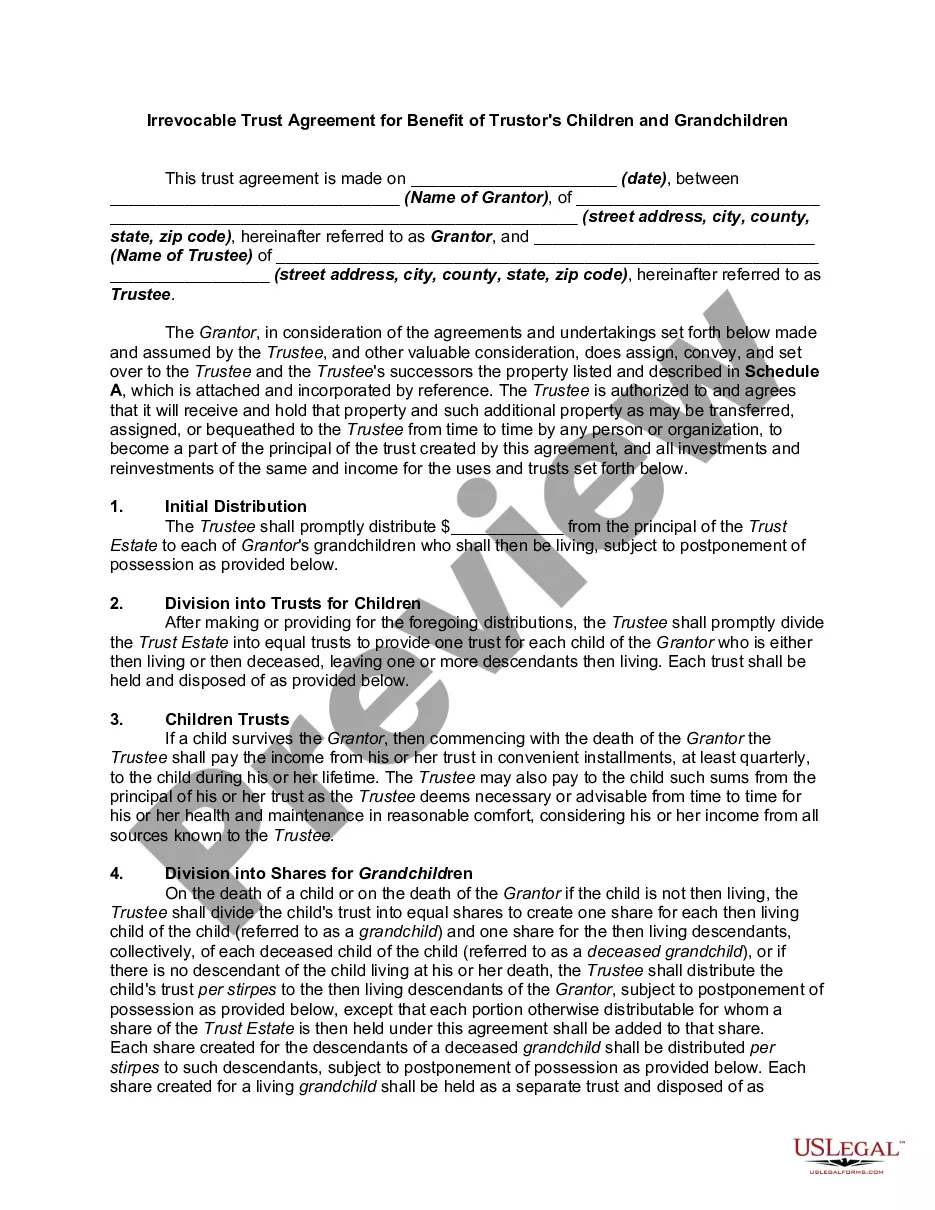
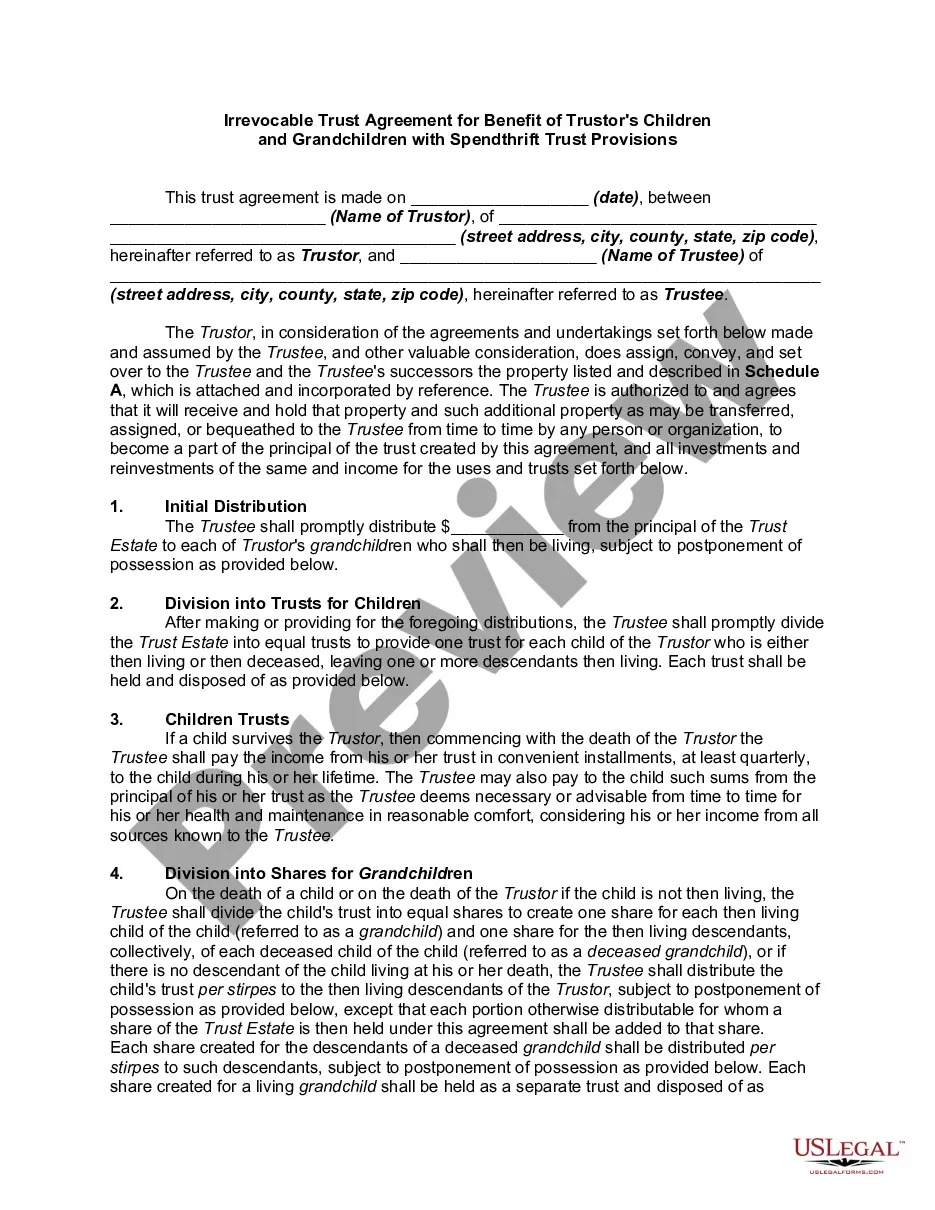
Irrevocable Trust Trustor With Trustee
Description
Get your form ready online
Our built-in tools help you complete, sign, share, and store your documents in one place.
Make edits, fill in missing information, and update formatting in US Legal Forms—just like you would in MS Word.
Download a copy, print it, send it by email, or mail it via USPS—whatever works best for your next step.
Sign and collect signatures with our SignNow integration. Send to multiple recipients, set reminders, and more. Go Premium to unlock E-Sign.
If this form requires notarization, complete it online through a secure video call—no need to meet a notary in person or wait for an appointment.
We protect your documents and personal data by following strict security and privacy standards.

Make edits, fill in missing information, and update formatting in US Legal Forms—just like you would in MS Word.

Download a copy, print it, send it by email, or mail it via USPS—whatever works best for your next step.

Sign and collect signatures with our SignNow integration. Send to multiple recipients, set reminders, and more. Go Premium to unlock E-Sign.

If this form requires notarization, complete it online through a secure video call—no need to meet a notary in person or wait for an appointment.

We protect your documents and personal data by following strict security and privacy standards.
Looking for another form?







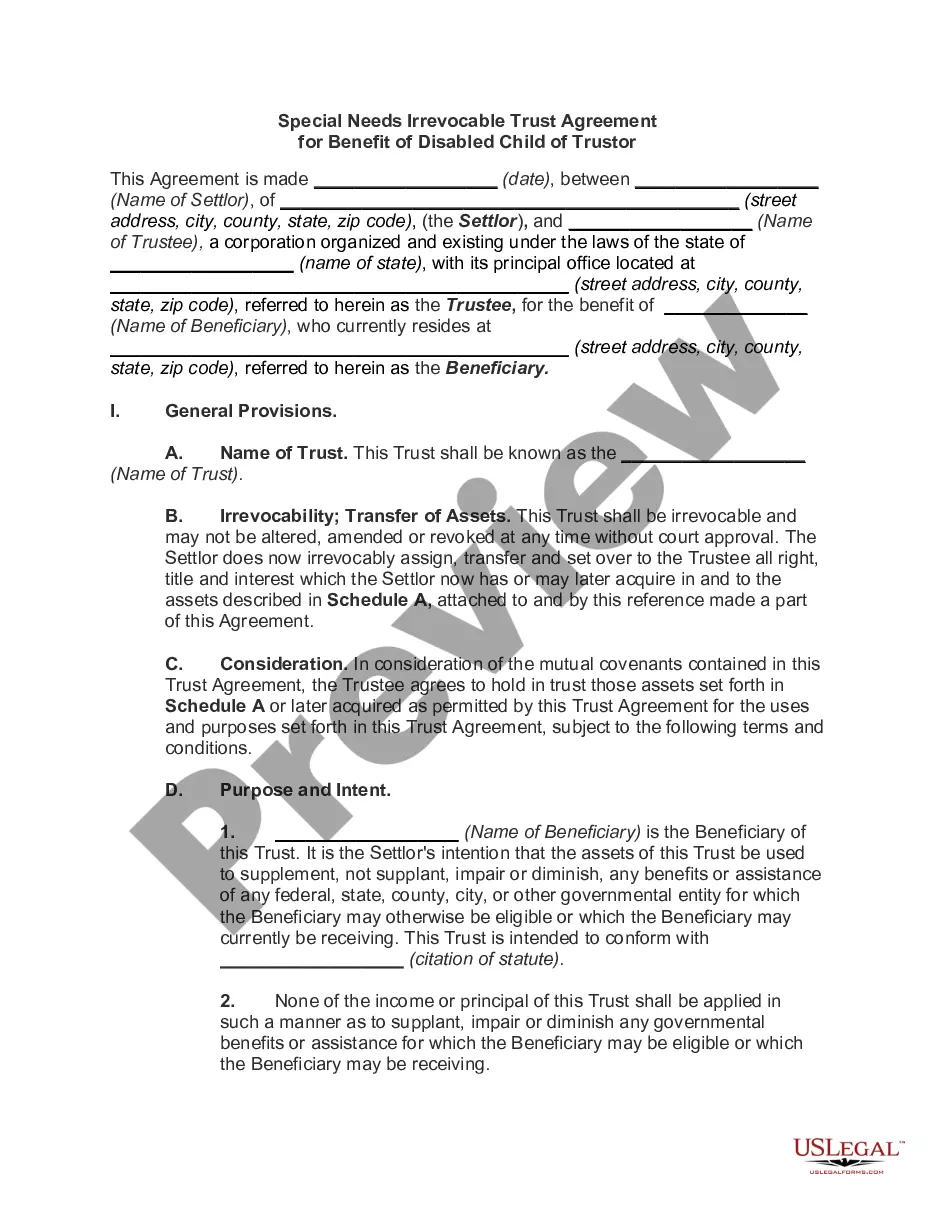
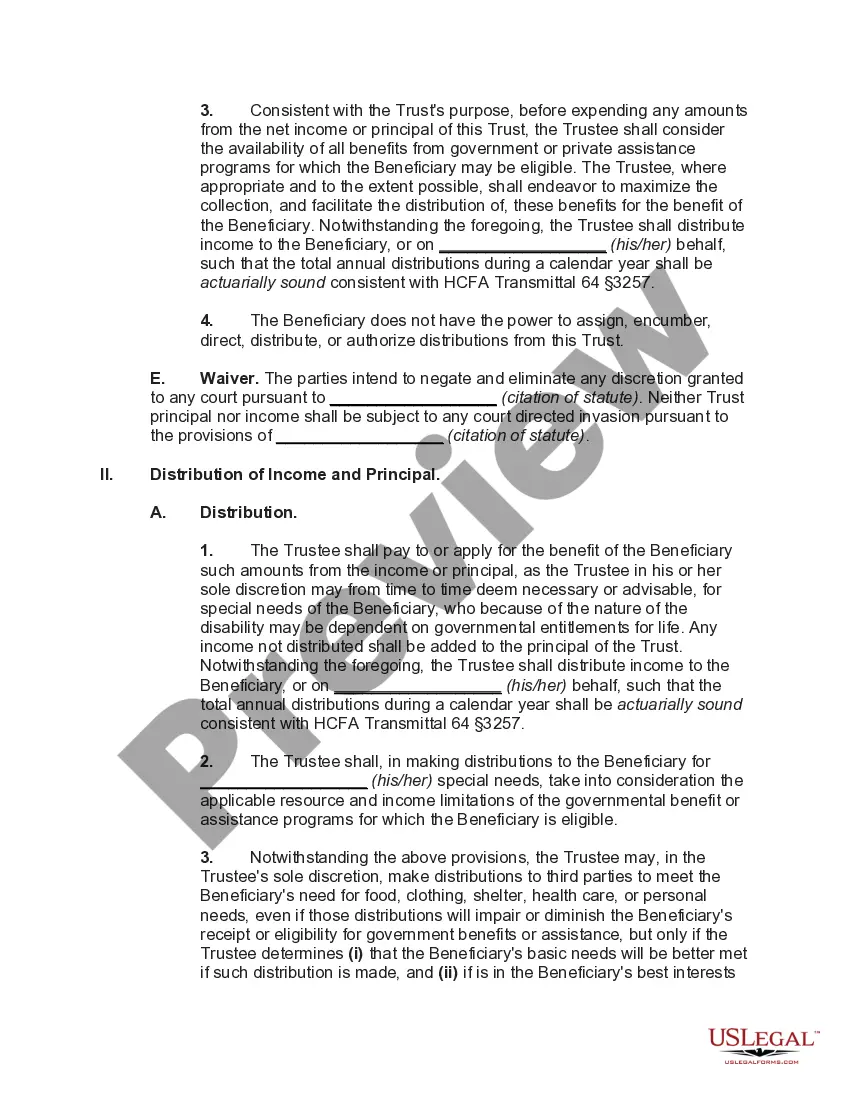
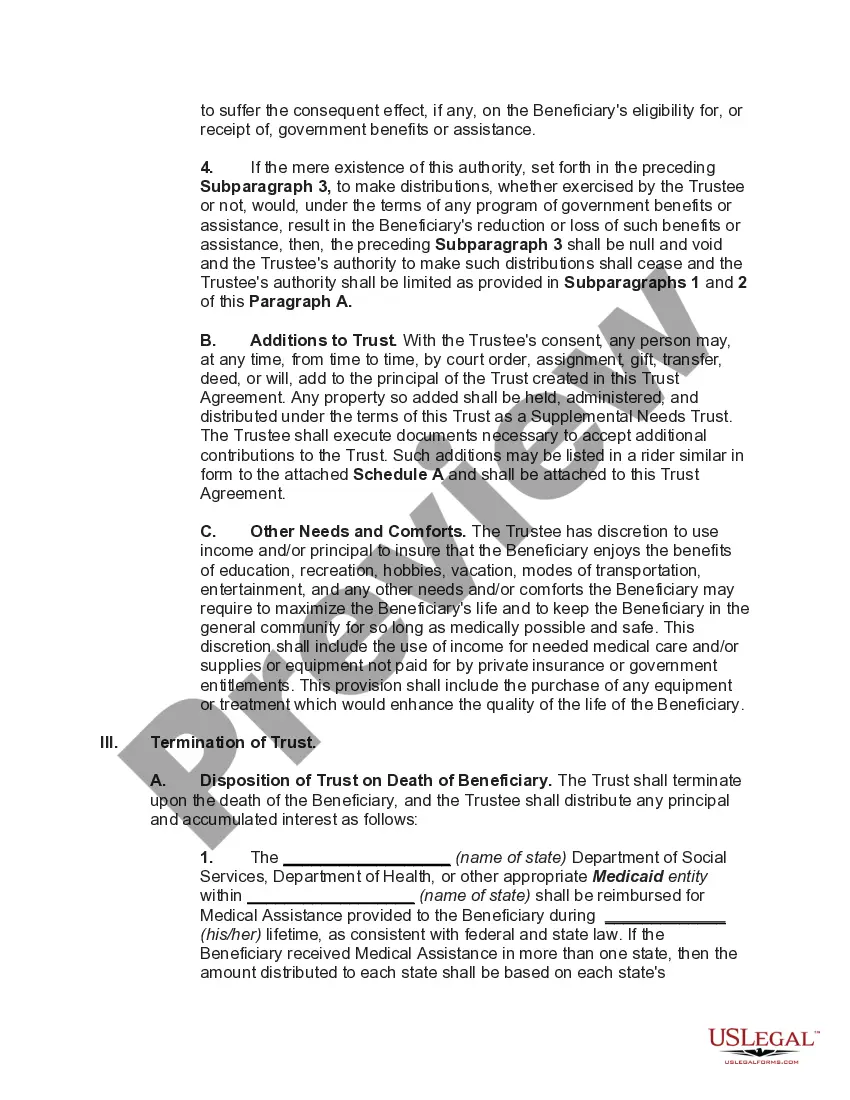
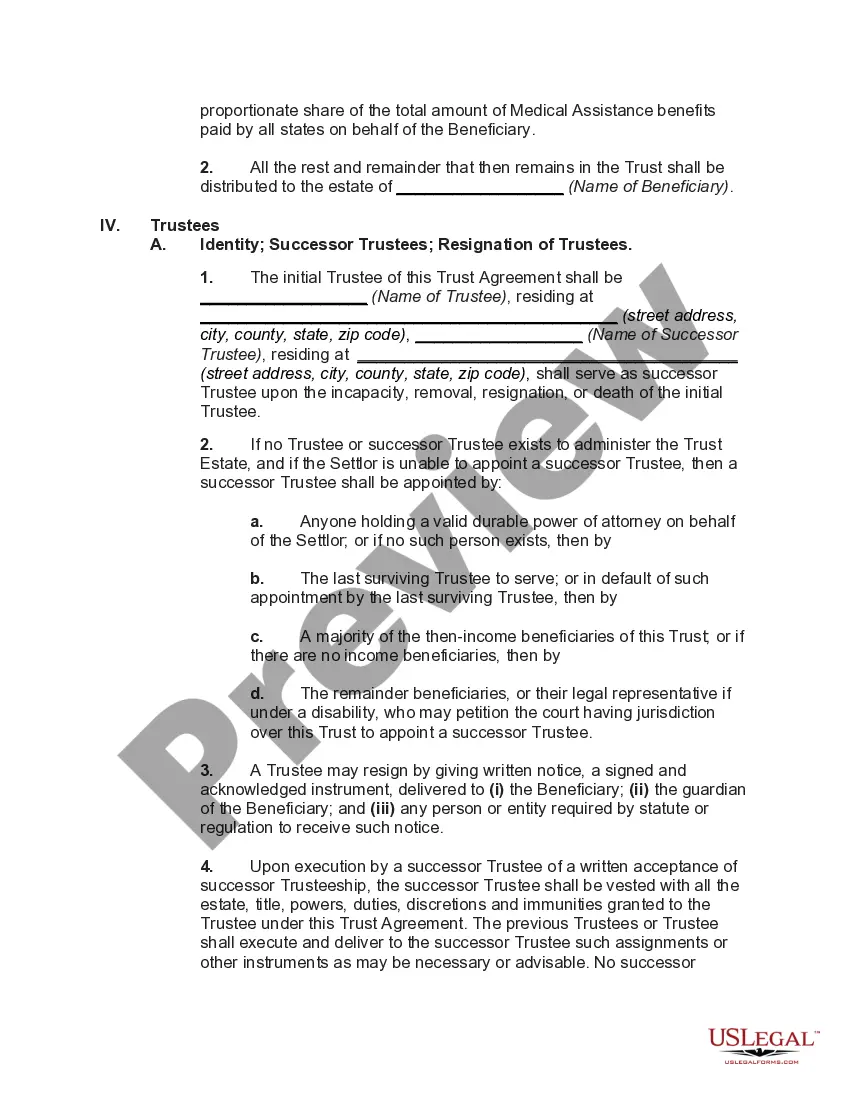
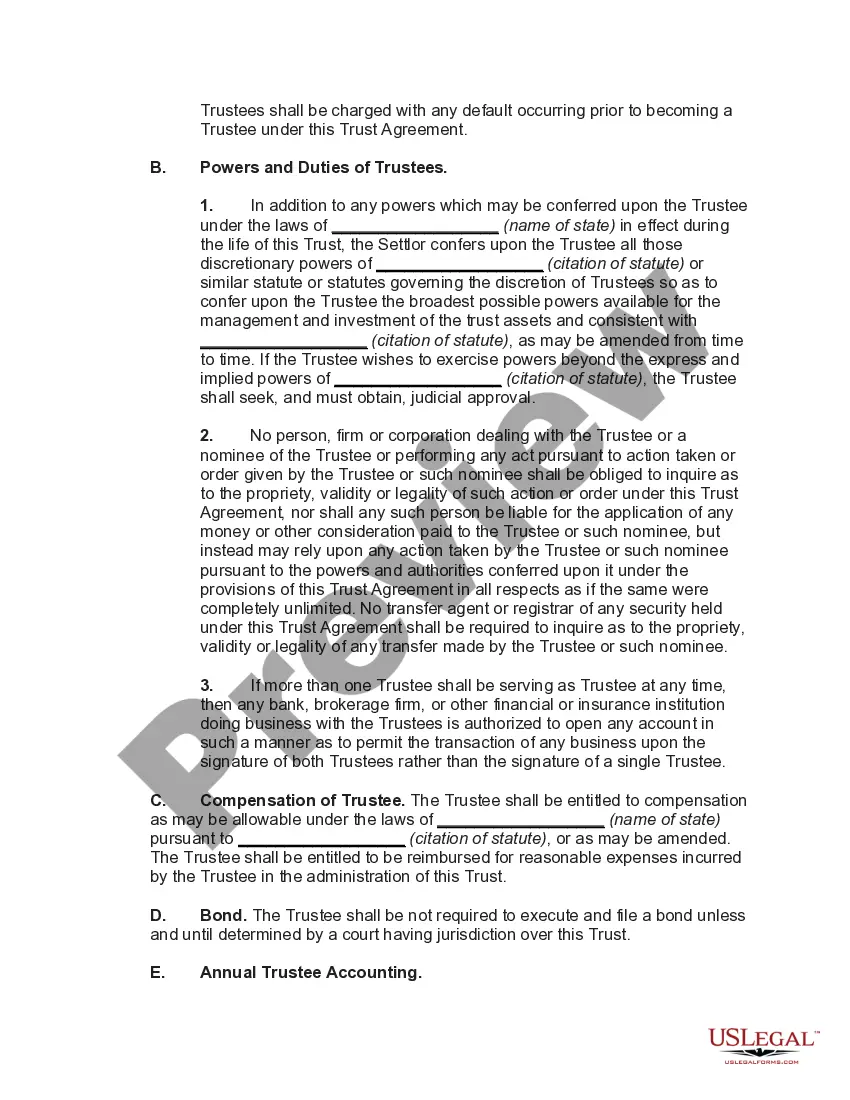
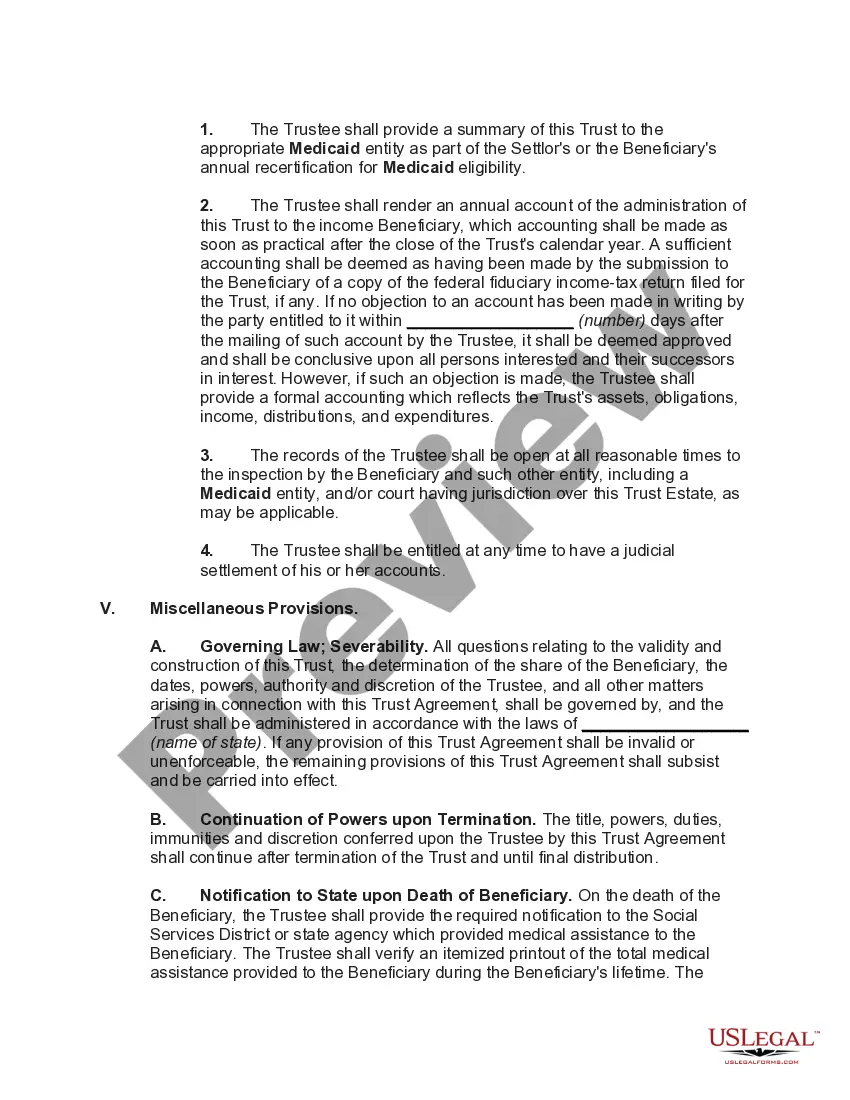
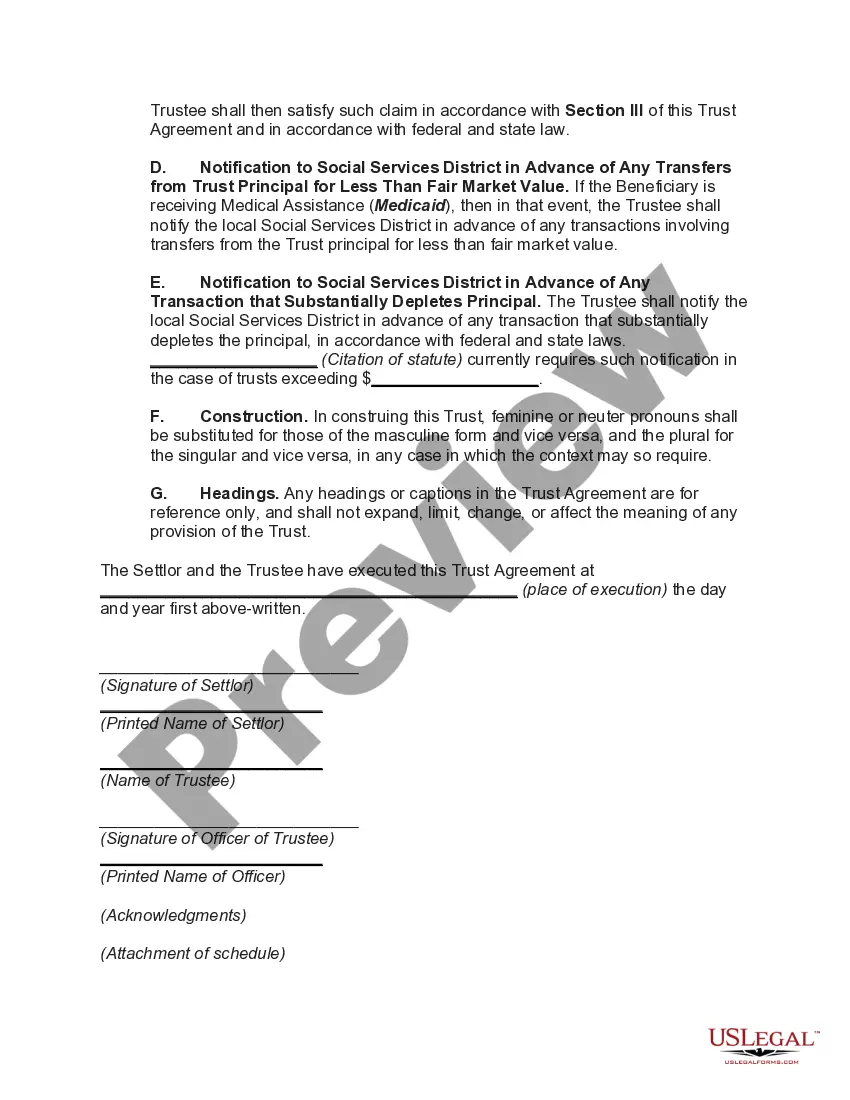
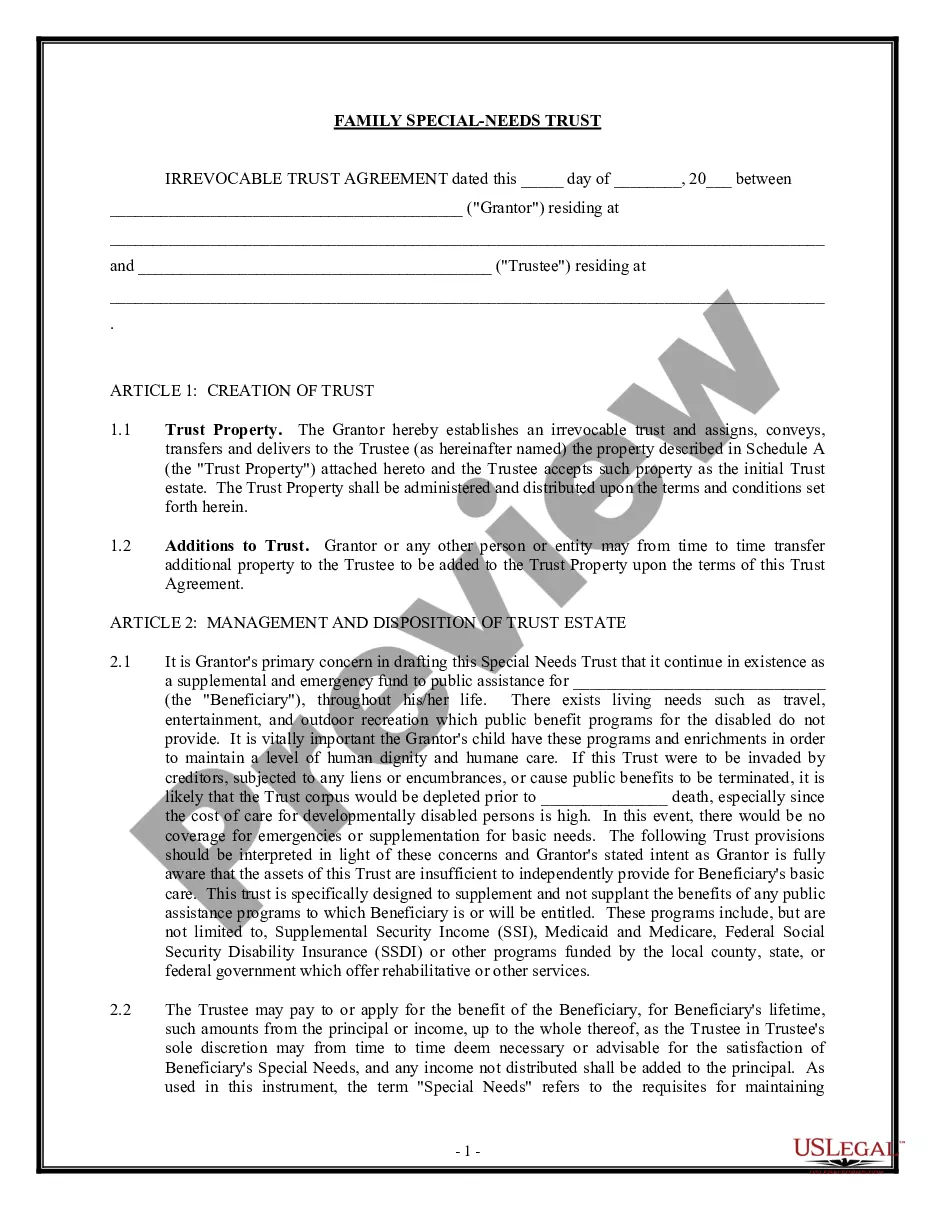
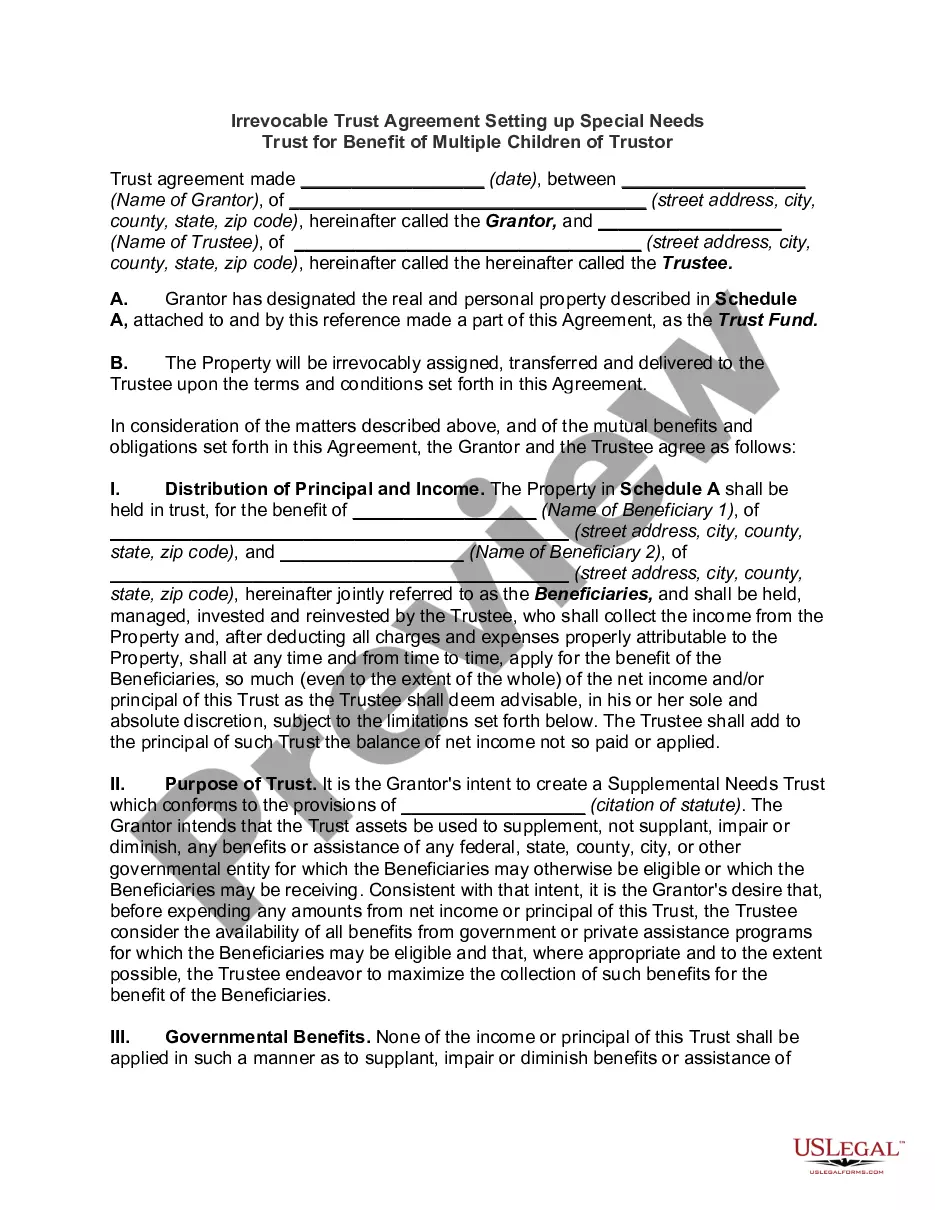
How to fill out Special Needs Irrevocable Trust Agreement For Benefit Of Disabled Child Of Trustor?
- If you are a returning user, log in to your US Legal Forms account and navigate to your profile to download the required form template by clicking the Download button. Ensure your subscription is active; if not, renew it based on your selected plan.
- For first-time users, begin by browsing the Preview mode and form descriptions to select the appropriate template that aligns with your needs and local jurisdiction.
- Should you find discrepancies with a form, utilize the Search tab to locate alternative templates that suit your requirements.
- Once satisfied with your selection, click on the Buy Now button to choose your subscription plan and register for an account to access the extensive library.
- After selecting your payment method, whether credit card or PayPal, complete the transaction for your subscription.
- Finally, download the form to your device for further completion and store it securely in the My Forms section of your profile for easy access.
US Legal Forms empowers users with a vast collection of over 85,000 fillable and editable legal documents, making it simpler to create accurate legal forms.
Start your journey to effective estate planning today! Access US Legal Forms and ensure your documents are completed correctly with the help of expert resources.
Form popularity
FAQ
The trustee is responsible for managing the assets held in an irrevocable trust. This individual or entity follows the instructions set forth by the trustor and ensures that the assets are distributed according to the trust’s terms. A trustworthy and experienced trustee is crucial for maintaining the integrity of the irrevocable trust trustor with trustee relationship. Utilizing a platform like US Legal Forms can simplify the process of selecting and managing your trustee.
The trustor of an irrevocable trust is the individual who creates the trust and transfers their assets into it. This person sets the terms and conditions under which the trust operates. Importantly, once established, the trustor cannot modify the trust or regain control of the assets. Understanding the role of the irrevocable trust trustor with trustee is essential for effective estate planning.
Yes, an irrevocable trust may receive a Form 1099 if it earns reportable income, such as interest or dividends. The income reported helps determine the tax obligations for the trust and its beneficiaries. If you are unsure about tax forms related to your irrevocable trust, seeking assistance from a professional can provide clarity and ensure compliance.
The IRS treats irrevocable trusts as separate entities for tax purposes. Once you establish this type of trust, the trustor relinquishes control over the assets, and these assets must be reported on the trust's tax return. This separation means the trust itself may owe taxes on its income. Understand these rules to manage your trust effectively and consult uslegalforms for tailored advice.
Yes, if your irrevocable trust generates income, you must file Form 1041, U.S. Income Tax Return for Estates and Trusts. This tax form allows the IRS to assess income generated from the assets within the trust. As the trustor with a trustee, ensuring your trust complies with tax regulations is essential. Consider seeking detailed advice on tax matters to avoid any mishaps.
You must file your irrevocable trust in the probate court of the county where the trustor resides. This filing process helps officialize the trust and notifies relevant parties. You may also want to provide copies to designated beneficiaries and the trustee. For assistance, platforms like uslegalforms can guide you through the necessary documentation.
Yes, an irrevocable trust typically needs to be filed with the court in order to be effective. When you create an irrevocable trust, the trustor must ensure proper documentation and potentially initiate a formal court process. This step helps establish the trust legally, providing clear authority for the trustee to manage the assets. Consulting with a legal expert can simplify this process for you.
The ideal trustee for an irrevocable trust is someone who brings a balance of personal touch and professional expertise. This individual should be reliable, neutral, and qualified to manage the trust assets responsibly. Engaging a professional trustee could provide added reassurance that the trust will be handled according to the trustor's wishes and legal requirements, reinforcing the role of the irrevocable trust trustor with trustee.
The best trustee is someone who combines integrity, financial acumen, and the ability to act impartially. It is beneficial to choose someone who understands your values and the purpose of the trust. You might also consider individuals or firms with professional trust management experience to enhance the effectiveness of the irrevocable trust trustor with trustee.
Filling out an irrevocable trust requires clear identification of all parties involved, including the trustor and the trustee. You will also need to specify the assets and instructions for management and distribution. Using platforms like US Legal Forms can streamline this process, providing you with professionally prepared documents. This ensures that the terms reflect the wishes of the irrevocable trust trustor with trustee.