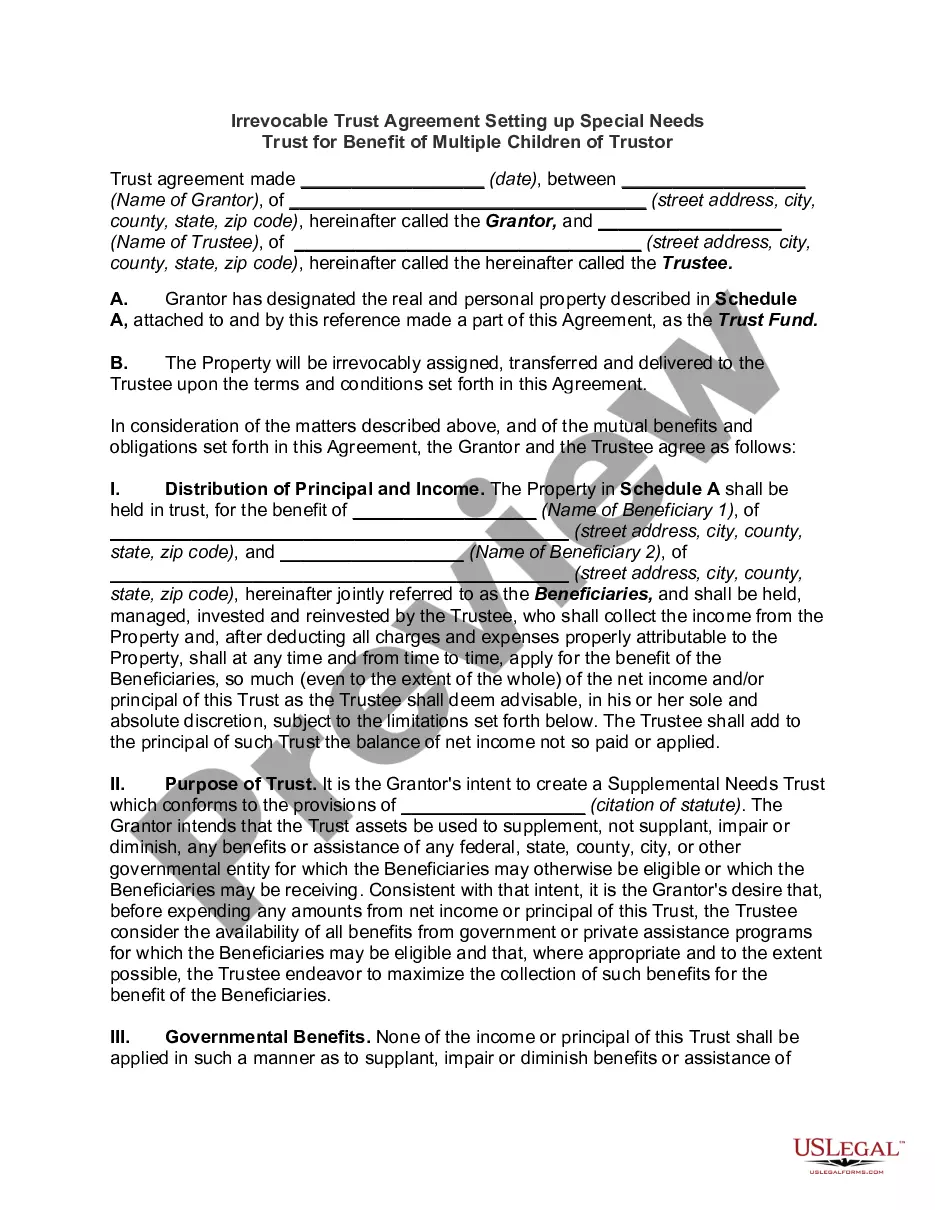
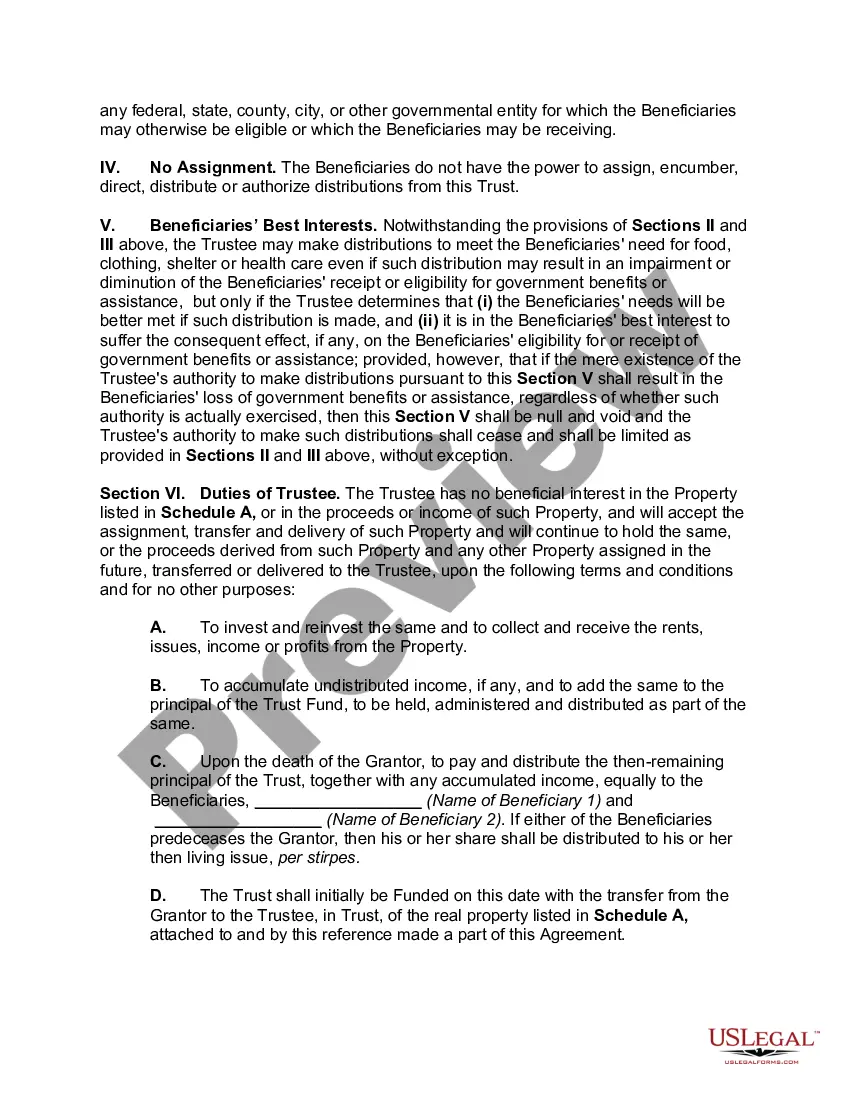
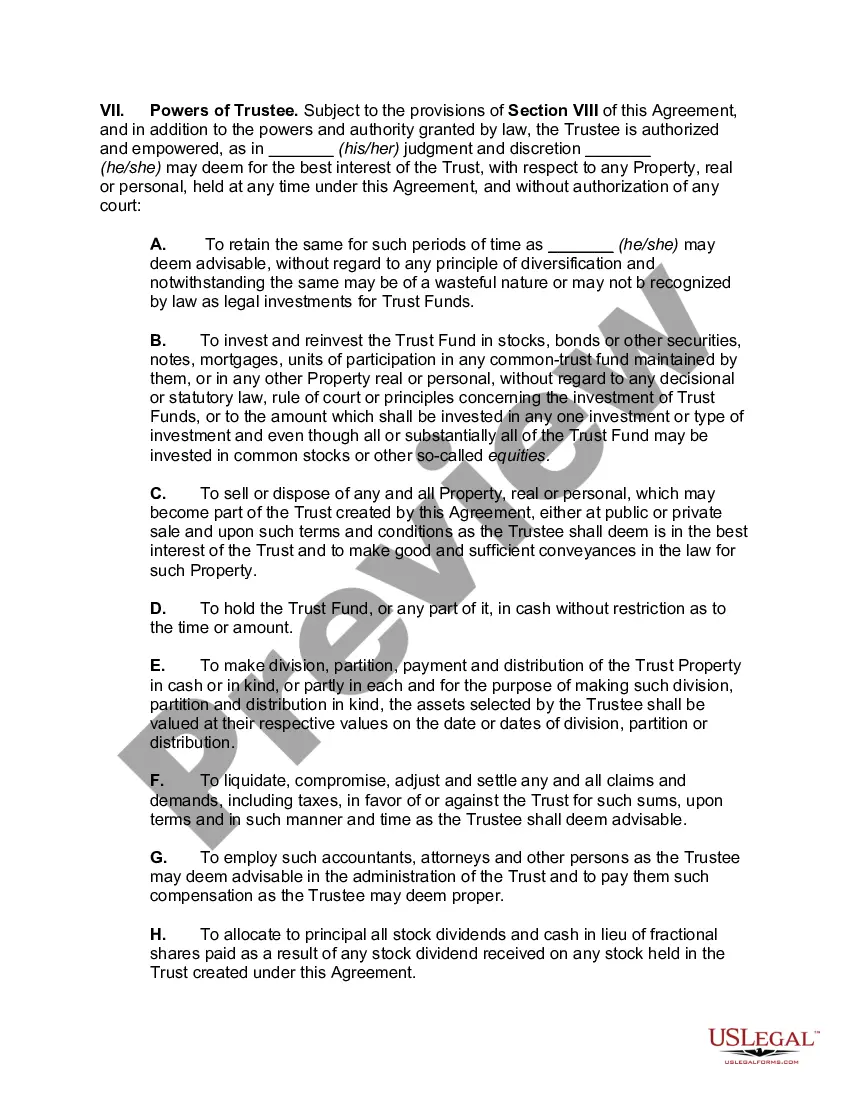
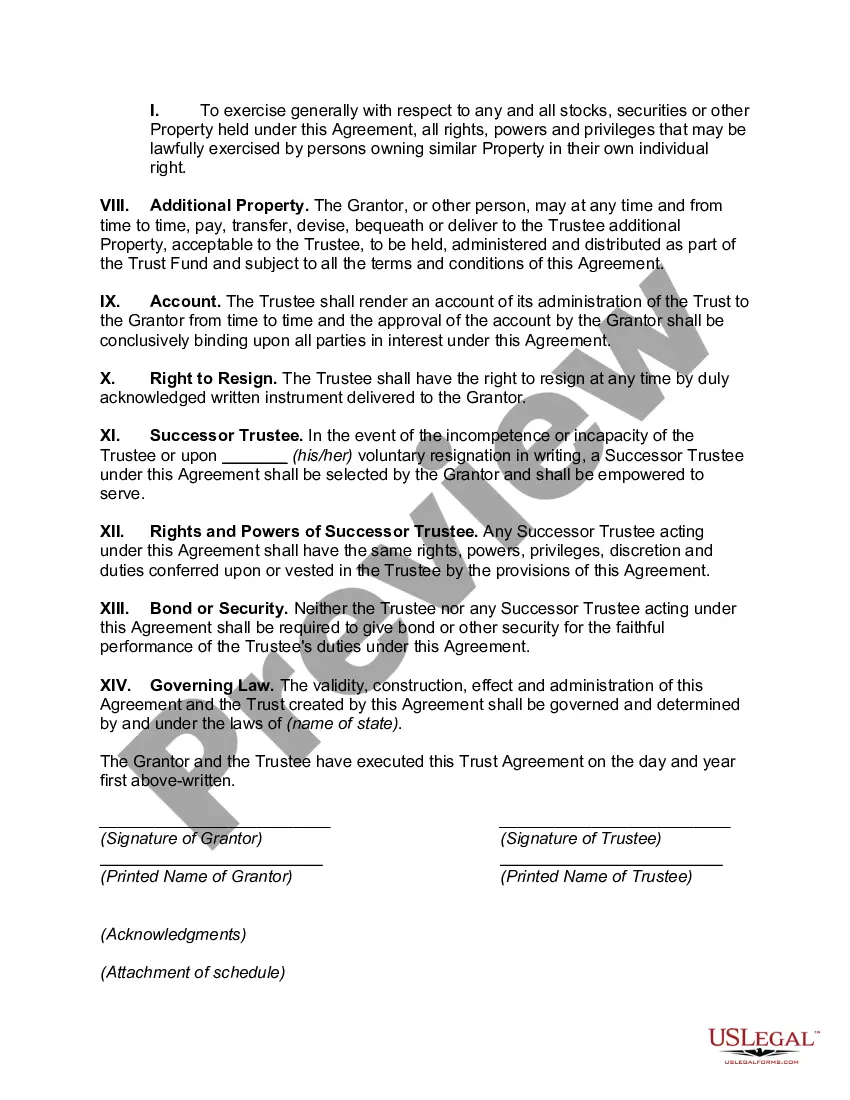
Irrevocable Trust Form For Medicaid Purposes
Description

Get your form ready online
Our built-in tools help you complete, sign, share, and store your documents in one place.
Make edits, fill in missing information, and update formatting in US Legal Forms—just like you would in MS Word.
Download a copy, print it, send it by email, or mail it via USPS—whatever works best for your next step.
Sign and collect signatures with our SignNow integration. Send to multiple recipients, set reminders, and more. Go Premium to unlock E-Sign.
If this form requires notarization, complete it online through a secure video call—no need to meet a notary in person or wait for an appointment.
We protect your documents and personal data by following strict security and privacy standards.

Make edits, fill in missing information, and update formatting in US Legal Forms—just like you would in MS Word.

Download a copy, print it, send it by email, or mail it via USPS—whatever works best for your next step.

Sign and collect signatures with our SignNow integration. Send to multiple recipients, set reminders, and more. Go Premium to unlock E-Sign.

If this form requires notarization, complete it online through a secure video call—no need to meet a notary in person or wait for an appointment.

We protect your documents and personal data by following strict security and privacy standards.
Looking for another form?








Form popularity
FAQ
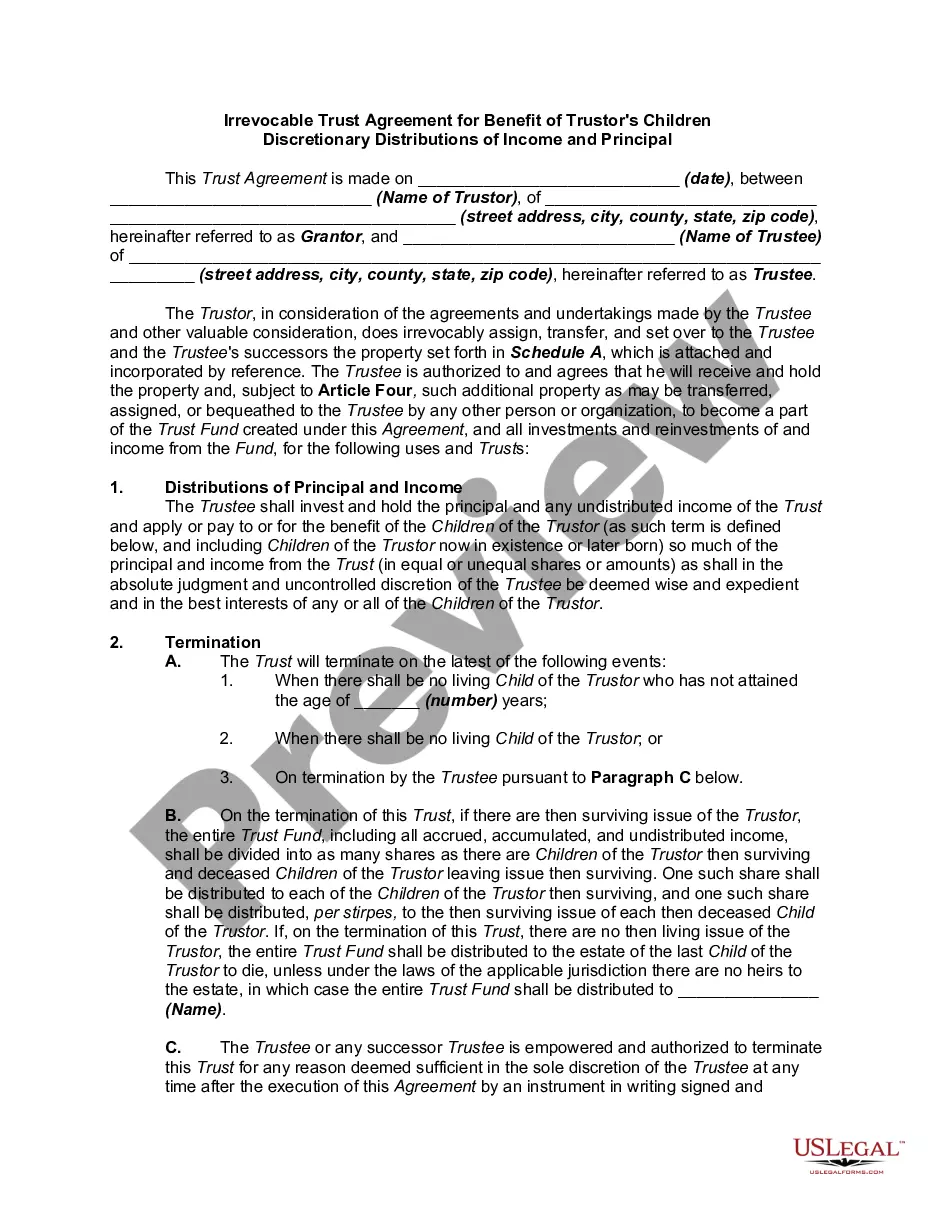
The 5-year rule for irrevocable trusts relates to Medicaid eligibility and the timing of asset transfers. Essentially, if you transfer assets into an irrevocable trust form for Medicaid purposes, you must wait five years before applying for Medicaid to avoid penalties. During this period, Medicaid may consider the trust assets as part of your financial resources. Understanding this rule can help you plan effectively and ensure compliance with Medicaid requirements.
The look-back period for a Medicaid irrevocable trust is five years. During this time, any gift or transfer to an irrevocable trust could affect your eligibility for Medicaid benefits. This makes it important to plan your trust well in advance. Consulting professionals and using a reliable irrevocable trust form for Medicaid purposes can ease this planning process.
Certain assets are exempt from Medicaid, including your primary residence, personal belongings, and some vehicles. Each state has its own regulations, so it's wise to consult local laws and guidelines. Utilizing an irrevocable trust form for Medicaid purposes can also help manage how assets are categorized and protected, allowing you to retain some resources while applying for benefits.
Yes, irrevocable trusts can offer protection from Medicaid, as they remove assets from the individual's ownership. When properly established, an irrevocable trust can help shield your assets from being counted for Medicaid eligibility. However, it is important to follow Medicaid rules and use the correct irrevocable trust form for Medicaid purposes to ensure that your assets remain protected.
The look-back period for a Medicaid irrevocable trust is typically five years. This means that any transfers made to an irrevocable trust within this time frame may impact Medicaid eligibility. It's essential to plan accordingly to avoid penalties or delays in receiving benefits. Understanding this period is crucial when considering an irrevocable trust form for Medicaid purposes.
Yes, Medicaid does consider irrevocable trusts as part of the asset evaluation process. When applying for Medicaid benefits, it is important to disclose any irrevocable trusts you have established. These trusts can affect your eligibility, but they may also help you manage your resources effectively. To navigate this complexity, using an irrevocable trust form for Medicaid purposes can simplify the process and protect your assets legally.
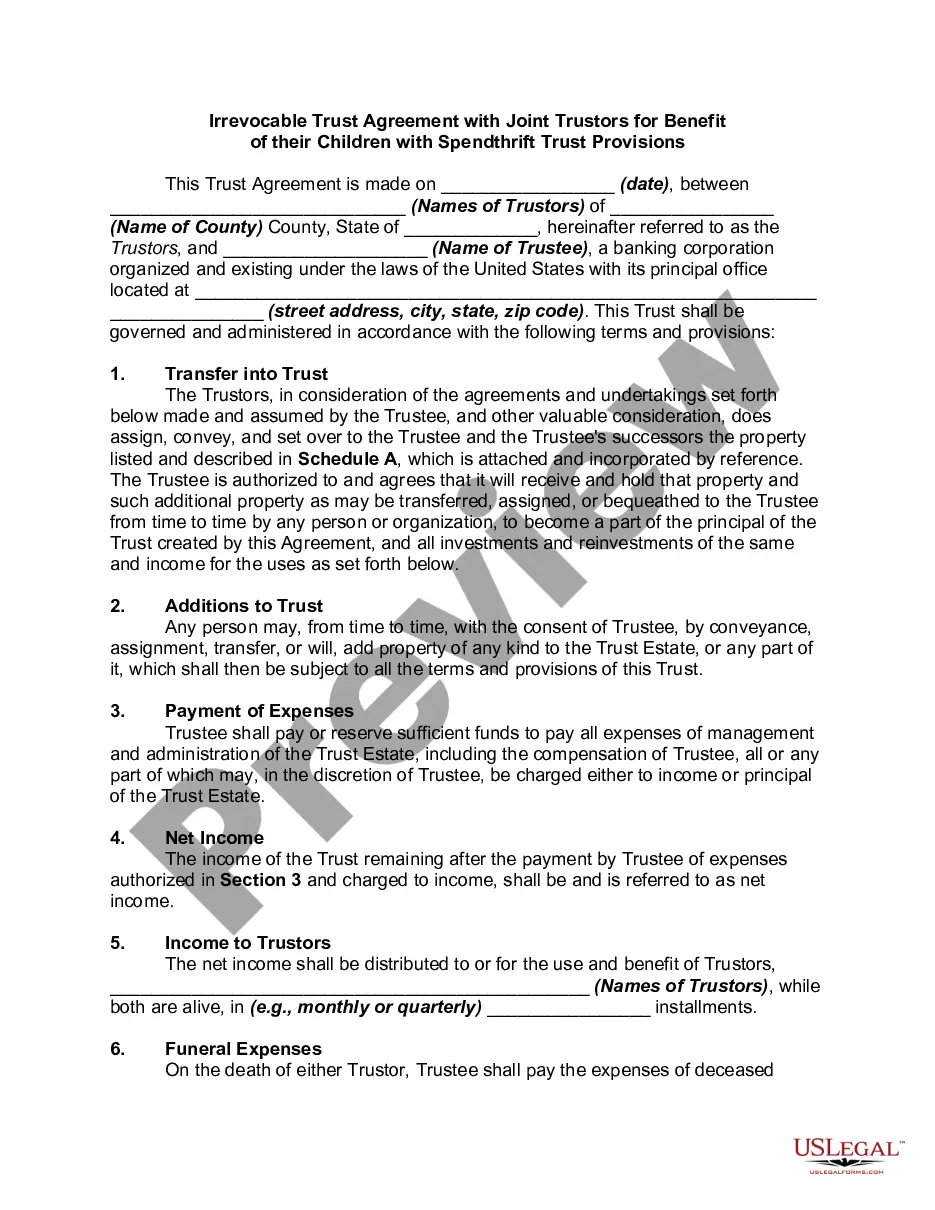
The requirements for a Medicaid trust often include that assets must be transferred to the trust without the ability to reclaim them. Moreover, the trust must meet state-specific criteria regarding income and asset limits. Understanding these requirements is crucial for ensuring the irrevocable trust form for Medicaid purposes meets all legal standards. Consulting with experts can also provide clarity on any additional stipulations that may apply in your state.
While it is possible to set up an irrevocable trust on your own, it is generally advisable to seek professional guidance. Using a template or online service can simplify the process, but legal complexities may arise. For the best outcome, consider enlisting the help of an attorney experienced in trusts to ensure compliance with legal requirements. This approach helps make sure that your irrevocable trust form for Medicaid purposes serves its intended function and meets all regulations.
Filing your irrevocable trust typically involves submitting it to the appropriate state court or local probate office depending on your location. It's essential to check if additional state-specific procedures are necessary, as they can vary. Consulting with a legal professional can help you navigate this process and ensure your irrevocable trust form for Medicaid purposes is properly recorded. Additionally, some documents may need to be filed with financial institutions or other entities.
People often choose an irrevocable trust to protect their assets while qualifying for Medicaid benefits. By transferring assets into this trust, individuals can potentially reduce their countable resources for Medicaid eligibility. Additionally, an irrevocable trust provides peace of mind, knowing that assets will be distributed according to their wishes. This trust can serve as an important financial planning tool in long-term care situations.
