Residuary Estate Meaning
Description

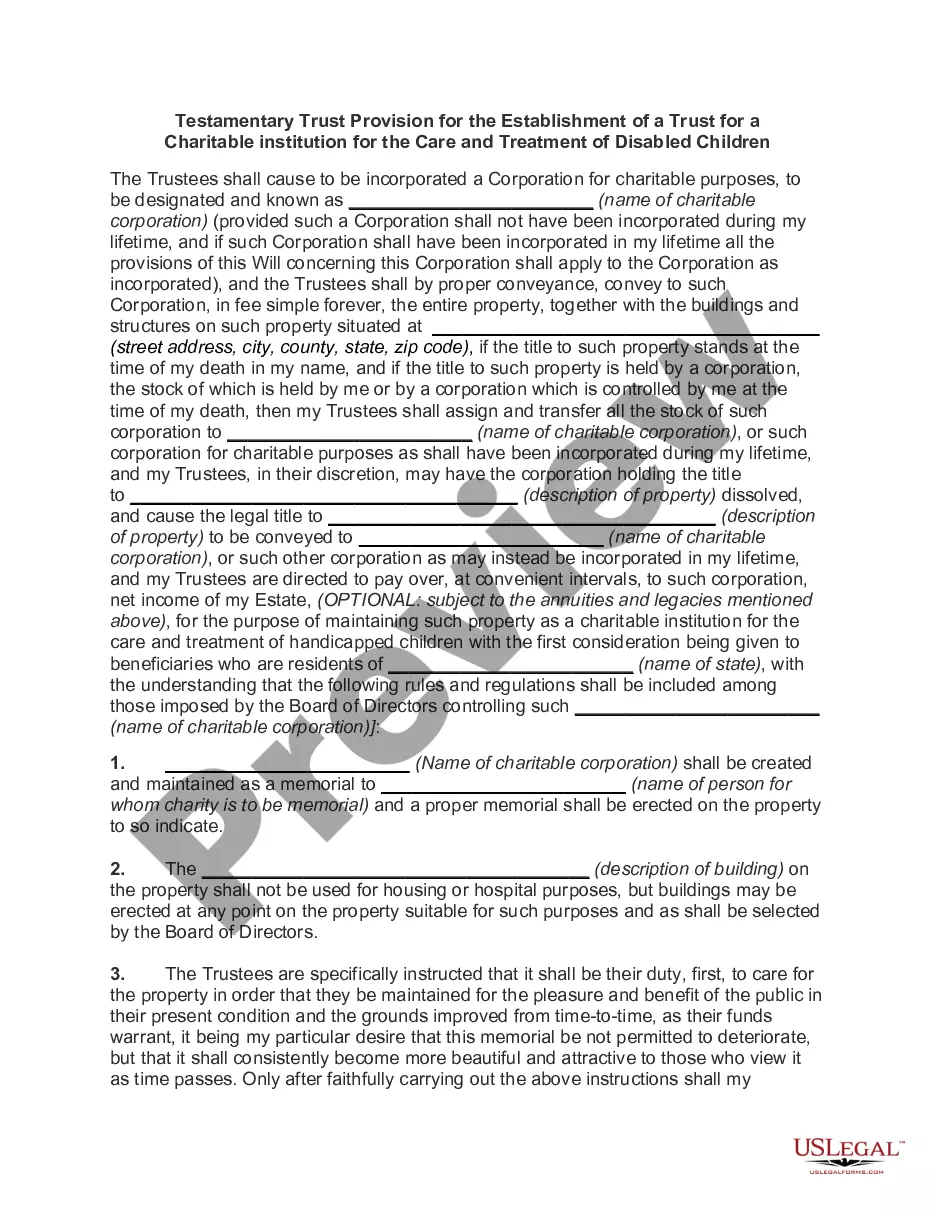
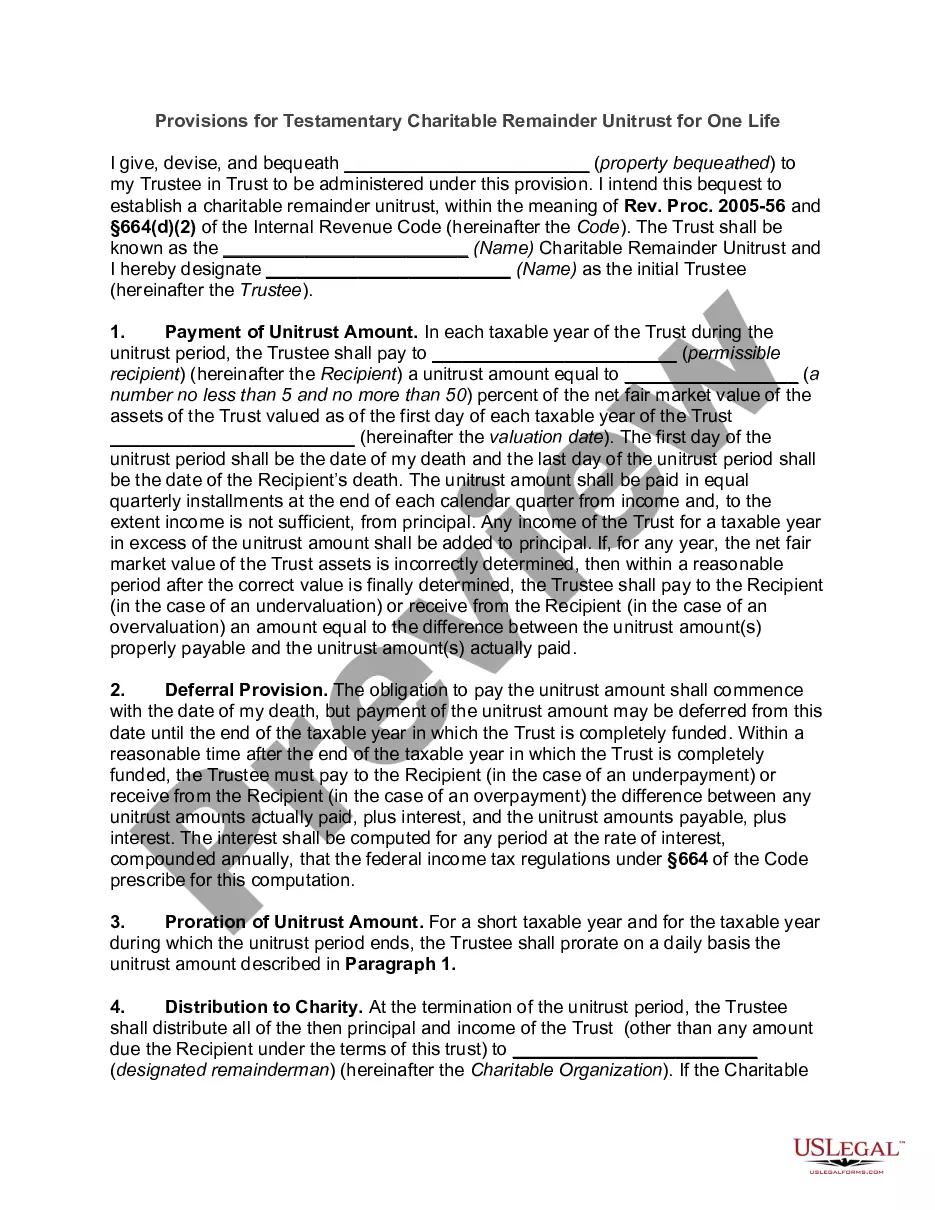

Get your form ready online
Our built-in tools help you complete, sign, share, and store your documents in one place.
Make edits, fill in missing information, and update formatting in US Legal Forms—just like you would in MS Word.
Download a copy, print it, send it by email, or mail it via USPS—whatever works best for your next step.
Sign and collect signatures with our SignNow integration. Send to multiple recipients, set reminders, and more. Go Premium to unlock E-Sign.
If this form requires notarization, complete it online through a secure video call—no need to meet a notary in person or wait for an appointment.
We protect your documents and personal data by following strict security and privacy standards.

Make edits, fill in missing information, and update formatting in US Legal Forms—just like you would in MS Word.

Download a copy, print it, send it by email, or mail it via USPS—whatever works best for your next step.

Sign and collect signatures with our SignNow integration. Send to multiple recipients, set reminders, and more. Go Premium to unlock E-Sign.

If this form requires notarization, complete it online through a secure video call—no need to meet a notary in person or wait for an appointment.

We protect your documents and personal data by following strict security and privacy standards.
Looking for another form?





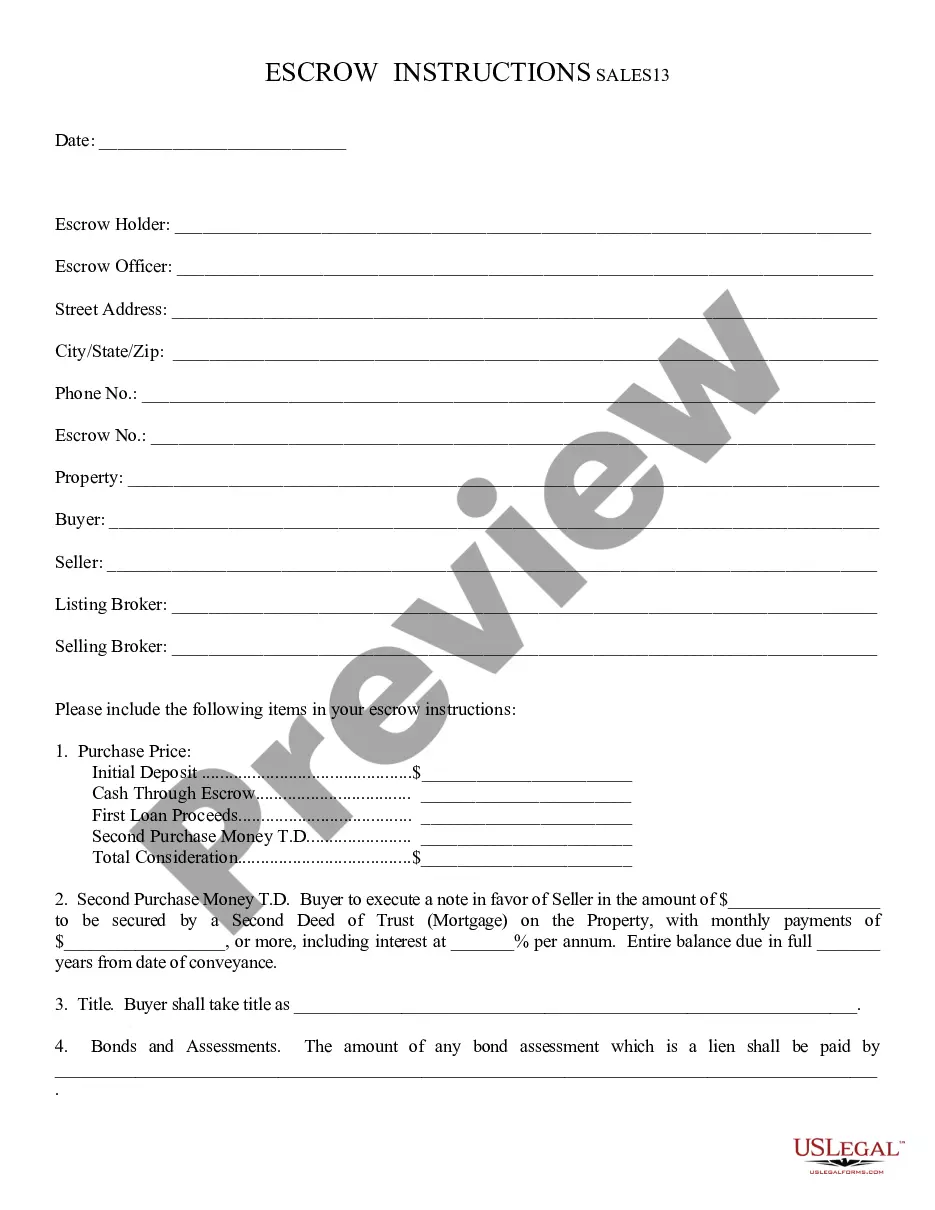




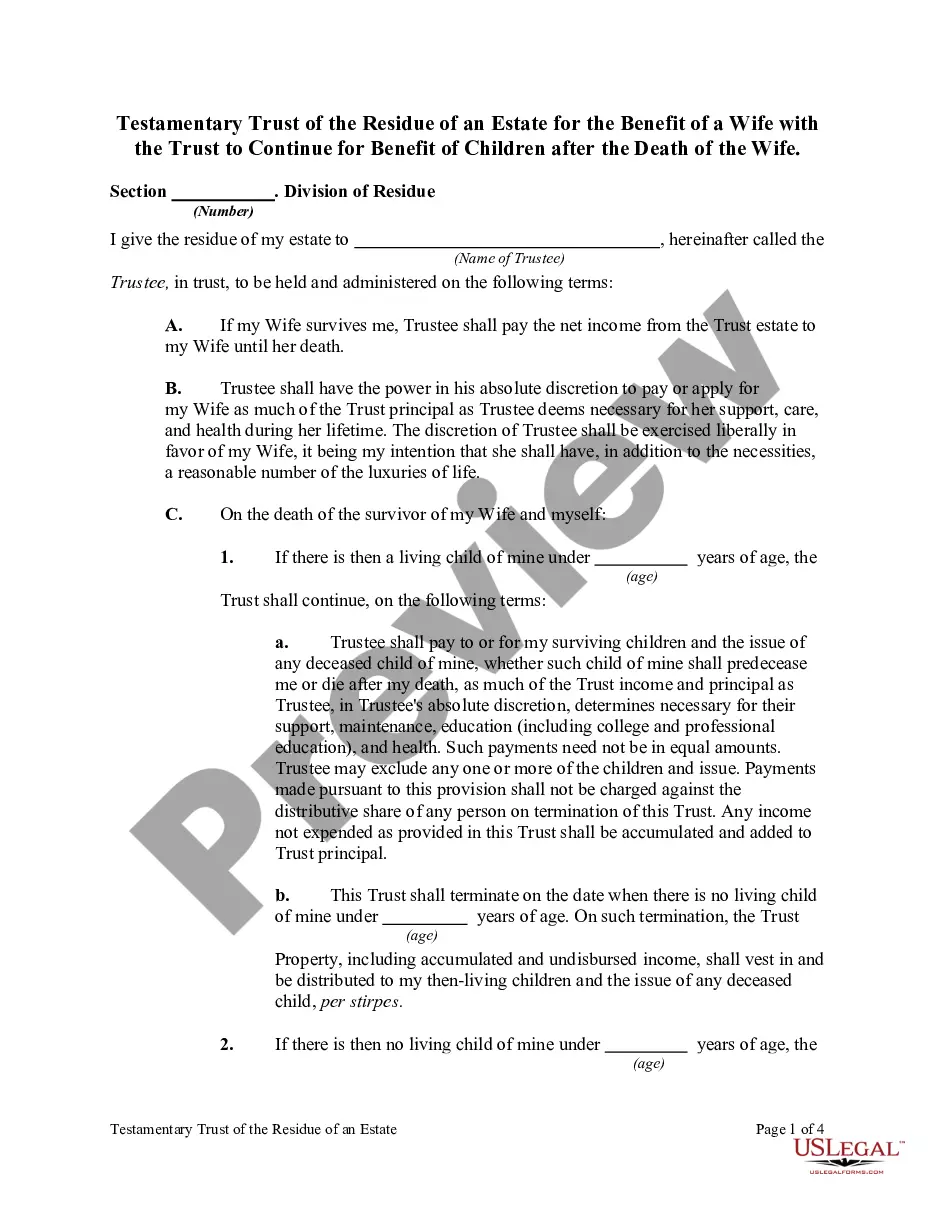
How to fill out Testamentary Trust Of The Residue Of An Estate For The Benefit Of A Wife With The Trust To Continue For Benefit Of Children After The Death Of The Wife?
Utilizing legal templates that adhere to federal and local laws is essential, and the internet provides a multitude of choices.
However, what’s the benefit of spending time searching for the relevant Residuary Estate Meaning example online when the US Legal Forms digital library already consolidates such templates in one location.
US Legal Forms is the premier online legal repository featuring over 85,000 editable templates created by lawyers for any professional and personal situation.
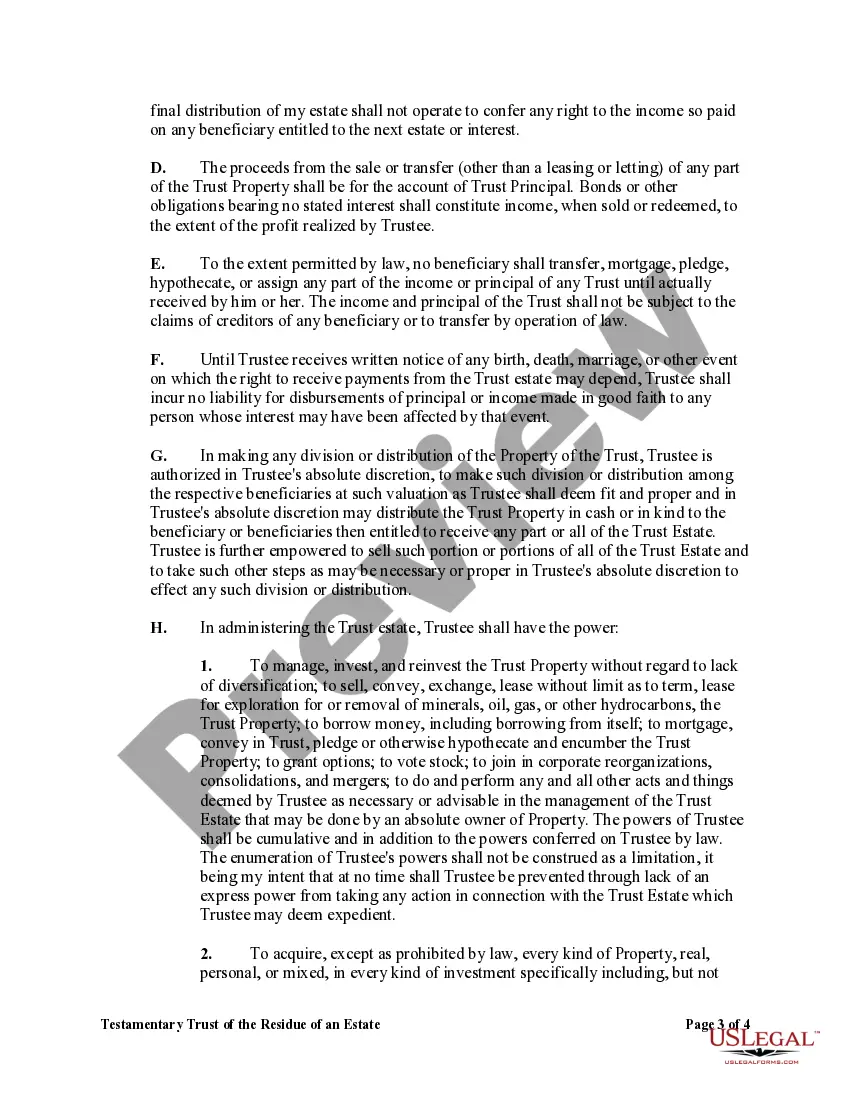
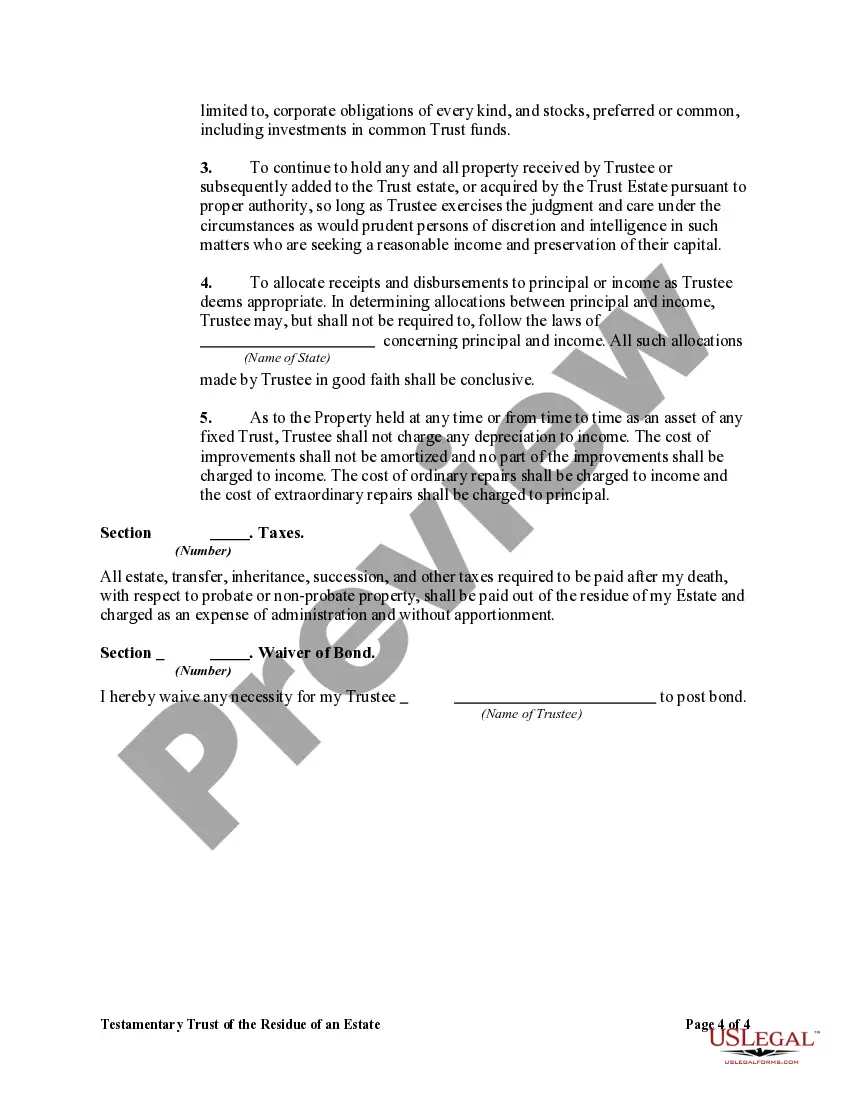
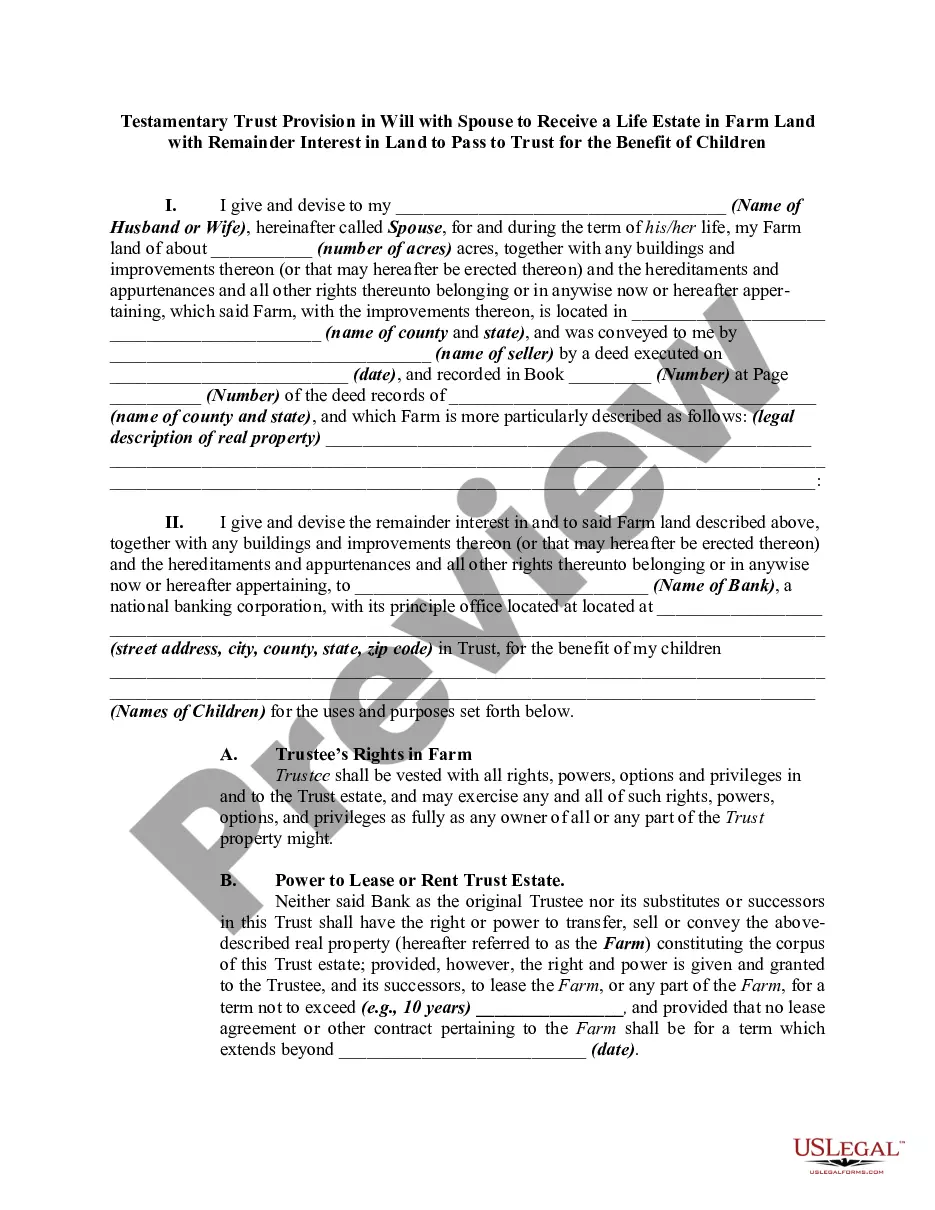
Review the template using the Preview feature or through the text outline to ensure it satisfies your requirements.
- They are simple to navigate with all documents categorized by state and intended use.
- Our specialists stay updated with legal modifications, ensuring that your form is always current and compliant when obtaining a Residuary Estate Meaning from our site.
- Acquiring a Residuary Estate Meaning is fast and straightforward for both existing and new users.
- If you possess an account with an active subscription, Log In and download the document sample you need in the suitable format.
- If you are a newcomer to our site, follow the steps below.
Form popularity
FAQ
In the context of a will, the residuary estate comprises the assets that are not explicitly mentioned or distributed to specific beneficiaries. This portion is typically assigned to one or more beneficiaries to receive the remaining assets after fulfilling all other obligations. Knowing the residuary estate meaning in a will is vital for proper estate management, as it allows for clear directives on how leftover assets should be handled. Using resources like US Legal Forms can help you draft a will that clearly outlines your residuary estate intentions.
Yes, bank accounts can be part of your residuary estate, depending on how they are structured. If an account is solely in your name and does not have a designated beneficiary, it will likely fall into your residuary estate. Understanding the residuary estate meaning ensures that you account for all assets, including bank accounts, in your estate planning. US Legal Forms offers resources to help you navigate these details and secure your financial legacy.
The management of a residuary estate typically falls to the executor named in your will. This individual is responsible for settling your estate, which includes distributing the residuary estate according to your instructions. Knowing the residuary estate meaning allows you to choose the right executor who will handle your affairs diligently. US Legal Forms can guide you in selecting an appropriate executor and drafting a comprehensive will.
Example of residuary estate The residuary estate is the remaining assets after you've settled everything else in your will. So, when the executor has given away everything away or disposed of it for other purposes. In this case, it would be the house and its contents. Residuary Estate: What is it and How to Distribute it - Myend Myend ? residuary-estate-what-is-it-and-ho... Myend ? residuary-estate-what-is-it-and-ho...
There are two main ways to distribute the rest of the residue: Dividing up the residue by percentage or fractional share: If the residue is to go to more than one person or entity, the will may provide that it be divided by percentage or fractional share of the total assets. Each will have the same effect. How to Distribute the Residue of a Decedent's Estate - Dummies.com dummies.com ? article ? estate-planning ? h... dummies.com ? article ? estate-planning ? h...
A residuary beneficiary is a person who receives any property from a will or trust that is not specifically left to another designated beneficiary. The property received by the residuary beneficiary from a will is referred to as the residuary bequest.
EXAMPLE: In her will, Sara, a widow, leaves many different items to many different beneficiaries: books to her daughter, jewelry to a friend, a car to her nephew and so on. She doesn't name alternate beneficiaries for these specific bequests, but she names her daughter as residuary beneficiary. Naming a Residuary Beneficiary - WillMaker willmaker.com ? legal-manual ? wills ? nam... willmaker.com ? legal-manual ? wills ? nam...
A typical residuary clause says: I leave all the rest and residue of my property, both real and personal, of whatever nature and wherever situated, assets, including all real and personal property, tangible or intangible, to: _______________. Residuary Estate Distribution Clause - Altman & Associates altmanassociates.net ? not-to-be-overlooked-the-re... altmanassociates.net ? not-to-be-overlooked-the-re...