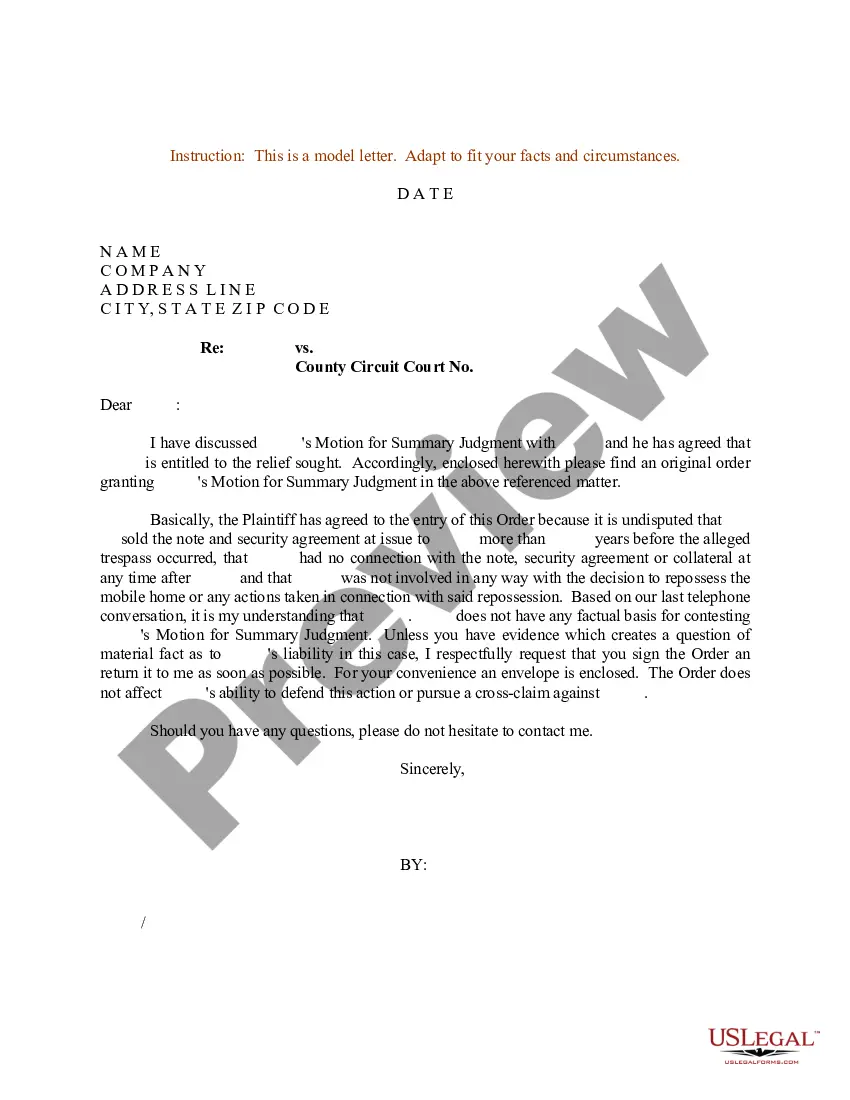
Summary Judgment In Court Foreclosure
Description
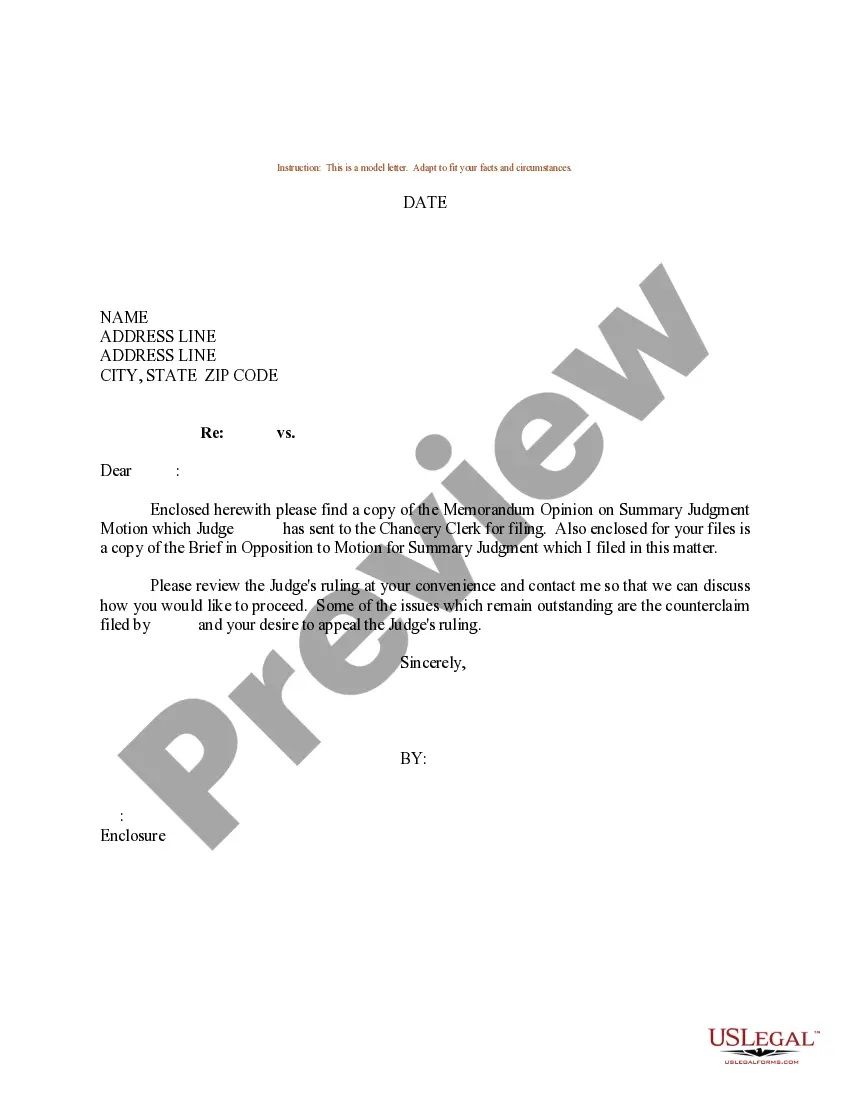
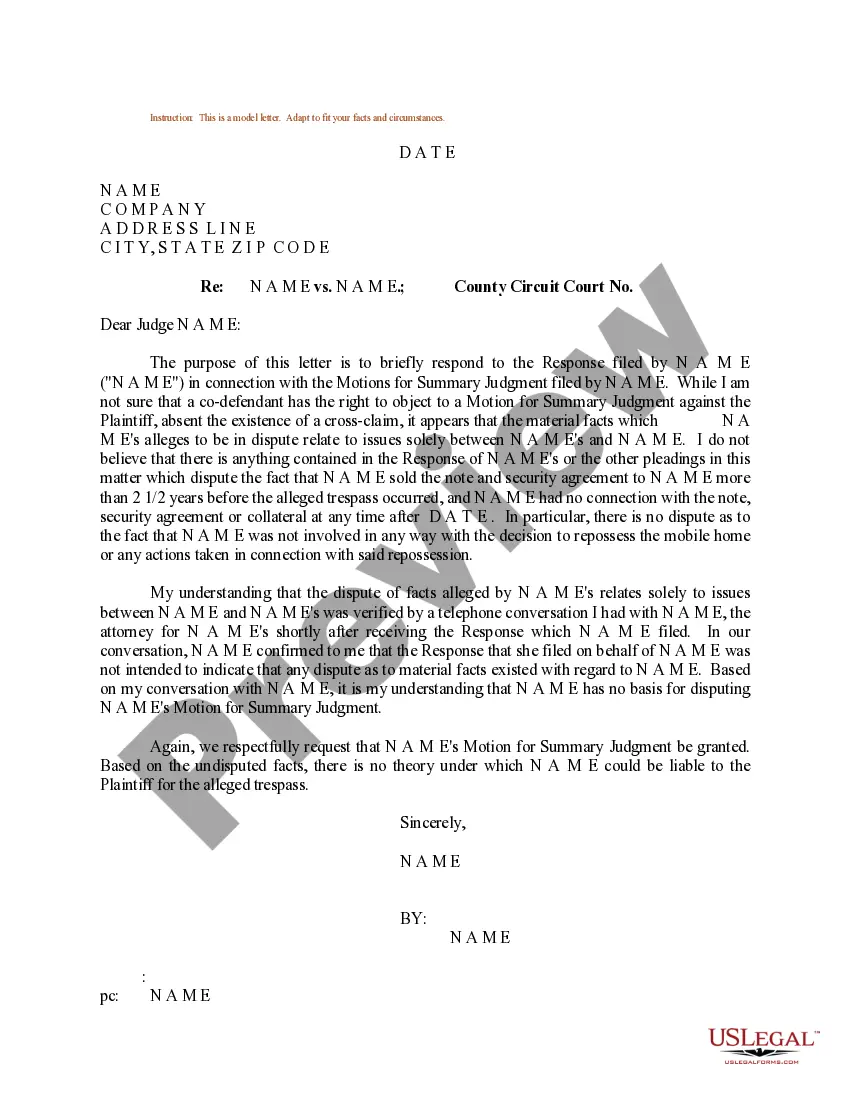
Get your form ready online
Our built-in tools help you complete, sign, share, and store your documents in one place.
Make edits, fill in missing information, and update formatting in US Legal Forms—just like you would in MS Word.
Download a copy, print it, send it by email, or mail it via USPS—whatever works best for your next step.
Sign and collect signatures with our SignNow integration. Send to multiple recipients, set reminders, and more. Go Premium to unlock E-Sign.
If this form requires notarization, complete it online through a secure video call—no need to meet a notary in person or wait for an appointment.
We protect your documents and personal data by following strict security and privacy standards.

Make edits, fill in missing information, and update formatting in US Legal Forms—just like you would in MS Word.

Download a copy, print it, send it by email, or mail it via USPS—whatever works best for your next step.

Sign and collect signatures with our SignNow integration. Send to multiple recipients, set reminders, and more. Go Premium to unlock E-Sign.

If this form requires notarization, complete it online through a secure video call—no need to meet a notary in person or wait for an appointment.

We protect your documents and personal data by following strict security and privacy standards.
Looking for another form?
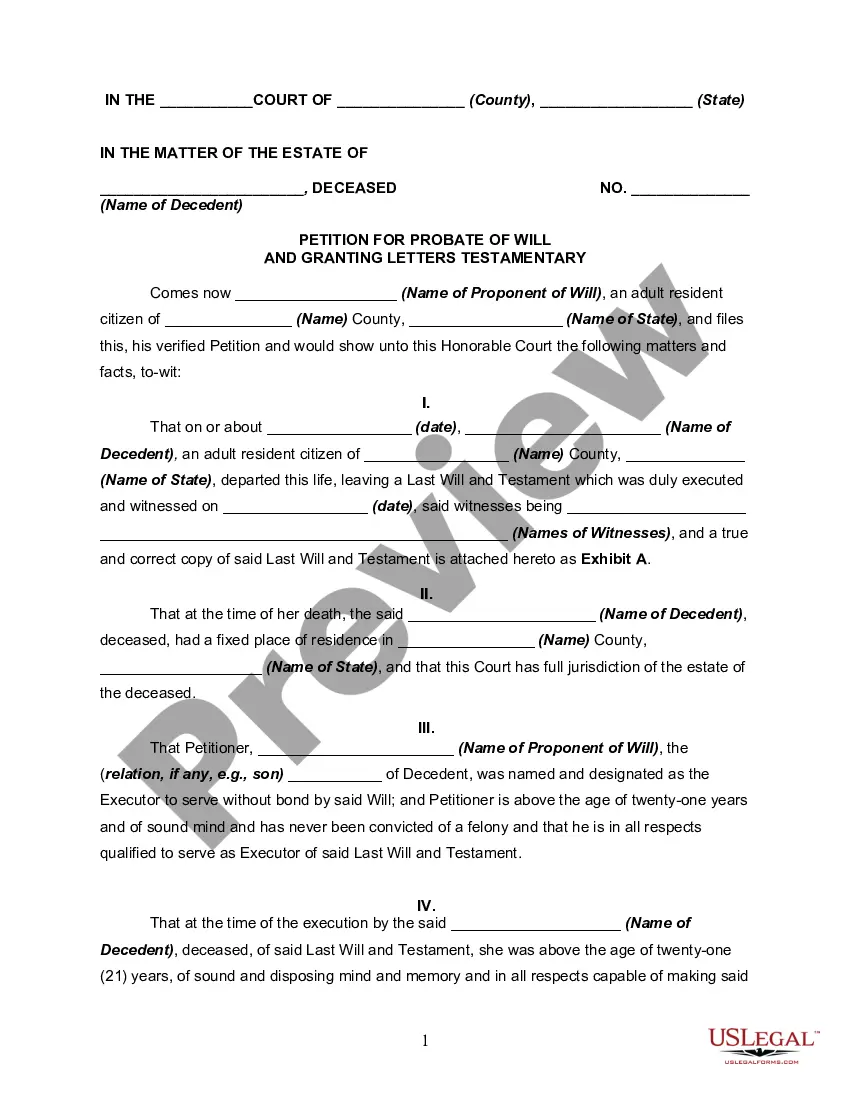





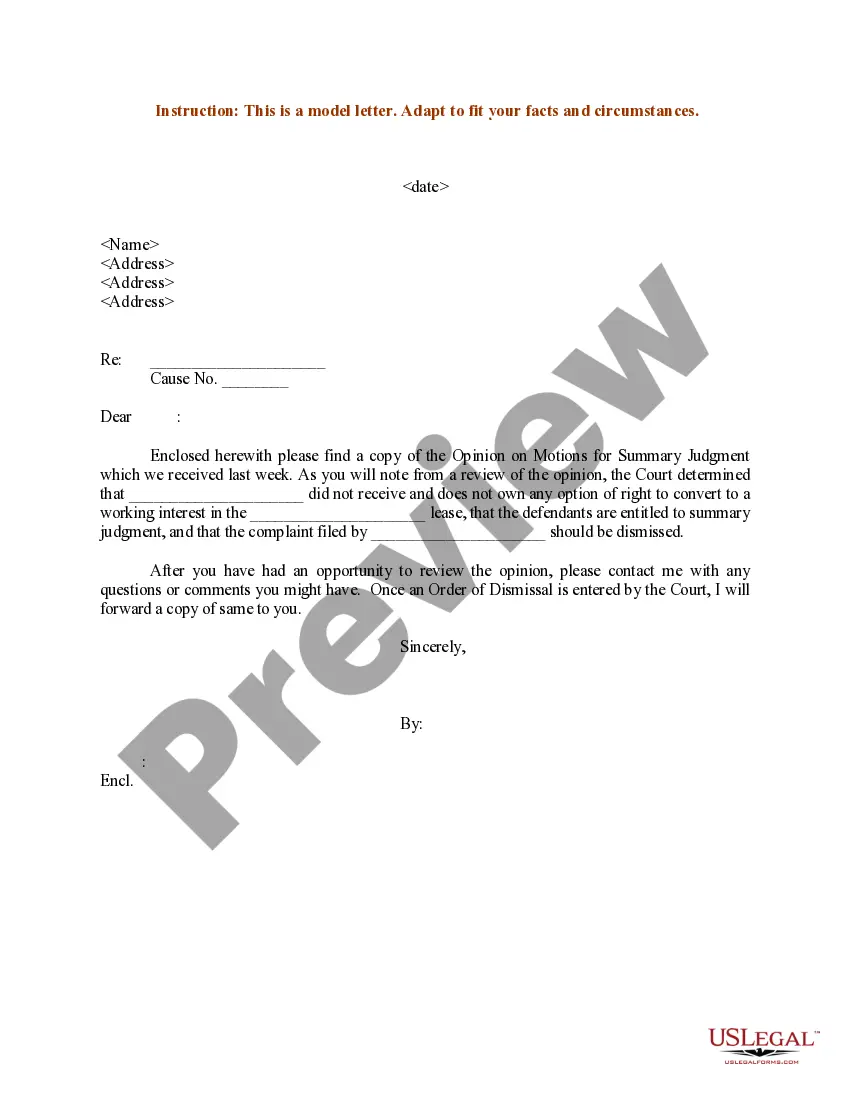
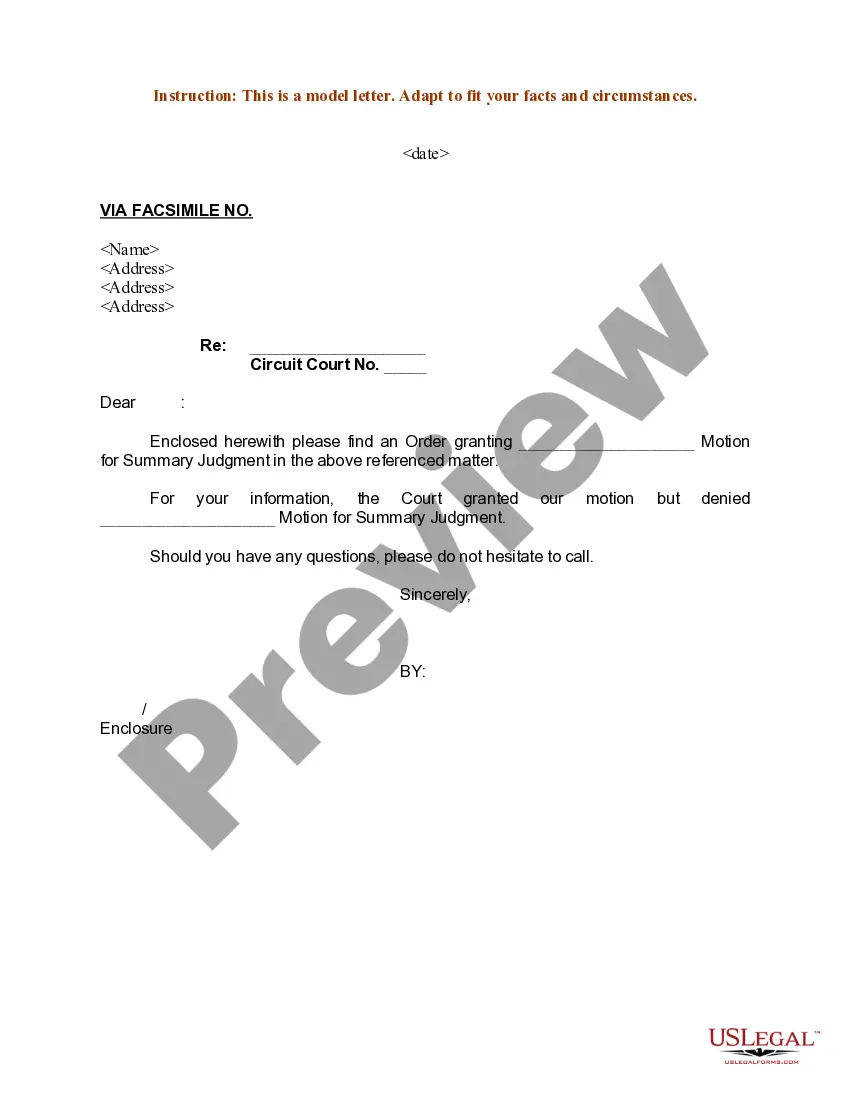
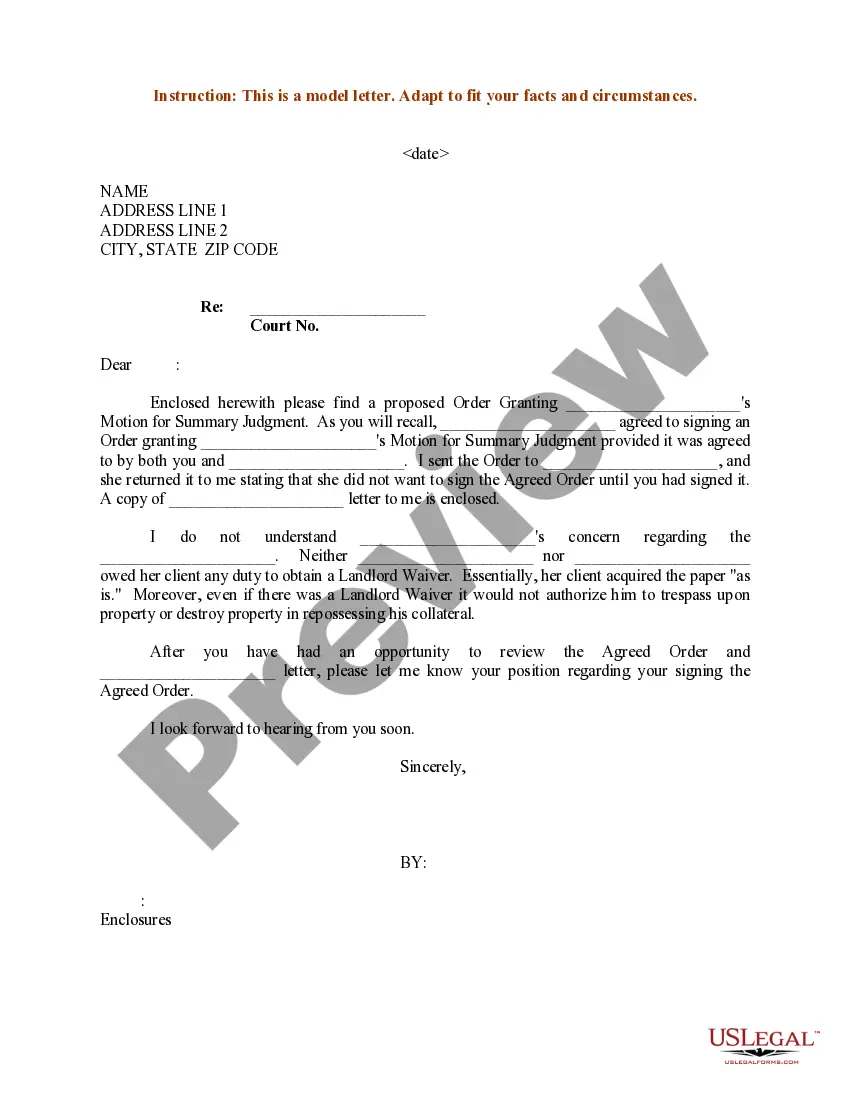
How to fill out Sample Letter For Motion For Summary Judgment?
Getting a go-to place to access the most recent and relevant legal samples is half the struggle of dealing with bureaucracy. Finding the right legal papers calls for precision and attention to detail, which explains why it is crucial to take samples of Summary Judgment In Court Foreclosure only from reliable sources, like US Legal Forms. A wrong template will waste your time and delay the situation you are in. With US Legal Forms, you have little to be concerned about. You can access and view all the information concerning the document’s use and relevance for your situation and in your state or county.
Consider the following steps to complete your Summary Judgment In Court Foreclosure:
- Utilize the library navigation or search field to find your sample.
- View the form’s description to see if it suits the requirements of your state and county.
- View the form preview, if available, to ensure the form is definitely the one you are looking for.
- Return to the search and look for the right template if the Summary Judgment In Court Foreclosure does not suit your requirements.
- If you are positive about the form’s relevance, download it.
- If you are a registered customer, click Log in to authenticate and gain access to your picked forms in My Forms.
- If you do not have a profile yet, click Buy now to obtain the template.
- Pick the pricing plan that fits your preferences.
- Go on to the registration to complete your purchase.
- Finalize your purchase by picking a transaction method (credit card or PayPal).
- Pick the file format for downloading Summary Judgment In Court Foreclosure.
- When you have the form on your gadget, you can modify it with the editor or print it and finish it manually.
Get rid of the headache that accompanies your legal documentation. Discover the extensive US Legal Forms library to find legal samples, check their relevance to your situation, and download them immediately.
Form popularity
FAQ
Among other requested forms of relief the Order of Reference (aka OOR or OREF) formally asks the Court to appoint a Referee to determine the amount due on the mortgaged premises. The Referee will report these findings in what is commonly known as the Referee's Oath and Report.
Such redemption shall be made pursuant to the provisions of Rule 39 of the Rules of Court, i.e., by paying the purchase or bid price with interest of 1% per month, and any assessments or taxes which the purchaser may have paid after the purchase with interest thereon at the same rate (Section 28, Rule 39 of the Rules ...
Summary judgment motions do have a timeline for filing and response. First, a summary judgment motion must be on file at least 21 days before it can be heard. (TRCP 166a) Second, any opposing affidavits or written response should be on file no later than 7 days before the hearing. (Id.)
In a Florida foreclosure action, a motion for summary judgment is typically filed by the lender, asking the judge to decide the case in favor of the lender immediately. This would provide the bank to take control of the property without a lengthy trial.
What is an Order of Default? An order of default is a court order saying that one party (usually the plaintiff) has won the case, and the defendant has lost, because the defendant did not participate in the case. The order of default does not settle the issue of how much money is owed.