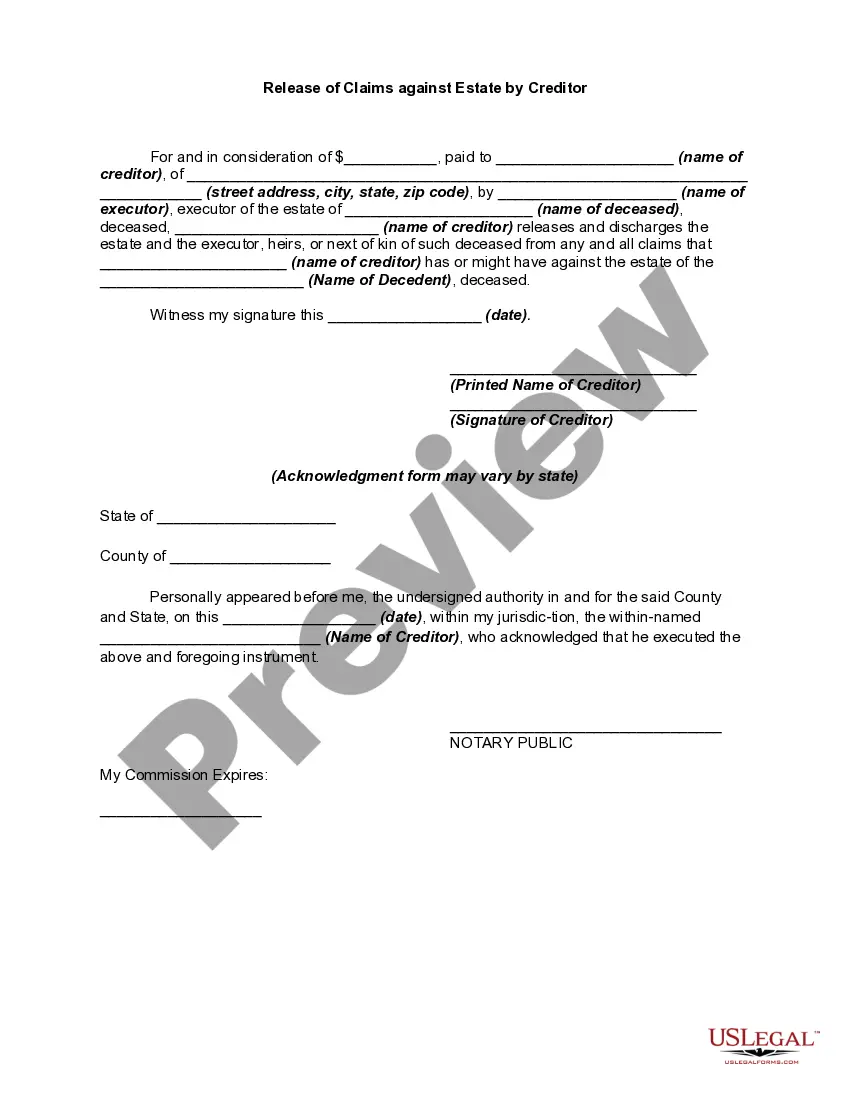
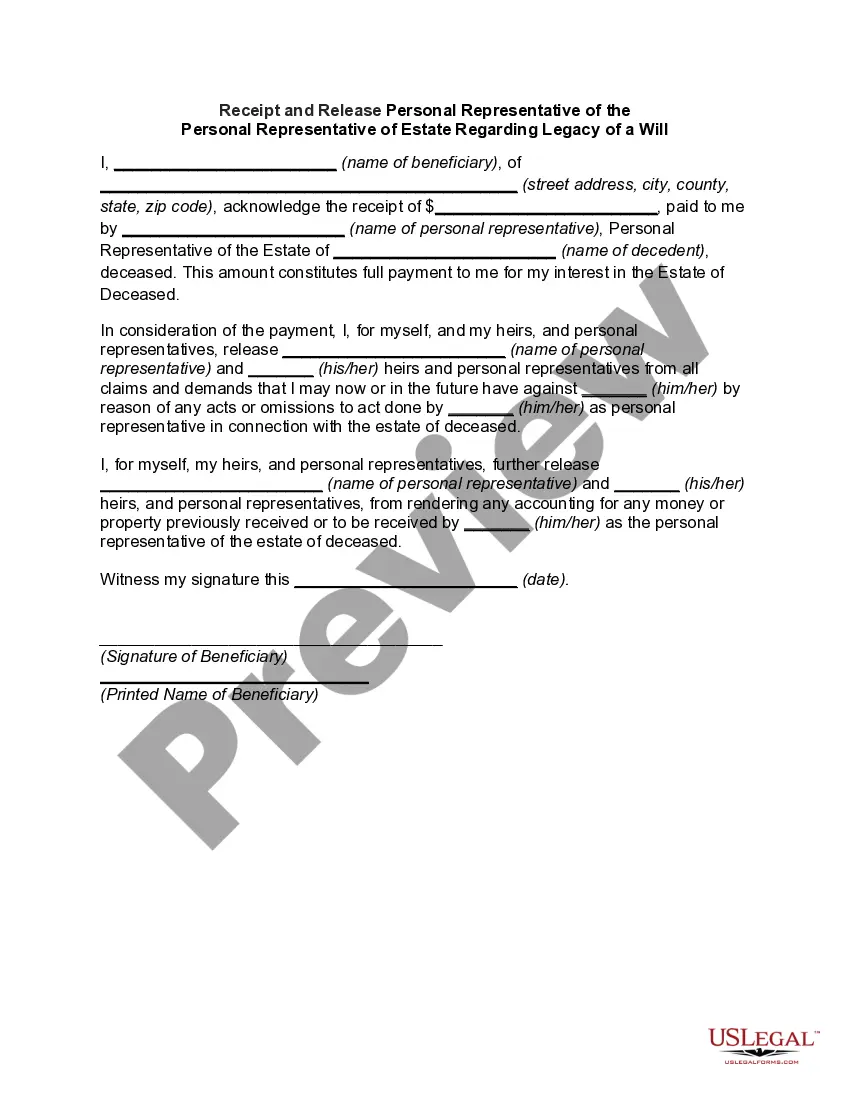
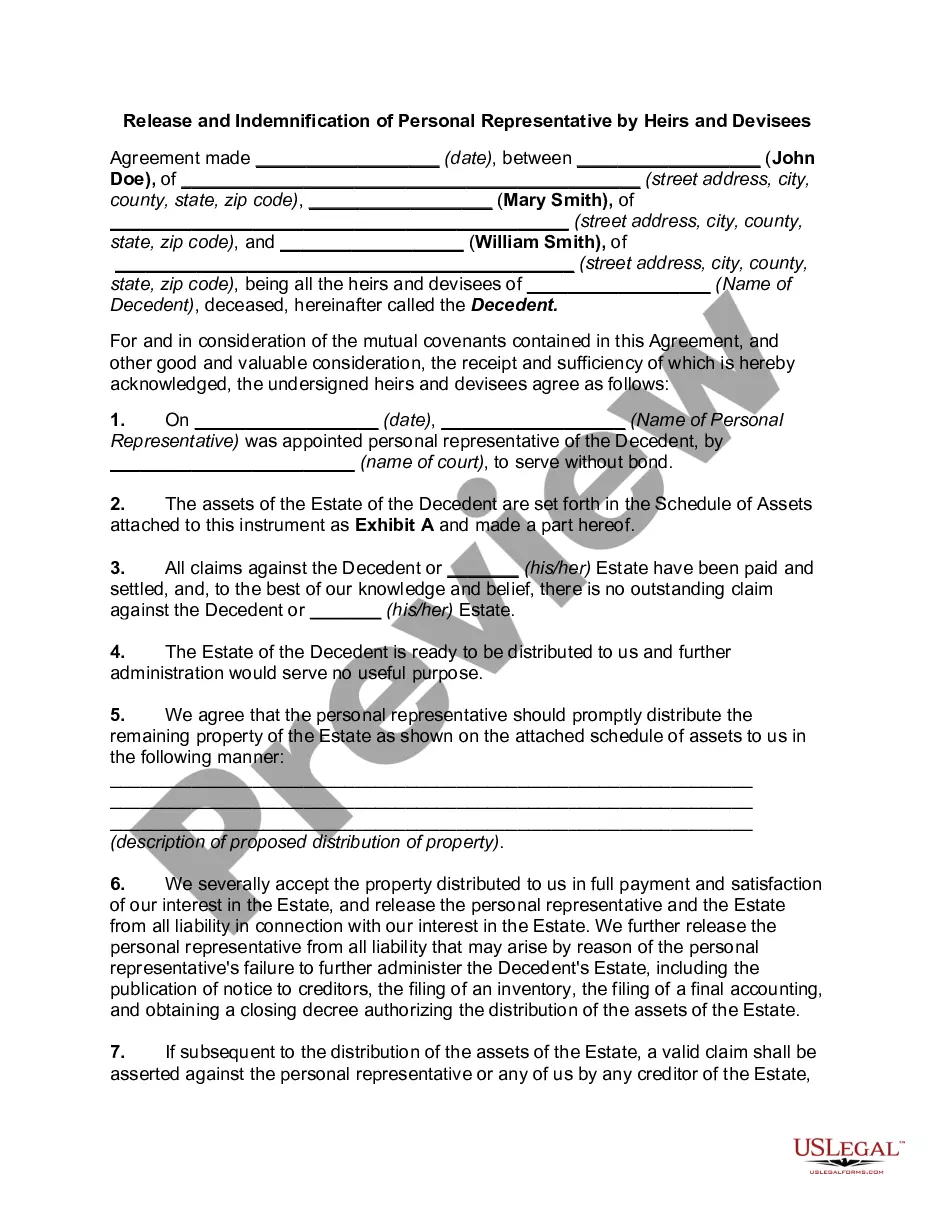
Release Of Executor
Description


Get your form ready online
Our built-in tools help you complete, sign, share, and store your documents in one place.
Make edits, fill in missing information, and update formatting in US Legal Forms—just like you would in MS Word.
Download a copy, print it, send it by email, or mail it via USPS—whatever works best for your next step.
Sign and collect signatures with our SignNow integration. Send to multiple recipients, set reminders, and more. Go Premium to unlock E-Sign.
If this form requires notarization, complete it online through a secure video call—no need to meet a notary in person or wait for an appointment.
We protect your documents and personal data by following strict security and privacy standards.

Make edits, fill in missing information, and update formatting in US Legal Forms—just like you would in MS Word.

Download a copy, print it, send it by email, or mail it via USPS—whatever works best for your next step.

Sign and collect signatures with our SignNow integration. Send to multiple recipients, set reminders, and more. Go Premium to unlock E-Sign.

If this form requires notarization, complete it online through a secure video call—no need to meet a notary in person or wait for an appointment.

We protect your documents and personal data by following strict security and privacy standards.
Looking for another form?
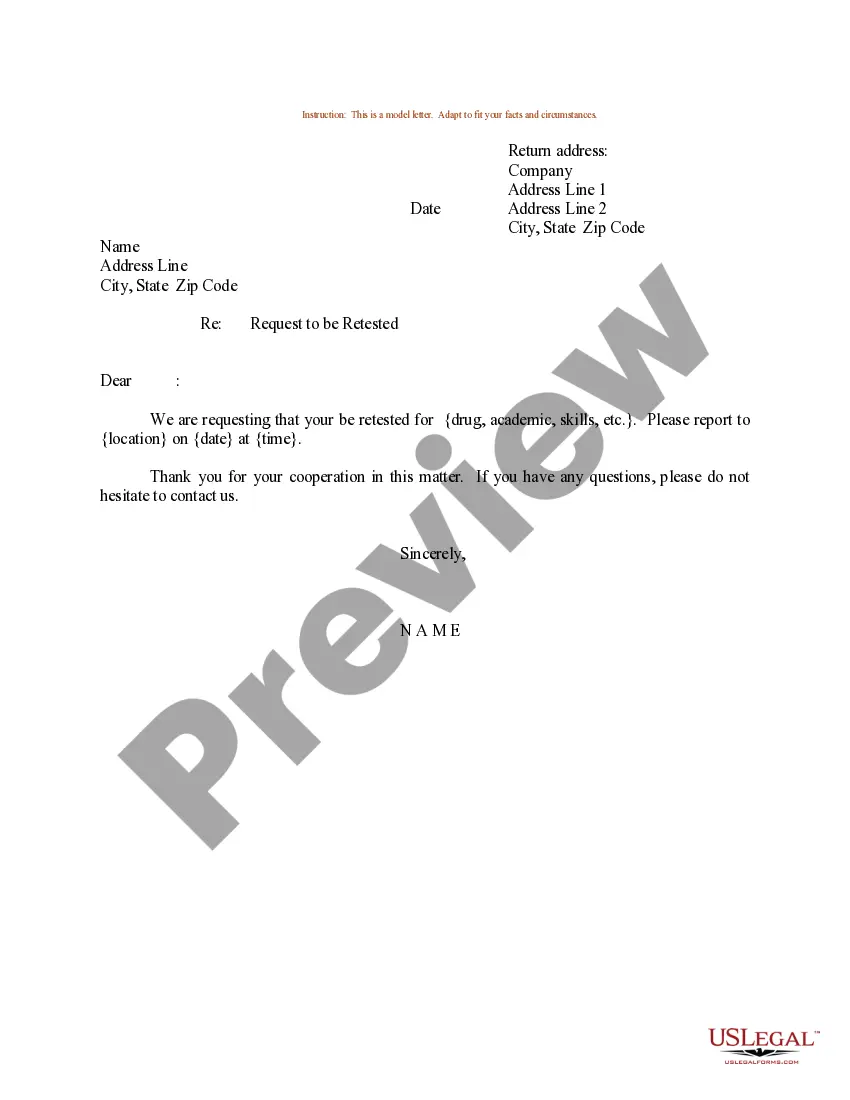
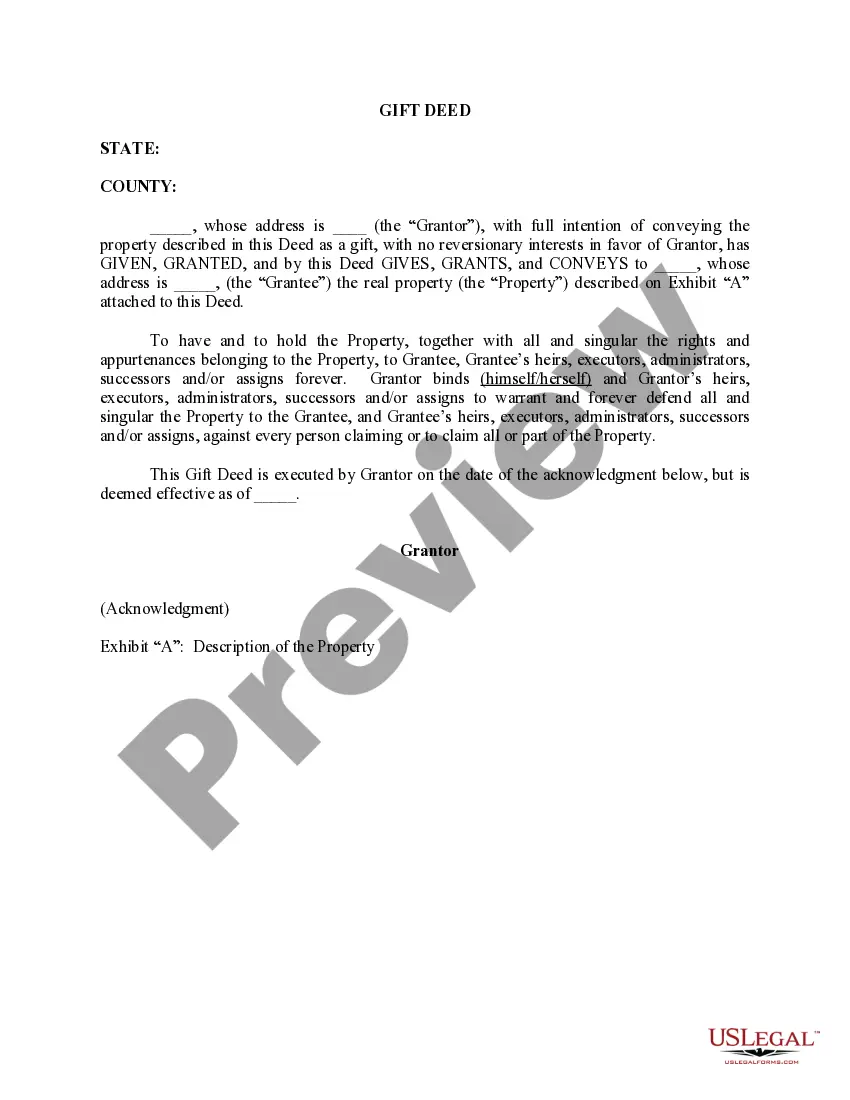

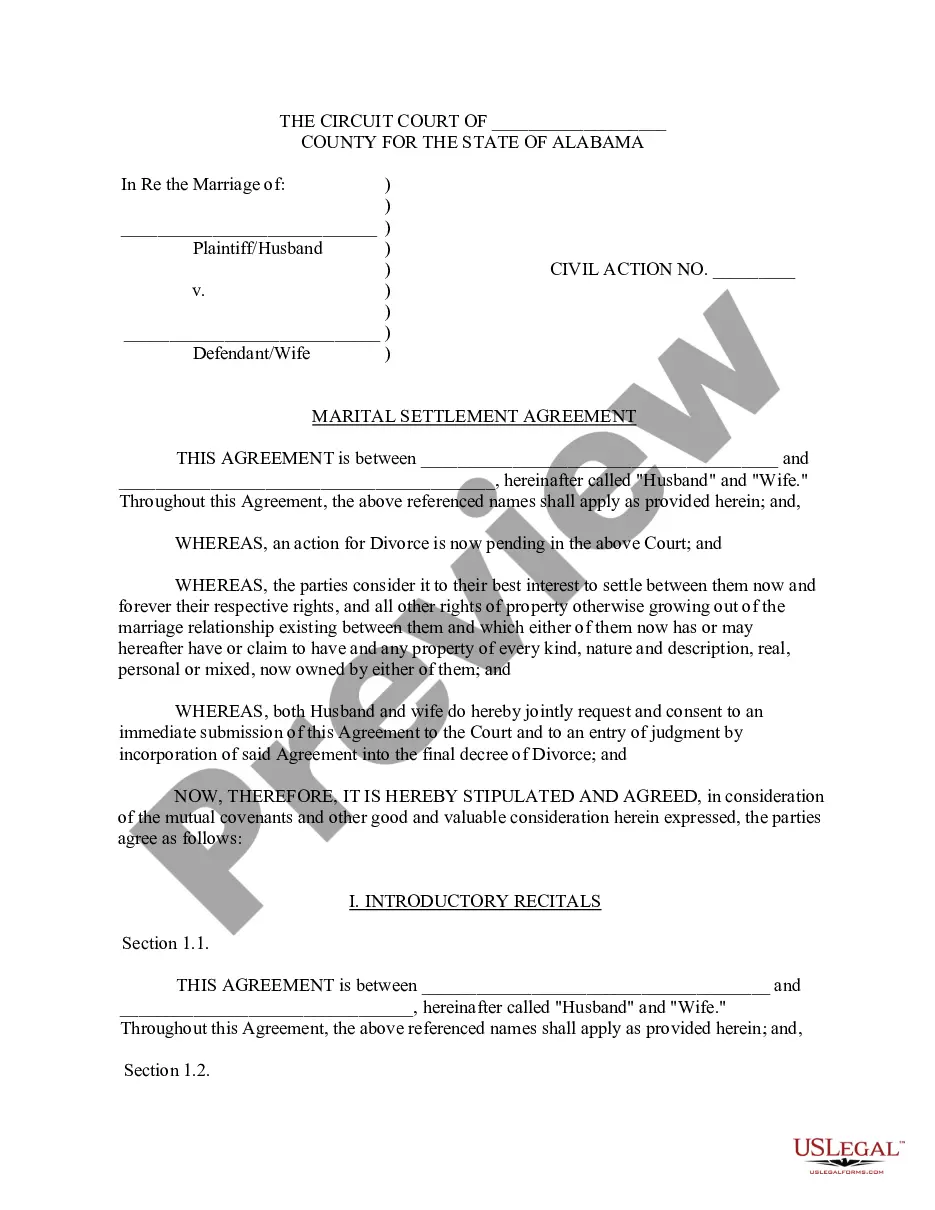

How to fill out Release And Exoneration Of Executor On Distribution To Beneficiary Of Will And Waiver Of Citation Of Final Settlement?
Accessing legal templates that comply with federal and regional laws is a matter of necessity, and the internet offers many options to pick from. But what’s the point in wasting time looking for the right Release Of Executor sample on the web if the US Legal Forms online library already has such templates collected in one place?
US Legal Forms is the greatest online legal library with over 85,000 fillable templates drafted by attorneys for any business and life scenario. They are simple to browse with all documents grouped by state and purpose of use. Our professionals keep up with legislative changes, so you can always be confident your paperwork is up to date and compliant when getting a Release Of Executor from our website.
Getting a Release Of Executor is easy and quick for both current and new users. If you already have an account with a valid subscription, log in and download the document sample you require in the right format. If you are new to our website, follow the steps below:
- Examine the template utilizing the Preview feature or through the text description to ensure it meets your needs.
- Locate another sample utilizing the search tool at the top of the page if needed.
- Click Buy Now when you’ve found the suitable form and opt for a subscription plan.
- Register for an account or log in and make a payment with PayPal or a credit card.
- Pick the format for your Release Of Executor and download it.
All templates you locate through US Legal Forms are reusable. To re-download and fill out previously purchased forms, open the My Forms tab in your profile. Enjoy the most extensive and easy-to-use legal paperwork service!
Form popularity
FAQ
The executor has authority from the county probate court to act in this role, but that doesn't necessarily mean that the executor has the final say on all decisions regarding the estate. In fact, they're are instead tasked with simply following the guidelines set forth by the will and other estate planning documents.
The role of a trustee is different than the role of an estate executor. An executor manages a deceased person's estate to distribute his or her assets ing to the will. A trustee, on the other hand, is responsible for administering a trust. What Is The Difference Between Executor, Trustee & Guardian? Surprenant & Beneski, PC ? estate-planning Surprenant & Beneski, PC ? estate-planning
If you're the executor, what should you do first? Find the will, secure it, and file it with probate court. Petition to open probate, validate the will, and obtain letters testamentary. Start gathering and securing all your loved one's assets.
If you have a trust and funded it with most of your assets during your lifetime, your successor Trustee will have comparatively more power than your Executor. ?Attorney-in-Fact,? ?Executor? and ?Trustee? are designations for distinct roles in the estate planning process, each with specific powers and limitations.
In the context of an estate, it means the beneficiaries agree to relinquish any claim they may have against the executor. When the estate falls short, however, demanding a release is good practice.