Executor To The Estate
Description
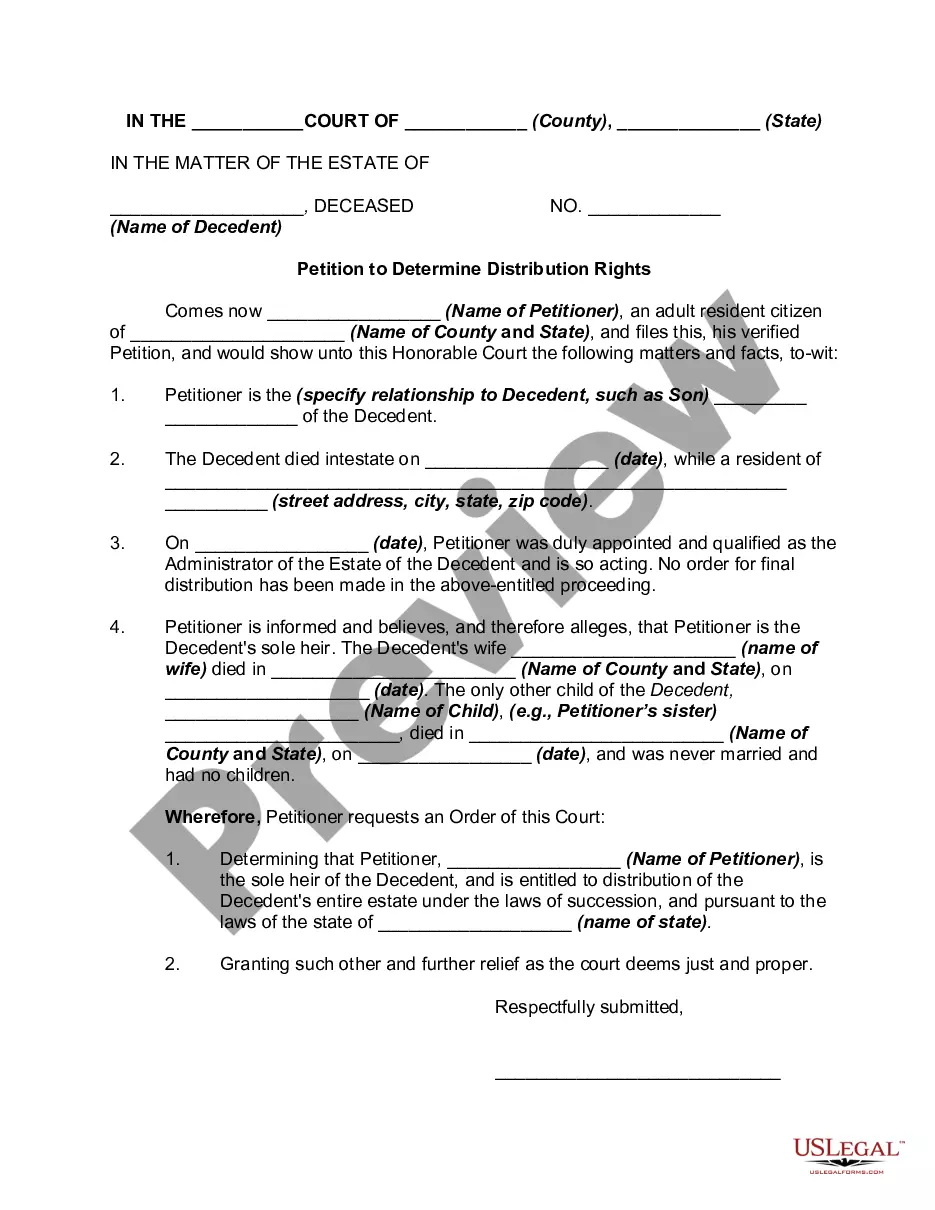
Get your form ready online
Our built-in tools help you complete, sign, share, and store your documents in one place.
Make edits, fill in missing information, and update formatting in US Legal Forms—just like you would in MS Word.
Download a copy, print it, send it by email, or mail it via USPS—whatever works best for your next step.
Sign and collect signatures with our SignNow integration. Send to multiple recipients, set reminders, and more. Go Premium to unlock E-Sign.
If this form requires notarization, complete it online through a secure video call—no need to meet a notary in person or wait for an appointment.
We protect your documents and personal data by following strict security and privacy standards.

Make edits, fill in missing information, and update formatting in US Legal Forms—just like you would in MS Word.

Download a copy, print it, send it by email, or mail it via USPS—whatever works best for your next step.

Sign and collect signatures with our SignNow integration. Send to multiple recipients, set reminders, and more. Go Premium to unlock E-Sign.

If this form requires notarization, complete it online through a secure video call—no need to meet a notary in person or wait for an appointment.

We protect your documents and personal data by following strict security and privacy standards.
Looking for another form?



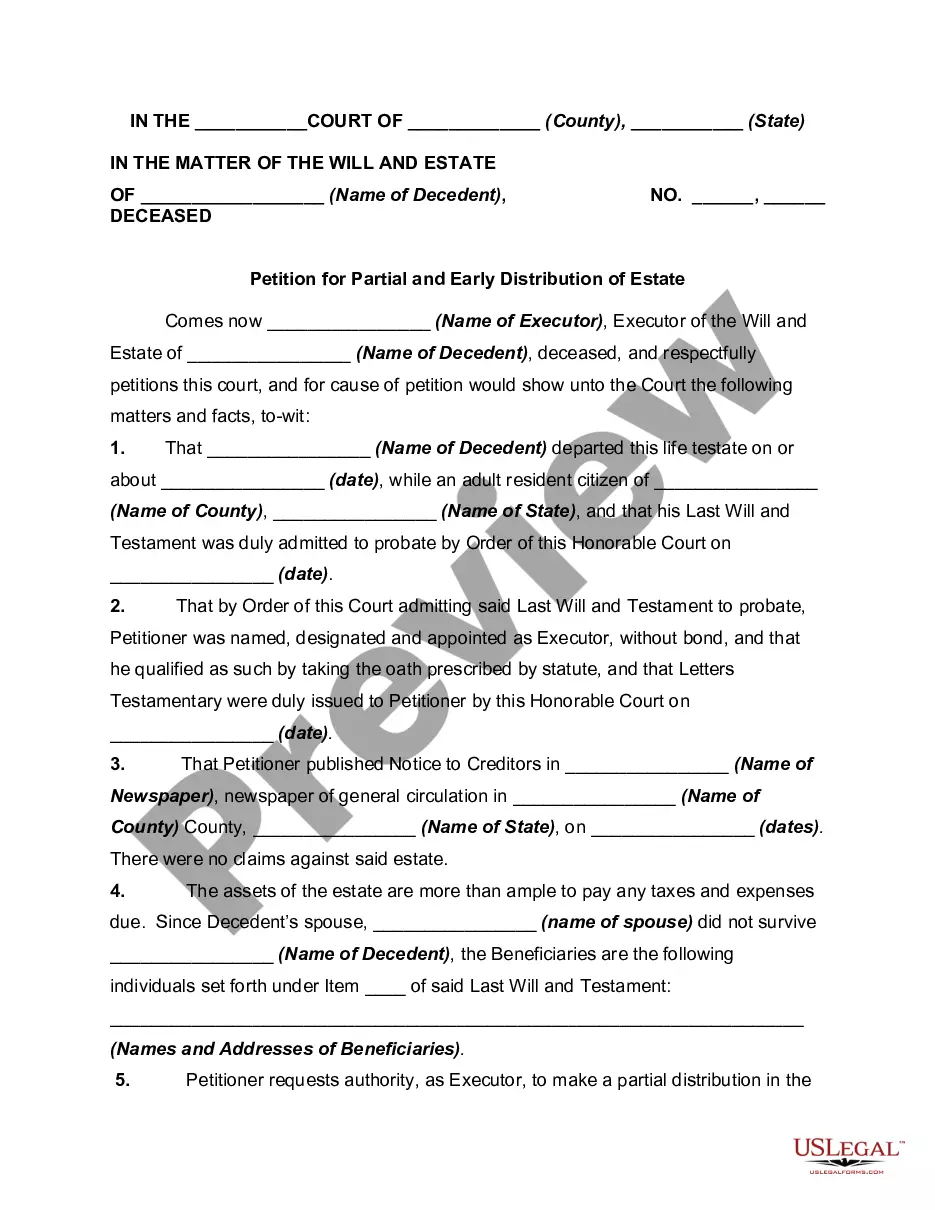
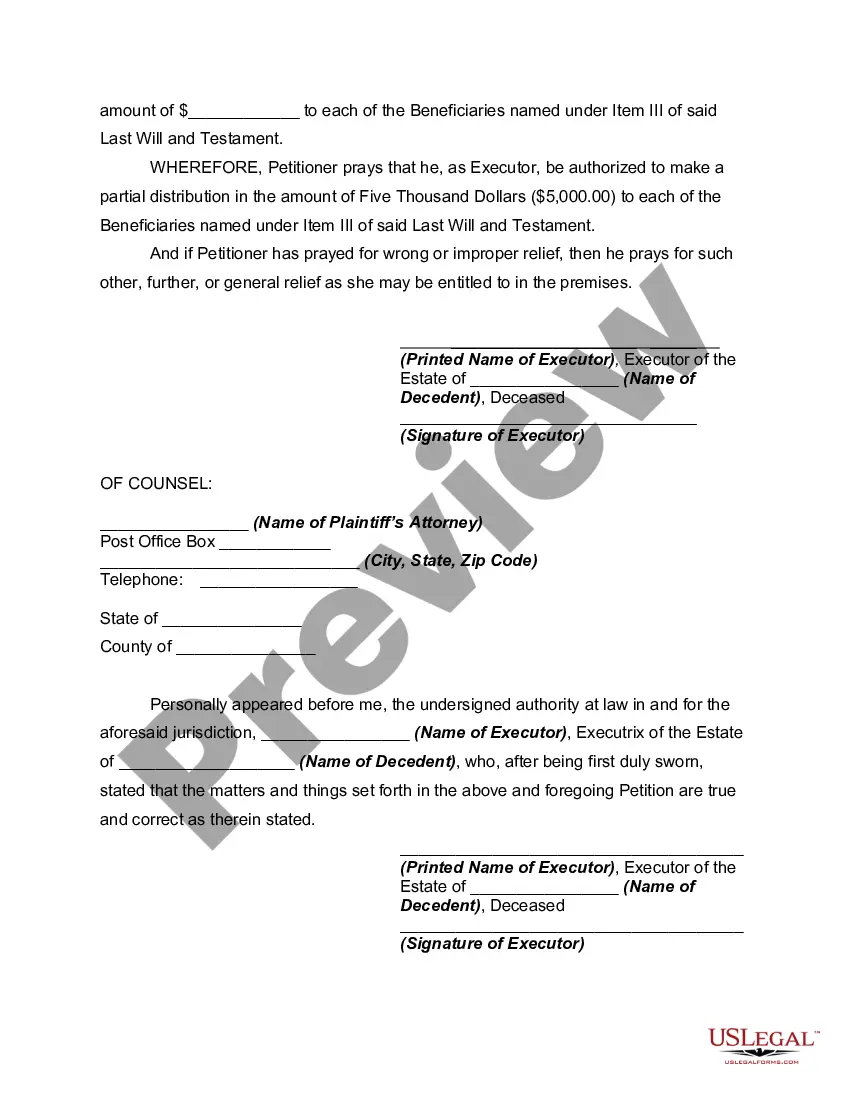
How to fill out Petition For Partial And Early Distribution Of Estate?
- Log into your US Legal Forms account if you're already a member and confirm your subscription status. If it's expired, renew your plan for continued access.
- For new users, browse the extensive online library to find your necessary form. Utilize the Preview mode and descriptions to ensure you select the correct document that meets your legal requirements.
- If the chosen form isn't what you need, you can use the Search feature to explore additional templates that fit your criteria.
- When you find the correct document, click the Buy Now button, choose a suitable subscription plan, and register for an account to access the library.
- Complete your purchase by submitting your payment details using a credit card or PayPal.
- Download the form to your device and access it anytime from the My Forms section of your profile.
US Legal Forms empowers individuals and attorneys to quickly execute legal documents with a robust and easy-to-use library of over 85,000 forms. Whether you need advice or a specific document, this platform offers expert assistance to ensure accuracy and compliance.
Start your journey with US Legal Forms today. Take control of your legal needs as Executor to the estate by accessing our vast library now!
Form popularity
FAQ
Writing a will that designates an executor involves clearly outlining your wishes regarding your assets and naming the individual or professional you trust to manage your estate. Specify the executor's responsibilities and ensure they understand the role they are accepting. For ease and to ensure legality, consider using platforms like US Legal Forms, which provide resources and templates to help you create a comprehensive and binding will.
To make yourself the executor of an estate, you must clearly state your wishes in a legally valid will. This document should identify you as the chosen executor and be signed according to your state’s legal requirements. Remember to communicate your plans to your family, ensuring everyone understands your intentions and the responsibilities that come with being the executor to the estate.
While you are not required to hire a lawyer to become the executor of an estate, having legal guidance can be beneficial. An attorney can help navigate the probate process and ensure compliance with state laws. Additionally, they can assist in managing any disputes among beneficiaries or complexities in the estate, making their support invaluable for first-time executors.
To prove you are the executor of an estate, you will need to present the court-approved will and the letters testamentary issued by the probate court. These documents establish your authority and provide legal backing to your role as executor. It's crucial to keep these documents safe, as they will often be required when dealing with banks and other entities.
Yes, you can change the executor of your will by creating a new will that names a different person as the executor. Simply ensure that the new will is properly signed and witnessed, as required by your state laws. This process will officially update your choice and help maintain your wishes regarding the management of your estate.
To become the executor of an estate, you must be named in the deceased’s will. If you are appointed, you need to file the will in the probate court to start the legal process. After validation by the court, you will receive the authority to manage the estate according to the will's stipulations, stepping into the important role of executor to the estate.
The best person to serve as the executor of a will is someone you trust implicitly and who has strong organizational skills. It's important that this person is capable of managing financial matters and can handle communication with beneficiaries and creditors. Often, people choose family members or close friends; however, professionals like attorneys or financial advisors can also fulfill this role effectively.
As an executor of a will, the first steps involve gathering essential documents, including the will and financial records of the deceased. You should then notify beneficiaries and creditors of your role, ensuring they are aware of your responsibilities. Following this, you will need to initiate the probate process by filing the will with the appropriate court, thereby solidifying your position as executor to the estate.
To serve as executor to the estate, you will require proof of your appointment through the court's probate process. This generally includes the original will and a court document that confirms your status as the executor. Additionally, you may need to provide identification and, in some cases, proof of your relationship to the deceased, especially if there are disputes regarding your role.
To file for executor of an estate, you first need to locate the original will and ascertain its authenticity. Next, you will file a petition for probate in the probate court within the jurisdiction where the deceased lived. It is advisable to submit necessary documents, such as the death certificate and the will, to ensure the court recognizes you as the executor of the estate.