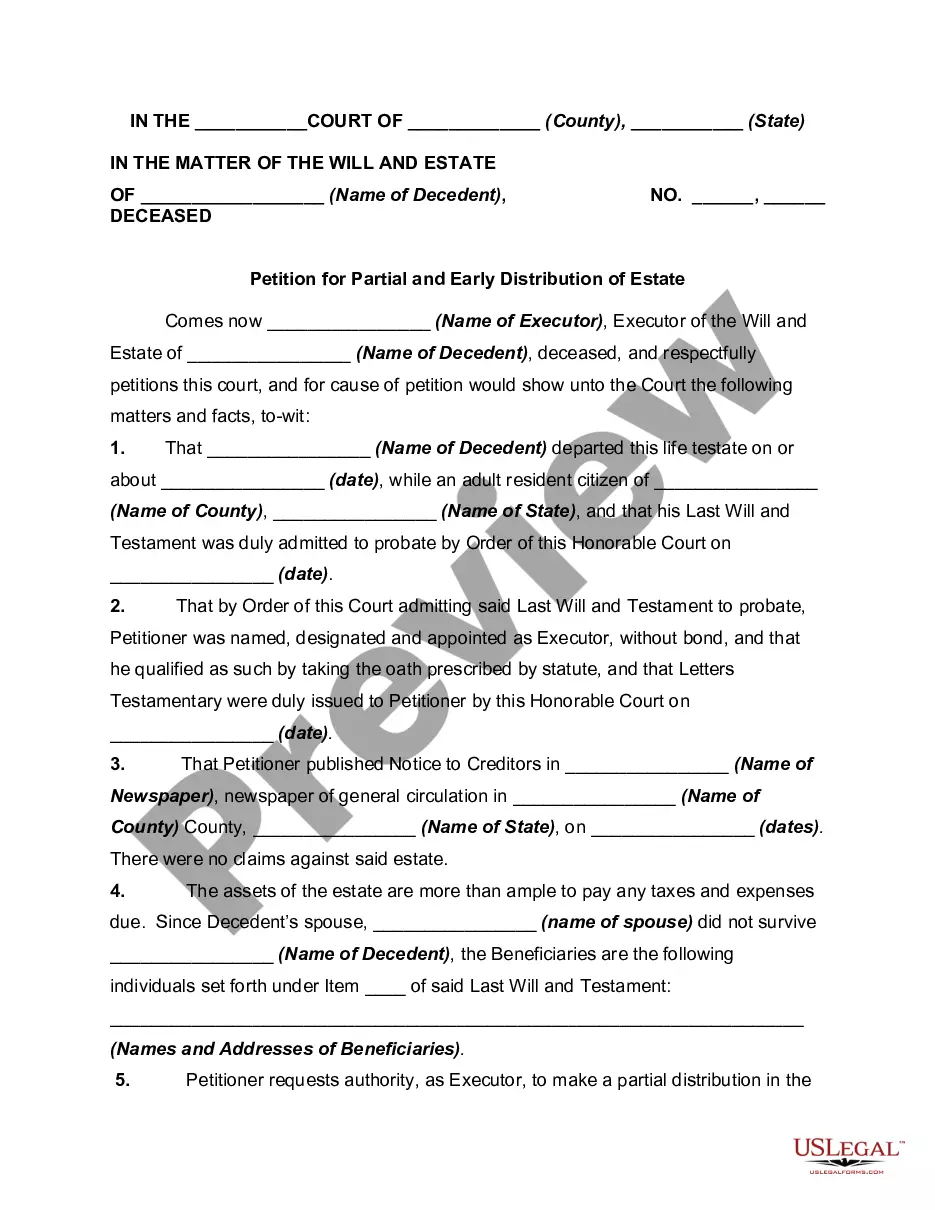
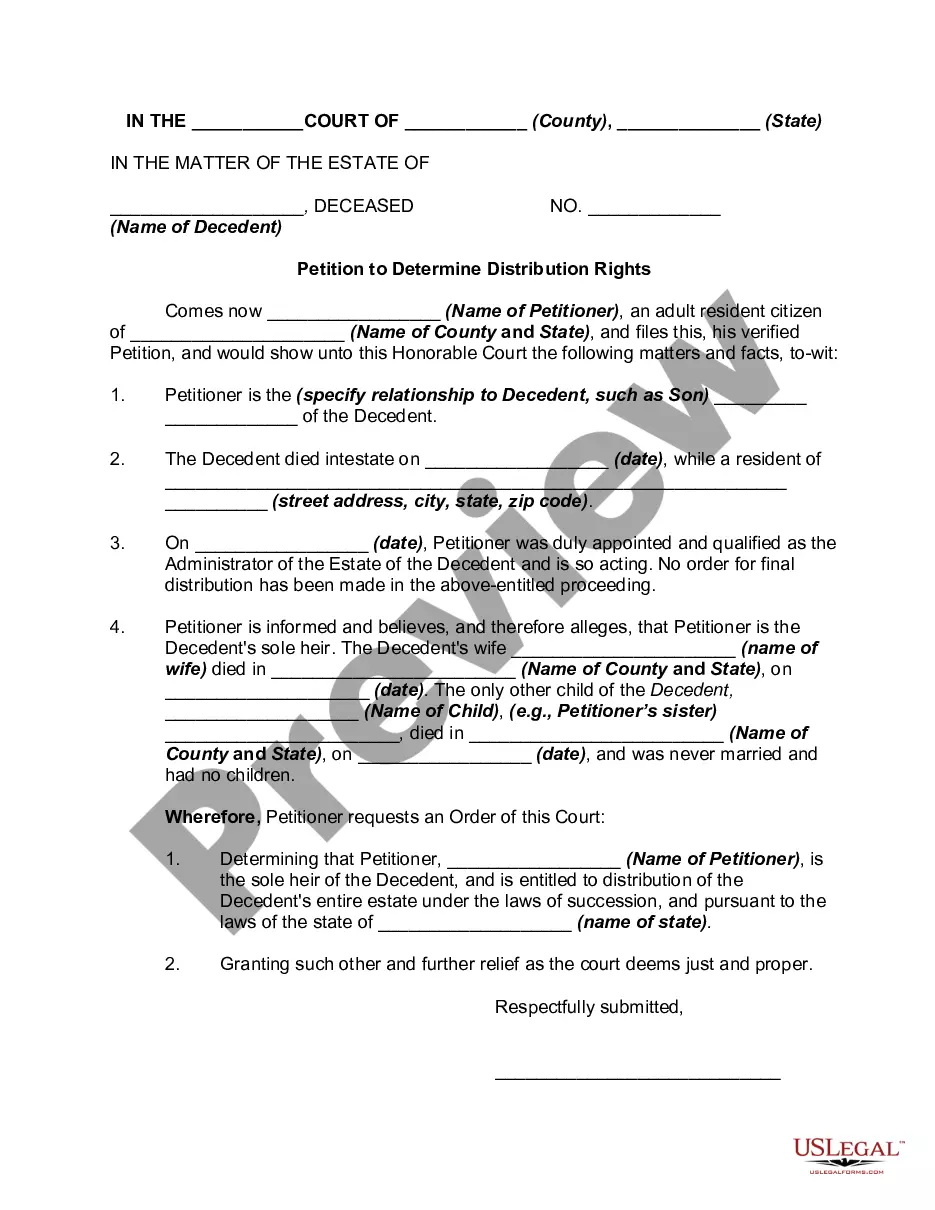
Executor Petition Estate Without Probate
Description
Get your form ready online
Our built-in tools help you complete, sign, share, and store your documents in one place.
Make edits, fill in missing information, and update formatting in US Legal Forms—just like you would in MS Word.
Download a copy, print it, send it by email, or mail it via USPS—whatever works best for your next step.
Sign and collect signatures with our SignNow integration. Send to multiple recipients, set reminders, and more. Go Premium to unlock E-Sign.
If this form requires notarization, complete it online through a secure video call—no need to meet a notary in person or wait for an appointment.
We protect your documents and personal data by following strict security and privacy standards.

Make edits, fill in missing information, and update formatting in US Legal Forms—just like you would in MS Word.

Download a copy, print it, send it by email, or mail it via USPS—whatever works best for your next step.

Sign and collect signatures with our SignNow integration. Send to multiple recipients, set reminders, and more. Go Premium to unlock E-Sign.

If this form requires notarization, complete it online through a secure video call—no need to meet a notary in person or wait for an appointment.

We protect your documents and personal data by following strict security and privacy standards.
Looking for another form?

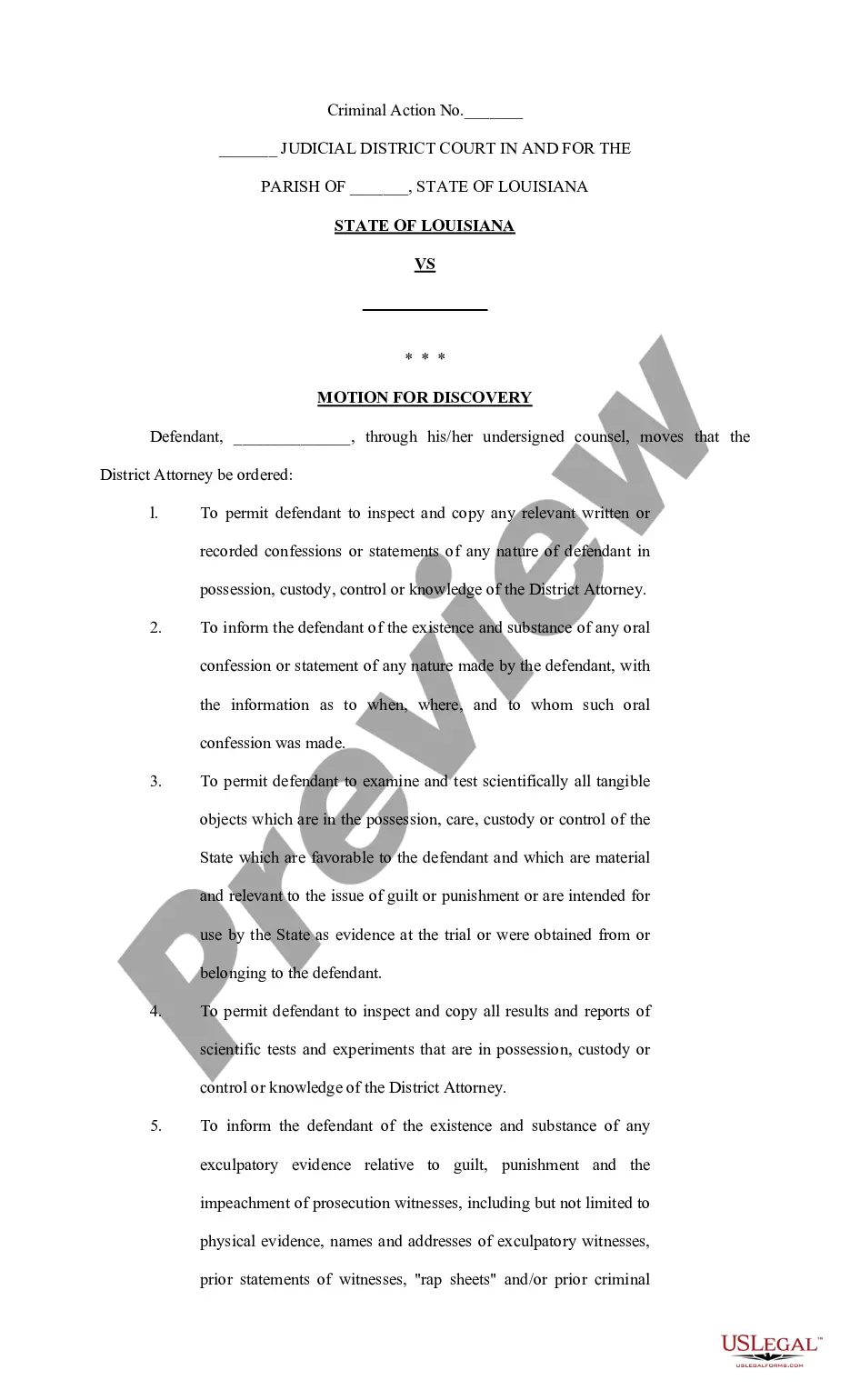


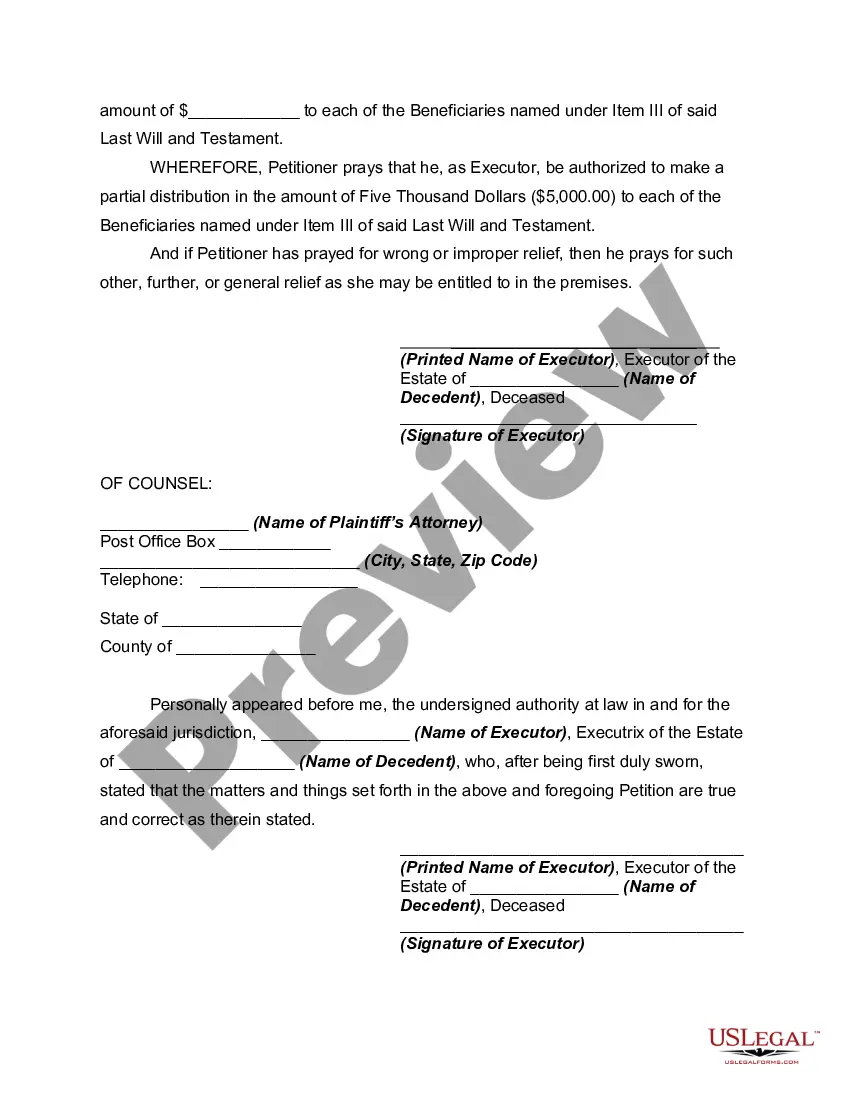
How to fill out Petition For Partial And Early Distribution Of Estate?
Creating legal documents from the ground up can frequently be daunting.
Certain situations may entail extensive research and significant expenses.
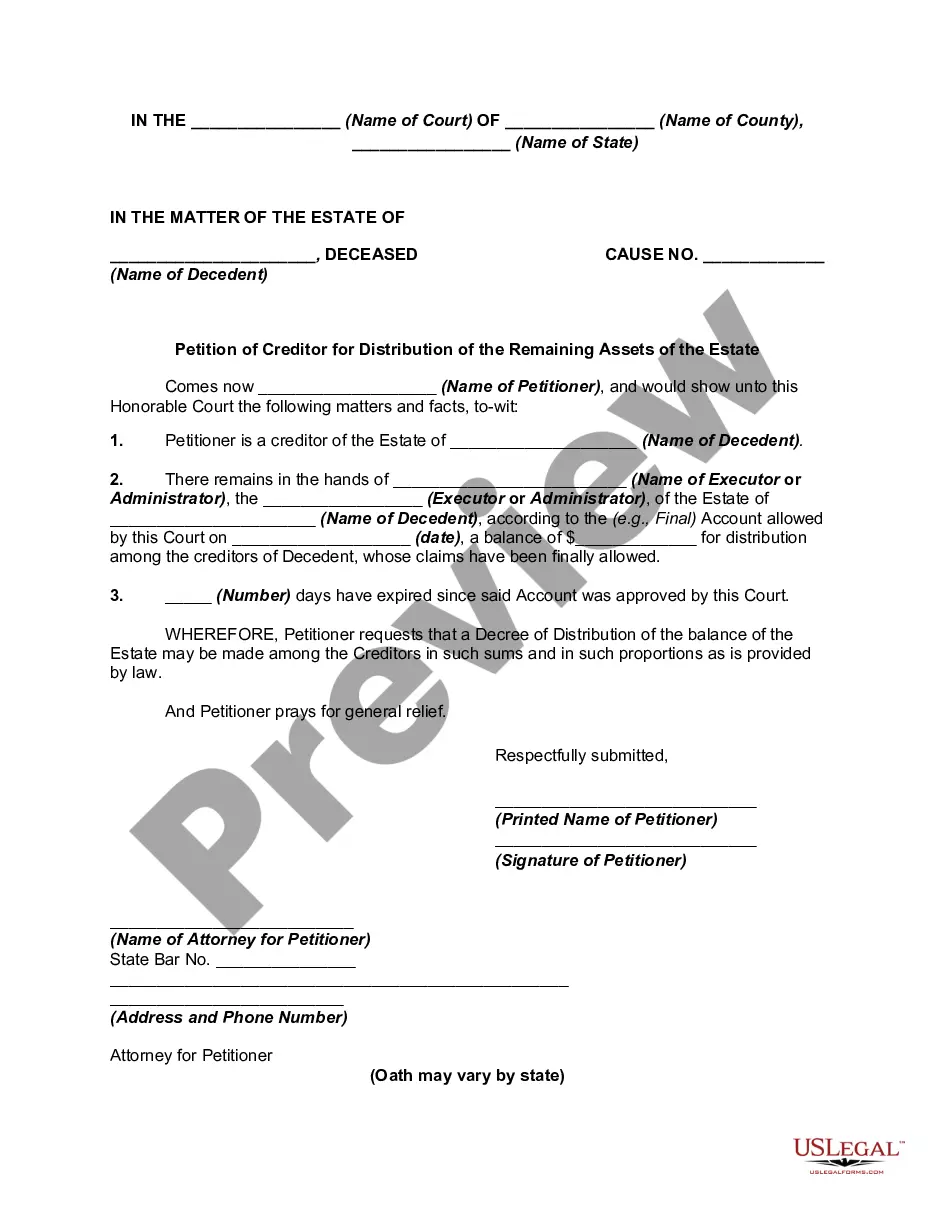
If you seek a more straightforward and economical method of generating Executor Petition Estate Without Probate or any other forms without the hassle, US Legal Forms is always within your reach.
Our online repository of over 85,000 current legal documents covers nearly every aspect of your financial, legal, and personal issues.
However, before proceeding directly to downloading Executor Petition Estate Without Probate, adhere to these suggestions: Check the document preview and descriptions to ensure you have located the form you need. Ensure the form you select complies with your state and county laws and regulations. Choose the appropriate subscription option to purchase the Executor Petition Estate Without Probate. Download the document. Then complete, sign, and print it. US Legal Forms boasts a solid reputation and over 25 years of experience. Join us today and make form execution a simple and efficient process!
- With just a few clicks, you can swiftly obtain state- and county-specific forms carefully prepared for you by our legal experts.
- Utilize our website whenever you require a dependable and trustworthy service through which you can effortlessly find and download the Executor Petition Estate Without Probate.
- If you're not new to our services and have previously established an account with us, simply Log In to your account, find the form, and download it or re-download it at any moment in the My documents section.
- Not registered yet? No worries. It takes minimal time to set it up and browse the catalog.
Form popularity
FAQ
If no one files probate for an individual who has died and owned assets in California, the court can freeze the decedent's assets, making them inaccessible to heirs and other beneficiaries until debts are paid.
In California, probate settles a deceased person's estate and is required in California if the estate is worth more than $184,500.
How to Avoid Probate in California Creating a Living Trust. Setting up a Joint Ownership. Payable-on-Death Designations for Bank Accounts. Transfer-on-Death Registration for Securities. Transfer-on-Death Deeds for Real Estate. Transfer-on-Death Registration for Vehicles.
A Letter of Appointment of Executor helps prove you have been put in charge of someone's estate after they have passed away. As Executor, you've been given the duty to manage the estate and carry out the directions of the will; however, a court may require official documentation.
Any assets that do not qualify for a simple transfer process will likely have to go through formal probate. And, if the dead person's property is worth more than $166,250, none of the exceptions apply. You must go to court and start a probate case.