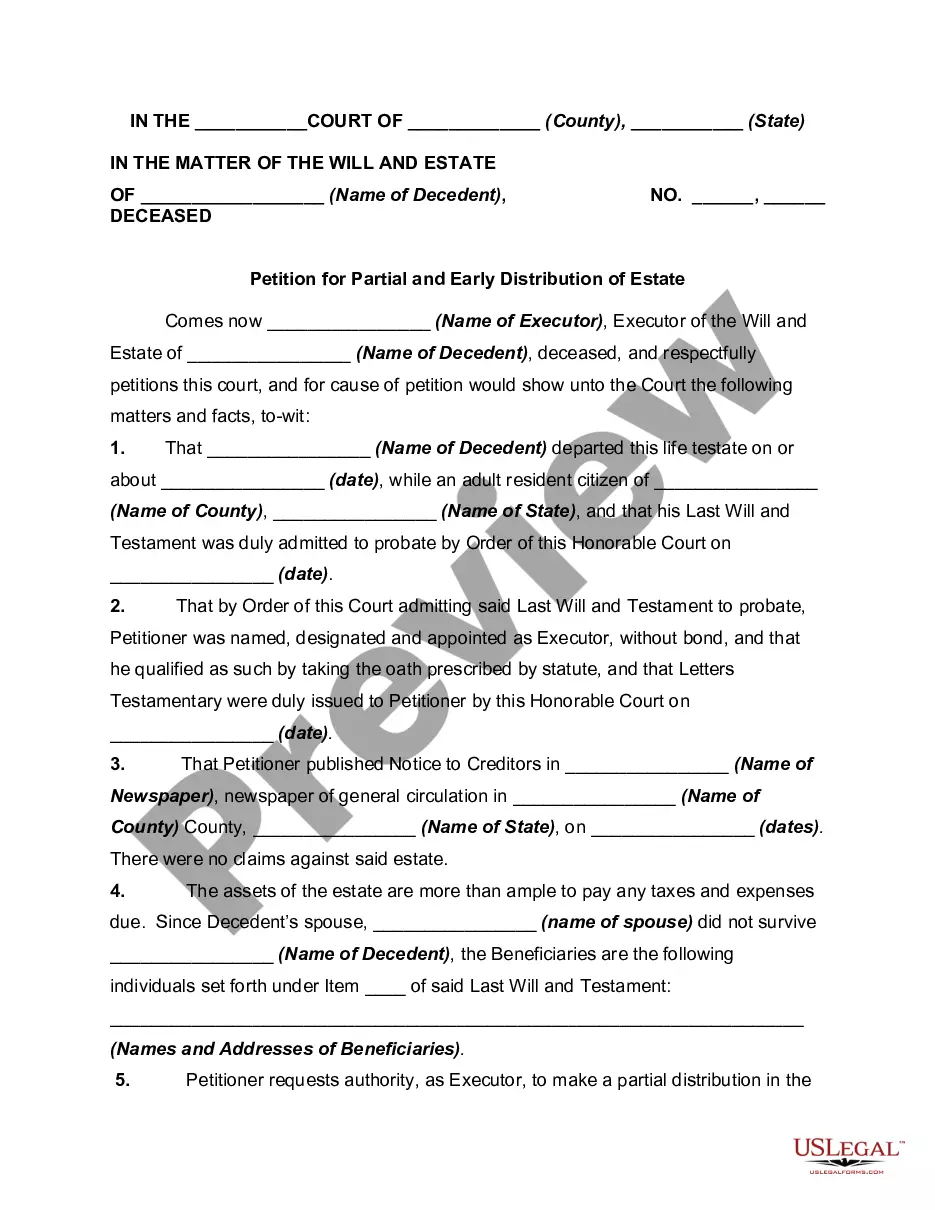
Executor Petition Court Without Will
Description

Get your form ready online
Our built-in tools help you complete, sign, share, and store your documents in one place.
Make edits, fill in missing information, and update formatting in US Legal Forms—just like you would in MS Word.
Download a copy, print it, send it by email, or mail it via USPS—whatever works best for your next step.
Sign and collect signatures with our SignNow integration. Send to multiple recipients, set reminders, and more. Go Premium to unlock E-Sign.
If this form requires notarization, complete it online through a secure video call—no need to meet a notary in person or wait for an appointment.
We protect your documents and personal data by following strict security and privacy standards.

Make edits, fill in missing information, and update formatting in US Legal Forms—just like you would in MS Word.

Download a copy, print it, send it by email, or mail it via USPS—whatever works best for your next step.

Sign and collect signatures with our SignNow integration. Send to multiple recipients, set reminders, and more. Go Premium to unlock E-Sign.

If this form requires notarization, complete it online through a secure video call—no need to meet a notary in person or wait for an appointment.

We protect your documents and personal data by following strict security and privacy standards.
Looking for another form?
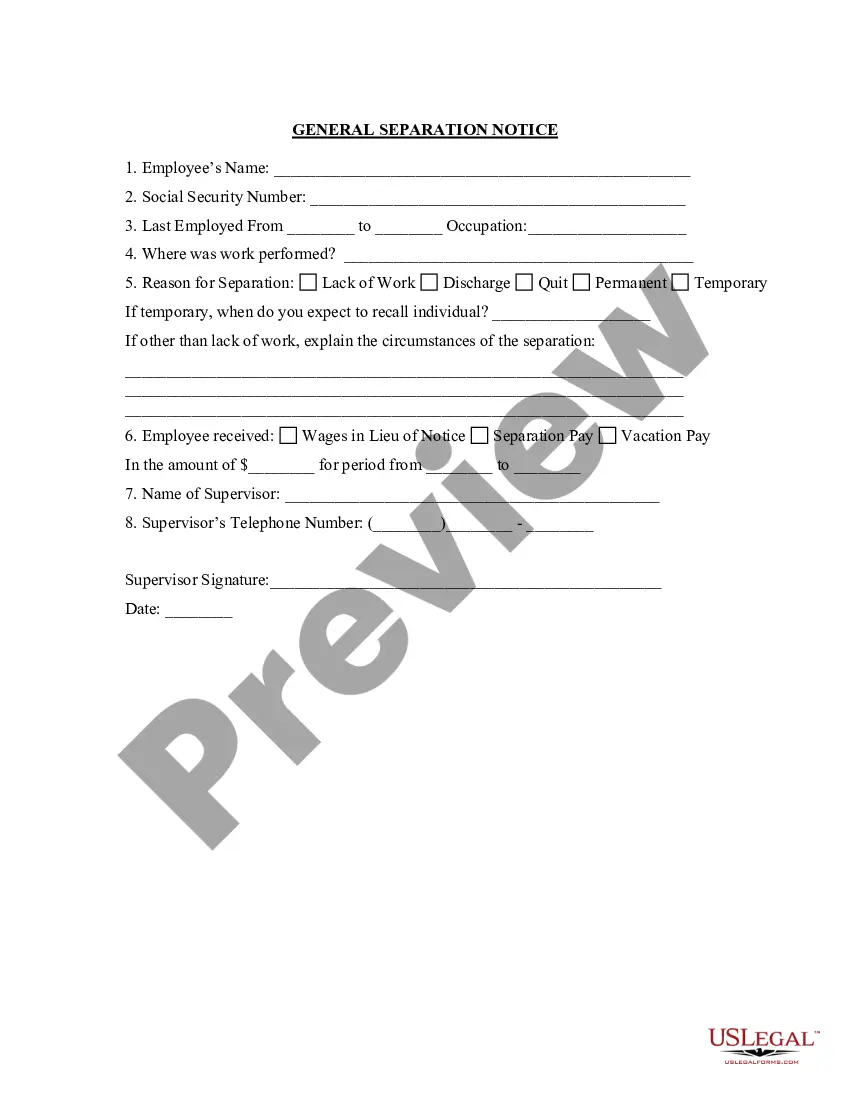

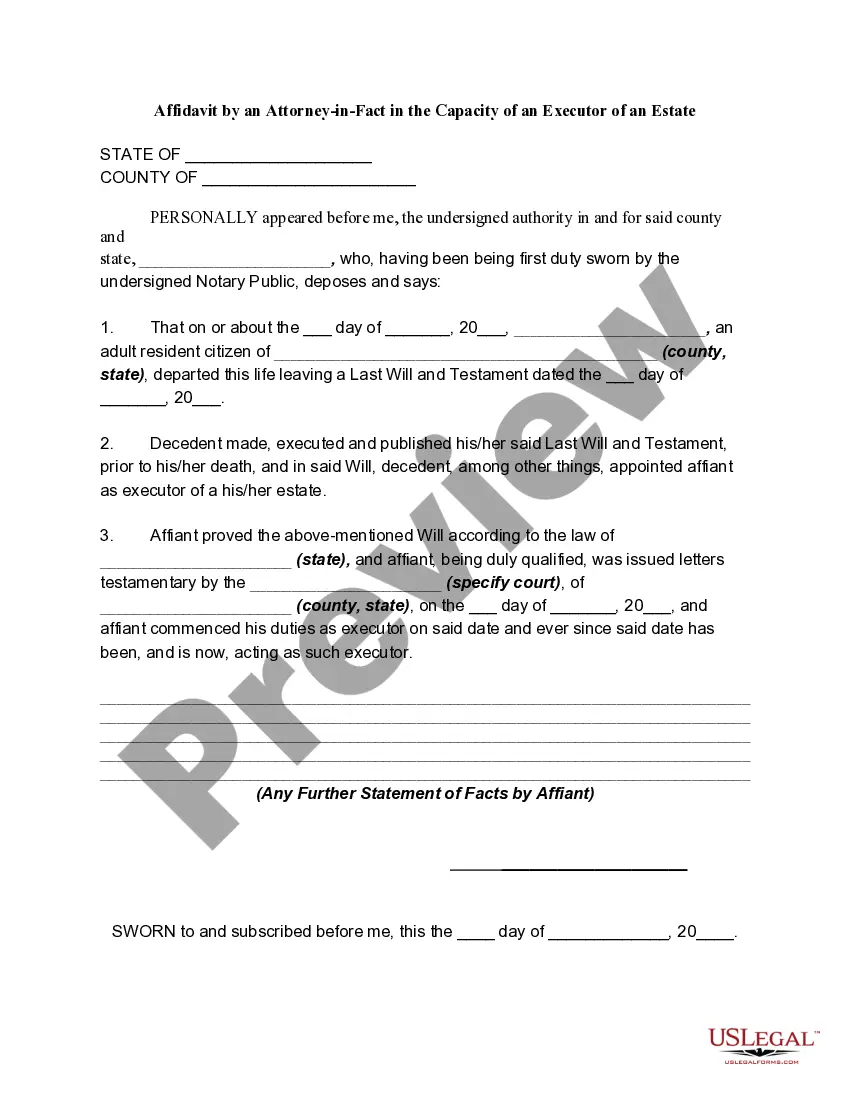





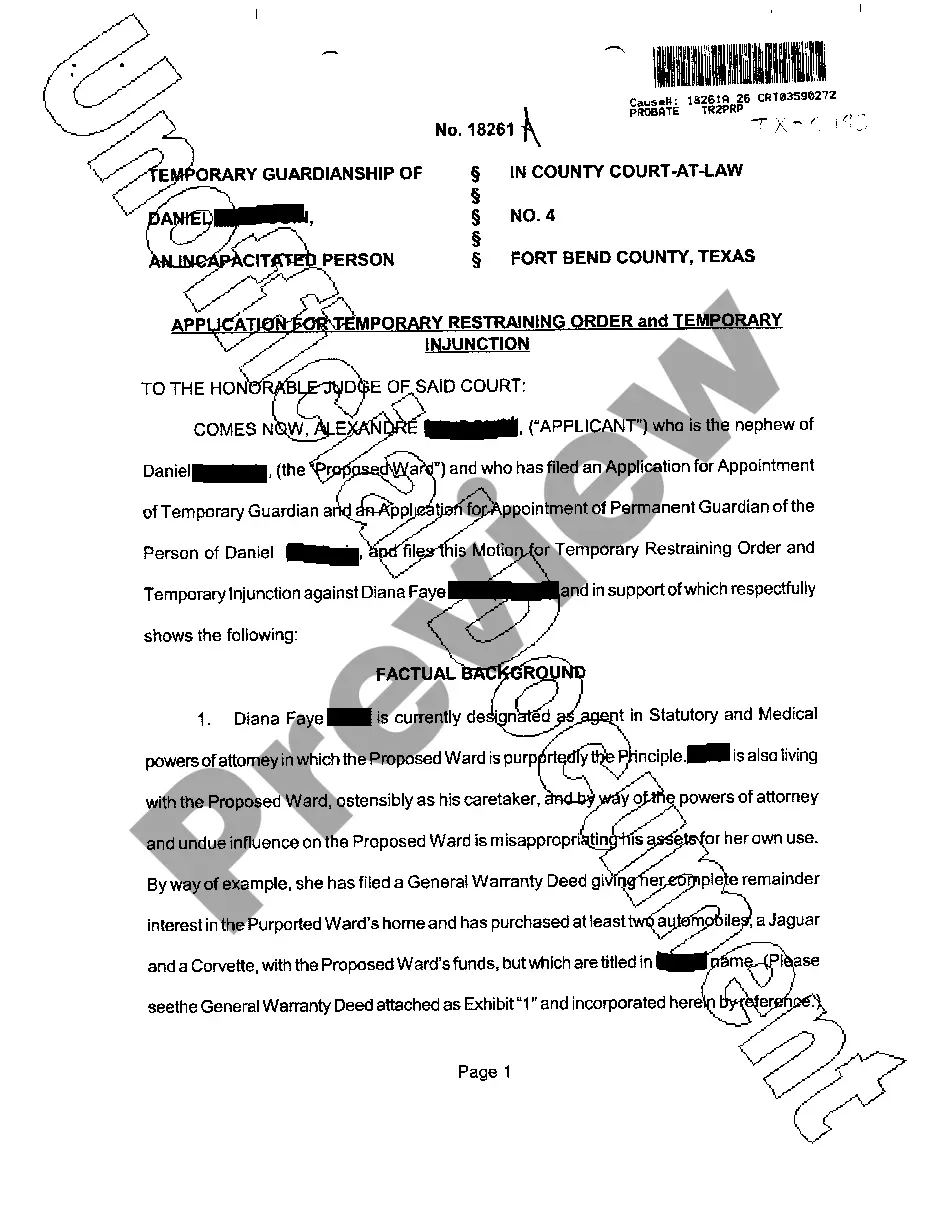
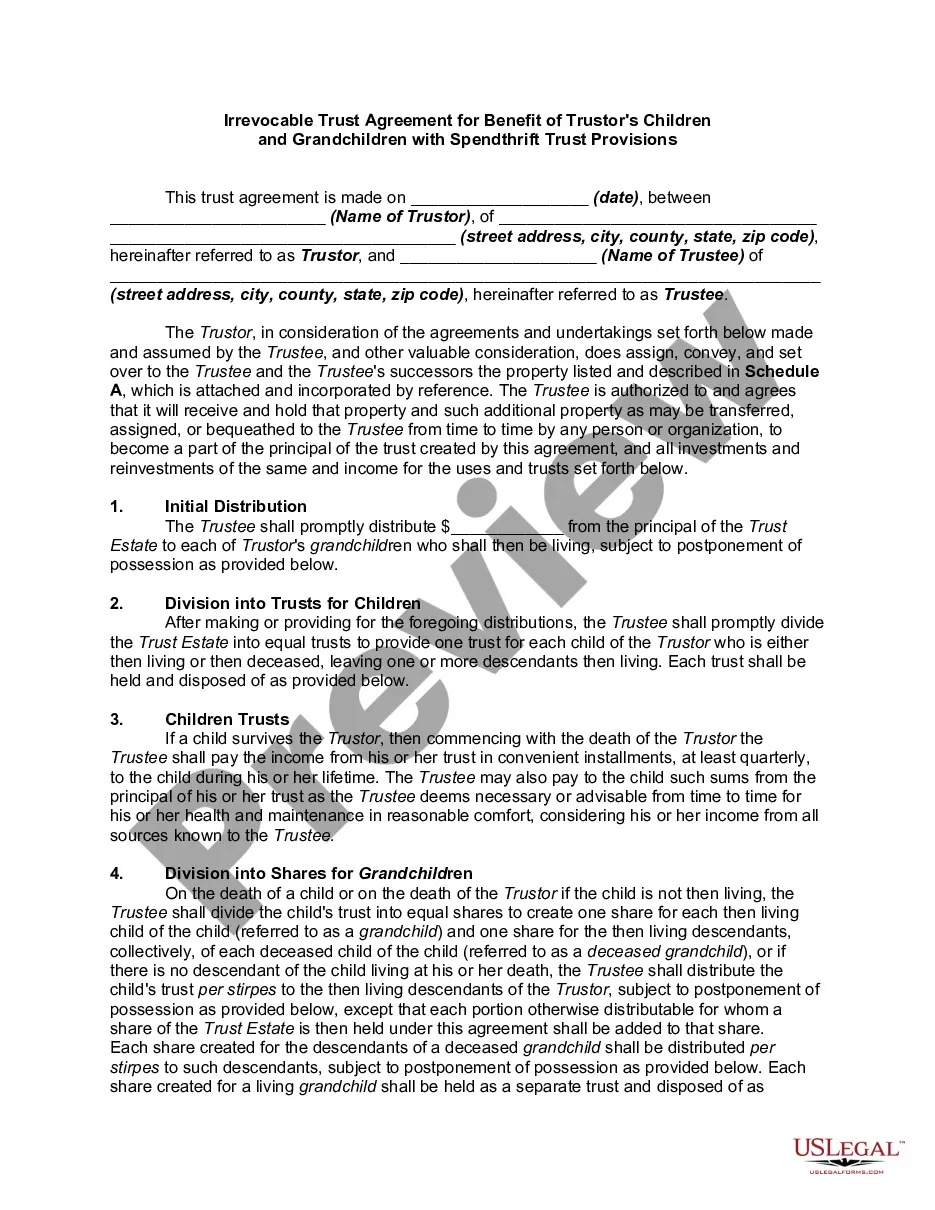
How to fill out Petition For Partial And Early Distribution Of Estate?
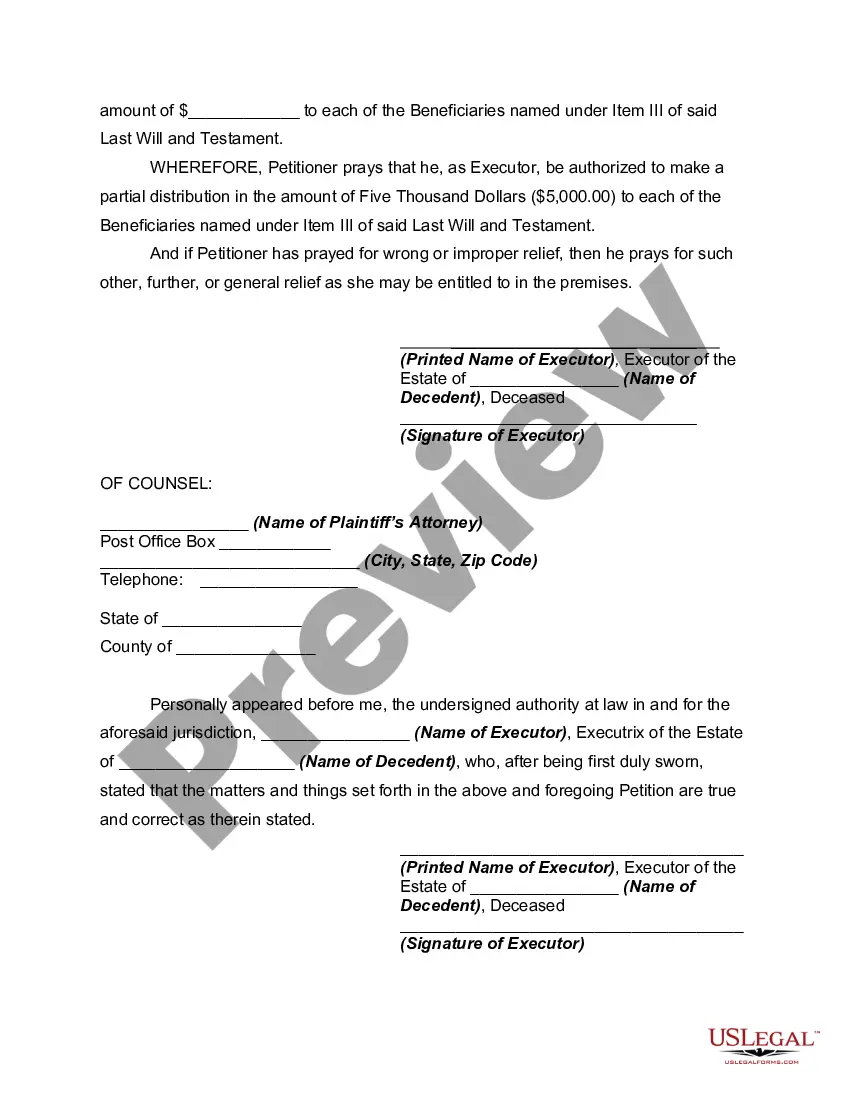
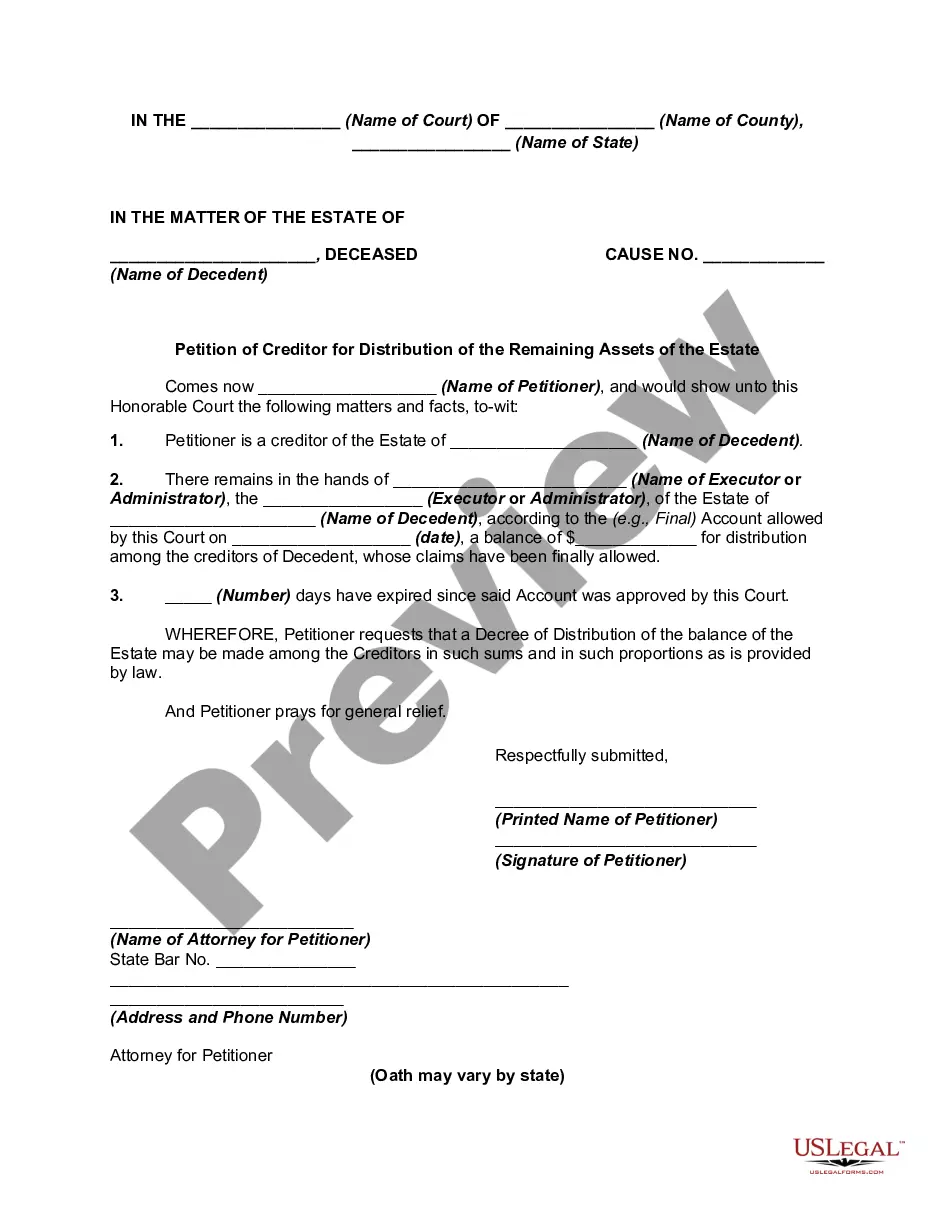
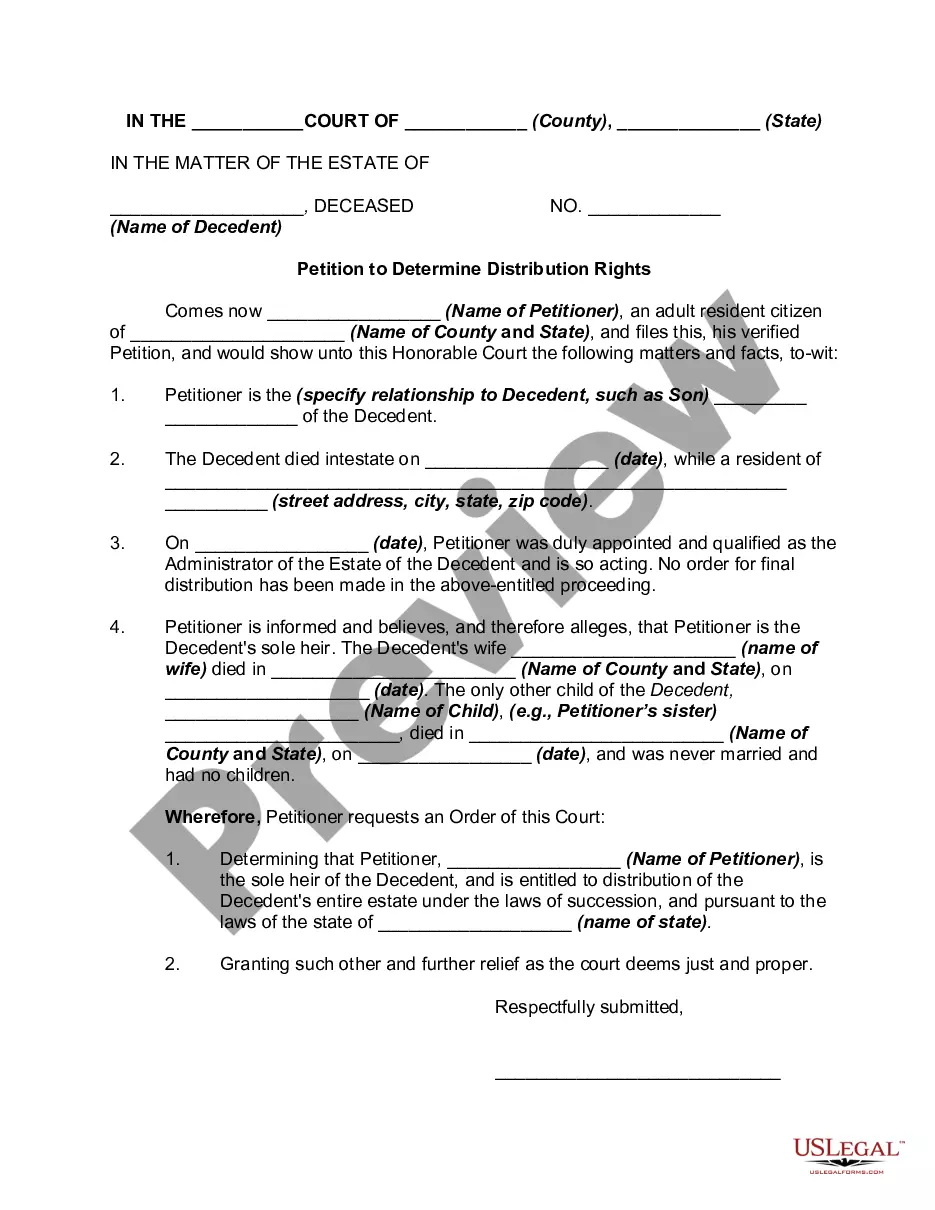
The Executor Petition Court Without Will you see on this page is a multi-usable formal template drafted by professional lawyers in line with federal and regional laws. For more than 25 years, US Legal Forms has provided individuals, companies, and attorneys with more than 85,000 verified, state-specific forms for any business and personal situation. It’s the quickest, simplest and most trustworthy way to obtain the paperwork you need, as the service guarantees bank-level data security and anti-malware protection.
Acquiring this Executor Petition Court Without Will will take you just a few simple steps:
- Search for the document you need and review it. Look through the sample you searched and preview it or review the form description to verify it fits your needs. If it does not, use the search bar to find the right one. Click Buy Now once you have found the template you need.
- Subscribe and log in. Choose the pricing plan that suits you and create an account. Use PayPal or a credit card to make a quick payment. If you already have an account, log in and check your subscription to continue.
- Get the fillable template. Choose the format you want for your Executor Petition Court Without Will (PDF, DOCX, RTF) and download the sample on your device.
- Fill out and sign the paperwork. Print out the template to complete it by hand. Alternatively, use an online multi-functional PDF editor to rapidly and precisely fill out and sign your form with a legally-binding] {electronic signature.
- Download your papers one more time. Use the same document once again whenever needed. Open the My Forms tab in your profile to redownload any previously purchased forms.
Subscribe to US Legal Forms to have verified legal templates for all of life’s circumstances at your disposal.
Form popularity
FAQ
In the unfortunate event someone passes away without a will, if there is a surviving spouse in most cases they will inherit 50% of the separate property, while the remaining 50% will pass to the deceased's children, parents, siblings, and other relatives - ing to California's intestate succession law.
The term next of kin usually refers to a person's closest living relative(s). Individuals who count as next of kin include those with a blood relation, such as children, or those with a legal standing, such as spouses or adopted children.
If you do not have a loved one who can serve in this role, you have other options! Your CPA. If you work with a Certified Public Accountant (CPA), they may be willing and able to act as the executor of your will. ... A Trust Company. You also have the option of hiring a trust company to act as your executor. ... A Bank.
As per the Hindu Succession Act, 1965, if a person dies intestate, his property would go to Class I heirs. If the Class I heirs do not exist, then the property would be delegated to Class II heirs. However, if both the Class I and Class II heirs are not alive, then the property would be transferred to Agnates.
If a person dies without a will they are considered intestate "without a will". Therefore that person's property and estate is distributed ing to the state that is their home state. Real property is handled ing to state law. The distribution of all property is by relationship to the deceased.