Special Needs Trust Tax Rules With Beneficiaries
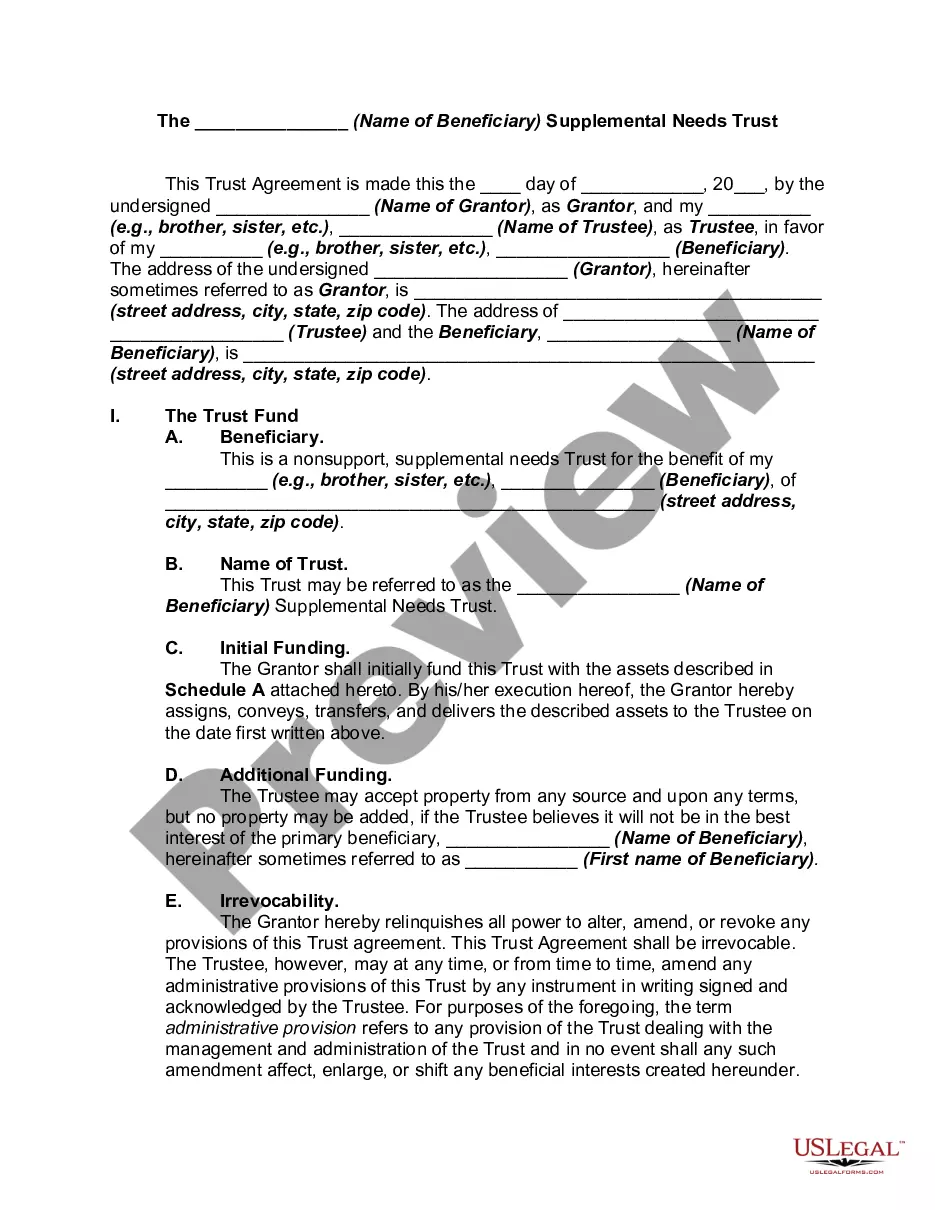
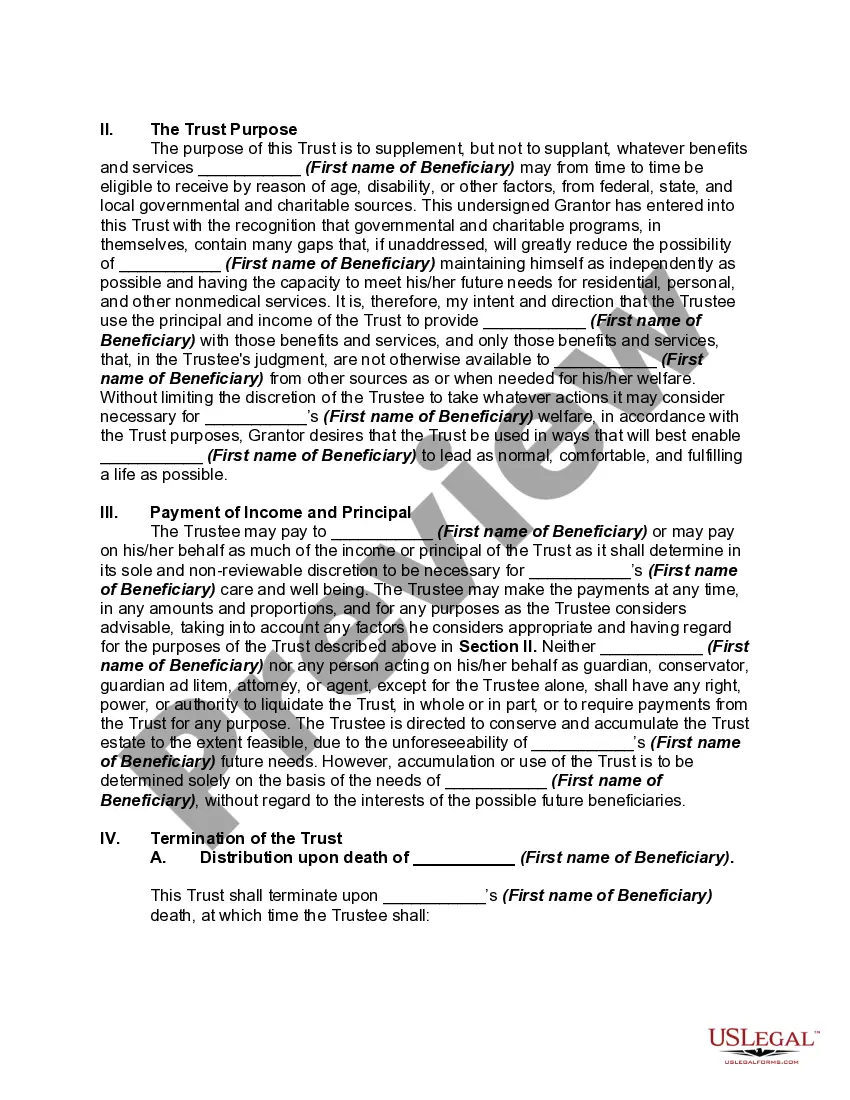
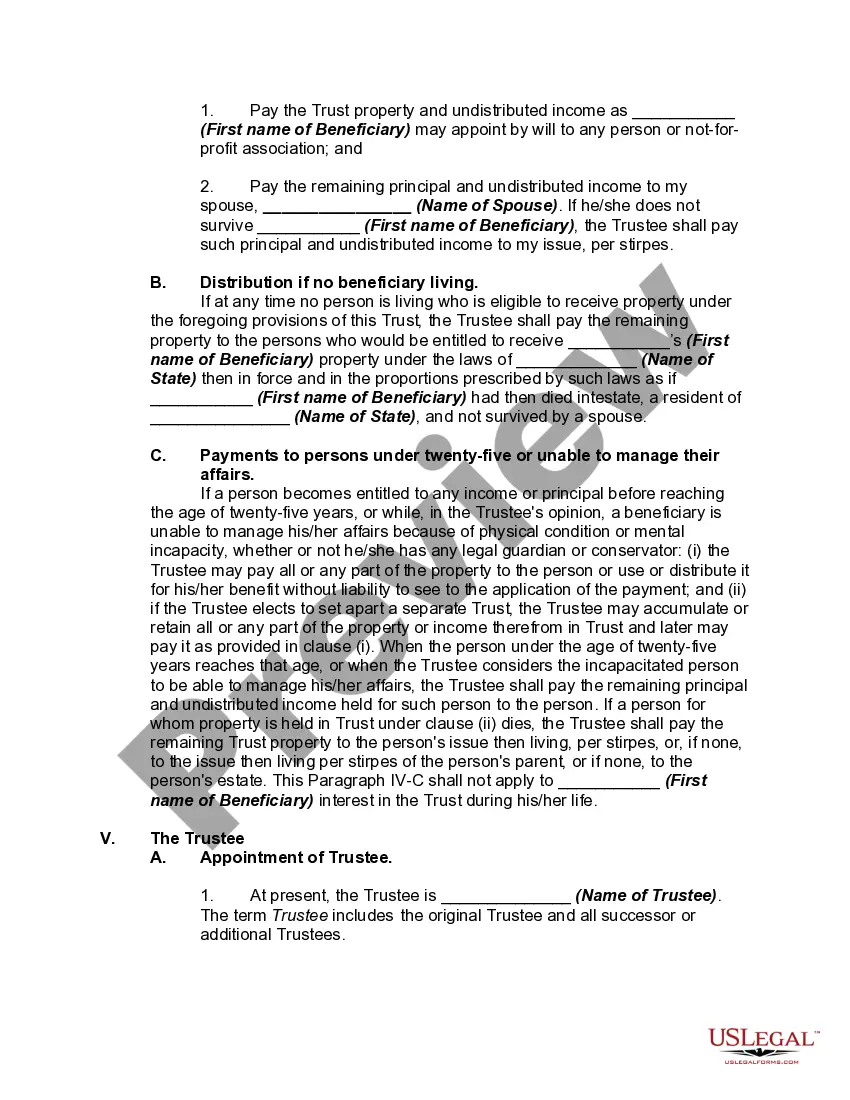
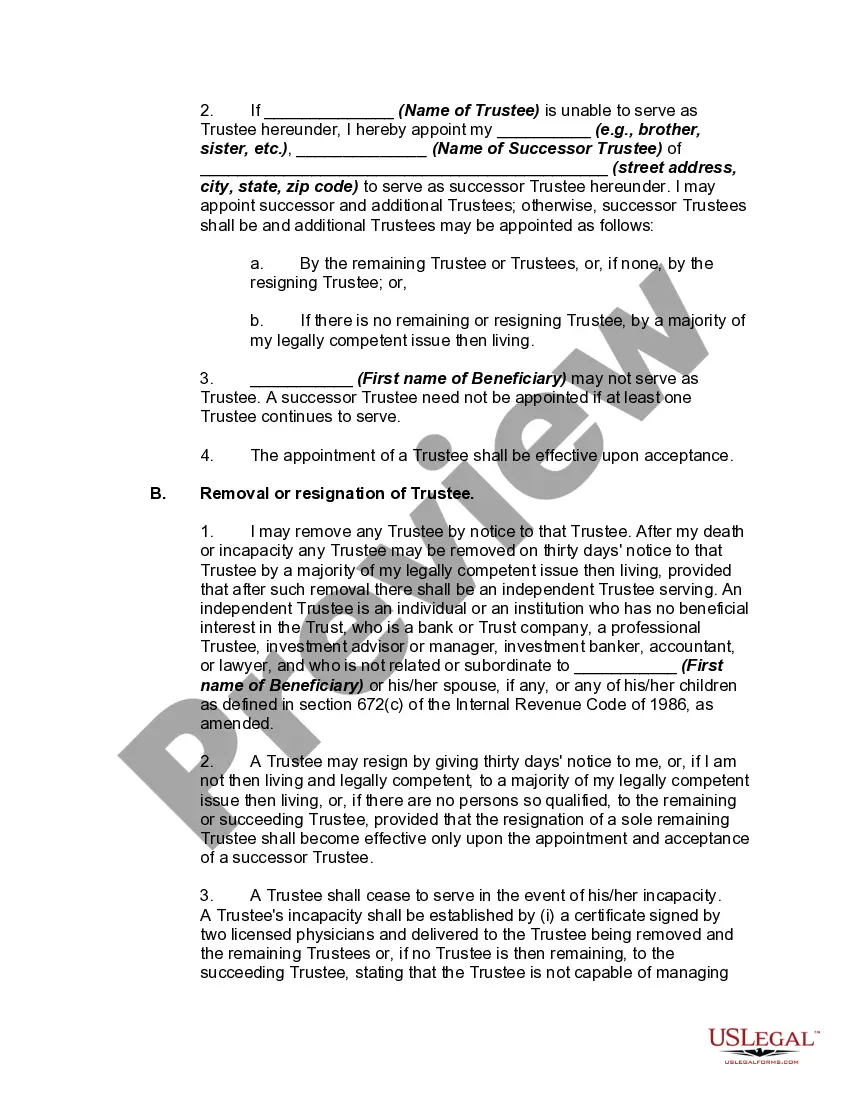
Description



Get your form ready online
Our built-in tools help you complete, sign, share, and store your documents in one place.
Make edits, fill in missing information, and update formatting in US Legal Forms—just like you would in MS Word.
Download a copy, print it, send it by email, or mail it via USPS—whatever works best for your next step.
Sign and collect signatures with our SignNow integration. Send to multiple recipients, set reminders, and more. Go Premium to unlock E-Sign.
If this form requires notarization, complete it online through a secure video call—no need to meet a notary in person or wait for an appointment.
We protect your documents and personal data by following strict security and privacy standards.

Make edits, fill in missing information, and update formatting in US Legal Forms—just like you would in MS Word.

Download a copy, print it, send it by email, or mail it via USPS—whatever works best for your next step.

Sign and collect signatures with our SignNow integration. Send to multiple recipients, set reminders, and more. Go Premium to unlock E-Sign.

If this form requires notarization, complete it online through a secure video call—no need to meet a notary in person or wait for an appointment.

We protect your documents and personal data by following strict security and privacy standards.
Looking for another form?






How to fill out Supplemental Needs Trust For Third Party - Disabled Beneficiary?
Accessing legal templates that meet the federal and local regulations is crucial, and the internet offers numerous options to choose from. But what’s the point in wasting time searching for the right Special Needs Trust Tax Rules With Beneficiaries sample on the web if the US Legal Forms online library already has such templates accumulated in one place?
US Legal Forms is the largest online legal catalog with over 85,000 fillable templates drafted by attorneys for any professional and personal situation. They are simple to browse with all files organized by state and purpose of use. Our professionals keep up with legislative changes, so you can always be sure your form is up to date and compliant when obtaining a Special Needs Trust Tax Rules With Beneficiaries from our website.
Obtaining a Special Needs Trust Tax Rules With Beneficiaries is quick and easy for both current and new users. If you already have an account with a valid subscription, log in and save the document sample you require in the preferred format. If you are new to our website, follow the steps below:
- Analyze the template utilizing the Preview option or through the text description to ensure it meets your requirements.
- Look for another sample utilizing the search tool at the top of the page if necessary.
- Click Buy Now when you’ve found the suitable form and choose a subscription plan.
- Register for an account or log in and make a payment with PayPal or a credit card.
- Select the best format for your Special Needs Trust Tax Rules With Beneficiaries and download it.
All documents you find through US Legal Forms are multi-usable. To re-download and fill out earlier purchased forms, open the My Forms tab in your profile. Benefit from the most extensive and straightforward-to-use legal paperwork service!
Form popularity
FAQ
Income beneficiaries may benefit only from the income generated and distributed by the trust. They have no expectation to benefit from the trust capital, whether it is a distribution of the actual trust assets or a gain from the realisation of the trust assets.
First-Party or Self-Funded Special Needs Trusts Any income earned on the funds invested in the first-party trust is always taxable to the beneficiary in the year it is earned, regardless of when or if it is distributed to the beneficiary.
When trust beneficiaries receive distributions from the trust's principal balance, they don't have to pay taxes on this disbursement. The Internal Revenue Service (IRS) assumes this money was taxed before being placed into the trust. Gains on the trust are taxable as income to the beneficiary or the trust.
You could leave ½ of the IRA to a SNT as long as the SNT meets the criteria. If a SNT is named, it cannot have a charity as a remainder beneficiary because a charity is not considered a ?life in being?. Assuming the above 4 conditions are met, a SNT can be the beneficiary.
It is important to remember that the SNT cannot deduct expenses like rent and food. Deductions can be for medical care, custodial care, support services, and similar care not provided by public benefits programs.