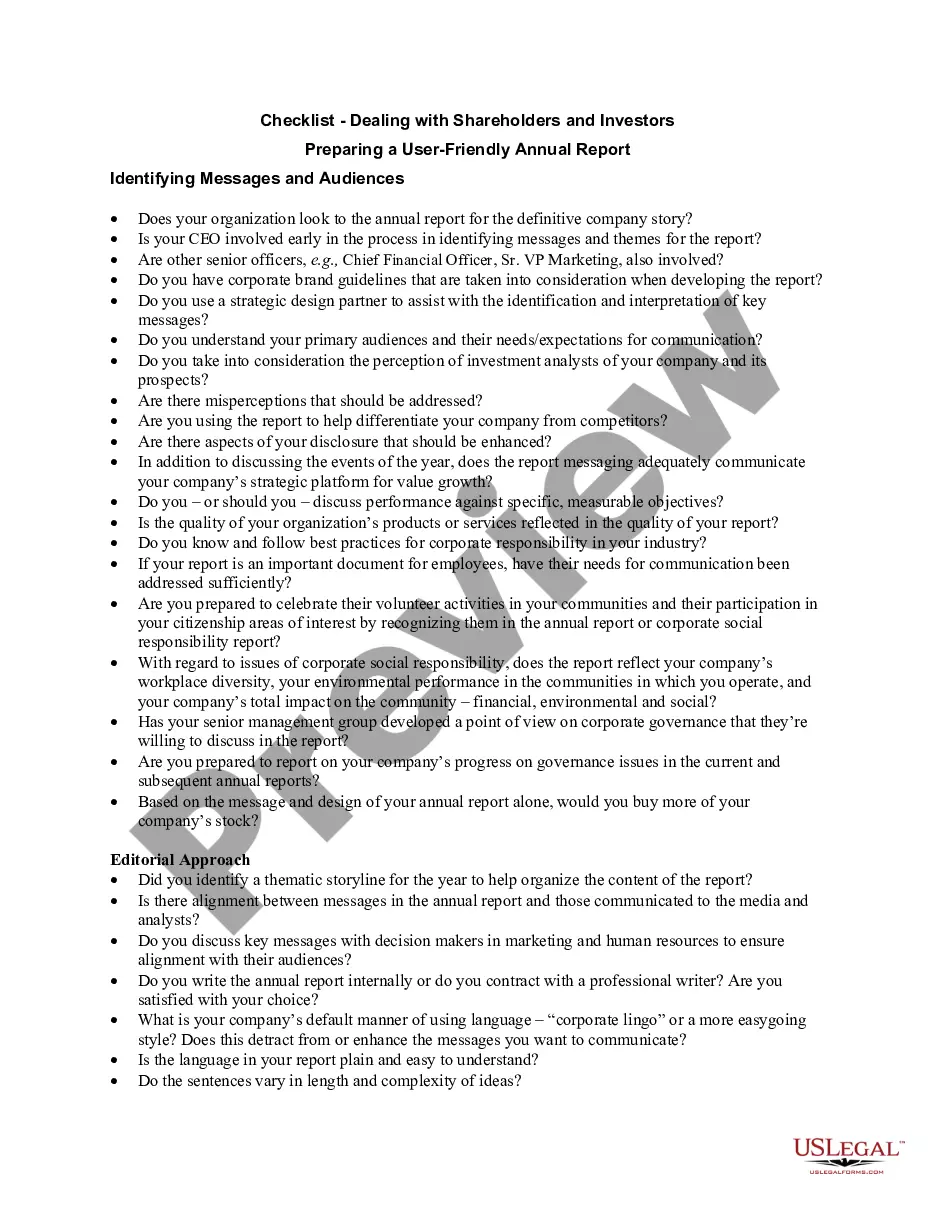
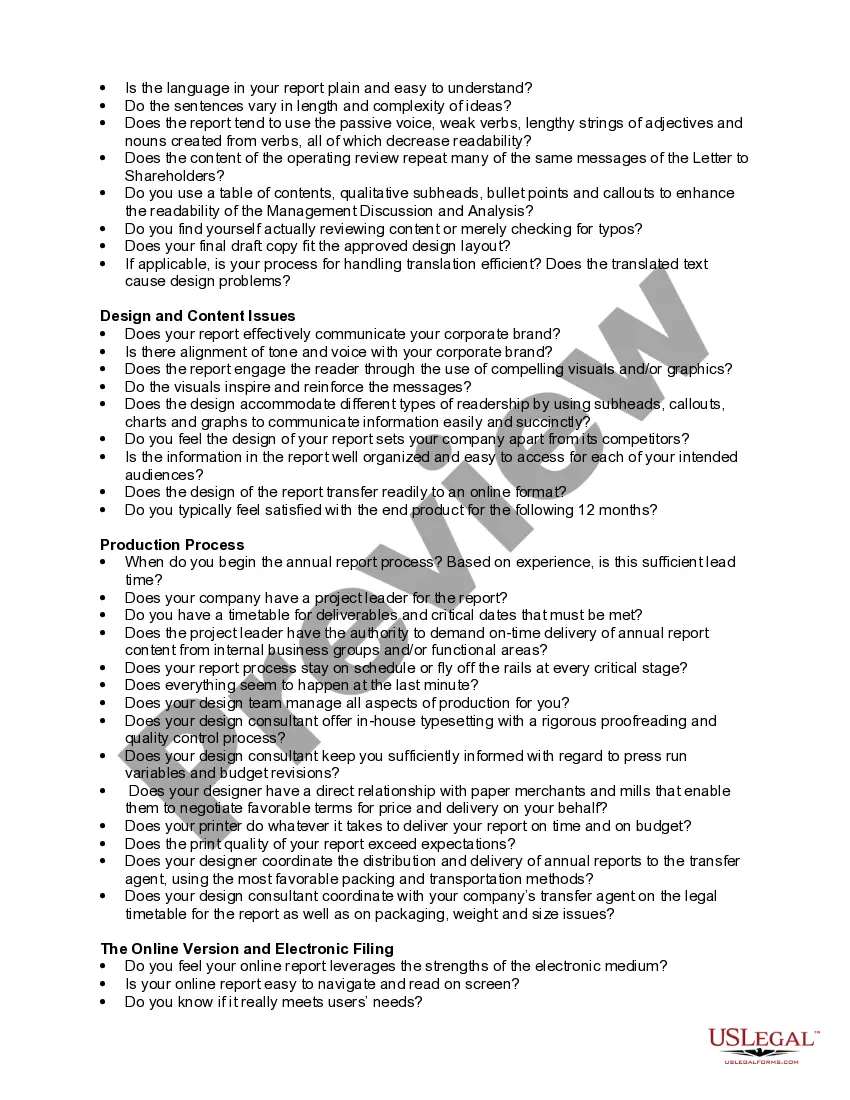
Preparing Annual Report For Nonprofit
Description

Get your form ready online
Our built-in tools help you complete, sign, share, and store your documents in one place.
Make edits, fill in missing information, and update formatting in US Legal Forms—just like you would in MS Word.
Download a copy, print it, send it by email, or mail it via USPS—whatever works best for your next step.
Sign and collect signatures with our SignNow integration. Send to multiple recipients, set reminders, and more. Go Premium to unlock E-Sign.
If this form requires notarization, complete it online through a secure video call—no need to meet a notary in person or wait for an appointment.
We protect your documents and personal data by following strict security and privacy standards.

Make edits, fill in missing information, and update formatting in US Legal Forms—just like you would in MS Word.

Download a copy, print it, send it by email, or mail it via USPS—whatever works best for your next step.

Sign and collect signatures with our SignNow integration. Send to multiple recipients, set reminders, and more. Go Premium to unlock E-Sign.

If this form requires notarization, complete it online through a secure video call—no need to meet a notary in person or wait for an appointment.

We protect your documents and personal data by following strict security and privacy standards.
Looking for another form?







Form popularity
FAQ
Planning your annual report for a nonprofit starts with establishing a timeline and roles. Determine which team members will gather data and write content. Schedule regular check-in meetings to ensure progress and address any challenges promptly. Using tools like US Legal Forms can simplify tracking these responsibilities, allowing you to focus on creating a strong narrative that resonates with your audience.
An annual report for a nonprofit should include financial statements, a narrative of accomplishments, goals for the next year, and information on how donations have been utilized. Additionally, testimonials or case studies can enhance your narrative by providing real-life examples of your work. Lastly, always remember to include contact information and how individuals can get involved, ensuring a call to action.
The four main components of an annual report for a nonprofit are the introduction, financial information, program details, and a conclusion. The introduction sets the tone, while financial information provides a factual background of performance. Program details showcase your nonprofit’s efforts, and the conclusion often outlines future directions. Together, these components create a compelling narrative of your nonprofit’s impact.
The content of an annual report for a nonprofit usually includes a message from leadership, financial statements, program descriptions, and future goals. It’s essential to present this information in a reader-friendly format, with graphs and visuals where applicable. By choosing an organized format, you can effectively communicate your nonprofit’s story and engage your audience. Consistency in design reinforces your brand and mission.
Creating an annual report for a nonprofit involves several key steps. Start by collecting data and evidence that showcase your accomplishments and challenges throughout the year. Next, draft the content, ensuring it is clear and engaging, while also aligning with your mission. Finally, utilize design tools or platforms like US Legal Forms that assist in the layout process to ensure a polished final product.
Planning an annual report for a nonprofit requires careful consideration of your organization’s objectives and achievements. Begin by gathering data on financial performance and program effectiveness from the past year. Next, outline your goals for the upcoming year and what metrics you will use to measure success. Engaging stakeholders in this planning process can also enhance the report's relevance and impact.
When preparing an annual report for a nonprofit, start with a clear structure. Typically, your report should include a cover page, table of contents, executive summary, and sections for financial statements, activities, and achievements. Utilize headings and subheadings to organize content logically, making the report easy to navigate. Remember, a well-formatted report reflects professionalism and transparency.
To organize an annual report, start with a clear outline that presents information logically. Begin with a cover page and table of contents, followed by sections on organizational background, program impact, and financials. Finally, include a conclusion with future goals. Consider using resources from US Legal Forms to assist in the organization and presentation of your annual report.
The mandatory contents of an annual report for nonprofits typically include financial statements, a statement of activities, and donor acknowledgments. Additionally, reports should contain a list of board members, an executive summary, and an overview of programs and services. Following these guidelines ensures that your report addresses stakeholders' needs effectively. US Legal Forms can help you meet these requirements with the right templates.
When preparing an annual report for a charity, start by summarizing the charity's mission and the programs offered. Include data on fundraising, expenditures, and community impact, ensuring a balance between financial and narrative sections. It is vital to create a visually appealing design that engages readers. Platforms such as US Legal Forms offer useful resources for formatting and structuring these reports.
