Employment At Will With Exceptions
Description
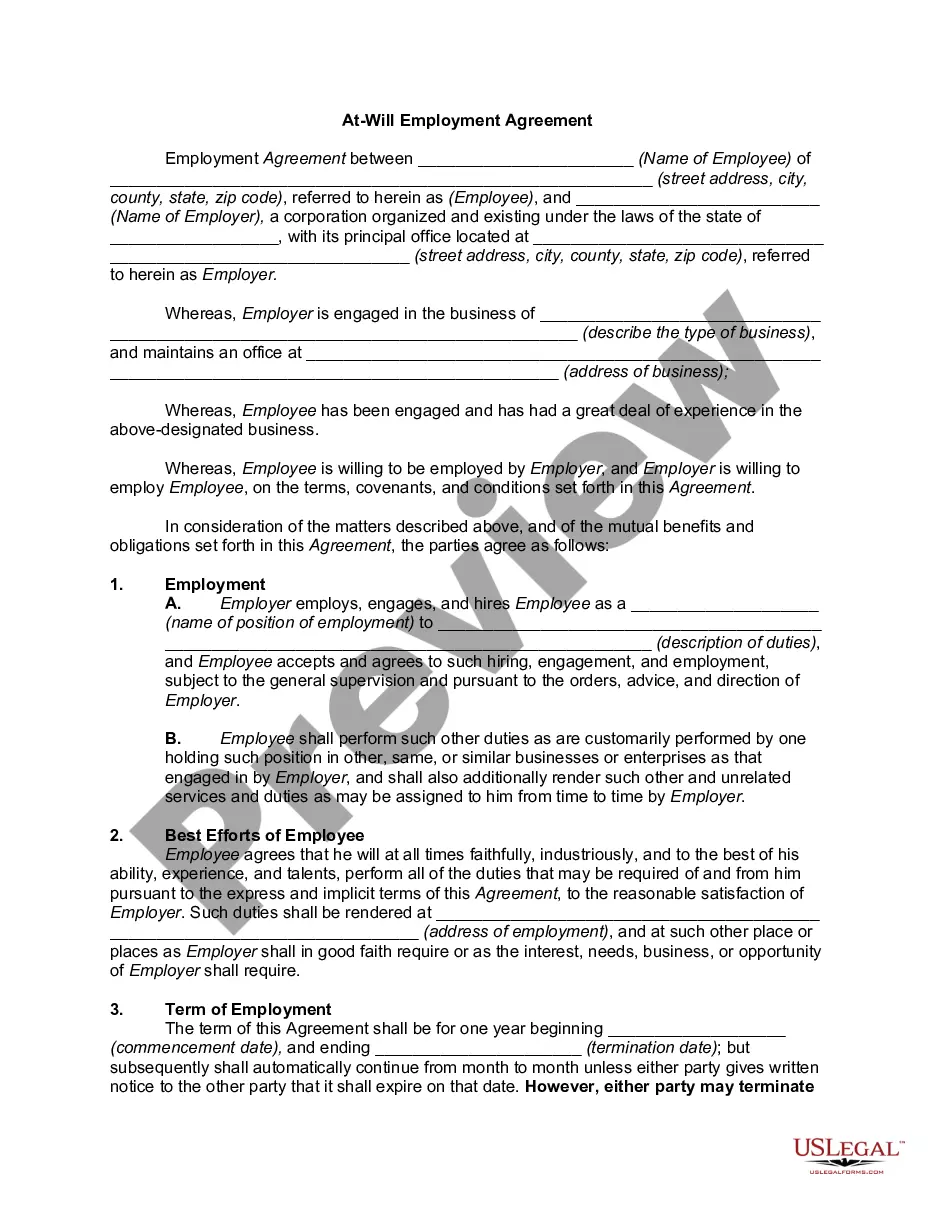
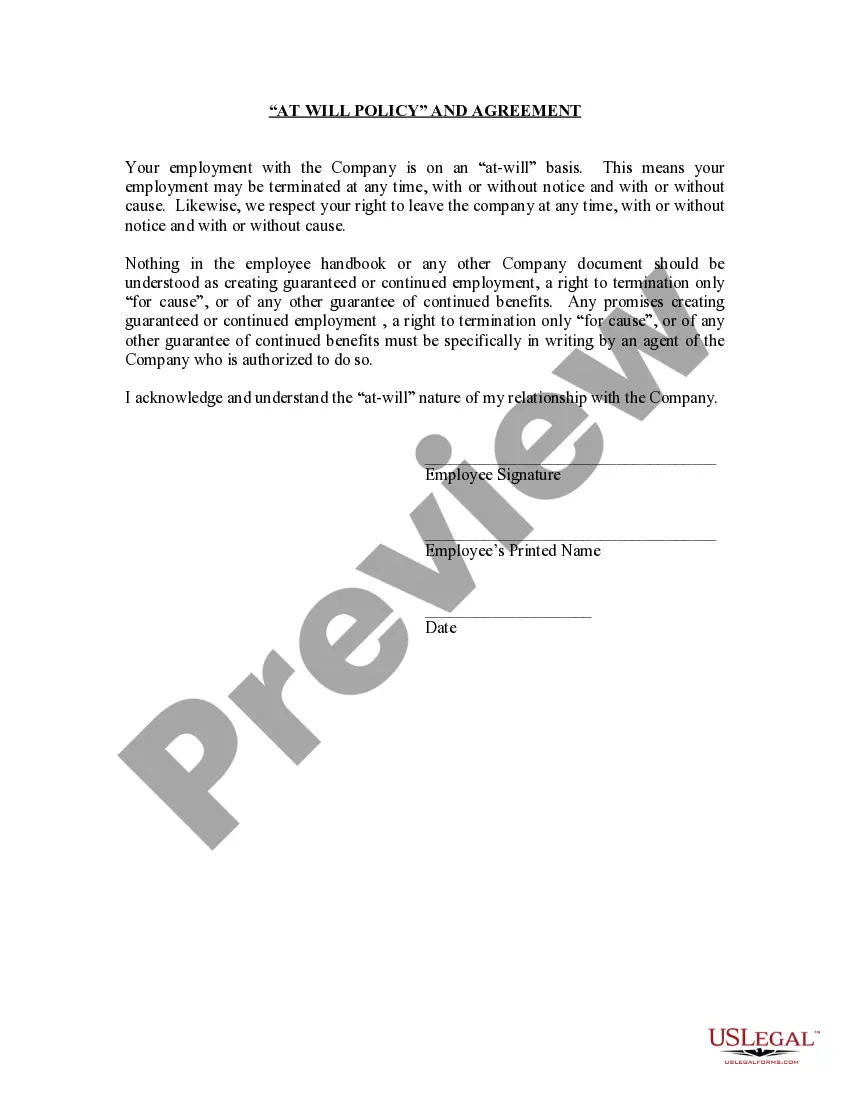
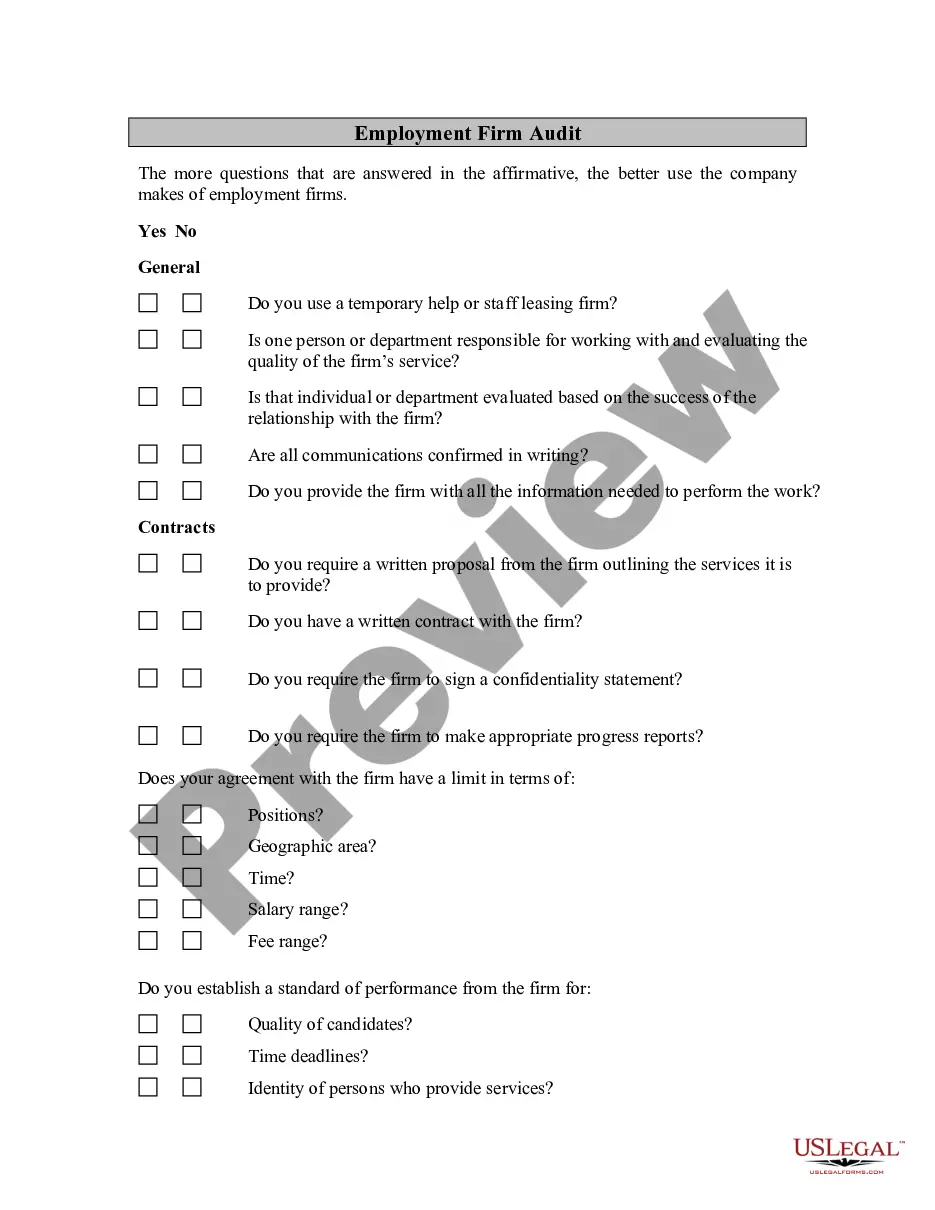
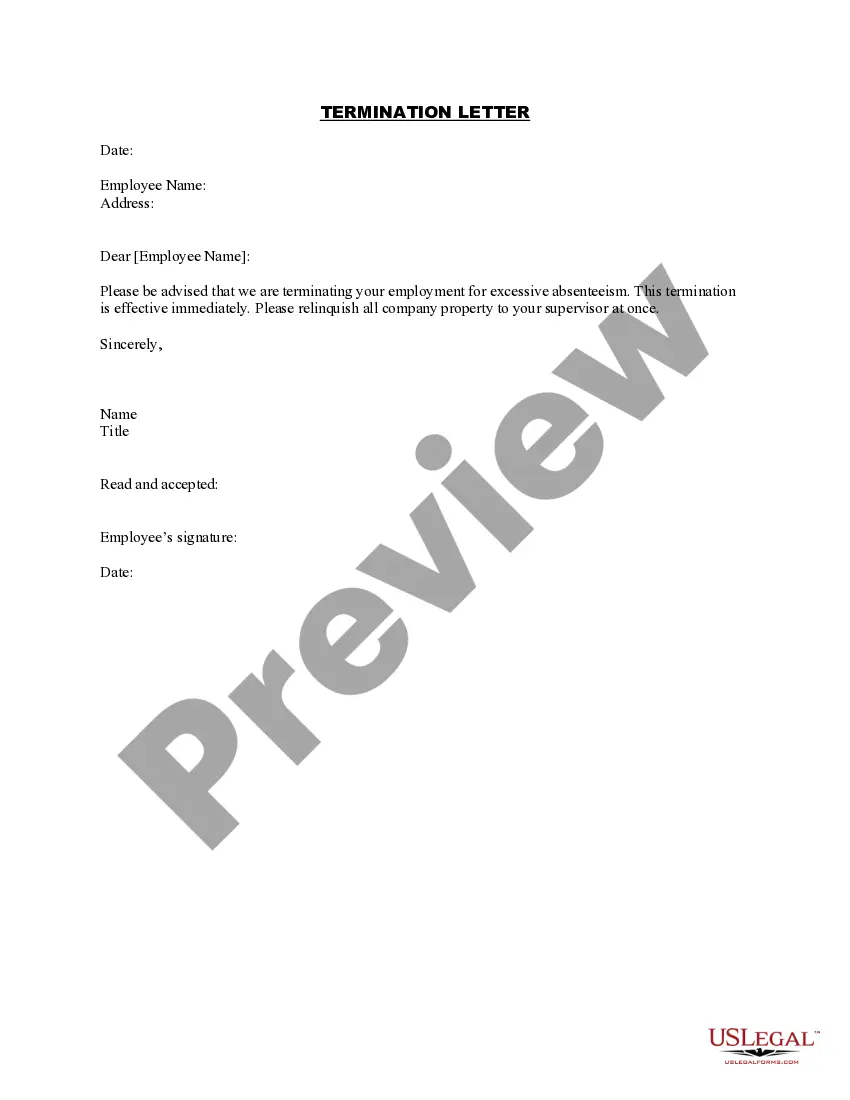
How to fill out Employment At Will Policy?
- Log in to your existing US Legal Forms account. If you do not have an account, create one to gain access.
- Select the appropriate form by reviewing the Preview mode and its description. Ensure it meets your specific local jurisdiction requirements.
- If necessary, use the Search tab to find alternative templates that suit your needs better.
- Purchase the document by clicking 'Buy Now' and selecting your desired subscription plan. You'll need to register if you're a first-time user.
- Complete the payment process with your credit card or through PayPal for a seamless transaction.
- Download the completed form to your device and find it under 'My Forms' in your profile for future reference.
By following these steps, you'll have access to an extensive library of over 85,000 fillable and editable legal forms that can empower individuals and attorneys alike.
Visit US Legal Forms today and streamline your legal document needs with confidence!
Form popularity
FAQ
There are various exceptions to the at-will employment rule that protect employees. The five notable exceptions include termination based on discrimination, retaliation, violation of public policy, breach of contract, and implied contract exceptions. Understanding these exceptions can empower you as an employee to better navigate your rights. If you face issues within this framework, resources like US Legal Forms can offer helpful insights and support.
Montana is a prominent example of a state that does not enforce strict at-will employment. In Montana, after a probationary period, employees can only be terminated for just cause. This exception provides significant protection for employees, emphasizing the importance of knowing the local regulations regarding employment at will with exceptions.
Yes, in many cases, you can be fired without warning under the at-will employment principle. However, certain exceptions may apply based on state laws or employment contracts. Employees may have rights to notice or a valid reason, particularly if the termination violates anti-discrimination laws. It’s crucial to recognize that employment at will with exceptions allows for different protections in various situations.
Several states have legal exceptions to at-will employment. Notably, Montana is well-known for its laws that prevent at-will termination after a probationary period. Additionally, other states may have specific statutes or cases that modify the at-will doctrine. Understanding these exceptions is essential when navigating employment at will with exceptions.
Some states have specific laws that limit the application of employment at will with exceptions. For example, Montana is unique in that it requires just cause for termination after a probationary period. States like California recognize public policy exceptions to at-will employment, which protect employees from wrongful termination. Understanding these distinctions is crucial for both employers and employees; it helps clarify rights and obligations in the workplace.
The common law rule exception refers to legal doctrines that modify the employment-at-will principle by incorporating specific legal protections for employees. These rules establish that employment cannot be terminated if it violates established public policies, contracts, or expectations of good faith. Understanding these legal standards helps employees identify their rights and protections in the workplace. For thorough information and legal forms tailored to these exceptions, consider US Legal Forms.
The most common exception to at-will employment involves public policy. This exception protects employees from being fired for reasons that contravene public interests, such as refusing to engage in illegal actions or reporting unlawful behavior. Recognizing this exception is essential for employees who may feel threatened with termination for standing up for their rights. For in-depth explanations and legal documentation, US Legal Forms is a reliable resource for employees.
When an employee can prove one of the exceptions to the employment-at-will principle, they may have grounds for legal action against their employer. This could lead to reinstatement, compensation for lost wages, or damages for emotional distress. Successfully demonstrating these exceptions highlights the employee’s rights and the potential accountability of the employer. Legal resources, like those at US Legal Forms, can provide valuable information for navigating these situations.
Exceptions at a job refer to particular circumstances under which the standard employment-at-will doctrine does not apply. This means that an employee may be protected from termination in specific situations, such as when they report illegal activities or when their termination violates a formal agreement. Understanding these exceptions is crucial for both employees and employers to navigate workplace rights and responsibilities. In such cases, seeking legal guidance from platforms like US Legal Forms can offer clarity and support.
The three common law exceptions to the employment-at-will doctrine include public policy, implied contract, and implied covenant of good faith and fair dealing. Public policy exceptions protect employees from termination for reasons that violate state or federal laws. Implied contracts often arise from employee handbooks or explicit promises made during the hiring process. Good faith and fair dealing exceptions prevent employers from terminating employees to avoid fulfilling contractual obligations.