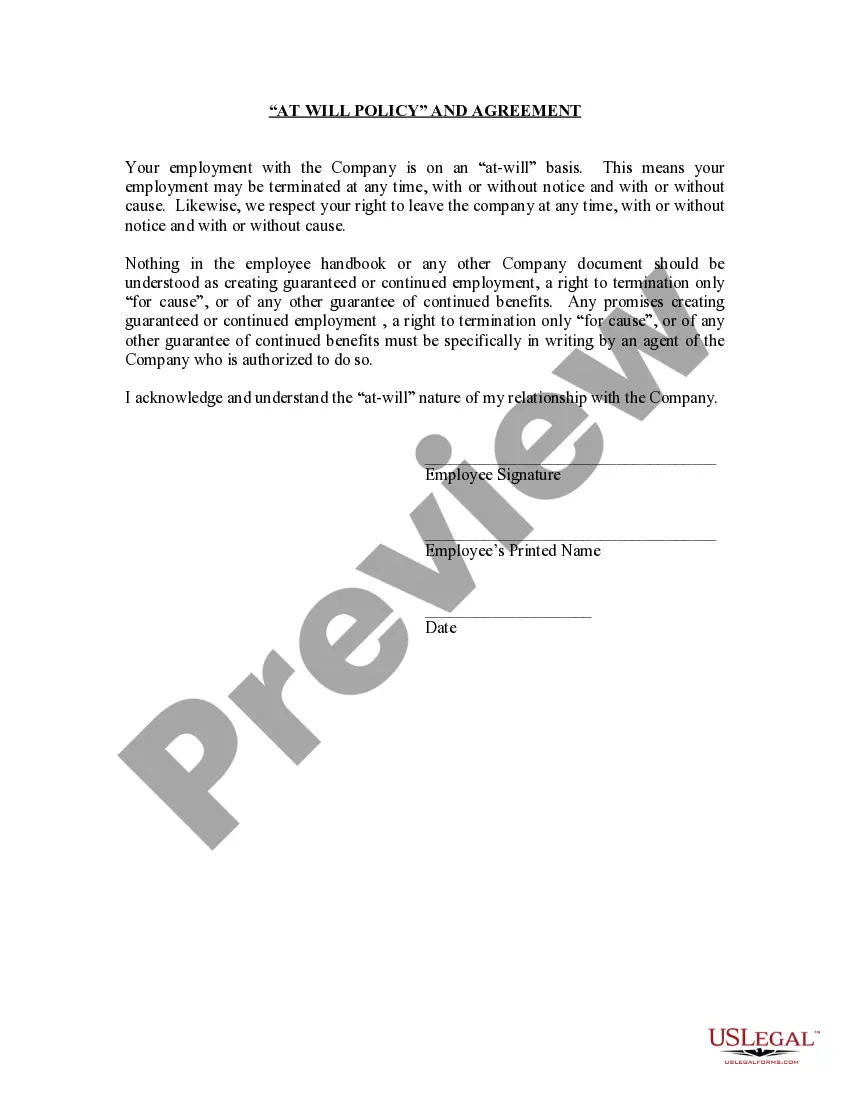
Benefits Employment Termination Without Prejudice
Description
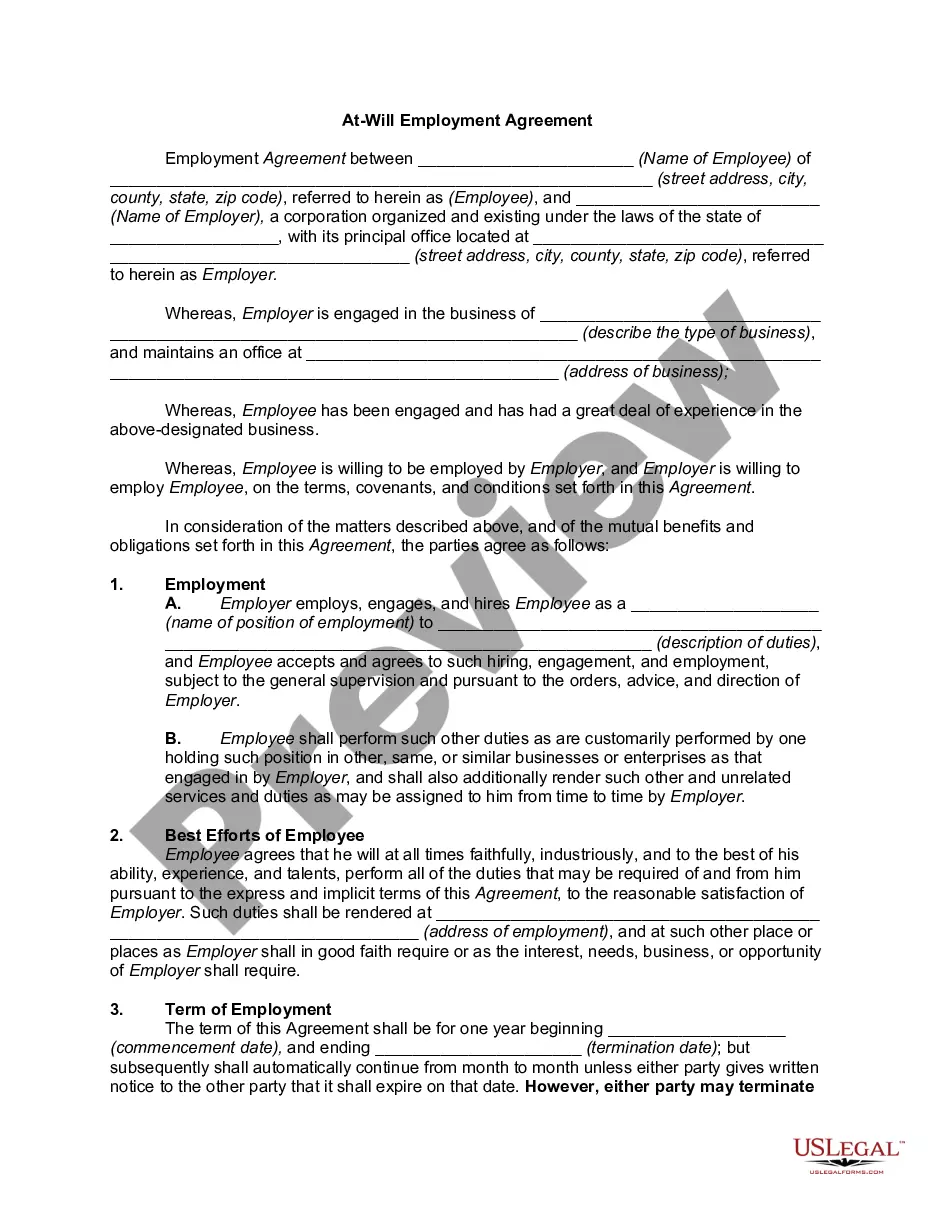
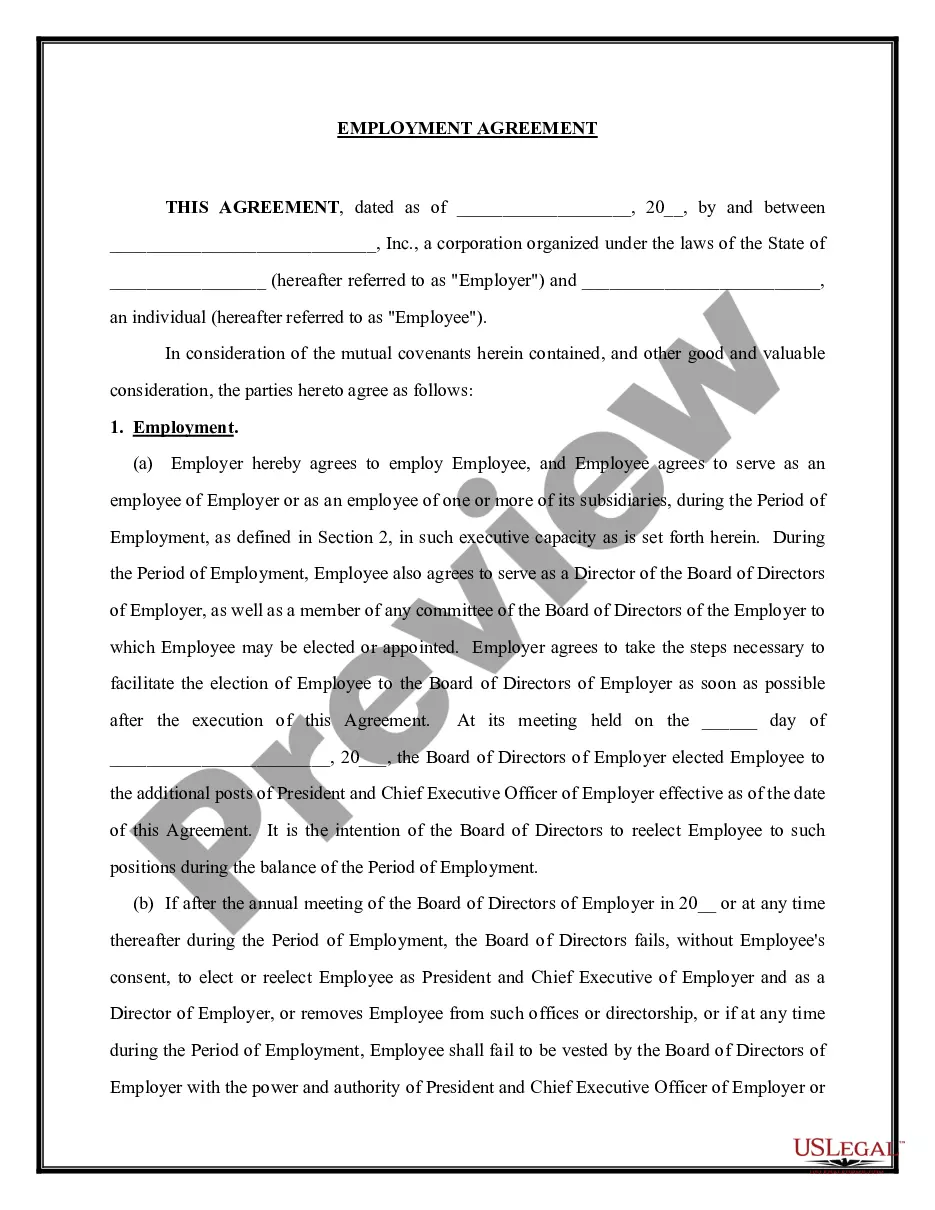
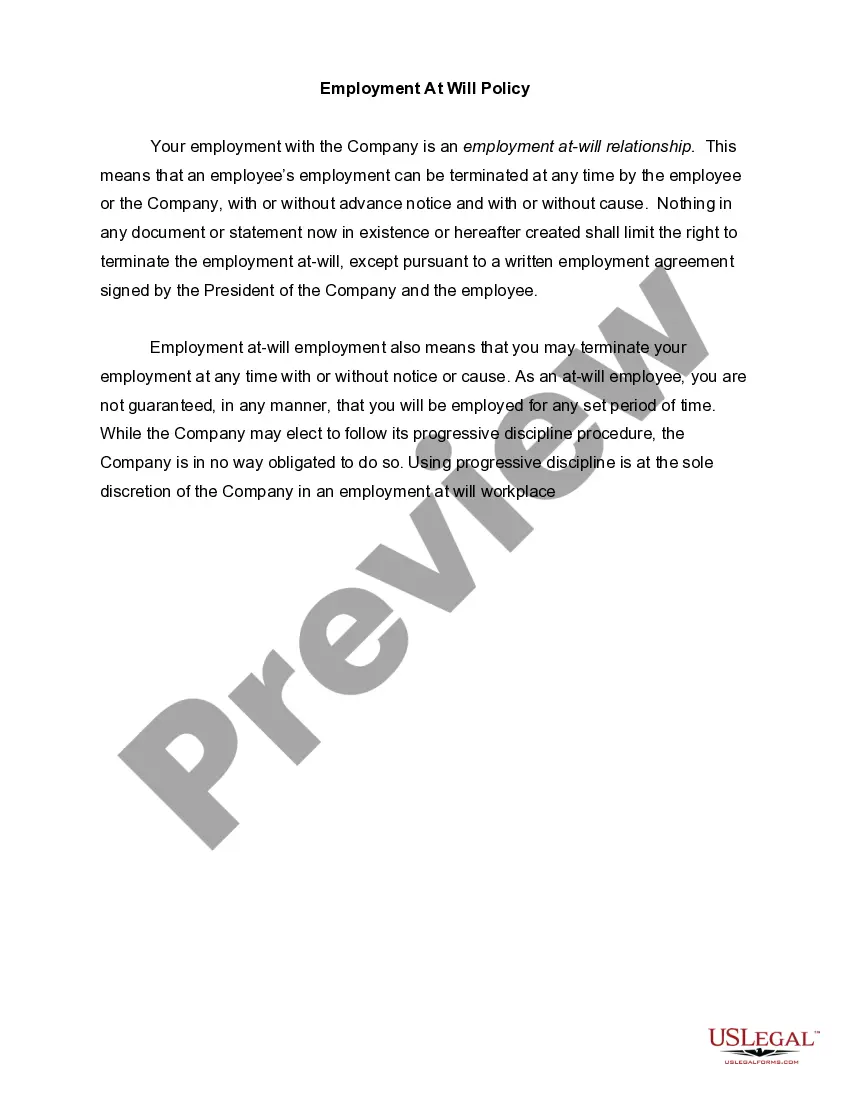
Get your form ready online
Our built-in tools help you complete, sign, share, and store your documents in one place.
Make edits, fill in missing information, and update formatting in US Legal Forms—just like you would in MS Word.
Download a copy, print it, send it by email, or mail it via USPS—whatever works best for your next step.
Sign and collect signatures with our SignNow integration. Send to multiple recipients, set reminders, and more. Go Premium to unlock E-Sign.
If this form requires notarization, complete it online through a secure video call—no need to meet a notary in person or wait for an appointment.
We protect your documents and personal data by following strict security and privacy standards.

Make edits, fill in missing information, and update formatting in US Legal Forms—just like you would in MS Word.

Download a copy, print it, send it by email, or mail it via USPS—whatever works best for your next step.

Sign and collect signatures with our SignNow integration. Send to multiple recipients, set reminders, and more. Go Premium to unlock E-Sign.

If this form requires notarization, complete it online through a secure video call—no need to meet a notary in person or wait for an appointment.

We protect your documents and personal data by following strict security and privacy standards.
Looking for another form?
Form popularity
FAQ
In Canada, the term 'without prejudice' refers to a legal principle that protects statements made in a negotiation from being used in court. This means that if you discuss settlement terms or potential resolutions, those discussions cannot be used against you later. The benefits of employment termination without prejudice often come into play during negotiations, allowing both parties to freely explore options without fear of legal repercussions. Understanding this concept can help you navigate employment matters more confidently.
Termination without clause means that an employee's contract can be ended without a formal reason stated within the contract. This type of termination typically offers more flexibility for employers. However, recognizing the benefits of employment termination without prejudice can help ensure that such actions are conducted fairly, legally, and with proper communication to the affected employee.
Using 'without prejudice' in a final wage letter protects the sender's legal position by ensuring that the letter cannot be used against them in future disputes. It creates a safe space for discussing owed wages, severance packages, or other claims. By utilizing this approach, you can leverage the benefits of employment termination without prejudice to maintain clarity while seeking resolution.
A signature marked without prejudice signifies that the signed document cannot be held against the signer in future legal matters. This allows individuals to negotiate or communicate more freely, reducing the fear of repercussions. Understanding the benefits of employment termination without prejudice can empower both parties to make informed decisions throughout the process.
'Without prejudice' in a clause indicates that statements or actions cannot be used against a party in a later legal proceeding. This term enhances negotiation and communication, allowing parties to express their views without risking legal repercussions. It highlights the benefits of employment termination without prejudice, as it can foster an environment for constructive resolution.
An example of without prejudice could be a negotiation where one party makes a settlement offer, declaring that the terms should not be taken as an admission of liability. This approach allows for open dialogue, encouraging compromise without the fear of compromising legal positions. Exploring the benefits of employment termination without prejudice can clarify options for both employers and employees in these discussions.
A termination clause without prejudice allows an employer to end an employee's contract while retaining the right to refer to the situation in the future if necessary. This means that the termination does not limit the employer's ability to protect their interests in any subsequent legal discussions. By understanding the benefits of employment termination without prejudice, both parties can navigate potential disputes more effectively.