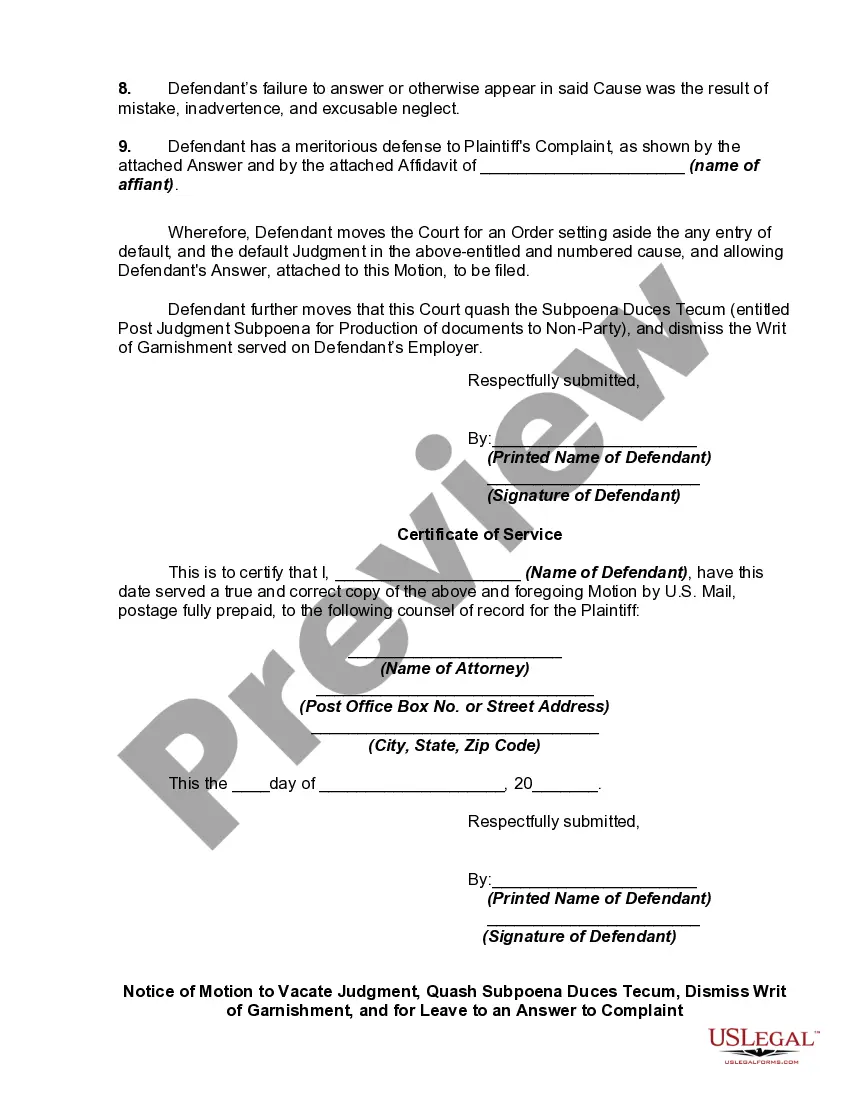
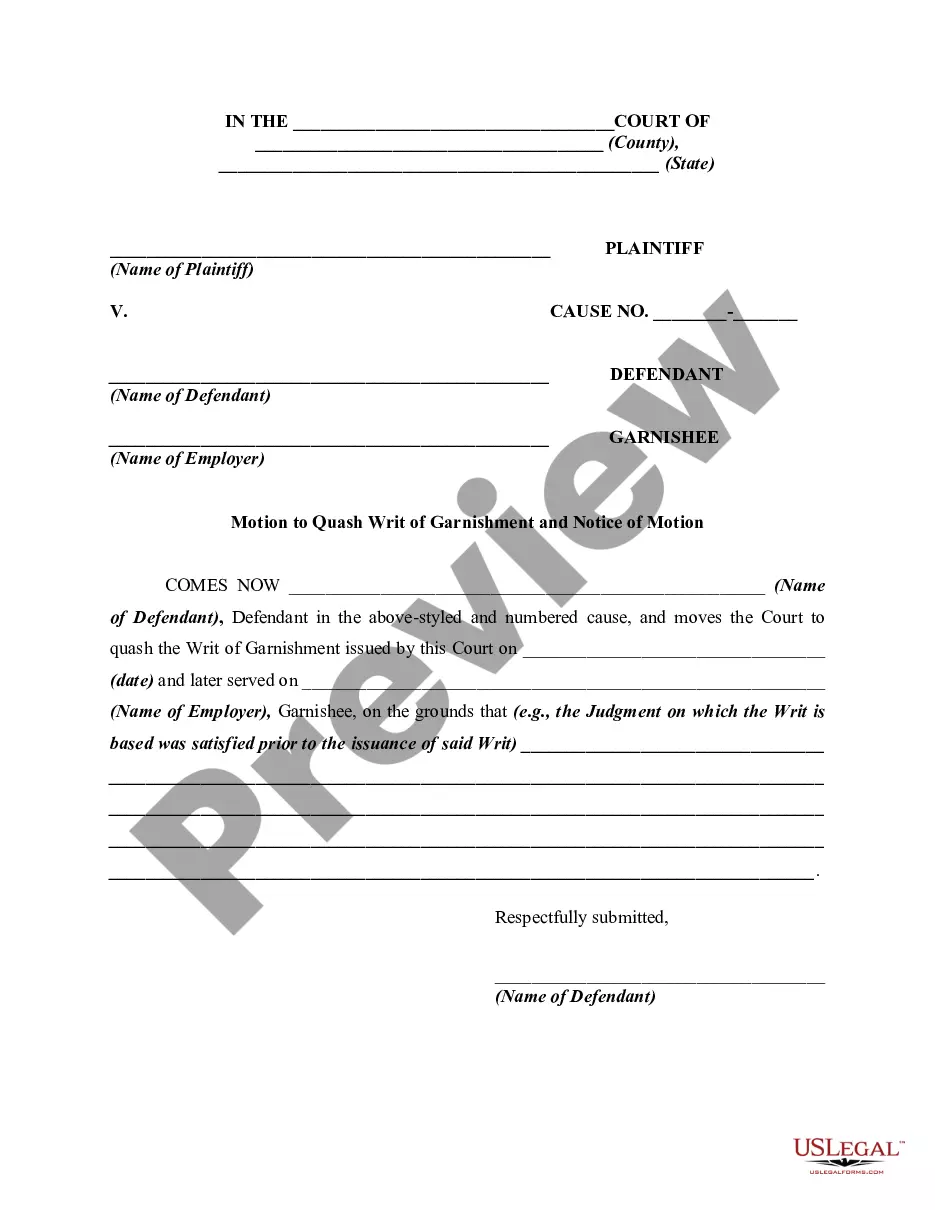
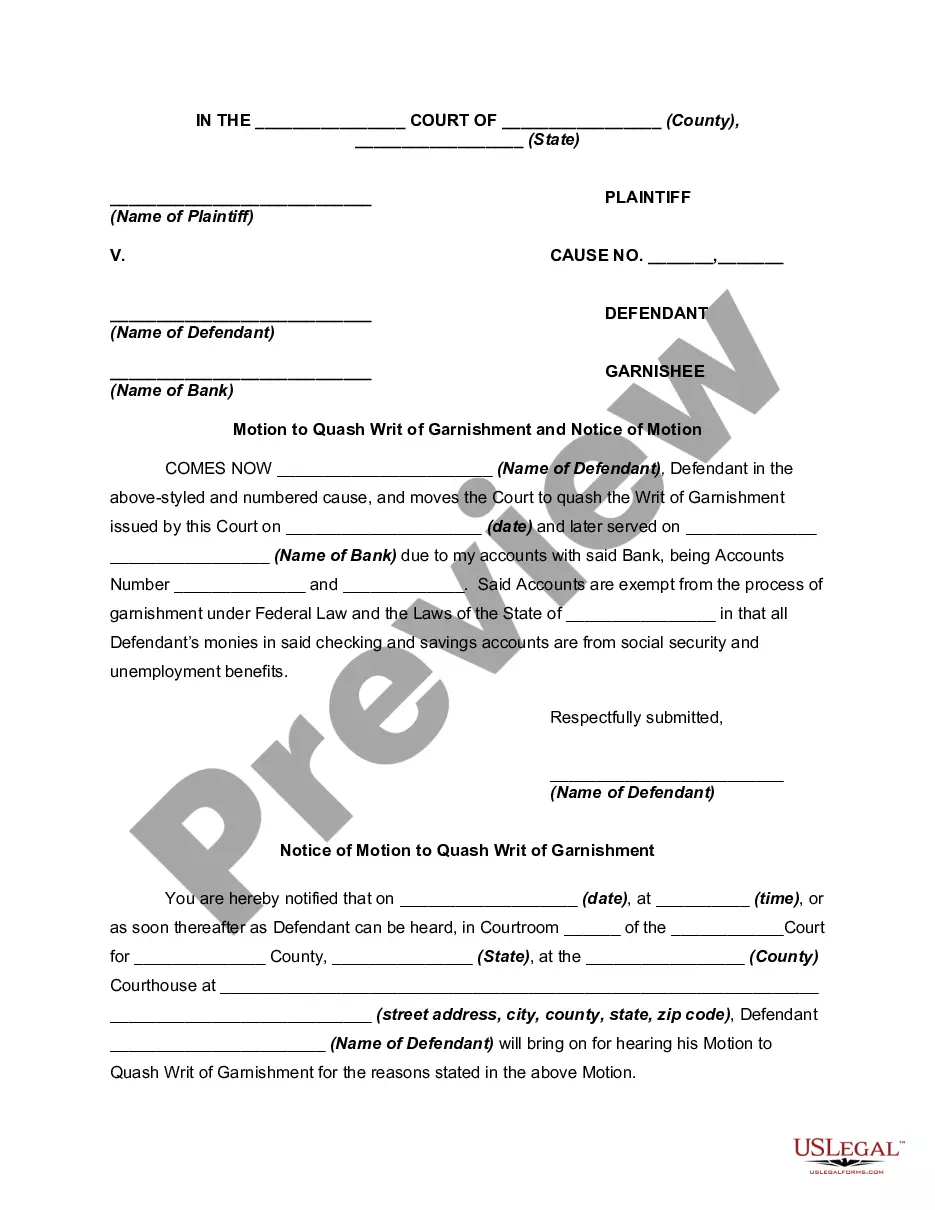
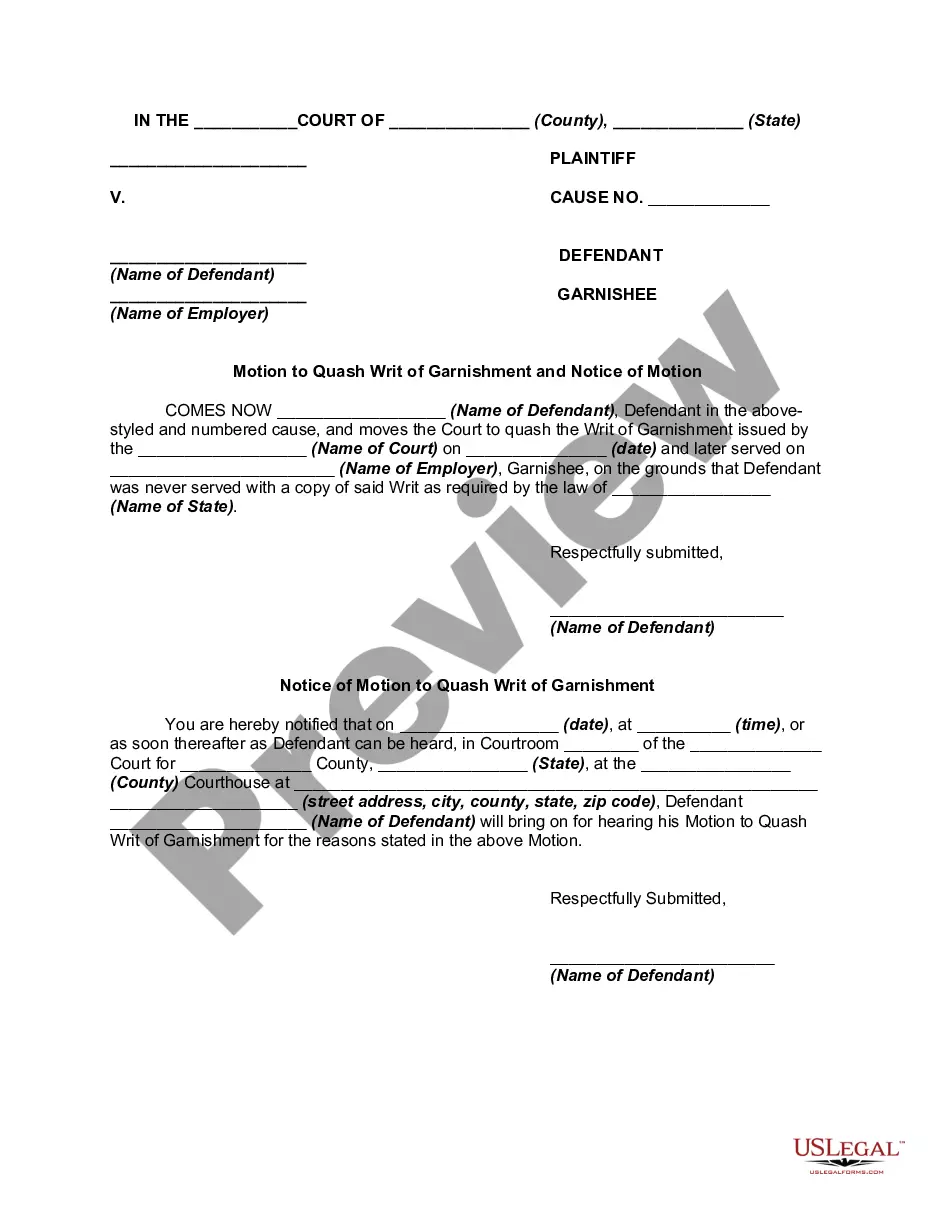
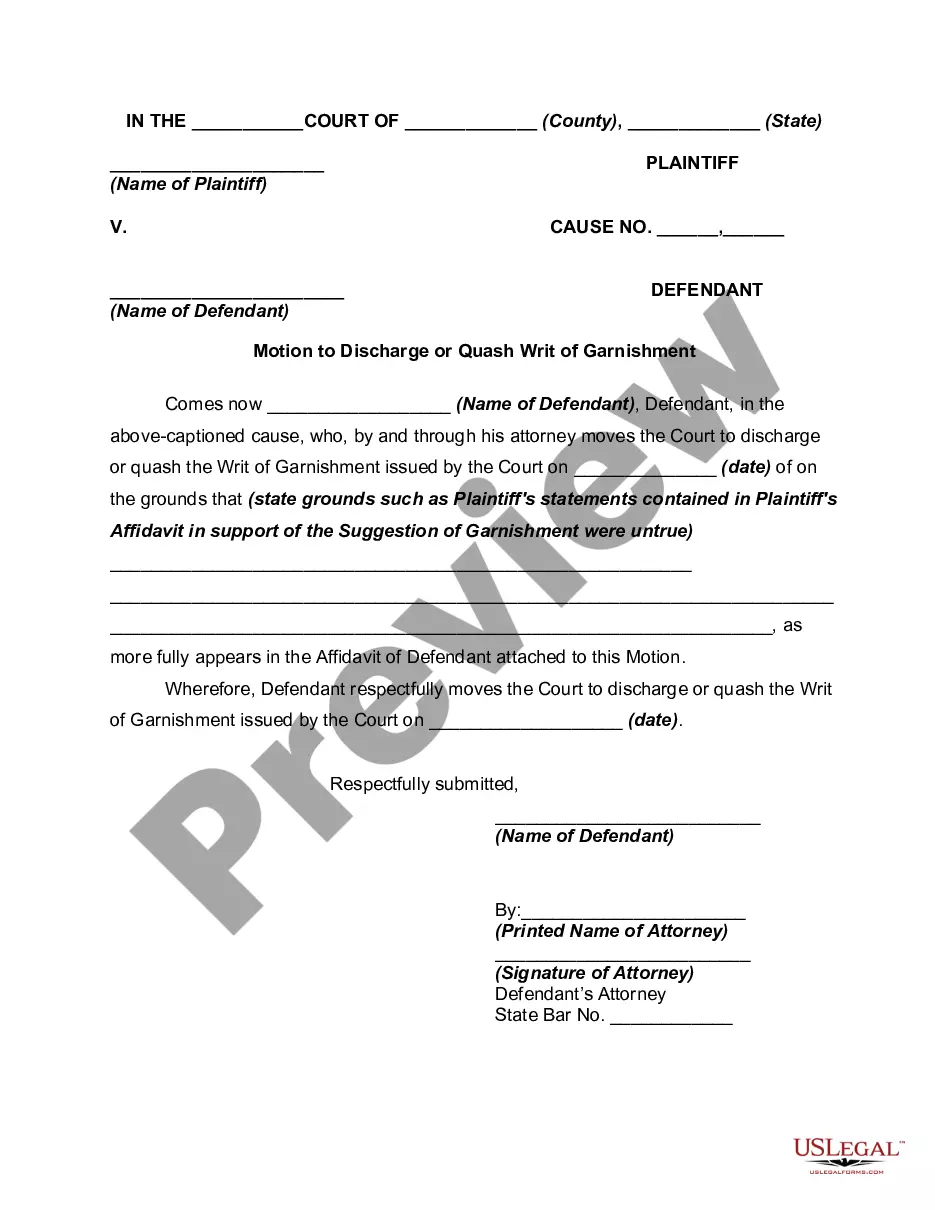
Motion To Quash Garnishment Missouri Form
Description
Get your form ready online
Our built-in tools help you complete, sign, share, and store your documents in one place.
Make edits, fill in missing information, and update formatting in US Legal Forms—just like you would in MS Word.
Download a copy, print it, send it by email, or mail it via USPS—whatever works best for your next step.
Sign and collect signatures with our SignNow integration. Send to multiple recipients, set reminders, and more. Go Premium to unlock E-Sign.
If this form requires notarization, complete it online through a secure video call—no need to meet a notary in person or wait for an appointment.
We protect your documents and personal data by following strict security and privacy standards.

Make edits, fill in missing information, and update formatting in US Legal Forms—just like you would in MS Word.

Download a copy, print it, send it by email, or mail it via USPS—whatever works best for your next step.

Sign and collect signatures with our SignNow integration. Send to multiple recipients, set reminders, and more. Go Premium to unlock E-Sign.

If this form requires notarization, complete it online through a secure video call—no need to meet a notary in person or wait for an appointment.

We protect your documents and personal data by following strict security and privacy standards.
Looking for another form?




Form popularity
FAQ
A motion to quash writ of garnishment is a legal request asking the court to stop or invalidate a garnishment order. This type of motion can be crucial if you believe the garnishment is illegal or if it improperly affects your finances. Filing the Motion to quash garnishment Missouri form can help protect your rights and financial wellbeing. Always check the specific grounds for filing to ensure your motion is valid.
To file a motion for continuance in Missouri, you should prepare a written request explaining the reasons for the delay and the specific new date you propose. Include the Motion to quash garnishment Missouri form if it is relevant to your situation. Submit the motion to the court and ensure the other party receives a copy. Timely filing may help avoid issues with your scheduling.
Filing a motion in Missouri starts with preparing your motion paper, including the relevant details and the specific request you are making. Once you have the Motion to quash garnishment Missouri form, you will submit it to the court clerk's office. After filing, serve a copy to the other party involved in the case. Always be mindful of any court-imposed deadlines.
To file for visitation rights without a lawyer in Missouri, you first need to gather the necessary forms, including the Motion to quash garnishment Missouri form if applicable. Next, you should complete the forms thoroughly and file them with the court. It’s also beneficial to prepare for the court hearing by organizing your arguments and any evidence that supports your case.
In Missouri, parties typically have 30 days to respond to a motion once it has been filed. However, this timeline can vary based on the court's schedule or the complexity of the case. It is essential to check the specific requirements for your motion. Effective use of the Motion to quash garnishment Missouri form can streamline your process.
Stopping a wage garnishment in Missouri involves filing a Motion to Quash Garnishment Missouri form and demonstrating your eligibility for exemptions. You may also consider reaching out to your creditor directly to discuss payment alternatives that can avoid garnishment. It is important to act quickly, as timelines can dictate the outcome significantly. Legal resources, such as those provided by US Legal Forms, can guide you through this process for better results.
To stop wage garnishment in Missouri, you can file a Motion to Quash Garnishment Missouri form with the court, asserting your right for an exemption. This process may involve providing financial documents and proof of your income to support your claims. Another option is to negotiate with your creditor for a repayment plan that avoids garnishment altogether. Seeking help from legal professionals or platforms like US Legal Forms can be beneficial.
In Missouri, wage garnishment can persist until the entire debt is settled or the court issues an order to stop the garnishment. The duration can vary based on the amount owed and the payment arrangements made with the creditor. If you find the garnishment burdensome, submitting a Motion to Quash Garnishment Missouri form may help you address or challenge the garnishment effectively. Understanding this can assist you in planning your financial future.
In Missouri, the garnishment rule allows creditors to withhold a portion of your wages to satisfy a debt, typically up to 25% of your disposable income. However, certain exemptions protect your income, such as unemployment or social security benefits. It's crucial to know your rights and understand the process involved in wage garnishment, including how to file a Motion to Quash Garnishment Missouri form if necessary. Being knowledgeable will empower you to manage your financial situation.
While there is no guaranteed way to completely avoid wage garnishment, you can take certain steps to protect your income. Submitting a Motion to Quash Garnishment Missouri form may help you contest the garnishment if you qualify for exemptions. Additionally, negotiating directly with your creditor can lead to arrangements that reduce or eliminate the garnishment. Always consider seeking professional legal assistance for the best outcomes.