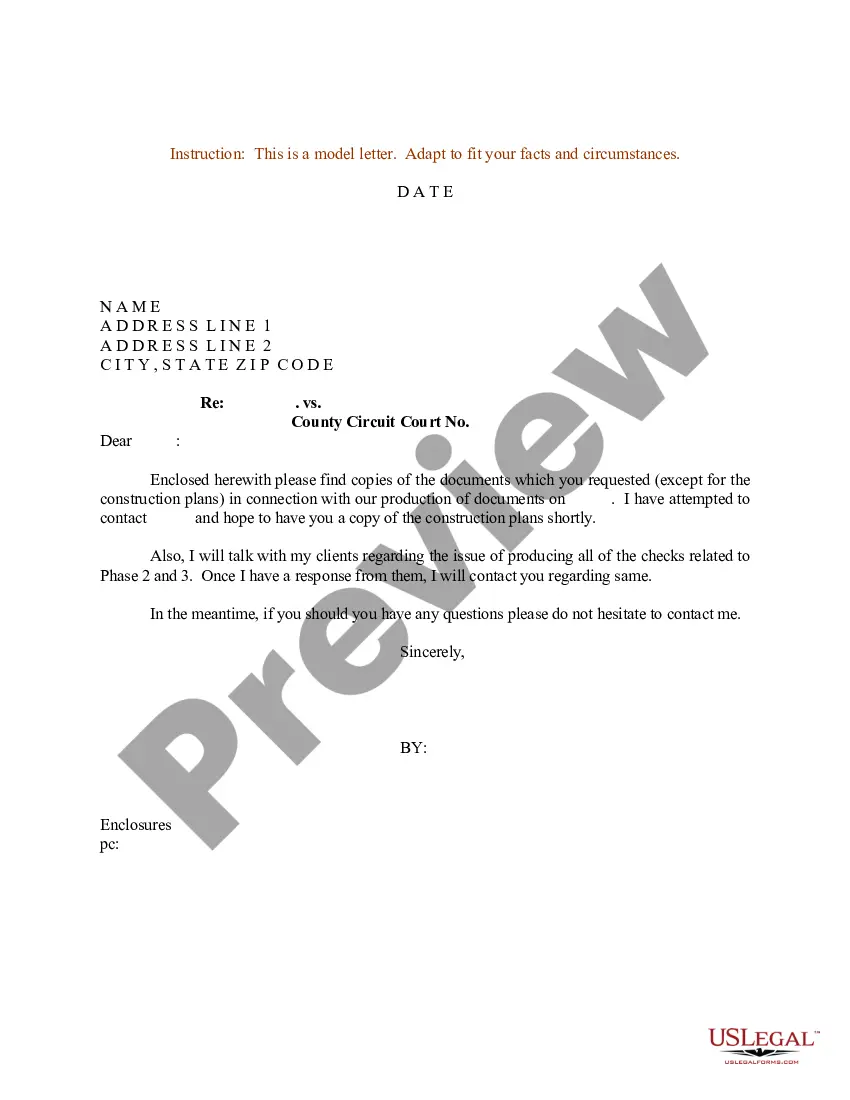
Form Letter Example
Description
Get your form ready online
Our built-in tools help you complete, sign, share, and store your documents in one place.
Make edits, fill in missing information, and update formatting in US Legal Forms—just like you would in MS Word.
Download a copy, print it, send it by email, or mail it via USPS—whatever works best for your next step.
Sign and collect signatures with our SignNow integration. Send to multiple recipients, set reminders, and more. Go Premium to unlock E-Sign.
If this form requires notarization, complete it online through a secure video call—no need to meet a notary in person or wait for an appointment.
We protect your documents and personal data by following strict security and privacy standards.

Make edits, fill in missing information, and update formatting in US Legal Forms—just like you would in MS Word.

Download a copy, print it, send it by email, or mail it via USPS—whatever works best for your next step.

Sign and collect signatures with our SignNow integration. Send to multiple recipients, set reminders, and more. Go Premium to unlock E-Sign.

If this form requires notarization, complete it online through a secure video call—no need to meet a notary in person or wait for an appointment.

We protect your documents and personal data by following strict security and privacy standards.
Looking for another form?
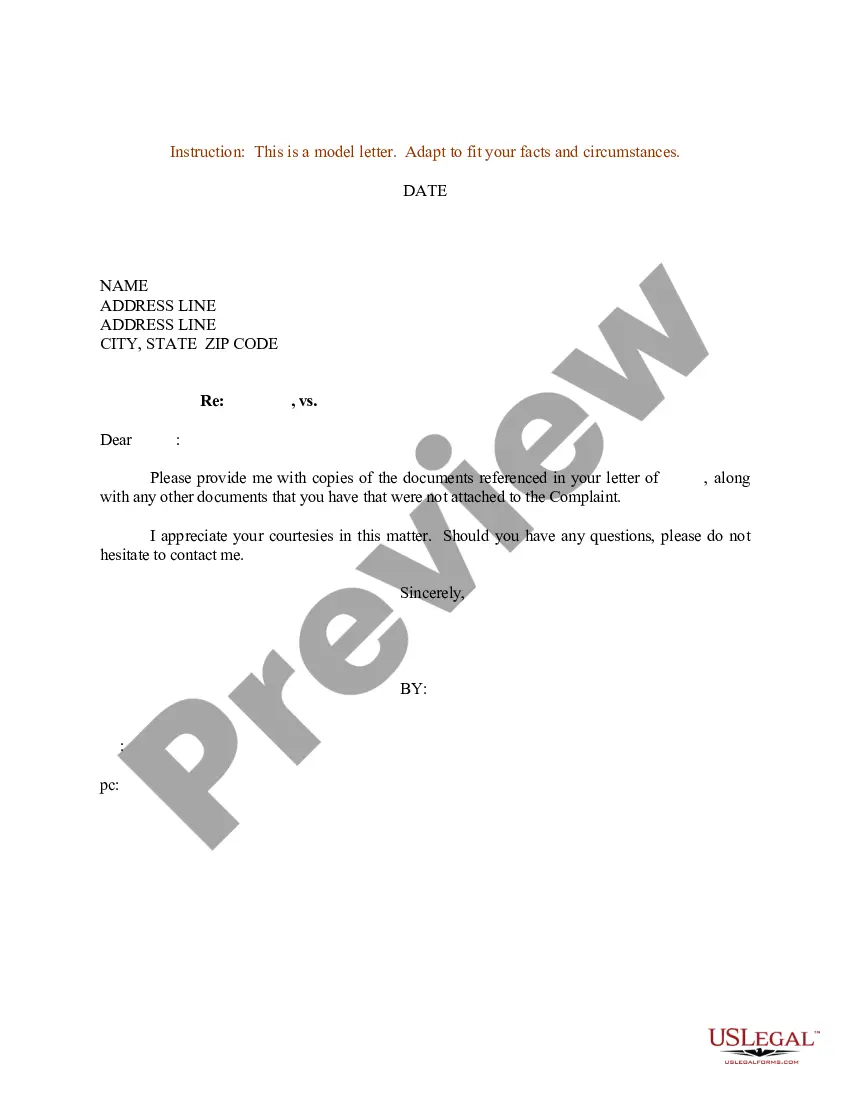
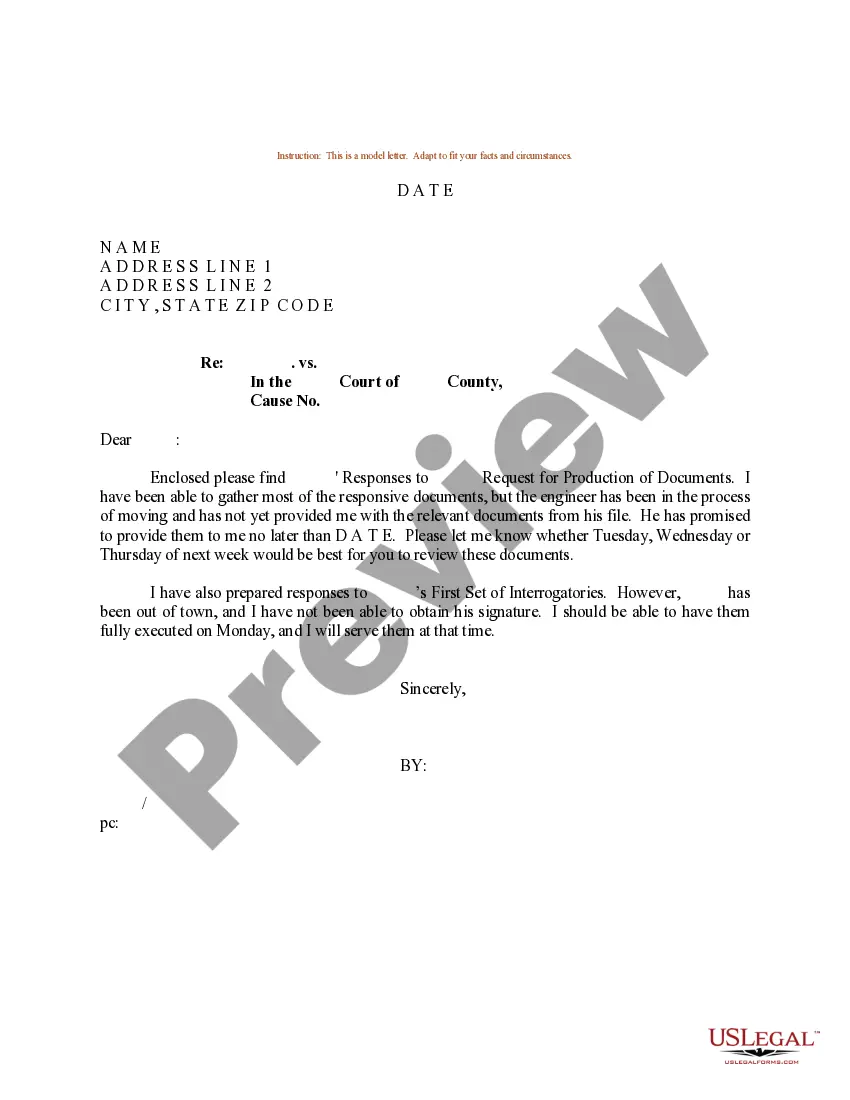
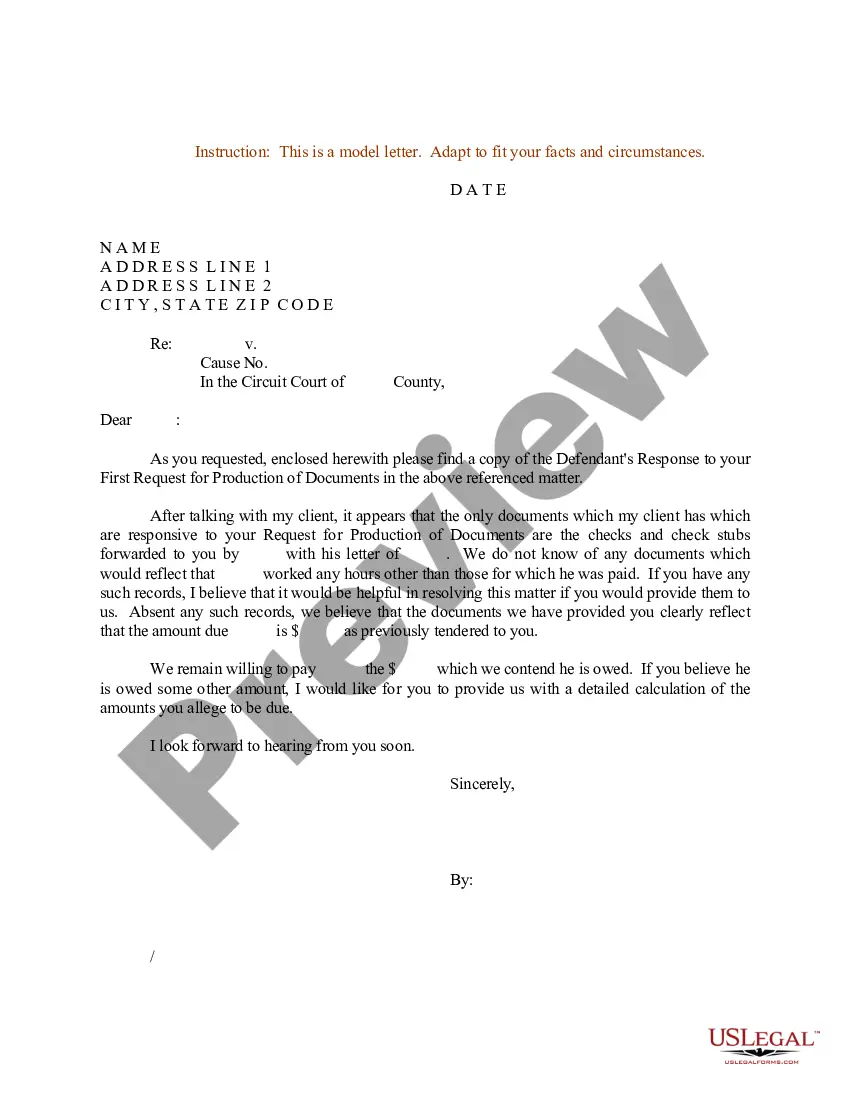
How to fill out Sample Letter For Production Of Documents?
The Sample Letter Template you see on this page is a versatile formal blueprint created by experienced attorneys in compliance with national and local laws and regulations. For over 25 years, US Legal Forms has supplied individuals, businesses, and legal practitioners with more than 85,000 validated, state-specific documents for any commercial and personal situation. It’s the fastest, simplest, and most trustworthy method to acquire the documentation you require, as the service ensures bank-level data protection and anti-malware safeguards.
Obtaining this Sample Letter Template will require only a few straightforward steps.
Select the format you desire for your Sample Letter Template (PDF, Word, RTF) and download the sample onto your device.
- Search for the document you require and examine it.
- Scan through the sample you sought and preview it or review the form details to confirm it meets your needs. If it does not, utilize the search function to find the appropriate one. Click Buy Now once you have found the template you need.
- Sign up and Log In.
- Choose the pricing plan that fits you and create an account. Use PayPal or a credit card to make a swift payment. If you already possess an account, Log In and verify your subscription to proceed.
- Obtain the editable template.
Form popularity
FAQ
Write your contact information and date at the top if you're using block style (see below). On a new line write a salutation, such as ?Dear Ms. Smith,? or ?To Whom It May Concern.? Write the body of your letter in a standard paragraph format. On a new line write a complimentary close, such as ?Sincerely,? or ?Best,?
A form letter is a letter written from a template, rather than being specially composed for a specific recipient. The most general kind of form letter consists of one or more regions of boilerplate text interspersed with one or more substitution placeholders.
Begin with the most appropriate greeting Using the professional greeting of "Dear" followed by the recipient's name or title is appropriate in most cases. In cases where you have an established relationship, "Hello," or "Greetings" can also be used, followed by the recipient's name.
How to write a formal letter Write your name and contact information. ... Include the date. ... Include the recipient's name and contact information. ... Write a subject line for AMS style. ... Write a salutation for block style. ... Write the body of the letter. ... Include a sign-off. ... Proofread your letter.
The format of a formal letter typically includes the sender's address, date, recipient's address, salutation, body paragraphs, closing, and the sender's signature. It is important to maintain a professional tone and adhere to standard conventions in formatting a formal letter.