Held Corporation For Business Law
Description
Get your form ready online
Our built-in tools help you complete, sign, share, and store your documents in one place.
Make edits, fill in missing information, and update formatting in US Legal Forms—just like you would in MS Word.
Download a copy, print it, send it by email, or mail it via USPS—whatever works best for your next step.
Sign and collect signatures with our SignNow integration. Send to multiple recipients, set reminders, and more. Go Premium to unlock E-Sign.
If this form requires notarization, complete it online through a secure video call—no need to meet a notary in person or wait for an appointment.
We protect your documents and personal data by following strict security and privacy standards.

Make edits, fill in missing information, and update formatting in US Legal Forms—just like you would in MS Word.

Download a copy, print it, send it by email, or mail it via USPS—whatever works best for your next step.

Sign and collect signatures with our SignNow integration. Send to multiple recipients, set reminders, and more. Go Premium to unlock E-Sign.

If this form requires notarization, complete it online through a secure video call—no need to meet a notary in person or wait for an appointment.

We protect your documents and personal data by following strict security and privacy standards.
Looking for another form?


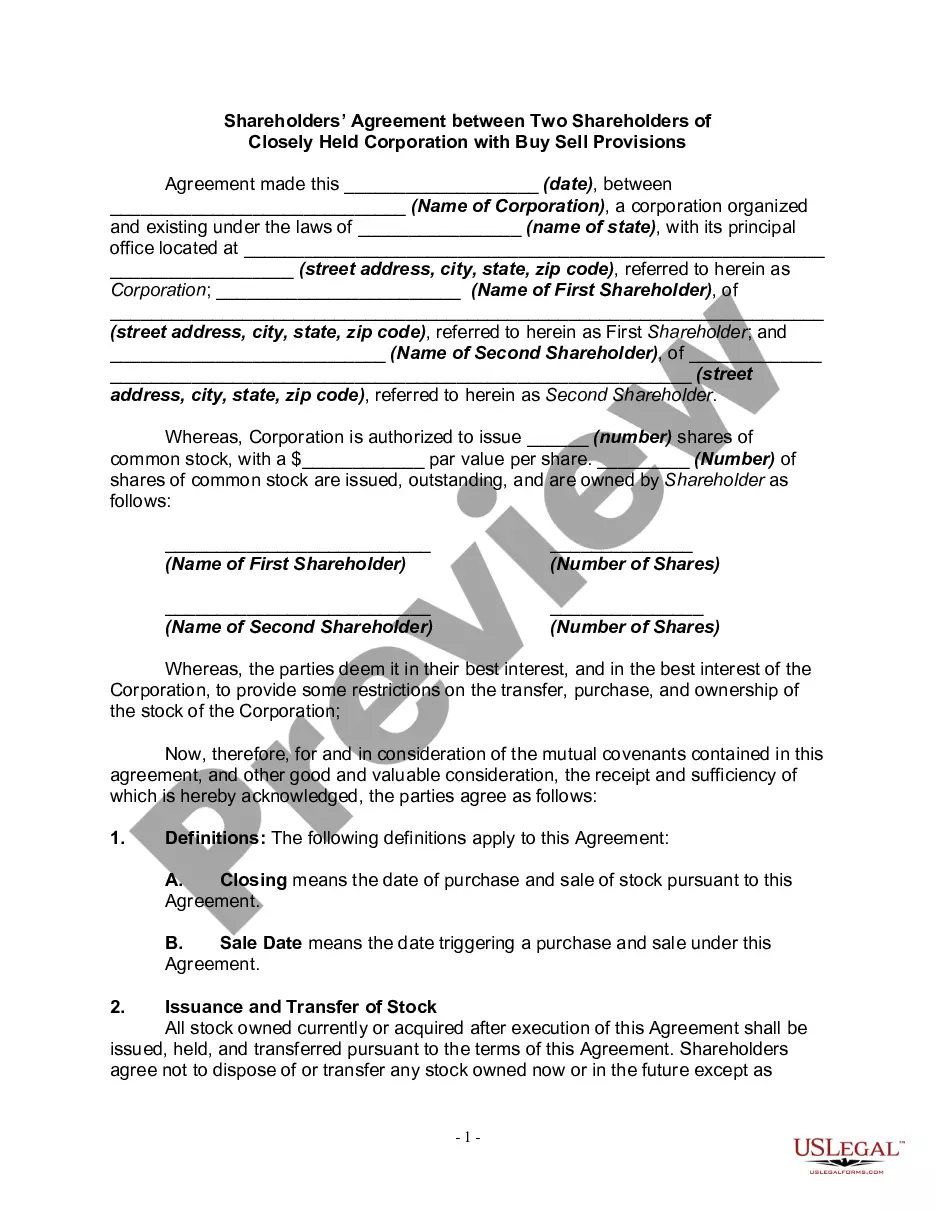
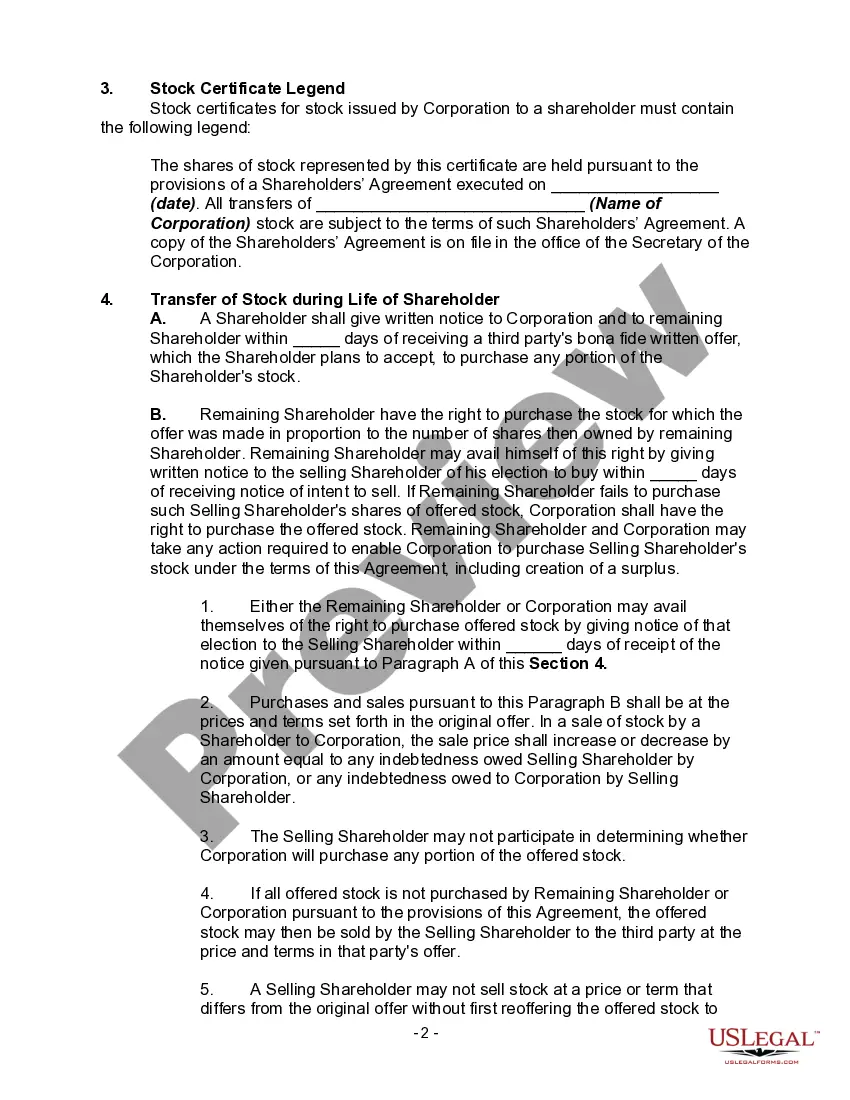
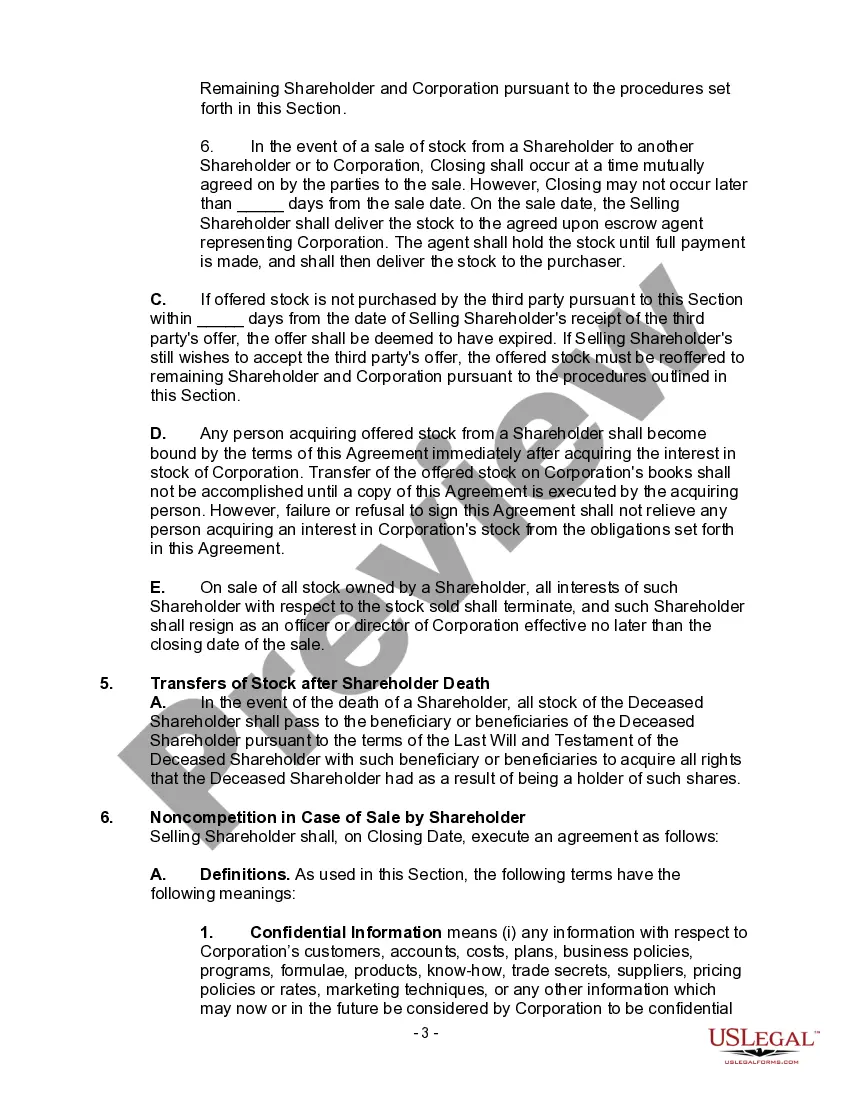
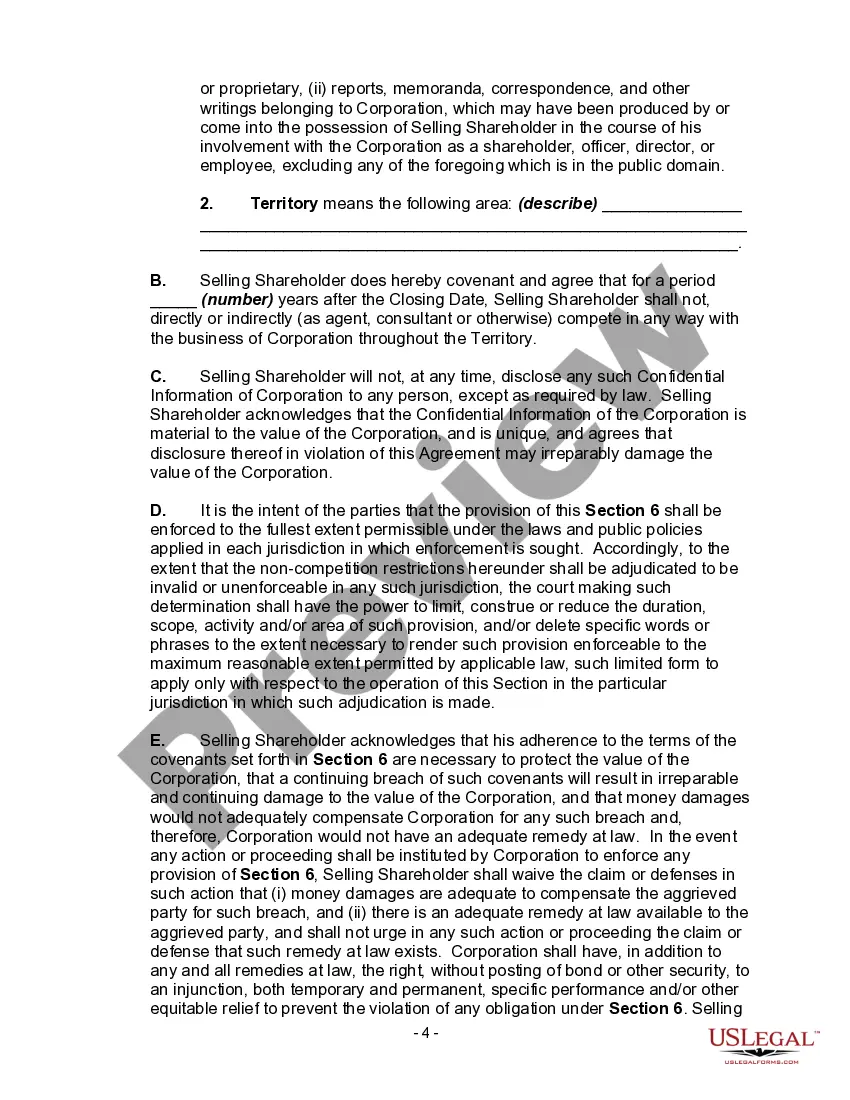
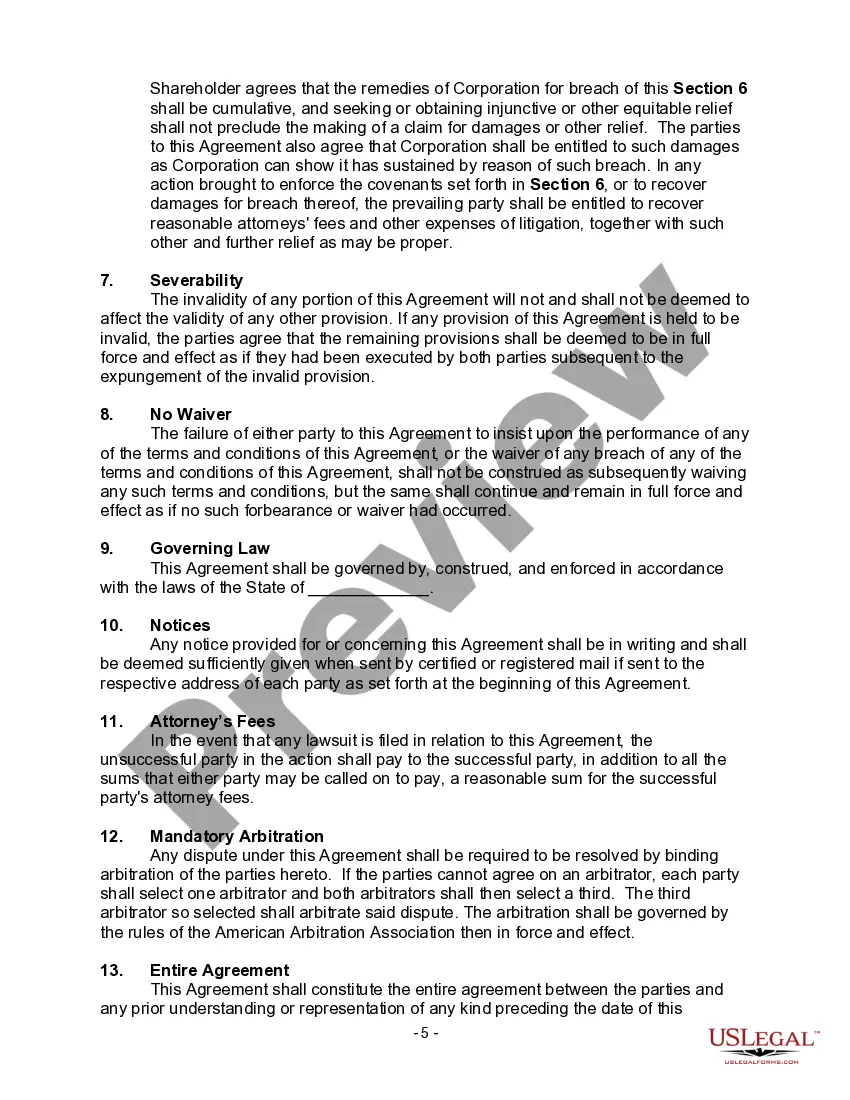
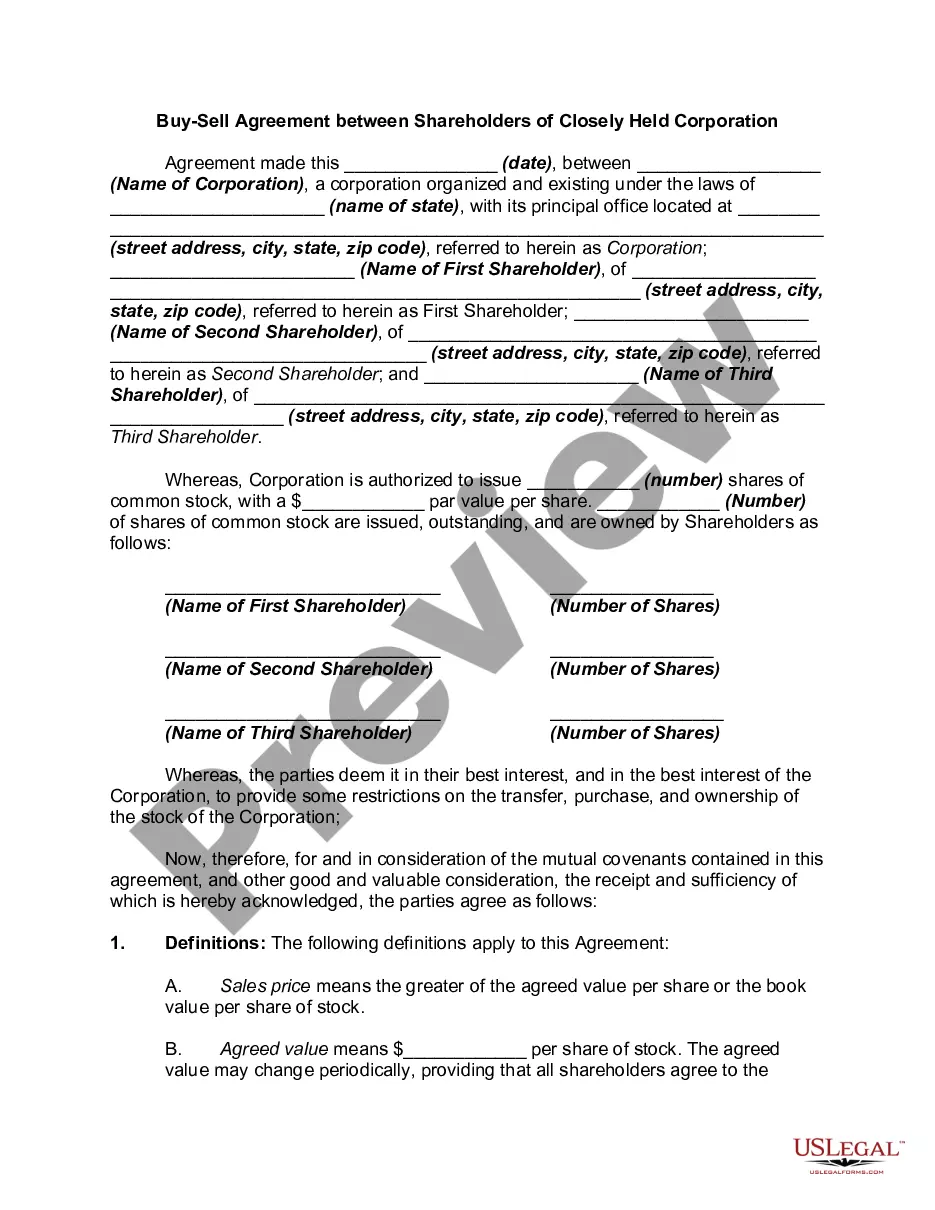
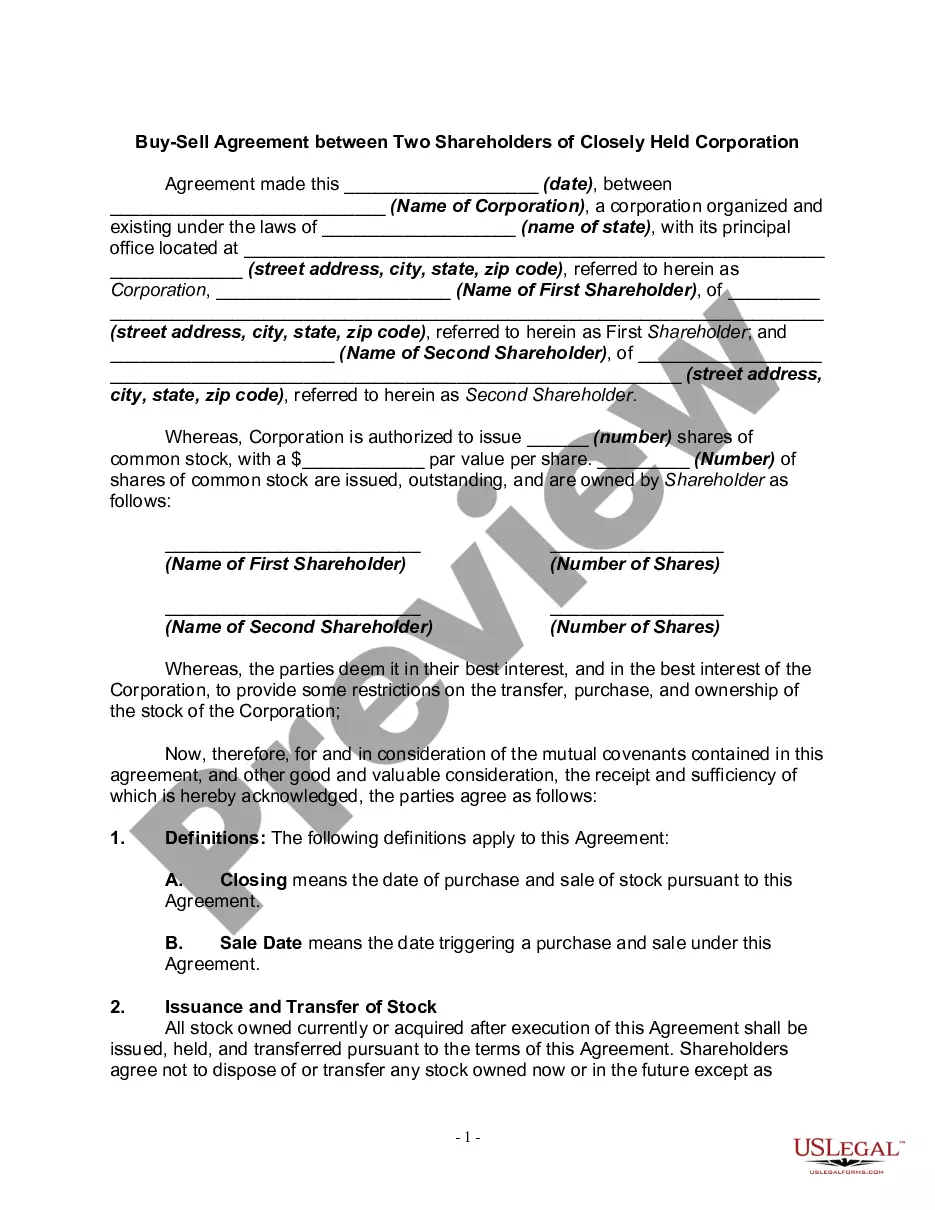
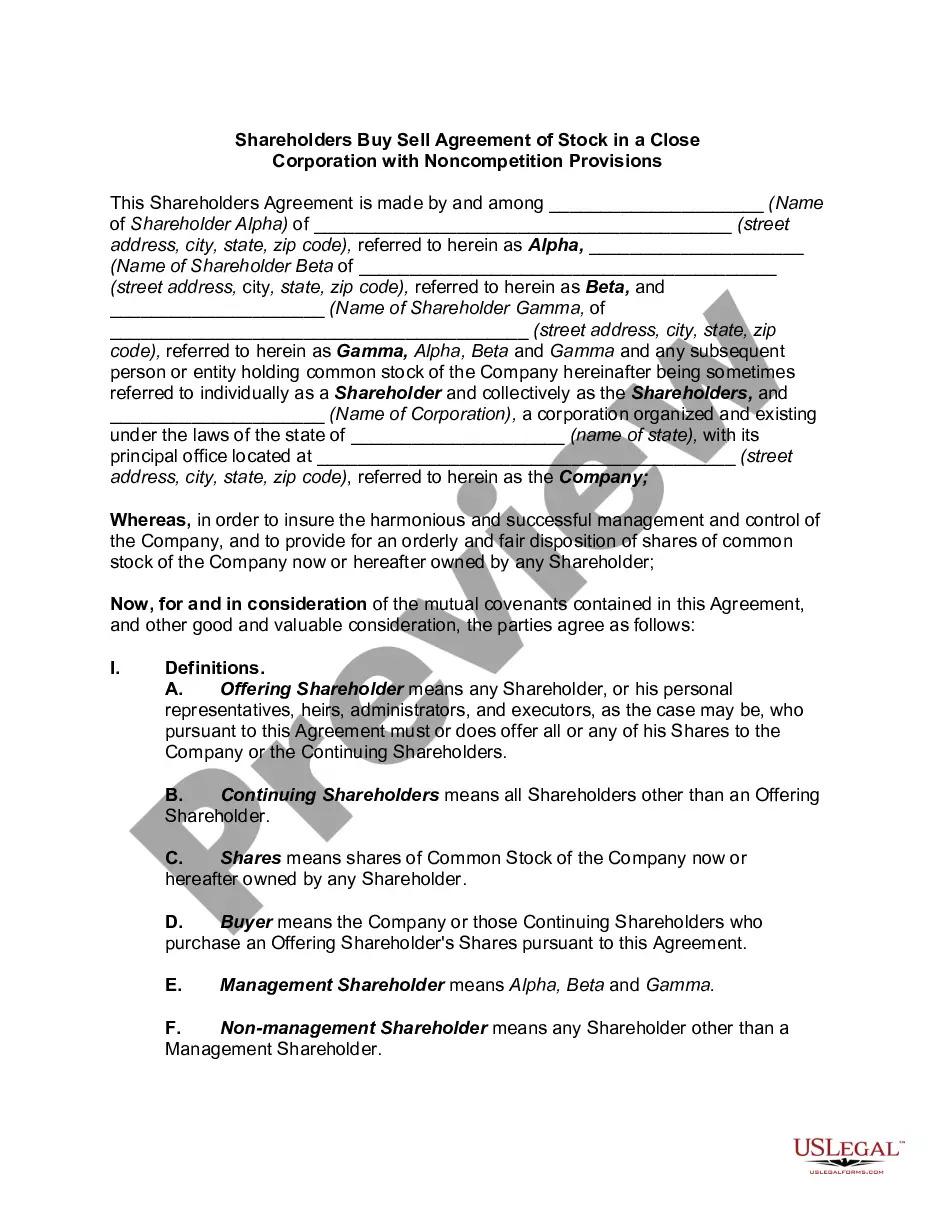
How to fill out Shareholders' Agreement Between Two Shareholders Of Closely Held Corporation With Buy Sell Provisions?
Precisely composed official documents are one of the crucial assurances for preventing issues and litigation, yet obtaining them without the help of a lawyer can be time-consuming.
Whether you need to swiftly locate a current Held Corporation For Business Law or any other forms for employment, family, or business contexts, US Legal Forms is always available to assist.
The procedure is even more straightforward for current users of the US Legal Forms library. If your subscription is active, you only need to Log In to your account and hit the Download button next to the selected file. Furthermore, you can access the Held Corporation For Business Law at any time, as all documents previously obtained on the platform are accessible within the My documents section of your profile. Save time and money on creating formal documents. Experience US Legal Forms today!
- Ensure that the document fits your situation and locality by reviewing the description and preview.
- Search for another example (if required) using the Search bar in the header of the page.
- Press Buy Now once you discover the appropriate template.
- Choose the pricing plan, Log In to your account or create a new one.
- Select your preferred payment method to buy the subscription plan (using a credit card or PayPal).
- Choose PDF or DOCX file format for your Held Corporation For Business Law.
- Click Download, then print the template to complete it or upload it to an online editor.
Form popularity
FAQ
A company is a broad term that can refer to any business entity, including sole proprietorships or partnerships, while a corporation is a specific type of company that is legally distinct from its owners. Corporations provide limited liability to their shareholders, protecting personal assets from business debts. Additionally, held corporations often benefit from more structured management and regulations under business law compared to other forms of companies. Understanding these differences is crucial for choosing the right business structure and US Legal Forms can assist you in navigating these definitions effectively.
Being a closely held corporation means that the ownership of the company is concentrated among a small group of individuals, often family or friends. These organizations prioritize personal relationships in management and decision-making, which can lead to a unique corporate culture. Such structures offer advantages in privacy and operational efficiency within the context of held corporations for business law.
The terms 'public corporation' and 'publicly held corporation' often cause confusion, but they generally refer to the same concept. Both denote companies whose shares are traded on the stock market and available to a wide array of investors. In contrast, held corporations often limit ownership, focusing on more private operations and less regulatory scrutiny.
A held corporation refers to a business entity where shares are owned by a small number of shareholders, often resulting in private management. This structure allows minimum regulatory overhead while facilitating flexible governance. Understanding the nuances of held corporations for business law enables better strategic planning and risk management.
One key advantage of a closely held or private corporation is the enhanced control owners have over business operations and decision-making. These corporations can make swift decisions without the need to consult numerous shareholders, leading to increased agility. Additionally, private corporations often face fewer formalities and regulations, which can significantly reduce operational costs.
A widely held corporation has its shares owned by a large number of shareholders and is typically traded on stock exchanges. This kind of corporation enjoys broader public participation, leading to increased capital and liquidity. However, it also faces more stringent regulations and reporting requirements, contrasting with the simpler structures of held corporations for business law.
A held company refers to a business that has its ownership concentrated among a small group of individuals. Unlike public companies, held companies focus on limited shareholder involvement and often operate under stricter privacy regulations. This structure allows for easier decision-making and management without the complexities of larger public entities.
A holding corporation is an entity that owns the majority of shares in one or more other companies. Its primary purpose is to control these businesses and manage their assets. This model often helps in reducing risks and enhancing strategic management across multiple ventures, making it effective in the realm of held corporations for business law.
A closely held S Corporation is a type of business entity that allows limited shareholders, typically involving family or friends. This structure combines the benefits of a corporation with the tax advantages of pass-through taxation. Businesses often choose this model to maintain control and simplify management while protecting personal assets.
Yes, a corporation is recognized as a separate legal entity under the law. This means that it can own property, enter contracts, and be liable for debts independently of its owners. Understanding the implications of this concept is vital when you operate within held corporations for business law. This separation provides personal liability protection, which is one of the many benefits of establishing a corporation, thereby making it essential to consult reliable legal resources such as US Legal Forms.