Performance Appraisal For Teachers
Description
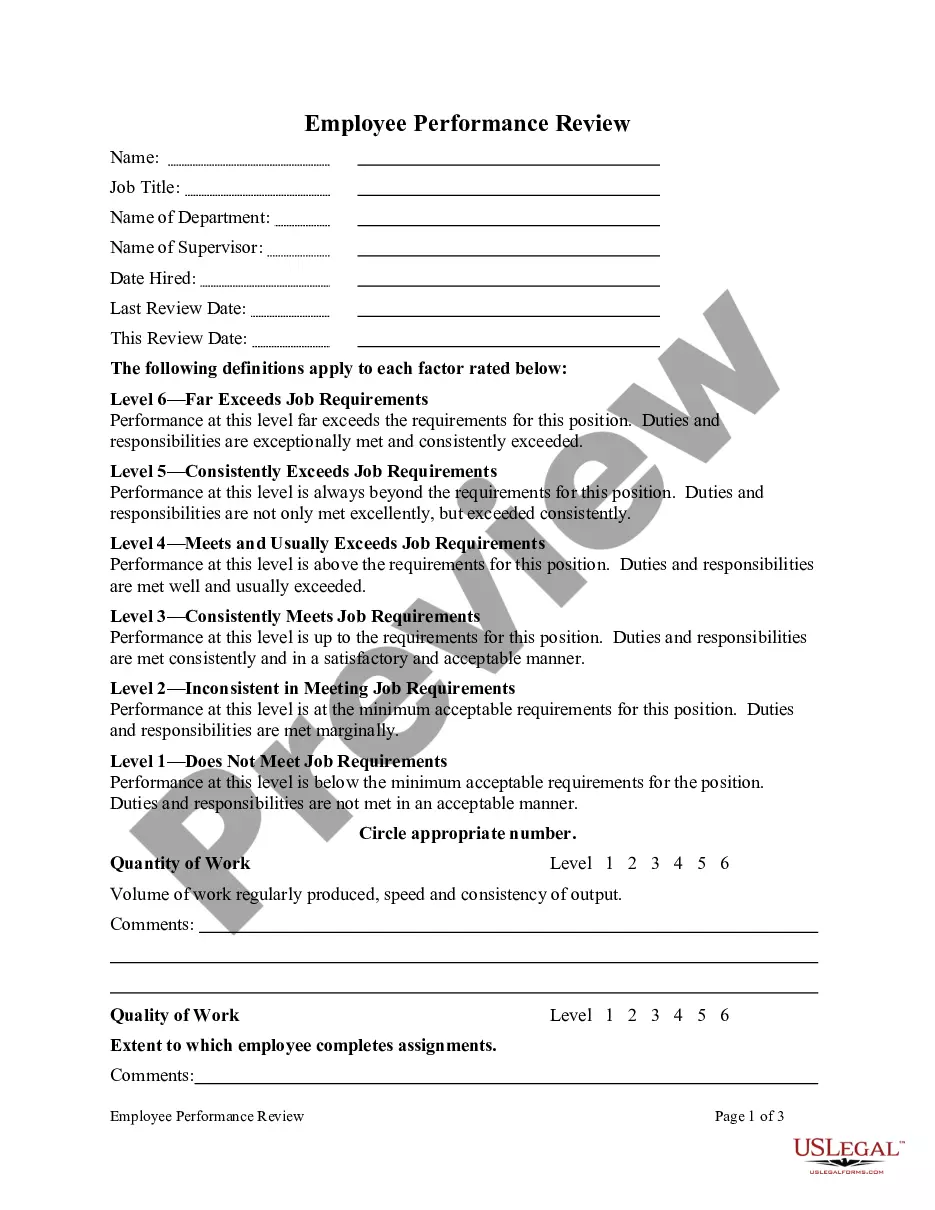
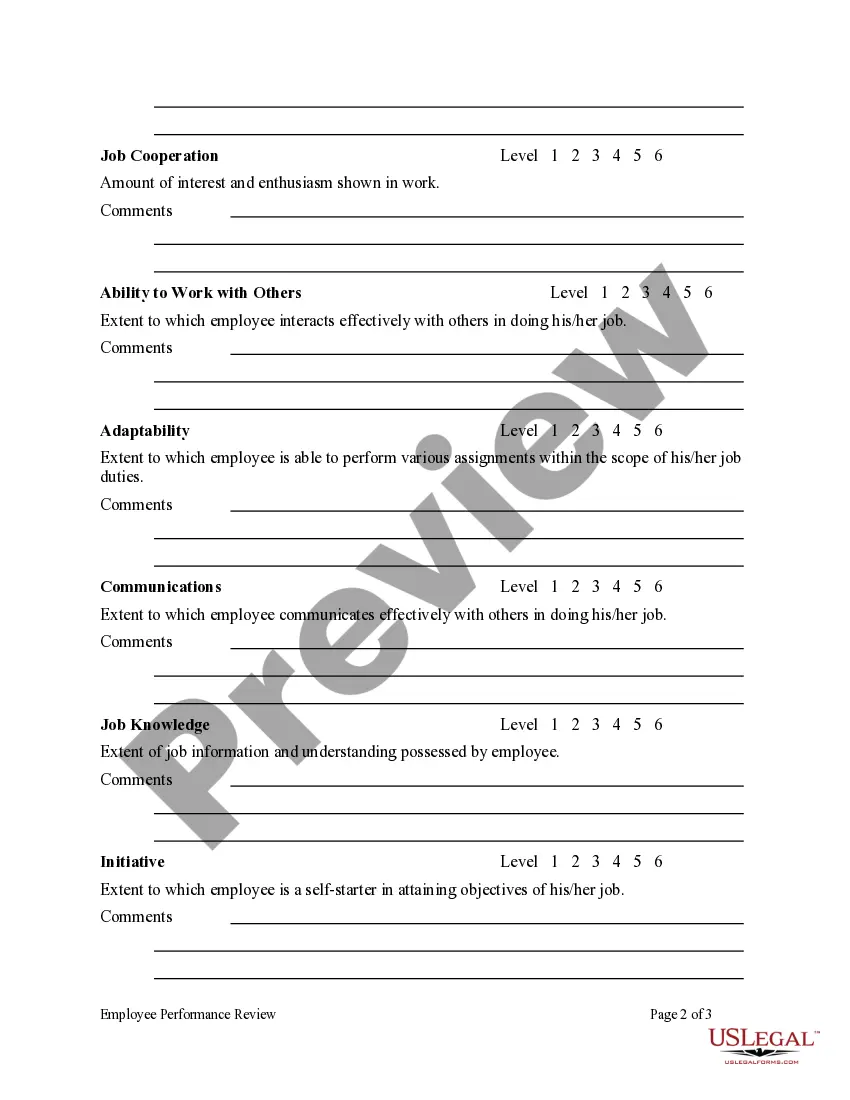
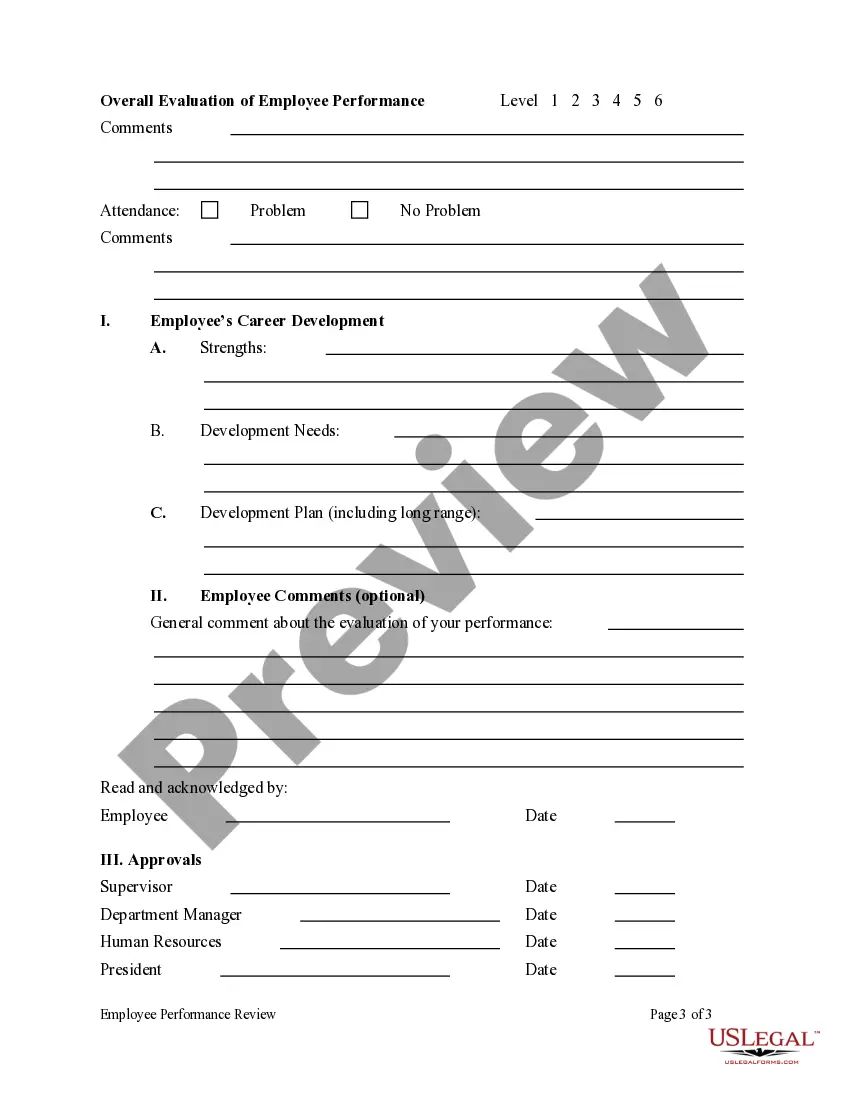
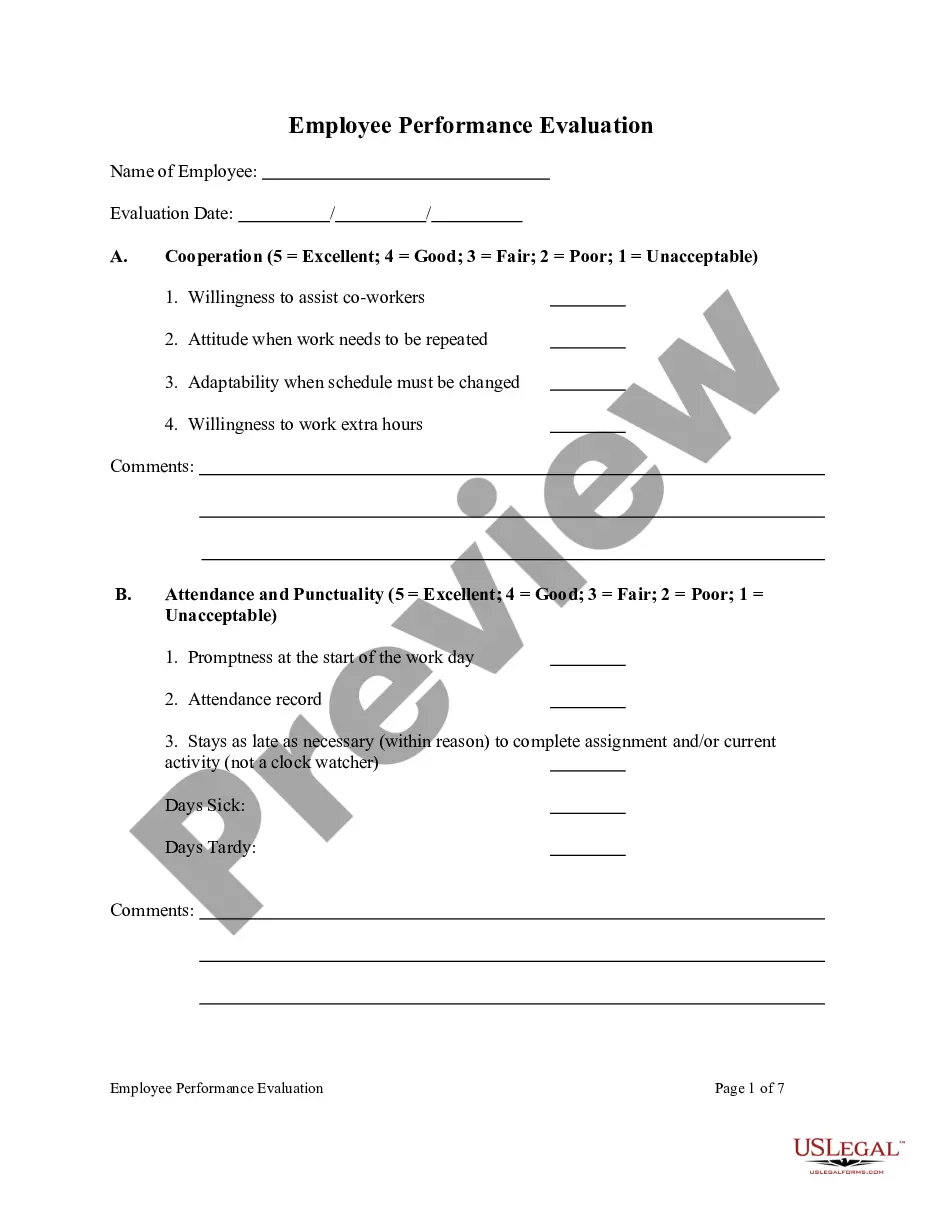
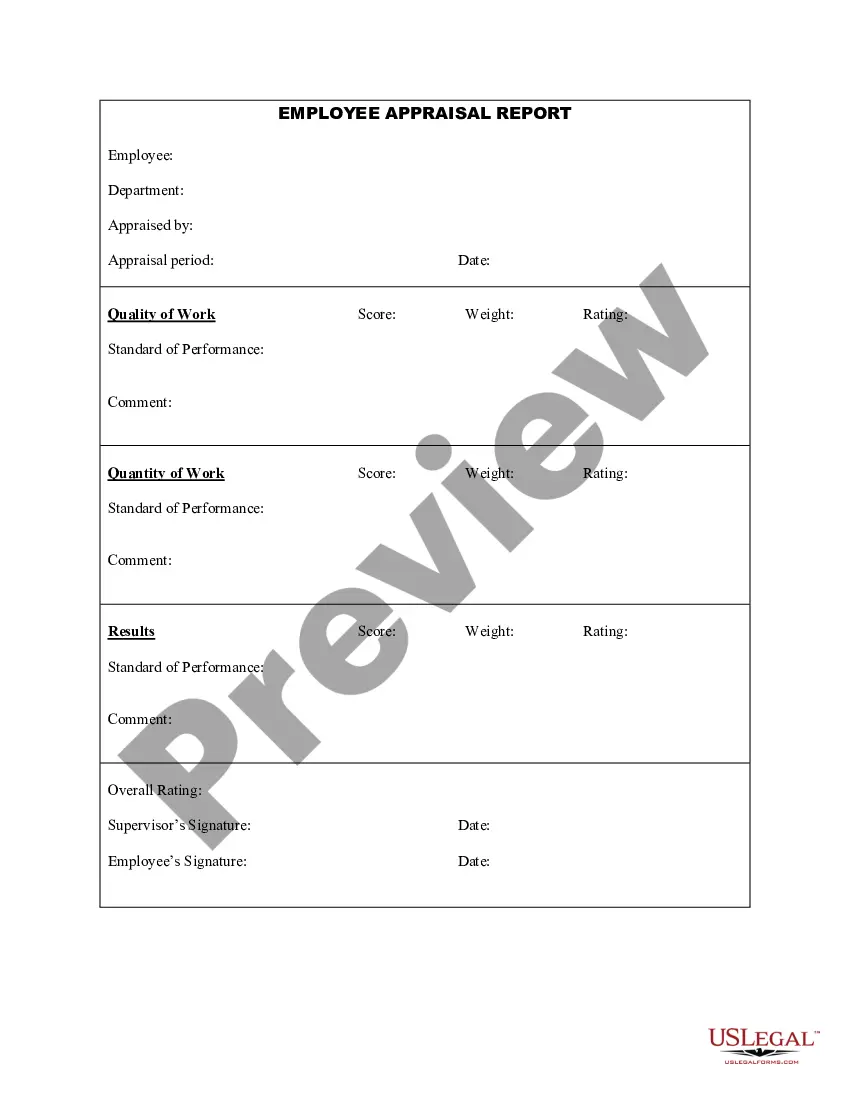



How to fill out Employee Performance Review?
- If you're a returning user, log in to your account and select the performance appraisal form. Ensure your subscription is up-to-date before continuing.
- For first-time users, start by reviewing the Preview mode and form description to confirm it meets your standards and local regulations.
- If the chosen document doesn’t meet your needs, utilize the Search tab to find alternative templates that fit your criteria.
- Once you've identified the right form, click the Buy Now button and select a subscription plan that works for you. Registration will be required for library access.
- Proceed to make your purchase by entering your payment details via credit card or PayPal.
- Finally, download your desired form and save it on your device. You can also access it later from the My Forms section in your profile.
In conclusion, US Legal Forms provides a comprehensive platform for acquiring the legal documents necessary for performance appraisals in teaching. Its robust library and user-friendly interface enhance the process of obtaining crucial forms.
Ready to streamline your performance appraisal process? Visit US Legal Forms today!
Form popularity
FAQ
One appropriate strategy to evaluate teacher performance is using a combination of quantitative and qualitative data to form a complete picture. This could include standardized test scores, classroom observations, and feedback from colleagues. Therefore, implementing a performance appraisal for teachers that incorporates these strategies will lead to richer insights and better professional development opportunities.
To evaluate a teacher's performance, start by setting clear performance expectations and utilizing various assessment tools, including student test scores and observation checklists. Regular check-ins can also provide valuable feedback loops for both parties. A comprehensive performance appraisal for teachers helps create an open dialogue, fostering an environment that supports continuous improvement.
Assessing teacher performance involves multiple methods, such as peer reviews, self-assessments, and classroom observations. By integrating these methods, educational institutions can gather diverse data that reflects a teacher's effectiveness. A well-structured performance appraisal for teachers helps ensure that the assessment process is transparent, fair, and geared toward professional development.
The best way to evaluate a teacher includes a combination of observational assessments, student feedback, and performance metrics. Observations provide insights into teaching practices, while student input gives a unique perspective on how effectively a teacher communicates and engages. Incorporating these elements into a performance appraisal for teachers can lead to a well-rounded assessment that promotes growth and success.
The criteria for evaluating teachers' performance often include classroom management, lesson planning, student engagement, and assessment outcomes. Additionally, student feedback and professional development participation also play significant roles. Adopting a robust performance appraisal for teachers ensures a comprehensive evaluation that highlights areas of strength and opportunities for improvement.
The teacher appraisal process involves a comprehensive evaluation that focuses on multiple aspects of teaching effectiveness. It usually includes classroom observations, feedback from peers and students, and self-reflection. This process ensures that teachers receive the necessary support to improve their practice. Emphasizing a well-structured performance appraisal for teachers allows educators to foster growth and deliver quality education.
The performance appraisal system for teachers is a structured framework that outlines how evaluations are conducted within educational institutions. It typically includes criteria for assessing teaching quality, tools for data collection, and procedures for delivering feedback. Such systems aim to provide a consistent and fair evaluation experience. Therefore, understanding how the performance appraisal for teachers works can help you navigate this process more effectively.
The teacher performance appraisal process is a systematic approach to evaluating the effectiveness of educators. It generally includes observation, feedback collection, and analysis of teaching methods and student outcomes. This appraisal aims to enhance teaching quality and encourage professional development. Thus, an effective performance appraisal for teachers not only benefits educators but also enriches the learning environment for students.
The performance appraisal process generally consists of five steps: setting performance expectations, observing and gathering data, preparing feedback, conducting the appraisal meeting, and setting development goals. Each step plays a pivotal role in ensuring that both teachers and evaluators are aligned on performance standards. By addressing these steps, you can contribute to a meaningful performance appraisal for teachers. This structured approach promotes clarity and accountability.
Submitting a performance appraisal typically involves filling out a standardized form that reflects your observations and assessments of the teacher's performance. Depending on the institution's guidelines, you may need to submit this form electronically or in a physical format. Utilizing platforms like UsLegalForms can simplify this process, offering templates and structured formats for easy submission. Therefore, you can efficiently contribute to the performance appraisal for teachers.