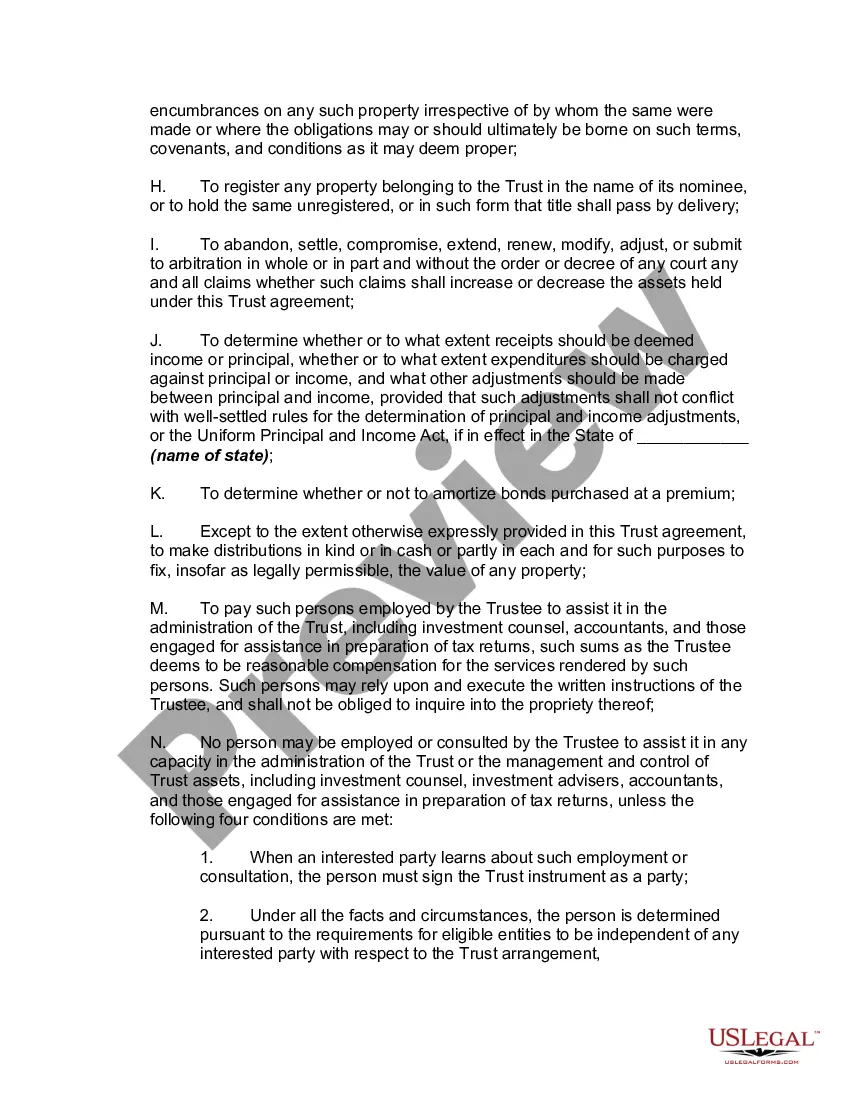
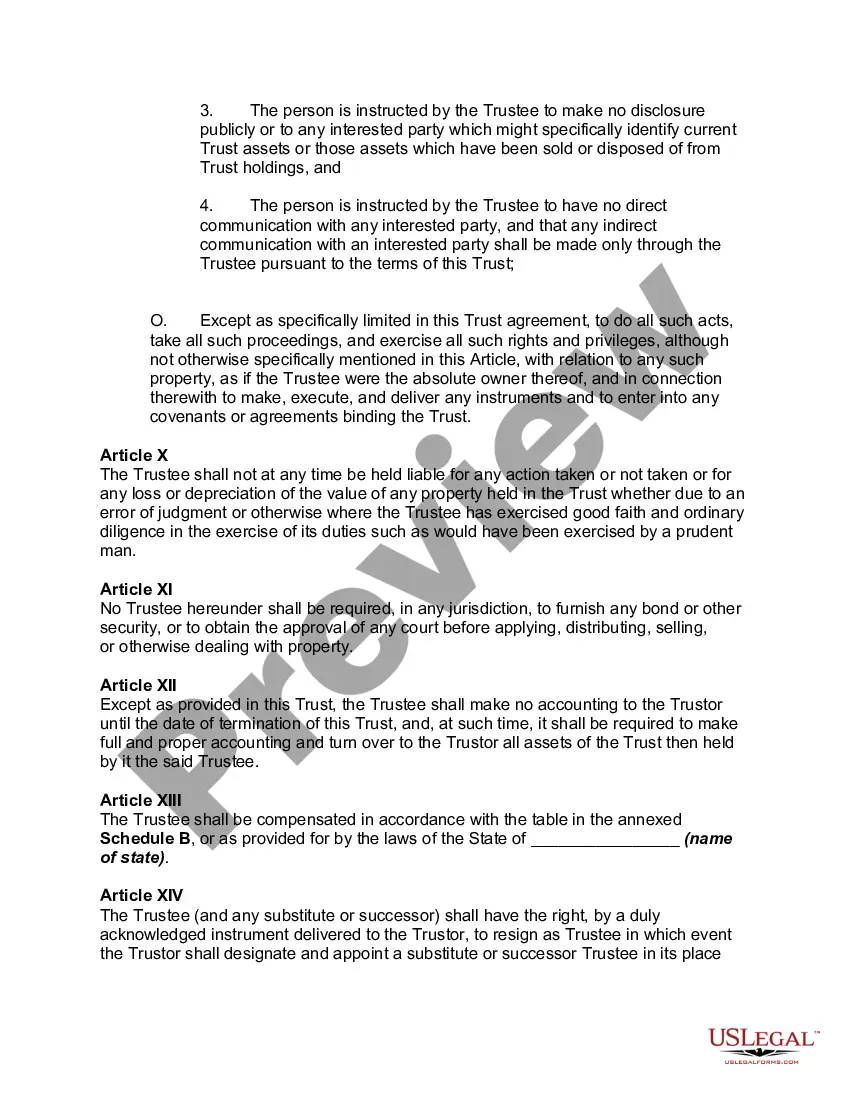
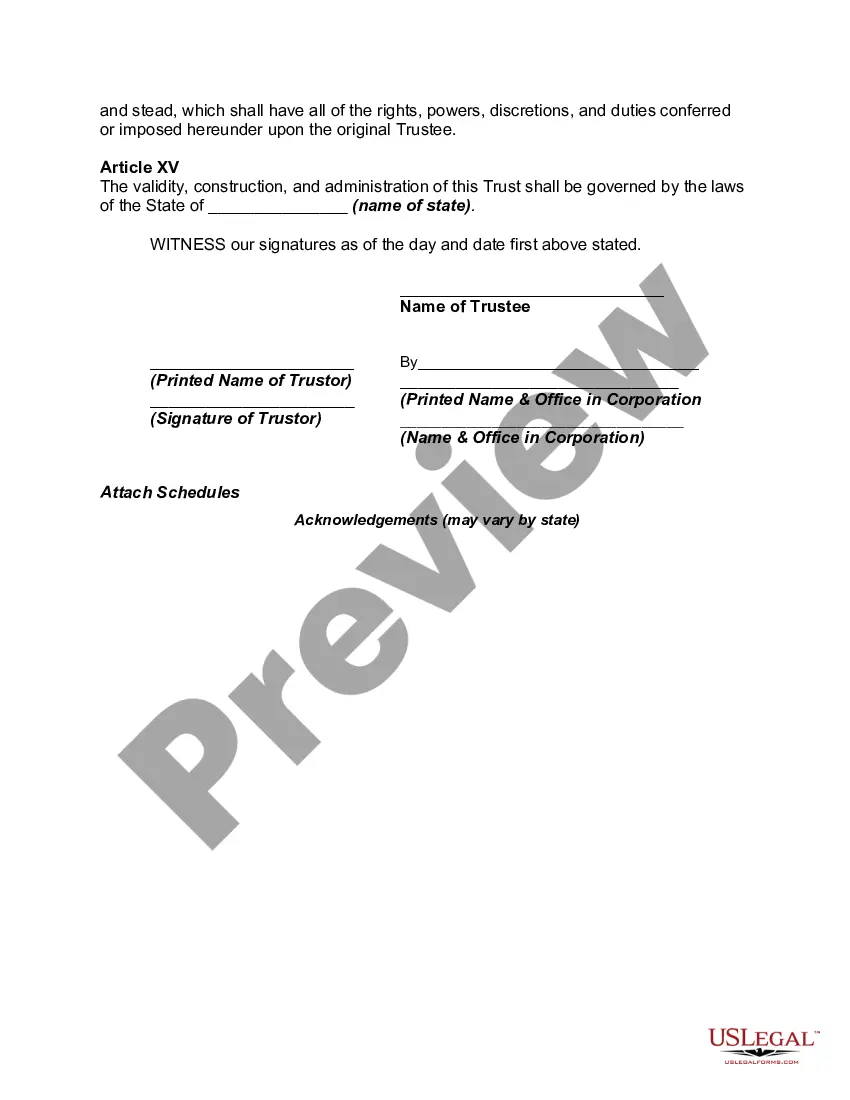
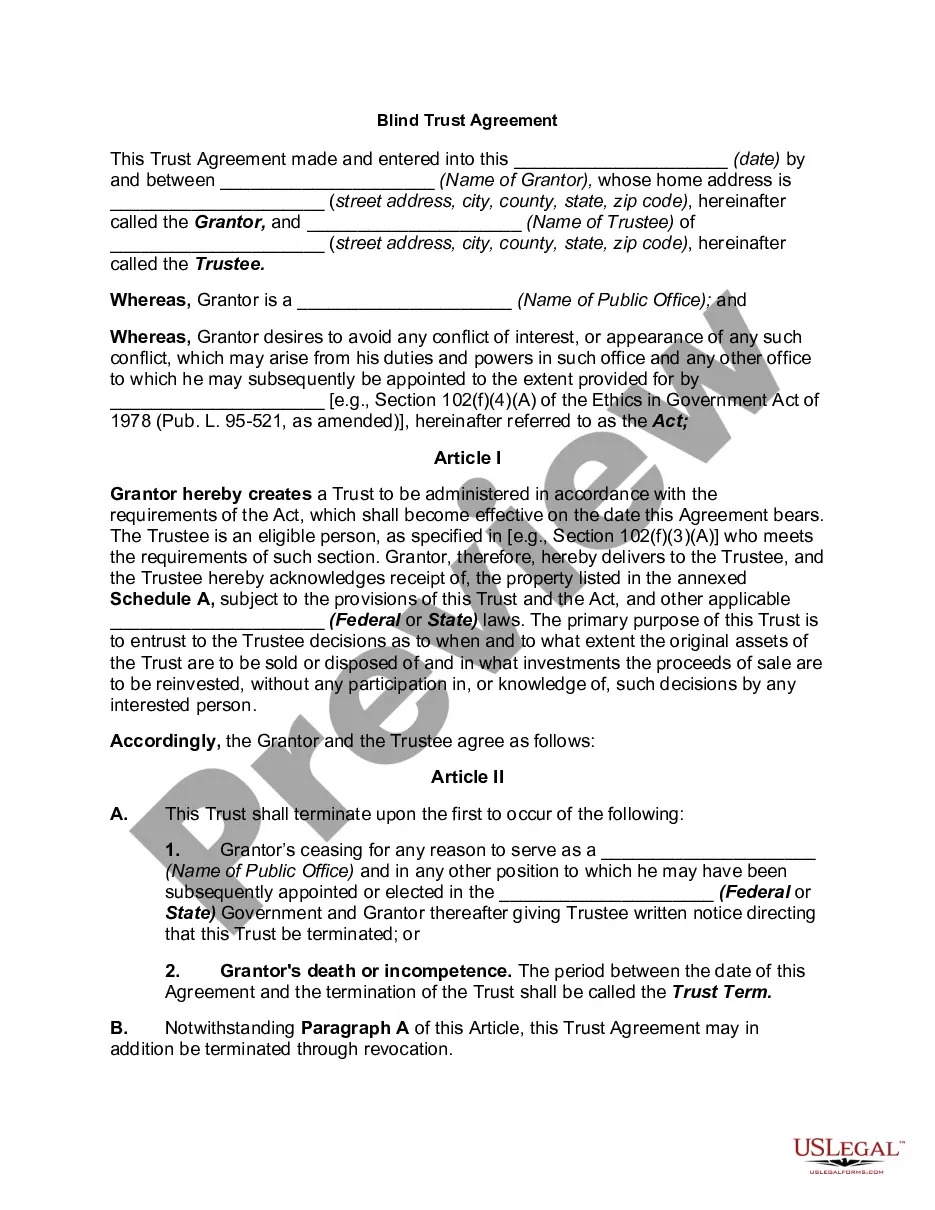
Blind Trust Example With Explanation
Description
Get your form ready online
Our built-in tools help you complete, sign, share, and store your documents in one place.
Make edits, fill in missing information, and update formatting in US Legal Forms—just like you would in MS Word.
Download a copy, print it, send it by email, or mail it via USPS—whatever works best for your next step.
Sign and collect signatures with our SignNow integration. Send to multiple recipients, set reminders, and more. Go Premium to unlock E-Sign.
If this form requires notarization, complete it online through a secure video call—no need to meet a notary in person or wait for an appointment.
We protect your documents and personal data by following strict security and privacy standards.

Make edits, fill in missing information, and update formatting in US Legal Forms—just like you would in MS Word.

Download a copy, print it, send it by email, or mail it via USPS—whatever works best for your next step.

Sign and collect signatures with our SignNow integration. Send to multiple recipients, set reminders, and more. Go Premium to unlock E-Sign.

If this form requires notarization, complete it online through a secure video call—no need to meet a notary in person or wait for an appointment.

We protect your documents and personal data by following strict security and privacy standards.
Looking for another form?
How to fill out Blind Trust Agreement For Private Individual As Opposed To Government?
It’s clear that you cannot transform into a legal expert instantly, nor can you discover how to swiftly create Blind Trust Example With Explanation without having a specialized foundation.
Drafting legal documents is a labor-intensive task that necessitates specific training and expertise. So why not entrust the creation of the Blind Trust Example With Explanation to the professionals.
With US Legal Forms, one of the most comprehensive legal template repositories, you can locate anything from court documents to templates for internal communication.
You can regain access to your documents from the My documents tab at any moment. If you’re a current client, you can simply Log In, and locate and download the template from the same tab.
Regardless of the purpose of your forms—be it financial and legal, or personal—our platform has you covered. Give US Legal Forms a try now!
- Identify the form you require by utilizing the search bar at the top of the page.
- Preview it (if this option is available) and review the accompanying description to ascertain if Blind Trust Example With Explanation is what you’re looking for.
- Start your search again if you need another form.
- Create a free account and select a subscription plan to acquire the form.
- Click Buy now. Once the purchase is finalized, you can download the Blind Trust Example With Explanation, complete it, print it, and send or deliver it to the necessary individuals or entities.
Form popularity
FAQ
A simple example would be the situation in which one member of a family advances money to another and asks the second member to hold the money or to invest it for him. A more complicated example of an implied trust would be the situation in which one party provides money to another for the purchase of property.
Common Types of Trusts Inter vivos trusts or living trusts: Created and active during the lifetime of the grantor. Testamentary trusts: Trusts formed after the death of the grantor. Revocable trusts: Can be changed or revoked entirely by the grantor.
A simple example would be the situation in which one member of a family advances money to another and asks the second member to hold the money or to invest it for him. A more complicated example of an implied trust would be the situation in which one party provides money to another for the purchase of property.
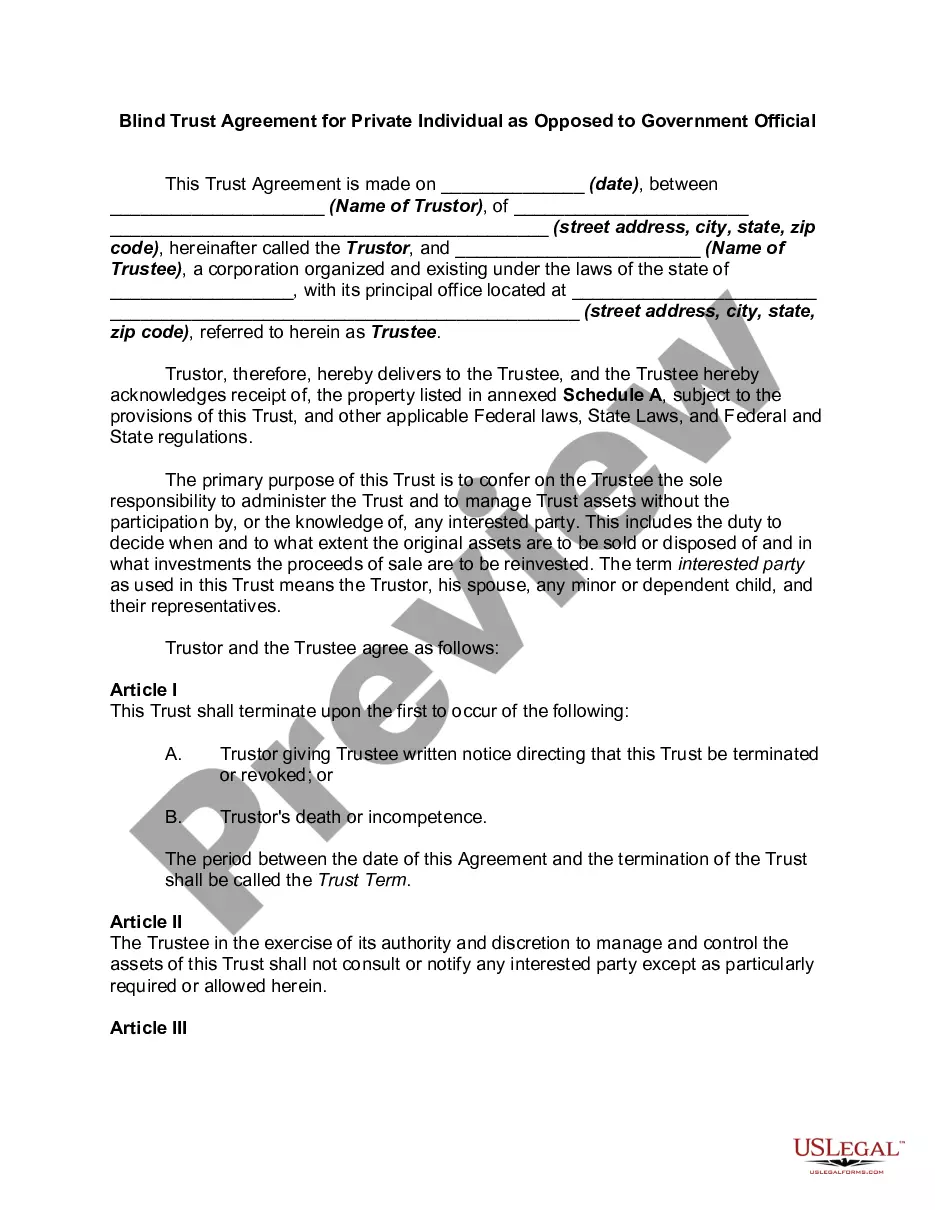
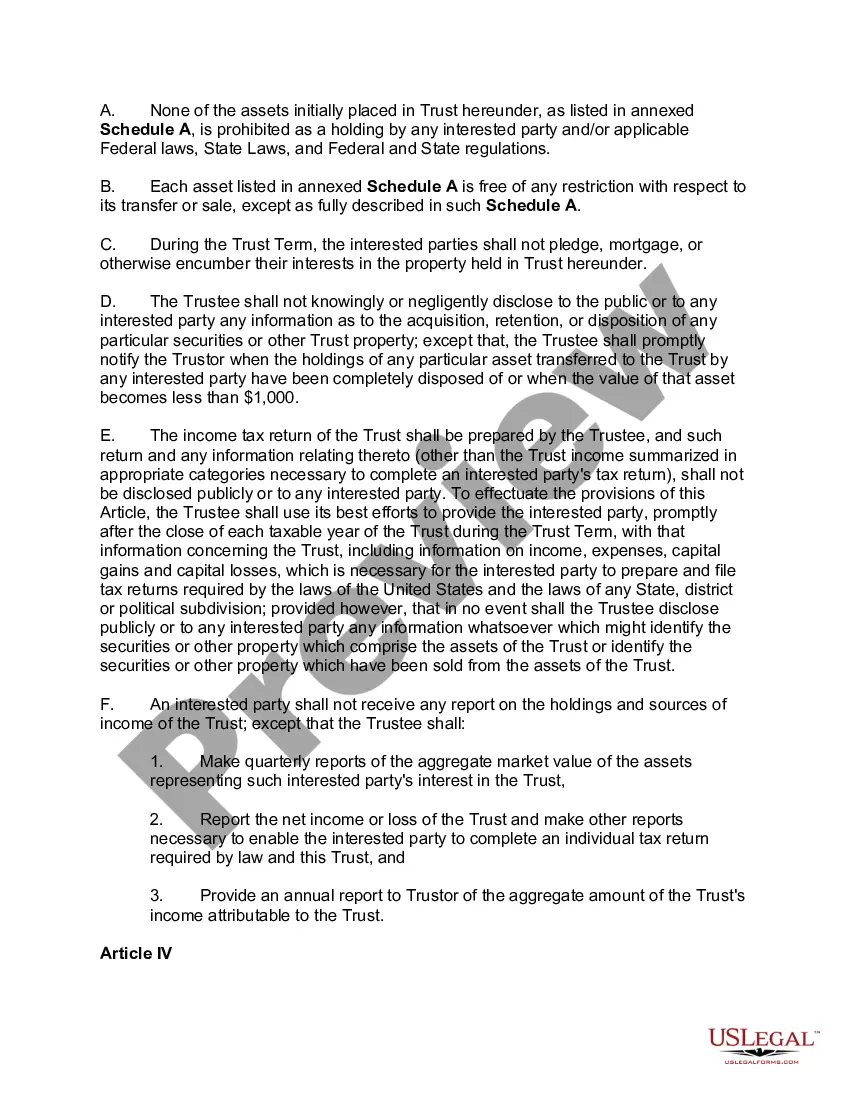
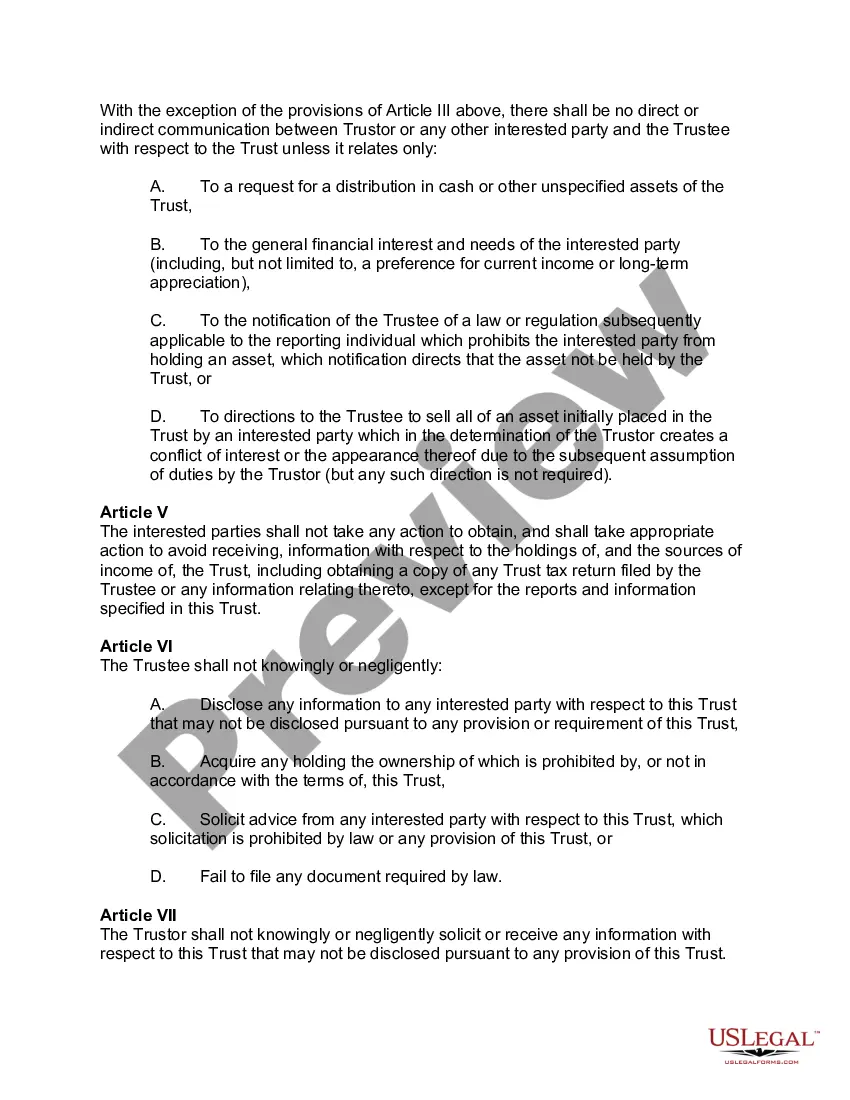
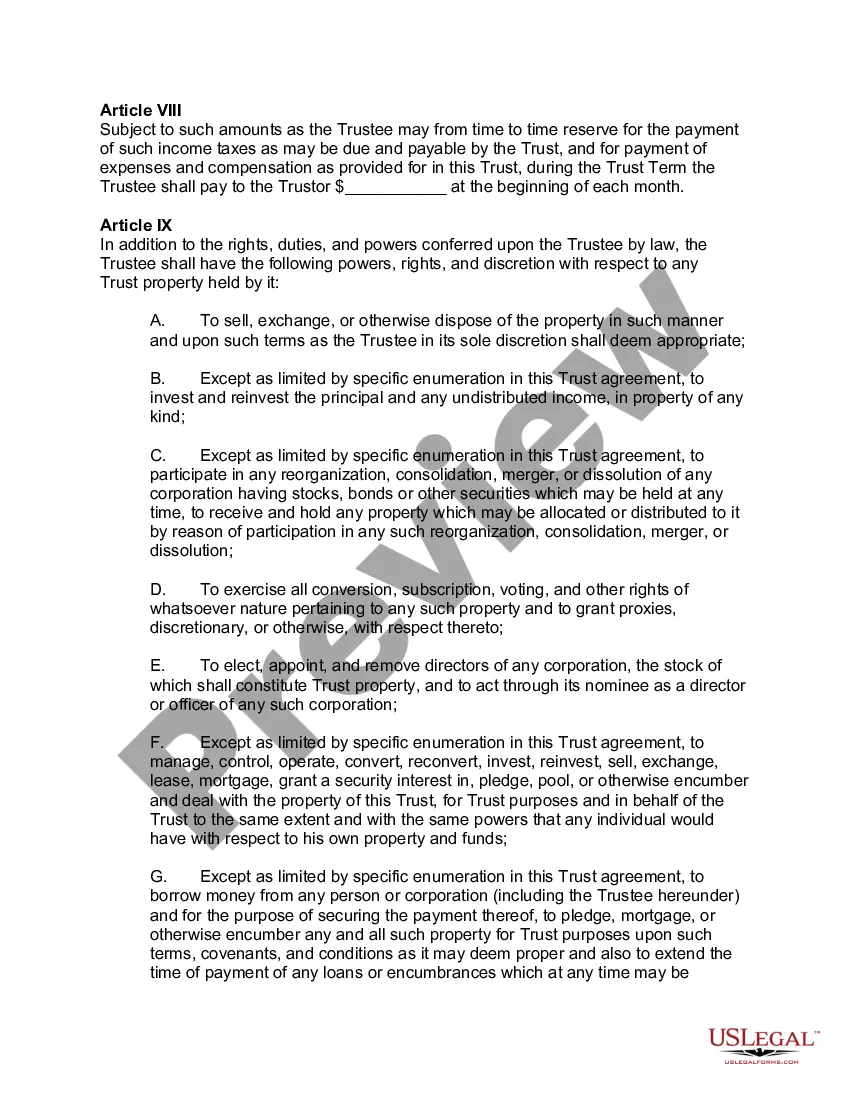
A blind trust is most common with public officials whose decisions can directly affect the financial markets, but another example would be creating a blind trust to hide its monetary value from an individual whose behavior and actions would change if they were privy to it.
In a blind trust, an individual places assets that could otherwise create conflicts of interest into an asset vehicle ("trust"). Control over the trust and its assets are given to an independent trustee, who may buy and sell assets without the knowledge or consent of the beneficiary ("blind").