Trust Information
Description
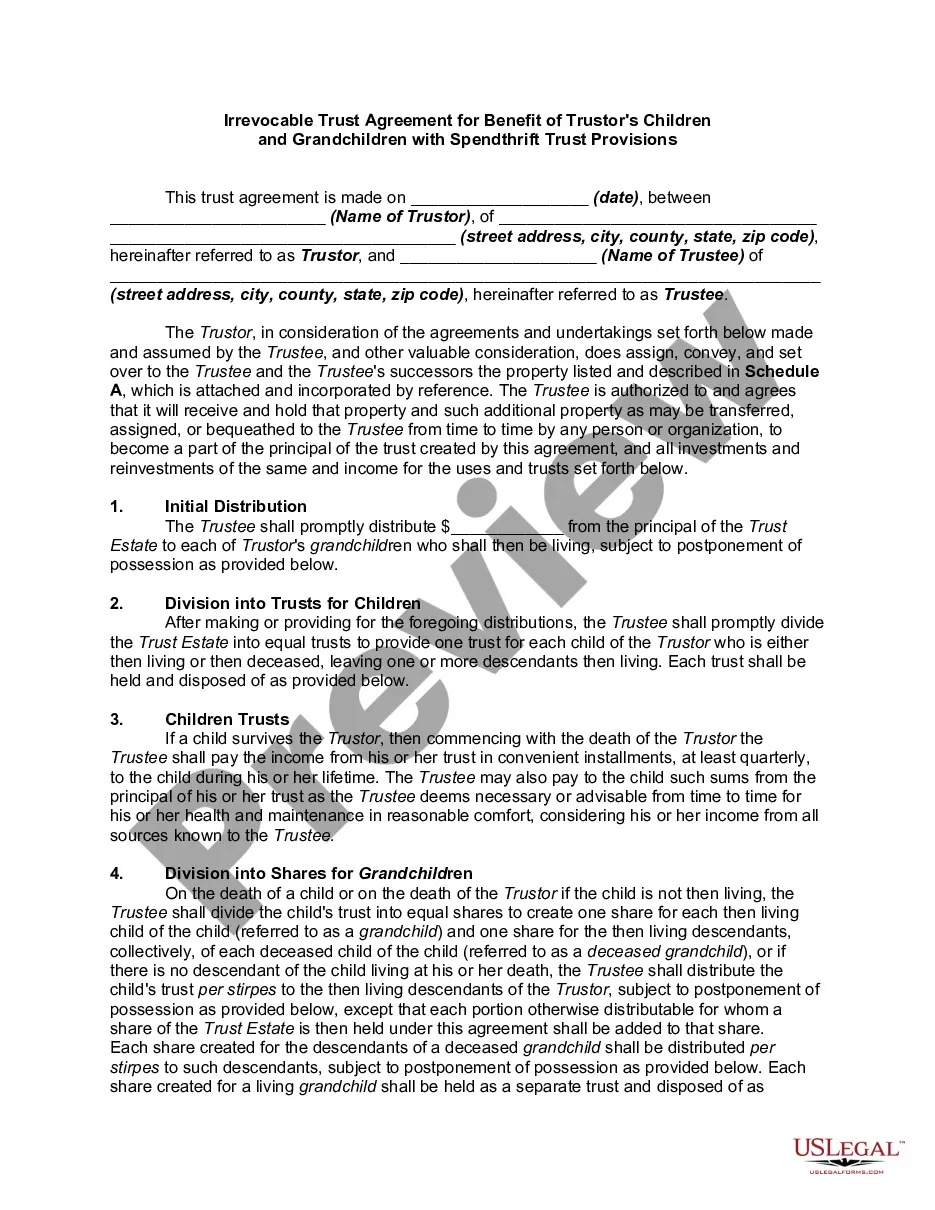
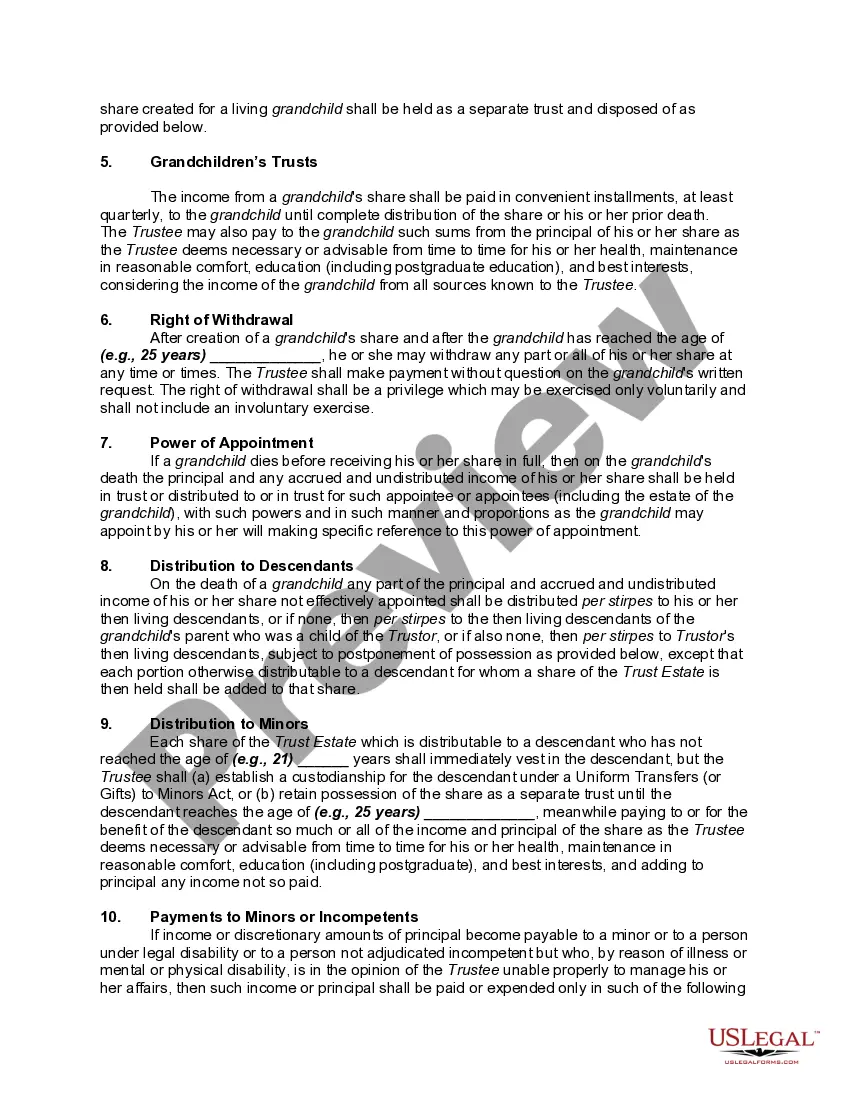
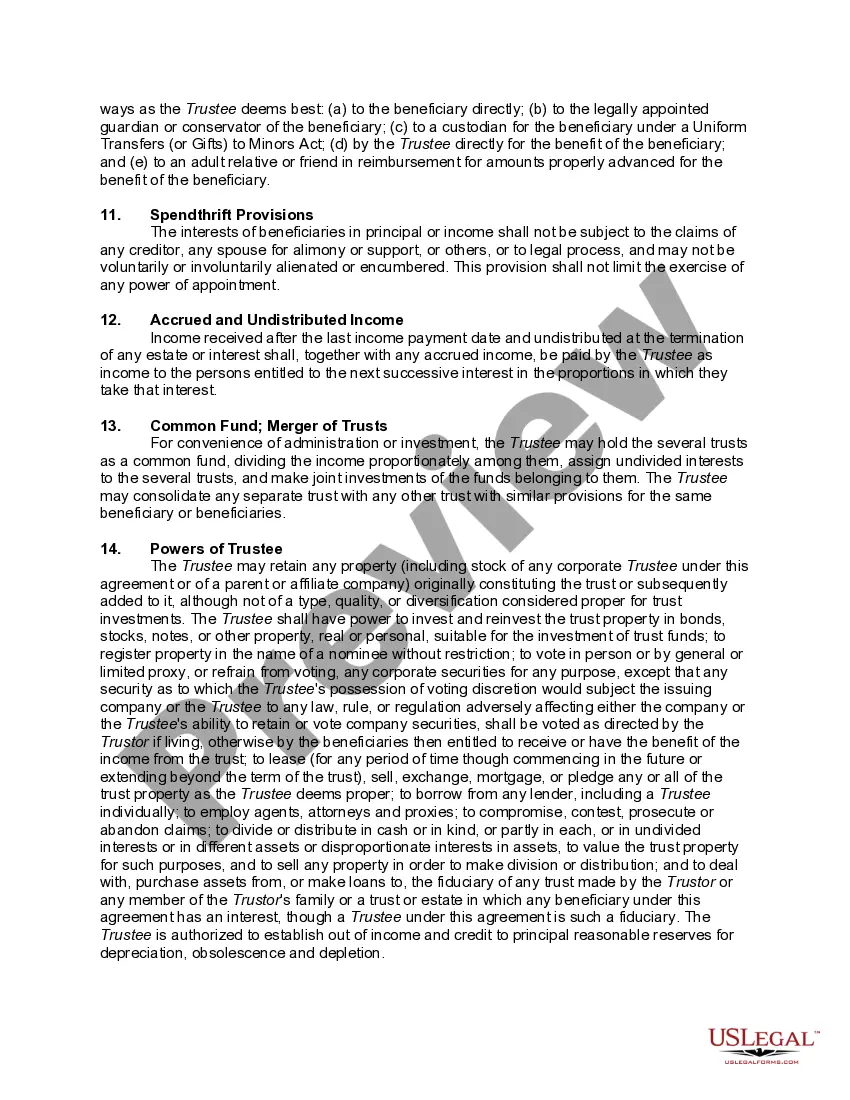
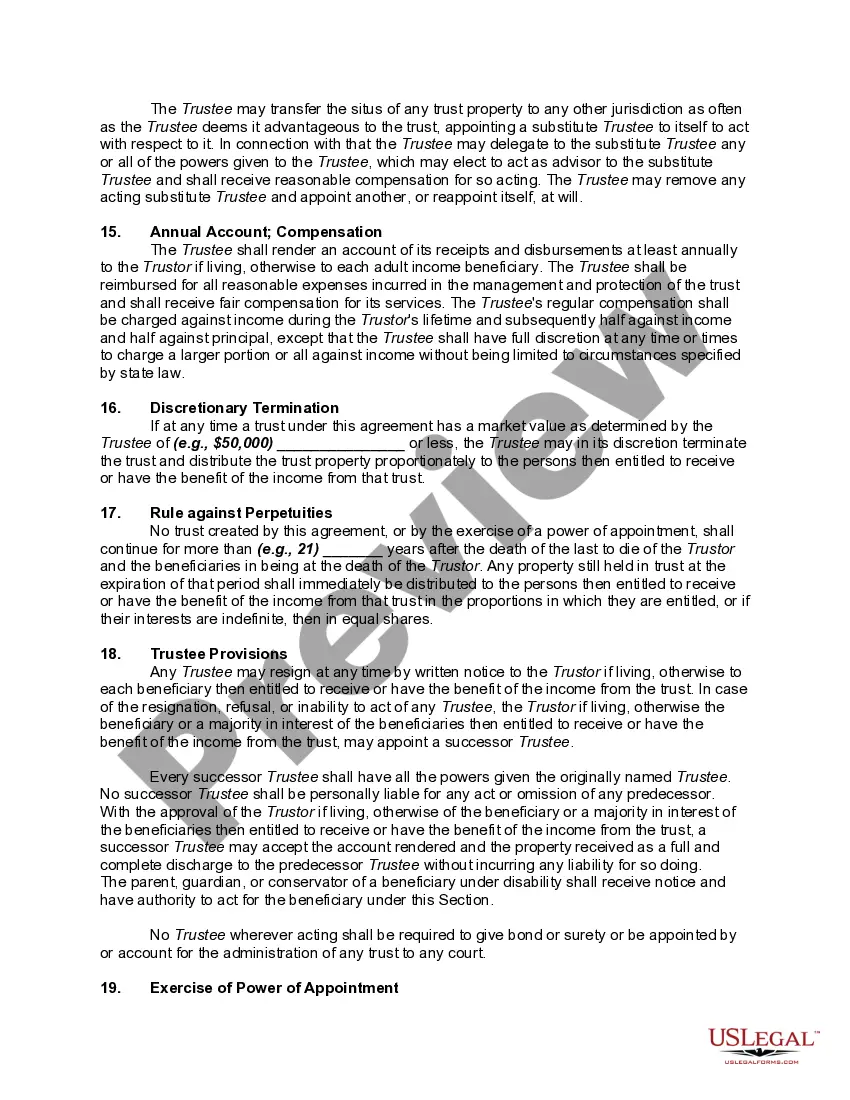


Get your form ready online
Our built-in tools help you complete, sign, share, and store your documents in one place.
Make edits, fill in missing information, and update formatting in US Legal Forms—just like you would in MS Word.
Download a copy, print it, send it by email, or mail it via USPS—whatever works best for your next step.
Sign and collect signatures with our SignNow integration. Send to multiple recipients, set reminders, and more. Go Premium to unlock E-Sign.
If this form requires notarization, complete it online through a secure video call—no need to meet a notary in person or wait for an appointment.
We protect your documents and personal data by following strict security and privacy standards.

Make edits, fill in missing information, and update formatting in US Legal Forms—just like you would in MS Word.

Download a copy, print it, send it by email, or mail it via USPS—whatever works best for your next step.

Sign and collect signatures with our SignNow integration. Send to multiple recipients, set reminders, and more. Go Premium to unlock E-Sign.

If this form requires notarization, complete it online through a secure video call—no need to meet a notary in person or wait for an appointment.

We protect your documents and personal data by following strict security and privacy standards.
Looking for another form?

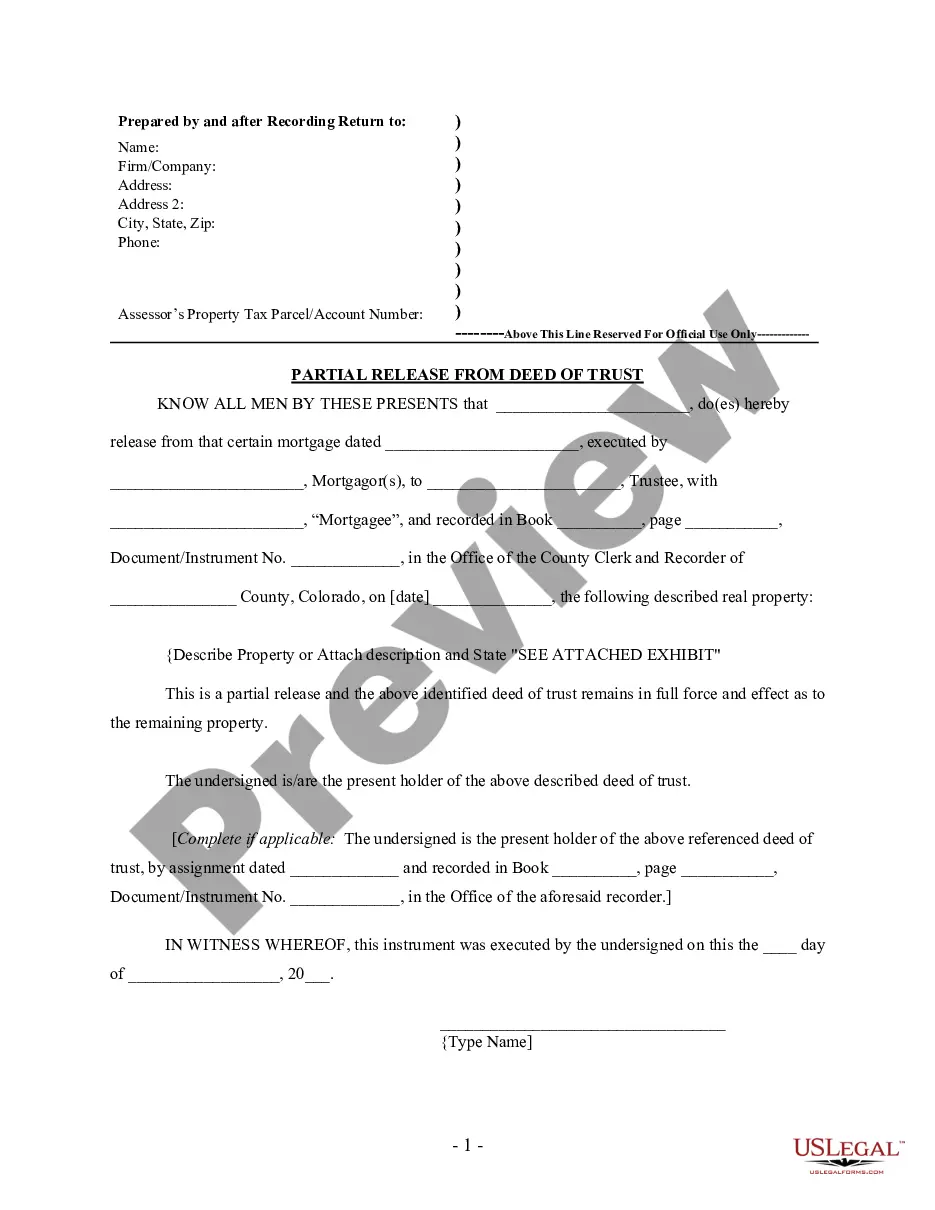

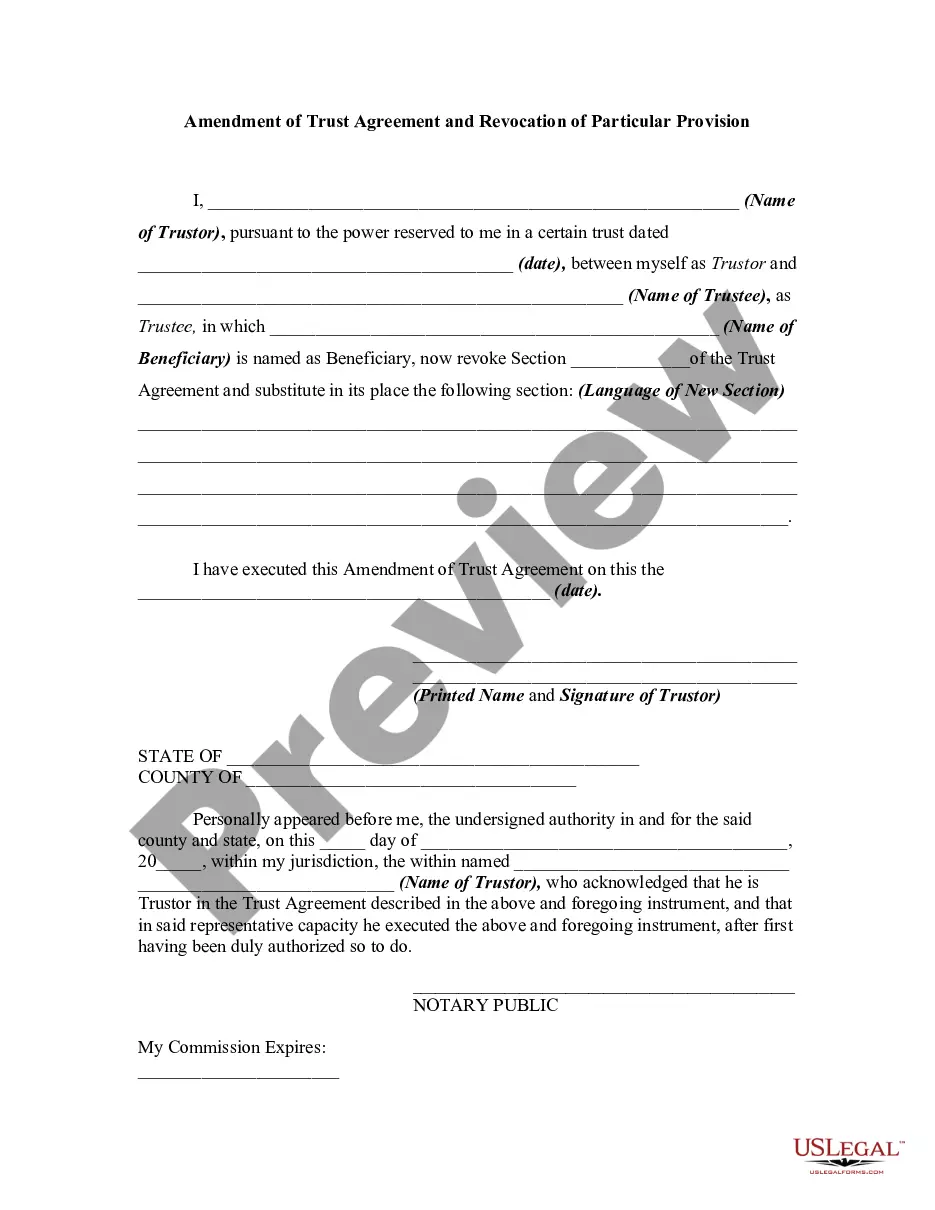

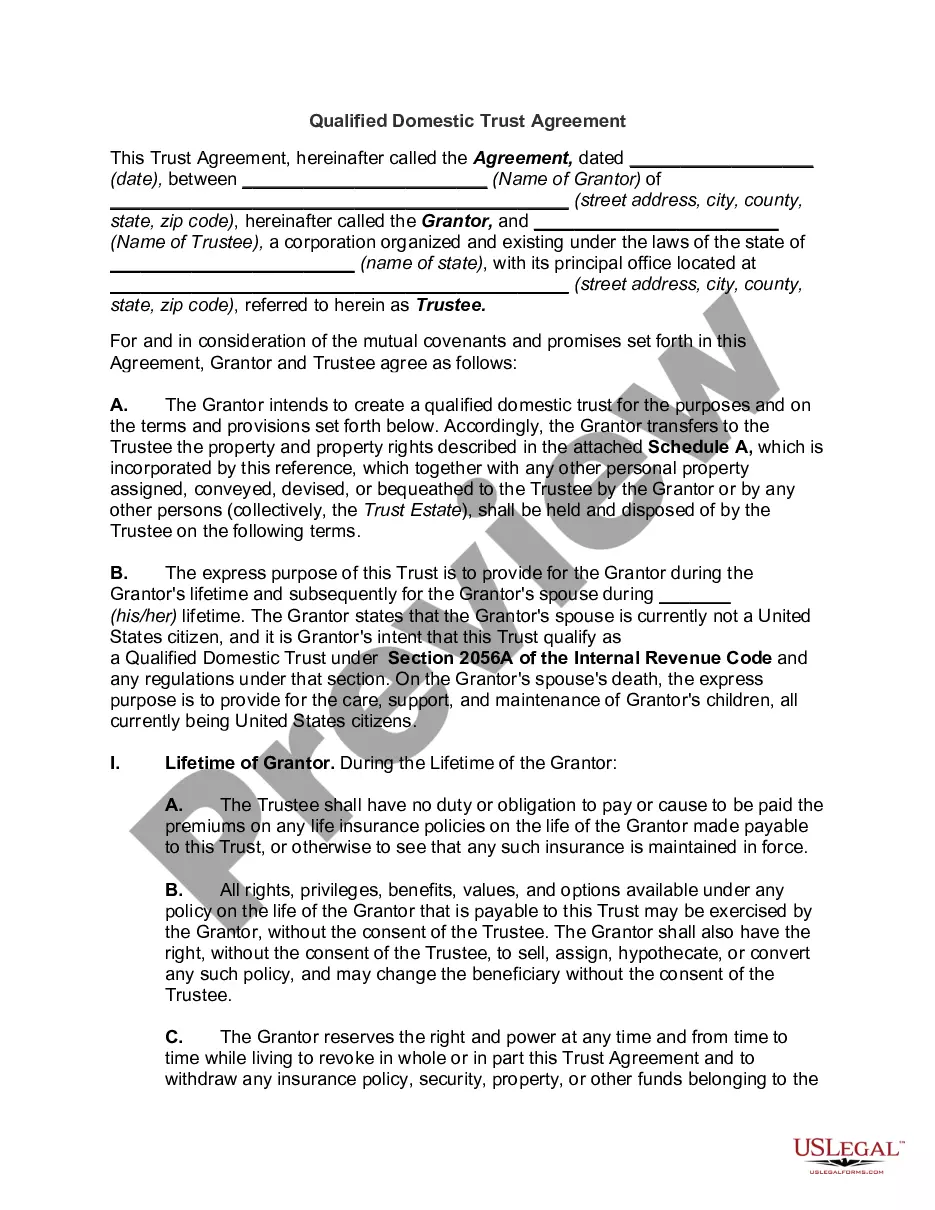
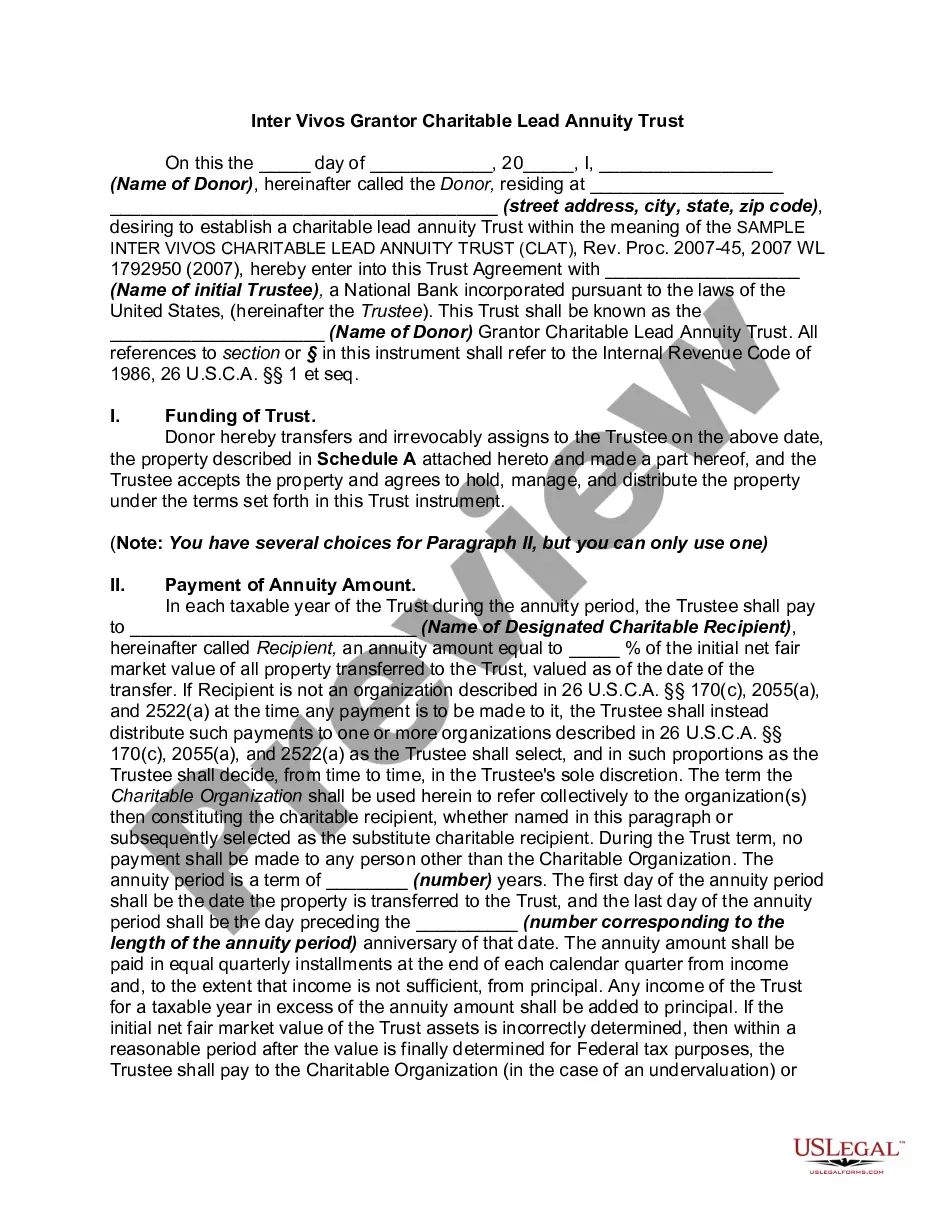
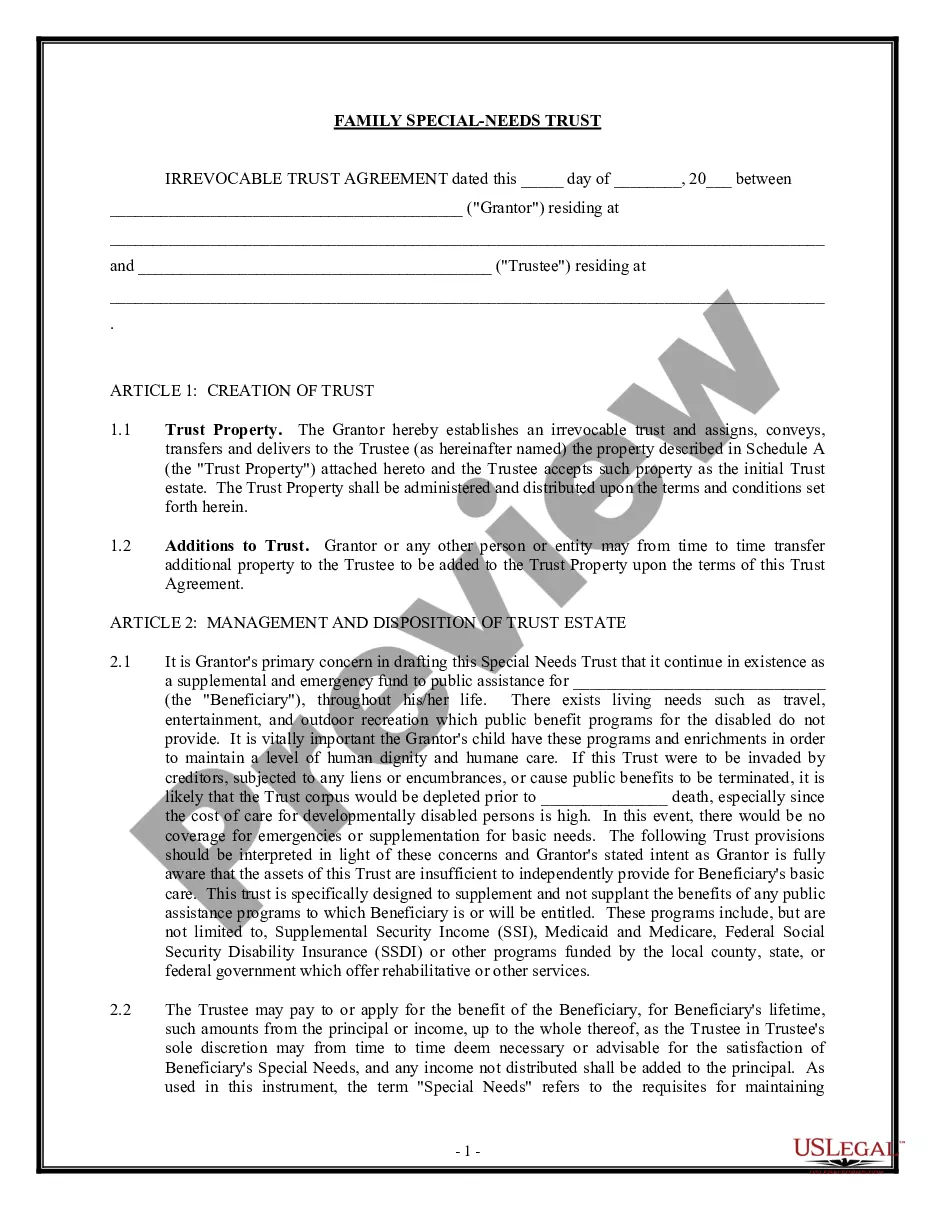

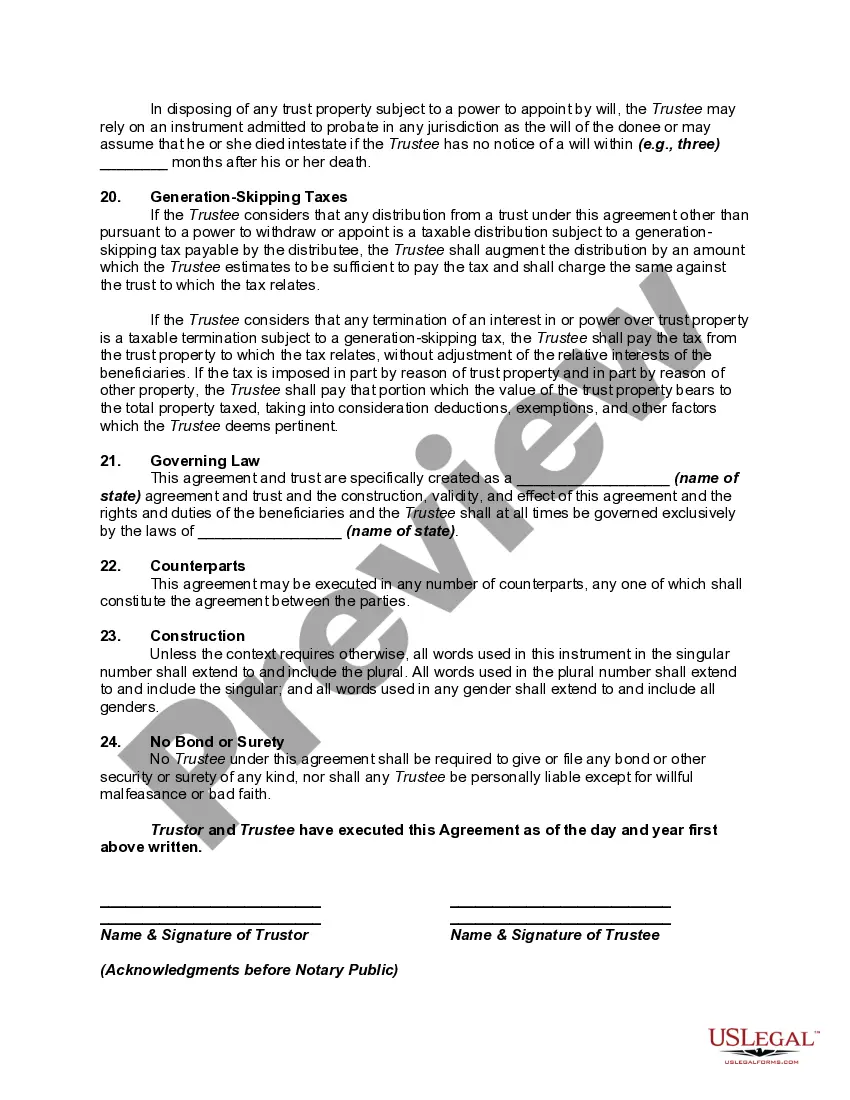
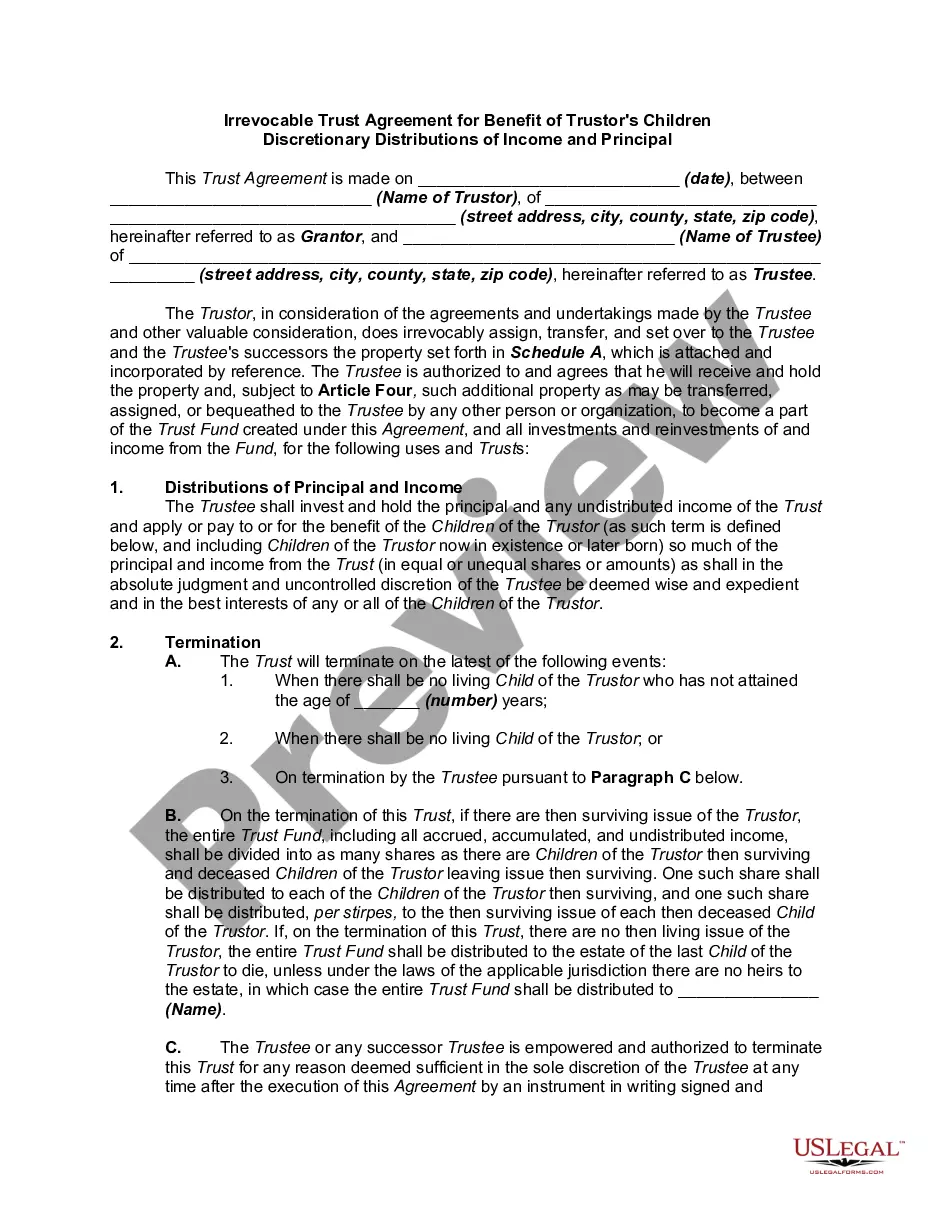
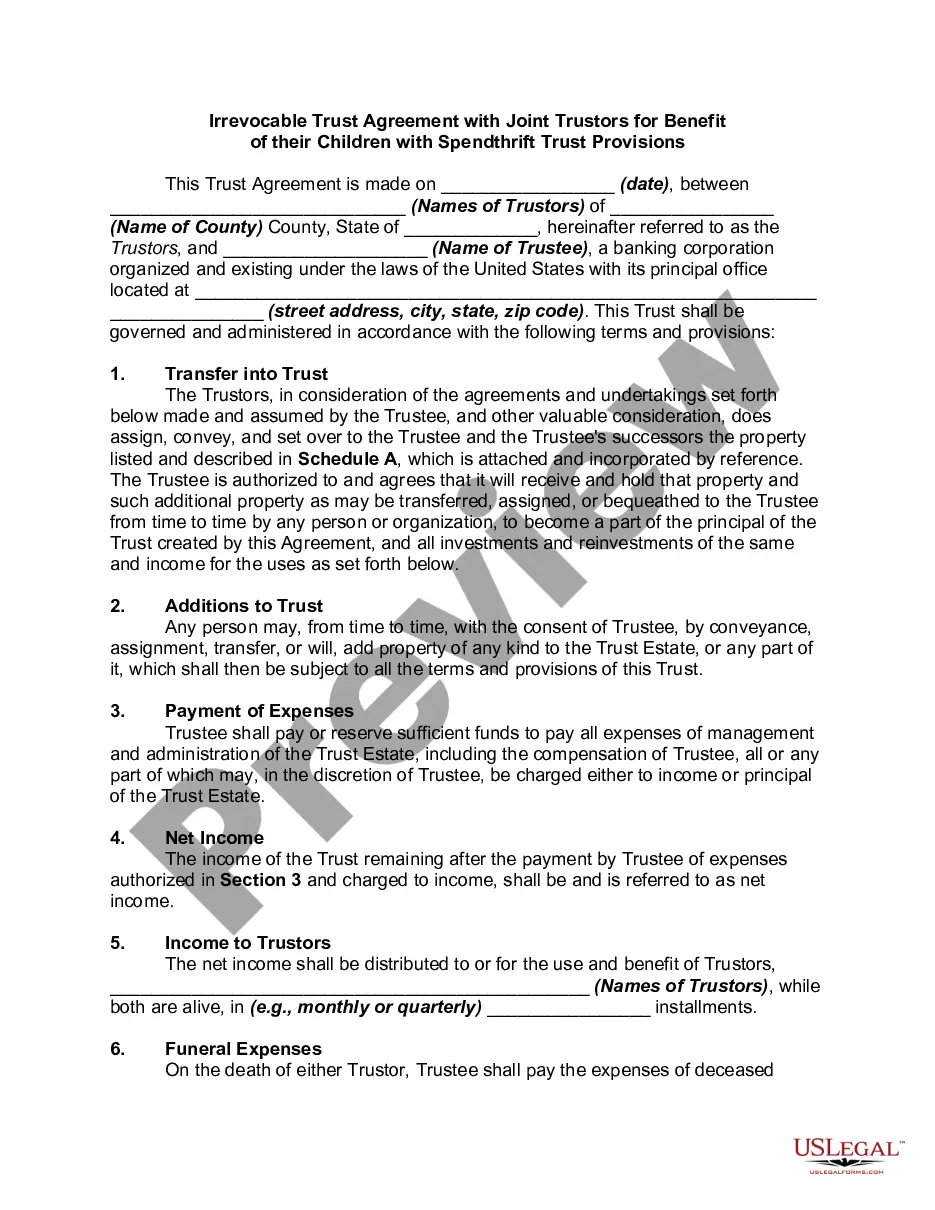
How to fill out Irrevocable Trust Agreement For Benefit Of Trustor's Children And Grandchildren With Spendthrift Trust Provisions?
- If you're a returning user, log into your account and download the desired form template by clicking the Download button. Ensure your subscription is active, or renew it based on your payment plan if necessary.
- For first-time users, begin by browsing the Preview mode and form description to select the correct document that fits your needs and complies with your local jurisdiction.
- Should you find discrepancies, utilize the Search tab above to locate the appropriate template.
- Once you've identified the right form, click the Buy Now button to choose your subscription plan, and set up your account for access to the entire library.
- Proceed to payment by entering your credit card information or using your PayPal account to complete the purchase.
- Finally, download your form and save it to your device. You can always return to the My Forms section of your profile for easy access.
US Legal Forms significantly streamlines the process of acquiring legal documents, ensuring you have everything you need at your fingertips.
Don’t hesitate—start your journey for reliable legal forms today and experience the benefits of having expert assistance when you need it!
Form popularity
FAQ
While trusts offer many benefits, there are certain risks involved in placing assets in them. For example, once assets are transferred into a trust, you may lose direct control over them. Additionally, if a trust is not properly managed, it could lead to disputes among beneficiaries or potential legal challenges. Therefore, it’s crucial to seek sound trust information before making significant decisions.
Filing a private trust involves creating a formal trust document that outlines the terms and conditions of the trust. After drafting the document, you may need to transfer assets into the trust, such as real estate or bank accounts. It's advisable to seek expert assistance to ensure the trust is valid and complies with legal standards. Accessing trustworthy trust information can offer clarity and peace of mind.
Not all trusts are required to file IRS Form 1041, the income tax return for estates and trusts. Generally, only irrevocable trusts that generate income must file this form. On the other hand, revocable trusts typically do not require a filing as they are treated as part of your personal tax return. Always consult up-to-date trust information to understand your filing obligations.
To establish a trust, you generally need to complete a trust document, which outlines the terms and beneficiaries of the trust. Specific forms can vary depending on state laws, so checking your state's requirements is essential. Additionally, organizations like US Legal Forms provide reliable templates and guidance for creating your trust documents correctly. Proper trust information can simplify this process.
Typically, assets that require beneficiary designations or have specific ownership requirements should not be put into a trust. This includes accounts like health savings accounts and certain life insurance policies. Often, personal property may also be excluded, particularly if it carries sentimental value. Utilizing accurate trust information can help clarify which assets should remain outside a trust.
Some assets are generally not suitable for inclusion in a trust. For example, retirement accounts like IRAs typically have designated beneficiaries and may be better off outside a trust. Additionally, certain types of life insurance policies may not offer any benefits if placed in a trust. To ensure you make the best decisions, reference comprehensive trust information and seek legal advice.
Putting your bank accounts in a trust can provide added security and privacy for your assets. By doing so, your funds may avoid probate, allowing for easier access for your beneficiaries. Furthermore, it can safeguard your financial resources from potential creditors. However, it's essential to consider your unique circumstances and consult with a professional for accurate trust information.
The primary downfall of having a trust can be the complexity it introduces into one's financial and estate planning. Trusts require ongoing maintenance and can incur costs that may not be justified for everyone. Therefore, understanding all aspects and obtaining complete trust information is crucial to make the best choice for your circumstances.
Deciding whether to put assets in a trust depends on individual family situations and financial goals. A trust can offer benefits such as avoiding probate and offering privacy. Parents should carefully weigh their options and consult with a professional to gather trust information that can help them make informed decisions.
Filling out a trust fund involves providing specific information about the trust’s structure and assets. Ensure you include the names of the grantor and beneficiaries, a detailed list of assets, and the governing rules for the trust. Utilizing platforms like uslegalforms can simplify this process by guiding you through the necessary steps and providing reliable trust information.