Sample Irrevocable Trust Form 1
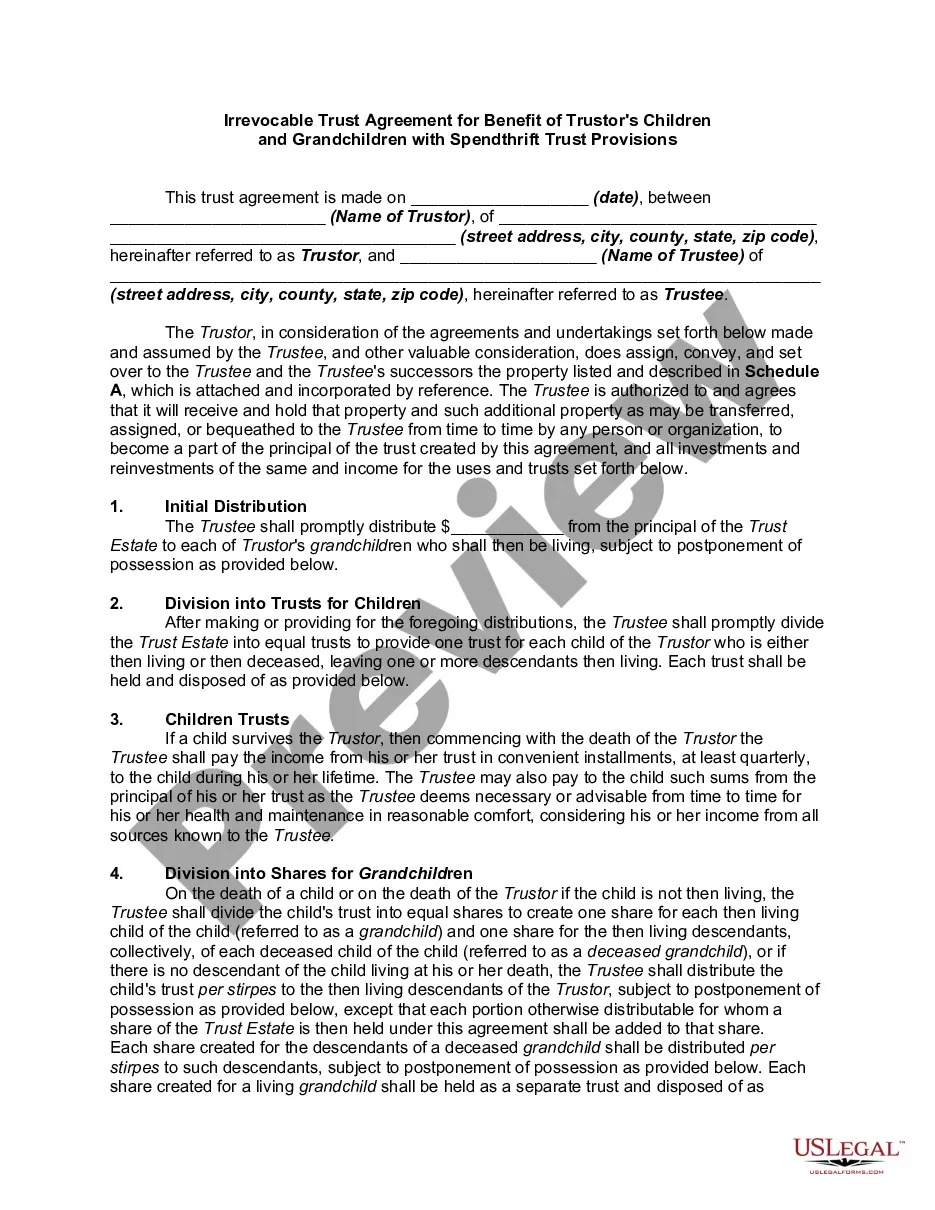
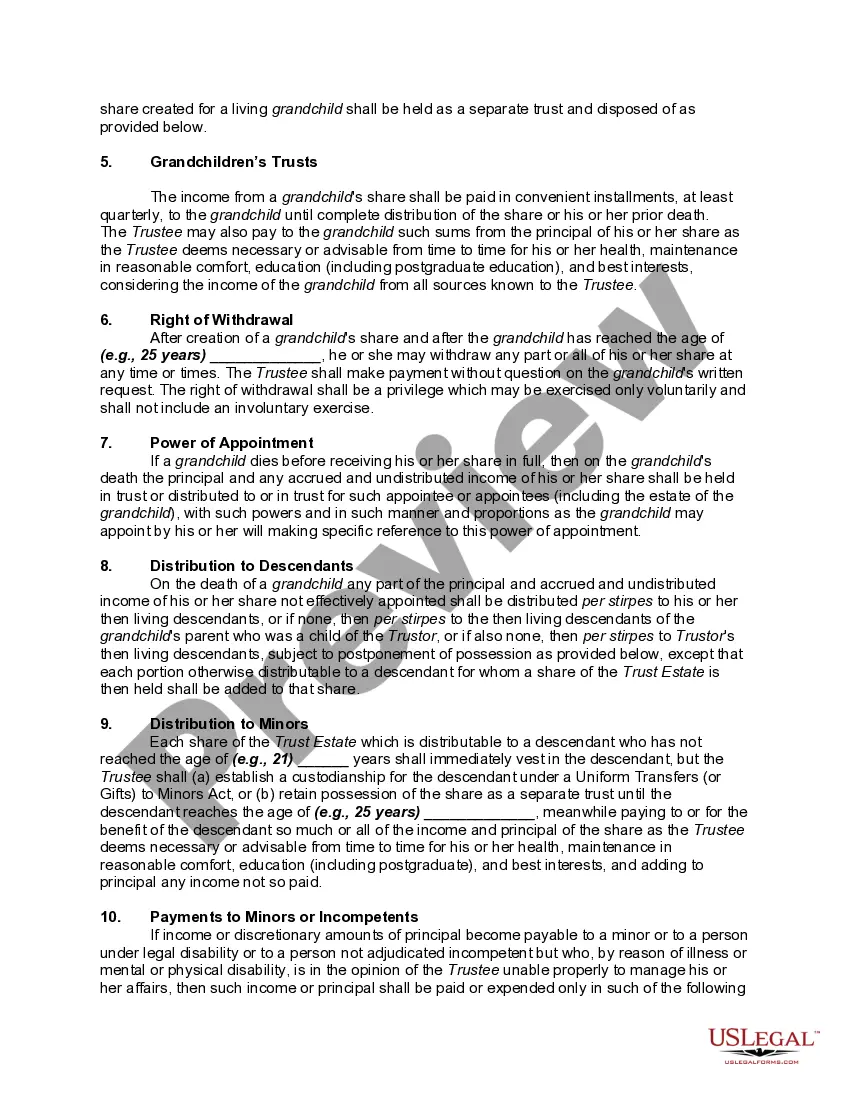
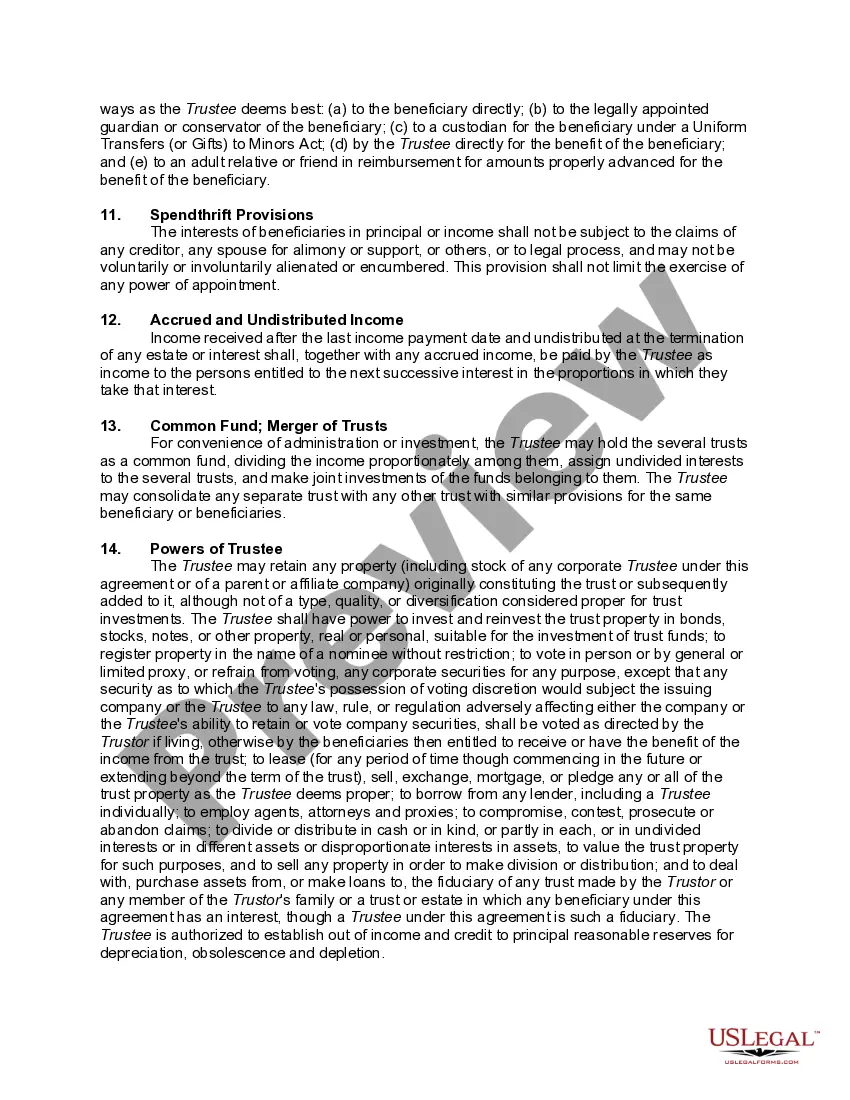
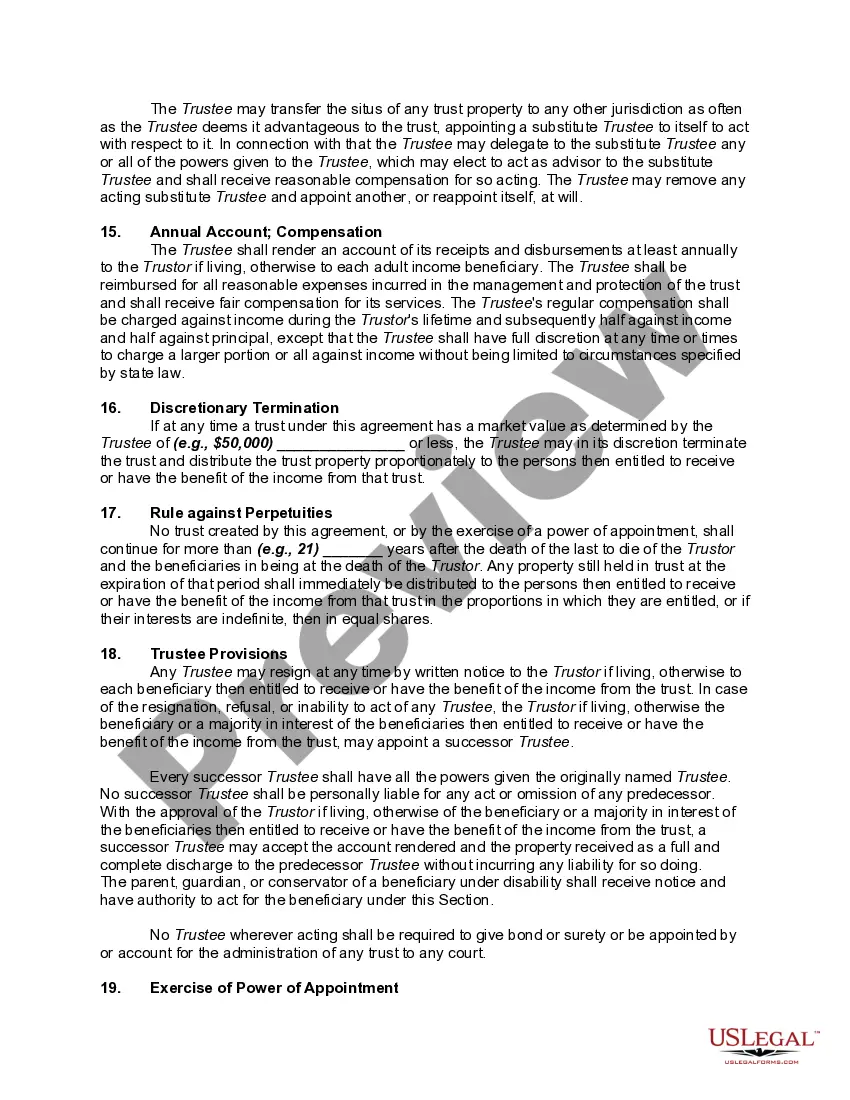
Description


Get your form ready online
Our built-in tools help you complete, sign, share, and store your documents in one place.
Make edits, fill in missing information, and update formatting in US Legal Forms—just like you would in MS Word.
Download a copy, print it, send it by email, or mail it via USPS—whatever works best for your next step.
Sign and collect signatures with our SignNow integration. Send to multiple recipients, set reminders, and more. Go Premium to unlock E-Sign.
If this form requires notarization, complete it online through a secure video call—no need to meet a notary in person or wait for an appointment.
We protect your documents and personal data by following strict security and privacy standards.

Make edits, fill in missing information, and update formatting in US Legal Forms—just like you would in MS Word.

Download a copy, print it, send it by email, or mail it via USPS—whatever works best for your next step.

Sign and collect signatures with our SignNow integration. Send to multiple recipients, set reminders, and more. Go Premium to unlock E-Sign.

If this form requires notarization, complete it online through a secure video call—no need to meet a notary in person or wait for an appointment.

We protect your documents and personal data by following strict security and privacy standards.
Looking for another form?

How to fill out Irrevocable Trust Agreement For Benefit Of Trustor's Children And Grandchildren With Spendthrift Trust Provisions?
Regardless of whether for corporate reasons or personal affairs, each individual inevitably encounters legal situations at some point in their life. Completing legal documents requires meticulous care, starting with selecting the appropriate form template.
For example, if you select an incorrect version of a Sample Irrevocable Trust Form 1, it will be rejected upon submission. Thus, it is crucial to have a reliable source of legal documents such as US Legal Forms.
With a vast catalog of US Legal Forms available, you do not need to waste time searching for the right template online. Utilize the library's user-friendly navigation to find the appropriate form for any circumstance.
- Obtain the template you require by using the search bar or browsing the catalog.
- Review the form’s details to ensure it aligns with your situation, state, and county.
- Click on the form’s preview to examine it.
- If it is the wrong document, revert to the search option to locate the Sample Irrevocable Trust Form 1 template you require.
- Download the file when it aligns with your needs.
- If you possess a US Legal Forms account, click Log in to access documents you have saved in My documents.
- If you do not have an account yet, you can acquire the form by clicking Buy now.
- Choose the appropriate pricing option.
- Fill out the profile registration form.
- Select your payment method: a credit card or PayPal account.
- Choose the document format you prefer and download the Sample Irrevocable Trust Form 1.
- Once it is downloaded, you may fill out the form using editing software or print it and complete it by hand.
Form popularity
FAQ
A common example of an irrevocable trust is a life insurance trust, which is designed to hold and manage life insurance policies. Once assets are placed into this trust, the grantor cannot modify or revoke it, allowing for estate tax advantages. Utilizing a Sample irrevocable trust form simplifies the process of creating this type of trust, while ensuring compliance with legal standards.
Yes. An irrevocable trust is a separate legal entity mandated to file annual income tax returns. All income disbursed to beneficiaries should be reported by the beneficiaries, while the trust should report income that is yet to be distributed.
Draft the written irrevocable trust agreement. Spell out which assets will be placed into the trust, name a trustee and beneficiaries, and outline the terms by which the trust assets will be distributed (how, when, to whom, etc.).
The trusts shall be irrevocable, and the Grantor expressly waives all rights and powers, whether alone or in conjunction with others, and regardless of when or from what source he may have acquired such rights or powers, to alter, amend, revoke, or terminate the trusts, or any of the terms of this Agreement, in whole ...
Taxation of Irrevocable Trust Disbursements This form, known as a K-1, shows the total disbursement received and includes a breakdown of the amount that is attributed to interest income versus principal balance. The beneficiary can then use this information to determine their tax liability.
Don't use trust assets to pay personal expenses. Don't use trust assets to purchase an automobile (since all the assets in the trust will be exposed to liability if there is a car accident). Don't take principal or capital gains from trust assets. Don't transfer IRA's or 401(k)'s to the trust.