Revocable Trust With Ein
Description



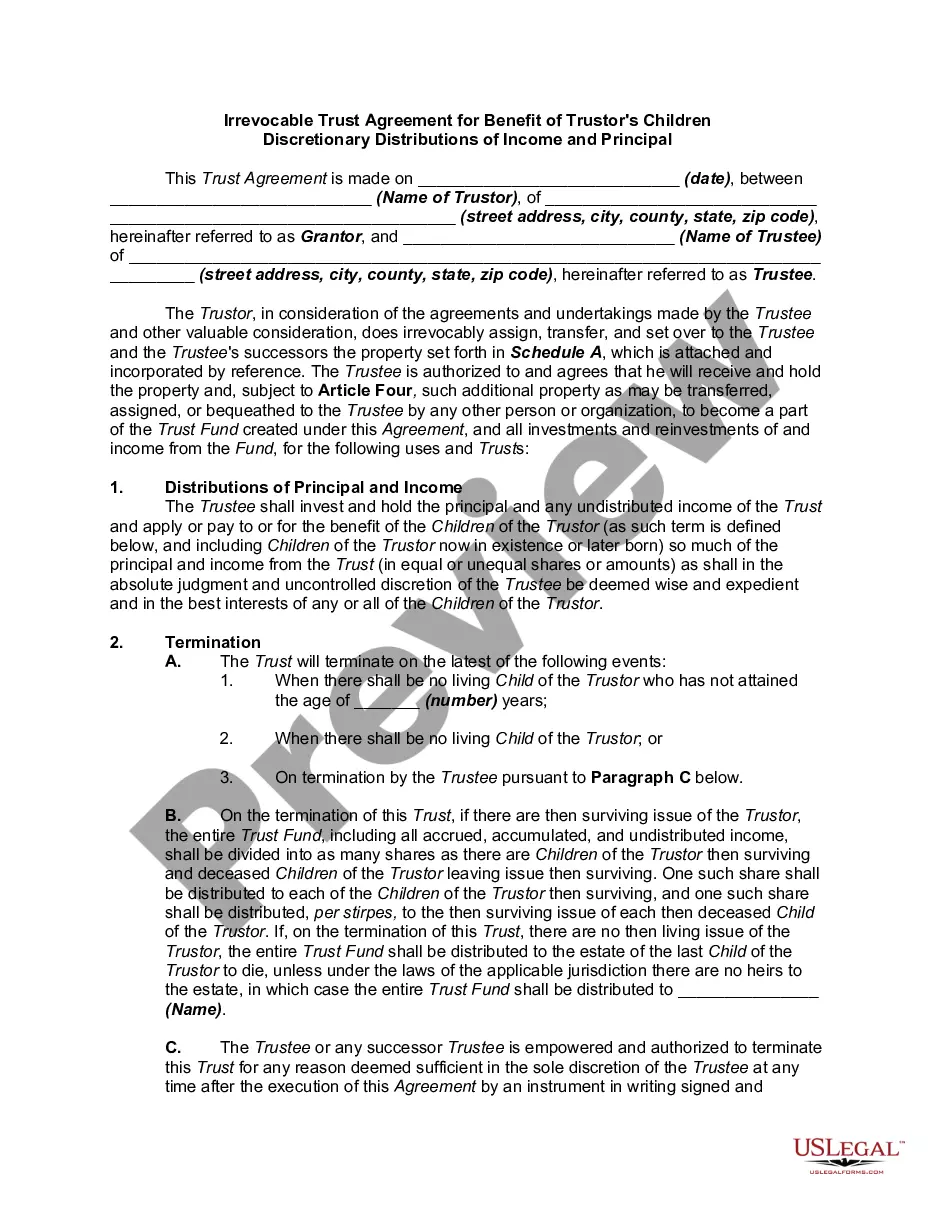
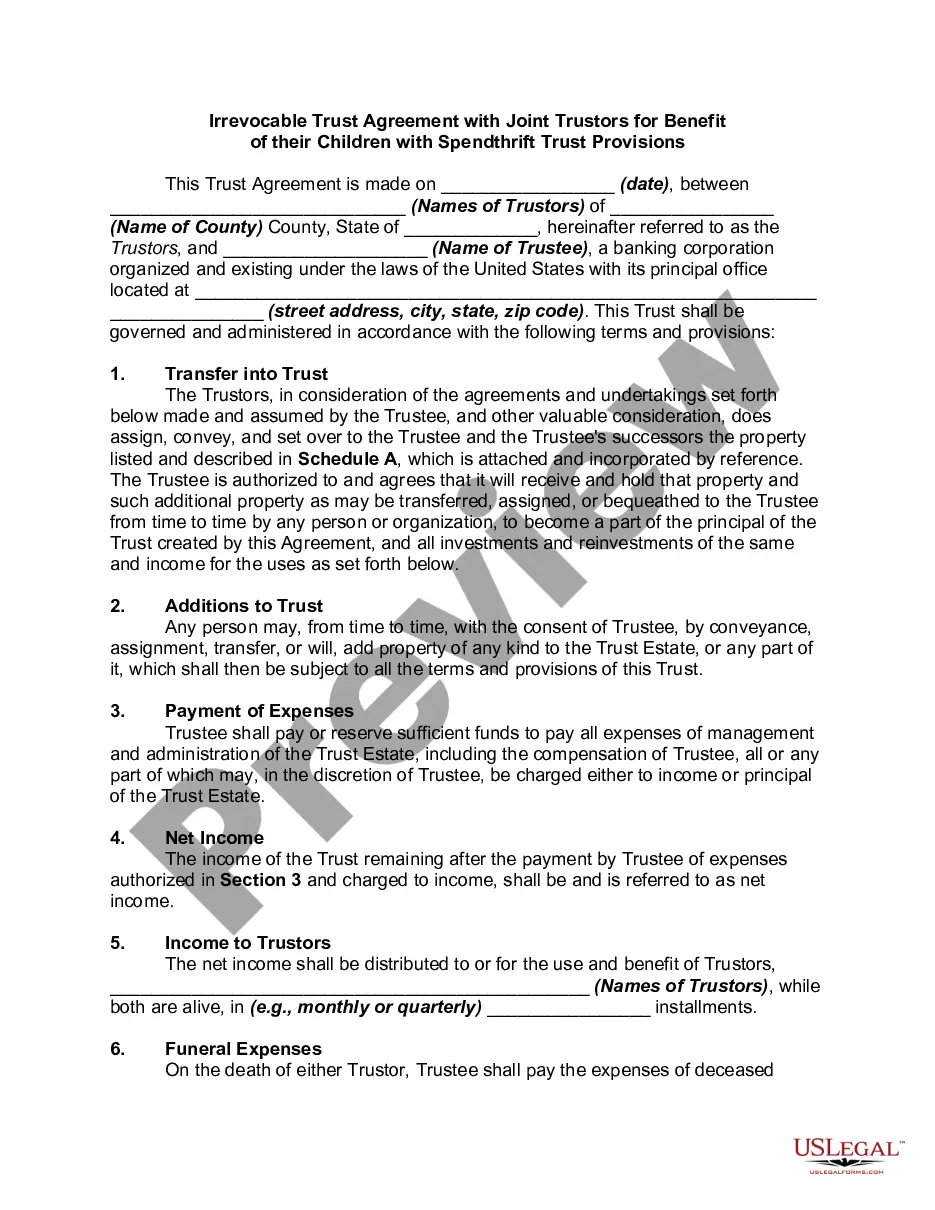

Get your form ready online
Our built-in tools help you complete, sign, share, and store your documents in one place.
Make edits, fill in missing information, and update formatting in US Legal Forms—just like you would in MS Word.
Download a copy, print it, send it by email, or mail it via USPS—whatever works best for your next step.
Sign and collect signatures with our SignNow integration. Send to multiple recipients, set reminders, and more. Go Premium to unlock E-Sign.
If this form requires notarization, complete it online through a secure video call—no need to meet a notary in person or wait for an appointment.
We protect your documents and personal data by following strict security and privacy standards.

Make edits, fill in missing information, and update formatting in US Legal Forms—just like you would in MS Word.

Download a copy, print it, send it by email, or mail it via USPS—whatever works best for your next step.

Sign and collect signatures with our SignNow integration. Send to multiple recipients, set reminders, and more. Go Premium to unlock E-Sign.

If this form requires notarization, complete it online through a secure video call—no need to meet a notary in person or wait for an appointment.

We protect your documents and personal data by following strict security and privacy standards.
Looking for another form?
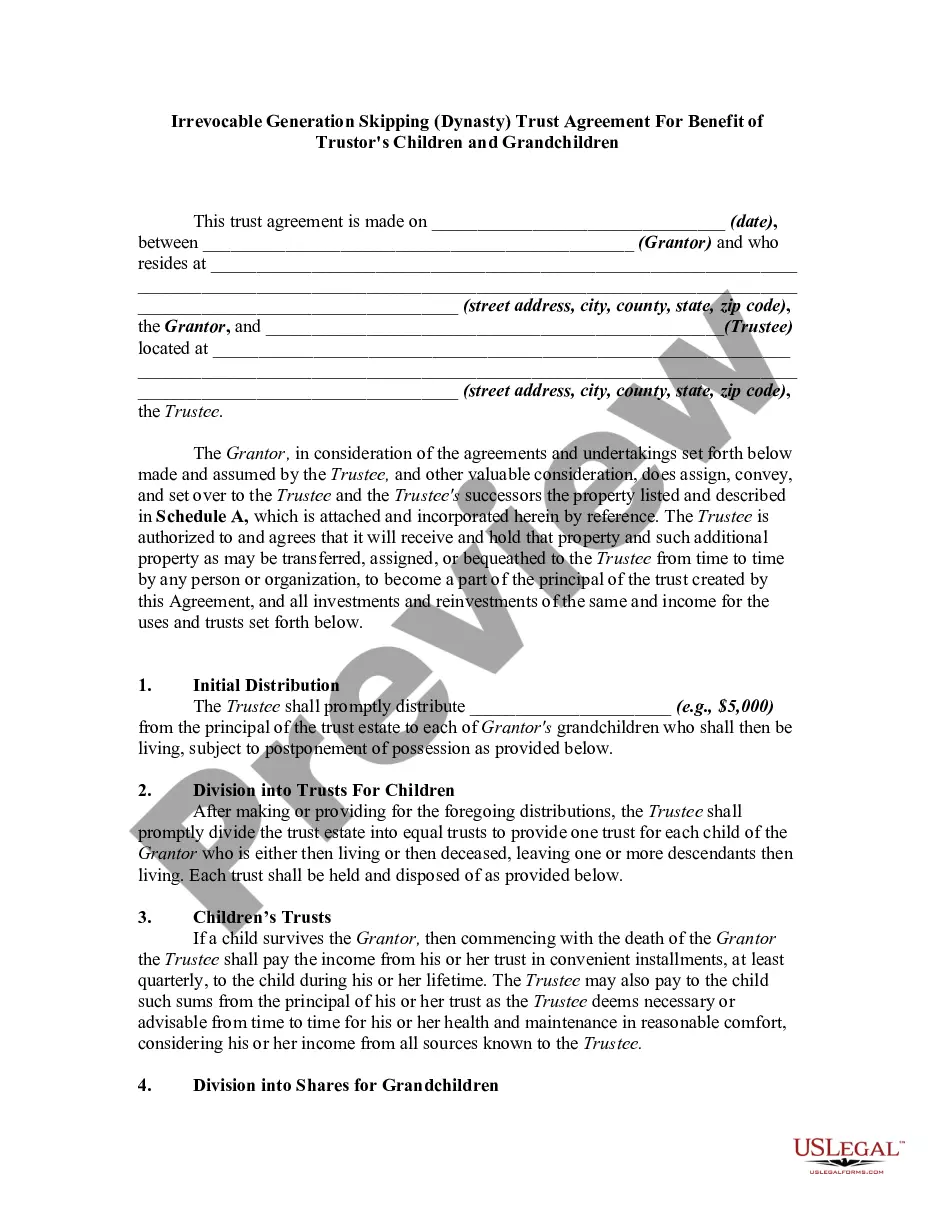



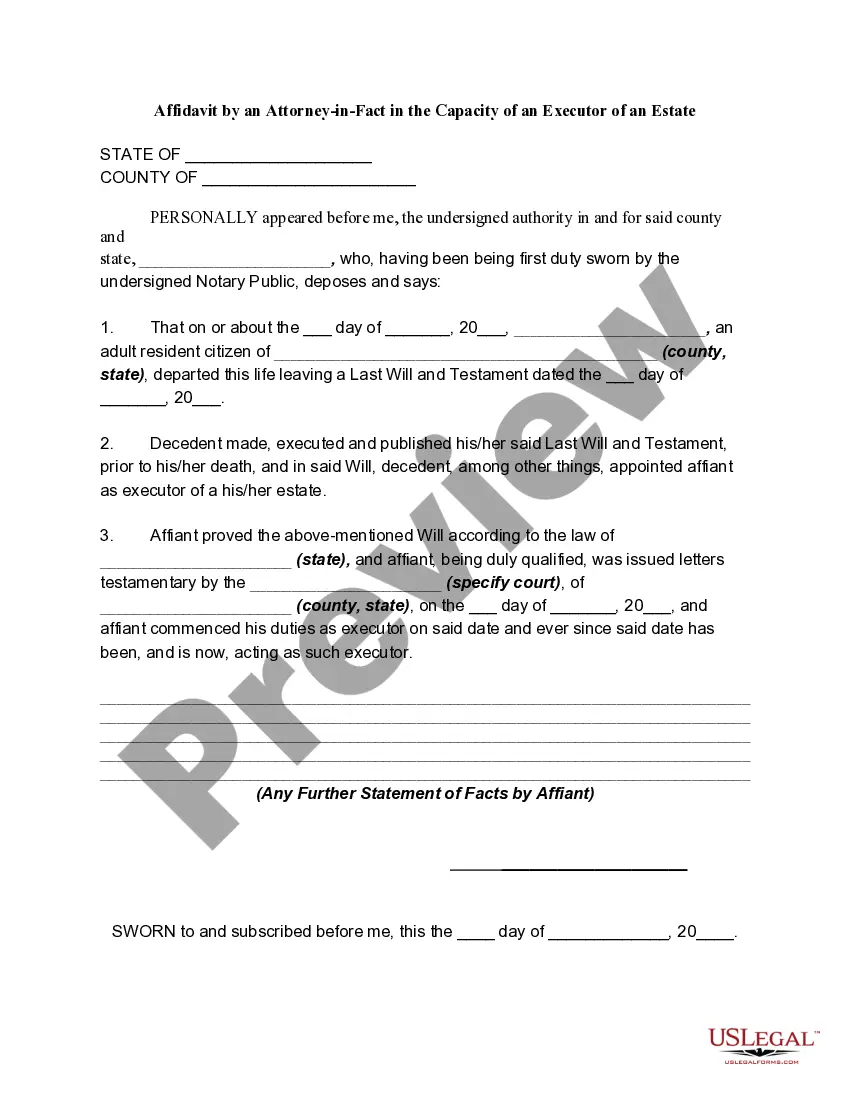
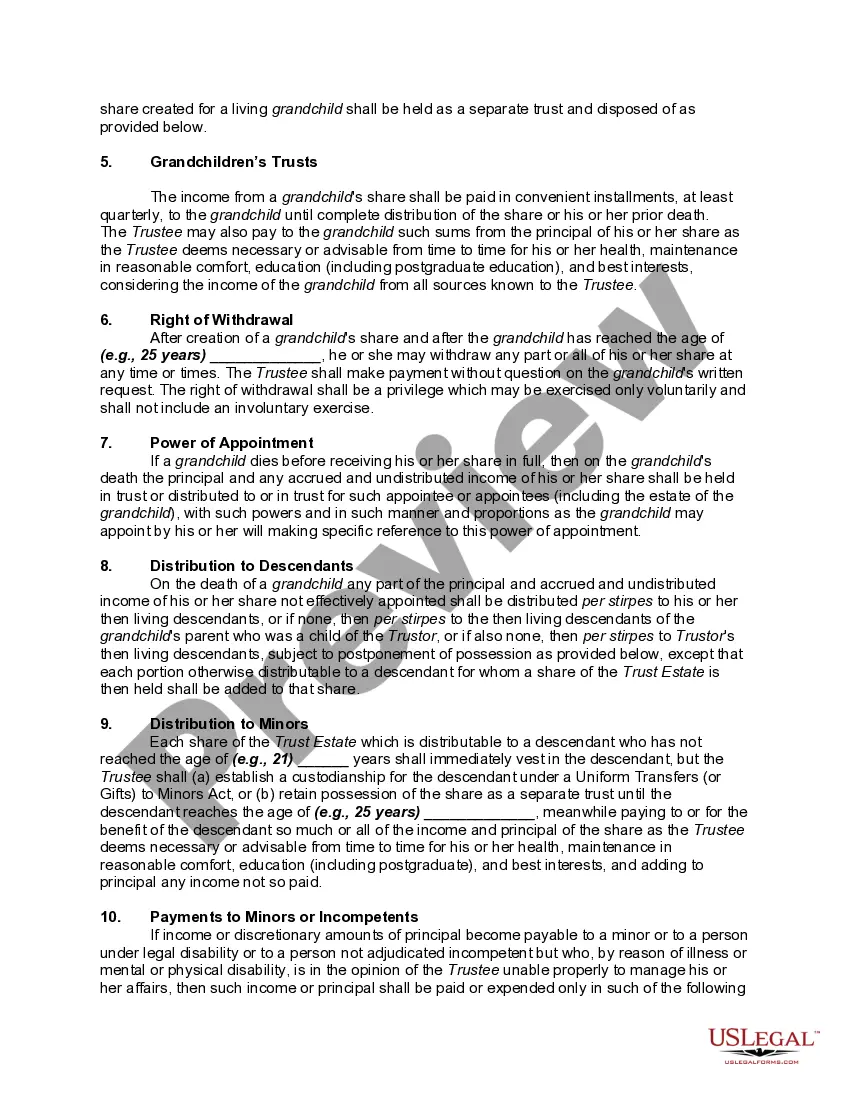
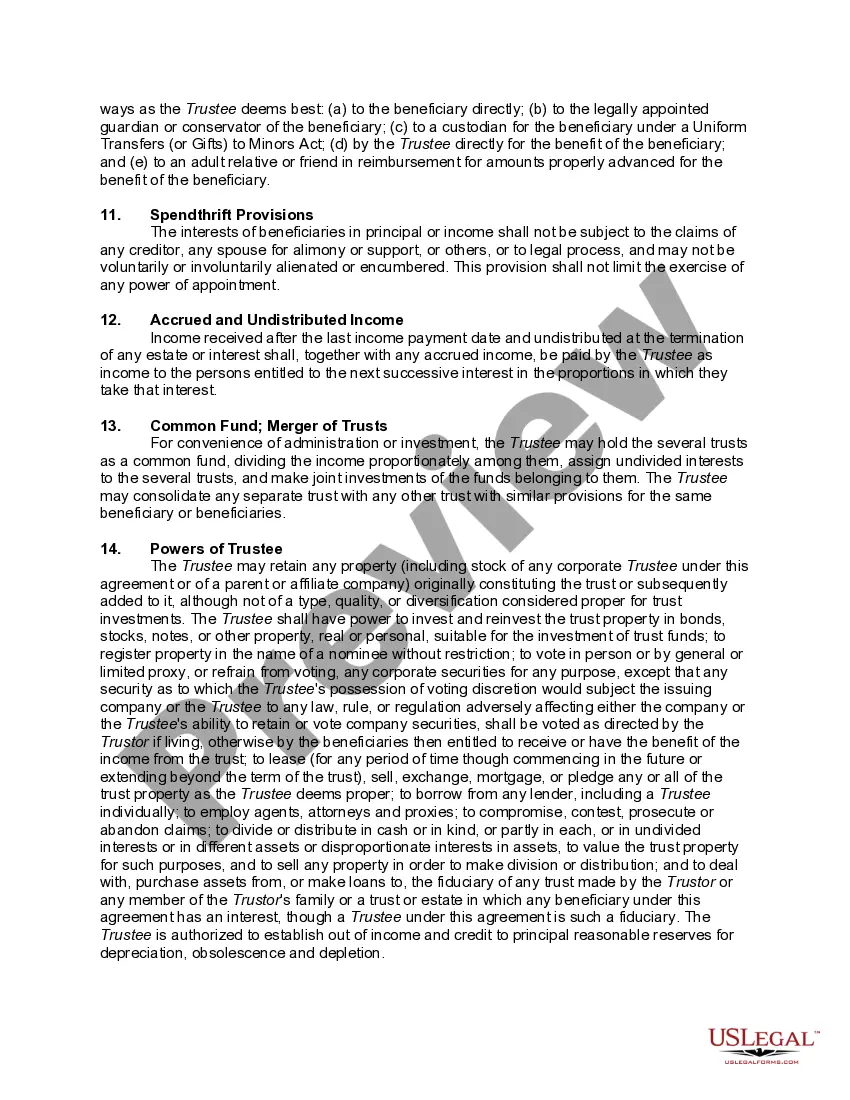
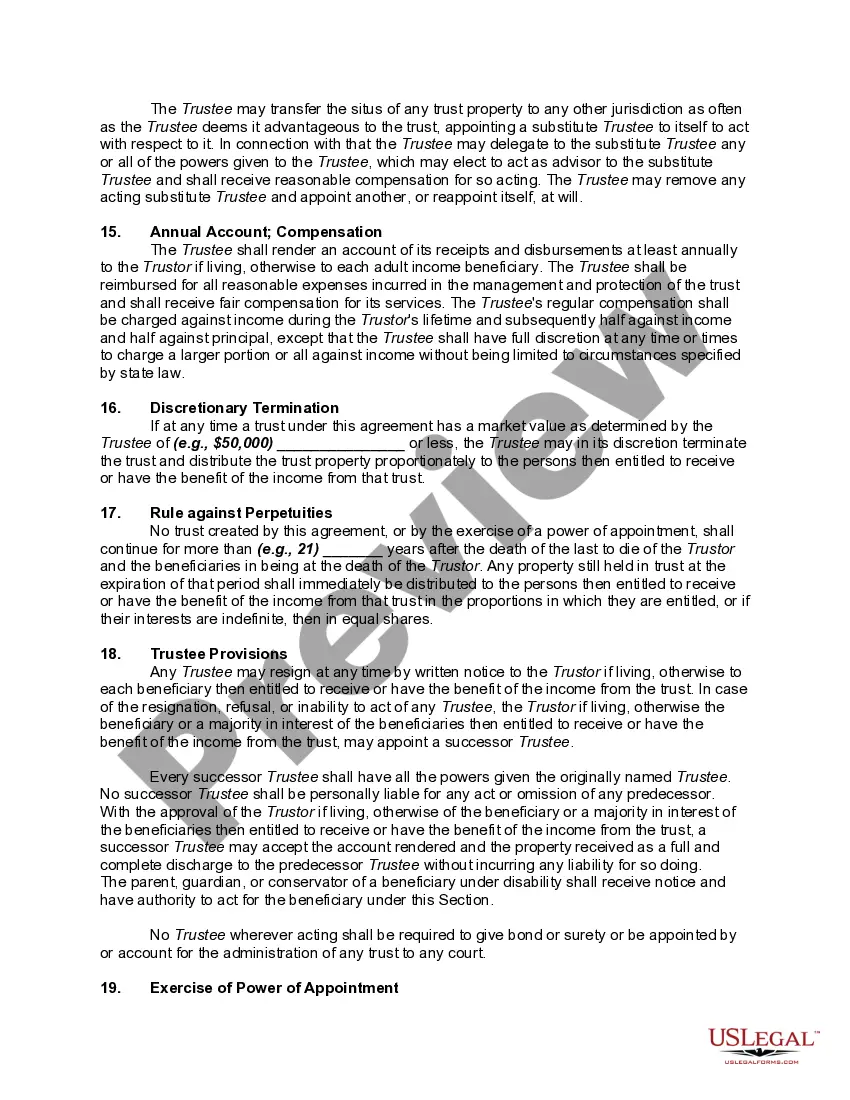
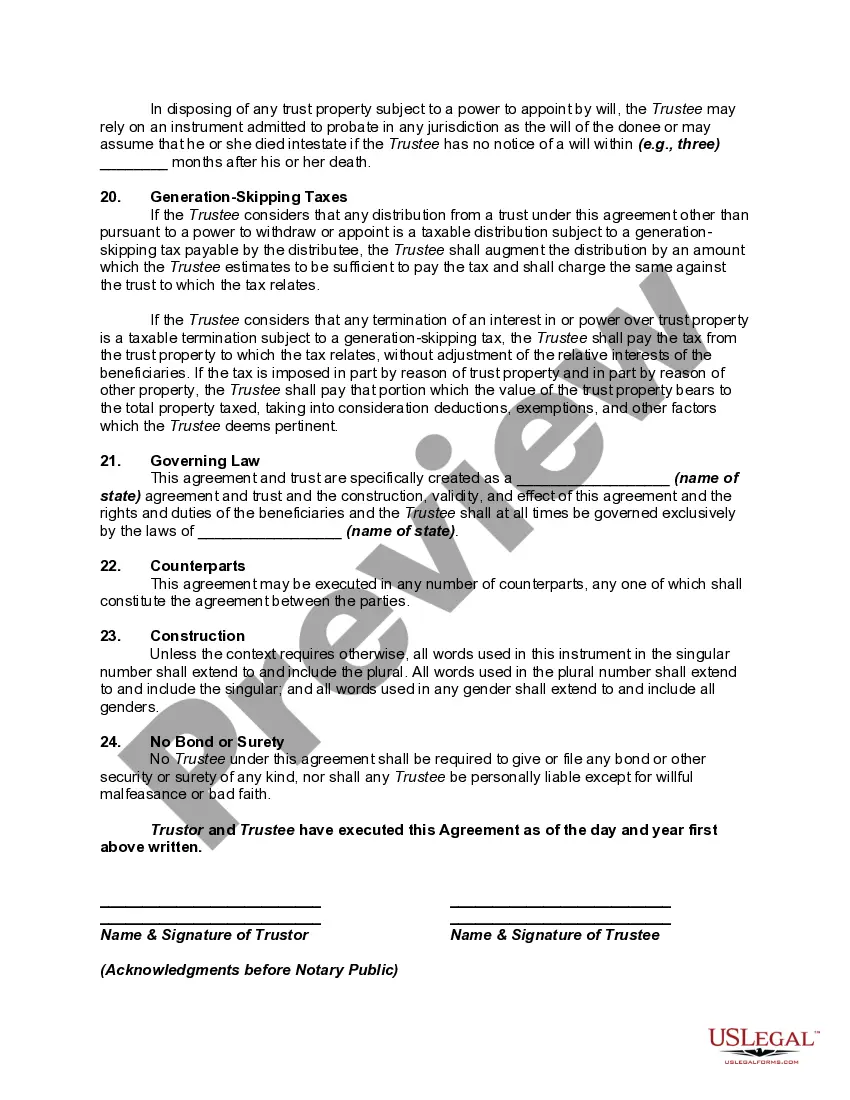
How to fill out Irrevocable Trust Agreement For Benefit Of Trustor's Children And Grandchildren With Spendthrift Trust Provisions?
It’s widely known that you cannot instantly become a legal expert, nor can you learn how to swiftly draft a Revocable Trust With Ein without a specific skill set. Formulating legal documents is a lengthy undertaking that necessitates particular training and expertise. So why not entrust the drafting of the Revocable Trust With Ein to the specialists.
With US Legal Forms, one of the most extensive legal template repositories, you can find everything from court filings to templates for internal office correspondence. We recognize the significance of compliance and conformity to federal and state laws and regulations. That’s why, on our site, all forms are location-specific and current.
Here’s how you can begin with our website and obtain the document you require in just a few minutes.
You can regain access to your forms from the My documents tab at any point. If you are a returning client, you can simply Log In and find and download the template from the same tab.
No matter the reason for your documentation—whether financial and legal, or personal—our website has you covered. Give US Legal Forms a try today!
- Locate the form you need by utilizing the search feature at the top of the page.
- Preview it (if this option is available) and review the accompanying description to determine if Revocable Trust With Ein is what you are looking for.
- If you need any additional forms, restart your search.
- Create a free account and select a subscription plan to purchase the template.
- Hit Buy now. Once the purchase is finalized, you can obtain the Revocable Trust With Ein, fill it out, print it, and send or mail it to the required individuals or entities.
Form popularity
FAQ
Choosing between a revocable and irrevocable trust largely depends on your goals. A revocable trust with ein offers flexibility, allowing you to change the trust any time while you're alive. In contrast, an irrevocable trust provides tax benefits and asset protection but lacks that same flexibility. Therefore, you should consider what you prioritize most in managing your estate.
Revocable trusts do not necessarily require an EIN as you can use the grantor's social security number, yours if you created the trust if you wish. However, the IRS recommends that both revocable and irrevocably trusts have their own Tax ID (EIN) Number.
Because grantors don't always acquire an EIN for the created trust, their heirs or beneficiaries may have to do so after the fact. If the grantor in a revocable trust has died, making the trust irrevocable, you will need to complete the application for an EIN.
A revocable trust turns into an irrevocable trust when the grantor of the trust dies. Typically, the grantor is also the trustee and the first beneficiary of the trust. Once the grantor dies, the terms written into a revocable trust cannot be modified in any way, nor can anyone add or remove assets.
To get an EIN, you'll need to know who the trustee will be and their Social Security number. This person will be listed as the responsible party and will be the one who actually utilizes the EIN when filing taxes, both before and after the passing of the grantor.
This will include the grantor's name, mailing address, Social Security number or ITIN, in addition to information about the trust itself. Acquiring an EIN number for a trust is similar to the process of acquiring an EIN number for a business: You will need to know how the trust is structured and when the trust began.