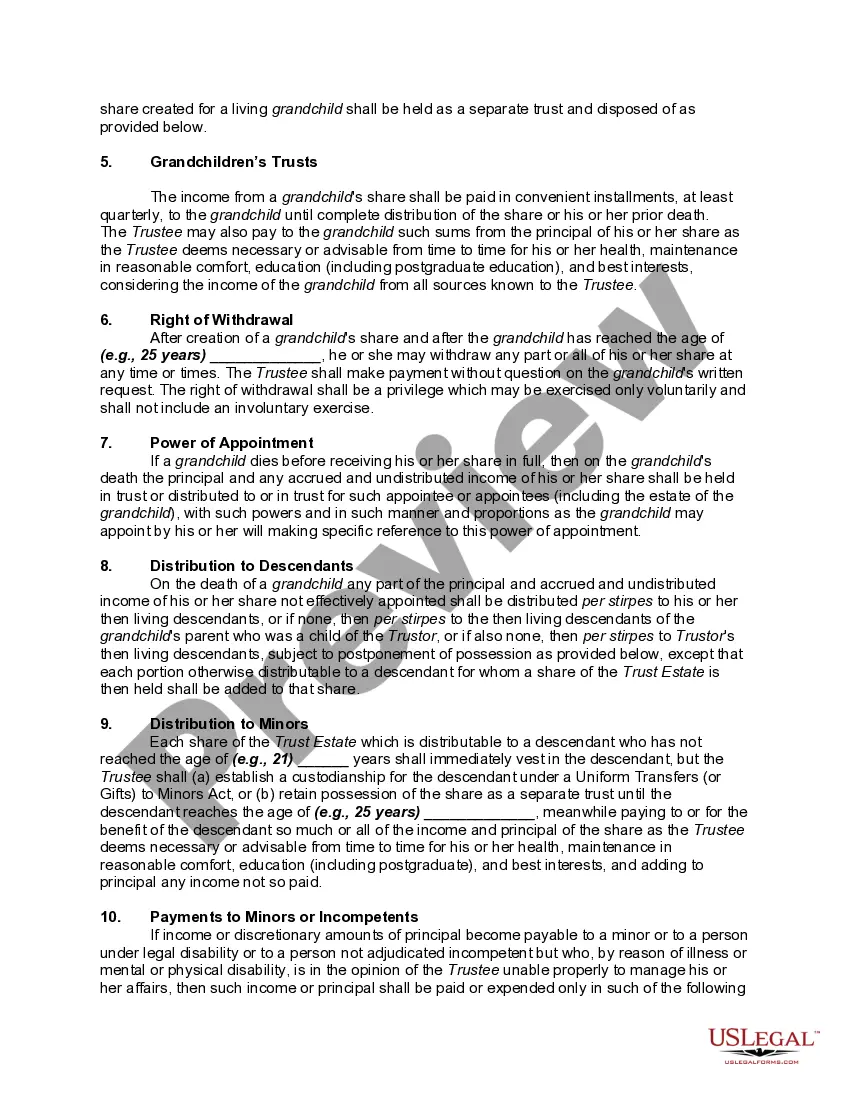
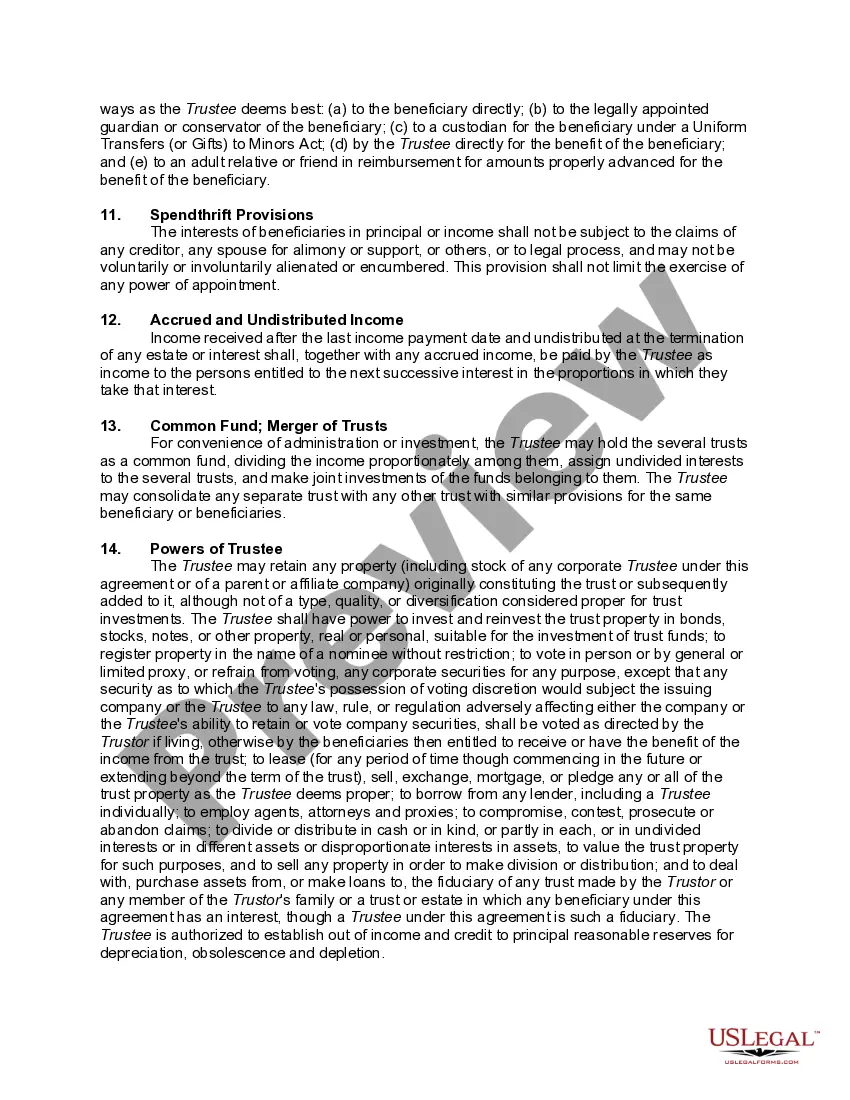
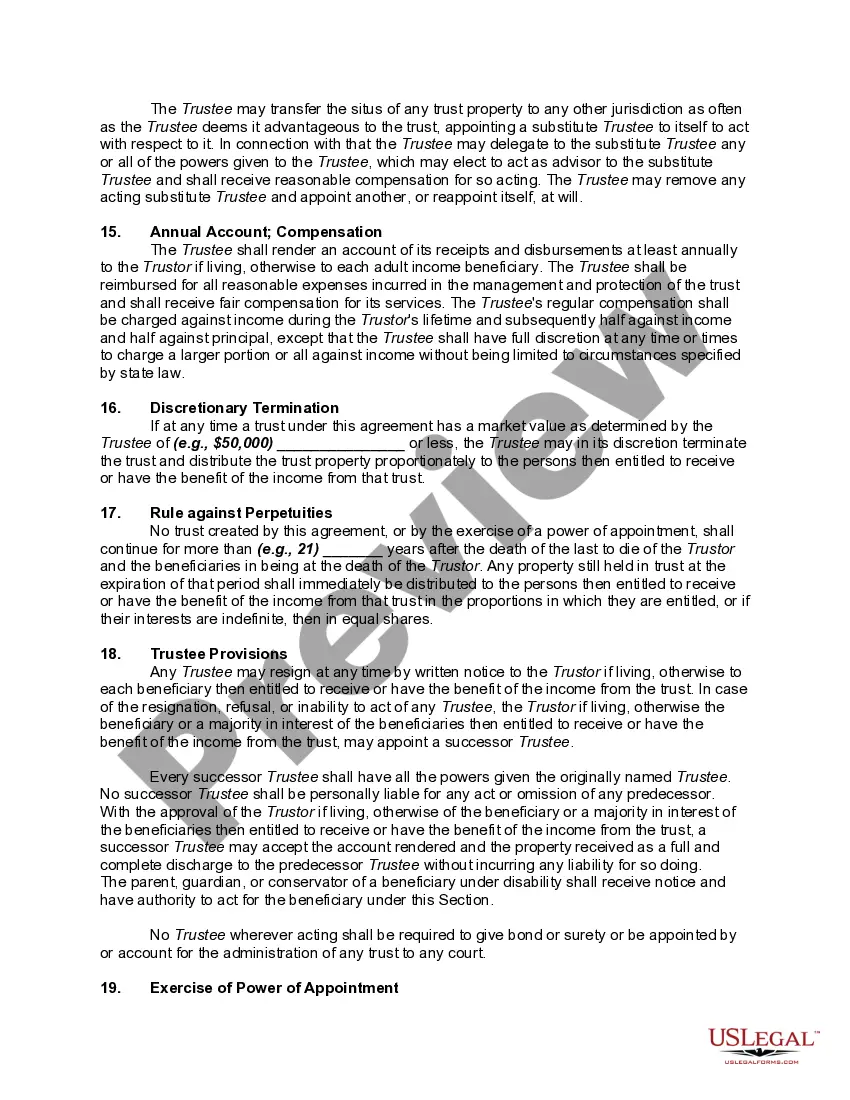
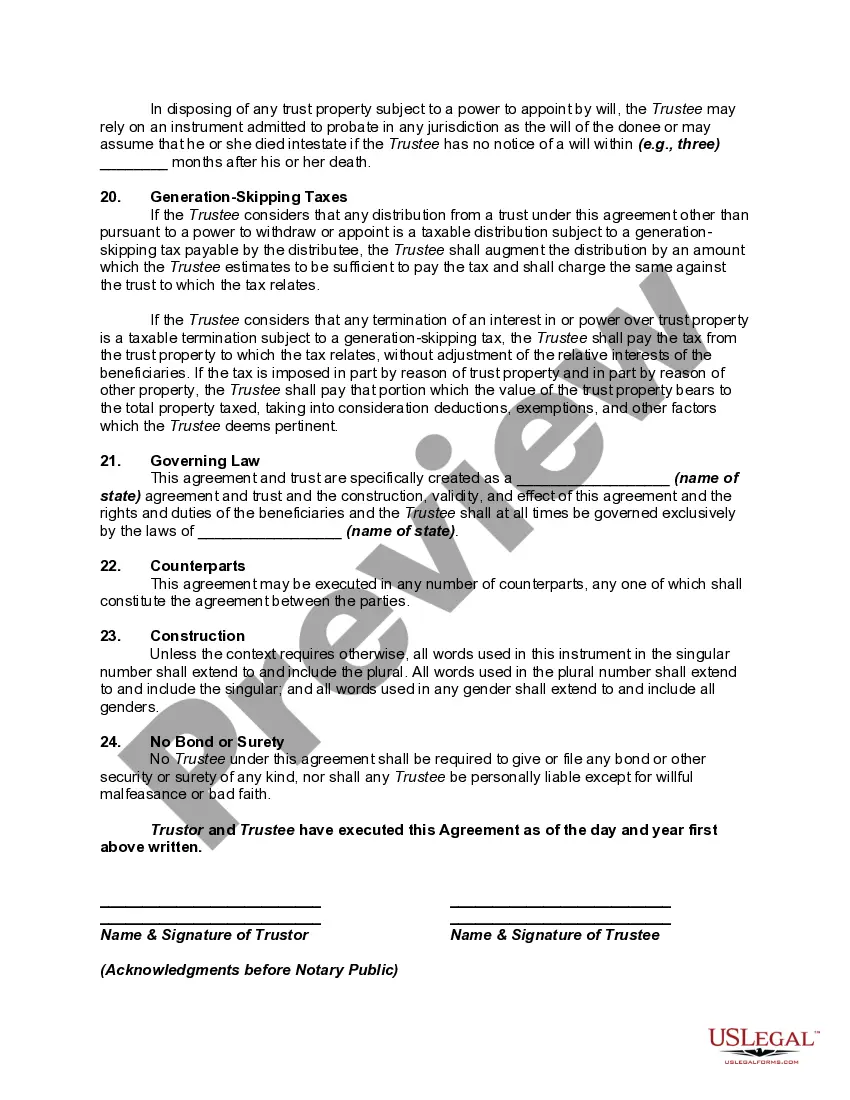
Irrevocable Trust With Will
Description


Get your form ready online
Our built-in tools help you complete, sign, share, and store your documents in one place.
Make edits, fill in missing information, and update formatting in US Legal Forms—just like you would in MS Word.
Download a copy, print it, send it by email, or mail it via USPS—whatever works best for your next step.
Sign and collect signatures with our SignNow integration. Send to multiple recipients, set reminders, and more. Go Premium to unlock E-Sign.
If this form requires notarization, complete it online through a secure video call—no need to meet a notary in person or wait for an appointment.
We protect your documents and personal data by following strict security and privacy standards.

Make edits, fill in missing information, and update formatting in US Legal Forms—just like you would in MS Word.

Download a copy, print it, send it by email, or mail it via USPS—whatever works best for your next step.

Sign and collect signatures with our SignNow integration. Send to multiple recipients, set reminders, and more. Go Premium to unlock E-Sign.

If this form requires notarization, complete it online through a secure video call—no need to meet a notary in person or wait for an appointment.

We protect your documents and personal data by following strict security and privacy standards.
Looking for another form?

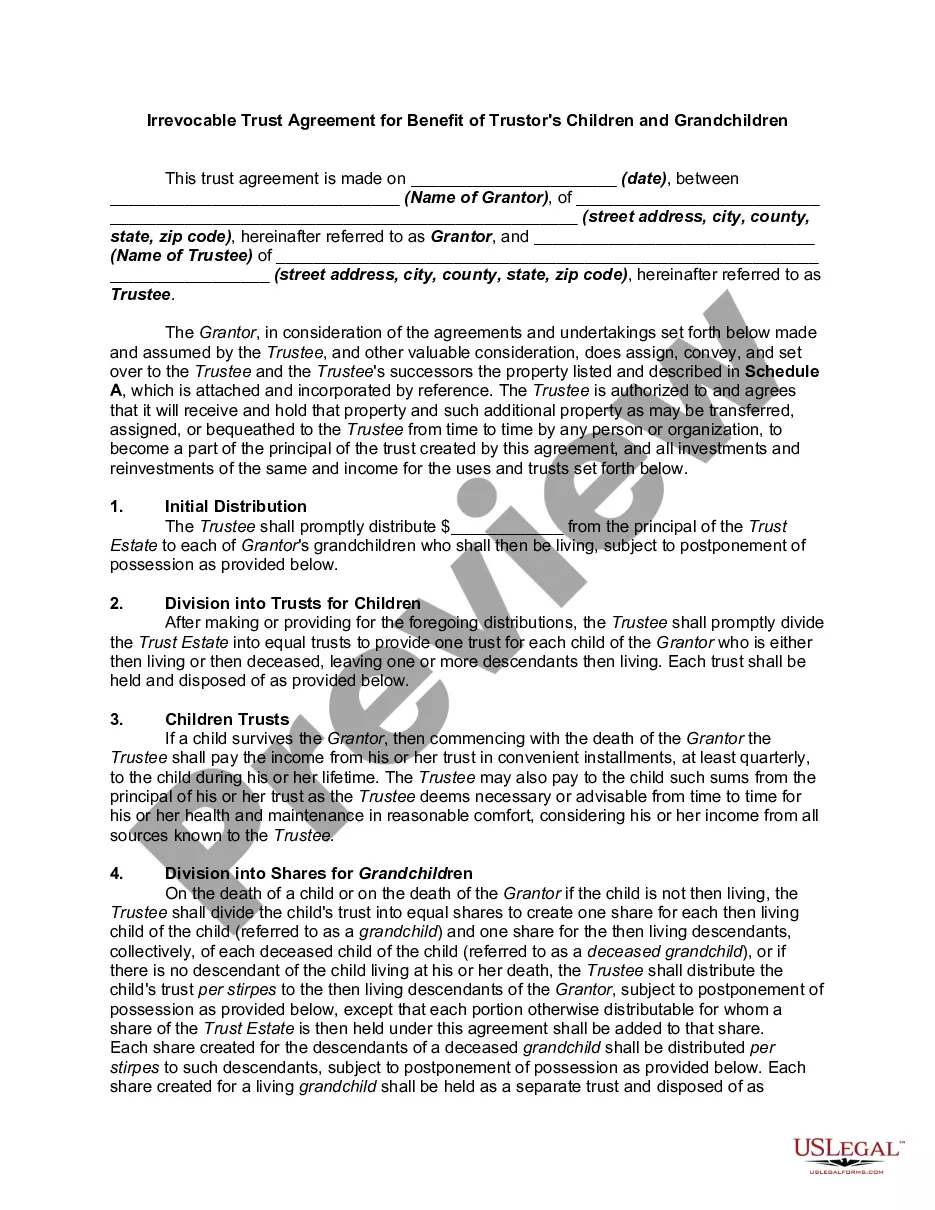
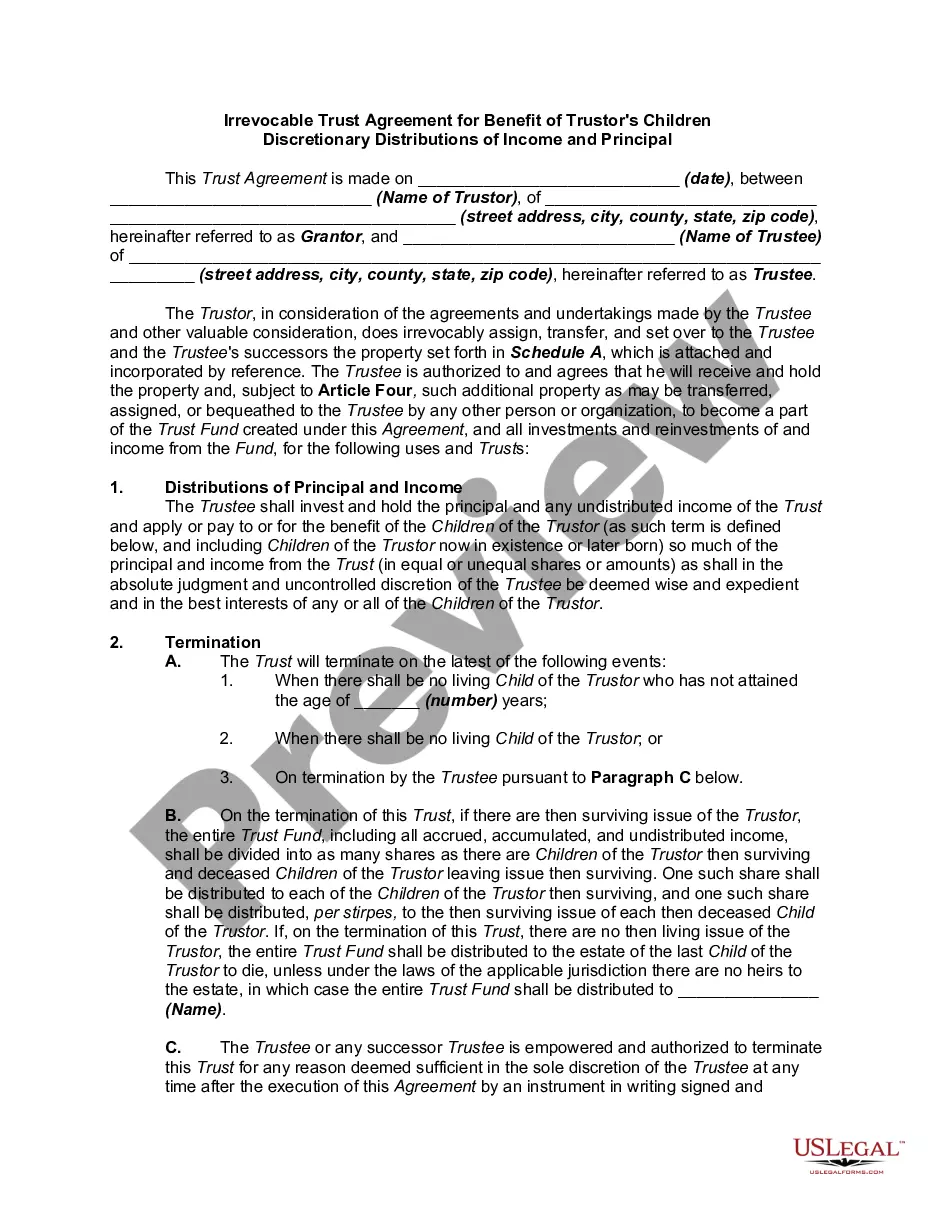
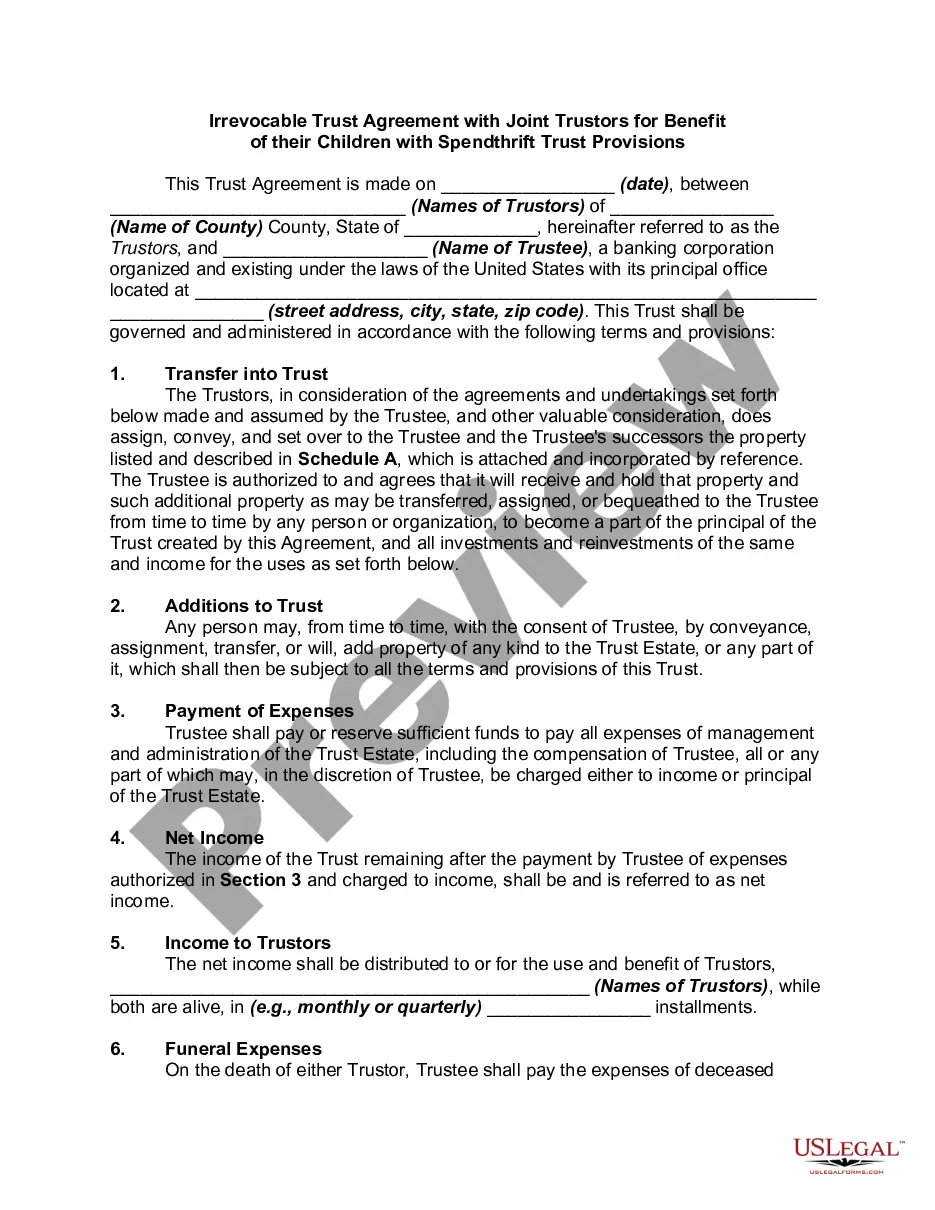
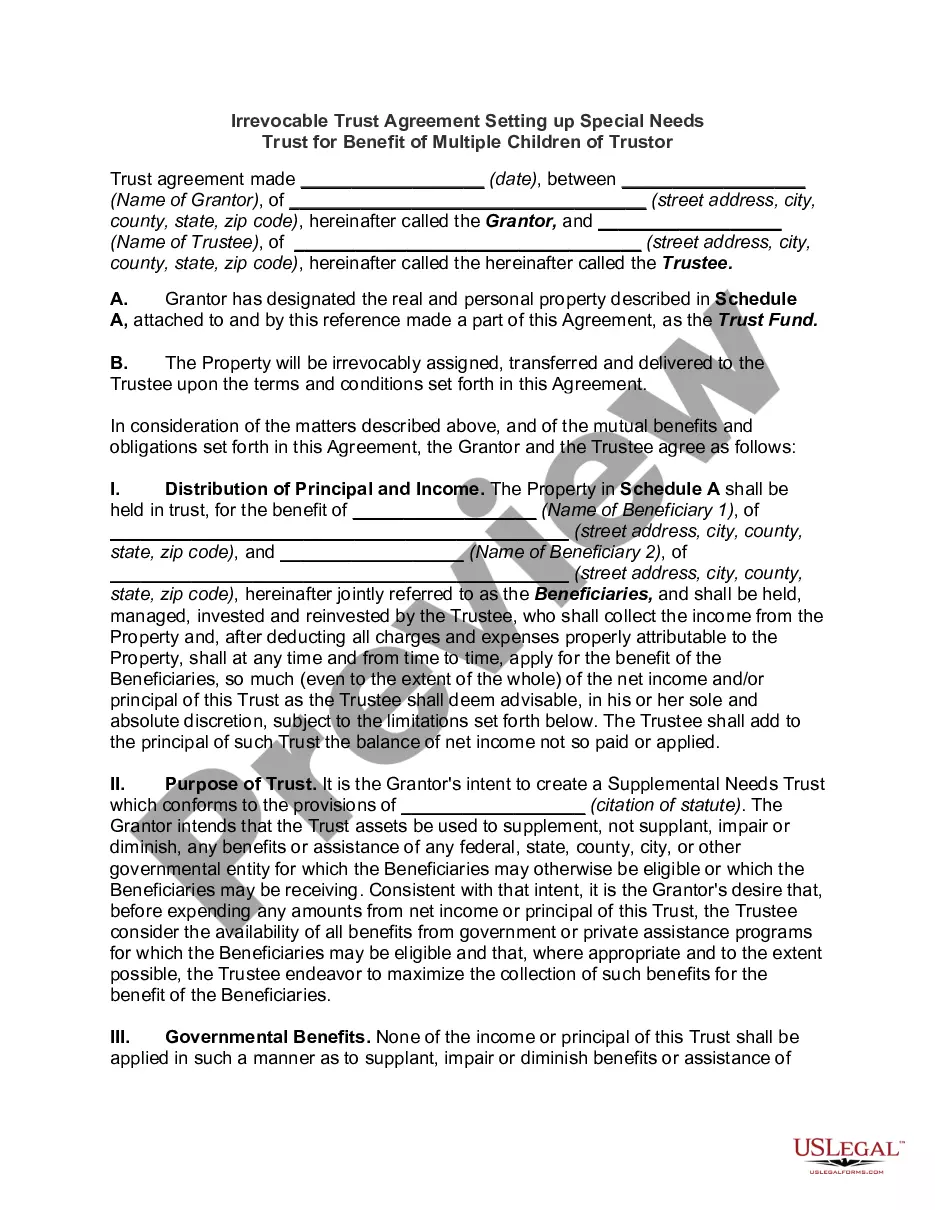
How to fill out Irrevocable Trust Agreement For Benefit Of Trustor's Children And Grandchildren With Spendthrift Trust Provisions?
Whether for commercial reasons or for personal matters, everyone has to contend with legal circumstances at some time in their life.
Completing legal documents necessitates meticulous care, starting from choosing the right form example.
With an extensive US Legal Forms catalog available, you no longer need to waste time searching for the suitable example across the internet. Utilize the library’s straightforward navigation to find the correct template for any situation.
- Obtain the document you require by using the search box or catalog browsing.
- Examine the form’s description to ensure it suits your situation, state, and locality.
- Click on the form’s preview to view it.
- If it is the wrong document, go back to the search feature to locate the Irrevocable Trust With Will example you require.
- Download the template when it aligns with your needs.
- If you have a US Legal Forms profile, simply click Log in to access previously saved documents in My documents.
- If you do not have an account yet, you can acquire the form by clicking Buy now.
- Choose the appropriate pricing option.
- Complete the profile registration form.
- Select your payment method: you can utilize a credit card or PayPal account.
- Choose the file format you desire and download the Irrevocable Trust With Will.
- Once it is saved, you can finalize the form using editing software or print it out and complete it physically.
Form popularity
FAQ
The beneficiary will be responsible for taxes on the income it receives. Income paid to beneficiaries retains its character as earned by the trust.
Wills do not avoid estate taxes, though estate tax generally only applies to assets over $12.92 million in 2023. Irrevocable trusts can provide tax benefits and protect your estate from creditors. Revocable trusts generally do not provide these things. Wills may be subject to probate, which is a public legal process.
Trusts take precedence because a trust is a separate legal entity that owns assets at the time of the trust is funded (when the creator put the property in the name of the trust), while a will manages any assets that are not titled in the trust.
Irrevocable trust: If a trust is not a grantor trust, it is considered a separate taxpayer. Taxable income retained by the trust is taxed to the trust. Distributed income is taxed to the beneficiary who receives it.
What Should I Avoid with My Irrevocable Trust? Use trust funds to pay for personal expenses. Use trust funds to pay for monthly bills, such as phone bills or utilities. Use trust assets to purchase vehicles. Gift assets from the trust to beneficiaries. Transfer assets into the trust without consulting your lawyer.