Irrevocable Trust For Grandchildren
Description



Get your form ready online
Our built-in tools help you complete, sign, share, and store your documents in one place.
Make edits, fill in missing information, and update formatting in US Legal Forms—just like you would in MS Word.
Download a copy, print it, send it by email, or mail it via USPS—whatever works best for your next step.
Sign and collect signatures with our SignNow integration. Send to multiple recipients, set reminders, and more. Go Premium to unlock E-Sign.
If this form requires notarization, complete it online through a secure video call—no need to meet a notary in person or wait for an appointment.
We protect your documents and personal data by following strict security and privacy standards.

Make edits, fill in missing information, and update formatting in US Legal Forms—just like you would in MS Word.

Download a copy, print it, send it by email, or mail it via USPS—whatever works best for your next step.

Sign and collect signatures with our SignNow integration. Send to multiple recipients, set reminders, and more. Go Premium to unlock E-Sign.

If this form requires notarization, complete it online through a secure video call—no need to meet a notary in person or wait for an appointment.

We protect your documents and personal data by following strict security and privacy standards.
Looking for another form?






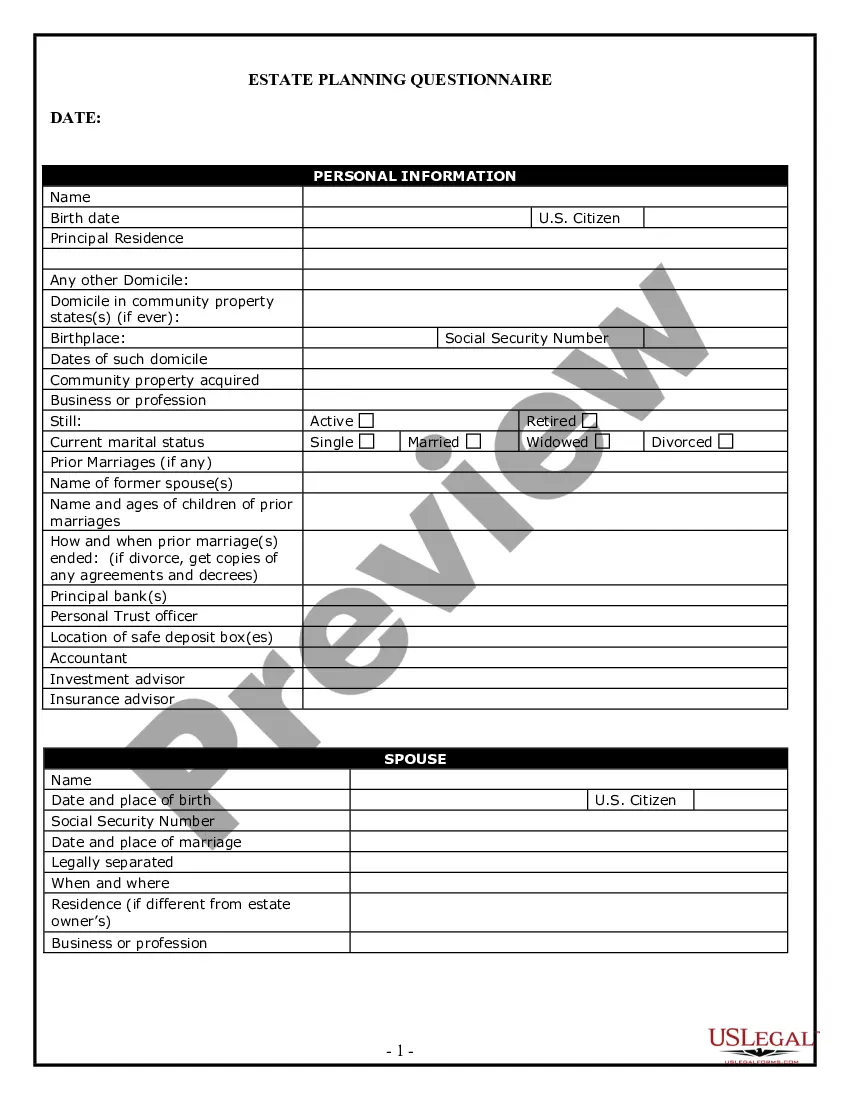


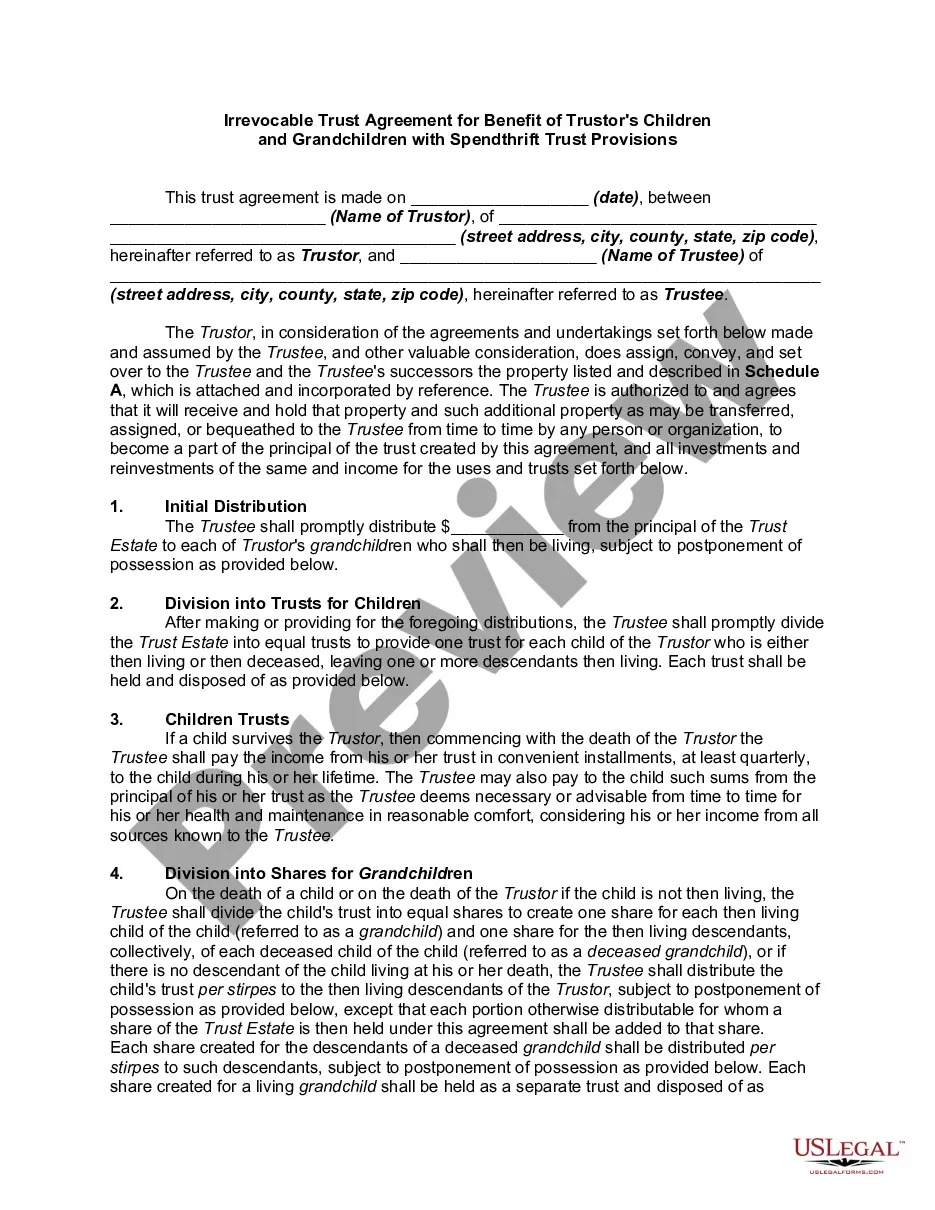
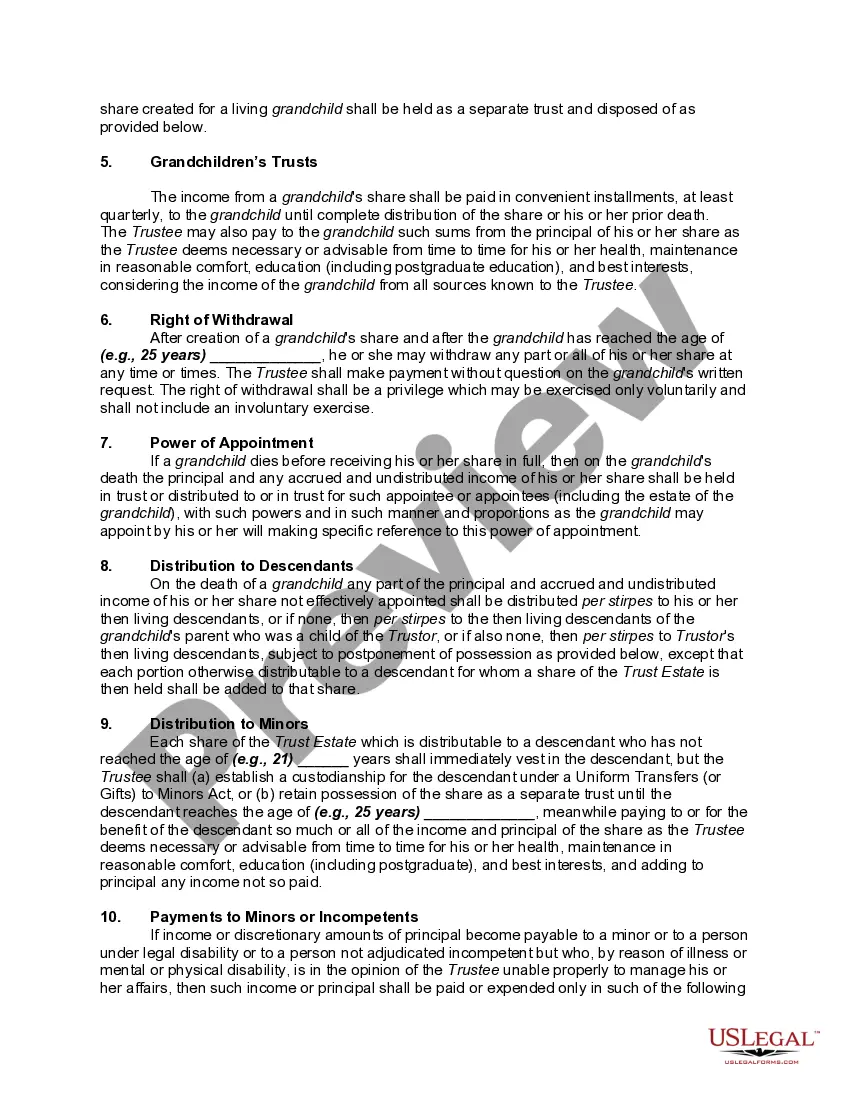
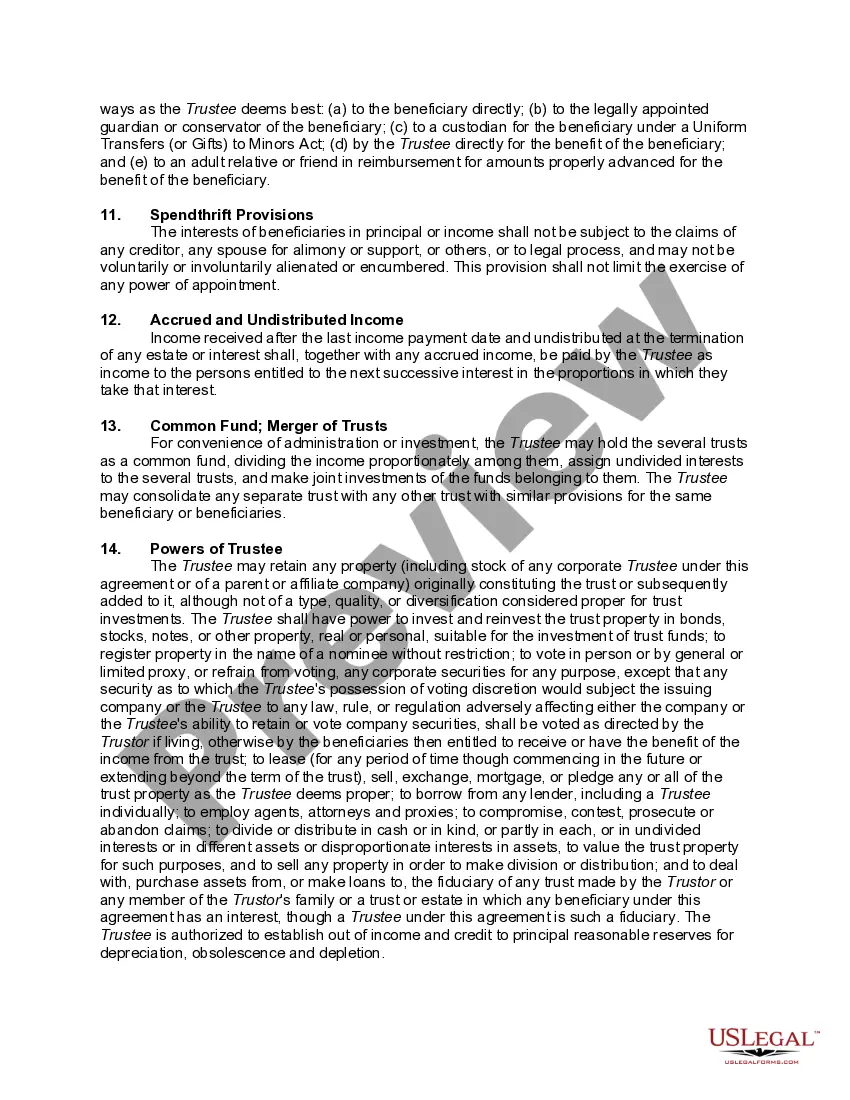
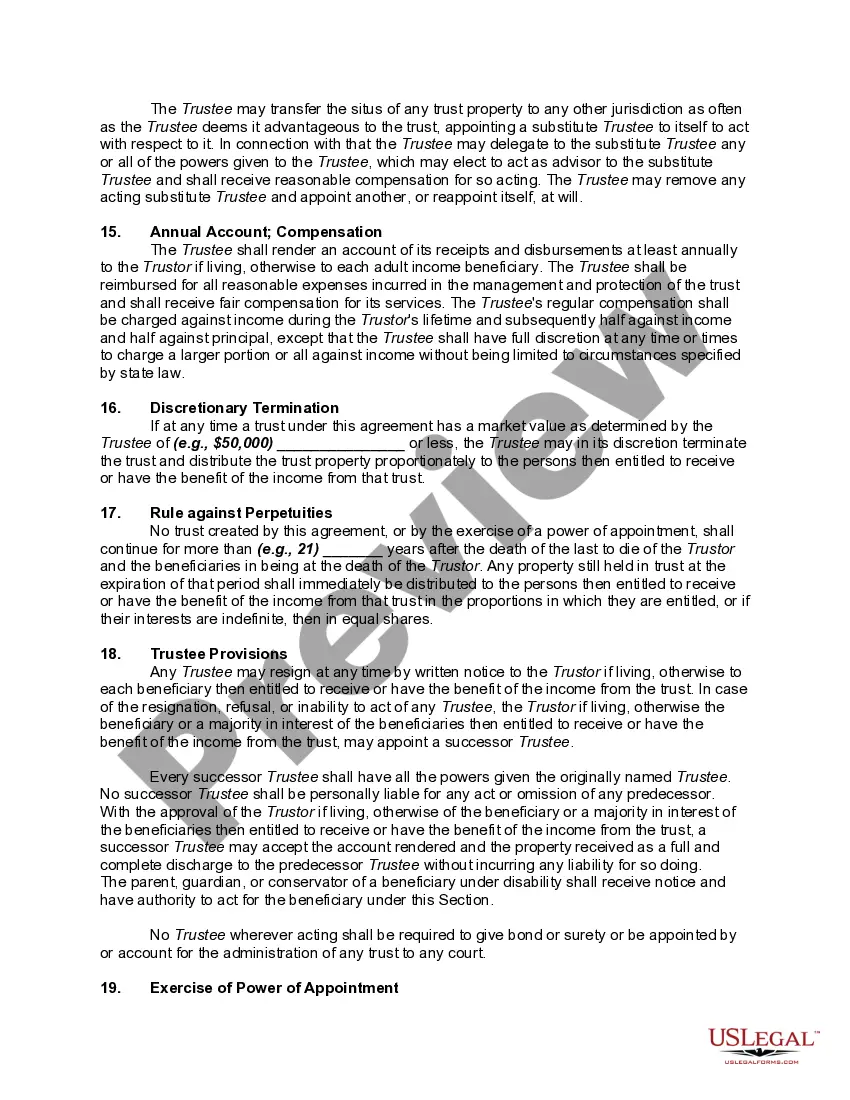
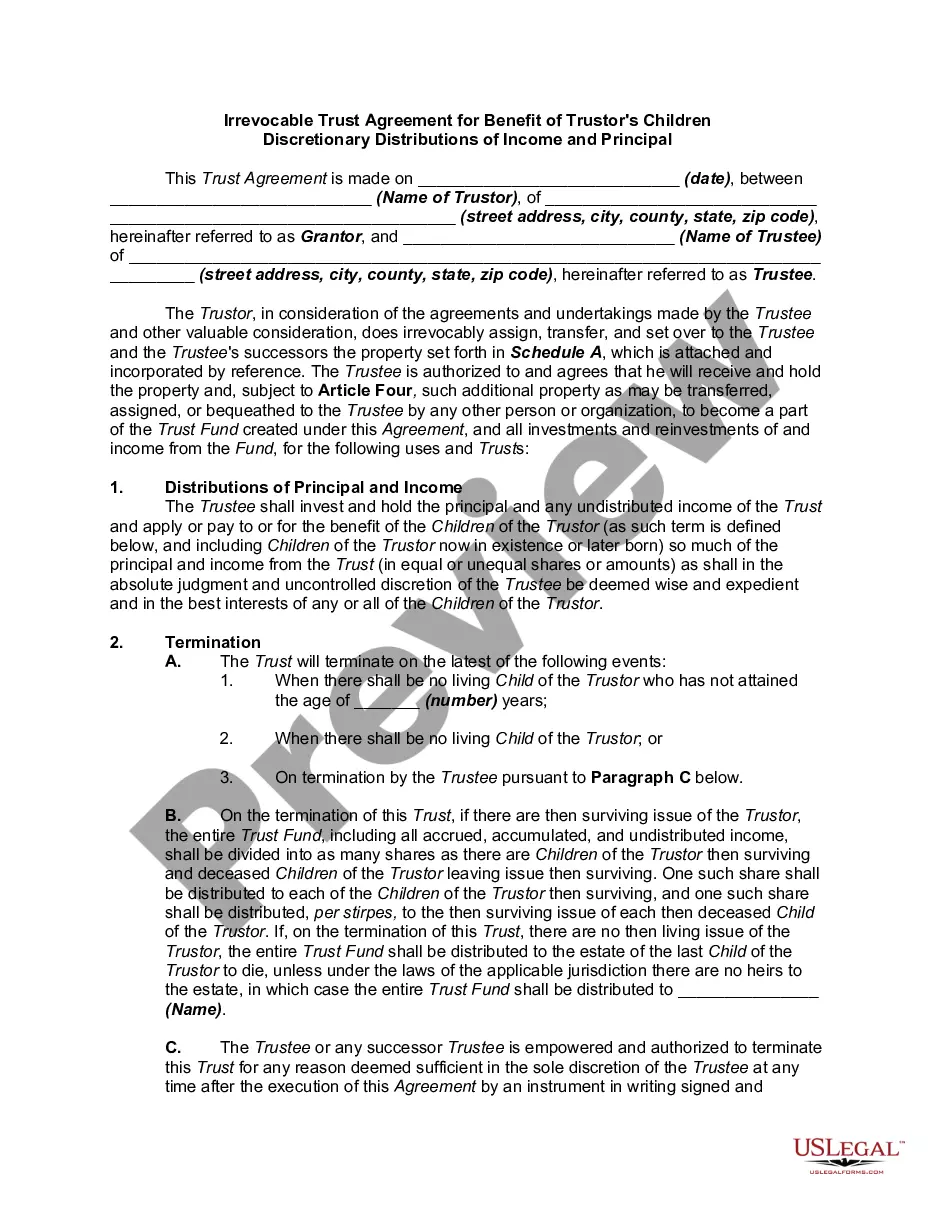
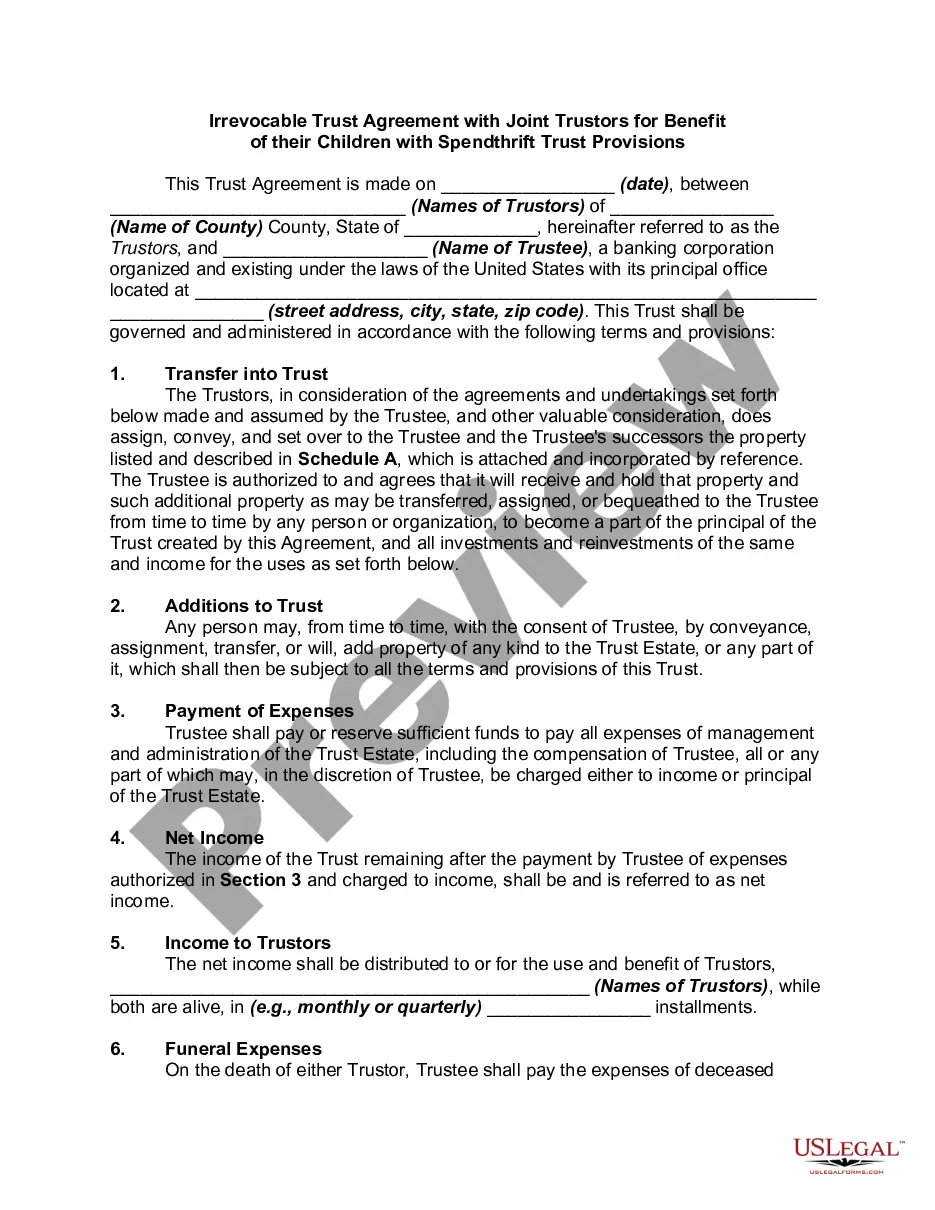
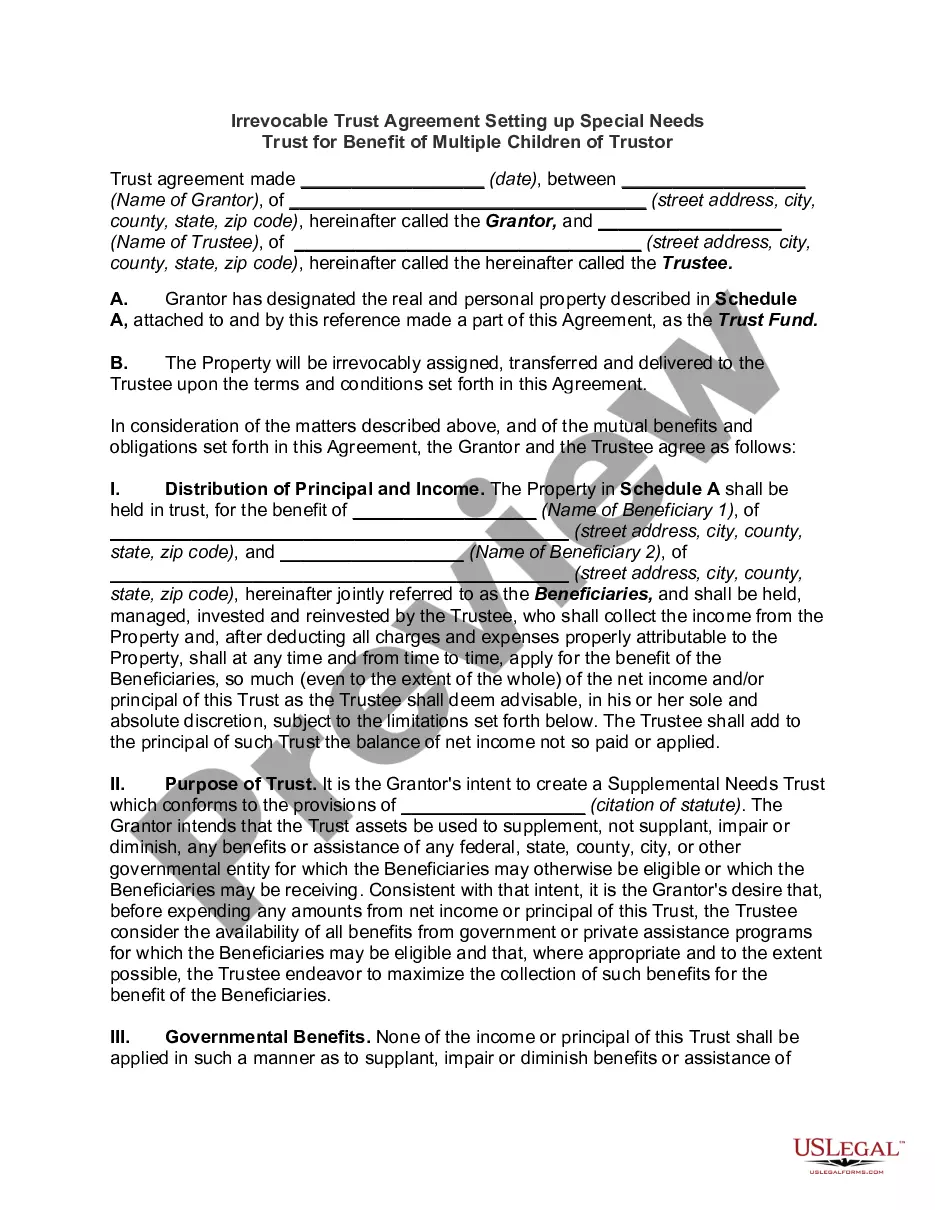
How to fill out Irrevocable Trust Agreement For Benefit Of Trustor's Children And Grandchildren With Spendthrift Trust Provisions?
Dealing with legal paperwork and processes can be a lengthy addition to your day.
Irrevocable Trust For Grandchildren and similar forms generally necessitate you to search for them and comprehend how to fill them out correctly.
Consequently, if you are managing financial, legal, or personal affairs, utilizing a thorough and user-friendly online directory of forms at your disposal will be extremely beneficial.
US Legal Forms is the leading online service for legal templates, featuring over 85,000 state-specific forms and a range of resources to help you complete your paperwork effortlessly.
Simply Log In to your account, find Irrevocable Trust For Grandchildren, and obtain it immediately from the My documents section. You can also access previously stored forms.
- Explore the collection of suitable documents available to you with a simple click.
- US Legal Forms provides you with state- and county-specific forms accessible at any time for download.
- Safeguard your document management processes with a premium service that allows you to create any form in minutes without incurring extra or concealed fees.
Form popularity
FAQ
Establishing a trust Since trusts for grandchildren are legal structures, you'll work with an attorney to establish them. However, you may also want to discuss wealth planning and investment options with your contacts at Wells Fargo Private Bank before you finalize your plans, Sowell says.
Perhaps the simplest approach to gifting is to give the grandchild an outright gift. You may give each grandchild up to $16,000 a year (in 2022) without having to report the gifts. If you're married, both you and your spouse can make such gifts.
For minor grandchildren, consider setting up a lifetime trust, or a trust that will last until they are in their 40s. Consider who you will appoint as the trustee to oversee the money, since your grandchildren will be completely reliant on them to steer them in the right direction.
What Should I Avoid with My Irrevocable Trust? Use trust funds to pay for personal expenses. Use trust funds to pay for monthly bills, such as phone bills or utilities. Use trust assets to purchase vehicles. Gift assets from the trust to beneficiaries. Transfer assets into the trust without consulting your lawyer.
Irrevocable trusts are generally set up to minimize estate taxes, access government benefits, and protect assets. This is in contrast to a revocable trust, which allows the grantor to modify the trust, but loses certain benefits such as creditor protection.