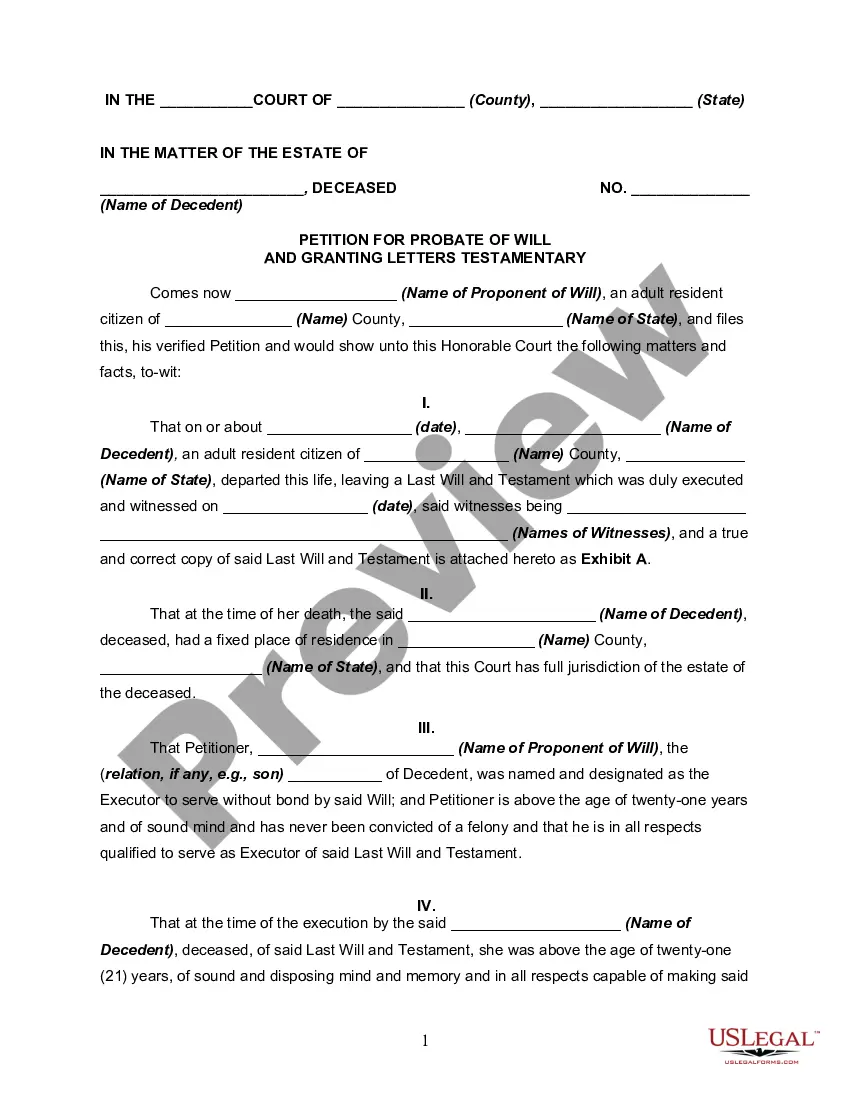
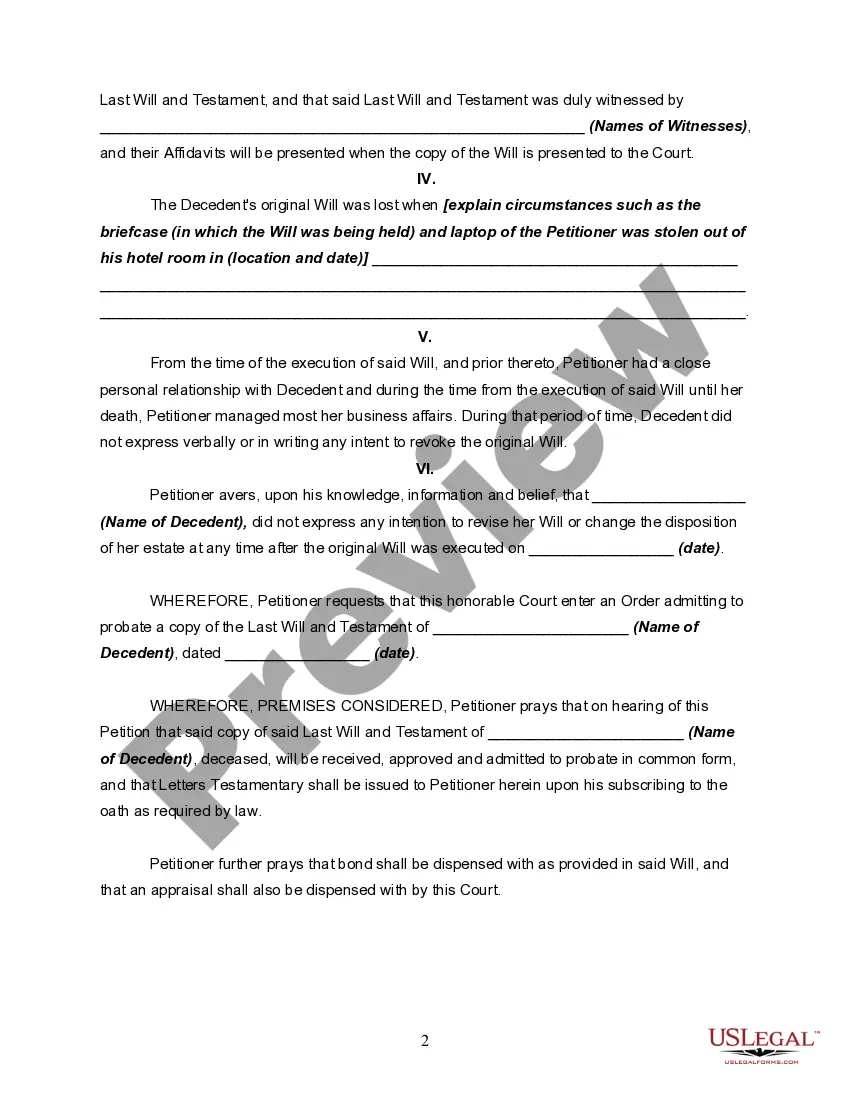
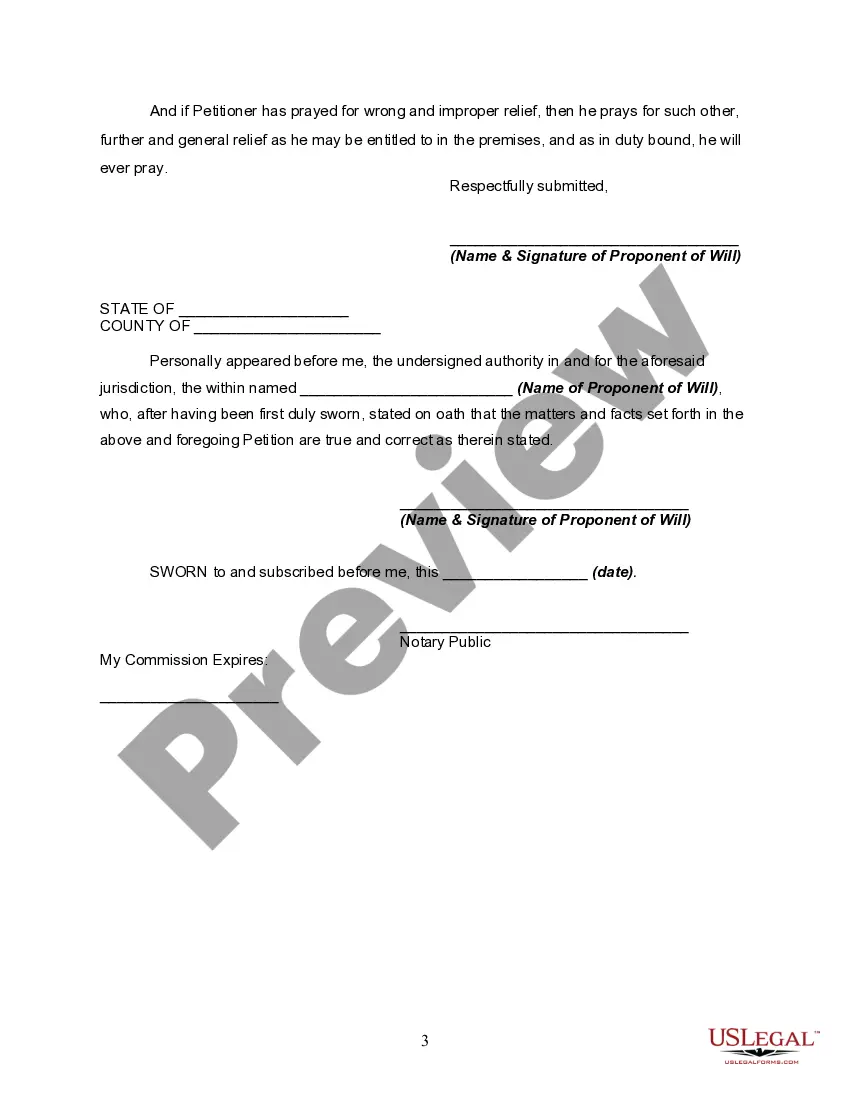
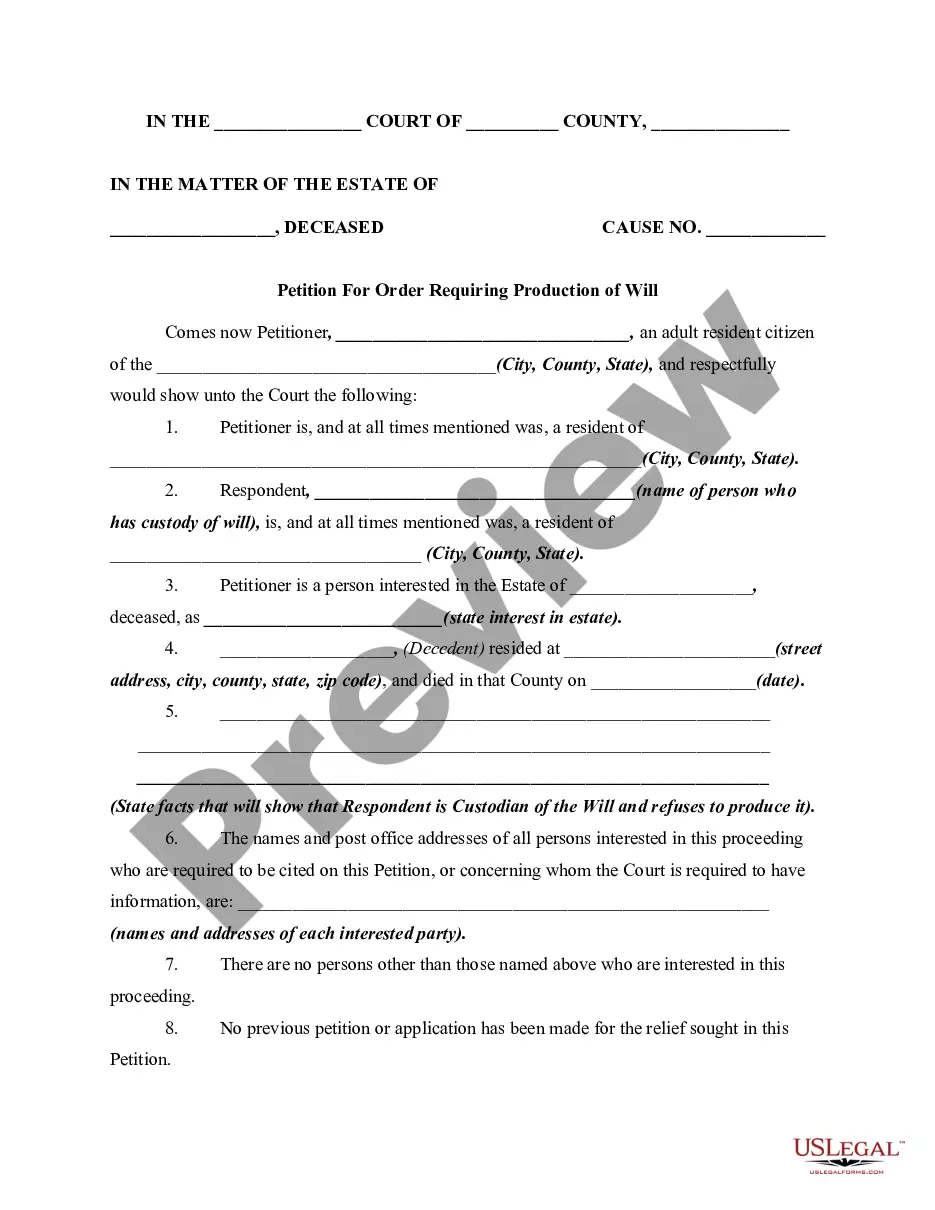
Probate Lost Will With Probate Court
Description

Get your form ready online
Our built-in tools help you complete, sign, share, and store your documents in one place.
Make edits, fill in missing information, and update formatting in US Legal Forms—just like you would in MS Word.
Download a copy, print it, send it by email, or mail it via USPS—whatever works best for your next step.
Sign and collect signatures with our SignNow integration. Send to multiple recipients, set reminders, and more. Go Premium to unlock E-Sign.
If this form requires notarization, complete it online through a secure video call—no need to meet a notary in person or wait for an appointment.
We protect your documents and personal data by following strict security and privacy standards.

Make edits, fill in missing information, and update formatting in US Legal Forms—just like you would in MS Word.

Download a copy, print it, send it by email, or mail it via USPS—whatever works best for your next step.

Sign and collect signatures with our SignNow integration. Send to multiple recipients, set reminders, and more. Go Premium to unlock E-Sign.

If this form requires notarization, complete it online through a secure video call—no need to meet a notary in person or wait for an appointment.

We protect your documents and personal data by following strict security and privacy standards.
Looking for another form?









How to fill out Petition To Probate Lost Will?
The Probate Lost Will With Probate Court you see on this page is a reusable legal template crafted by expert attorneys in accordance with federal and local regulations.
For over 25 years, US Legal Forms has offered individuals, businesses, and legal practitioners more than 85,000 authenticated, state-specific documents for any commercial and personal situation. It’s the fastest, simplest, and most dependable method to acquire the paperwork you require, as the service guarantees high-level data security and anti-virus protection.
Subscribe to US Legal Forms to access verified legal templates for all of life’s situations at your fingertips.
- Look for the document you require and examine it.
- Choose the pricing plan that fits you and set up an account.
- Select the format you need for your Probate Lost Will With Probate Court (PDF, DOCX, RTF) and save the document on your device.
- Print the template to complete it by hand, or use an online versatile PDF editor for a swift and precise fill-in and signature.
- Use the same document again whenever needed.
Form popularity
FAQ
Texas law provides that, when this happens, the Will is treated as if it did not exist, and the estate passes by intestate (without a Will) succession.
This procedure is not found in any North Carolina statute, but it is a product of case law over the years. The executor or beneficiary starts the process just the same as if he or she were going to probate an original will ? by filing an application for probate with the Clerk and submitting a death certificate.
Legal Assets Will Not Transfer If the executor fails to probate a will, all the decedent's assets remain in their name indefinitely. That means the deceased individual's assets, such as their house, car or personal property, cannot transfer over to the appropriate parties without court approval.
An estate may be exempt from the probate process in certain circumstances. Under Texas Estates Code, Title 2, Chapter 205, an estate need not pass through the probate process if there is no will and the total value of the estate (not counting any homestead real estate owned by the Decedent) is $75,000 or less.
In Texas, when a person dies and leaves a will, that will must be submitted to the court. However, all wills do not have to be probated. For a will to be admitted to probate, the court must determine a necessity for administration.